
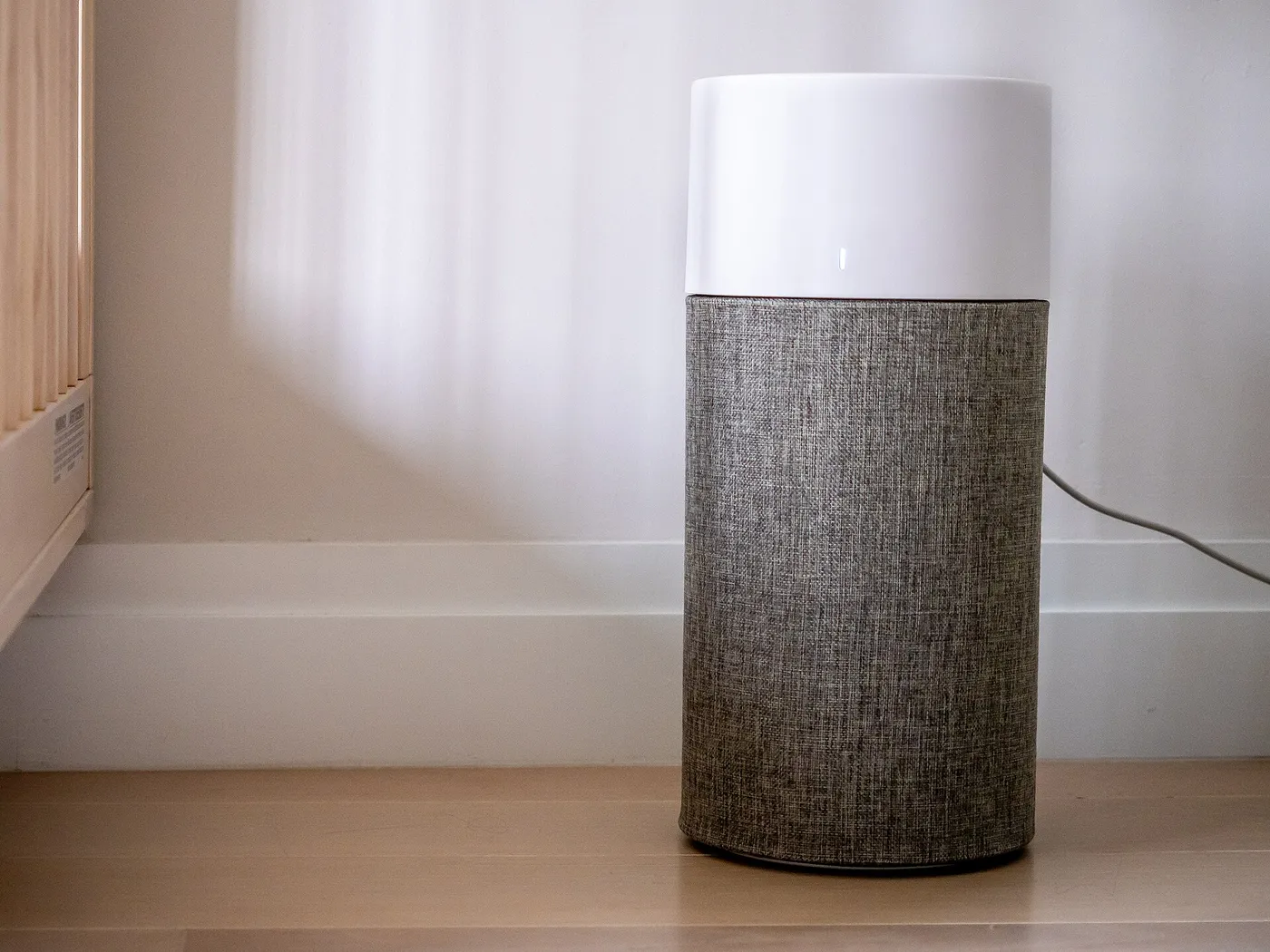
The coverage claim on the box
Almost every air purifier carries a line such as "covers rooms up to" some number of square feet. It reads like a guarantee. It is not, and treating it as one is how people end up with a machine that cleans the air of a small bedroom perfectly and does almost nothing in a large living room it claimed to cover.
The better way to size a purifier is to think about how often it can replace the air in your room. That idea has a name, air changes per hour, and it turns a vague claim into something you can calculate and compare.
What air changes per hour means
Air changes per hour, usually written ACH, counts how many times the purifier could move a volume of air equal to the room through its filter in sixty minutes. An ACH of four means the filter processes a room's worth of air four times each hour. It is a rate of turnover and does not mean the air is replaced with fresh outdoor air. The same air is cycled and cleaned again and again.
Because it depends on volume, ACH explains why a tall room is harder than a standard one of the same floor area. More cubic feet means more air to process, so the same machine delivers fewer changes.
The formula
You need two numbers: the room's volume and the purifier's delivery rate.
- Multiply length by width by ceiling height, all in feet, to get volume in cubic feet.
- Find the purifier's CADR in cubic feet per minute. If the unit gives three numbers, use the one that matches your main concern, and use smoke as a conservative default.
- Multiply the CADR by 60 to convert minutes into hours.
- Divide that result by the room volume. The answer is air changes per hour.
The CADR figure and where it comes from are explained in our CADR guide. The point to remember is that CADR is measured on the highest fan setting, so the answer is the best case.
A worked example
The following numbers are illustrative, chosen to show the arithmetic. A bedroom measures 15 feet by 12 feet with an 8 foot ceiling, which is 1,440 cubic feet. A purifier with a CADR of 240 cubic feet per minute delivers 240 times 60, or 14,400 cubic feet per hour. Divide by 1,440 and you get 10 air changes per hour at top speed.
Now run the same machine on a lower speed that cuts delivery roughly in half, and the result falls to about 5. Put the same machine in a 24 by 20 foot living room with a 9 foot ceiling, which is 4,320 cubic feet, and top speed gives only a little over 3. This is how one machine can look excellent in one room and feeble in another without any change to the machine itself.
How many air changes do you want
There is no single official target for a home. Different organizations and manufacturers cite different numbers, and the right figure depends on what you are trying to do. For general dust and allergies, a moderate turnover is usually enough. For smoke events, or for a person who is sensitive to particles, you want a higher rate so that the air returns to a clean state quickly.
| Goal | Practical approach |
|---|---|
| General dust and light allergies | A moderate turnover on a quiet speed, run for many hours |
| Pets and shedding | Higher turnover, plus a good pre-filter for hair |
| Wildfire or cooking smoke | High turnover during the event, then maintain on a lower speed |
| Bedroom for sleep | Moderate turnover at a speed quiet enough to sleep through |
| Large open rooms | Consider two units rather than one oversized unit |
These are guidelines from the mechanism, not regulatory requirements. A higher rate cleans the air faster after an event, and a lower rate maintains the air once it is clean.
The two thirds shortcut
If you do not want to calculate, a commonly cited shortcut says that a purifier's smoke CADR should be about two thirds of the room's floor area in square feet, for a standard ceiling of around 8 feet. This effectively gives a turnover of around five changes per hour at top speed.
It is a decent rule for ordinary rooms and a poor one for tall ceilings, because it ignores height. Use it for a quick check, then run the full formula if your ceiling is higher than normal or you want a more precise result.
Tall ceilings and open plans
A vaulted living room with a two story opening holds far more air than its floor area suggests. In that case, size the purifier by volume. If the ceiling is twice as high, you need roughly twice the delivery for the same turnover.
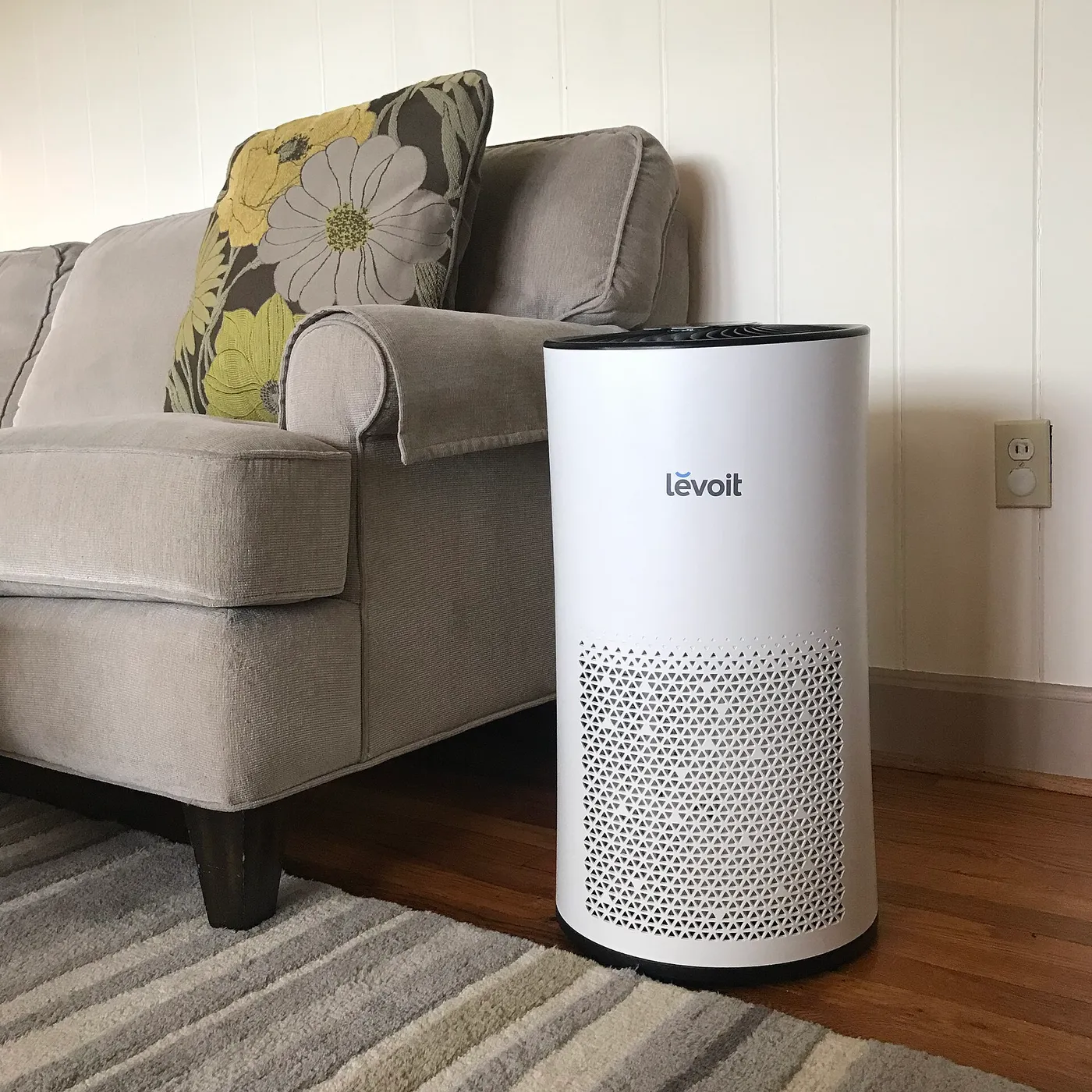
Open plan spaces add another wrinkle. The purifier is not confined to one room, because air moves across the boundary into the kitchen or hall. In an open layout, treat the connected volume as the room, or place the machine where it can pull from the main living zone, and consider a second unit for a distant area.
Why fan speed changes everything
The CADR on the box is the top-speed rating. Most people run a purifier on a lower speed, so their real turnover is lower than the calculation. Check the manufacturer's data for delivery at the speeds you actually use, or estimate that a medium setting may deliver around half of the maximum.
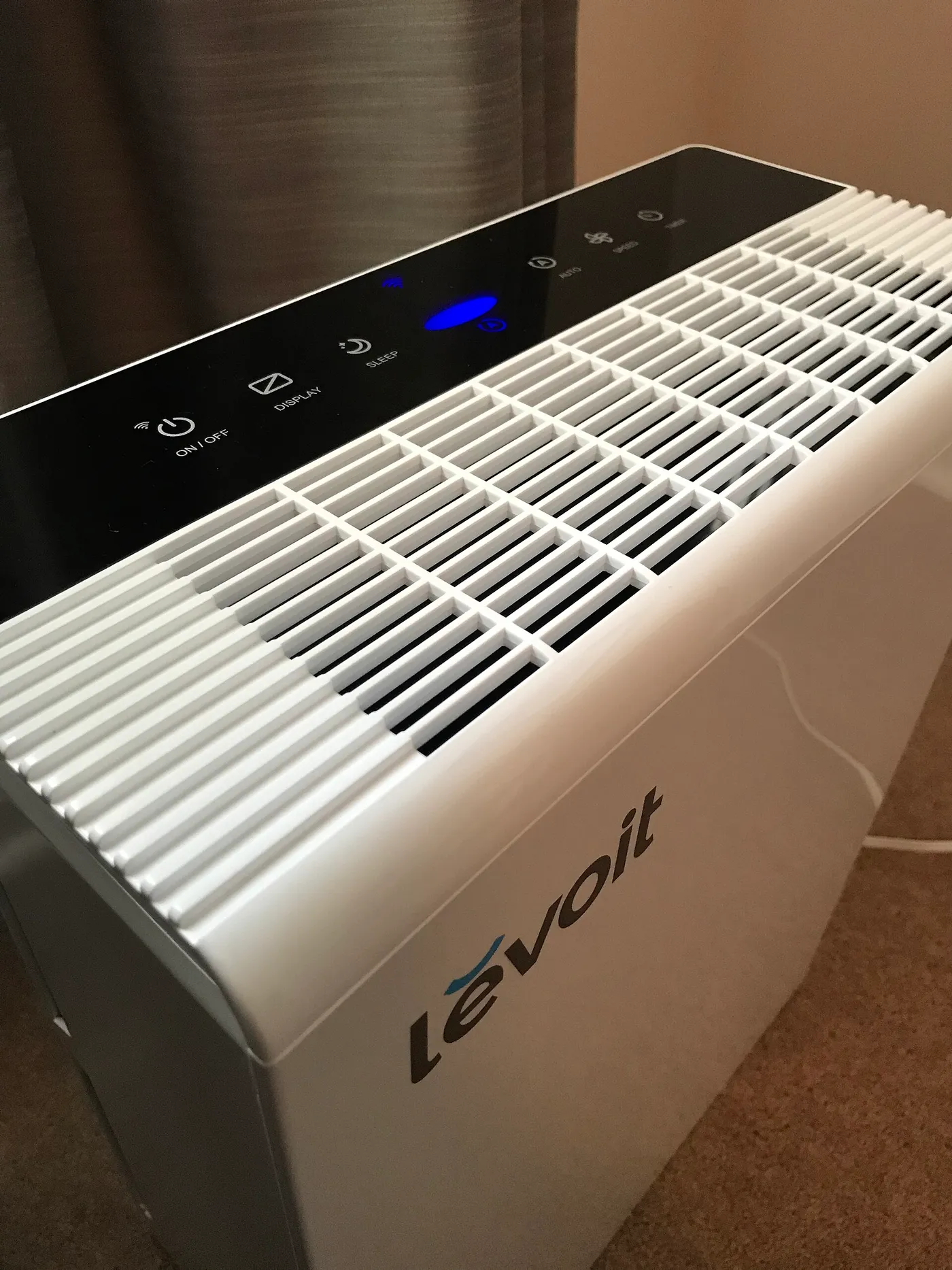
That is why a larger machine is often better than a minimal one for the same room. A bigger unit can reach your turnover target on a quiet speed. A smaller unit may need its loudest setting to get there, and you will switch it off.
Doors, windows and the air you are cleaning
A purifier cleans the air in its space. If the door is open to a smoky kitchen, or windows are open to wildfire smoke, new particles arrive as fast as the filter removes them. For a bedroom, closing the door during the night gives the machine a defined volume to work on and shortens the time to clean air.
Sealing obvious leaks around windows and doors also helps during smoke events. The best measure of success is the trend, with a particle monitor or the unit's own sensor showing the level falling, and staying down when you reduce the speed.
Placement inside the room
Place the machine where air can reach the intake without obstruction, and not tucked behind a sofa or curtain. A purifier with a front intake wants a clear path, and a 360 degree design can sit more freely. Keep a gap around it, as recommended in the manual.
Putting the unit near the bed is useful for sleep, as long as the airflow is not blowing directly at your face. In larger rooms, a central position helps the air circulate through the whole volume.
When two smaller purifiers beat one big one
If the space is a long, divided or open area, two purifiers placed in different zones can be more effective than a single large one. The air is processed in two places and the circulation pattern covers more of the room. Two machines can also run on lower, quieter settings.
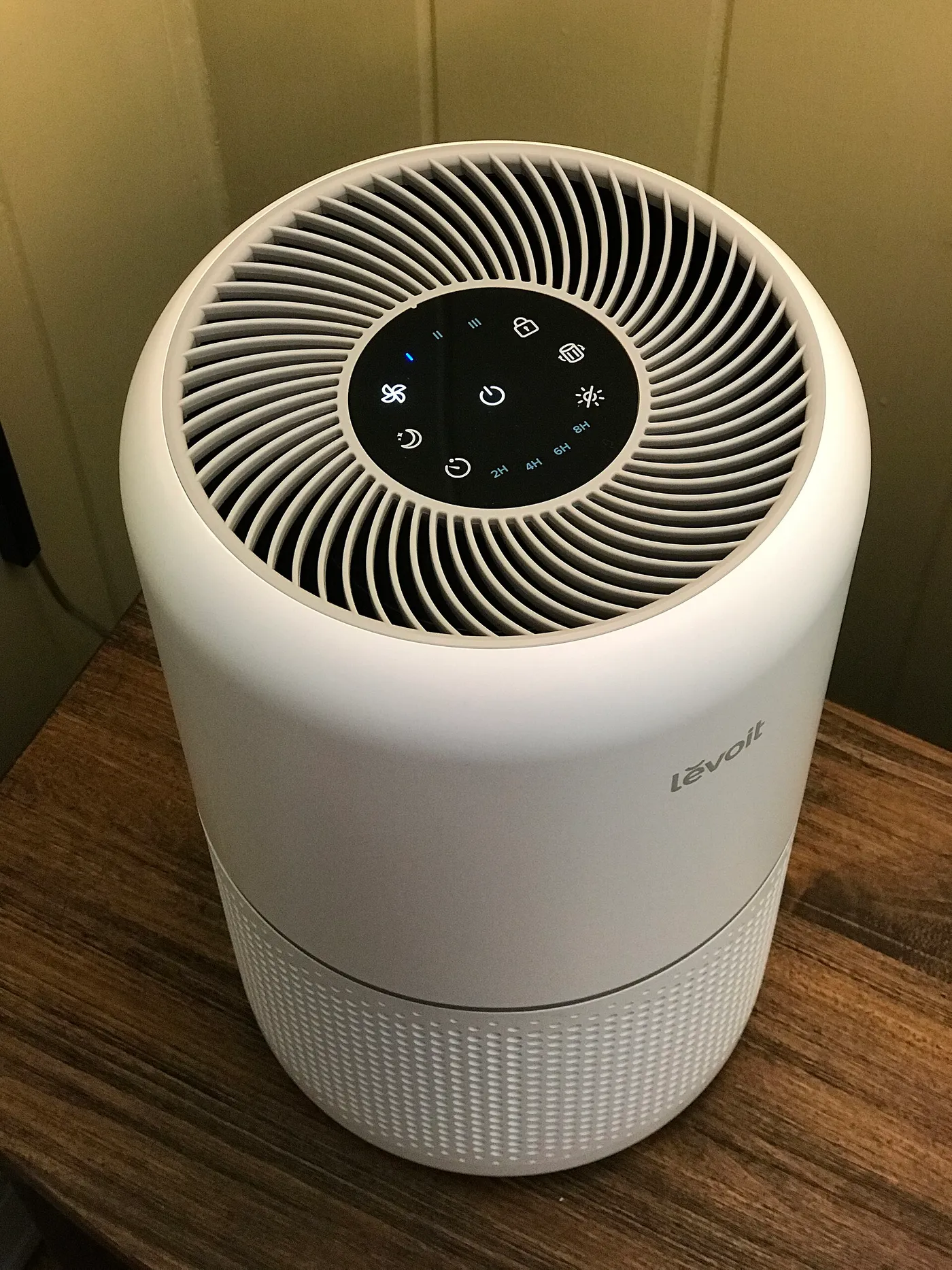
The trade-off is the cost of two sets of filters and a little more complexity. For a typical single room, one correctly sized unit is enough.
Shopping steps
- Calculate room volume, not just area.
- Decide your goal and choose a target turnover.
- Find CADR figures at the speed you will actually run.
- Check noise at that speed.
- Consider the filter type and cost, including the HEPA claims explained in our HEPA and True HEPA article.
The best air purifiers guide lists current models across sizes, and the Alen air purifier roundup compares one brand's range if you want a consistent family of sizes.
ACH is not ventilation
A frequent confusion is to treat air changes per hour from a purifier as if it were the same as bringing in fresh air. It is not. A purifier recirculates the air already in the room, removing particles each pass. It does not add oxygen, reduce carbon dioxide or dilute gases that a filter cannot capture.
Mechanical ventilation measures a different thing, the exchange of indoor air with outdoor air. A room can have a high purifier turnover and still feel stuffy if people are breathing in a closed space for hours. Use a purifier for particles and use ventilation for freshness, and do not substitute one for the other.
How quickly a room reaches clean air
With a given turnover rate, the particle concentration falls in a smooth decay. Each hour, a share of the particles is removed, and the share depends on the turnover. A higher number of changes brings the room down to a low level sooner, which is why smoke events call for a high setting at first.
It is not a straight line to zero. Because the filter removes a fraction of what passes through it each cycle, the level keeps falling but never quite reaches nothing, and new particles keep arriving from people, pets and doors. In practice you are aiming for a low steady level, not a perfect one.
This also explains why running the purifier continuously on a low setting beats running it occasionally on high. A steady low turnover keeps the level down as new particles arrive, and it is quieter and cheaper over a day.
Special situations
Home offices and small rooms
A small room is easy to turn over, so a compact unit often delivers a high number of changes. The limit in a small room is usually noise and the position of the intake, since you will be sitting close to the machine.
Kitchens and open dining areas
Kitchens produce fine particles from cooking and a lot of gases. A purifier helps with the particles, but a range hood vented outdoors does more at the source. Size the purifier for the connected open volume, not just the kitchen itself.
Nurseries and sleeping rooms
The priority is a quiet setting that still gives a useful turnover. Calculate the volume, pick a machine that meets your target on its low or medium speed, and check the noise rating at that speed.
Reading the manufacturer's coverage claim critically
When a box says it covers a large room, ask what turnover that claim assumes. Some manufacturers calculate coverage at a low number of air changes, so that a unit seems to cover a big room. Others use a higher turnover and a smaller room. Two machines with identical CADR can carry very different coverage claims, and neither is lying.
You can reverse the calculation to see which assumption was used. Take the claimed square footage, multiply by the ceiling height to get volume, multiply the CADR by 60, and divide. The result tells you the turnover behind the claim. If it is very low, the claim is generous. If it is high, the claim is conservative, and the machine has headroom for a bigger room than it advertises.
- A claim based on a low turnover suits light, routine cleaning.
- A claim based on a high turnover suits allergies and smoke events.
- If the claim does not state its basis, run the calculation yourself.
Checking that it is working
Calculations tell you what to expect, and a monitor tells you what happens. Many purifiers include a particle sensor with a color indicator, and you can also buy a standalone air quality monitor. Watch the trend after you turn the machine on. A working unit in a closed room should show the reading falling steadily.
If the trend is flat, look for the cause. A clogged filter, a blocked intake, a door left open to a source, or a unit that is too small for the room would all show up this way. A monitor also reveals useful habits, such as the effect of cooking, vacuuming or opening a window on the particle level, which helps you decide when to boost the speed.
Treat consumer sensors as indicators and not instruments. They are good at showing direction and rough size, and less reliable at absolute values. The point is to see whether the machine and the room are behaving as the calculation predicts.
A second illustrative example: an open living room
These numbers are illustrative only. Take a living room of 20 feet by 18 feet with a 9 foot ceiling, which is 3,240 cubic feet. It opens to a dining area through a wide archway, so treat the connected space as roughly one and a half times that. A purifier with a CADR of 300 cubic feet per minute delivers 18,000 cubic feet per hour. Divided by 3,240, that is a little over five changes at top speed, and about half that once you account for the connected dining area.
The result suggests a unit with a higher CADR, or two units, if you want a strong turnover for the whole open space. It also shows why a quiet speed in such a room gives modest turnover, and why the larger purifier you can run slowly is often the better answer than a smaller one at full tilt.
Frequently Asked Questions
How do I calculate the right air purifier size?
Multiply the room's length, width and height to get volume. Then multiply the purifier's CADR by 60 and divide by the volume to get air changes per hour. Choose a machine that reaches your target on a speed you will use.
How many air changes per hour do I need?
There is no single official figure for homes. A moderate rate suits general dust, and a higher rate helps during smoke events or for sensitive people. Use the number as a goal and judge by noise and trend.
Does a larger purifier always clean better?
A larger unit gives more turnover and can run quietly at a lower speed, which is a real advantage. But a unit that is far larger than the room offers diminishing returns and a higher filter cost.
Does ceiling height matter?
Yes. Volume depends on height, and a taller ceiling means more air to process. Use volume instead of square footage if your ceiling is higher than standard.
Is the coverage on the box reliable?
It is a starting point based on the top fan speed and standard assumptions. Verify with your own volume and the delivery rate at the speed you plan to use.
Can I use one purifier for several rooms?
Only to a limited extent. Closed doors limit the air the machine can reach, so a purifier works best in one room or one open zone. Move it between rooms or use one per room if you need whole-home coverage.
Bottom line
Size a purifier by volume and air changes per hour, not by a coverage line on the box. Calculate the room's cubic feet, convert the CADR to hourly delivery and divide. Then be honest about the fan speed you will run and the noise you will tolerate. A machine that reaches a good turnover quietly is the one you will keep switched on, and that is what cleans your air.