
The garage problem that exposes the difference
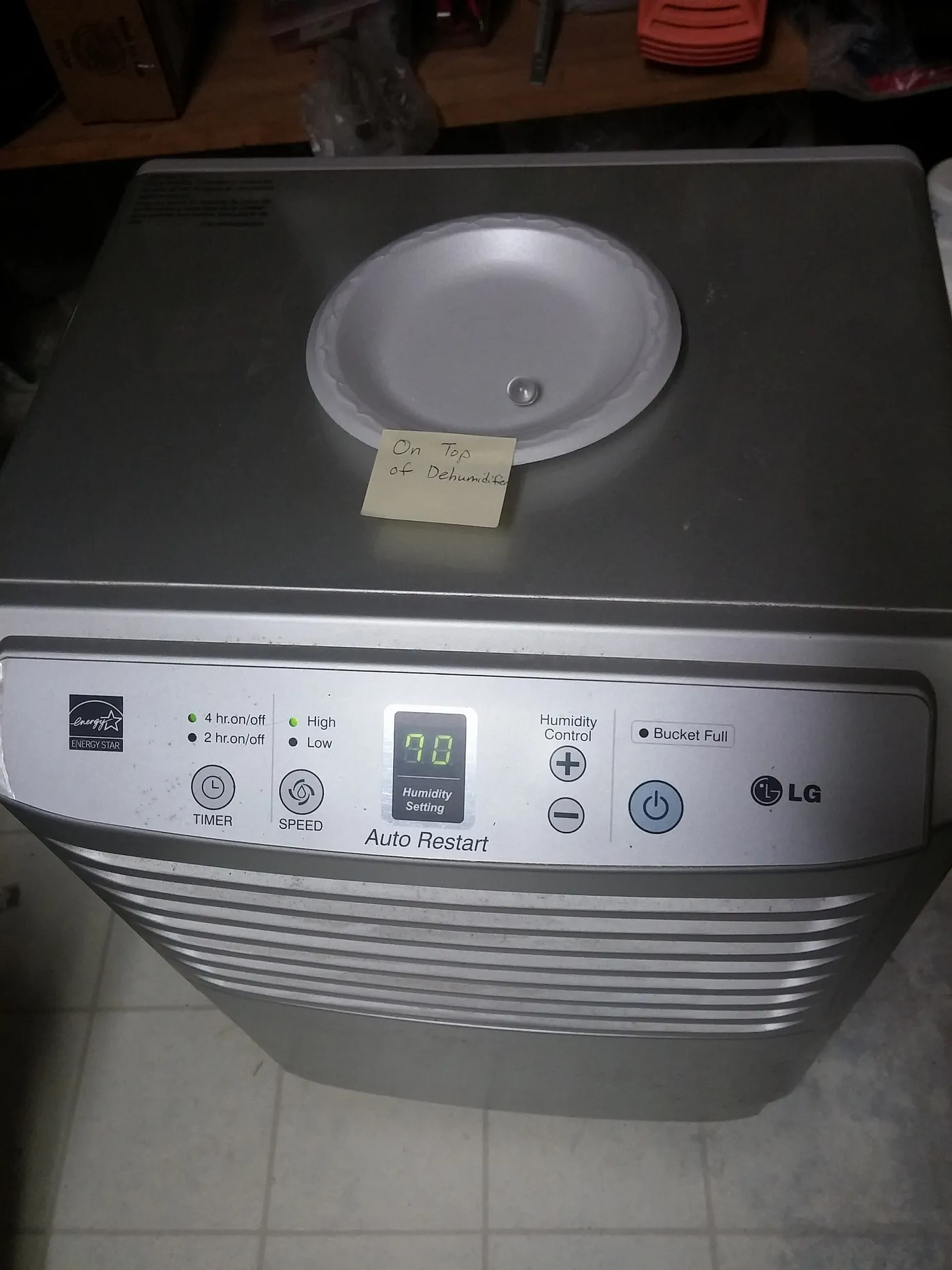
Picture a garage workshop in late autumn. The air is cool, tools are getting a faint film of rust, and a compressor dehumidifier sits in the corner humming away while the bucket stays nearly empty. The owner assumes it is broken. In fact it is working exactly as designed, in a place it was not designed for.
That scene is the clearest way to understand the two technologies. They both remove moisture, but they get there by different physics, and each one has a temperature zone where it shines and a zone where it struggles.
How each technology removes moisture
A compressor unit chills air over a cold coil until water vapor condenses into liquid, then reheats the air and returns it. That cycle is explained step by step in our mechanism guide. It uses a refrigerant loop, a compressor and two coils.
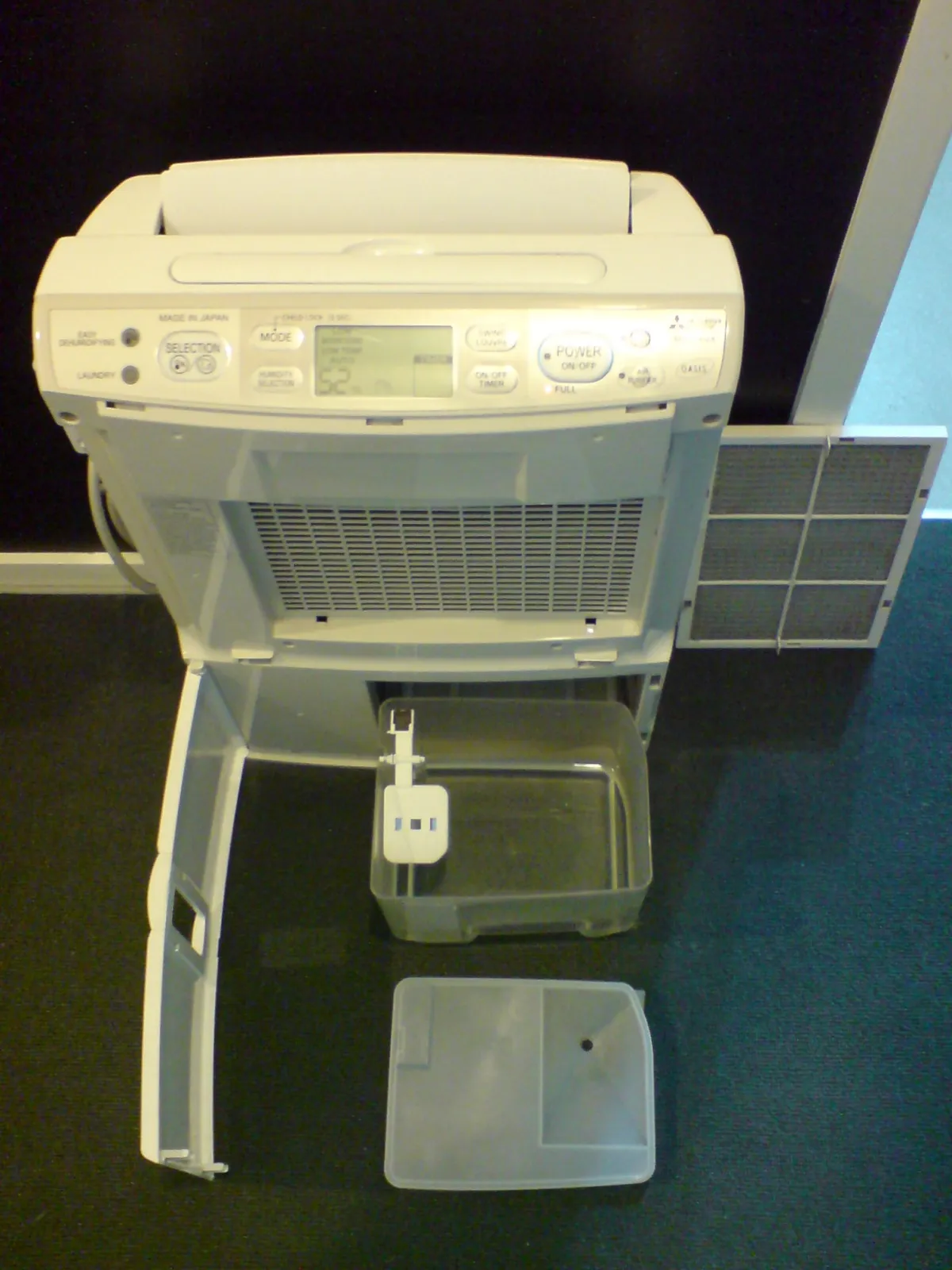
A desiccant unit has no cold coil. Instead, a slowly rotating wheel or rotor coated with a moisture-absorbing material, called a desiccant, passes through two airstreams. In one, humid room air flows through the wheel and the desiccant captures the vapor. In the other, a heated stream of air flows through the wet section of the wheel and drives the moisture out as warm, humid air that then condenses or is vented. The wheel keeps turning so one section absorbs while another is being dried.
The difference is that one machine condenses vapor on a cold surface, and the other physically adsorbs vapor onto a material and then heats it away.
Side by side
| Factor | Compressor | Desiccant |
|---|---|---|
| Best conditions | Warm, humid rooms | Cool or cold rooms |
| Low temperature behavior | Coil frosts, defrost pauses reduce output | Keeps removing moisture without a cold coil |
| Energy per unit of water | Lower in warm damp air | Higher because it heats a regeneration stream |
| Noise | Compressor hum plus fan | Fan and wheel motor, usually quieter |
| Heat added to the room | Slight | More noticeable |
| Weight | Heavier, because of the compressor | Often lighter |
| Typical use | Basements, large damp rooms | Garages, RVs, cold closets, drying stations |
The table is a general pattern. Individual models differ, so read each unit's published operating range rather than assuming the technology label tells the whole story.
Temperature behavior, the deciding factor
The compressor design has a built-in weakness: its water-collecting surface is cold by design. In a warm room that is perfect. As the incoming air cools, the coil can fall below freezing, frost builds on the fins and the unit must pause to defrost. Output falls sharply.
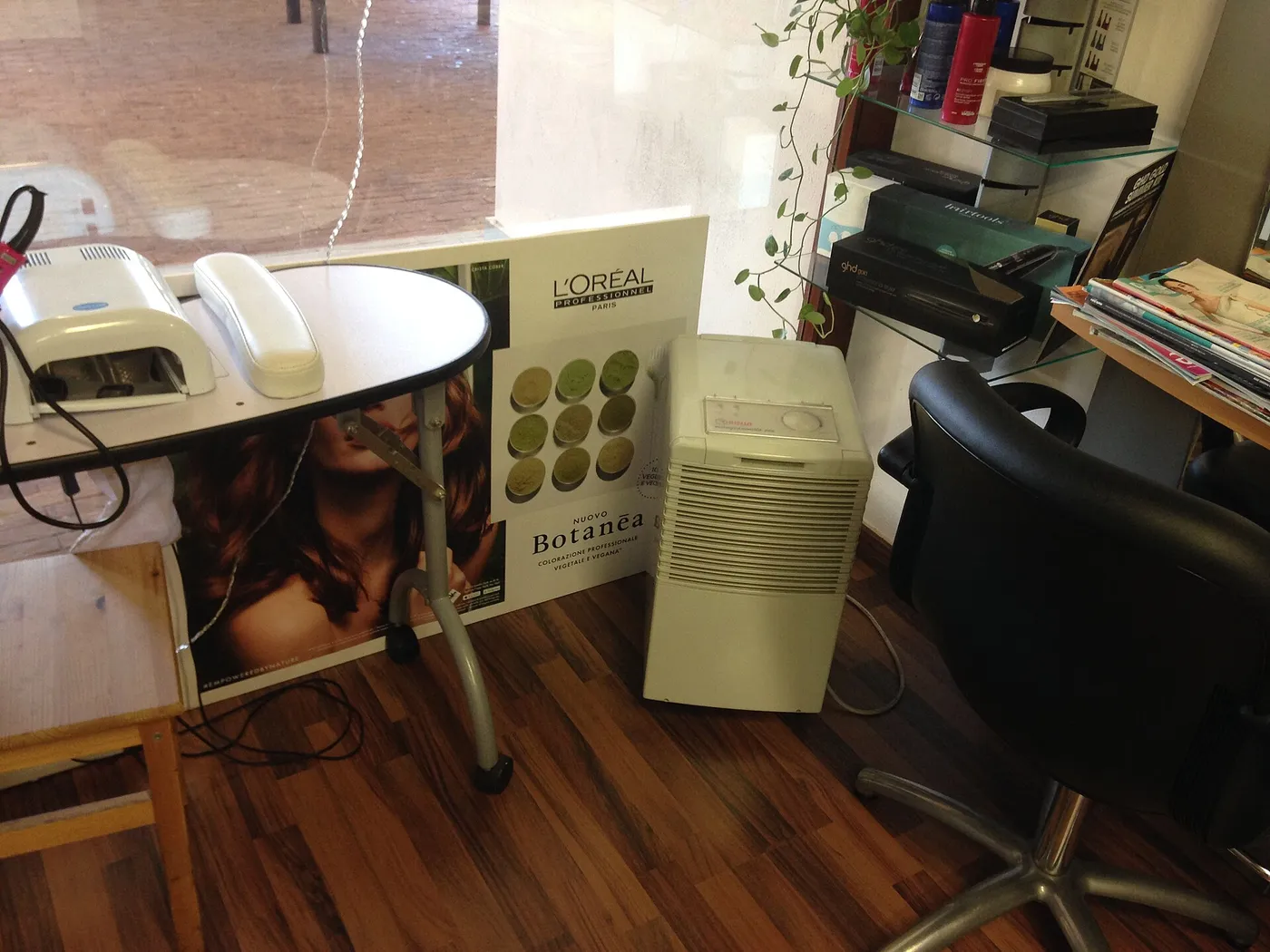
A desiccant wheel has no such limit, because it does not rely on a cold surface. The absorption process continues even when the room is cool. That is why desiccant models are the usual answer for unheated garages, cold basements, boats and storage rooms. If your space sits cold for months, this one factor may decide the whole choice.
Energy use in practice
In warm, humid air a compressor dehumidifier is the efficient machine. The refrigeration loop moves heat rather than creating it, so each unit of electricity removes a lot of water. This is why compressor models are the default for large, damp, warm spaces.
A desiccant unit needs a heater to regenerate the wheel, and heating air costs more energy than moving heat with a compressor. In warm, damp conditions it therefore uses more electricity for the same water. In cold conditions the picture reverses, because the compressor unit barely functions and the desiccant unit keeps removing water.
The honest summary is that neither is cheaper to run in every condition. Efficiency depends on the air temperature, so match the technology to the season in which you need it most.
Noise and weight
Compressors are mechanical and make a recognizable hum, in addition to the fan. For a living room or bedroom, that background noise can be tiring. Desiccant units lack a compressor, so the sound is mostly airflow and a slow wheel motor, which many people find easier to live with.
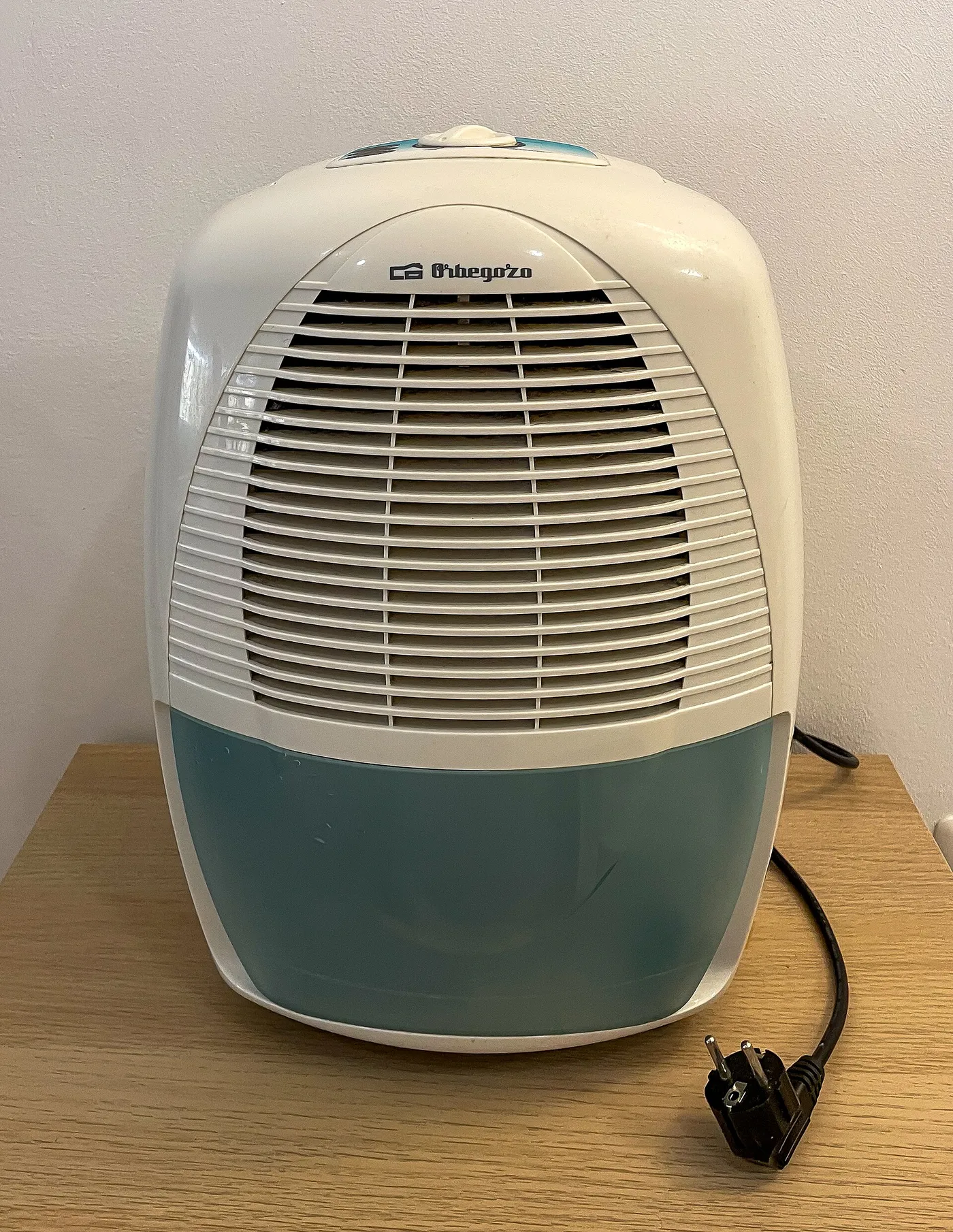
The same missing compressor often makes desiccant units lighter and easier to carry, which suits spaces where you move the machine between rooms or stairs. Compressor units are heavier and often sit on wheels. If portability matters, look at the weight stated in the specification.
The heat they put into the room
Both machines warm the air slightly. A desiccant model does so more, because it runs a heater. In a cold garage that can be a quiet advantage, since the small warming effect helps. In a warm summer room, it is a minor penalty that you will feel if the space is small and closed.
This also affects where you can use each one. A desiccant unit placed in a tiny closet can raise its temperature noticeably, so give it ventilation as directed by the manual.
Where each one wins
Compressor wins
- Warm, humid basements in summer and shoulder seasons.
- Large finished spaces that stay at room temperature.
- Owners who want low running cost in a damp climate.
- Models with built-in pumps and a large capacity range.
Desiccant wins
- Cold garages, workshops, sheds and unheated basements.
- Bedrooms and offices where low noise matters.
- Small spaces such as boats, caravans and closets.
- Drying after a leak when the room is cool.
RV owners in particular tend to favor desiccant or small thermoelectric units for the weight and quiet. We cover related equipment in the best dehumidifiers guide.
What about thermoelectric units
A third, smaller category uses a Peltier plate instead of a compressor. These mini units are quiet and lightweight but collect very little water, and they perform best in a warm, damp, small space. They are fine for a closet or a cabinet and not a substitute for a basement unit.
They are sometimes marketed as desiccant units, but a Peltier unit is a cooled-surface design, so it shares the same dependence on warm air. Read the specifications to identify the actual technology instead of trusting a product title.
Maintenance differences
A compressor unit needs a clean filter and a clean coil, plus a bucket or drain that does not clog. The sealed refrigerant system is not serviced by owners. A desiccant unit also needs a clean filter, and the wheel itself is a wearing element. Dust can coat it, and over years its capacity can decline.
In both cases, the filter is the first thing to maintain. A blocked filter reduces airflow and lowers output, and it is the cheapest fix available.
A decision by space
| Your space | Better fit | Reason |
|---|---|---|
| Warm basement, damp in summer | Compressor | Efficient at warm temperatures |
| Unheated garage or shed | Desiccant | Works when cold |
| Bedroom needing quiet | Desiccant, or a quiet compressor model | No compressor hum |
| Large open basement | Compressor | Higher capacity and lower running cost |
| Cold crawlspace | Desiccant or a rated crawlspace unit | Frost risk with standard compressors |
| RV, boat or small cabin | Desiccant | Light, quiet, tolerant of cool air |
Shopping notes
Whichever you choose, size it to the space using the method in our sizing guide. When you compare brands, such as the models in the best GE dehumidifiers guide, check the published operating range and the drain options as carefully as the capacity figure.
If a model lists its capacity at a standard test condition and says nothing about cool-room output, assume the number falls in cool conditions. Where a manufacturer publishes a second figure at a cooler condition, treat it as the more honest guide to your garage.
Inside a desiccant wheel
The wheel is a honeycomb of fine channels coated or impregnated with a drying material, often a silica-based compound or a similar absorbent. Humid room air is drawn through one segment of the wheel, where the material takes up vapor and the air leaves drier. A second, smaller airstream is heated and pulled through another segment, which drives the captured water out of the material.
That regenerating stream leaves warm and wet. In a typical consumer unit it passes through a condenser, where it cools and drops its water into a tank, or it is ducted out of the space. Because the wheel turns slowly, each part of it spends time absorbing and then time being refreshed in a continuous loop.
The design has no cold coil, so there is nothing to frost. The trade is that the heater consumes energy every minute the machine runs, and the room slowly warms. That one structural difference explains almost every difference in the table above.
Placement and setup
Both types need open space around the intake and exhaust. A compressor unit can sit anywhere with decent airflow. A desiccant unit that vents regeneration air should be positioned where that humid, warm exhaust has a path out, and a model that condenses it into a tank behaves more like a compressor unit in practice.
Keep any dehumidifier away from walls and furniture by the distance the manual specifies, and place it on a level, stable surface. If you run a drain hose, check that it slopes downhill all the way, because an uphill section will back water up into the machine. For desiccant models that exhaust warm air, never block the outlet.
Control and the humidity you can reach
A desiccant wheel can pull air to quite dry conditions, which makes it useful for tasks such as drying tools, storing sensitive materials or finishing woodwork in a cold shop. A compressor unit can reach comfortable humidity levels in a warm space, but it has more difficulty at very low targets because the coil must be colder, which accelerates frost.
If you need a very dry space, such as a storage room for equipment or a hobby area, the desiccant approach reaches lower targets more reliably in cool surroundings. If you only want to keep a living area from feeling damp, either technology is fine, and the compressor unit will cost less to run when it is warm.
Cost of ownership over several years
A compressor unit tends to have a lower running cost in warm weather and a higher purchase weight in the form of a heavy, mechanical build. A desiccant unit can cost more to run in warm weather because of its heater, but it avoids compressor wear and frost cycles. Total cost depends on which season you run it in.
A practical way to decide is to ask how many months a year the unit truly works. If it will run through a cool autumn, winter and spring in a garage, the desiccant unit's higher power draw is spread over months when the compressor model would have done little. If it will run in a warm basement through summer, the compressor model almost always costs less per liter removed.
When some owners keep both
Some households with a damp year-round basement and a cold workshop end up with one of each. A compressor unit handles the warm months in the basement and a desiccant unit handles the cold garage. It sounds like overkill, but if the two spaces really differ, each machine is doing the job it suits, and neither is fighting its own limits.
If you only want one, pick the technology that matches the space where the problem is worst and where you are least willing to compromise, then see our best dehumidifiers guide for models that suit that choice.
Errors buyers make with this choice
- Buying a compressor unit for a cold garage because it was cheaper, then judging it broken when the bucket stays empty.
- Buying a desiccant unit for a large warm basement and being surprised by the electricity cost.
- Ignoring the stated operating temperature range and relying only on the capacity figure.
- Assuming that a quiet unit is also a high-capacity unit. Quiet desiccant and thermoelectric units generally remove less water than a large compressor model.
- Skipping a drain option and then emptying a small tank daily.
Most of these come from the same mistake: choosing by one headline number. The technology you need is decided by the temperature and the size of the job, so settle those first.
Before you buy, check these three things
First, find the coldest temperature the room reaches during the damp season, and compare it with the lowest operating temperature in the manual. If the room dips below that limit, a compressor unit is the wrong choice regardless of price.
Second, decide how you will handle water. A tank that fills and stops the machine undermines any technology. Look for a hose outlet or pump if you want it to run unattended.
Third, check the warranty and the availability of replacement filters. These are boring details, but they decide whether a machine is still working in a few years.
Fix the source before the machine
Whichever technology you choose, a dehumidifier is fighting a continuous supply of vapor. Gutters that dump water against the foundation, an unvented dryer, a bare soil crawlspace or a leaking pipe can overwhelm even a large unit. Fix those and a smaller, cheaper machine may be all you need.
It also helps to keep doors to the damp area closed while the unit runs, so you do not exhaust it against the whole house, and to run it long enough for the readings to settle before you judge whether it is the right size.
Frequently Asked Questions
Is a desiccant dehumidifier better than a compressor one?
Neither is better everywhere. A desiccant unit is better in cold, quiet-sensitive or small spaces, and a compressor unit is better in warm, damp, larger rooms where efficiency counts.
Do desiccant dehumidifiers use more electricity?
In warm, humid air they usually use more energy per unit of water because they heat a regeneration airstream. In cold air the comparison reverses, because a compressor unit removes little water.
Can I use a compressor dehumidifier in a garage?
Only if the garage stays within the unit's stated operating range. In a cold garage the coil frosts, and the output falls well below the label. A desiccant unit is the safer choice there.
Are desiccant dehumidifiers quieter?
Generally yes, because they lack a compressor. They still have a fan and wheel motor, so they are not silent, but many owners find the sound easier to tolerate in bedrooms.
Which lasts longer?
Lifespan depends on the model and how it is used, and no single figure applies. Keeping filters clean and avoiding constant frost cycles helps either type last.
Where does the desiccant unit's water go?
The moisture driven off the wheel is condensed and collected in a tank or sent to a drain, much like a compressor unit. Some designs vent the humid air instead, so check how the model handles its output.
Bottom line
Choose by temperature first. If the space stays warm and damp, a compressor dehumidifier gives the best water removal for the electricity. If it is cold, small or noise-sensitive, a desiccant model keeps working where the compressor stalls. Check the published operating range, size the unit to the room, and add drainage so it can run unattended. That combination matters more than any brand name on the front of the box.