
Amazon affiliate links - we earn a commission.Affiliate disclosure

Buying guide · 16 min read · Updated 2026-11-06

Best 10 Circuit Generator Transfer Switches (2026)

Six 10 circuit manual transfer switches for portable generators compared on amp rating, circuit layout, inlet, enclosure and expandability.

James MillerBy James MillerLead Machine Editor6 machines comparedSpec-sheet verified
Best 10 Circuit Generator Transfer Switches

At a glance

Our top picks

Side by side

Spec comparison

MachineRatingCircuitsMetering
Reliance Controls 31410CRK Pro/Tran 10 Circuit 30 Amp KitBest OverallReliance Controls 31410CRK Pro/Tran 10 Circuit 30 Amp Kit30 A, up to 7,500 running Wn/an/a
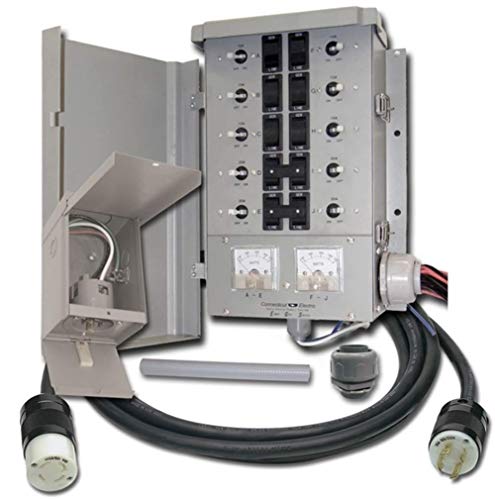
Connecticut Electric EmerGen 30 Amp 10 Circuit Transfer Switch KitBest Complete KitConnecticut Electric EmerGen 30 Amp 10 Circuit Transfer Switch Kit30 A, 7,500 W10 total, four 2-pole 240 Vn/a
Reliance Controls 30310A 30 Amp 10 Circuit Indoor Transfer PanelBest Indoor PanelReliance Controls 30310A 30 Amp 10 Circuit Indoor Transfer Panel30 A, up to 7,500 running WUp to 10 individually controlledBuilt in wattmeters
Generac HomeLink 50 Amp Manual Transfer Switch, 8 to 16 CircuitsBest 50 Amp UpgradeableGenerac HomeLink 50 Amp Manual Transfer Switch, 8 to 16 Circuits50 A, 120/240 V single phase10 included, expandable to 16n/a
VEVOR 30 Amp 10 Circuit Manual Transfer Switch KitBest ValueVEVOR 30 Amp 10 Circuit Manual Transfer Switch Kit30 A, for 7,500 W generators10, prewired and labeledMechanical watt meter
VEVOR 50 Amp 10 Circuit Manual Transfer Switch KitBest 50 Amp BudgetVEVOR 50 Amp 10 Circuit Manual Transfer Switch Kit50 A, for 12,500 W generators10, prewired and labeledMechanical watt meter

A circuit-level manual transfer switch lets a portable generator power a handful of hardwired circuits in your house, such as the refrigerator, furnace blower, sump pump and some lights, without extension cords and without connecting the generator to the entire panel. Each chosen circuit gets its own rocker or toggle that moves it between utility and generator power. The challenge is that the 10 circuit label hides big differences in amperage, pole count and installation.

This guide explains how smaller switches differ from larger ones, how single pole and double pole circuits are counted, and what the inlet, enclosure and wattmeter details really mean. Start with the picks above for the short list, then read the reviews below to match a switch to your generator and the circuits you actually need backed up.

Before you buy

6 Criteria to Look For Before Buying a 10 Circuit Generator Transfer Switch

  1. 01

    30 amp or 50 amp rating

    A 30 amp, 240 V switch carries about 7,200 W, which is why the 7,500 W label on the 30 amp boxes is a ceiling and not a guarantee. A 50 amp switch carries about 12,000 W, enough for a well pump plus the usual essentials. Choose by your generator's output and the loads you really need, since a bigger switch does not make a smaller generator stronger. The Reliance 31410CRK and the VEVOR 30 Amp serve 7,500 W class generators, while the Generac HomeLink 50 Amp and the VEVOR 50 Amp serve 12,000 W and up.

  2. 02

    Single pole versus double pole slots

    A 120 V circuit needs one pole and a 240 V circuit needs two, so a ten slot panel does not always give ten circuits. A well pump or a dryer circuit uses two slots and the circuits you can move shrink accordingly. The Reliance 31410CRK states a maximum of ten single pole or five double pole circuits, while the Connecticut Electric EmerGen provides four dedicated 240 V circuits and lets you remove tie bars to free single pole slots. List your circuits and their voltages before you buy.

  3. 03

    Indoor panel or weatherproof kit

    Some units are indoor panels designed to sit beside the main breaker box, and others are weatherproof kits that include an inlet for the exterior wall. The Generac HomeLink and the Reliance 30310A are indoor panels, while the Connecticut Electric EmerGen and both VEVOR kits are NEMA 3R. An indoor panel still needs an inlet on the outside, so count that as part of the job.

  4. 04

    Inlet and cord compatibility

    The inlet must match your generator's outlet. A 30 amp generator typically uses an L14-30 style plug, and the Connecticut Electric EmerGen and VEVOR 30 Amp use that style. The VEVOR 50 Amp uses a CS6375 plug and the Generac HomeLink inlet comes only in kit model 9855. Buying a switch and then finding the inlet does not match your generator is a common, avoidable mistake.

  5. 05

    Load monitoring on the box

    Watt meters help you avoid overloading the generator by showing what the connected circuits are drawing. The Reliance 30310A has built in wattmeters and both VEVOR kits have a mechanical watt meter. Without one, you rely on the generator's own gauge, which is often missing on budget models. Meters are most useful when you are cautious about adding loads one at a time.

  6. 06

    Breaker fit and expansion

    Circuit switch boxes land on breakers in your load center, and the match matters. The Connecticut Electric EmerGen lists compatibility with Challenger, Cutler Hammer, GE, Homeline, Siemens, Square D and Westinghouse. The Generac HomeLink is multi-listed for Siemens, Eaton and Square D and can grow from 10 to 16 circuits. Confirm your panel brand with your electrician before buying.

Detailed reviews

The 6 best 10 circuit generator transfer switches, explained

01
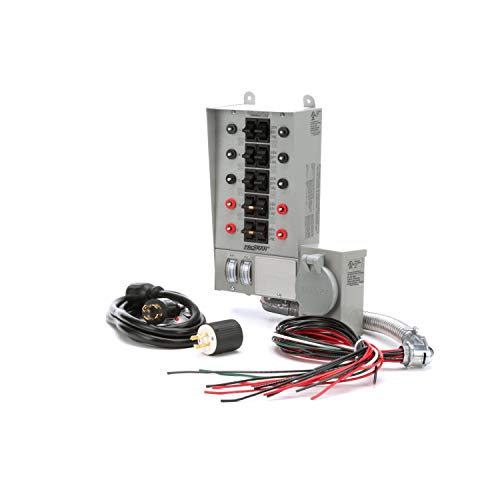
Reliance Controls 31410CRK Pro/Tran 10 Circuit 30 Amp Kit
30 A, 7,500 W running10 single pole circuits5 double pole max18 in conduit whip
Check price on Amazon
Best for: Homeowners with a 30 amp portable generator who want a well established 10 circuit switch with flexible 120 V and 240 V circuit choices.

Reliance Controls has made Pro/Tran style panels for a long time, and the 31410CRK is the template many other 10 circuit boxes are measured against. It is a manual panel for generators up to 7,500 running watts, with the circuit selecting switches grouped in one cabinet and an 18 in flexible conduit whip that runs to your existing load center. You choose up to 10 single pole circuits, or up to 5 double pole circuits, and the factory pre-wiring keeps the electrician's work to the panel connections.

The layout matters more than the badge. A mix of 120 V and 240 V circuits shares the same ten slots, so one well pump on a 240 V circuit uses two of them, and the five double pole maximum is a hard limit. Compared with the Connecticut Electric EmerGen, which provides four dedicated 240 V circuits, the Reliance is flexible and lets you spend all ten slots on 120 V circuits if that suits your home. Against the Reliance 30310A, the same company's indoor panel with wattmeters, the 31410CRK is the kit-style option aimed at a faster install.

The powder-coated steel cabinet with six combination knockouts is built for indoor mounting beside the main panel. Ownership is mostly about habits: keep a labeled list of each circuit, move the switches to the generator position only after the generator is running, and never exceed the generator's running wattage. The 30 amp limit works out to about 7,200 W at 240 V, which is why a 7,500 W label is a ceiling and not a promise.

What works

  • Ten single pole or five double pole circuits give flexible layouts
  • Eighteen inch flexible conduit whip eases the panel connection
  • Powder-coated steel cabinet with six combination knockouts
  • Long established design that electricians know well

Watch out for

  • Thirty amp limit caps total output near 7,200 W at 240 V
  • Mounted indoors, so the inlet and cord must be planned separately
  • Priced above the generic 10 circuit kits in this roundup

Spec sheet

Rating
30 A, up to 7,500 running W
Max single pole circuits
10
Max double pole circuits
5
Conduit
18 in flexible whip to load center
Cabinet
Powder-coated steel
Knockouts
Six combination
Type
Manual, circuit-selecting
02
Connecticut Electric EmerGen 30 Amp 10 Circuit Transfer Switch Kit
30 A, 7,500 W10 ft cord includedNEMA L14-30 inletFour 240 V circuits
Check price on Amazon
Best for: Homeowners who want one matched box, inlet and cord for a 30 amp portable generator, with a couple of 240 V circuits.

Where the Reliance is a flexible panel, the EmerGen is a complete kit. It includes a 10 ft generator cord with an L14-30 plug and a rainproof power inlet, and the switch is rated NEMA 3R, so the box and the inlet can be mounted indoors or outdoors. That makes it the least fiddly purchase for a typical homeowner, because the cord, inlet and switch are matched to each other and to a 30 amp, 120/240 V portable generator.

The circuit layout is deliberate. It has four 2-pole 240 V circuits, which suits a well pump or sump pump, and the tie bars can be removed to turn those into additional single pole circuits when you do not need 240 V. That is a different trade from the Reliance 31410CRK, which allows up to five double pole circuits, and from the VEVOR 30 Amp, which is built for generators up to 7,500 W with a mechanical watt meter. The switches are double-throw rockers, so each circuit is on utility or on generator, never both.

The listing states the unit is ETL listed and compatible with all residential load centers from Challenger, Cutler Hammer, GE, Homeline, Siemens, Square D and Westinghouse. Ownership is simple: label every rocker, keep the cord coiled indoors out of sun and weather, and run the generator at least monthly under load so the carburetor and the connection stay healthy. A licensed electrician should install it, because it ties into your load center.

What works

  • Cord and rainproof inlet come in the box
  • Four 240 V circuits suit a well pump or sump pump
  • Tie bars come off to turn 240 V slots into 120 V circuits
  • ETL listed and fits major residential load centers

Watch out for

  • Only four of the ten circuits are 240 V capable at once
  • Fixed ten foot cord may be too short for some generator spots
  • Newer panels may need an electrician to confirm breaker fit

Spec sheet

Rating
30 A, 7,500 W
Circuits
10 total, four 2-pole 240 V
Tie bars
Removable to make four more 1-pole circuits
Cord
10 ft, NEMA L14-30
Rating of enclosure
NEMA 3R inlet and switch
Listing
ETL listed
Panel fit
Challenger, Cutler Hammer, GE, Homeline, Siemens, Square D, Westinghouse
03
Reliance Controls 30310A 30 Amp 10 Circuit Indoor Transfer Panel
30 A, 7,500 W running10 controlled circuitsBuilt in wattmetersIndoor panel
Check price on Amazon
Best for: Buyers who want a well known indoor 10 circuit panel with wattmeters to keep an eye on generator load.

This is the indoor panel variant from Reliance, and its distinguishing feature is metering. Built in wattmeters let you watch how much power each leg of the generator is delivering, which is the single most useful feedback when you are deciding whether you can add the microwave to a circuit already running the refrigerator and a furnace blower. Ten individually controlled circuits cover the usual essentials: refrigerator, freezer, sump pump, heat, garage door and lighting.

The panel is built to isolate your house wiring from the utility while backup power is running, and it is meant for code-compliant installation by someone who follows local electrical rules. Compared with the Reliance 31410CRK kit, this panel emphasizes monitoring over a bundled install, and compared with the Generac HomeLink it stays at 30 amps and 7,500 W running rather than 50 amps and 12,000 W. The listing is thin on kit contents, so confirm with the seller whether an inlet and cord come with it before you assume they do.

Indoors, the usual advice applies: mount it beside the main panel with clear working space, keep it dry and labeled, and never stack boxes or storage in front. Read the wattmeters while appliances start, since a motor can briefly draw several times its running watts, and be ready to switch a circuit back to utility power if the generator bogs. A licensed electrician should perform the installation.

What works

  • Built in wattmeters show how hard the generator is working
  • Ten individually controlled circuits for common essentials
  • Indoor panel sits tidily beside the main breaker box
  • From a long standing maker of manual transfer equipment

Watch out for

  • Listing is thin on exactly what hardware is included
  • Thirty amp limit restricts total load to roughly 7,200 W at 240 V
  • Indoor mounting only, so the inlet must be sourced and placed outside

Spec sheet

Rating
30 A, up to 7,500 running W
Circuits
Up to 10 individually controlled
Metering
Built in wattmeters
Install
Indoor, near the main panel
Isolation
Isolates home wiring from the utility
Brand
Reliance Controls
Type
Manual transfer panel
04
Generac HomeLink 50 Amp Manual Transfer Switch, 8 to 16 Circuits
50 A, 12,000 W10 circuits, expandable to 16Indoor NEMA 1 panelUpgradeable to automatic
Check price on Amazon
Best for: Homeowners with a 50 amp generator or standby plans who want an expandable circuit switch from a major generator brand.

This is the step up in the circuit switch class, and the extra headroom comes from the 50 amp rating. At 120/240 V single phase it supports around 12,000 W, enough to cover a well pump, an electric water heater circuit and central air alongside the usual essentials, provided your generator can deliver that. The panel installs indoors beside the main breaker box, with a push-button rocker for the switchover, and it carries a mechanical interlock so the utility and generator contacts cannot close together.

What makes it different from the other picks is the growth path. Interchangeable breakers let you expand from 10 to 16 circuits, and the HomeLink platform can be upgraded to automatic standby for a Generac generator up to 11 kW by swapping the controller. The listing notes the power inlet box and generator cord come only with the kit model 9855, so check which model number you are buying. Against the VEVOR 50 Amp, which sells 10 circuits for 12,500 W generators with a CS6375 inlet, the Generac is the more established name and the more expandable system.

The breakers are multi-listed for Siemens, Eaton and Square D standard, tandem, GFCI and AFCI types, which spares many panels a breaker swap. Ownership is mostly about getting the load right: add the running watts of the circuits you move, include motor starting surge, and let a licensed electrician do the load calculation and the install. The panel is indoor only, so plan a short, clean route for the conduit and the inlet.

What works

  • Fifty amp rating supports about 12,000 W and 240 V loads
  • Expandable from 10 to 16 circuits with interchangeable breakers
  • Multi-listed for Siemens, Eaton and Square D breakers
  • Upgrades to automatic standby by swapping the controller

Watch out for

  • Inlet box and cord only come with kit model 9855
  • Indoor NEMA 1 panel needs a protected wall location
  • Priced like a premium circuit switch against the generic kits

Spec sheet

Rating
50 A, 120/240 V single phase
Capacity
12,000 W
Circuits
10 included, expandable to 16
Panel
Indoor NEMA 1, 15.4 x 15.8 x 4 in
Inlet box
NEMA 3R, only in kit model 9855
Breakers
Multi-listed for Siemens, Eaton and Square D
Upgrade
Swap controller for automatic standby up to 11 kW
05
VEVOR 30 Amp 10 Circuit Manual Transfer Switch Kit
30 A, 7,500 W gens10 circuits prewiredL14-30P inlet boxMechanical watt meter
Check price on Amazon
Best for: Buyers with a 30 amp generator who want the lowest cost kit that still includes an inlet box and a watt meter.

The VEVOR kit packs the features of the more expensive 30 amp panels into a less established brand: ten prewired and labeled circuits, a NEMA L14-30P inlet box, a double-throw switch and a mechanical watt meter on the box. The enclosure is NEMA 3R, so it can be installed indoors or outdoors. For a buyer who is price conscious and has a 7,500 W class generator, it is the most feature-dense option on the list.

The trade-off is track record. Against the Reliance Controls 31410CRK, the VEVOR has fewer decades of installed base and electricians have less experience with it, and compared with the Connecticut Electric kit it does not state a lab listing in the same way. Compared with the VEVOR 50 Amp sibling, it handles generators up to 7,500 W rather than 12,500 W, so decide first which generator class you own. The mini circuit breaker adds overcurrent protection to the box.

The prewired circuits and labeling reduce the electrician's time, but they do not replace a load calculation. Count the running watts of the circuits you plan to move, allow for motor surge, and balance the load across the two 120 V legs. Keep the watt meter in view during start-up so you can see when the generator is working too hard, and plan to confirm local inspection requirements before you buy, particularly for the listing.

What works

  • Inlet box with L14-30P plug is part of the kit
  • Mechanical watt meter shows generator load at a glance
  • Prewired and labeled circuits reduce installation time
  • NEMA 3R box works indoors or outdoors

Watch out for

  • Less established brand with a shorter record than Reliance
  • Lab listing details are not clearly stated in the listing
  • Thirty amp limit leaves no room for large 240 V loads

Spec sheet

Rating
30 A, for 7,500 W generators
Circuits
10, prewired and labeled
Inlet
NEMA L14-30P power inlet box
Enclosure
NEMA 3R, indoor or outdoor
Switching
Double-throw
Metering
Mechanical watt meter
Protection
Mini circuit breaker
06
VEVOR 50 Amp 10 Circuit Manual Transfer Switch Kit
50 A, 12,500 W gens10 circuits prewiredCS6375 inlet boxMechanical watt meter
Check price on Amazon
Best for: Owners of a 50 amp, 12,500 W class generator who want the lowest cost prewired 10 circuit kit with an inlet box.

This is the 50 amp sibling of the VEVOR 30 Amp, built for bigger generators of up to 12,500 W. It keeps the same formula: ten prewired, labeled circuits, a double-throw switch, a mechanical watt meter and a mini circuit breaker, and it adds a CS6375 plug power inlet box suited to 50 amp, 240 V generators. The NEMA 3R enclosure can be mounted indoors or outdoors.

The 50 amp class changes what you can back up. Where a 30 amp switch tops out near 7,200 W, a 50 amp one supports about 12,000 W at 240 V, which opens the door to a well pump, an electric water heater element or central air on top of the essentials. Compared with the Generac HomeLink 50 Amp, it gives up the established brand and the expansion to 16 circuits, in exchange for a lower cost and a bundled inlet box. Compared with the VEVOR 30 Amp, the generator and cord requirements are different, so you cannot mix them.

Even with the larger rating, you are bound by your generator. A 50 amp switch with a 5,000 W generator still has a 5,000 W limit, so decide the loads before you decide the switch. Plan for a licensed electrician to run the conduit and connect the panel, keep the inlet cover closed when not in use, and check that your generator's 50 amp outlet matches the CS6375 style of inlet before you buy a cord.

What works

  • Fifty amp rating supports about 12,000 W for big loads
  • Inlet box with CS6375 plug comes in the kit
  • Mechanical watt meter gives constant load feedback
  • Prewired circuits reduce the installer's time

Watch out for

  • Generator cord is a separate purchase matched to the inlet
  • Less established brand than Reliance or Generac
  • No stated expansion path beyond ten circuits

Spec sheet

Rating
50 A, for 12,500 W generators
Circuits
10, prewired and labeled
Inlet
CS6375 plug power inlet box
Enclosure
NEMA 3R, indoor or outdoor
Switching
Double-throw
Metering
Mechanical watt meter
Protection
Mini circuit breaker

Spec sheet decoder

What the numbers on the box really mean

The specs manufacturers lead with, translated into what they tell you about real-world performance.

Circuits

The number of household circuits the switch can move to generator power. Each is a separate rocker or toggle. Double pole circuits take two positions.

Watch forTen circuits on the label can mean far fewer if you need several 240 V loads, as the Reliance 31410CRK five double pole maximum shows.

Running watts (7,500 W)

The continuous power the generator can supply, which the switch must be sized to carry. Starting surge is higher and short lived.

Watch forA 30 amp switch at 240 V carries about 7,200 W, so a 7,500 W claim is a rounded ceiling.

Double-throw switch

Each circuit can sit in one of two positions, utility or generator, and never both. This is what isolates the grid from the generator.

Watch forThe Connecticut Electric EmerGen and both VEVOR kits describe double-throw operation. Always confirm the design on any listing you consider.

NEMA 3R

An enclosure rated for rain and ice on the outside, so a box can be mounted outdoors. It does not mean submersion proof.

Watch forIndoor-only panels like the Generac HomeLink are NEMA 1, so never mount them outside.

Inlet amperage

The inlet's amp rating and plug style must match the generator outlet and cord. A mismatch means an adapter or a new inlet.

Watch forL14-30 on the 30 amp kits and CS6375 on the VEVOR 50 Amp are not interchangeable.

Methodology

How We Evaluated These 10 Circuit Generator Transfer Switches

Rating and circuit math

We compared amp ratings, wattage limits and the single pole versus double pole slot counts across the lineup. We converted amps and volts into watts so the 30 amp units near 7,200 W and the 50 amp units near 12,000 W could be compared honestly. Marketing wattage claims were treated as ceilings.

Kit completeness

We checked what each box includes: inlet, cord, conduit whip, meters. The Connecticut Electric EmerGen includes a cord and inlet, the VEVOR kits include an inlet box, and the Generac HomeLink includes the inlet only in model 9855. More bundled parts earns more weight because it reduces mismatches.

Brand and listing confidence

We looked at how clearly each product states its safety listing, load center compatibility and warranty. Reliance and Generac are established names in manual transfer equipment, Connecticut Electric states ETL listing, and the VEVOR kits state fewer details. We ranked established names above generic brands when features were close.

Install and enclosure fit

We compared indoor panels against weatherproof kits and checked wire space, conduit whips and knockouts. The Reliance 31410CRK has an 18 in whip and six knockouts, and the Generac HomeLink is a compact indoor panel. Every pick assumes a licensed electrician performs the install.

Growth and monitoring

We rated how easily a buyer can monitor and expand the system. The Reliance 30310A offers wattmeters, the VEVOR kits offer a mechanical meter, and the Generac HomeLink expands from 10 to 16 circuits and can move to automatic standby. This put the Generac at the top for long term flexibility and the Reliance 31410CRK at the top for plain reliability.

Decision guide

How to Choose the Right 10 Circuit Generator Transfer Switches

By Generator Size

The generator you own matches one switch rating more than any other factor.

GeneratorRecommended pickWhy
30 amp portable, up to 7,500 WReliance Controls 31410CRK Pro/TranEstablished design and flexible circuit layout
30 amp portable, want cord includedConnecticut Electric EmerGen 30 AmpCord and rainproof inlet in the box
30 amp portable, tight budgetVEVOR 30 Amp 10 Circuit KitInlet box and watt meter included
50 amp portable, up to 12,500 WGenerac HomeLink 50 AmpExpandable and from a major brand
50 amp portable, tight budgetVEVOR 50 Amp 10 Circuit KitLowest cost bundled inlet

By Budget

Relative tiers, with installation labor sitting on top of each.

Budget tierPickWhat you give up
LowestVEVOR 30 Amp 10 Circuit KitBrand track record
Low, 50 ampVEVOR 50 Amp 10 Circuit KitExpandability and brand
MidConnecticut Electric EmerGen 30 AmpFewer 240 V circuits
Mid to upperReliance Controls 31410CRK Pro/TranCord may be extra
Upper, indoor with metersReliance Controls 30310A Indoor PanelKit contents are unclear
PremiumGenerac HomeLink 50 AmpInlet only in model 9855

30 Amp vs 50 Amp

This is the fundamental sizing fork, and it should follow your generator and your loads, not the other way around.

30 amp

Around 7,200 W at 240 V, suited to portable generators in the 5,000 to 7,500 W class. It handles a refrigerator, a furnace blower, a sump pump and lights without strain. The Reliance 31410CRK, Reliance 30310A, Connecticut Electric EmerGen and VEVOR 30 Amp live here.

50 amp

Around 12,000 W at 240 V, suited to larger generators and to homes with a well pump, electric water heater or central air. It needs a bigger generator and a matching inlet and cord. The Generac HomeLink 50 Amp and the VEVOR 50 Amp live here.

Choose 30 amp if your generator is a typical 5,000 to 7,500 W portable. Choose 50 amp only when you own a larger generator or need 240 V appliances.

Indoor Panel vs Weatherproof Kit

Where the box lives shapes the install.

PreferenceRecommended pickNote
Tidy indoor install near the main panelGenerac HomeLink 50 AmpIndoor NEMA 1, inlet separate unless model 9855
Indoor with load metersReliance Controls 30310AWattmeters built in
Weatherproof box with cordConnecticut Electric EmerGen 30 AmpNEMA 3R, cord included
Weatherproof box with watt meterVEVOR 30 Amp 10 Circuit KitMechanical meter on the box
Indoor with conduit whipReliance Controls 31410CRK Pro/Tran18 in whip supplied

For Essential Circuits Specifically

Look for

List the circuits you truly need and note which are 240 V. A refrigerator, furnace blower, sump pump and a few lights are all 120 V, so a 30 amp, ten slot switch covers them comfortably. A well pump is usually 240 V and uses two slots. Add running watts and allow for motor starting surge.

In this comparison

The Connecticut Electric EmerGen suits a homeowner who needs a well pump and several 120 V circuits, since it has four dedicated 240 V circuits and a cord in the box. The Reliance 31410CRK suits someone who wants all ten slots for 120 V essentials or up to five 240 V circuits, with a conduit whip for an easy panel connection.

When to Spend More

Spend more if

You plan to grow the system, own a larger generator, or want an established brand with a clear upgrade path. The Generac HomeLink 50 Amp expands to 16 circuits and can move to automatic standby, and the Reliance 31410CRK carries a long record of use. Premium money buys flexibility and support.

Save if

You have a 30 or 50 amp portable generator and a short list of essentials. The VEVOR 30 Amp and VEVOR 50 Amp bundle the inlet and a watt meter for a lower cost. Put some of the savings toward a licensed electrician and a permit.

Whichever you choose, have a licensed electrician install it. A circuit switch connects to your load center and must meet local code.

Ownership

Maintenance schedule

The upkeep that decides whether this machine lasts two seasons or ten.

TaskIntervalWhy it matters
Operate every switchTwice a yearContacts that never move can oxidize. With the generator running and loads light, move each circuit to generator and back so none sticks.
Check the circuit labelsYearlyFaded labels turn an outage into a guessing game. Make sure the label and the rocker position match the circuit.
Inspect the inlet and cordBefore each useA cracked cord or a corroded pin heats up under load. Replace damaged parts and keep the inlet cover closed.
Run the generator under loadMonthlyA generator that sits unused gums up its carburetor, and the switch is useless without it. Fresh or stabilized fuel keeps starting reliable.
Have lugs and breakers checkedEvery 2 to 3 years, by an electricianLoose connections run warm and are a fire risk. A licensed electrician can retorque lugs and verify the breakers.

FAQ

Frequently Asked Questions

How do I choose between a 30 amp and a 50 amp 10 circuit switch?

Start with your generator. A 30 amp switch carries about 7,200 W at 240 V and suits typical portable generators, while a 50 amp switch carries about 12,000 W and needs a matching generator and inlet. Buying the larger switch does not increase what a small generator can deliver.

How much should I budget for a 10 circuit transfer switch?

The kits range from the generic VEVOR boxes at the low end to the Generac HomeLink at the premium end, with Reliance and Connecticut Electric between. The real budget also includes the inlet, cord, a permit and an electrician. Plan for the whole project.

Can I connect a generator to my house myself?

No. Connecting a generator to your home wiring should be done by a licensed electrician using a properly listed transfer switch. The kits here carry the same instruction in their own listings. An inspector may also need to sign off.

Does 10 circuits mean I can run ten appliances?

Not necessarily. Each 240 V circuit uses two slots, and the generator's running watts limit what you can run together. Add up the watts of the circuits you plan to move and allow for motor starting surge.

Is it safe to leave the generator outside during an outage?

Run a portable generator outdoors, well away from doors, windows and vents, because the exhaust contains carbon monoxide. Use working CO alarms inside the house. Never run a generator in a garage or basement.

What is the difference between a circuit switch and a whole panel switch?

A circuit switch moves a chosen set of circuits to the generator, so the generator needs to carry only those loads. A whole panel switch connects the entire service and relies on you to manage the load. Circuit switches suit smaller generators and simpler outage routines.

Bottom line

The short version

Browse more 10 circuit generator transfer switcheson Amazon →
James Miller, Lead Machine Editor

About the author

James Miller

Lead Machine Editor, MachineFanatic

James Miller leads MachineFanatic's buying guides, turning spec sheets, manuals and owner feedback into clear verdicts on power tools, outdoor power equipment, shop machines and kitchen machines.

More from James →