
Amazon affiliate links - we earn a commission.Affiliate disclosure

Buying guide · 16 min read · Updated 2026-11-06

Best 10-Ton Electric Log Splitters (2026)

Six electric log splitters from 6.5 to 14 tons compared on pump, motor, cycle time and log capacity, so you can pick one that fits a 15-amp outlet.

James MillerBy James MillerLead Machine Editor6 machines comparedSpec-sheet verified
Best 10-Ton Electric Log Splitters

At a glance

Our top picks

Side by side

Spec comparison

MachineRated forceMotorMax logCycle time
BILT HARD 14 Ton Electric Hydraulic Log SplitterBest OverallBILT HARD 14 Ton Electric Hydraulic Log Splitter14 tons15 A, 1800 W20 in long, 16 in diametern/a
SuperHandy 14 Ton Electric Hydraulic Log SplitterBest Hydraulic BuildSuperHandy 14 Ton Electric Hydraulic Log Splitter14 tons15 A, 1800 W induction20 in long, 14 in diameter16 seconds
FORESTWEST 11056 10 Ton Kinetic Electric Log SplitterBest 10-Ton Class KineticFORESTWEST 11056 10 Ton Kinetic Electric Log Splittern/a2 HP, 13.6 A16 in long, 12 in diametern/a
Ogracwheel 10 Ton Double Flywheel Electric Log SplitterBest Kinetic CapacityOgracwheel 10 Ton Double Flywheel Electric Log Splittern/a2 HP, 16 A18.5 in long, 15 in diameter2 seconds
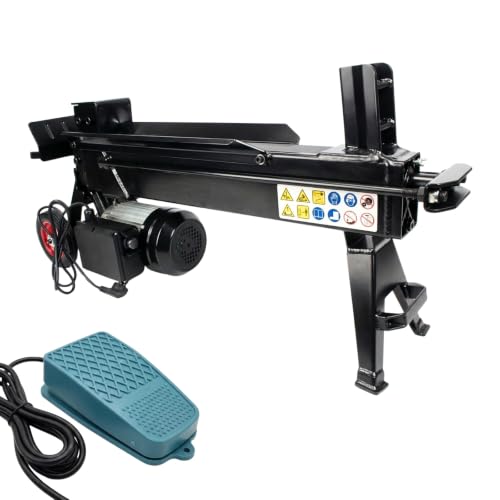
ROCKCUB 7 Ton Electric Log Splitter with Foot PedalBest Foot Pedal ControlROCKCUB 7 Ton Electric Log Splitter with Foot Pedal7 tonsListed as 3 HPn/a18 seconds
PowerSmart 6.5 Ton Electric Log Splitter, 15 AmpBest ValuePowerSmart 6.5 Ton Electric Log Splitter, 15 Amp6.5 tons15 A induction, 3450 rpm20 in long, 10 in diameter20 seconds

An electric log splitter swaps a pull-cord engine for a motor you plug into the wall. That removes the carburetor, the fuel and most of the noise, and it makes the machine something you can run in a garage doorway. The catch is that a household outlet caps how much power the motor can draw, so the headline tonnage on the box has to be read with that ceiling in mind.

This guide explains how hydraulic and flywheel splitters make force, why a ton rating means different things on each, and which specs predict whether a machine will stall on knotty wood. Start with the picks above for the short list, then use the reviews below to match log length, diameter and cycle time to your own woodpile.

Before you buy

6 Criteria to Look For Before Buying a 10-Ton Electric Log Splitter

  1. 01

    Rated tons versus real force

    On a hydraulic splitter, tonnage equals cylinder area times system pressure, so a ton rating is a physical figure you can compare. On a kinetic splitter the force is a short impact from the flywheels, so the 10 ton on the box is a manufacturer equivalent that has no standard test behind it. Treat a kinetic 10 ton as roughly competitive with a lower rated hydraulic machine on seasoned wood, and do not expect it to push through a stalled knot. A common mistake is comparing a flywheel 10 ton directly to a hydraulic 10 ton. In this lineup the BILT HARD and SuperHandy are true 14 ton hydraulic ratings, while the FORESTWEST and Ogracwheel are kinetic claims.

  2. 02

    Log diameter and length limits

    Capacity limits decide whether a machine is usable at all, regardless of tonnage. Standard firewood rounds from a 16 in bar saw are often 12 to 16 in across, and a splitter that stops at 10 in forces you to pre-split with a maul. Length matters for stoves: 16 in is a typical stove length, while 20 in suits many fireplaces. The BILT HARD at 16 in diameter and the Ogracwheel at 15 in cover most rounds. The PowerSmart at 10 in is the tightest limit here, and the FORESTWEST at 12 in sits in between.

  3. 03

    Cycle time and woodpile pace

    Cycle time is the time to push the ram out and return it. A hydraulic machine's cycle depends on pump flow and stroke length, and an extra five seconds per split adds up over a cord, which is roughly 600 pieces for a typical split size. The flywheel machines quote about 2 seconds, the SuperHandy states 16 seconds, the ROCKCUB 18 seconds and the PowerSmart 20 seconds. Faster is not always better, because loading and stacking will cap your real pace anyway. If you split a couple of cords a year, a 20 second cycle is perfectly workable.

  4. 04

    Circuit and cord limits

    A standard 15 A household circuit supplies about 1,800 watts, and a motor at that draw leaves no room for another load on the same breaker. The Ogracwheel pulls 16 A, which is at the edge, while the FORESTWEST lists 13.6 A and the hydraulic machines list 15 A. Use a short, heavy extension cord, ideally 12 gauge and under 50 ft, because voltage drop on a thin cord makes a motor run hot and stall. Never plug the machine into a cord that also feeds other tools. A tripped breaker midway through a split is the most common first-day problem for new owners.

  5. 05

    Wood species and moisture

    Splitting resistance depends on species, moisture and grain. Seasoned straight-grained ash, maple, birch and pine split easily, while green elm, sycamore and knotty oak can defeat a small machine. Hydraulic machines push through slowly and can usually finish a hard split, while a flywheel machine either splits on the blow or needs repeated strikes. If you cut green wood and split it the same day, favor a hydraulic unit such as the BILT HARD or SuperHandy. If you split seasoned rounds, the FORESTWEST and Ogracwheel are faster.

  6. 06

    Controls, stance and safety

    Two-hand controls are a safety feature because they keep both hands away from the wedge while the ram moves. The BILT HARD uses two-hand operation, and the ROCKCUB uses a pedal plus a lever that reduces bending but needs a firmer habit of hand placement. Stable footing matters as much as controls: a splitter on soft ground can shift during a split. Wear eye protection, gloves without loose cuffs and boots with a toe cap, and clear the area of bystanders. Never reach to clear a stuck log while the motor is powered.

Detailed reviews

The 6 best 10-ton electric log splitters, explained

01
BILT HARD 14 Ton Electric Hydraulic Log Splitter
14-ton rated15 A, 1800 W motor20 x 16 in log1.45 gal reservoir
Check price on Amazon
Best for: Homeowners who split seasoned hardwood rounds up to 16 in across and want the most capacity a 120 V outlet can support.

This is a classic horizontal hydraulic splitter: a motor turns a pump, the pump pushes oil into a cylinder, and the cylinder drives the ram and wedge into the log. The two-stage pump is the feature that matters. It moves the ram quickly at low pressure while the wedge is still traveling, then shifts to high pressure when the wood resists, which is how a 15-amp motor can approach a 14-ton rating without a huge cycle time.

The 16 in diameter capacity is the largest in this roundup, and the 20 in log length covers standard fireplace and stove lengths. That makes it the one to buy if you cut rounds with a full-size chainsaw rather than a pole saw. Against the PowerSmart 6.5 Ton, which tops out at 10 in diameter, it simply fits rounds the smaller machine cannot accept, and against the SuperHandy it gains 2 in of diameter for a similar motor.

Ownership is typical hydraulic work. Fill the 1.45 gal reservoir to the mark with AW32 or equivalent hydraulic oil before first use, check the level each season, and replace the oil every couple of years. The 10 in wheels roll over lawn better than the 8 in wheels on the SuperHandy, and the support leg lets you work at a comfortable height on a stand. Expect a slower cycle than the flywheel machines in this guide, and treat the 14-ton figure as a rating of the hydraulic system rather than a promise it will push through every knot.

What works

  • Largest log diameter capacity in this lineup at 16 in
  • Two-stage pump keeps ram speed up while building force
  • Ten inch wheels roll easily over grass and gravel
  • Hydraulic force does not drop on tough, knotty rounds

Watch out for

  • Slower cycle than either flywheel splitter in this guide
  • Hydraulic oil is a separate purchase and needs periodic checks
  • Newer listing, so long term durability is still an early signal

Spec sheet

Rated force
14 tons
Motor
15 A, 1800 W
Pump
2-stage hydraulic
Max log
20 in long, 16 in diameter
Reservoir
1.45 gal
Wheels
10 in transport wheels
Controls
Two-hand operation
02
SuperHandy 14 Ton Electric Hydraulic Log Splitter
14-ton rated10.5 GPM gear pump16 s cycle126 lb
Check price on Amazon
Best for: Buyers who want a well documented hydraulic machine and mostly split rounds under 14 in across.

SuperHandy publishes more of the hydraulic spec sheet than most brands in this category, and that transparency is part of the appeal. The pump is a two-stage 10.5 GPM gear pump, driven by an induction motor with copper windings. An induction motor runs cooler and quieter than the brushed universal motors on cheaper tools and tolerates repeated start and stop cycles, which is exactly the duty a log splitter imposes.

The quoted 16 second cycle is a real figure you can plan with: a few hundred pounds of firewood an hour is realistic. Compared with the BILT HARD 14 Ton it is similar in motor and tonnage but takes 2 in less log diameter at 14 in, and it rolls on 8 in wheels rather than 10 in. Compared with the ROCKCUB at 18 seconds it is slightly quicker, and it is much slower than a flywheel machine with a 2 second cycle. The stated 65 dB operating noise is a manufacturer figure, so treat it as a rough indicator that this is quieter than a gas unit rather than a measured value.

At 126 lb it is portable but not light, so plan for a ramp or a second person if your woodpile is down a slope. Hydraulic fluid is not included, and AW32 is the grade the maker recommends. It can sit on the ground or on a workbench, which is a real advantage for people who dislike bending to load rounds.

What works

  • Induction motor with copper windings suits repeated start cycles
  • Published 10.5 GPM two-stage pump is easy to compare
  • Quoted 16 second cycle is quicker than the other hydraulic picks
  • Works on the ground or on a bench for easier loading

Watch out for

  • Eight inch wheels struggle in soft ground at 126 lb
  • Fourteen inch diameter limit rules out the biggest rounds
  • Hydraulic fluid is not in the box and must be bought first

Spec sheet

Rated force
14 tons
Motor
15 A, 1800 W induction
Pump
2-stage, 10.5 GPM gear pump
Cycle time
16 seconds
Max log
20 in long, 14 in diameter
Weight
126 lb
Wheels
8 in transport wheels
03
FORESTWEST 11056 10 Ton Kinetic Electric Log Splitter
10-ton class2 HP, 13.6 ADouble flywheel16 x 12 in log
Check price on Amazon
Best for: Anyone splitting seasoned softwood and straight-grained hardwood who values speed and near zero maintenance.

A kinetic splitter does not work like the hydraulic machines above. The motor spins two heavy flywheels up to speed, and a clutch releases that stored energy into a rack that throws the wedge forward in a fraction of a second. Because the force arrives as a quick blow rather than a sustained push, the 10 ton figure on the box is a marketing equivalent, not a hydraulic measurement.

What you get in exchange is speed and simplicity. With no pump, hoses, seals or oil, there is nothing to leak in cold weather and very little to service, which suits the listing's claim about working at low temperatures. Compared with the 14 ton hydraulic machines it cuts a full round in a couple of seconds, but its 12 in diameter limit is smaller than the BILT HARD at 16 in and the Ogracwheel kinetic at 15 in. The 13.6 A draw leaves slightly more headroom on a shared circuit than the 16 A flywheel units.

Ownership is mostly about wood selection. Seasoned, straight-grained splitting wood like ash, maple or dry pine is where a flywheel machine shines. Knotty or green rounds may need a second pass, and a stalled wedge cannot be pushed through the way a hydraulic ram can. Keep the flywheel guard and wedge clean, lubricate the rack per the manual, and always use a stable surface, since the blow transmits a lot of shock to the frame.

What works

  • Flywheel drive splits a round in about two seconds
  • No hydraulic oil, hoses or pump seals to maintain
  • Lower 13.6 amp draw leaves more headroom on a shared circuit
  • Works in cold weather with no fluid to thicken

Watch out for

  • Ton rating is an equivalent claim, not a sustained hydraulic force
  • Twelve inch diameter limit is the smallest of the capable picks
  • Knotty or green wood may need more than one strike

Spec sheet

Force class
10 tons (kinetic)
Motor
2 HP, 13.6 A
Drive
Double flywheel, no hydraulics
Max log
16 in long, 12 in diameter
Mobility
Large wheels and handles
Fluid
No hydraulic oil
04
Ogracwheel 10 Ton Double Flywheel Electric Log Splitter
10-ton class2 HP, 16 A2 s cycle18.5 x 15 in log
Check price on Amazon
Best for: Buyers who want flywheel speed but need to split rounds up to 15 in in diameter.

The Ogracwheel uses the same double flywheel idea as the FORESTWEST but with a larger motor current and a bigger working envelope. A 16 A draw is close to the limit of a standard 15 A household circuit, so this machine should have its own outlet and a short, heavy extension cord if you need one. The reward is capacity: 15 in of diameter against the FORESTWEST at 12 in, and 18.5 in of length against 16 in.

The low-profile bed is a practical ergonomic point. Because the rack and wedge sit close to the ground, you can roll a heavy round onto the bed instead of lifting it, which matters when splitting 15 in rounds that can weigh well over 50 lb. The stated 2 second cycle matches the FORESTWEST, so the difference between them is size and electrical load, not speed. Other listings in the same category share very similar specs under different brand names, so compare warranty and support terms before you assume the lowest listed price is the better deal.

Maintenance is light. Check bolts and the flywheel belt or clutch condition, keep the rack lubricated as directed, and clear bark and chips from under the bed. Use the wood guidance for any kinetic machine: seasoned rounds split best, and a round with a big branch knot is a better candidate for a hydraulic unit such as the BILT HARD.

What works

  • Fifteen inch diameter capacity beats the other kinetic pick
  • Low profile bed lets you roll heavy rounds into position
  • Two second cycle keeps a large woodpile moving
  • No hydraulic fluid, so nothing to top up or replace

Watch out for

  • Sixteen amp draw nearly fills a standard 15 amp circuit
  • Ton figure is a kinetic equivalent and not a sustained force
  • Premium priced against the larger hydraulic machines here

Spec sheet

Force class
10 tons (kinetic)
Motor
2 HP, 16 A
Drive
Double flywheel
Cycle time
2 seconds
Max log
18.5 in long, 15 in diameter
Design
Low-profile loading bed
05
ROCKCUB 7 Ton Electric Log Splitter with Foot Pedal
7-ton rated28 MPa hydraulics22 in splitting bed18 s cycle
Check price on Amazon
Best for: Splitters who want hands-and-feet control and a dual wedge for kindling and softer wood.

This machine changes the control layout. A foot pedal powers the motor while one hand works the hydraulic lever, so you no longer hold two handles while crouched over the beam. That is easier on the back and keeps one hand free to steady a log, though it also means you must be disciplined about foot placement and never leave a hand near the wedge while the pedal is engaged.

The 7 ton rating is modest and the 28 MPa pressure figure explains why: a small cylinder with high pressure delivers 7 tons without a large bore. Compared with the BILT HARD at 14 tons it will stall sooner on dense rounds, but its 22 in splitting bed accepts longer logs than the 20 in beds on the BILT HARD and SuperHandy. The included cross wedge turns a round into four pieces in one pass, which is a real time saver when you are making kindling or splitting soft species.

The motor is listed as 3 HP, but a plug-in motor on a 120 V circuit is limited by amperage, so read that as a marketing horsepower figure and judge the machine by its 7 ton rating and cycle time. Keep an eye on oil level and fittings, because a high-pressure small system shows leaks quickly. Wedge swaps are tool-free according to the maker, which makes switching between splitting and kindling work fast.

What works

  • Foot pedal frees a hand and reduces bending at the beam
  • Tool-free swap between standard and four-way wedge
  • Twenty-two inch bed takes longer logs than the 14 ton picks
  • High pressure system keeps the cylinder compact and light

Watch out for

  • Seven ton rating stalls earlier on dense, knotty hardwood
  • Listed horsepower is a marketing figure, not outlet-limited power
  • Eighteen second cycle is slower than the SuperHandy

Spec sheet

Rated force
7 tons
Motor
Listed as 3 HP
Hydraulic pressure
28 MPa (over 4000 PSI)
Cycle time
18 seconds
Splitting length
22 in
Wedges
Standard plus 4-way cross wedge
Control
Foot pedal start, hand lever
06
PowerSmart 6.5 Ton Electric Log Splitter, 15 Amp
6.5-ton rated15 A induction motor20 s cycle20 x 10 in log
Check price on Amazon
Best for: Light users with seasoned softwood or small rounds who want the smallest, most affordable electric splitter.

The PowerSmart is the least expensive machine here and also the most compact. A 15 A induction motor at 3450 rpm drives a hydraulic pump for a 6.5 ton rating, and the 37.4 in length means it fits against a shed wall or in a car trunk. For people who split a few dozen seasoned softwood rounds a year, it removes most of the chore of a maul without the cost of a larger machine.

The tradeoffs are clear when you line it up with the others. Its 10 in diameter limit is well below the BILT HARD at 16 in, the 20 second cycle is the slowest listed, and the lower tonnage means oak or hickory rounds with knots will stall it. It is best at pine, poplar, birch and cleanly seasoned maple, split at around 10 in across or less. It is also a sensible secondary machine if you already own a larger splitter and want a light one for kindling.

Upkeep is simple. Check the oil level, keep the cylinder rod clean so the seal lasts, and store it level so the oil does not migrate. The 2 year warranty is stated clearly, which is helpful on a low priced machine whose long term durability is hard to judge from the spec sheet alone.

What works

  • Most affordable pick in this roundup
  • Compact 37.4 in body fits tight storage and car trunks
  • Induction motor suits repeated start and stop duty
  • Two year warranty is clearly stated by the brand

Watch out for

  • Ten inch diameter limit excludes many standard rounds
  • Twenty second cycle is the slowest in this lineup
  • Six and a half tons stalls on knotty oak and hickory

Spec sheet

Rated force
6.5 tons
Motor
15 A induction, 3450 rpm
Cycle time
20 seconds
Max log
20 in long, 10 in diameter
Size
37.4 x 10.6 x 18.1 in
Warranty
2 years

Spec sheet decoder

What the numbers on the box really mean

The specs manufacturers lead with, translated into what they tell you about real-world performance.

Rated tons (hydraulic)

The rated force a cylinder can produce, equal to pressure multiplied by piston area, with a ton being 2,000 pounds. A larger bore at the same pressure gives more tons, and a smaller bore needs more pressure for the same result.

Watch forA rating tells you peak force, not whether a weak motor can sustain it. A 15 A motor limits real throughput, so the 14 ton BILT HARD and SuperHandy rely on the two-stage pump to approach their rating.

Kinetic ton equivalent

A flywheel splitter stores energy in rotating mass and releases it in a short blow. Because it is an impact rather than a steady push, comparisons to hydraulic tons are estimates with no common test.

Watch forListings for the FORESTWEST and Ogracwheel claim 10 tons, but a clean, seasoned round is what that claim assumes. Ask whether the machine will split your wood rather than relying on the number.

Motor HP and amps

Horsepower on a plug-in tool is a marketing figure, while amps tell you the actual electrical draw. A 15 A motor at 120 V draws about 1,800 watts, which is roughly 2.4 electrical horsepower before losses.

Watch forThe ROCKCUB lists 3 HP, yet it still plugs into a 120 V outlet limited by the breaker. Judge machines by amps and tonnage, and read inflated horsepower as a sales number.

Cycle time

The seconds for the ram to extend and return. It depends on pump flow in gallons per minute and the length of the stroke, and a two-stage pump shortens it by moving fast before the wedge meets resistance.

Watch forQuoted cycles are measured with an empty ram. Under load a hydraulic cycle is longer, so expect the SuperHandy's 16 second figure to stretch on large rounds.

Maximum log size

The longest and widest round the beam and wedge can accommodate. Length is limited by the beam and ram stroke, while diameter is limited by wedge height and by whether the machine has the force to finish the split.

Watch forCapacity is often a physical limit rather than a power limit. A round that fits the PowerSmart at 10 in may still stall it if it is dense, so use the diameter as a maximum for ideal wood.

Methodology

How We Evaluated These 10-Ton Electric Log Splitters

Force type and honest ratings

We separated true hydraulic tonnage from kinetic equivalents, since the two cannot be compared directly. The BILT HARD and SuperHandy at 14 tons were treated as the strongest, the ROCKCUB at 7 tons and PowerSmart at 6.5 tons as light duty, and the kinetic machines as speed oriented tools for seasoned wood. We penalized any listing that blurred this distinction.

Capacity against real firewood

We compared stated log length and diameter against standard stove and fireplace lengths and common round sizes. A machine that cannot accept a 12 to 16 in round loses points regardless of rating. The BILT HARD at 16 in and the Ogracwheel at 15 in ranked highest here, and the PowerSmart at 10 in ranked lowest.

Electrical practicality

Every machine here is plug-in, so we looked at the stated amperage and what it means for a standard 15 A circuit. Units at 15 A or below were scored as workable with a good cord, and the 16 A Ogracwheel was marked down for having almost no margin. We also considered whether the brand published a warranty term.

Cycle speed and workflow

We weighed stated cycle times and how the design affects loading. The flywheel machines at about 2 seconds sit at the top, the SuperHandy at 16 seconds leads the hydraulic group, and the PowerSmart at 20 seconds trails. Low beds and foot controls got credit for reducing lifting and bending.

Ownership and support

We considered fluid and service needs, availability of clear specs and warranty terms. Kinetic units avoid hydraulic oil entirely, while the hydraulic ones need periodic oil checks. We favored brands that publish pump and motor details, such as SuperHandy, over listings that give a headline ton rating and little else.

Decision guide

How to Choose the Right 10-Ton Electric Log Splitters

By Log Size and Wood Type

Match the machine to the roundest, densest log you will actually split, not the average one.

Your woodRecommended pickWhy
Large 14 to 16 in rounds, seasoned hardwoodBILT HARD 14 TonLargest 16 in capacity and a 14 ton hydraulic system
Mixed rounds up to 14 in, some knotsSuperHandy 14 TonTwo-stage 10.5 GPM pump finishes tough splits
Seasoned straight-grained rounds up to 15 inOgracwheel Double FlywheelLargest kinetic capacity with a 2 second cycle
Seasoned rounds up to 12 inFORESTWEST 11056Fast flywheel with a lower 13.6 A draw
Pine, poplar and kindling under 10 inPowerSmart 6.5 TonLight duty machine sized for small rounds
Long logs and kindling in one sessionROCKCUB 7 Ton22 in bed plus cross wedge for quick kindling

Green, knotty oak is the hard case. If most of your wood fits that description, only the 14 ton hydraulic machines have a realistic chance.

By Budget

Tiers are relative, since prices move often. Compare the tier first, then check the live price on Amazon.

Budget tierRecommended pickWhat you give up
Most affordablePowerSmart 6.5 TonSmall log diameter and slow cycle
Lower midROCKCUB 7 TonRating is modest, but foot control and 22 in bed help
Mid to upperBILT HARD 14 TonSlower cycle than flywheels, but the most capacity
UpperSuperHandy 14 TonSmaller wheels and 14 in diameter limit
PremiumFORESTWEST 11056Flywheel speed, but 12 in diameter and no hydraulic reserve
Premium upperOgracwheel Double FlywheelHighest electrical draw, but top kinetic capacity

The most expensive machines here are the flywheel units, so a higher price does not mean more splitting force.

Kinetic Flywheel vs Hydraulic Ram

This is the central decision in an electric splitter, because the two mechanisms behave differently on the same log.

Kinetic flywheel

A motor spins two flywheels, and a clutch releases the energy into a wedge in a single fast blow. It has no oil, hoses or pump, so maintenance is minimal and cold weather does not affect it. Its weakness is that force is delivered once, so a knotty round may need repeated strikes and green wood can defeat it. In this roundup the FORESTWEST 11056 and Ogracwheel are kinetic machines.

Hydraulic ram

A motor drives a pump that pressurizes oil to push a cylinder at steady force, so it can keep pushing through a stubborn split. The cost is a slower cycle, hydraulic oil to maintain and seals that can wear over time. The BILT HARD, SuperHandy, ROCKCUB and PowerSmart are hydraulic.

Choose a flywheel machine like the Ogracwheel if you split seasoned straight wood and want speed. Choose a hydraulic one like the BILT HARD if you split knotty, green or large rounds.

By Control Layout and Ergonomics

How you stand and reach for the controls matters over a long session.

PreferenceRecommended pickWhy
Two-hand safety controlsBILT HARD 14 TonBoth hands are away from the wedge during the stroke
Foot pedal and hand leverROCKCUB 7 TonLeaves one hand free to steady the log
Low bed for heavy roundsOgracwheel Double FlywheelRoll large rounds on instead of lifting
Work on a bench or the groundSuperHandy 14 TonDesigned for either position
Compact storagePowerSmart 6.5 Ton37.4 in body fits against a wall
Large wheels over lawnBILT HARD 14 Ton10 in wheels versus 8 in on the SuperHandy

If you have a back problem, prioritize a low bed or a bench-height setup over a few extra tons.

For Firewood for a Wood Stove Specifically

Stove burners cut to a standard length and burn seasoned wood, which shapes the choice.

Look for

A beam that accepts your stove length, usually 16 in, a diameter limit of at least 12 in, and a cycle that lets you split a cord in a weekend. Seasoned wood favors a flywheel machine, while mixed or damp wood favors hydraulics.

In this comparison

The BILT HARD 14 Ton is the all-rounder because it handles 16 in rounds with steady hydraulic force. If your wood is well seasoned, the FORESTWEST 11056 or Ogracwheel will finish the same pile faster. The PowerSmart suits a small stove burning mostly softwood.

Season wood at least a year before burning, which also makes every machine here work better.

When to Spend More

Extra spend only pays off if it buys capacity or speed you will actually use.

Spend more if

You split more than a few cords a year, cut rounds above 12 in or work with green hardwood. In that case the BILT HARD 14 Ton or SuperHandy 14 Ton justifies its cost with real hydraulic force. Spend more on the Ogracwheel if you split a lot of seasoned wood and value a 2 second cycle.

Save if

You split a few dozen rounds a year of softwood or small seasoned pieces. The PowerSmart 6.5 Ton or ROCKCUB 7 Ton does that job without the cost of a 14 ton machine. Also save if you already own a bigger splitter and want a light one for kindling.

If you heat your home with wood, consider whether a gas hydraulic splitter, which is outside this guide, is a better long term fit.

Ownership

Maintenance schedule

The upkeep that decides whether this machine lasts two seasons or ten.

TaskIntervalWhy it matters
Check hydraulic oil levelBefore each seasonLow oil lets the pump suck air, which causes slow rams and a spongy stroke. Use the grade the maker specifies, such as AW32 for the SuperHandy.
Change hydraulic oilEvery 2 years or after heavy useOil absorbs moisture and fine metal over time, which wears the pump and valve. Fresh oil keeps cycle time consistent.
Lubricate flywheel rack and guidesEvery few hours of useThe rack takes a hard impact on every strike. Grease reduces wear and keeps the wedge moving freely on the FORESTWEST and Ogracwheel.
Inspect hoses, fittings and ram sealEach seasonA weeping fitting loses pressure and sprays oil. Catching it early on a small high-pressure system like the ROCKCUB prevents a larger repair.
Clean the beam and wedgeAfter each sessionBark, sap and chips build up and slow the wedge. A clean beam also lets you see cracks or loose bolts before they cause a failure.
Check cord and plugBefore each useA damaged or thin cord causes voltage drop and heat. Replace it rather than tape it, especially on the 16 A Ogracwheel.

FAQ

Frequently Asked Questions

Is a kinetic 10 ton splitter as strong as a hydraulic 10 ton?

Not in a measurable sense. A hydraulic ton is a sustained force, while a kinetic splitter delivers a short impact, so the two numbers do not map one to one. On seasoned, straight-grained wood a flywheel machine can match a lighter hydraulic unit and be faster. On knotty or green rounds a hydraulic machine such as the BILT HARD will usually finish a split that a flywheel cannot.

How much should I budget for an electric log splitter?

Pricing runs from the most affordable PowerSmart class through mid-range hydraulic machines to premium flywheel units, and it moves frequently. The best way to decide is to price by capacity first, not by tonnage. A cheaper machine with a 10 in limit is false economy if your rounds are 14 in. Check the current price on Amazon before you decide.

What maintenance does an electric log splitter need?

Hydraulic machines need oil level checks each season, an oil change every couple of years, and an inspection of hoses and seals. Kinetic machines need rack lubrication and bolt checks but no oil. Both types need a clean beam, a good cord and dry storage. Compared with a gas splitter, there is no carburetor, spark plug or fuel stabilizer to manage.

Can I plug a splitter into any outlet?

Use a dedicated 15 A circuit if you can. A motor drawing 15 A fills a standard circuit, and the 16 A Ogracwheel is at the limit, so sharing the breaker with a freezer or lights risks tripping it. If you need an extension cord, use a short 12 gauge cord. A thin cord causes voltage drop and can overheat the motor.

Is it safe to use a splitter indoors or in a garage?

Electric models produce no exhaust, so carbon monoxide is not a concern, unlike gas machines. They still throw wood and need space, so open the garage door and keep the floor clear of debris. The SuperHandy states it can be used inside, but you still need good footing and eye protection. Never use an electric machine in rain or on wet ground because of shock risk.

Do I need to season wood before splitting?

You can split green wood, and it is often easier to split green because the fibers are wetter. But green wood is heavier and can be stringy, which hurts flywheel machines in particular. For burning, wood should be dried before use, typically for around a year, to reduce smoke and creosote. A hydraulic machine handles green rounds better than a kinetic one.

Bottom line

The short version

Browse more 10-ton electric log splitterson Amazon →
James Miller, Lead Machine Editor

About the author

James Miller

Lead Machine Editor, MachineFanatic

James Miller leads MachineFanatic's buying guides, turning spec sheets, manuals and owner feedback into clear verdicts on power tools, outdoor power equipment, shop machines and kitchen machines.

More from James →

Keep reading

Related guides