
Amazon affiliate links - we earn a commission.Affiliate disclosure

Buying guide · 12 min read · Updated 2026-11-07

Best 100 Watt RV Solar Panels (2026)

Six 100 watt 12V solar panels and starter kits for RVs compared on cell type, size, controllers and weatherproofing so your house battery stays topped up.

James MillerBy James MillerLead Machine Editor6 machines comparedSpec-sheet verified
Best 100 Watt RV Solar Panels

At a glance

Our top picks

Side by side

Spec comparison

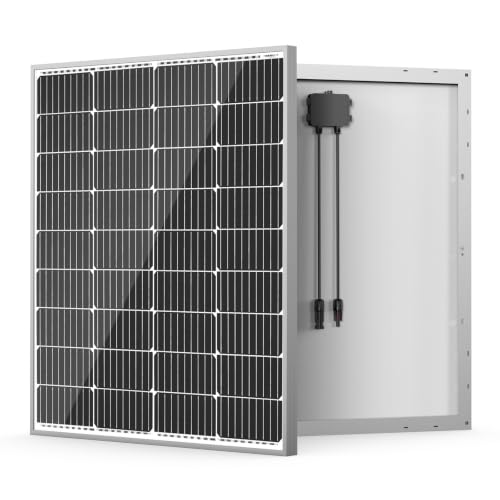
A single panel of this size is the classic entry point for keeping a camper battery from going flat, running a vent fan, charging phones and powering lights. It is not meant to run big appliances, and it works best as a trickle supply that refills what small loads take out.

What changes the result is not the label on the panel but everything around it: the cell type, the size on your roof, the charge controller and the wiring. This comparison looks at those details.

Before you buy

6 Criteria to Look For Before Buying a 100 Watt RV Solar Panel

  1. 01

    Cell type and efficiency

    The Renogy N-type and the 18BB panel claim 25 percent, while the HQST claims 23 percent and the Voltset 23 to 25. On a 100 watt panel that two point gap is modest, but N-type cells also degrade more slowly and cope with heat better. On a hot roof that matters over a ten year ownership.

  2. 02

    Footprint on the roof

    The HQST is a squarish 31.8 by 27.5 inches, while many 100W panels are long and narrow. A roof with vents, an air conditioner and a TV antenna leaves odd gaps. Measure the free space before buying, and remember to leave a few inches around each panel for airflow. Shade from a vent or an antenna can drop a small panel's output by far more than the shaded area suggests, so site it away from obstructions.

  3. 03

    PWM versus MPPT controllers

    The Renogy, Topsolar and Voltset kits ship with PWM-style controllers, which hold the panel at battery voltage and waste headroom. MPPT recovers roughly 20 to 30 percent more energy, most in cold or low light. For a single 100W panel the difference is small, but plan for MPPT if you will add panels.

  4. 04

    Controller amp rating

    A 100W panel on a 12V system produces about 6 amps at best, so a 20A controller like the Voltset's is enough. The 30A units in the Renogy and Topsolar kits leave room for a second panel. Choose the controller for your future array, not only the panel you own today. Wiring losses add up too, so keep the cable between the panel and controller short and use a heavier gauge when the run is long.

  5. 05

    Weatherproofing

    The unbranded 18BB panel lists an IP68 junction box, while the HQST lists IP65. Water ingress in the junction box is the commonest failure on RV roofs. Pair any panel with sealant on the mounting feet and an annual look at the connectors. Panels also need a free airflow gap beneath them, since a hot panel loses a little output for every degree above its rated temperature.

  6. 06

    What 100 watts really delivers

    The Renogy kit cites about 500 watt-hours a day on average. That runs LED lights, a vent fan and phone charging, but not a residential fridge. In winter or in shade expect much less. If your daily use exceeds that, you need more panels.

Detailed reviews

The 6 best 100 watt rv solar panels, explained

01
Renogy 100 Watt N-Type 16BB Solar Panel
100W 12VN-type 16BB25% efficiencySmaller frame
Check price on Amazon
Best for: RV owners who want a proven brand and a modern N-type cell.

Renogy's panel uses A+ grade N-type cells with a 16 busbar layout and states 25 percent conversion efficiency. N-type silicon ages more slowly than the older P-type cells, so output holds up better over the years on a hot RV roof.

The maker lists this generation as 11 percent smaller and 8 percent lighter than the previous one at the same 100 watt rating, which helps on a crowded roof with vents and an air conditioner. Compared with the HQST at 23 percent efficiency, it squeezes a bit more watts from the same area, though both are rated 100W.

A bare panel needs a charge controller, mounting hardware and cable, so budget for them. The advantage of the Renogy name is easy access to compatible controllers, brackets and replacement support, which matters in year four when a connector corrodes.

What works

  • N-type cells hold output over the years
  • 25 percent efficiency squeezes more from small space
  • Smaller and lighter than its predecessor
  • Widely supported brand and accessories

Watch out for

  • Panel only, so a controller is a separate purchase
  • Costs more than generic 100W panels

Spec sheet

Rated power
100W for 12V systems
Cell type
N-type, 16BB, A+ grade
Efficiency
25%
Size change
11% smaller, 8% lighter than predecessor
Use
12V battery systems
02
HQST 100W 12V 9BB Monocrystalline Panel
100W 12V23% efficiency31.8 x 27.5 inIP65
Check price on Amazon
Best for: RVs with a small or awkward roof footprint.

The HQST uses a square footprint of 31.8 by 27.5 inches, which the maker says is 11 percent smaller than a traditional panel. That squarer shape fits roof gaps that a long narrow panel cannot, and it is the clearest reason to pick it.

It uses 166 millimetre Grade A+ monocrystalline cells with 100 percent electroluminescence testing, and lists 2400 pascal wind and 5400 pascal snow load ratings. Those load figures are the same ones the Renogy kit lists, so mechanical strength is a wash. Its 23 percent efficiency trails the Renogy N-type by two points.

The IP65 junction box and connectors stand up to rain, but check the seal annually on a roof that sees heat and UV. It suits an RV with a limited, awkward roof footprint.

What works

  • Square 31.8 by 27.5 inch footprint fits tight gaps
  • Lists 2400Pa wind and 5400Pa snow loads
  • IP65 connectors and junction box
  • Grade A+ cells with full EL screening

Watch out for

  • 23 percent efficiency trails N-type panels
  • Panel only, with no controller included

Spec sheet

Rated power
100W, 12V
Size
31.8 x 27.5 x 1.18 inches
Efficiency
23%
Loads
2400Pa wind, 5400Pa snow
Rating
IP65 connectors and junction box
03
Renogy 100W 12V Starter Kit with 30A PWM Controller
100W30A PWM500Wh per day avgUL 61730
Check price on Amazon
Best for: First-time installers who want matched parts and paperwork.

This is a complete kit, with a monocrystalline panel and a 30 amp PWM charge controller. The maker says it generates about 500 watt-hours a day on average, which depends on sun hours and tilt, so use it as a best case and not a promise.

It lists UL 61730 and IEC 61215 certification, plus wind and snow load ratings, which makes it the best-documented choice in the group. A PWM controller is cheaper than an MPPT unit but wastes some panel voltage, so it suits a single 100 watt panel on a small system and not a bigger array later.

The kit is the lowest-risk purchase for a first RV solar install, because the parts match and the instructions are clear. Compared with the Topsolar kit it carries better paperwork and brand support. If you plan to grow past 200 watts, buy an MPPT controller instead.

What works

  • Matched panel and 30A PWM controller
  • UL 61730 and IEC 61215 certification listed
  • Well-documented wind and snow ratings
  • Brand support for parts and manuals

Watch out for

  • PWM controller wastes some panel voltage
  • Not ideal if you plan to expand the array

Spec sheet

Rated power
100W, 12V
Controller
30A PWM
Daily energy claim
About 500Wh average
Certification
UL 61730, IEC 61215
Coverage
10 year material and workmanship plan listed
04
Topsolar 100W 12V Monocrystalline Kit with 30A Controller
100W30A PWMZ bracketsCable included
Check price on Amazon
Best for: DIY buyers who want brackets, cable and controller in one box.

Topsolar bundles the panel with four Z mounting brackets, a pair of solar cables and a 30 amp PWM controller that accepts 12V and 24V systems. The brackets are the standout, since many bare panels leave you to source mounting parts.

The controller lists protection against overcharge and over-voltage, which is standard for PWM units. The 24V compatibility gives a little flexibility if you later wire two panels in series, but PWM efficiency still limits that approach.

Compared with the Renogy kit, it offers fewer certifications and less brand history, so keep the receipt and photograph the label. It suits a buyer who wants everything in one box and will do a basic roof install.

What works

  • Includes four Z brackets and a cable pair
  • 30A controller accepts 12V and 24V systems
  • Overcharge and over-voltage protection listed
  • Complete kit for cabin, boat or RV

Watch out for

  • Less documentation than the Renogy kit
  • PWM controller limits later expansion

Spec sheet

Rated power
100W, 12V
Controller
30A PWM, 12V/24V
Brackets
Four Z mounting brackets
Cable
Red and black solar cable pair
Uses
RV, cabin, boat, backup
05
Voltset 100W 12V Kit with 20A Smart Controller
100W20A controllerDigital display23 to 25% cells
Check price on Amazon
Best for: Owners who want to see live voltage and current.

Voltset gives you a controller with a digital display showing voltage, current and battery status, which is useful for seeing what the panel actually delivers. It runs bulk, float and trickle charging stages, the standard for protecting a lead-acid battery.

The panel lists 23 to 25 percent cell efficiency, a range that suggests variation between production batches. The 20 amp controller is smaller than the 30 amp units in the other kits, which is plenty for one 100 watt panel but leaves no room to expand.

The display makes troubleshooting easier, because you can see whether a loose connector is dropping output. It suits an owner who likes to watch the numbers, and it is a less sensible pick if you plan a bigger array.

What works

  • Digital display shows voltage and current
  • Bulk, float and trickle stages protect the battery
  • A+ monocrystalline cells
  • Waterproof panel build listed

Watch out for

  • 20A controller leaves little room to expand
  • Efficiency is listed as a range

Spec sheet

Rated power
100W, 12V
Controller
20A smart controller
Display
Voltage, current, battery status
Cells
A+ monocrystalline, 23 to 25%
Charging
Bulk, float and trickle modes
06
100W 18BB N-Type Panel with IP68 Junction Box
100W18BB N-type25% efficiencyIP68
Check price on Amazon
Best for: Wet or coastal RV roofs that need extra weather protection.

This unbranded N-type panel offers 18 busbars and a stated 25 percent efficiency, with an IP68 certified junction box that resists dust and immersion. IP68 is the tougher of the weather ratings, ahead of the IP65 on the HQST.

It uses cured solar glass with a weather-resistant surface, and the 18BB design helps current flow around small cracks. Those details are the reason to pick it for a rig that sits in coastal or wet climates.

The weakness is the label: with no named maker, warranty and support are uncertain. Check the seller's return window, and match it with a controller of your choice. It suits a boat-style, wet-weather install where water ingress is the main risk.

What works

  • IP68 junction box beats IP65 on rivals
  • N-type cells with 18 busbars
  • Cured solar glass surface
  • 25 percent efficiency stated

Watch out for

  • Unbranded with an uncertain warranty path
  • Panel only, with no controller or brackets

Spec sheet

Rated power
100W
Cell type
N-type, 18BB
Efficiency
25%
Rating
IP68 junction box
Surface
Cured solar glass

Spec sheet decoder

What the numbers on the box really mean

The specs manufacturers lead with, translated into what they tell you about real-world performance.

100W rating

Output under laboratory test conditions. Real output on a roof is often 60 to 80 percent of that.

Watch forThe Renogy kit's 500Wh per day figure is an average, not a guarantee. Always compare the 100W rating against your own sun hours.

N-type vs P-type

N-type silicon ages more slowly and handles heat better. P-type is older and cheaper.

Watch forThe Renogy and 18BB panels are N-type, while HQST lists monocrystalline cells.

Busbars (BB)

The thin conductors on each cell. More busbars shorten current paths and help with micro-cracks.

Watch forThe Renogy lists 16BB, the unbranded N-type 18BB and the HQST 9BB.

IP rating

Ingress protection against dust and water. IP65 is jets of water, IP68 is immersion.

Watch forThe unbranded panel lists IP68, HQST lists IP65.

Wind and snow loads

Mechanical ratings in pascals that describe how much pressure the frame withstands.

Watch forHQST and the Renogy kit both list 2400Pa wind and 5400Pa snow.

Methodology

How We Evaluated These 100 Watt RV Solar Panels

Cell technology

We read the stated cell type and efficiency. The Renogy and the 18BB panel at 25 percent N-type led, while HQST at 23 percent trailed. Unstated cell data would have scored low. Panel data was read from listings and not measured.

Roof fit

We compared dimensions where the listing gave them. The HQST at 31.8 by 27.5 inches is the clearest square footprint. Panels with no dimensions were scored neutrally.

Kit completeness

We credited what comes in the box. Topsolar includes four brackets and cable, and the Renogy kit includes a 30A controller. Bare panels needed more purchases.

Weather and certification

We read IP ratings and certifications. The Renogy kit lists UL 61730 and IEC 61215, and the 18BB panel lists IP68. Missing certifications lost points.

Support and risk

We weighed brand history and owner feedback patterns. Renogy scored highest, and unnamed labels scored lowest. Keep receipts for every panel.

Decision guide

How to Choose the Right 100 Watt RV Solar Panels

By Roof Situation

SituationPickWhy
Tight, awkward roof gapHQST 100WSquare 31.8 by 27.5 inch footprint
Plenty of roof, want best cellsRenogy 100 Watt N-Type25 percent N-type cells
Wet or coastal climate100W 18BB N-type panelIP68 junction box
First install, want a kitRenogy 100W Starter KitPanel, 30A controller and paperwork
Need brackets and cableTopsolar 100W kitFour Z brackets and cable pair
Want live readoutVoltset 100W kitDigital display controller

By Budget

TierPickWhy
Lowest costTopsolar 100W kitEverything in one box
LowVoltset 100W kitController with display
Low to middleHQST 100WCompact bare panel
Middle100W 18BB N-type panelN-type and IP68
UpperRenogy 100W Starter KitPaperwork and support
HighestRenogy 100 Watt N-TypeBest cell and brand

Bare Panel vs Kit

Bare panel

The Renogy N-type, HQST and 18BB panel arrive without a controller. You choose an MPPT controller and cable, which gives better efficiency and room to grow.

Complete kit

The Renogy, Topsolar and Voltset kits bundle a controller. They simplify the install, but the PWM controllers limit later growth.

Expanders should buy a bare panel and an MPPT controller, while simple installs should buy the Renogy kit.

Controller Choice

PreferencePickWhy
Room for a second panelRenogy 100W Starter Kit30A controller
12V and 24V flexibilityTopsolar 100W kitController accepts both
See live numbersVoltset 100W kitDigital display
Choose my own MPPTRenogy 100 Watt N-TypeBare N-type panel
Roof with moisture risk100W 18BB N-type panelPair with a sealed controller
Tight spaceHQST 100WCompact panel

For Keeping a Battery Topped Up Specifically

Look for

Enough daily watt-hours to cover standby loads, plus a controller with float stage. A fridge, a fan and lights can use more than 100 watts of solar supplies in poor sun.

In this comparison

The Renogy Starter Kit's 500Wh per day claim and bulk, float charging suit a vent fan and lights. For a 12V fridge, plan on a second panel.

When to Spend More

Spend more if

You plan a long ownership and a larger array. The Renogy N-type panel with a separate MPPT controller is the stronger base.

Save if

You camp a few weekends a year for lights and phones. The Topsolar kit covers that for less.

Ownership

Maintenance schedule

The upkeep that decides whether this machine lasts two seasons or ten.

TaskIntervalWhy it matters
Wash the panelEvery 2 to 3 monthsDust and pollen can cut output by several percent. Rinse with water and a soft cloth. Avoid pressure washers, which can force water past the junction box seal.
Check roof sealantEach seasonHeat and UV crack sealant around mounting feet. Reseal before water finds its way in.
Inspect connectorsEvery 6 monthsCorroded MC4 plugs add resistance and heat. Clean and reseat them.
Check wiring and fusesYearlyChafed cable and loose terminals waste power. Look at every run between panel and controller. Add a fuse near the battery if the kit does not include one.
Watch the battery voltageMonthlyA controller display or meter shows if charging has stopped. It catches failures before the battery is flat.

FAQ

Frequently Asked Questions

Is one 100 watt panel enough for an RV?

For lights, a vent fan and phone charging, yes. For a 12V fridge or heavy use you need two or more panels, because 100 watts delivers only a few hundred watt-hours a day. A useful habit is to add up your daily amp-hours first, then divide by the roughly 25 to 30 amp-hours a single panel puts back on a good day, so you know the gap before you buy.

PWM or MPPT for a 100W panel?

PWM is fine for a single small panel. MPPT recovers 20 to 30 percent more energy and handles bigger arrays, so choose it if you plan to expand. A cheap PWM unit is a perfectly sound choice for a cabin light circuit, while a bigger rig deserves the extra efficiency of MPPT.

Will it work in winter or shade?

Output drops sharply in shade and with low winter sun. Tilting the panel toward the sun and keeping it clean of snow helps. Parking so the panel faces the sun, rather than the camper's nose pointing to the view, is the most underrated gain you can make for free.

What is the difference between N-type and monocrystalline?

N-type is a type of monocrystalline cell that ages more slowly and handles heat better. Most N-type panels are monocrystalline, but not every monocrystalline panel is N-type.

How should I mount it?

Use Z brackets or feet with sealant at each hole, and leave a few inches under the panel for airflow. Never drill without sealing, because leaks are the commonest roof failure.

Do I need a controller?

Yes. A controller protects the battery from overcharge. Even a small panel can damage a battery without one. Pick one with a lithium profile if your house battery is lithium, because a lead-acid charging curve will under-charge it.

Bottom line

The short version

Browse more 100 watt rv solar panelson Amazon →
James Miller, Lead Machine Editor

About the author

James Miller

Lead Machine Editor, MachineFanatic

James Miller leads MachineFanatic's buying guides, turning spec sheets, manuals and owner feedback into clear verdicts on power tools, outdoor power equipment, shop machines and kitchen machines.

More from James →

Keep reading

Related guides