
Amazon affiliate links - we earn a commission.Affiliate disclosure

Buying guide · 14 min read · Updated 2026-11-07

Best 120 Pint Dehumidifiers (2026)

Six 120 pint dehumidifiers compared on honest ratings, crawl space fit, Wi-Fi control and drain options, with a clear pick for each kind of damp space.

James MillerBy James MillerLead Machine Editor6 machines comparedSpec-sheet verified
Best 120 Pint Dehumidifiers

At a glance

Our top picks

Side by side

Spec comparison

Machines at this capacity are built for big basements, garages, crawl spaces and storage buildings. They run long duty cycles, weigh a lot and move a great deal of air, so the questions that matter are about drainage, placement and the truth behind the headline number.

This guide explains how large daily ratings are produced, why crawl space units differ from living space units, and which drain and control features matter in practice. Use the picks above for a quick shortlist, then read the reviews to match a unit to your space.

Before you buy

6 Criteria to Look For Before Buying a 120 Pint Dehumidifier

  1. 01

    The label versus normal conditions

    The hOmeLabs unit states 50 pints as its rating and 120 as a maximum at 95 F and 90 percent humidity. Most other 120 pint units quote only the maximum. In a 60 F basement expect output closer to the normal rating, so size from dampness, not the headline. Ask which number a listing leads with. A hygrometer log over a week will show what your space truly asks for.

  2. 02

    Living space or crawl space

    A freestanding unit like the Kesnos is built for a finished area with a display and sleep mode. The ALORAIR Sentinel HD55S is built for crawl spaces with continuous drain and auto defrost. Putting a living-space unit in a crawl space shortens its life, and the reverse wastes features. Match the unit to where it sits, not to the largest label.

  3. 03

    Drainage and tank size

    A 5 liter tank on the Shinco or Uhome fills within hours of heavy use. Plan a hose to a floor drain with a continuous downhill slope. For a high drain pick a pump model from the larger sizes; none of these six advertises one here. A kinked hose is the commonest cause of an overnight shutoff.

  4. 04

    Humidity target range

    Waykar and Kesnos list 30 to 80 percent, and many units stop at 40. A lower target matters for stored paper, instruments and tools, where 35 to 40 percent protects against rust and mildew. Do not run a living space below 35 percent. Check the range on the spec sheet before you buy.

  5. 05

    Airflow and placement

    The Waykar's 90 degree swing spreads dry air across a wider area. In a long basement place the unit near the center rather than a corner. Keep six to twelve inches clear on all sides. A second smaller unit in a far corner sometimes beats one large machine.

  6. 06

    Energy Star and running cost

    A large unit runs for long hours, so efficiency matters. Waykar, Kesnos, Shinco, Uhome and ALORAIR all cite Energy Star. Verify the model on the EPA list before trusting a listing claim. Running hours also depend on how tight the building is.

Detailed reviews

The 6 best 120 pint dehumidifiers, explained

01
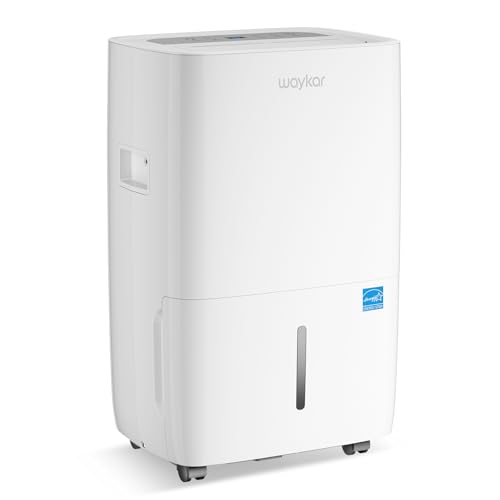
Waykar 120 Pint Energy Star Dehumidifier 6,000 Sq Ft Auto Swing
120 pints at 95 F90 degree swing30 to 80 percentAuto defrost
Check price on Amazon
Best for: A long open basement or garage where airflow coverage and a low humidity target both matter.

Waykar builds its pitch around airflow and range. A 90 degree auto swing louver sweeps dry air across a wider part of the room instead of blowing it at one wall, which helps in a long, open basement where a fixed outlet dries one corner. It also offers a humidity target as low as 30 percent, where many units stop at 40, and that lower end suits stored paper, tools and instruments.

The pint label is stated honestly as 120 pints at 95 F and 90 percent humidity, which means a cool basement will see a fraction. Treat it as a size class. The 6,000 sq ft coverage line is typical for the category, and the listing adds Energy Star certification and auto defrost, a useful feature when the room drops below 65 F and the coil starts to ice.

Compared with the Kesnos, the Waykar offers swing and a wider range but no sleep-mode branding or humidity readout beyond the basics. Compared with the Uhome, it carries a bolder airflow idea and a more detailed range. Ownership is routine: wash the filter, keep a hose to a drain and give the cabinet space to breathe. In a finished space, aim the swing so it does not blow across a desk or a bed.

What works

  • 90 degree auto swing spreads dry air wider
  • 30 to 80 percent target range
  • Auto defrost for cool rooms
  • Energy Star certified

Watch out for

  • Label figure is the hot and wet maximum
  • Swing mechanism adds a moving part

Spec sheet

Label capacity
120 pints at 95 F, 90 percent
Listed coverage
6,000 sq ft
Airflow
90 degree auto swing
Humidity range
30 to 80 percent
Defrost
Automatic
02
hOmeLabs 50 Pint Dehumidifier (Max 120 Pint) 7,000 Sq Ft Wi-Fi
50 pint rated120 max at 95 FWi-Fi app7,000 sq ft
Check price on Amazon
Best for: A buyer who wants a realistic capacity number and phone control.

The hOmeLabs listing does what the others avoid: it puts the normal rating first. The title says 50 pint, with 120 pints as a maximum at 95 F and 90 percent humidity. That is the clearest picture in this guide of how much of the big number is hot-and-wet marketing. In a cool basement, expect work closer to the 50 pint line than the 120.

The 7,000 sq ft coverage claim is the largest here and follows the generous logic of the category, so discount it. The reasons to buy are the Wi-Fi control, which lets you adjust and monitor remotely, and the honest labeling, which makes comparison easier. It is the right unit for someone who wants a realistic picture before spending.

Against the Waykar, the hOmeLabs offers an app and plainer labeling while giving up the swing louver and low-humidity range. Against the Shinco, which also offers Wi-Fi, it is the more cautious label. The app is most useful for noticing a stalled unit, so enable notifications on your phone and keep the manual panel as the fallback. Weigh the long coverage figure against the rating, because dampness decides more than area.

What works

  • Normal 50 pint rating shown first
  • Maximum condition disclosed
  • Wi-Fi app control
  • Large listed coverage for open spaces

Watch out for

  • Real capacity is far below the headline max
  • Coverage claim is generous

Spec sheet

Rated capacity
50 pints per day
Maximum rating
120 pints at 95 F, 90 percent
Listed coverage
7,000 sq ft
Connectivity
Wi-Fi app
Design
Modern, upgraded humidity control
03
Kesnos 120 Pint Energy Star Dehumidifier 6,500 Sq Ft
120 pints6,500 sq ft30 to 80 percentSleep mode
Check price on Amazon
Best for: A finished lower level where you want a readable display and a quieter night setting.

Kesnos gives the panel more attention than most. A front humidity display reads out the room level in real time, a sleep mode dims the lights and quiets the fan, and the target spans 30 to 80 percent like the Waykar. A readable display means you do not need a separate hygrometer to know what the unit is doing.

The listing is Energy Star certified and quotes 6,500 sq ft, a claim larger than the Waykar's. Treat it as optimism; both are 120 pint labels. The display and sleep mode are what separates it. Against the Uhome, the Kesnos has a nicer panel but no stated carbon or filter extra.

If the unit lives in a finished space near a bedroom, the sleep mode is a real convenience. Expect the usual filter care and a hose to a drain, and keep an eye on the display accuracy by comparing it to a separate hygrometer once. A readout is only as good as its sensor, so check it against a hygrometer after the first week and note the offset. Keep the sleep mode for nights and the normal mode for days.

What works

  • Front display shows room humidity
  • Sleep mode dims lights and slows the fan
  • 30 to 80 percent range
  • Energy Star certified

Watch out for

  • Largest coverage claim in the 120 class
  • No pump in the listing

Spec sheet

Label capacity
120 pints per day
Listed coverage
6,500 sq ft
Humidity range
30 to 80 percent
Display
Front humidity readout
Mode
Mirage sleep mode
04
Shinco 120 Pint Energy Star Wi-Fi Dehumidifier 6,000 Sq Ft
120 pints at 95 FWi-Fi5L tankEnergy Star
Check price on Amazon
Best for: People who want Wi-Fi control on an Energy Star unit with a proven category presence.

Shinco states its rating at 95 F and 90 percent humidity and adds Wi-Fi so you can control it from your home network. The 5 liter tank and continuous drain give you two ways to handle water. Energy Star certification is listed, so the efficiency claim can be checked.

At this size a 5 liter tank fills within hours of heavy use, which makes the hose the normal route. The Wi-Fi is the part to scrutinize, because it relies on an app and a connection that may change. Compared with the hOmeLabs, the Shinco states the large number without the normal-conditions context, so you must supply the discount yourself.

This is a sensible choice if you want a known brand in the category with an app. Keep the filter clean and the intake clear, and check that the hose is clipped at both ends. Keep a manual setting available in case the app misbehaves. Before the wet season, run it for a day on the hose and watch the line for kinks. If the signal in the basement is weak, a cheap extender near the stairs usually fixes the app.

What works

  • Wi-Fi network control
  • Energy Star certified
  • Manual tank or continuous drain
  • Test basis disclosed

Watch out for

  • Hot-and-wet maximum, no normal rating
  • 5 liter tank fills fast

Spec sheet

Label capacity
120 pints at 95 F, 90 percent
Listed coverage
6,000 sq ft
Connectivity
Wi-Fi
Tank
5 L (1.32 gal)
Drainage
Manual tank or continuous
05
Uhome 120 Pint Energy Star Dehumidifier 6,000 Sq Ft Hose
120 pints at 95 F6,000 sq ft5L tankEnergy Star
Check price on Amazon
Best for: A mainstream, no-surprises basement unit with a hose drain.

Uhome pitches this as a quiet, energy-saving unit with Energy Star certification and a drain hose. The claimed rating is the usual 120 pints at 95 F and 90 percent, with a 5 liter tank and the choice to drain continuously. It is a plain, readable listing and a good baseline for the class.

There is little to separate it on paper from the Shinco or the Waykar, and that is not a criticism. It is a mainstream choice from a brand that already shows up in smaller sizes. The quiet claim is something to verify, since no decibel figure is stated in the visible text.

Ownership is simple: wash the filter, empty or hose the water and keep the intake clear. A well-known brand that sells in several sizes also makes it easier to buy a second unit later for another zone. A mainstream listing also means plenty of owner discussion to read before you buy, which helps you spot recurring faults. Keep a spare filter if the maker sells one.

What works

  • Energy Star certified efficiency
  • Continuous drain with hose
  • Test basis stated
  • Brand sells in several sizes

Watch out for

  • No decibel figure in the listing
  • No pump or app extras

Spec sheet

Label capacity
120 pints at 95 F, 90 percent
Listed coverage
6,000 sq ft
Tank
5 L (1.32 gal)
Drainage
Tank or continuous hose
Efficiency
Energy Star
06
ALORAIR Sentinel HD55S 120 Pint Crawlspace Dehumidifier
120 pints per day1,300 sq ftAuto defrostEnergy Star
Check price on Amazon
Best for: A crawl space or a wet utility area where reliability matters more than looks.

The Sentinel HD55S is a crawl space machine, and its coverage figure shows it: 1,300 sq ft is far smaller than the 6,000 sq ft of the freestanding units. A crawl space is a low, wet volume, and a unit built for it is compact, rugged and continuously draining. Auto defrost and Energy Star certification are listed.

That smaller figure is the honest one. A crawl space of this size can hold a great deal of moisture because the soil beneath it is wet, so the 120 pint label is a response to a different problem. Against the Waykar and Kesnos, the ALORAIR is not a living-space unit, so noise and looks matter less than reliability.

Install it with the drain line sloped, a sturdy platform off the ground and access for filter changes. Check it monthly in the wet season, since a crawl space unit that stops can let humidity climb silently. Mount it level and raised off damp soil on a platform so the intake does not pull in dust from the ground. Because it runs hard in damp air, inspect the drain line every month and the filter every two weeks.

What works

  • Built for crawl space duty
  • Auto defrost for cold air
  • Continuous drainage designed in
  • Energy Star certified

Watch out for

  • 1,300 sq ft coverage limits it to small volumes
  • Noisier than living-space units

Spec sheet

Label capacity
120 pints per day
Listed coverage
1,300 sq ft
Defrost
Automatic
Drainage
Continuous
Use
Crawl spaces and basements

Spec sheet decoder

What the numbers on the box really mean

The specs manufacturers lead with, translated into what they tell you about real-world performance.

Pints at 95 F, 90 percent

The maximum daily water removal in hot, saturated air. A lived-in basement is far cooler and drier. Compare any lower rating a listing provides.

Watch forThe hOmeLabs rates itself at 50 pints for normal conditions.

Coverage sq ft

A marketing estimate of area treated. It assumes mild humidity and normal ceiling height. Ceiling height changes the real air volume.

Watch forThe Kesnos claims 6,500 and the ALORAIR claims 1,300 for the same pint class.

Humidity range

The target values you can set. Lower limits suit storage.

Watch forWaykar and Kesnos reach 30 percent.

Auto defrost

Cycling that clears frost from the coil in cool rooms. Output pauses during defrost.

Watch forALORAIR and Waykar list it.

Tank size

How much water the bucket holds before shutoff. A hose makes it moot.

Watch forShinco and Uhome list 5 liters.

Methodology

How We Evaluated These 120 Pint Dehumidifiers

Rating honesty

We compared how each listing states the test behind its pint figure. The hOmeLabs leads with a normal rating while the others state only a hot maximum. Listings that lead with only a maximum figure scored lower.

Space fit

We separated living-space units from crawl space units. The Kesnos has a display and sleep mode, and the ALORAIR is built for low, wet volumes. Fit to the real space mattered more than headline size.

Control range and airflow

We looked at humidity ranges and airflow design. The Waykar swing and the 30 percent lower bound are the standouts.

Drainage practicality

We counted tank size and drain routes. Five liter tanks mean a hose is mandatory in this class, based on the spec sheet.

Efficiency and support

We checked Energy Star claims and brand history, judged against owner feedback patterns. We evaluated each unit against the same checklist.

Decision guide

How to Choose the Right 120 Pint Dehumidifiers

By Space

SituationPickWhy
Long open basementWaykar 120 PintAuto swing spreads dry air
Finished lower levelKesnos 120 PintDisplay and sleep mode
Crawl spaceALORAIR Sentinel HD55SBuilt for low wet volumes
Remote storage buildingShinco 120 PintWi-Fi alerts
Realistic sizing firsthOmeLabs 50 PintNormal rating disclosed
Garage workshopUhome 120 PintSimple hose drain and mainstream build

By Budget

TierPickWhy
LowerShinco 120 PintWi-Fi at an entry price
Lower midUhome 120 PintPlain mainstream unit
MidKesnos 120 PintDisplay and sleep mode
Upper midWaykar 120 PintSwing and wide range
HigherALORAIR Sentinel HD55SCrawl space build

Honest Rating vs Max Rating

Honest rating

The hOmeLabs puts 50 pints first and the maximum second, so you can judge real capacity. It suits buyers who want to avoid oversizing.

Max rating

The Waykar, Shinco, Uhome and Kesnos lead with a 120 pint maximum. They are fine if you treat the number as a size class.

Choose the honest-label unit if you want predictability, the others if you value features. Either way, size from the room, not from the biggest number on the box.

Wi-Fi vs Display

PreferencePickWhy
Remote alertsShinco 120 PintNetwork control
App and honest labelhOmeLabs 50 PintWi-Fi with disclosed rating
Readable panelKesnos 120 PintFront humidity display
No frillsUhome 120 PintPlain controls

For Crawl Spaces Specifically

Look for

Continuous drainage, auto defrost and a rugged, compact cabinet. Plan a platform off the soil and a downhill drain.

In this comparison

The ALORAIR Sentinel HD55S is built for it, while the Waykar can serve a larger crawl area with auto defrost.

When to Spend More

Spend more if

You need airflow reach or a crawl space build. The Waykar and ALORAIR are the two to look at.

Save if

You have a floor drain and a mild space. The Uhome or Shinco will cover it.

Ownership

Maintenance schedule

The upkeep that decides whether this machine lasts two seasons or ten.

TaskIntervalWhy it matters
Wash the filterEvery 2 to 4 weeksDust blocks airflow and strains the compressor. Dry it fully before refitting. A spare filter lets you swap while one dries.
Check the swing louverEvery seasonDust can stiffen the louver motor. The Waykar needs this.
Clean the coilYearlyDust lowers heat exchange. Use a soft brush with power off.
Inspect the drain lineMonthly in wet seasonKinks and slime stop the flow. A crawl space unit needs this most. Flush with a mild vinegar solution once a year.
Verify with a hygrometerMonthlySensors drift. A separate reading confirms your target.

FAQ

Frequently Asked Questions

Is 120 pints right for a basement?

For an open basement of several thousand square feet with real dampness, yes. For a small room it will short-cycle. Size from dampness first. A hygrometer reading above 60 percent after a day means the unit is undersized.

Will it really remove 120 pints a day?

Only in hot, saturated air. The hOmeLabs rates itself at 50 pints for normal conditions, which is a better guide for a cool basement. Expect that range.

Do I need a crawl space model?

Only if the unit lives in a crawl space. Those have continuous drain and rugged builds. A living-space unit costs more for features you will not use there. Check the manual for the lowest ambient temperature each model allows.

How low should I set the humidity?

Around 45 to 50 percent for living space and 35 to 40 percent for stored tools or paper. Below 30 can dry wood too far. Use a separate hygrometer to confirm the setting.

How loud are these?

Waykar quotes about 40 dB at low speed, and others do not state a figure. The compressor runs louder. Place them away from bedrooms.

How long do they last?

Several years with filter care, and longer in commercial-grade builds. The compressor is the wear part. Keep the filter and drain line clean to extend the compressor life.

Bottom line

The short version

Browse more 120 pint dehumidifierson Amazon →
James Miller, Lead Machine Editor

About the author

James Miller

Lead Machine Editor, MachineFanatic

James Miller leads MachineFanatic's buying guides, turning spec sheets, manuals and owner feedback into clear verdicts on power tools, outdoor power equipment, shop machines and kitchen machines.

More from James →

Keep reading

Related guides