

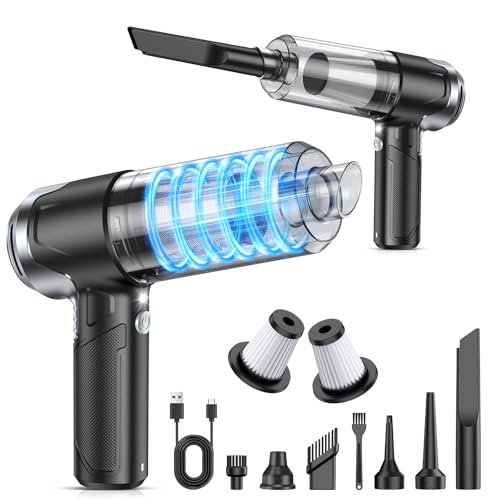


This KMM model leads because the specs that matter line up: a 5200 mAh battery, an 84,000 RPM motor driving cyclone airflow and a dual filtration system with both a metal and a HEPA filter. A larger battery is the single best predictor of real runtime on a mini vacuum, since a 120W draw empties a small pack in minutes. Cyclone airflow throws debris to the walls of the dust cup, which keeps the filter from clogging as quickly.
The 16000PA number is the loudest claim in the KMM family, but Pascal figures for these vacuums come with no standard test. Treat it as a ranking of the maker's own models, with 16000 above 10000 and 9000. The metal pre-filter catches larger debris and the HEPA layer traps fine dust, a sensible arrangement that also makes the washable parts easy to clean.
Expect a short runtime on the boost setting and several times longer on eco. Charge it by Type-C, wash the filters when suction drops and empty the dust cup after each use. A mini vacuum like this suits crumbs and dust, not sand in floor mats. Run it for a full week of normal use and note how many sessions a charge gives you, since that real number is the one you will live with. If the suction fades before the battery does, the filter is almost certainly the cause.
What works
- 5200 mAh battery gives the best runtime here
- Metal and HEPA dual filtration
- Cyclone airflow resists clogging
- Type-C charging
Watch out for
- Pascal claim has no standard test
- Heavier than smaller-battery rivals
Spec sheet
- Power
- 120W brushless
- Claimed suction
- 16000PA
- Motor speed
- 84,000 RPM
- Battery
- 5200 mAh rechargeable
- Filtration
- Metal and HEPA, cyclone airflow