
Amazon affiliate links - we earn a commission.Affiliate disclosure

Buying guide · 13 min read · Updated 2026-11-07

Best 4K Projectors for Home Theater (2026)

Six 4K home theater projectors compared on light engine, brightness, contrast, input lag and upkeep, so the picture you buy matches the room you have.

James MillerBy James MillerLead Machine Editor6 machines comparedSpec-sheet verified
Best 4K Projectors for Home Theater

At a glance

Our top picks

Side by side

Spec comparison

A projector turns a room into a cinema, but only if the room cooperates. Light control, screen choice and placement matter as much as the projector itself, and a modest model in a dark room often beats a brilliant one in a bright room.

Marketing makes 4K look simple. In practice, projectors differ in how they reach that resolution, in how bright and contrasty they are, and in how much upkeep they demand. This guide ranks six 4K models on what you will notice on the screen and what you will pay to keep running.

Before you buy

6 Criteria to Look For Before Buying a 4K Projector for Home Theater

  1. 01

    Laser or lamp

    Lamps need replacement around 3,000 to 5,000 hours and dim as they age. Laser engines last about 20,000 hours or more with no lamp changes. The LS11000, UHZ36 and TK710 are laser; the 2350, 3800 and PX701-4K use lamps. Add replacement cost to the five-year price.

  2. 02

    Native 4K versus pixel shifting

    Many 4K projectors, including the Epson PRO-UHD models, use pixel shifting to place 4K pixels from smaller chips. A sharp lens can make it look near-native. Check reviews of sharpness rather than the badge.

  3. 03

    Lumens and room light

    A dark room needs about 1,500 to 2,000 lumens, while a room with ambient light wants 2,500 or more. The TK710 and PX701-4K list 3,200 lumens for lit rooms. Bigger screens need more light.

  4. 04

    Native contrast

    Native contrast decides how deep blacks look. Dynamic contrast numbers on the box are inflated. A dark room and a premium engine such as the LS11000 show the benefit. In a lit room, contrast is lost anyway.

  5. 05

    3LCD versus DLP

    3LCD shows all colors at once, so it avoids rainbow flashes. DLP typically has lower input lag, which suits gaming. Try a single-chip DLP projector before committing if you are sensitive to rainbows.

  6. 06

    Throw distance and placement

    Throw ratio is distance divided by image width. Measure your room and compare it to the projector's range. Lens shift and zoom make placement easier, while digital keystone correction softens the image.

Detailed reviews

The 6 best 4k projectors for home theater, explained

01
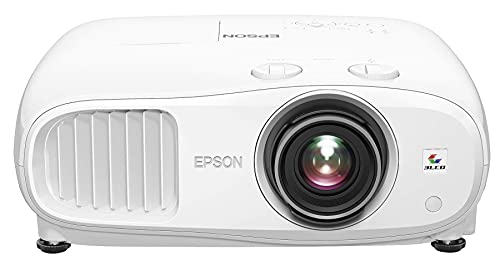
Epson Home Cinema LS11000 4K PRO-UHD laser projector, 3LCD, 2,500 lumens
Laser light3-chip 3LCD2,500 lumensHDR10+
Check price on Amazon
Best for: Dedicated rooms where film quality and low upkeep matter most.

The LS11000 pairs a laser array light source with three LCD chips, one each for red, green and blue. Because all three colors appear at once, 3LCD avoids the brief color flashes some viewers see on single-chip DLP projectors. Epson's 4K PRO-UHD process shifts the image to build an 8.29 million pixel picture, which looks very close to native 4K on film.

The 2,500 lumens figure is generous for a dark-room projector, and the laser engine removes lamp replacement for tens of thousands of hours. HDR10+ support and 10-bit color processing suit film. Against the Optoma UHZ36, it favors cinema over gaming speed. Against the Epson 3800, it is brighter, laser-based and costs more.

Ownership is simple. There is no lamp to change, but you should clean the dust filter on the schedule the manual gives and keep the vents clear. Budget for a screen and a mount, because the projector is only part of the picture. Ceiling mounts need the right pole length and a cable run for power and HDMI, and a quality high-speed HDMI cable is essential for 4K HDR signals over longer distances.

What works

  • Laser engine avoids lamp replacement
  • 3LCD shows all colors at once, no rainbow effect
  • 2,500 lumens suits large screens
  • HDR10+ and 10-bit color processing

Watch out for

  • Highest cost in this lineup
  • Not the lowest input lag for gaming
  • Needs a dark room to show its contrast

Spec sheet

Light source
Laser array
Engine
3-chip 3LCD, 4K PRO-UHD
Brightness
2,500 lumens
HDR
HDR10, HDR10+, HLG
Colour processing
10-bit
02
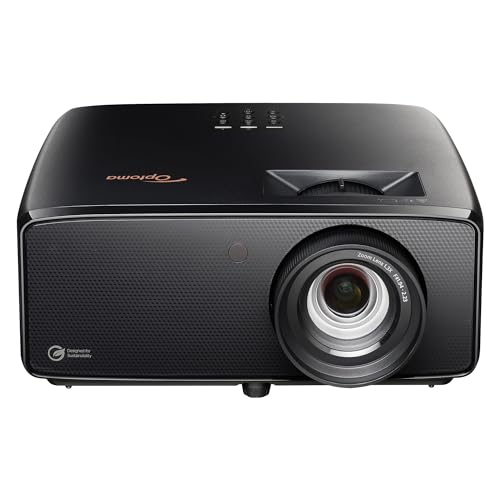
Optoma UHZ36 4K UHD laser HDR home theater projector
Laser light4K UHDHDRFilmmaker Mode
Check price on Amazon
Best for: Movie watchers who want accurate colour with laser upkeep.

The UHZ36 is a laser 4K UHD projector with HDR and a Filmmaker Mode that preserves the director's intended color and motion. Laser light means no lamp changes and consistent brightness over years. It is aimed at movie watchers who want accurate settings without a calibration session.

Compared with the Epson LS11000, it is a more affordable laser entry with fewer premium features. Against the BenQ TK710, it leans toward cinema accuracy, while the BenQ leans toward bright rooms and gaming. Detailed specifications are limited in the listing, so check brightness and throw ratio with the maker before buying.

Ownership is similar to other laser models: keep the vents and filter clean, avoid blocking exhaust, and plan screen and mount costs. Because it is a single-chip design, viewers sensitive to rainbow flashes should try it before committing. Also watch the exhaust: laser projectors run warm, and a unit pushed into a cabinet or shelf corner will throttle brightness and get louder, so leave generous clearance behind and beside it.

What works

  • Laser light source avoids lamp swaps
  • Filmmaker Mode preserves intended picture
  • 4K UHD with HDR support
  • Strong value among laser models

Watch out for

  • Listing gives few specifications
  • Single-chip design can show rainbow flashes
  • Fewer premium features than the LS11000

Spec sheet

Light source
Laser
Resolution
4K UHD
HDR
Supported
Picture mode
Filmmaker Mode
Use
Home theater
03
BenQ TK710 4K HDR laser projector, 3,200 lumens, 4 ms input lag
Laser light3,200 lumens4 ms lag240 Hz
Check price on Amazon
Best for: Bright living rooms and gaming.

The TK710 combines a laser light source with 3,200 lumens, which makes it bright enough for a living room with some ambient light. A 4 ms input lag and a 240 Hz refresh mode, typically at reduced resolution, make it a strong gaming choice. HDR10 and HLG support cover most streaming and console content.

Brightness is the tradeoff for contrast. In a fully dark room, it will not match the black levels of the LS11000, but in a lit room it holds up better. Against the ViewSonic PX701-4K, it offers a laser engine instead of a lamp, so there is no bulb to replace.

Ownership is easy: no lamp, a filter to clean and vents to keep clear. Plan for a mount and a gray screen if you watch in daylight, because a standard white screen washes out in ambient light. Running the fan in a quieter eco mode costs some brightness, so test both modes at your screen size, and use the lower-lag game mode only for consoles, since it drops some picture processing that films benefit from.

What works

  • 3,200 lumens for lit rooms
  • 4 ms input lag and 240 Hz mode
  • Laser light source avoids lamp swaps
  • HDR10 and HLG support

Watch out for

  • Lower contrast than premium dark-room models
  • Single-chip rainbow risk for sensitive viewers
  • Brightness can mean more fan noise

Spec sheet

Light source
Laser
Brightness
3,200 lumens
Input lag
4 ms
Refresh
Up to 240 Hz
HDR
HDR10 and HLG
04
Epson Home Cinema 2350 4K PRO-UHD smart streaming projector, 2,800 lumens
3-chip 3LCD2,800 lumensAndroid TV4K PRO-UHD
Check price on Amazon
Best for: Mixed-use rooms and buyers who want built-in streaming.

The Home Cinema 2350 uses three-chip 3LCD with the 4K PRO-UHD process for an enhanced picture, rated at 2,800 lumens of color and white brightness. It includes an Android TV streaming system, so no extra box is needed. Three chips display every color at once, avoiding rainbow flashes.

It uses a lamp, which is cheaper up front but needs replacement and dims over time. Against the LS11000, it is much cheaper but less bright in contrast and not laser-based. Against the Epson 3800, it adds streaming and more brightness.

Ownership includes a lamp to replace at the interval given in the manual, plus a filter to clean. Check lamp price before buying, because the replacement cost shapes the five-year price. Use the eco lamp mode for dark-room films to stretch life, and keep the room dark enough that you do not need the brightest setting, which ages the lamp fastest.

What works

  • 2,800 lumens handles ambient light
  • 3LCD avoids rainbow effect
  • Built-in Android TV streaming
  • Strong value in the Epson range

Watch out for

  • Lamp needs periodic replacement
  • Lower contrast than laser models
  • Pixel-shifted 4K, not native

Spec sheet

Engine
3-chip 3LCD, 4K PRO-UHD
Brightness
2,800 lumens
Smart system
Android TV
Light source
Lamp
Colour
100% RGB each frame
05
Epson Home Cinema 3800 4K PRO-UHD 3-chip 3LCD projector with HDR
3-chip 3LCD4K PRO-UHDHDRLamp
Check price on Amazon
Best for: Controlled-light rooms that want 3LCD quality at a lower tier.

The Home Cinema 3800 is a three-chip 3LCD projector that uses pixel shifting on three high-definition chips to reach 4K PRO-UHD. All three colors are shown for every frame, so there are no rainbow flashes. HDR support adds depth for film content.

It is a lamp projector aimed at dedicated or controlled rooms. Against the 2350, it focuses on picture quality over streaming features. Against the LS11000, it lacks a laser engine and the lamp dims over time.

Ownership centers on the lamp and filter. Replace the lamp when brightness falls, clean the filter and let the fan run down before unplugging. Check whether replacement lamps remain available for this older model. Because it lacks a built-in streaming system, plan for a streaming stick or console on an HDMI port and a way to power it, and use the lens shift dials to avoid keystone correction, which would blur fine detail.

What works

  • Three-chip 3LCD shows full RGB each frame
  • 4K PRO-UHD pixel shifting
  • HDR support
  • Established model with community guidance

Watch out for

  • Lamp dims and needs replacement
  • Older design than laser models
  • No built-in streaming system

Spec sheet

Engine
3-chip 3LCD
Resolution
4K PRO-UHD pixel-shifting
HDR
Supported
Light source
Lamp
Colour
100% of RGB signal
06
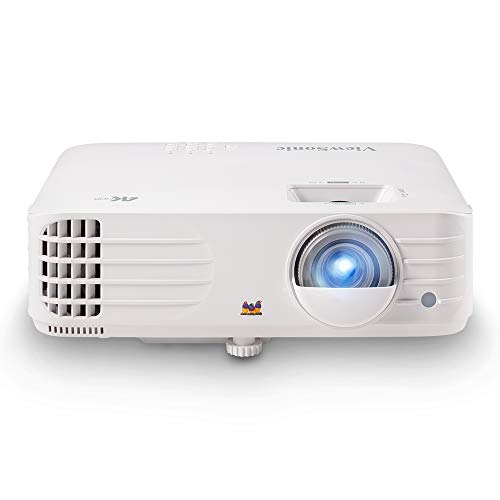
ViewSonic PX701-4K UHD DLP projector, 3,200 lumens, 240 Hz
3,200 lumens240 HzDLPAuto keystone
Check price on Amazon
Best for: Gamers who want brightness and low lag at a lower tier.

The PX701-4K is a DLP projector rated at 3,200 ANSI lumens with a 240 Hz refresh mode for gaming and HDR/HLG support. Auto keystone correction helps with placement. DLP projectors generally have low input lag.

It is a lamp-based unit, so it needs bulb replacement over its life. Against the BenQ TK710, it is brighter on paper but lacks a laser engine. Against the Epson 2350, it is a gaming-focused choice but lacks a built-in streaming system and 3LCD color.

Ownership involves the lamp, a clean filter and attention to rainbow flashes if you are sensitive. Auto keystone is convenient but softens the image, so use lens position and mounting to avoid heavy correction. Its high brightness comes with a louder fan than the laser models, so sit it behind or above the audience and use eco mode for quiet scenes.

What works

  • 3,200 ANSI lumens
  • 240 Hz gaming mode
  • Auto keystone for easy setup
  • DLP generally has low input lag

Watch out for

  • Lamp needs replacement
  • Single-chip rainbow risk
  • Digital keystone softens the picture

Spec sheet

Brightness
3,200 ANSI lumens
Resolution
4K UHD
Refresh
240 Hz mode
Technology
DLP
Keystone
Auto

Spec sheet decoder

What the numbers on the box really mean

The specs manufacturers lead with, translated into what they tell you about real-world performance.

ANSI lumens

A standard measure of brightness across the screen.

Watch forThe TK710 and PX701-4K list 3,200, the LS11000 2,500.

4K PRO-UHD

Epson's pixel-shifting process that builds a 4K picture from smaller chips.

Watch forUsed on the LS11000, 3800 and 2350.

Input lag

The delay between a game signal and the screen.

Watch forThe TK710 lists 4 ms.

HDR10+ / HLG

High dynamic range formats that add brightness detail.

Watch forThe LS11000 supports HDR10+; the others list HDR10 and HLG.

Filmmaker Mode

A preset that preserves the director's colour and motion settings.

Watch forThe UHZ36 offers it.

Methodology

How We Evaluated These 4K Projectors for Home Theater

Picture engine

We compared 3LCD and DLP, laser and lamp, and native versus shifted 4K. The LS11000 scored highest.

Brightness and contrast

We weighed lumens against likely room conditions. Bright models scored better in lit rooms.

Gaming and motion

We looked at input lag and refresh modes. The TK710 and PX701-4K lead.

Ownership cost

We considered lamp replacement, filter care and fan noise.

Features and value

We looked at streaming, HDR formats and price tier.

Decision guide

How to Choose the Right 4K Projectors for Home Theater

By Room

SituationPickWhy
Dedicated dark roomEpson Home Cinema LS11000Laser and 3LCD
Controlled-light room, lower tierEpson Home Cinema 38003LCD at lower cost
Living room with ambient lightBenQ TK7103,200 lumens and laser
Mixed-use room with streamingEpson Home Cinema 2350Android TV built in
Accurate film colourOptoma UHZ36Filmmaker Mode

By Budget

TierPickWhy
LowestViewSonic PX701-4KGaming-focused lamp model
Lower-middleEpson Home Cinema 2350Value 3LCD
MiddleEpson Home Cinema 3800Dark-room quality
Upper-middleOptoma UHZ36Laser entry
UpperBenQ TK710Bright laser
HighestEpson Home Cinema LS11000Premium laser 3LCD

Laser vs Lamp

Laser

The LS11000, UHZ36 and TK710 need no lamp and keep brightness longer. They cost more up front.

Lamp

The 2350, 3800 and PX701-4K cost less now but need replacement bulbs and dim over time.

Choose laser if you plan to keep the projector for years. Choose lamp to save money up front.

3LCD vs DLP

PreferencePickWhy
No rainbow effectEpson Home Cinema LS110003LCD
Lowest input lagBenQ TK7104 ms listed
Value gamingViewSonic PX701-4KDLP with 240 Hz

For Gaming Specifically

Look for

Low input lag, a high refresh mode and HDMI features. Many 240 Hz modes run at 1080p.

In this comparison

The BenQ TK710 lists 4 ms and 240 Hz, and the ViewSonic PX701-4K offers a 240 Hz mode at a lower tier.

When to Spend More

Spend more if

You have a dark dedicated room and watch film. The LS11000 pays back.

Save if

You watch in a mixed room. The 2350 or PX701-4K covers it.

Ownership

Maintenance schedule

The upkeep that decides whether this machine lasts two seasons or ten.

TaskIntervalWhy it matters
Clean the dust filterEvery 3 monthsDust raises temperature and noise, and a clogged filter is the most common reason a projector shuts down mid-film. Follow the manual and keep a spare cleaning cloth with the unit.
Replace the lampAs the manual statesLamp models dim and eventually fail. Keep a spare.
Let the fan run downAfter each useCooling extends lamp and laser life.
Clean the lensAs neededDust softens the image. Use a lens cloth.
Check cablesYearlyLong HDMI runs can fail with 4K HDR signals, showing as sparkles or dropouts, so replace suspect cables with certified high-speed or fiber versions.

FAQ

Frequently Asked Questions

Is pixel-shifted 4K real 4K?

It places 4K pixels using smaller chips that shift quickly. A sharp lens can look near-native on film and most viewers will not tell at a normal seating distance, but native panels are the safer choice if you sit close or care about fine text.

How many lumens do I need?

About 1,500 to 2,000 for a dark room and 2,500 or more with ambient light. Larger screens spread the same light over more area, so a projector that looks fine at 100 inches may look dim at 130, and HDR content benefits from extra headroom even in a dark room.

Do I need a special screen?

A gray or ambient-light-rejecting screen helps in lit rooms. A white wall works for dark rooms but loses contrast and shows texture, so a flat, matte screen is a worthwhile upgrade once you know you enjoy the projector.

Will I see rainbows?

Some viewers see them on single-chip DLP. 3LCD avoids the effect.

Laser or lamp?

Laser costs more but lasts longer. Lamp costs less but needs replacement, and the lamp's gradual dimming means the picture on year three is noticeably duller than on day one unless you swap it.

Are built-in speakers enough?

They are modest. Plan for a soundbar or receiver, and run audio from the source device or an eARC-capable path so that you do not depend on the projector's small speakers for film dialogue.

Bottom line

The short version

Browse more 4k projectors for home theateron Amazon →
James Miller, Lead Machine Editor

About the author

James Miller

Lead Machine Editor, MachineFanatic

James Miller leads MachineFanatic's buying guides, turning spec sheets, manuals and owner feedback into clear verdicts on power tools, outdoor power equipment, shop machines and kitchen machines.

More from James →