
Amazon affiliate links - we earn a commission.Affiliate disclosure

Buying guide · 12 min read · Updated 2026-11-17

Best 5-Cup Rice Cookers (2026)

Five 5-cup rice cookers compared on capacity, controls and upkeep, from a micom Zojirushi to a one-switch Ovente, for small and mid-size households.

James MillerBy James MillerLead Machine Editor5 machines comparedSpec-sheet verified
Best 5-Cup Rice Cookers

At a glance

Our top picks

Side by side

Spec comparison

MachineCapacityControlAccessory
Zojirushi NS-TSC10 5.5-Cup Micom Rice CookerBest OverallZojirushi NS-TSC10 5.5-Cup Micom Rice Cooker5.5 cups uncooked (1.0 L)Microcomputer fuzzy logicn/a
Tiger JBV-A10U 5.5-Cup Micom Rice Cooker with TacookBest for One-Pot MealsTiger JBV-A10U 5.5-Cup Micom Rice Cooker with Tacook5.5 cups uncookedMicrocomputern/a
Toshiba Simple Rice Cooker 5.5-Cup with Steamer BasketBest Simple ControlsToshiba Simple Rice Cooker 5.5-Cup with Steamer Basket5.5 cups uncookedOne button, auto keep warmSteaming basket
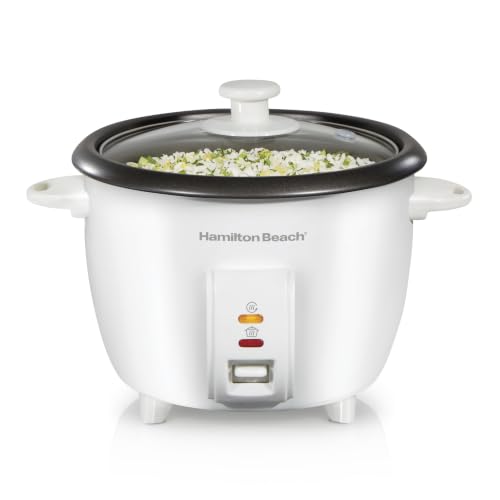
Hamilton Beach 5-Cup Rice Cooker and Food SteamerBest Steam and Rinse SetHamilton Beach 5-Cup Rice Cooker and Food Steamer5 cups uncookedBasic switch styleSteam and rinse basket
Ovente RCS01W 5-Cup Rice Cooker and SteamerBest ValueOvente RCS01W 5-Cup Rice Cooker and Steamer5 cupsOne-touch switchSteamer basket

A 5-cup rice cooker sits in the middle of the range. It feeds two to four people without the scorched, overfilled feel of a tiny unit, and it still fits in a cabinet that a family-size machine would not. The word cup is where most buyers go wrong, so this page treats capacity as a measurement before it is a feature.

Under the lid, the choice is between a simple heating plate with a thermal switch and a microcomputer that manages soak, boil and rest. We evaluated each option on how much control the cook gets, how easy the pot is to clean, and how forgiving the machine is when you cook less than a full batch.

Before you buy

6 Criteria to Look For Before Buying a 5-Cup Rice Cooker

  1. 01

    Uncooked versus cooked capacity

    A rice cup is 180 ml, not the 240 ml US cup, and cooked rice is roughly double the uncooked volume. A cooker listed as 5 cups uncooked, like the Toshiba or the Tiger at 5.5, feeds more people than a unit labelled 5 cups cooked. Read the product title for the word uncooked, because the Hamilton Beach spells out both numbers (5 uncooked, 10 cooked) and many rivals do not.

  2. 02

    Micom versus one-switch control

    A thermal switch ends the cycle when free water boils off and the pot temperature rises past 100 C. A microcomputer, as in the Zojirushi NS-TSC10 and Tiger JBV-A10U, adjusts heat through soak, boil and rest. If you cook white rice only, the switch is enough, but a micom is worth it when you cook brown rice, small batches or rice you want at an exact time.

  3. 03

    Behavior with partial batches

    A 5.5 cup pot cooking one cup of rice spreads the grains thinly across a wide base, and the bottom layer scorches on a basic plate. The Ovente and Toshiba are most vulnerable to this, while the Zojirushi and Tiger moderate their heat. Plan on at least two rice cups per batch in any of these, and add a little extra water when the batch is small.

  4. 04

    Inner pot coating and wear

    Every pot in this group is nonstick, so metal spoons, scouring pads and dishwasher abuse shorten its life. Once the coating flakes it cannot be repaired, and rice begins to stick at the bottom. Use the supplied paddle, soak stuck grains rather than scraping them, and expect a pot to last several years with gentle care.

  5. 05

    Steam tray and side dish

    A steam basket lets you cook fish or broccoli over the rice, but the steam timing is by eye on basic units like the Hamilton Beach and the Ovente. The Tiger Tacook tray is designed around that idea, with the heat curve built for two foods. Choose a tray only if you will use it, because it adds parts that need washing.

  6. 06

    Keep warm and delay timer

    Rice held on a simple warming plate dries and yellows after about 12 hours. The Zojirushi adds an extended keep warm mode and two delay settings, which is useful for overnight soaking and a ready dinner. Without a timer, as on the Toshiba, you cook at the time you are standing in the kitchen.

Detailed reviews

The 5 best 5-cup rice cookers, explained

01
Zojirushi NS-TSC10 5.5-Cup Micom Rice Cooker
5.5 cups uncooked1.0 L potMicom controlDelay timer
Check price on Amazon
Best for: Households that eat rice most days and want the same texture every time.

The NS-TSC10 is the only cooker in this group that behaves like a small appliance with a plan. A microcomputer watches the pot temperature and moves through soak, boil, steam and rest stages instead of waiting for one thermal switch to trip, which is why the finished rice has an even grain from the top to the bottom of the pot. The 1.0 liter inner pot works out to roughly 5.5 rice cups of 180 ml each, so the label counts uncooked rice, not the doubled cooked volume.

The trade is cost and fuss. It has no steamer basket as a headline feature, and the LCD menu takes a minute to learn, so a person who wants one button will find the Toshiba or the Ovente quicker. What you gain is a delay timer with two settings, an extended keep warm mode that is gentler than a plain warming plate, and a reheat cycle for rice that went cold on the counter. Next to the Tiger JBV-A10U, which has the same 5.5 cup size, the Zojirushi leans toward rice quality and the Tiger leans toward cooking a side dish at the same time.

Ownership is mostly about the lid and the plate. Pull the inner lid and the steam vent cap after each cooking, because dried starch in the vent is the usual cause of sputtering and odors on this style of cooker. Dry the outside of the pot before it goes back in, since a wet base hisses on the plate and can confuse the thermal sensor. The stainless exterior wipes clean in seconds, and the nonstick pot lasts for years if it only ever meets the plastic paddle.

What works

  • Micom control gives even grains top to bottom
  • Two delay settings for overnight soak and breakfast rice
  • Extended keep warm protects rice from drying out
  • Stainless exterior wipes clean in seconds

Watch out for

  • LCD menu needs a few cooking cycles to learn
  • No dedicated steamer layer as a selling point

Spec sheet

Capacity
5.5 cups uncooked (1.0 L)
Control
Microcomputer fuzzy logic
Timer
2 delay time settings
Warm mode
Keep warm, extended warm, reheat
Exterior
Clear coated stainless steel
02
Tiger JBV-A10U 5.5-Cup Micom Rice Cooker with Tacook
5.5 cups uncookedMicom controlTacook trayNonstick pot
Check price on Amazon
Best for: People who want rice and a protein from one plug.

Tiger built the JBV-A10U around one idea, which is cooking rice and a main dish at the same time. A flat tray sits above the rice and holds fish, chicken or vegetables, so the steam rising from the rice pot cooks the top layer while the rice finishes below. The microcomputer manages the heat curve, which matters more here than on a basic unit because two foods are drawing on a single heating plate.

The limitation is that the tray is shallow, so it suits a fillet or a handful of greens rather than a stew for four. It also asks you to learn timing: thick chicken needs more minutes than the standard white rice cycle provides, and thin fish needs fewer. Beside the Zojirushi NS-TSC10, which shares the 5.5 cup size, the Tiger gives you more dinner per pot and fewer keep warm refinements.

Upkeep is simple but has two extra parts. Wash the tray and its lid wherever food has dripped, because fish oil and soy residue hold odors in plastic. Wipe the inner lid after each rice batch and keep the plate clear of grains. Store the tray stacked inside the pot so it does not go missing, since replacement trays are a nuisance to find.

What works

  • Tacook tray cooks a side dish above the rice
  • Micom control handles two foods on one plate
  • Same 5.5 cup size as the Zojirushi
  • Steamer tray included for vegetables

Watch out for

  • Tray timing takes trial and error
  • Shallow tray limits portion size

Spec sheet

Capacity
5.5 cups uncooked
Control
Microcomputer
Side dish
Tacook synchronized tray
Steaming
Included steamer tray
Format
Countertop, one pot
03
Toshiba Simple Rice Cooker 5.5-Cup with Steamer Basket
5.5 cups uncookedOne buttonSteamer basketInner lid
Check price on Amazon
Best for: Anyone who wants rice with the fewest decisions possible.

Toshiba took the opposite path from the micom machines and kept the control panel to one button. You add rice and water, press down, and the machine switches to keep warm when the water is gone. For someone who finds menus irritating, that is a real advantage, and the 5.5 cup uncooked capacity is the same as the Tiger and the Zojirushi.

A single cycle means white rice is the target, so brown, sushi or porridge will need your own water adjustments. Without a delay timer there is no way to schedule rice for the morning either. Against the Hamilton Beach, the Toshiba trades a rinse basket for a removable inner lid, which is the more useful part for daily cleaning.

The removable inner lid is the detail to care for. Lift it out and rinse it under the tap after every batch, because starch dries into a film on the underside that the wipe of a cloth leaves behind. The nonstick pot should stay away from metal utensils and scouring pads. Keep the pot dry on the outside before inserting it, as moisture on the base is the most common cause of a cooker that will not switch cleanly.

What works

  • One button and automatic keep warm
  • Removable inner lid washes in the sink
  • Steaming basket included for vegetables
  • Large 5.5 cup uncooked capacity

Watch out for

  • No delay timer or brown rice cycle
  • Single cycle means manual water tweaks for other grains

Spec sheet

Capacity
5.5 cups uncooked
Control
One button, auto keep warm
Inner pot
Removable nonstick
Inner lid
Removable for washing
Accessory
Steaming basket
04
Hamilton Beach 5-Cup Rice Cooker and Food Steamer
5 cups uncooked10 cups cookedRinse basketSteamer
Check price on Amazon
Best for: Families who rinse rice and steam vegetables on the same plate.

Hamilton Beach pairs a 5 cup uncooked pot with a basket that does double duty as a rinsing colander and a steamer. Rinsing rice is the step most people skip, and having a basket that sits in the pot and drains the first cloudy water removes the excuse. The label also states both numbers clearly, 5 cups uncooked and 10 cups cooked, which makes it the least confusing capacity claim on this list.

The cooker is a basic design, so expect the thermal switch to decide when rice is finished rather than a processor tuning the heat. That is perfectly adequate for white rice and for steaming vegetables, but brown rice and sushi rice will depend on how carefully you measure. Compared with the Ovente, which is also an entry level machine, the Hamilton Beach feels more complete because of the basket.

After cooking, wash the basket in warm soapy water because starch clings to the slots and goes sour if left overnight. Check the lid gasket or vent for rice debris, and wipe the heating plate of any grains that spilled. The inner pot is nonstick and wants a soft sponge.

What works

  • Rinse and steam basket in one accessory
  • Capacity printed as both 5 and 10 cups
  • Basic switch is easy to operate
  • Suits a three to four person table

Watch out for

  • No microcomputer to adjust the heat curve
  • Brown rice depends on careful water measuring

Spec sheet

Capacity
5 cups uncooked
Cooked yield
10 cups
Accessory
Steam and rinse basket
Function
Rice cooker and steamer
Control
Basic switch style
05
Ovente RCS01W 5-Cup Rice Cooker and Steamer
5 cupsOne-touch switchSteamer basketNonstick pot
Check price on Amazon
Best for: Budget shoppers who want a plain rice cooker with a steamer.

The Ovente RCS01W is the cheapest way into this size, and it keeps the design honest: a one-touch switch, a removable nonstick pot, a steamer basket and a keep warm function. White rice, jasmine and similar grains are the target. For a student kitchen, a second household or a first cooker, it removes the guesswork without adding a menu.

The label says 5 cups, and as with most simple units that number is the 180 ml rice measure, so plan on about 2.5 to 3 cups of rice for a comfortable batch. It lacks the delay timer and the fuzzy control of the Zojirushi, so the finished rice depends more on correct water measuring. The Toshiba is the closest rival, and it counts uncooked capacity more clearly.

Treat the nonstick bowl gently, since a coating that has been scratched flakes and cannot be repaired. Rinse the lid and steam vent after use, and let the base cool before you wash the pot. Keep warm should be used for a few hours only, as rice left on a simple warming plate dries and yellows.

What works

  • Lowest cost entry in this comparison
  • One-touch switch needs no instruction
  • Steamer basket included
  • Removable nonstick pot

Watch out for

  • No delay timer or alternative cycles
  • Capacity label is less precise than rivals

Spec sheet

Capacity
5 cups
Control
One-touch switch
Inner pot
Removable nonstick
Accessory
Steamer basket
Warm mode
Keep warm function

Spec sheet decoder

What the numbers on the box really mean

The specs manufacturers lead with, translated into what they tell you about real-world performance.

5.5 cups uncooked

Capacity is measured in 180 ml rice cups, so 5.5 cups equals roughly 1.0 liter of dry rice. The cooked yield is about double.

Watch forThe Zojirushi, Tiger and Toshiba all claim 5.5, while the Ovente simply says 5.

Micom

A microcomputer reads the pot temperature and steps through the cooking stages. It can adjust the timing for different rice types.

Watch forOnly the Zojirushi and Tiger in this lineup offer it.

Delay timer

A timer starts the cycle later so rice is finished when you want it. It also lets rice soak in the water before heating.

Watch forThe Zojirushi has two delay settings, but the Toshiba, Ovente and Hamilton Beach have none.

Keep warm

After the cycle, the plate drops to a low temperature to hold the rice. On simple units the heat is steady, and on premium ones it is moisture managed.

Watch forBasic keep warm on the Ovente yellows rice if left for most of a day.

Steam basket

A perforated tray above the rice lets steam cook vegetables or fish. It is a rack, not a separate heating zone.

Watch forThe Tiger Tacook tray is purpose built, whereas the Toshiba and Hamilton Beach baskets are general purpose.

Methodology

How We Evaluated These 5-Cup Rice Cookers

Capacity honesty

We checked how each listing states its cup size and whether the number refers to uncooked or cooked rice. The Hamilton Beach lists 5 uncooked and 10 cooked, while the Ovente gives only 5 cups. Clear labelling scored higher.

Control and cycle quality

We compared how each cooker decides when rice is done, from a thermal switch to a microcomputer. The Zojirushi and Tiger earned credit for staged heating, and the one-button units earned credit for simplicity.

Cleaning and parts

We looked at the number of removable parts and how easy they are to wash. A removable inner lid on the Toshiba and a rinse basket on the Hamilton Beach both count as practical advantages.

Small batch behavior

We evaluated how a 5.5 cup pot is likely to cope with one or two cups of rice, based on pot size and control type. Micom controls scored better than a simple plate.

Value for the household

We ranked the five by what the control level adds for the cost tier, from the Ovente at the cheapest end to the Zojirushi at the premium end. The extra money only counts when the features suit how you cook.

Decision guide

How to Choose the Right 5-Cup Rice Cookers

By Household Size

SituationPickWhy
Two people, rice most nightsZojirushi NS-TSC105.5 cups uncooked is generous, and micom control handles small batches
Family of four with side dishesTiger JBV-A10UTacook tray adds a protein or vegetable layer
Three people, simple dinnersToshiba Simple 5.5-CupSame capacity as the premium pair with one button
Family that rinses and steamsHamilton Beach 5-CupRinse basket and steamer in one
Occasional cookingOvente RCS01WPlain switch at the lowest cost tier

By Budget

SituationPickWhy
Lowest cost tierOvente RCS01WOne-touch switch and a steamer basket
Low to mid tierHamilton Beach 5-CupAdds the rinse basket for little more
Mid tier with a lid you can washToshiba Simple 5.5-CupRemovable inner lid and bigger uncooked capacity
Upper tier for one-pot mealsTiger JBV-A10UMicom plus Tacook
Premium tier for rice qualityZojirushi NS-TSC10Fuzzy logic, delay timer, extended warm

Micom vs One-Switch

Micom

The Zojirushi NS-TSC10 and Tiger JBV-A10U adjust heat through soak, boil and rest, so partial batches and different rice types come out more evenly. You pay more and learn a menu.

One-switch

The Toshiba, Ovente and Hamilton Beach rely on a thermal switch. They work well for white rice at normal quantities and cost less, but they leave brown rice and tiny batches to your water measuring.

Pick micom if you cook rice several times a week or want a timer. Pick one-switch if rice is a side to a weekend meal.

Steam and Side Dish Habits

SituationPickWhy
Fish and rice in one goTiger JBV-A10UTacook tray is built for it
Broccoli and carrots over riceToshiba Simple 5.5-CupBasket included, simple timing
Rinse rice first, then steamHamilton Beach 5-CupBasket doubles as a rinsing colander
No steaming at allZojirushi NS-TSC10Spend on rice quality instead

For Small Households Specifically

Look for

A cooker that makes two cups of rice without scorching, a lid that comes apart for washing, and a keep warm mode that will not dry rice over an evening. Bigger is not better for two people.

In this comparison

The Zojirushi NS-TSC10 handles small portions best thanks to its micom control, while the Toshiba is the simpler choice with a removable inner lid.

When to Spend More

Spend more if

You eat rice daily, want a delay timer, or cook brown rice often. The Zojirushi NS-TSC10 and Tiger JBV-A10U repay the premium by delivering consistent texture.

Save if

Rice is an occasional side and you use white rice only. The Ovente and Toshiba cover that need, and the money saved buys a better set of bowls.

Ownership

Maintenance schedule

The upkeep that decides whether this machine lasts two seasons or ten.

TaskIntervalWhy it matters
Rinse the inner lid and ventAfter every batchStarch dries into a film that causes sputtering and odors. A quick rinse prevents buildup.
Wipe the heating plate and sensorWeeklyGrains or spilled water on the plate give uneven heating. A clean sensor allows the cooker to switch off at the right moment.
Dry the pot exterior before insertingEvery useA wet base hisses on the plate and can disturb thermal contact. Dry contact gives dependable shut-off.
Inspect the nonstick surfaceEvery few monthsScratches mean the coating is wearing and rice will begin to stick. Replace the pot once flakes appear.
Wash steam tray and basketAfter steamingFish and soy residue hold odors in plastic slots. Hot soapy water clears them.

FAQ

Frequently Asked Questions

How many people does a 5-cup rice cooker feed?

Five uncooked rice cups of 180 ml make about 10 cups cooked, which serves four to six people as a side. A couple will get leftovers, and that is fine for fried rice the next day.

Is micom control worth it for a 5-cup cooker?

It is worth it if you cook rice most days, make brown or sushi rice, or want a timer. For occasional white rice a thermal switch is adequate.

Why does my rice stick to the bottom?

Usually the pot was filled with too little water for the batch size, or the nonstick coating has worn. Rinse the rice, measure water to the line and replace a scratched pot.

Is the cup size the same as a US measuring cup?

No. The included cup is about 180 ml, which is smaller than the 240 ml US cup. Use the cooker cup with the water lines, not a kitchen measuring cup.

How long can I leave rice on keep warm?

Basic models hold rice well for several hours and begin to dry and yellow near 12 hours. Premium units with extended warm modes cope better.

Can I cook oatmeal or quinoa in these?

Yes, in most of them, using the white rice cycle and watching for foam. Use less than the max line for foamy grains and keep an eye on the vent.

Bottom line

The short version

Browse more 5-cup rice cookerson Amazon →
James Miller, Lead Machine Editor

About the author

James Miller

Lead Machine Editor, MachineFanatic

James Miller leads MachineFanatic's buying guides, turning spec sheets, manuals and owner feedback into clear verdicts on power tools, outdoor power equipment, shop machines and kitchen machines.

More from James →

Keep reading

Related guides