
Amazon affiliate links - we earn a commission.Affiliate disclosure

Buying guide · 12 min read · Updated 2026-11-13

Best 80 Pint Dehumidifiers (2026)

Six 80 pint basement dehumidifiers compared by real test-condition ratings, tank size, drain setup and noise, with firm picks for damp basements.

James MillerBy James MillerLead Machine Editor6 machines comparedSpec-sheet verified
Best 80 Pint Dehumidifiers

At a glance

Our top picks

Side by side

Spec comparison

MachineHeadline ratingCoverage claimTank
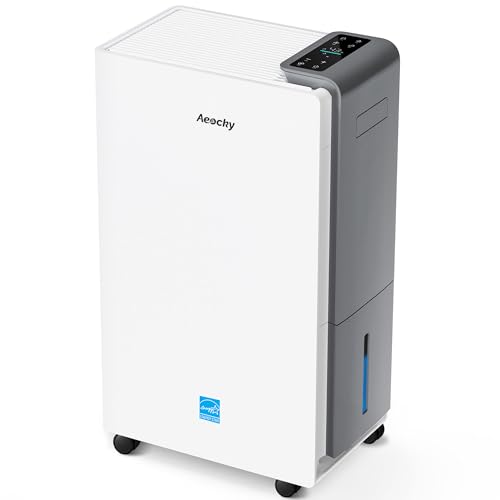
AEOCKY 80 Pint Energy Star Most Efficient, 5500 sq ftBest OverallAEOCKY 80 Pint Energy Star Most Efficient, 5500 sq ft80 pints per day, 95F and 95% RHUp to 5,500 sq ftn/a
KNKA 80 Pint Energy Star Dehumidifier, 1.45 gal tankBest Tank and Hose SetupKNKA 80 Pint Energy Star Dehumidifier, 1.45 gal tank80 pints per day, 95F and 95% RHUp to 5,500 sq ft1.45 gal built in, 2.64 gal tank optional
DUMOS 80 Pint Basement Dehumidifier, 5,500 sq ftBest ValueDUMOS 80 Pint Basement Dehumidifier, 5,500 sq ftUp to 80 pints per dayUp to 5,500 sq ft1.32 gal
Shinco 80 Pint Energy Star Dehumidifier with Wi-FiBest Smart ControlsShinco 80 Pint Energy Star Dehumidifier with Wi-Fi80 pints per day, 95F and 90% RHUp to 5,000 sq ft5 L (1.32 gal), plus hose drain
Ludatido 80 Pint Energy Star Basement DehumidifierQuietest ClaimLudatido 80 Pint Energy Star Basement Dehumidifier80 pints per dayUp to 5,000 sq ft1.32 gal
Waykar Max 80 Pint (62 Standard) Energy Star DehumidifierMost Transparent RatingWaykar Max 80 Pint (62 Standard) Energy Star Dehumidifiern/aUp to 5,000 sq ftn/a

A big-capacity dehumidifier is sold on one flattering number, and that number is measured in a sauna-like test room that no basement ever reaches. Buyers who read only the headline end up with a machine that runs nonstop and still leaves the air clammy.

What separates a good large unit from a disappointing one is the stuff printed in smaller type: the test conditions behind the rating, the drain arrangement, how the coil behaves when it gets cold, and whether you can live next to the fan noise.

Before you buy

6 Criteria to Look For Before Buying a 80 Pint Dehumidifier

  1. 01

    Rated vs real pint output

    Large dehumidifiers are advertised at a hot, saturated test point such as 95F and 95% RH, where the coil collects water easily. A basement that sits near 70F and 70% RH delivers far less. The AEOCKY and KNKA both print 56 pints at a basement-style condition next to the 80 pint headline, and the Waykar lists a 62 pint standard rating. Always compare the pint number together with the test condition.

  2. 02

    Drain method and tank size

    A wet basement can fill a gallon-class bucket in under a day. The DUMOS and Ludatido hold 1.32 gallons, the KNKA holds 1.45 and offers a 2.64 gallon option. Treat a hose as the default, and measure the run: the KNKA hose is 6.56 feet, which only suits a nearby floor drain. A drain above the unit needs a pump, which is a different product class.

  3. 03

    Cold-room behavior

    Compressor units chill a coil, and below roughly 65F the coil frosts and output drops. Auto defrost, listed on the Shinco and the Waykar, cycles the compressor to clear ice. It does not restore capacity. If the space routinely falls under 60F, the right answer is a low-temperature commercial unit rather than any model in this lineup.

  4. 04

    Energy tier and running cost

    A unit this size draws roughly 500 to 800 watts while the compressor runs, and in a damp summer it runs most of the day. That is why the Most Efficient 2025 tier on the AEOCKY and DUMOS matters. Efficiency is measured in liters per kilowatt hour, and the gap compounds over several summers, so a higher purchase price can pay back.

  5. 05

    Coverage claims versus room fit

    The 5,000 to 5,500 sq ft figures on these listings assume a mild moisture problem. A basement at 70% RH needs about one size more than the number suggests. If your space is under 2,000 sq ft and only slightly musty, any pick here has headroom; if the walls sweat, favor the units with a stated basement rating.

  6. 06

    Noise and placement

    Dehumidifier noise comes from the compressor, the fan and the water trickling into the tank. The Ludatido claims 35 dB, but the figure is for low speed. Keep 6 to 12 inches clear of walls, on a hard flat surface, and expect the unit to add a few degrees to the room because compressor heat stays indoors.

Detailed reviews

The 6 best 80 pint dehumidifiers, explained

01
AEOCKY 80 Pint Energy Star Most Efficient, 5500 sq ft
80 pints at 95F/95% RH56 pints at 86F/80% RH5,500 sq ftMost Efficient 2025
Check price on Amazon
Best for: Large damp basements where you want a realistic rating and low running cost.

Most listings in this size class quote one test point and stop there. AEOCKY prints two, an 80 pint figure in a hot, saturated room and a 56 pint figure at 86F and 80% RH, which is a far better proxy for a wet summer basement. That honesty is why this unit leads the lineup: you can plan around 56 pints a day without guessing.

The Most Efficient 2025 designation is the second reason. Machines at this tier remove more water per kilowatt hour than ordinary Energy Star units, and a large dehumidifier that runs 12 to 16 hours a day in July is a real line on the power bill. The price tier sits near the top of this group, so you pay for the efficiency up front.

Expect the ownership routine of any hose-drained compressor machine. Wash the intake filter every few weeks, vacuum the coil once a year and keep the back of the cabinet 6 to 12 inches off the wall. Against the KNKA, which quotes the same 56 pint basement figure, the AEOCKY costs more but carries the stronger efficiency badge; against the DUMOS it is the safer bet if your basement actually stays above 70% RH.

What works

  • Prints a basement-condition rating, not just a sauna figure
  • Most Efficient tier lowers long-run electricity use
  • Hose included, so continuous drain works out of the box
  • Covers the biggest floor area claim in this group

Watch out for

  • Sits near the top of the price tier here
  • Real daily output is about 56 pints, not 80
  • Tank size is modest if you cannot run a hose

Spec sheet

Headline rating
80 pints per day, 95F and 95% RH
Basement rating
56 pints per day, 86F and 80% RH
Coverage claim
Up to 5,500 sq ft
Efficiency tier
Energy Star Most Efficient 2025
Drain
Drain hose included for continuous use
02
KNKA 80 Pint Energy Star Dehumidifier, 1.45 gal tank
80 pints at 95F/95% RH1.45 gal tank6.56 ft hose5,500 sq ft
Check price on Amazon
Best for: Buyers who want a bigger tank and a hose, and may switch between the two.

KNKA took the practical route: a larger built-in tank than most rivals, a 6.56 foot hose in the box and an optional 2.64 gallon tank for people who will not plumb a drain. That means you can start with bucket-and-carry, then move to a hose when the novelty of emptying wears off. Few units in this class give you both paths without buying extra parts.

The rating story matches the AEOCKY, with 80 pints at 95F and 95% RH and 56 pints at typical basement conditions. A 6.56 foot hose is short, though. It reaches a floor drain next to the machine, not a laundry sink across the room, so measure the run before you rely on it.

On ownership, a bigger bucket means fewer trips but a heavier lift: a 1.45 gallon tank full of water weighs about 12 pounds. Keep the float switch clean and rinse the tank monthly to stop slime. The price tier is lower-middle for the group, which makes it the cheaper route to the 56 pint basement rating than the AEOCKY, minus the Most Efficient label.

What works

  • Tank larger than most units in this class
  • Optional 2.64 gal tank cuts emptying trips
  • Basement-condition rating is stated, not hidden
  • Lower-middle price tier for the capability

Watch out for

  • Included hose is only 6.56 ft long
  • No Most Efficient tier badge
  • Full tank is a heavy carry up stairs

Spec sheet

Headline rating
80 pints per day, 95F and 95% RH
Basement rating
56 pints per day in typical basement conditions
Tank
1.45 gal built in, 2.64 gal tank optional
Hose
6.56 ft (2 m) continuous drain hose
Coverage claim
Up to 5,500 sq ft
03
DUMOS 80 Pint Basement Dehumidifier, 5,500 sq ft
80 pints per day5,500 sq ft1.32 gal tankHumidity ring
Check price on Amazon
Best for: Budget-minded buyers with a floor drain who will run a hose.

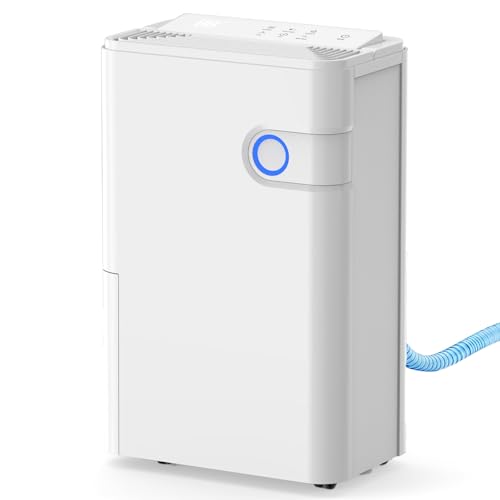
DUMOS has the lowest price tier of the six and still claims the Most Efficient Energy Star designation, which is why it earns the value badge. A glowing ring on the front turns blue when the room is dry and green when humidity is in the comfort band, so you can read the room from the stairs without squinting at digits.

Plan around the 1.32 gallon tank. A basement that needs this much capacity can fill that bucket in well under a day, so the realistic setup here is the drain hose and a gravity run to a floor drain. If the drain sits above the unit, you would need a separate pump, and the 80 pint models with a built-in pump are a different category.

Set beside the AEOCKY, the DUMOS gives up the printed basement-condition rating, so treat the 80 pints as a ceiling and size one step up if the room reads over 70% RH. Check the efficiency claim against the Energy Star product listing for the exact model before you count on the power savings. Upkeep is the usual filter wash and an annual coil vacuum.

What works

  • Lowest price tier in the lineup
  • Colored humidity ring is readable across a room
  • Efficiency badge claimed at a budget price
  • Wide 5,500 sq ft coverage claim

Watch out for

  • No basement-condition rating published
  • Small tank means a hose is nearly mandatory
  • Efficiency claim should be verified per model

Spec sheet

Headline rating
Up to 80 pints per day
Coverage claim
Up to 5,500 sq ft
Tank
1.32 gal
Display
Color ring: blue dry, green comfortable
Efficiency tier
Energy Star Most Efficient claimed
04
Shinco 80 Pint Energy Star Dehumidifier with Wi-Fi
80 pints at 95F/90% RHWi-Fi app control1.32 gal tankAuto defrost
Check price on Amazon
Best for: People who want remote monitoring of a basement they rarely visit.

Shinco adds Wi-Fi to a straightforward 80 pint machine, so you can watch the humidity and change the setpoint from your phone. For a basement you only visit occasionally, that matters: you can check on it during a storm and confirm the target is being met without walking downstairs.

The headline figure is stated at 95F and 90% RH, a gentler condition than the 95% RH quoted by the AEOCKY and KNKA, so the two 80 pint numbers are not identical promises. Auto defrost is listed, which keeps the coil from icing in a cool room, though the research on every compressor unit applies: below roughly 65F output falls hard.

The 1.32 gallon tank is average, and the hose option is the realistic way to run it. Remember that the app is a convenience: confirm the unit still holds its humidity target from the front panel if your router goes down. Shinco lands in the lower price tier, undercutting the KNKA while adding the smartphone control that the DUMOS lacks.

What works

  • Phone app control and monitoring
  • Auto defrost for cooler rooms
  • Low price tier for a connected unit
  • Hose drain plus tank gives two options

Watch out for

  • Rating stated at a milder test condition
  • Standard tank size fills fast in damp rooms
  • App features depend on a stable Wi-Fi signal

Spec sheet

Headline rating
80 pints per day, 95F and 90% RH
Coverage claim
Up to 5,000 sq ft
Connectivity
Wi-Fi with phone app
Tank
5 L (1.32 gal), plus hose drain
Cold operation
Auto defrost
05
Ludatido 80 Pint Energy Star Basement Dehumidifier
80 pints per day35 dB claimed5,000 sq ft1.32 gal tank
Check price on Amazon
Best for: Finished basements and dens where fan noise is the main complaint.

Ludatido leans on noise. The listing claims 35 dB from a revised compressor and fan structure, which would make it quieter than a refrigerator hum. Real-world noise from a compressor machine depends on the speed setting, and any dB figure on a spec sheet is normally measured at the lowest fan speed, so assume it gets noticeably louder when the unit is working hard.

If the basement doubles as a workshop, gym or finished den, that quiet claim is the reason to look here. The cost is a thinner paper trail on rating conditions, since the listing does not break out a basement-condition number the way the AEOCKY does. Size accordingly and pick this one for a moderate problem, not a flooded one.

Ownership is routine: hose out the back, wash the filter, keep clearance behind the cabinet.

What works

  • Noise claim of 35 dB is the lowest here
  • Energy Star certified at a low price tier
  • Handy carrying design for the tank
  • Covers a 5,000 sq ft rating

Watch out for

  • No separate basement-condition rating listed
  • Noise figure is a low-speed spec
  • Tank size is average for the class

Spec sheet

Headline rating
80 pints per day
Noise claim
35 dB with upgraded compressor and fan
Coverage claim
Up to 5,000 sq ft
Tank
1.32 gal
Certification
Energy Star
06
Waykar Max 80 Pint (62 Standard) Energy Star Dehumidifier
Max 80 / standard 625,000 sq ftAuto defrostLCD display
Check price on Amazon
Best for: Shoppers who want the manufacturer to state a realistic standard rating.

Waykar puts the gap between marketing and reality right in the title: maximum 80 pints, standard 62. That is the most candid framing in the group and a good lesson in how to read every other listing here. The two numbers use different test conditions, and the standard one is the closer guide to normal living-space use.

Auto defrost and an LCD with a clear setpoint make it a plain, predictable machine. It lacks the Wi-Fi of the Shinco and the quiet claim of the Ludatido, and it carries the highest price tier among the six, so you are paying for a rating you can trust more than for features. Whether that is worth it depends on how much you value honest numbers.

Maintenance follows the usual pattern: wash the filter on a schedule, empty or drain the water, and give the cabinet space to breathe.

What works

  • Title states the 62 pint standard rating openly
  • Auto defrost for cool basements
  • Plain LCD control, no app required
  • Energy Star certified

Watch out for

  • Highest price tier in the lineup
  • No Wi-Fi or quiet-operation claim
  • Standard rating is well under the headline

Spec sheet

Maximum rating
80 pints per day
Standard rating
62 pints per day
Coverage claim
Up to 5,000 sq ft
Cold operation
Auto defrost
Display
LCD panel with setpoint

Spec sheet decoder

What the numbers on the box really mean

The specs manufacturers lead with, translated into what they tell you about real-world performance.

Pints per day

This is the water removed in 24 hours at a stated temperature and humidity. Under the 2019 DOE test at 65F and 60% RH, the same machine reads about 40 percent lower than the old 80F test, which is why listings still quote hot-room figures.

Watch forCheck whether the listing gives a second, cooler rating, as the AEOCKY and KNKA do.

Max versus standard rating

A maximum rating describes the hottest, wettest test point. A standard rating uses milder air and lands lower. Both are legitimate, but only one predicts what a living-space machine delivers.

Watch forWaykar labels 80 maximum and 62 standard, so use the 62 for planning.

Coverage in square feet

Manufacturers compute coverage from capacity for a mildly damp space. It is not a promise for a basement with visible condensation or a floor that wicks moisture.

Watch forEvery unit here claims 5,000 to 5,500 sq ft, so compare drainage and rating instead.

Tank capacity

A gallon of water weighs over 8 pounds, so tank size sets how often you carry. It also sets how long the unit runs before the float switch shuts it off.

Watch forKNKA at 1.45 gal and its optional 2.64 gal tank is the biggest option among these.

Energy Star Most Efficient

This is the top tier of Energy Star certification, reserved for models far above the minimum liters per kWh. It helps only if you run the machine many hours a day.

Watch forAEOCKY and DUMOS both claim the tier, so confirm it on the Energy Star listing.

Methodology

How We Evaluated These 80 Pint Dehumidifiers

Rating transparency

Each listing was read for the conditions behind its pint number. Units that publish a basement-style figure, such as the AEOCKY at 56 pints, ranked above those that quote one hot-room value. A rating without a test condition is a marketing line, not a spec.

Drainage practicality

We looked at tank volume, included hose length and whether a bigger tank is offered. The KNKA scored well with a 1.45 gallon tank and a 6.56 foot hose. A unit that forces daily emptying in a wet basement was marked down.

Efficiency evidence

Going by the spec sheet, we favored units that claim the Most Efficient tier and discounted claims that cannot be checked against the Energy Star database. Running cost is a larger share of ownership than the purchase price for a machine that works 12 hours a day.

Owner feedback patterns

Themes that owners repeat were weighed rather than any single star score: filter cleaning frequency, bucket slime, compressor longevity and how the humidistat tracks a separate meter. Compressors in this class commonly last 5 to 10 years, and cheaper ones tend toward the short end.

Fit across the lineup

Finally the six were set against each other by role: honest rating, value, smart control, quiet operation, drain flexibility. Waykar sits at the top price tier and DUMOS at the bottom, so we asked what each tier actually buys instead of assuming more money means more water.

Decision guide

How to Choose the Right 80 Pint Dehumidifiers

By Basement Condition

SituationPickWhy
Walls sweat, 70% RH or higherAEOCKY 80 PintPublished 56 pint basement rating lets you size with confidence
Mild musty smell, 50 to 60% RHDUMOS 80 PintPlenty of headroom at the lowest price tier
Finished den used dailyLudatido 80 PintClaimed 35 dB is the quietest in the group
Remote or vacation propertyShinco 80 Pint Wi-FiApp lets you watch humidity away from home
Mixed tank and hose useKNKA 80 Pint1.45 gal tank plus a hose and an optional 2.64 gal bucket

By Budget

Budget tierPickWhy
Lowest tierDUMOS 80 PintCheapest listing with an efficiency badge claimed
Low tier with featuresShinco 80 Pint Wi-FiAdds app control without a big jump in cost
Lower-middle tierKNKA 80 PintBest tank and hose package for the money
Upper tierAEOCKY 80 PintEfficiency and rating honesty justify the premium
Top tierWaykar 80 PintOnly worth it if the realistic 62 pint rating appeals to you

Bucket Emptying vs Continuous Hose

Bucket emptying

Works only where the humidity problem is mild or seasonal. The KNKA with its optional 2.64 gallon tank is the best bucket machine here, since a bigger reservoir stretches the interval between trips. Expect to carry 11 to 22 pounds of water each time.

Continuous hose

The default for a serious basement, and the reason the DUMOS, AEOCKY and Shinco make sense. Gravity needs the unit above the drain, so a floor drain or laundry tub nearby is essential. Slope the hose evenly so it never loops, or water will back up and trip the float.

Pick the bucket route only if the unit runs under 6 hours a day; otherwise plan a hose.

Control Style

PreferencePickWhy
Read the room at a glanceDUMOS 80 PintColor ring changes from blue to green
Phone monitoringShinco 80 Pint Wi-FiWi-Fi app with remote setpoint
Simple LCD, no networkWaykar 80 PintPlain panel, nothing to pair
Sleep-friendly quietLudatido 80 PintLow-speed noise claim of 35 dB

For Wet Basements Specifically

Look for

A second rating below the headline, auto defrost for a room that dips under 65F, and a hose drain. Add a separate hygrometer so you know whether the unit is actually reaching 45 to 50 percent.

In this comparison

The AEOCKY and KNKA both print 56 pints at a basement-style condition, and the Shinco and Waykar add auto defrost. The AEOCKY is the safest buy because it combines the basement rating with the Most Efficient tier.

When to Spend More

Spend more if

Your machine will run 10 or more hours daily from May to October. The AEOCKY pays back its higher tier through lower energy use, and its published 56 pint rating means you will not undersize the space.

Save if

The basement is only damp in a few weeks of summer. The DUMOS or Ludatido gives you 80 pint capability at the cheapest tier, and the unit will idle most of the year.

Ownership

Maintenance schedule

The upkeep that decides whether this machine lasts two seasons or ten.

TaskIntervalWhy it matters
Wash the intake filterEvery 2 to 4 weeksA clogged mesh starves the coil of air and lets the unit freeze up. Rinse in warm water, dry fully and refit.
Scrub the water tankMonthlyStanding water grows slime that can trip the float sensor and smell musty. A quick wash with mild soap and a rinse keeps the bucket clean.
Vacuum the coilOnce a yearDust on the fins cuts heat transfer and forces longer run cycles. A soft brush and vacuum, with the unit unplugged, restores airflow.
Check the drain hoseEach seasonKinks and low spots hold water and cause overflow shutoffs. Re-lay the hose with a steady downward slope to the drain.
Verify the humidistatTwice a yearA plus or minus 5 percent error is normal, but drift can leave the room too wet. Compare the display with a separate hygrometer and offset the setpoint if needed.

FAQ

Frequently Asked Questions

Is an 80 pint dehumidifier too big for a basement?

Rarely. Because the 80 pint number is a hot-room rating, the real daily output in a cool basement is closer to 56 to 62 pints, as the AEOCKY and Waykar listings show. A unit with extra capacity cycles off sooner, which is gentler on the compressor.

Do I need a pump with these models?

Only when the drain sits above the machine or is far away. All six rely on gravity, and the KNKA hose is just 6.56 feet. For lifted drains, look at units with a built-in pump.

How much do these cost to run?

A big compressor draws roughly 500 to 800 watts while it works, so the monthly figure depends on hours of operation. The Most Efficient tier on the AEOCKY and DUMOS lowers that bill compared with a standard unit.

What does Energy Star Most Efficient actually mean?

It is a top tier above regular Energy Star, measured in liters of water removed per kilowatt hour. It does not change capacity, only the electricity used to reach it. Verify any claim against the official product listing.

Will an 80 pint unit work in a 55 degree room?

Poorly. Compressor machines lose output as the coil gets cold, and auto defrost only prevents ice. For rooms that live under 60F, a low-temperature commercial unit is the right tool.

How long should one of these last?

Expect 5 to 10 years of compressor life with regular filter cleaning. Cheaper units tend to fail sooner because a hot compressor working in humid air wears faster, so keep airflow clear and clean the coil.

Bottom line

The short version

Browse more 80 pint dehumidifierson Amazon →
James Miller, Lead Machine Editor

About the author

James Miller

Lead Machine Editor, MachineFanatic

James Miller leads MachineFanatic's buying guides, turning spec sheets, manuals and owner feedback into clear verdicts on power tools, outdoor power equipment, shop machines and kitchen machines.

More from James →

Keep reading

Related guides