
Amazon affiliate links - we earn a commission.Affiliate disclosure

Buying guide · 12 min read · Updated 2026-11-11

Best Air Compressors (2026)

Six air compressors from trim-size to 29-gallon, compared on delivered CFM, noise, tank size and upkeep so you can match one to your tools.

James MillerBy James MillerLead Machine Editor6 machines comparedSpec-sheet verified
Best Air Compressors

At a glance

Our top picks

Side by side

Spec comparison

MachineTankMax pressureAir deliveryPump
Metabo HPT EC914S 6-Gallon Pancake 200 PSIBest OverallMetabo HPT EC914S 6-Gallon Pancake 200 PSI6 gallon pancake200 PSI4 CFM at 90 PSIOil-free
DEWALT DWFP55130 2.5-Gallon 200 PSI Trim CompressorBest for Trim WorkDEWALT DWFP55130 2.5-Gallon 200 PSI Trim Compressor2.5 gallon200 PSI3.0 SCFM at 90 PSIOil-free
CRAFTSMAN 6-Gallon 150 PSI Pancake with 25 ft HoseBest ValueCRAFTSMAN 6-Gallon 150 PSI Pancake with 25 ft Hose6 gallon pancake150 PSI2.6 SCFM at 90 PSIn/a
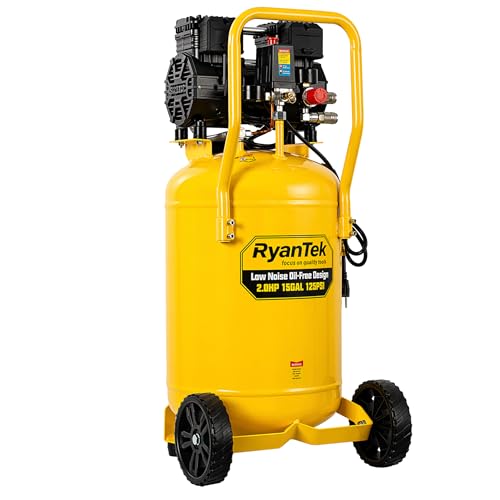
RyanTek 15-Gallon 2HP Twin-Cylinder 66 dB Oil-FreeBest Quiet Mid-SizeRyanTek 15-Gallon 2HP Twin-Cylinder 66 dB Oil-Free15 gallon verticaln/a4.5 CFM at 90 PSITwin-cylinder oil-free
Klutch 20-Gallon 2HP 120V 175 PSI Oil-FreeBest Mid-Size ValueKlutch 20-Gallon 2HP 120V 175 PSI Oil-Free20 gallon175 PSI4.2 SCFM at 90 PSIOil-free
Klutch 29-Gallon 2.5HP 120V 175 PSI VerticalBest for Bigger TankKlutch 29-Gallon 2.5HP 120V 175 PSI Vertical29 gallon vertical175 PSI5.1 CFM at 90 PSIOil-free

An air compressor is a pump and a storage tank, and the two do different jobs. The pump decides how much air you can make every minute, while the tank only buys you a few seconds of buffer before the motor has to start again. Most buyers shop by tank size and horsepower, and that is how they end up with a unit that runs out of breath on its first sander.

The honest way to shop is to start from the tools you own. List the one with the highest air appetite, check its consumption on the label, and then look for a compressor whose delivered flow clears that number with room to spare. Noise, weight, oil-free versus oil-lubricated pumps and 120V circuit limits come after that.

Before you buy

6 Criteria to Look For Before Buying an Air Compressor

  1. 01

    Delivered CFM at 90 PSI

    Delivered CFM is the amount of air the pump makes every minute at working pressure, and it decides whether a tool actually runs. A finish nailer needs under 1 CFM while an orbital sander wants 6 to 9. The Metabo HPT EC914S at 4 CFM and the Klutch 29-gallon at 5.1 CFM sit in the middle of that range. The most common mistake is buying on tank size, because a big tank only delays the problem.

  2. 02

    Tank size and pressure

    A larger tank lowers how often the motor restarts and gives bursty tools a reserve. A higher maximum pressure also stores more usable air, since you regulate down to 90 PSI. The Metabo HPT and DEWALT trim unit both reach 200 PSI from small tanks, while the Klutch pair reaches 175 PSI. Do not read tank pressure as a tool pressure; check what your tool wants at the nozzle.

  3. 03

    Oil-free versus oil-lubricated

    Every compressor here uses an oil-free pump, which removes oil changes but is louder and wears faster than cast iron oil-lubricated pumps. For weekend use that is a fair trade, and for daily use it is the part that fails. An oil-lubricated unit runs cooler and quieter but needs level standing and regular oil checks.

  4. 04

    Noise and where it runs

    Pancake and hot-dog oil-free pumps typically hit the high 70s to mid 80s dB at close range. The RyanTek at 66 dBA measured at 4 metres and the DEWALT trim unit at 71.5 dBA are among the quieter options.

  5. 05

    Circuit and cord limits

    A 120V compressor on a 15 amp circuit has a ceiling near 1.8 running horsepower, and the 2 HP and 2.5 HP labels on the larger units refer to peak numbers. Long, thin extension cords make starting harder and trip breakers. Use a short 12 gauge cord or a dedicated outlet, and treat 6 CFM and above as a job for a 230V compressor.

  6. 06

    Condensate and storage

    Compressing air squeezes out water, and it collects in the bottom of the tank. A tank that is never drained rusts from the inside, which is both a reliability and a safety problem. Open the drain valve after every session, more often in humid weather, and store the unit indoors. Larger tanks such as the Klutch 20 and 29 gallon collect more water than a 6 gallon pancake.

Detailed reviews

The 6 best air compressors, explained

01
Metabo HPT EC914S 6-Gallon Pancake 200 PSI
6 gal pancake200 PSI max4 CFM at 90 PSIOil-free
Check price on Amazon
Best for: Contractors and serious DIYers who run framing, roofing or siding nailers and want a portable tank.

The EC914S is a pancake-tank compressor with a higher pressure ceiling than the usual 150 PSI units. The listing quotes 200 PSI maximum and 4 CFM at 90 PSI, and that delivery figure is the number that matters. Pushing the tank to 200 PSI stores roughly a third more usable air than a 150 PSI tank of the same volume, because you can regulate down to 90 PSI and keep drawing from the extra stored pressure.

The tradeoff is the usual one for oil-free pancake pumps. It is loud, in the range where you want hearing protection, and a 6 gallon tank means the motor cycles frequently under a continuous load. At 4 CFM it comfortably runs one framing nailer or two finish nailers, but a random orbital sander that wants 6 to 9 CFM will outrun it. Against the CRAFTSMAN 6-gallon in this lineup at 2.6 SCFM, it moves roughly half again as much air from the same tank size.

Ownership is simple. There is no oil to check, so upkeep is draining condensate from the tank valve after each use and keeping the intake filter clean. The pancake shape is stable on a truck bed or a job-site floor, and the handle makes it a one-hand carry.

What works

  • 200 PSI ceiling stores more usable air per gallon
  • 4 CFM at 90 PSI feeds framing nailers
  • Pancake base stays put on uneven ground
  • Two couplers let a second tool run at once

Watch out for

  • Loud oil-free pump, hearing protection needed
  • Too little flow for sanders or spray guns

Spec sheet

Tank
6 gallon pancake
Max pressure
200 PSI
Air delivery
4 CFM at 90 PSI
Pump
Oil-free
Couplers
Two quick couplers
02
DEWALT DWFP55130 2.5-Gallon 200 PSI Trim Compressor
2.5 gal tank200 PSI max3.0 SCFM at 90Oil-free
Check price on Amazon
Best for: Trim carpenters and hobbyists who need a quieter, lighter compressor for finish and brad nailers.

This is a small-tank trim compressor built around a quieter pump than most of its price class. The listing rates it at 71.5 dBA, 3.0 SCFM at 90 PSI and a 200 PSI maximum from a 2.5 gallon tank. That noise rating is a manufacturer figure, so treat it as a relative comparison rather than a promise, but it does put the unit well under the 80 dB class of cheaper pancake pumps.

It is not a shop compressor. A 2.5 gallon tank empties fast under any tool that draws more than a nailer, and the 3.0 SCFM delivery is aimed at 15 and 16 gauge finish nailers, brad nailers and tire top-offs. It will inflate a car tire without drama but will not keep up with an impact wrench for more than a few bursts. Compared with the Metabo HPT EC914S at 4 CFM and 6 gallons, it gives up capacity and flow in exchange for being much easier to carry and to stand next to.

Upkeep is minimal: drain the tank, keep the air filter clear and store it dry. Because the tank is small, rust inside is slow to cause trouble, but a tank that is never drained will still corrode.

What works

  • Rated 71.5 dBA, quieter than typical pancakes
  • 200 PSI max gives usable air from a small tank
  • Light enough to carry up stairs
  • Oil-free pump with no oil changes

Watch out for

  • 2.5 gallons runs out quickly on heavier tools
  • Cannot sustain sanders, grinders or spray guns

Spec sheet

Tank
2.5 gallon
Max pressure
200 PSI
Air delivery
3.0 SCFM at 90 PSI
Pump
Oil-free
Noise
71.5 dBA rated
03
CRAFTSMAN 6-Gallon 150 PSI Pancake with 25 ft Hose
6 gal pancake150 PSI max2.6 SCFM at 9030.8 lb
Check price on Amazon
Best for: Homeowners who nail trim, inflate tires and run a brad nailer occasionally.

The CRAFTSMAN pancake is the most conventional design in this group: a 6 gallon tank, 150 PSI maximum and 2.6 SCFM at 90 PSI from an oil-free pump. It ships with a 25 foot hose and dual couplers, which means a homeowner can open the box and start nailing trim or filling a bike tire the same day. At 30.8 lb it is easy to move around a garage.

The 2.6 SCFM number is the limiting factor. Finish and brad nailers sip air and are fine, but roofing and framing nailers fired quickly will pull the tank down and wait for the pump. Compare it with the Metabo HPT at 4 CFM from the same 6 gallons: the Metabo is the better tool for a working contractor, while this one costs less to own and weighs less, which suits weekend projects.

Like every oil-free pancake it is loud, and the pump will not last as long as a cast iron oil-lubricated pump. The honest ownership advice is to drain the tank every session, store it indoors so the tank does not rust from the outside, and keep the intake clear of sawdust. For a household that nails a few deck boards and inflates tires a few times a year, that is plenty of compressor.

What works

  • Complete kit with 25 ft hose and dual couplers
  • 30.8 lb carry weight is easy for one person
  • Oil-free pump needs no oil changes
  • Large pancake footprint resists tipping

Watch out for

  • 2.6 SCFM is thin for framing or roofing nailers
  • Oil-free pump is loud and wears faster over time

Spec sheet

Tank
6 gallon pancake
Max pressure
150 PSI
Air delivery
2.6 SCFM at 90 PSI
Weight
30.8 lb
Couplers
Dual couplers, 25 ft hose
04
RyanTek 15-Gallon 2HP Twin-Cylinder 66 dB Oil-Free
15 gal vertical2HP twin cylinder4.5 CFM at 9066 dB rated
Check price on Amazon
Best for: Garage woodworkers who want quieter operation and more tank than a pancake provides.

RyanTek builds this around a dual-cylinder oil-free pump rated at 66 dBA measured at 4 metres, which is a distance figure and should not be compared directly with a close-range reading. The listing gives 4.5 CFM at 90 PSI and a 15 gallon vertical tank on wheels. That combination covers nailers and light sanding while keeping the noise down to a level where you can hold a conversation in the garage.

A 15 gallon tank is where noticeable motor-cycle reduction starts. Against the 6 gallon pancakes, the pump runs less often and for longer stretches, which is easier on the starting circuit of a 15A outlet and quieter in practice. It still has the limits of any 120V oil-free unit: a continuous 6 CFM sander will drain the tank, and the pump will cycle without a break.

The vertical layout saves floor space, but the unit is heavier than a pancake and the wheels matter on a rough shop floor.

What works

  • Dual-cylinder pump rated 66 dBA at 4 metres
  • 4.5 CFM at 90 PSI beats most pancake units
  • 15 gallons cut how often the pump cycles
  • Vertical tank with wheels saves floor space

Watch out for

  • Heavier and bulkier than a pancake
  • Newer brand with a thinner service network

Spec sheet

Tank
15 gallon vertical
Pump
Twin-cylinder oil-free
Air delivery
4.5 CFM at 90 PSI
Noise
66 dBA rated at 4 m
Mobility
Integrated wheels
05
Klutch 20-Gallon 2HP 120V 175 PSI Oil-Free
20 gal tank2HP, 120V4.2 SCFM at 90175 PSI max
Check price on Amazon
Best for: Home garages that need more air storage for tires, nailers and occasional impact wrench use.

The Klutch 20-gallon is a plain, wheeled, oil-free compressor that stays on a standard 120V circuit. The listing quotes 2 HP, 175 PSI maximum and 4.2 SCFM at 90 PSI, which is a modest flow figure for a 20 gallon tank. That means the pump is the limiting part, while the tank gives you a long buffer between motor starts.

The 175 PSI ceiling is useful here: stored pressure above 90 PSI is air you can regulate down and draw on, so the usable volume is greater than the gallon figure suggests. Compared with the RyanTek at 15 gallons and 4.5 CFM, it trades slightly lower delivery for more storage. It makes sense for a driveway or garage where you want to blow up a few tires, run a nailer and occasionally use an impact wrench for short bursts.

Ownership comes down to condensate and cords. A 20 gallon tank collects more water than a pancake, so drain it every time, and use a short heavy extension cord because a long thin one will cause the motor to struggle on starting. The 120V motor is the ceiling on this class: if you want 6 CFM or more you need to step up to a 230V stationary unit.

What works

  • 20 gallon tank cuts motor cycling noticeably
  • 175 PSI ceiling stores extra usable air
  • Runs on a standard 120V outlet
  • Oil-free pump needs no oil changes

Watch out for

  • 4.2 SCFM limits sanders and grinders
  • Oil-free pump is loud under load

Spec sheet

Tank
20 gallon
Motor
2 HP, 120V
Air delivery
4.2 SCFM at 90 PSI
Max pressure
175 PSI
Pump
Oil-free
06
Klutch 29-Gallon 2.5HP 120V 175 PSI Vertical
29 gal vertical2.5HP, 120V5.1 CFM at 90175 PSI max
Check price on Amazon
Best for: Garage mechanics who want the most air a 120V outlet can deliver without a 230V circuit.

The 29 gallon Klutch is the largest and highest-flow unit in this lineup, rated at 5.1 CFM at 90 PSI with a 2.5 HP motor and an upright oil-free design. It stays on 120V, which makes it unusual: most compressors with this much air come with a 230V motor. The 5.1 CFM figure is roughly a fifth higher than the Klutch 20-gallon at 4.2 CFM.

That extra delivery matters for an impact wrench or a die grinder used in short runs, and the larger tank gives you more working time before the pump restarts. It is still not a production machine. Sanding for an hour or painting a car body will exceed the pump's delivery, and the motor will run constantly and overheat.

Upright tanks save space, but a 29 gallon unit is heavy, so check how you will move it before you buy. Maintenance is draining the tank and checking hose fittings, but you should budget for the pump to be the first part that wears. If you often reach for tools that want 6 CFM or more, a 230V two-stage unit is the better long-term purchase than stretching a 120V one.

What works

  • 5.1 CFM at 90 PSI tops the lineup
  • 29 gallon tank gives long working buffer
  • Stays on a standard 120V circuit
  • Vertical design uses little floor space

Watch out for

  • Heavy to move compared with pancakes
  • Still undersized for continuous sanding or spraying

Spec sheet

Tank
29 gallon vertical
Motor
2.5 HP, 120V
Air delivery
5.1 CFM at 90 PSI
Max pressure
175 PSI
Pump
Oil-free

Spec sheet decoder

What the numbers on the box really mean

The specs manufacturers lead with, translated into what they tell you about real-world performance.

SCFM at 90 PSI

Standard cubic feet per minute is air volume corrected to standard conditions and measured at a working pressure. It is the real measure of what the pump can feed a tool.

Watch forSome listings quote CFM at 40 PSI or at 0 PSI, which flatters the number, so look for the 90 PSI figure as on the Metabo HPT at 4 CFM.

Horsepower

Compressor horsepower is often a peak or marketing rating, because a 15A 120V circuit cannot draw more than roughly 1.8 running HP. The number tells you little about delivered air.

Watch forCompare the 2 HP and 2.5 HP Klutch labels with their 4.2 and 5.1 CFM figures, which are the numbers that matter.

Max PSI

This is the tank cut-out pressure, not the working pressure of your tool. Higher pressure stores more usable air in the same tank.

Watch forThe DEWALT trim unit and Metabo HPT reach 200 PSI, but you still regulate to the pressure the tool needs.

Tank capacity

Gallons describe storage buffer, which governs how long a tool runs before the motor restarts. It does not change how much air the pump makes.

Watch forA 29 gallon tank with a 5.1 CFM pump will still stall under a tool that wants 8 CFM.

Noise rating (dBA)

Decibel ratings are logarithmic, so a few dB is a big change in sound energy. Manufacturers measure at different distances.

Watch forThe RyanTek 66 dBA is at 4 metres, while the DEWALT 71.5 dBA is a different test, so do not read them as head-to-head.

Methodology

How We Evaluated These Air Compressors

Delivered air against tool demand

We compared each unit's listed CFM at 90 PSI with the typical consumption of nailers, impact wrenches and sanders. This is the most important check, because a unit that cannot feed your tool is useless regardless of price. The lineup spans 3.0 SCFM on the DEWALT trim unit to 5.1 CFM on the Klutch 29-gallon.

Tank and pressure design

We looked at tank volume and maximum pressure together, since a 200 PSI small tank can store as much usable air as a larger lower-pressure one. We also noted tank orientation, because pancake, vertical and wheeled layouts suit different spaces. Wheels and handles count for more than most buyers expect.

Noise and workspace fit

We read the manufacturer noise ratings and noted the measuring distance, favouring the quieter oil-free designs where it was stated. A compressor you cannot stand next to will not get used in an attached garage or indoors.

Ownership burden

We weighed condensate draining, oil-free pump wear, cord and circuit demands and the weight you have to move.

Based on listings and owner feedback patterns

Our evaluation is based on the spec sheet and owner feedback patterns, not our own bench time.

Decision guide

How to Choose the Right Air Compressors

By Tool You Run Most

SituationPickWhy
Finish and brad nailers indoorsDEWALT DWFP55130Quieter 71.5 dBA rating and a light 2.5 gallon tank
Framing or roofing nailerMetabo HPT EC914S4 CFM at 90 PSI and 200 PSI storage
Light garage use and tiresCRAFTSMAN 6-GallonComplete hose kit at a low price tier
Impact wrench in short burstsKlutch 29-Gallon5.1 CFM and the largest tank here
Quiet shop workRyanTek 15-GallonRated 66 dBA at 4 metres with a dual-cylinder pump

By Budget

Budget tierPickWhy
Lowest costCRAFTSMAN 6-GallonCheapest way into a 6 gallon pancake with a hose
Lower middleDEWALT DWFP55130Brand-name trim compressor with a quiet rating
MiddleKlutch 20-GallonMore storage on a standard outlet
Upper middleRyanTek 15-GallonQuiet twin-cylinder pump
Top of this lineupKlutch 29-GallonHighest air delivery and tank volume here

Pancake vs Vertical Tank

Pancake

A pancake tank sits low, resists tipping and weighs 25 to 40 lb. The Metabo HPT EC914S and CRAFTSMAN 6-gallon are the examples here. They suit job sites and truck beds but run noisy and cycle often.

Vertical

A vertical tank holds more air for the same floor space and usually has wheels. The RyanTek 15, Klutch 20 and Klutch 29 are the examples. They are heavier but cycle less often and sound calmer.

Choose a pancake if you carry it between jobs, and a vertical tank if it lives in a garage.

Oil-Free vs Heavier Duty

PreferencePickWhy
Zero maintenanceCRAFTSMAN 6-GallonOil-free pump, only drain and clean the filter
Quiet over portableRyanTek 15-GallonLower-speed twin cylinder design
Largest air reserve on 120VKlutch 29-Gallon29 gallons at 5.1 CFM
Smallest, lightestDEWALT DWFP551302.5 gallons and a trim focus

For Trim and Finish Work Specifically

Look for

Low noise, light weight and a regulator you can set between 70 and 100 PSI. Finish and brad nailers use under 1 CFM, so tank size and pump speed matter less than sound and weight.

In this comparison

The DEWALT DWFP55130 is the pick: it is rated at 71.5 dBA, weighs little and gives 3.0 SCFM, which is three times what these nailers need.

When to Spend More

Spend more if

You run a sander, a grinder or a spray gun for long periods, or you work daily. The Klutch 29-gallon at 5.1 CFM is the strongest here, but even that is a bridge to a 230V stationary compressor.

Save if

You nail trim and fill tires. The CRAFTSMAN 6-gallon at 2.6 SCFM and the DEWALT trim compressor at 3.0 SCFM are fully adequate for that.

Ownership

Maintenance schedule

The upkeep that decides whether this machine lasts two seasons or ten.

TaskIntervalWhy it matters
Drain the tankAfter every sessionCondensate collects at the bottom and rusts the tank from inside. Open the drain valve with air pressure low and let the water run out.
Check intake filterMonthlyA clogged filter starves the pump and heats it. Dusty shops need cleaning more often.
Inspect hose and fittingsEvery few monthsLeaks make the pump run more and waste its limited CFM. Soapy water on the fittings shows leaks quickly.
Test the safety valveTwice a yearThe relief valve protects the tank if the pressure switch fails. Pull its ring briefly to confirm it moves freely.
Check cord and outletEach seasonA warm plug or frayed cord points to a voltage drop on starting. Replace it before it damages the motor.

FAQ

Frequently Asked Questions

Is a bigger tank always better?

No. Tank size sets how long the pump rests, but the pump's CFM sets whether a tool runs at all. A 29 gallon tank with a 5.1 CFM pump still struggles with a tool that wants 8 CFM.

How much should I spend?

Match spending to the tools. A trim compressor like the DEWALT DWFP55130 or the CRAFTSMAN 6-gallon covers most home needs at low cost, while the Klutch 29-gallon sits at the top of this lineup for people who want more air from a 120V plug.

How long do oil-free compressors last?

Oil-free pumps generally wear faster than cast iron oil-lubricated pumps, but light home use can last many years. Draining the tank and keeping the unit dry matters more than any other habit.

Does 2 HP mean twice the power of 1 HP?

Not in practice. Horsepower on a 120V compressor is a peak rating, and the delivered CFM figures are far better for comparison. Look at 4.2 SCFM against 5.1 CFM rather than 2 HP against 2.5 HP.

Can I use a regular extension cord?

Only a short, heavy one. A long thin cord drops voltage during motor start and can trip a breaker or damage the motor. A short 12 gauge cord is the safest choice.

Which one is best for a paint sprayer?

None of these. Most spray guns need 4 to 10 CFM continuously, and a 120V oil-free pump will run non-stop and overheat. A 230V compressor with a larger pump is the right category for painting.

Bottom line

The short version

Browse more air compressorson Amazon →
James Miller, Lead Machine Editor

About the author

James Miller

Lead Machine Editor, MachineFanatic

James Miller leads MachineFanatic's buying guides, turning spec sheets, manuals and owner feedback into clear verdicts on power tools, outdoor power equipment, shop machines and kitchen machines.

More from James →

Keep reading

Related guides