
Amazon affiliate links - we earn a commission.Affiliate disclosure

Buying guide · 13 min read · Updated 2026-11-07

Best Air Purifiers for Large Rooms (2026)

Large room air purifiers sized by ceiling height and air changes per hour, with honest limits on the 2,000 and 3,000 square foot claims you see on boxes.

James MillerBy James MillerLead Machine Editor6 machines comparedSpec-sheet verified
Best Air Purifiers for Large Rooms

At a glance

Our top picks

Side by side

Spec comparison

MachineListed coverageClassFilterSensor
Blueair Blue Pure 211i Max, up to 3,235 sq ft, WiFiBest OverallBlueair Blue Pure 211i Max, up to 3,235 sq ft, WiFi3,235 sq ftLarge room and open plann/an/a
FreAire HAP605 triple intake, up to 2,600 sq ftBest Value for Open PlansFreAire HAP605 triple intake, up to 2,600 sq ft2,600 sq ftn/aHEPA with washable layerPM2.5 with auto mode
Coway Airmega Mighty2, up to 1,800 sq ft, laser sensorBest SensorCoway Airmega Mighty2, up to 1,800 sq ft, laser sensor1,800 sq ftLarge roomn/aLaser, PM1, PM2.5, PM10
Winix 5520 True HEPA, verified at 392 sq ftBest Verified SizingWinix 5520 True HEPA, verified at 392 sq ftn/an/aMesh, True HEPA, carbonn/a
AIUZLK P260 H13 HEPA, up to 2,000 sq ftBest Budget Large-Room PickAIUZLK P260 H13 HEPA, up to 2,000 sq ft2,000 sq ftn/aH13 HEPA, 3-stagen/a
ECOSELF HEPA 360 intake, up to 1,800 sq ftBest 360 IntakeECOSELF HEPA 360 intake, up to 1,800 sq ft1,800 sq ftLarge roomn/aPM2.5, real time

A large room changes the purifier problem in two ways: the air volume is bigger, and the air is not mixed. A single machine in one corner of an open living area cleans the air near it quickly and the far end slowly, so airflow and placement matter as much as the coverage number.

This guide sorts large-room purifiers by how much honest room they cover after you allow for ceiling height, how they pull air in and how loud they are on the speed you will actually run all day. Read the ceiling-height section first, because it moves the numbers more than any feature.

Before you buy

6 Criteria to Look For Before Buying an Air Purifier for Large Rooms

  1. 01

    Ceiling height changes the room

    Coverage figures assume an eight-foot ceiling, and air volume scales with height. A nine-foot ceiling cuts the effective coverage by about a ninth, and a vaulted ceiling can cut it by a third or more. A Blueair 211i Max rated near 650 square feet at allergy grade is closer to 520 under a ten-foot ceiling.

  2. 02

    Headroom beats a tight fit

    A machine sized exactly to the room has to run on a high speed to hit its numbers, which is loud. One sized for a room twice as big can sit on a low speed. The Blueair at 3,235 and the FreAire at 2,600 give you that headroom, while the Coway at 1,800 is near its limit in a 360 square foot space.

  3. 03

    Intake design in open plans

    A single front intake pulls from one side of the machine and leaves the other side starved. The FreAire's front and two side inlets, and the ECOSELF's 360 degree intake, spread the work around. The practical rule is to leave at least a foot clear at every intake face.

  4. 04

    Verified versus claimed airflow

    Only the Winix 5520 states a verified room size, 392 square feet, in the lineup. Brand-claimed numbers on the FreAire, AIUZLK and ECOSELF may be fine, but they have no check behind them. For a large room, add a margin of about twenty percent.

  5. 05

    Sensor quality in auto mode

    A large room has more variation in air quality, so the auto mode matters. The Coway's laser sensor reads PM1, PM2.5 and PM10, while simpler infrared sensors read a narrower range. A drifting sensor can leave a unit idling in a polluted room or running hard in a clean one.

  6. 06

    Placement and mixing

    Air in a large room does not mix evenly, so place the machine in the center of the long wall, not in a corner. If the room is over 700 square feet or has an L shape, plan on two units. Two smaller machines usually clean a large space faster than one big one.

Detailed reviews

The 6 best air purifiers for large rooms, explained

01
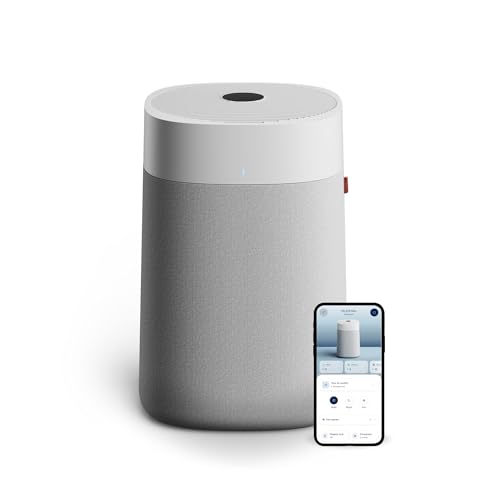
Blueair Blue Pure 211i Max, up to 3,235 sq ft, WiFi
Up to 3,235 sq ft23 dB quietWiFi auto mode
Check price on Amazon
Best for: Open living areas near 650 square feet that need headroom and quiet operation.

The 211i Max carries the largest coverage figure of any machine here, a 3,235 square foot listing, and it pairs that with a quiet-operation claim of 23 dB. Like every up-to figure, the large number is the one-air-change-per-hour version, so allergy-grade cleaning at about five changes works out near 650 square feet, which is still a big open living area. The headroom is the real benefit, because it lets the fan sit on a low speed in a large room.

Blueair's approach is a HEPASilent dual filtration that combines mechanical filtration with an electrostatic charge to hold airflow up and noise down, and the unit uses built-in sensors to raise the speed when pollution levels rise. The WiFi app gives schedules and readings, but the machine still works from the panel if the connection drops. Compared with the Coway Mighty2, it moves much more air and is built for a bigger space.

The maker positions it for living rooms and open floor plans, and the footprint reflects that, so plan for a tall cylinder with clear space on all sides. Placement matters: put it in the middle third of the room's long wall rather than in a corner. Ownership is the filter set, which is a single cloth-wrapped cartridge on this family, so check the replacement before you buy and keep a spare on hand. In year three, the fan will be the part that ages most, and a slow-running large unit has an advantage here because it rarely runs at full tilt. Wipe the sensor window and the intake every few months.

What works

  • Largest coverage figure in the lineup
  • Quiet 23 dB figure suits living spaces
  • WiFi app and sensor driven auto mode
  • Headroom keeps the fan on a low speed

Watch out for

  • Tall footprint needs clear floor space
  • The up-to figure is a one-change number

Spec sheet

Listed coverage
3,235 sq ft
Filtration
HEPASilent dual filtration
Quiet figure
23 dB
Control
WiFi, app, auto mode
Class
Large room and open plan
02
FreAire HAP605 triple intake, up to 2,600 sq ft
Up to 2,600 sq ftTriple air intakeTurbo pet mode
Check price on Amazon
Best for: Open living rooms near 500 square feet where cost matters and airflow from several sides helps.

The HAP605 is built around its intake. A wide front inlet plus two side inlets pull air from three directions, which lets the machine draw from more of a large room than a single-face tower. With a listed coverage of 2,600 square feet, the one-change figure translates to roughly 520 square feet at allergy-grade rates, so it sits between the Coway and the Blueair in capacity.

A PM2.5 sensor drives the auto mode and the listing describes a turbo pet mode that raises the fan after a spike. The washable filter layer is the cost saver here, since the first stage can be rinsed and reused rather than replaced. The airflow rating is a brand claim, so assume the real-world figure is more modest than the box.

Compared with the Blueair, you give up app control and the quieter dual filtration and get a lower price tier. In year three the habit that matters is rinsing the washable layer on a schedule and checking that the three inlets are not blocked by furniture. A machine pulling from three sides is more sensitive to a blocked side than a one-face unit. Because the brand is newer, confirm that the replacement HEPA layer is available before you commit.

What works

  • Three inlets draw from a wider part of the room
  • Washable layer lowers running cost
  • PM2.5 sensor with auto and turbo pet modes
  • Lower price tier than the Blueair

Watch out for

  • Airflow is a brand claim, not verified
  • No app control in the listing

Spec sheet

Listed coverage
2,600 sq ft
Intake
Front plus two side inlets
Filter
HEPA with washable layer
Sensor
PM2.5 with auto mode
Extra mode
Turbo pet mode
03
Coway Airmega Mighty2, up to 1,800 sq ft, laser sensor
Up to 1,800 sq ftMegascan laser sensorWashable pre-filter
Check price on Amazon
Best for: Living rooms near 360 square feet where responsive sensing matters.

The Mighty2 is Coway's next-generation version of a popular compact tower, and its listing leads with a Megascan laser sensor that reads PM1, PM2.5 and PM10 together. A laser sensor tracks a wider range of particle sizes than a basic infrared sensor, which makes the automatic speed control more responsive in a room where activity changes through the day.

Its coverage figure is 1,800 square feet, so allergy-grade cleaning is closer to 360 square feet, the smaller half of this lineup. That makes it the right choice for a living room rather than a loft. The filter is a combined HEPA and carbon element behind a washable pre-filter, a three-stage layout that is simple to maintain.

In year three the washable pre-filter is the chore, a quick vacuum or rinse, and the combined filter is a single replacement. Next to the FreAire it gives up coverage and adds a better sensor, and next to the Blueair it gives up headroom and gains a smaller footprint.

What works

  • Laser sensor reads PM1, PM2.5 and PM10
  • Washable pre-filter, single combined main filter
  • Compact for a large-room class machine
  • Auto mode reacts quickly to changes

Watch out for

  • Smaller coverage than the other large-room picks
  • The listing's coverage is the one-change figure

Spec sheet

Listed coverage
1,800 sq ft
Filtration
Washable pre-filter, 2-in-1 HEPA and carbon
Sensor
Laser, PM1, PM2.5, PM10
Stages
3
Class
Large room
04
Winix 5520 True HEPA, verified at 392 sq ft
AHAM at 392 sq ft1,882 sq ft in 1 hrCarbon filter
Check price on Amazon
Best for: Rooms near 390 square feet where a verified number is the deciding factor.

The Winix 5520 is the only unit here that states its coverage in three forms: a verified room size of 392 square feet, a one-hour figure of 1,882 and a half-hour figure of 941. Those numbers are all the same airflow expressed at different air-change rates, so you can pick the one that matches your goal, a fast clean in half an hour or a steady allergy-grade cycle at the verified room size.

The True HEPA layer is paired with a carbon filter for odors and an air quality monitor that drives the auto mode. Compared with the Blueair, it covers a much smaller verified area, and compared with the Coway it is the more transparent about how the claim was built.

In year three the cost is the HEPA and carbon set, and the maker keeps the genuine parts available. Vacuum the mesh pre-filter each month, and keep the display clear of dust so the monitor stays accurate.

What works

  • States verified, one-hour and half-hour coverage
  • True HEPA with a carbon odor stage
  • Air quality monitor drives auto mode
  • Genuine filters are easy to source

Watch out for

  • Smaller verified area than the biggest units
  • Louder than the Blueair at full speed

Spec sheet

AHAM room size
392 sq ft
Hourly coverage
1,882 sq ft
Half-hour coverage
941 sq ft
Filter
Mesh, True HEPA, carbon
Monitor
Air quality display
05
AIUZLK P260 H13 HEPA, up to 2,000 sq ft
Up to 2,000 sq ft24W brushless motor22 dB
Check price on Amazon
Best for: Medium-large rooms near 400 square feet on a tight budget.

The P260 is the low-cost way into a large-room machine. It pairs a 24W brushless motor with an H13 HEPA filter in a three-stage layout and a washable pre-filter. A 24W motor is modest next to a 56W unit like the Levoit tower, so the coverage claim of 2,000 square feet is best read as a ceiling, with allergy-grade cleaning closer to 400 square feet.

The 22 dB figure is quoted at the lowest speed, which is the speed to expect if the room is not full of smoke. A brushless motor tends to run cooler and quieter than a brushed one, which helps with year-three reliability. It is a brand-claimed rating, so allow a margin.

Expect to rinse the pre-filter and swap the HEPA layer on schedule, and check that the replacement is sold before you buy.

What works

  • H13 HEPA grade at a low tier
  • Brushless motor with a washable pre-filter
  • 22 dB figure at the lowest speed
  • Large coverage claim leaves headroom

Watch out for

  • Low-wattage motor, so treat coverage as a ceiling
  • Brand-claimed airflow, no third party mark

Spec sheet

Listed coverage
2,000 sq ft
Filter
H13 HEPA, 3-stage
Motor
24W brushless
Pre-filter
Washable
Noise
22 dB at lowest speed
06
ECOSELF HEPA 360 intake, up to 1,800 sq ft
Up to 1,800 sq ft360 degree intakePM2.5 sensor
Check price on Amazon
Best for: Square or open living rooms near 360 square feet where a 360 degree intake helps.

This ECOSELF draws air from every direction through a 360 degree intake, which spreads the filtering load around the cylinder and avoids the dead side that a single-face tower can have. The listing gives a coverage of 1,800 square feet, a figure that implies about 360 square feet at allergy-grade rates.

The filter stack is a pre-filter, a HEPA filter and an activated carbon layer, with a PM2.5 sensor feeding the auto mode. Compared with the Coway Mighty2, the capacity is the same on paper and the sensor is simpler, so the choice is between a laser sensor and a lower price.

Ownership is routine: clean the pre-filter, swap the main filter on schedule, and keep the 360 degree inlet clear of furniture. Because the machine is a cylinder that pulls from all sides, it can go in the middle of a room better than most towers. Keep it a foot from furniture, and expect the carbon layer to saturate before the HEPA layer does.

What works

  • 360 degree intake spreads the filter load
  • Pre-filter, HEPA and carbon stack
  • Real-time PM2.5 sensor with auto mode
  • Same listed coverage as the Coway

Watch out for

  • Simpler sensor than the Coway's laser unit
  • Brand-claimed coverage with no verification

Spec sheet

Listed coverage
1,800 sq ft
Intake
360 degree
Stages
Pre-filter, HEPA, carbon
Sensor
PM2.5, real time
Class
Large room

Spec sheet decoder

What the numbers on the box really mean

The specs manufacturers lead with, translated into what they tell you about real-world performance.

Square feet at 1 hour

The room size that gets one air change per hour. It is a ceiling, not an allergy-grade rating.

Watch forDivide the Blueair's 3,235 by about five to see its real working room.

Air changes per hour

How often the room's air passes through the filter. Four to five is the working target for allergies or smoke.

Watch forThe Winix 5520 states the half-hour number, which is two changes per hour.

Ceiling height

All coverage claims assume about eight feet. Taller ceilings enlarge the air volume.

Watch forA nine-foot ceiling reduces every figure here by about a ninth.

Sensor type

Infrared sensors count larger particles, and a laser sensor reads a wider range of sizes.

Watch forThe Coway has laser sensing, the ECOSELF a basic PM2.5 sensor.

Intake faces

The number of sides the machine pulls from. More faces means a more even draw.

Watch forFreAire uses three and ECOSELF 360 degrees.

Methodology

How We Evaluated These Air Purifiers for Large Rooms

Real room coverage

We converted every coverage figure into an allergy-grade room by dividing by about five, then adjusted for ceiling height. The lineup runs from the Blueair near 650 square feet to the Coway and ECOSELF near 360. Units with the smallest real room were placed lower for large-space use.

Headroom and quiet

We looked at how much spare airflow each unit had, since spare airflow lets the fan idle. We compared quiet figures such as the Blueair's 23 dB and the AIUZLK's 22 dB, always as lowest-speed numbers. This is a spec-sheet judgment.

Intake and mixing

We rated the intake layout, from the FreAire's three inlets and the ECOSELF's 360 degree design to single-face towers. Large rooms reward machines that draw from many sides.

Verification

We gave weight to the Winix 5520's verified room size and flagged brand-claimed numbers elsewhere. We did not run any measurement ourselves, so verification here means a mark on the listing.

Upkeep and filter supply

We weighed washable pre-filters, combined filters and how clearly each listing names a replacement. Large machines move more air and load their filters faster, so upkeep matters more here.

Decision guide

How to Choose the Right Air Purifiers for Large Rooms

By Room Size and Ceiling Height

SituationPickWhy
Open plan near 650 square feet, 8 ft ceilingsBlueair 211i MaxLargest headroom in the group
Living room near 520 square feetFreAire HAP605Three inlets, 2,600 claim
Room near 390 square feet, verified number wantedWinix 5520Verified at 392 square feet
Room near 360 square feet, 8 ft ceilingsCoway Mighty2Laser sensor, compact
Room near 400 square feet on a budgetAIUZLK P260H13 HEPA at low cost

By Budget

TierPickWhy
LowestAIUZLK P260Budget large-room claim
LowerFreAire HAP605Triple intake and washable layer
MidECOSELF 360Simple stack and sensor
UpperWinix 5520Verified sizing
HighestBlueair 211i MaxBiggest coverage and WiFi

One Big Unit vs Two Smaller Ones

One big unit

The Blueair 211i Max covers the most area alone and is simplest to run. It suits a single open room under about 650 square feet with standard ceilings.

Two smaller units

Two units such as a pair of Coway Mighty2 machines or a Winix 5520 plus a bedroom unit suit L-shaped or split spaces, where air does not travel between zones.

Choose one big unit for a single open space, and two units when a wall, corner or vaulted ceiling breaks the room up.

Intake Design

PreferencePickWhy
Pull from three sidesFreAire HAP605Front plus two side inlets
Pull from all aroundECOSELF 360360 degree intake
Single-face, compactCoway Mighty2Simple tower design
Verified sizing, simple intakeWinix 5520Third-party room size

For Open Plan Living Specifically

Look for

Enough headroom that the unit idles on a low speed, a multi-face intake and a sensor that reacts to cooking and activity. Place it centrally on the long wall.

In this comparison

The Blueair 211i Max gives the headroom and quiet, and the FreAire HAP605 gives the three-sided intake at a lower tier.

When to Spend More

Spend more if

The room is large, the ceilings are tall or you want WiFi and quiet running, which is the case for the Blueair 211i Max.

Save if

The room is near 400 square feet, where the AIUZLK or the ECOSELF covers it with a margin.

Ownership

Maintenance schedule

The upkeep that decides whether this machine lasts two seasons or ten.

TaskIntervalWhy it matters
Clean the pre-filterEvery 2 to 4 weeksLarge machines pull more dust and hair through the first stage. A clogged pre-filter forces the fan up and shortens the main filter life.
Replace the main filter6 to 12 monthsA loaded medium cuts the delivered airflow, which is exactly the headroom you bought. Replace on the schedule, not by appearance.
Clear every intake faceMonthlyA multi-intake machine starves if one face is blocked. Keep about a foot of space on every side.
Wipe the sensor windowEvery 3 monthsDust on the laser or infrared sensor skews the auto mode. A dry soft brush is enough.
Check the fan noiseTwice a yearA new rattle or whine usually means dust on the blades or a loose cover. Switch off and inspect.

FAQ

Frequently Asked Questions

Do I need one large purifier or two?

One large unit works in a single open room under about 650 square feet with standard ceilings. Two units are better for L-shaped, split or vaulted spaces, because air does not travel evenly between zones.

How much should I trust the 3,000 square foot claim?

Treat it as one air change per hour, which is too slow for allergies or smoke. Divide by about five to get the room the unit can really handle.

Are large-room purifiers loud?

Their top speed is loud, but their low speed is quiet. A unit with headroom runs on its low speed in a room smaller than its rating, which is why the Blueair and the FreAire are good choices.

Will a bigger unit cost more to run?

Larger motors use more power, but a unit on a low speed uses little. The bigger running cost is the filter, which loads faster on large machines.

Does ceiling height matter?

Yes, because every coverage figure assumes about eight feet. A ten-foot ceiling means about a quarter more air to clean, so move down a size in coverage.

Is placement really important?

Yes. A purifier in a corner with its back to a wall has a restricted intake. The middle of a long wall with a foot of clearance works better.

Bottom line

The short version

Browse more air purifiers for large roomson Amazon →
James Miller, Lead Machine Editor

About the author

James Miller

Lead Machine Editor, MachineFanatic

James Miller leads MachineFanatic's buying guides, turning spec sheets, manuals and owner feedback into clear verdicts on power tools, outdoor power equipment, shop machines and kitchen machines.

More from James →

Keep reading

Related guides