
Amazon affiliate links - we earn a commission.Affiliate disclosure

Buying guide · 12 min read · Updated 2026-11-25

Best Bench Grinders Under $50 (2026)

Three bench grinders that list for under $50: two 6 inch full-size units and a mini variable speed model, compared on speed, wheels, safety and sharpening use.

James MillerBy James MillerLead Machine Editor3 machines comparedSpec-sheet verified
Best Bench Grinders Under $50

At a glance

Our top picks

Side by side

Spec comparison

MachineWheel sizeSpeedMotorWheelsUse
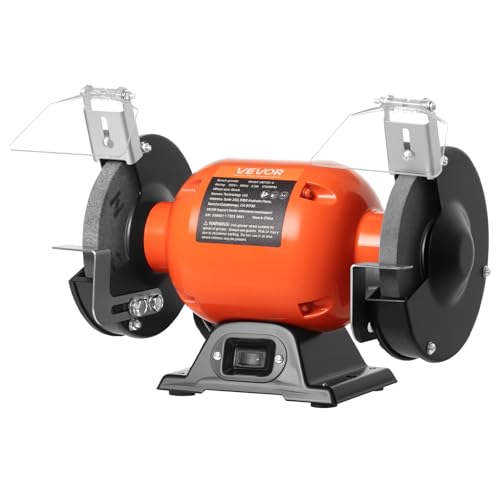
VEVOR 6 in low-speed bench grinder, 1750 RPM, 250WBest OverallVEVOR 6 in low-speed bench grinder, 1750 RPM, 250W6 inch1,750 RPM250 watt, 2 amp inductionTwo brown fused alumina, 36 and 60 gritn/a
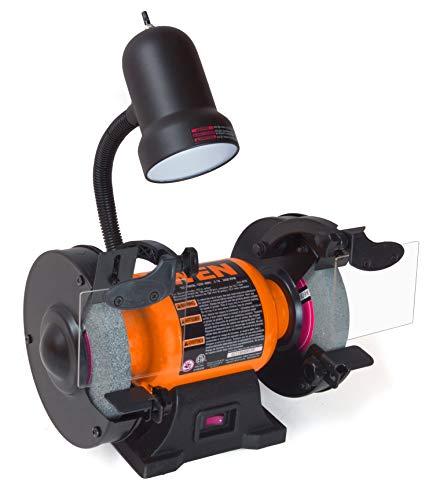
WEN BG4276 6 in single-speed bench grinder with work lightBest ValueWEN BG4276 6 in single-speed bench grinder with work light6 by 3/4 inchUp to 3,450 RPM2.1 ampn/aTools, knives, bits
Mini variable speed bench grinder, dual ceramic wheels, suction mountBest Mini Variable SpeedMini variable speed bench grinder, dual ceramic wheels, suction mountn/aAdjustablen/aWhite ceramic and coarseSmall items and hobby work

A bench grinder is two abrasive wheels on a motor shaft, and every other feature is there to make that simple machine safer or kinder to the metal. At the budget end you choose between speed, size and wheel quality, because you rarely get all three.

The biggest decision is motor speed. A fast motor removes steel quickly and also burns it, while a slow motor cuts cooler and protects the temper of a chisel. We ranked the options by how well their speed and wheels match the jobs people actually buy them for. Prices move, and the $50 cap reflects listing prices when this guide was updated.

Before you buy

6 Criteria to Look For Before Buying a Bench Grinder Under $50

  1. 01

    Motor speed and heat

    A standard 3,450 RPM grinder turns steel blue in seconds if you press hard, and a blue edge is soft. The VEVOR's 1,750 RPM is the speed woodworkers use for tool sharpening because the metal heats more slowly. Should you plan to sharpen chisels and plane irons, choose slow, and if you plan to grind mower blades and remove weld, choose fast. The mini grinder's variable speed lets you pick, but only on small work. A single wheel speed is the biggest decision at this budget. Think of the wheel as a source of heat: every second the steel touches it, energy goes into the edge. A slow wheel with a light touch lets the heat escape, while a fast wheel with a heavy touch cooks the tip. If you are unsure which matters to you, ask whether you ever grind something you would be upset to ruin, and buy the slow unit if the answer is yes.

  2. 02

    Wheel size

    A 6 inch wheel has less surface speed at the same RPM than an 8 inch wheel and wears down faster, but it is lighter and cheaper to replace. Eight inch wheels are flatter and last longer, but they cost more and need a bigger motor. At this budget, 6 inches is the norm. If you can afford to step up, look at the next tier. A bigger wheel also gives a flatter grind on a long tool, because the curve across the blade is gentler. On a 6 inch wheel a wide chisel gets a noticeable hollow, which some woodworkers like and others fight. That hollow is a normal result of wheel diameter, not a defect in the grinder.

  3. 03

    Motor type and noise

    An induction motor, like the VEVOR's, runs quieter and lasts longer because it has no brushes. A universal-style motor is cheaper and louder. A grinder is loud even at its best, so hearing protection matters. If you work in an attached garage, the quieter motor is worth the slower speed. A motor with no brushes also produces less radio and electrical noise and sheds no carbon dust inside the case. Whatever the motor, check that the switch is within easy reach, because you want to be able to shut the machine off without letting go of the work.

  4. 04

    Wheel quality and dressing

    Every grinder at this price ships with basic aluminum oxide wheels. They work, but they glaze and go out of round, which makes the machine vibrate. A star-wheel or diamond dresser restores the face. Never use a wheel rated below the grinder's speed, and ring-test a replacement wheel for cracks before mounting it. Tap a clean wheel lightly with a wooden handle while it hangs on a finger: a sound wheel rings, a cracked wheel thuds. After fitting a new wheel, stand to the side and run the grinder for a full minute before you put any work against it. These steps cost a minute and prevent the one failure that can really hurt you.

  5. 05

    Tool rest and spark guard

    The rest should sit within about an eighth of an inch of the wheel and the spark guard within a quarter inch. A wide gap lets a tool jam between the rest and the wheel, which is how grinders grab and throw work. Budget units often ship with loose rests, so check and tighten them before the first use. As the wheel wears smaller, the gap grows, so reset the rest every few sessions. A thin feeler gauge or a folded card makes the gap easy to set by eye.

  6. 06

    Base and vibration

    Cheap grinders have stamped steel bases that walk and chatter. A cast iron base dampens vibration, but none of the grinders in this budget have one. Bolt the machine to a heavy bench and use rubber pads or a mat. A grinder that vibrates leaves a rough finish and tires your hands. Balance matters too: a wheel that is out of round or loaded with metal will pulse at the speed of rotation. Dress it, and if the vibration remains, replace the wheel instead of living with it.

Detailed reviews

The 3 best bench grinders under $50, explained

01
VEVOR 6 in low-speed bench grinder, 1750 RPM, 250W
6 in wheels1,750 RPM250W induction36/60 grit
Check price on Amazon
Best for: Sharpening chisels, plane irons, knives and lawn tools without burning them.

VEVOR's 6 inch grinder runs at 1,750 RPM, which is roughly half the 3,450 RPM of a standard grinder. That slow speed matters because a grinding wheel turns steel into heat, and high-carbon tool steel loses its temper when it turns blue. A slow wheel produces less friction heat per second, so you can grind a chisel or plane iron with far less risk of ruining the edge.

The motor is a 250 watt, 2 amp induction type. Induction motors are quieter than the universal brush motors used on cheaper machines and they last longer because there are no brushes to wear. The kit includes two brown fused alumina wheels, one 36 grit for reshaping and one 60 grit for finer work, plus a transparent eye shield that adjusts to different angles.

The trade-off is removal rate. A slower wheel cuts less metal per minute, so heavy stock removal takes longer than on the WEN. For sharpening, that is a benefit. In ownership, check the tool rests are within an eighth of an inch of the wheel, dress the wheels when they glaze and keep the sparkguard within a quarter inch. Because the motor is small, ease off the pressure when you hear the pitch drop, since a stalled induction motor draws high current and heats quickly.

What works

  • Low speed protects tool temper
  • Induction motor is quiet and durable
  • Two grits included for rough and fine work
  • Adjustable transparent eye shield

Watch out for

  • Slower stock removal than a fast grinder
  • Small 250 watt motor stalls on heavy pressure

Spec sheet

Wheel size
6 inch
Speed
1,750 RPM
Motor
250 watt, 2 amp induction
Wheels
Two brown fused alumina, 36 and 60 grit
Safety
Transparent adjustable eye shield
02
WEN BG4276 6 in single-speed bench grinder with work light
6 in wheels3,450 RPM2.1 ampWork light
Check price on Amazon
Best for: General metal removal, deburring and sharpening yard tools.

The WEN BG4276 is the standard fast 6 inch grinder, with a 2.1 amp motor turning 6 by 3/4 inch wheels at up to 3,450 RPM. At that speed it removes metal quickly, which suits deburring, shaping mower blades, cleaning weld spatter and reviving old tools. The built-in flexible work light helps you see the spark pattern and the edge you are shaping.

Fast wheels are a mixed blessing. They cut quickly, but they heat the metal quickly too, so a chisel or a drill bit can turn blue in a few seconds if you hold it against the wheel. The usual technique is to quench the work in water often and take light passes. Compared with the VEVOR in this list, the WEN is the one for rough work and the VEVOR is the one for fine edges.

Ownership is simple. Keep the wheels dressed, set the tool rest close, never grind on the side of a wheel and always wear eye protection. A grinder on a thin bench will walk and vibrate, so bolt it to something solid. Replace the stock wheels with a better-quality pair when they wear, because the wheels are the cheapest upgrade on a budget grinder and the one that improves it most.

What works

  • Removes metal quickly at 3,450 RPM
  • Built-in flexible work light
  • Common 6 inch wheel size is easy to replace
  • Low cost for a full-size grinder

Watch out for

  • Fast wheels can burn tool steel
  • Universal-style motor is louder

Spec sheet

Wheel size
6 by 3/4 inch
Speed
Up to 3,450 RPM
Motor
2.1 amp
Light
Flexible work light
Use
Tools, knives, bits
03
Mini variable speed bench grinder, dual ceramic wheels, suction mount
Variable speedDual wheelsSuction cup baseMini size
Check price on Amazon
Best for: Hobbyists shaping small parts where speed control matters.

This is a small hobby grinder rather than a full bench machine. It carries two wheels, a white ceramic one and a coarse one, with an adjustable speed control and a suction-cup base that sticks to a flat bench. Variable speed is a real advantage on a tiny unit, since you can slow it for delicate work and speed it up for more aggressive grinding.

Its size defines its limit. A mini grinder suits small blades, jewelry-scale shaping, model making, nail trimming of tool tips and light deburring. It will not handle a mower blade or a heavy chisel, and the suction mount holds only when the surface is smooth and clean.

Against the two 6 inch units here, it gives up power and wheel size but gains speed control and a tiny footprint. Check that the suction cup grips before each session, wear eye protection and keep the work light. Replace the wheels as they wear, because a worn ceramic wheel stops cutting. A mini grinder spins fast for its size, so do not force the work against it. Light contact and a steady hand give a cleaner result than pressing hard, and a small unit will stall if you lean on it.

What works

  • Adjustable speed for delicate work
  • Two wheels for fine and coarse cuts
  • Suction base needs no bolts
  • Tiny footprint for a small bench

Watch out for

  • Too small for chisels or mower blades
  • Suction mount depends on a clean flat surface

Spec sheet

Format
Small hobby grinder
Speed
Adjustable
Wheels
White ceramic and coarse
Mount
Heavy-duty suction cup
Use
Small items and hobby work

Spec sheet decoder

What the numbers on the box really mean

The specs manufacturers lead with, translated into what they tell you about real-world performance.

RPM

How fast the wheel turns. Higher speeds remove metal faster and heat it faster.

Watch forThe VEVOR runs 1,750 RPM, the WEN up to 3,450.

Motor amps and watts

A measure of electrical input. Higher means more torque under load.

Watch forThe VEVOR is 250 watts at 2 amps, the WEN 2.1 amps.

Wheel grit

The coarseness of the abrasive. Low numbers cut fast, high numbers cut fine.

Watch forThe VEVOR ships 36 and 60 grit.

Induction versus universal

Two motor types. Induction is quieter and longer lived.

Watch forOnly the VEVOR lists an induction motor.

Variable speed

A control that lets you change the wheel speed.

Watch forOnly the mini grinder lists it, and only on small work.

Methodology

How We Evaluated These Bench Grinders Under $50

Speed and sharpening suitability

We compared RPM against the way people use a bench grinder. The VEVOR's 1,750 RPM suits sharpening and the WEN's 3,450 RPM suits rough work. The mini's variable speed offered flexibility. We did not penalise a fast grinder for being fast, only for being sold as something it is not, since a 3,450 RPM machine is a perfectly good rough tool.

Motor quality

Motor type and rating were reviewed. The induction motor earned credit for quiet running. Universal-style motors scored for power at a lower tier. We also noted that a 250 watt induction motor is modest, so we judged the VEVOR as a sharpening machine and not as a heavy-stock grinder.

Wheels and safety

Wheel grit, eye shields and rest design were considered. The VEVOR's two grits and adjustable shield stood out. The WEN's work light was noted as a convenience. A unit with no eye shield or with a flimsy one lost points, since eye protection should be part of the machine and not an afterthought.

Size and mounting

We considered footprint and how each unit mounts. The mini's suction cup suits a tiny bench. The 6 inch units need bolts and a solid surface. Because bench space is often the limit in a small garage, we gave weight to how little room each machine takes and how it mounts.

Cap compliance

Every grinder was verified under the $50 cap at the time of writing. Only three genuine grinders met that test, so the list is short. We left out accessories and unrelated polishers.

Decision guide

How to Choose the Right Bench Grinders Under $50

By Job

SituationPickWhy
Sharpening chisels and plane ironsVEVOR 6 in low-speed1,750 RPM protects temper
Reshaping mower bladesWEN BG4276Fast wheels remove metal quickly
Deburring and cleaning weld spatterWEN BG42763,450 RPM and work light
Small parts and hobby shapingMini variable speedAdjustable speed and small wheels

By Budget

TierPickWhy
Lowest in this listMini variable speedTiny hobby grinder
MiddleWEN BG4276Full-size fast grinder
Top of the capVEVOR 6 in low-speedInduction motor and two grits

Fast Grinder vs Slow Grinder

Fast (WEN, 3,450 RPM)

Strips metal quickly and suits rough work. It heats steel fast and needs water quenching to protect an edge.

Slow (VEVOR, 1,750 RPM)

Cuts cooler and suits sharpening. It removes metal more slowly, so heavy work takes longer.

Pick fast for rough work and slow for edges you care about. If you do both, own the slow unit for tools and a cheap fast one for the farm chores, which still costs less than one premium grinder.

Bench Space

PreferencePickWhy
Tiny bench or apartmentMini variable speedSuction cup, small footprint
Dedicated shop benchVEVOR 6 in low-speedNeeds a solid mount
Garage workbenchWEN BG4276Standard bolt-down grinder

For Woodworkers Specifically

Look for

A slow-speed induction motor, fine grit wheels and an adjustable rest. Woodworkers sharpen edges that must keep their temper. A jig or a tool rest with a fixed angle also helps repeat the same bevel every time.

In this comparison

The VEVOR fits that need best. The WEN works if you quench often and use light passes. For hand tools, finish the edge on a fine stone after the wheel.

When to Spend More

Spend more if

You want an 8 inch wheel, a cast iron base or a bigger motor for daily grinding. Those come at a higher cap.

Save if

You sharpen yard tools a few times a year. The WEN or VEVOR will serve, and either one leaves room in the budget for a better set of replacement wheels and a dressing tool, which together do more for the finish than a costlier motor would.

Ownership

Maintenance schedule

The upkeep that decides whether this machine lasts two seasons or ten.

TaskIntervalWhy it matters
Dress the wheelsWhen glazed or out of roundA dull or uneven wheel burns steel and vibrates. A dressing tool restores the face. Do it with the grinder running, a steady hand and eye protection, and take off only enough to expose fresh abrasive.
Check tool rest gapEvery sessionA wide gap can trap a tool. Keep it within an eighth of an inch. Reset it after every wheel change or dressing, since both alter the gap.
Inspect wheels for cracksBefore useA cracked wheel can break at speed. Ring-test and replace if it does not sound clear. Also check the date or rating printed on the wheel and make sure it is at or above the grinder's speed.
Tighten the base boltsMonthlyVibration loosens bolts. A loose base makes the grinder walk. If the bench itself flexes, add a plywood plate under the grinder to spread the load.
Clean dust from the motor ventsEvery few monthsGrit builds up and heats the motor. Clean vents keep it cool. Blow them out with compressed air or a soft brush while the machine is unplugged.

FAQ

Frequently Asked Questions

Why does the wheel speed matter?

Faster wheels cut faster but heat steel faster. A slow wheel protects the temper of chisels and plane irons. A rough test is to touch the metal: if it is too hot to hold, the edge has probably gone soft.

Can I sharpen a chisel on a fast grinder?

Yes, with care. Use light passes and quench in water often, because the edge can turn blue and soften in seconds. Many woodworkers grind to a rough bevel on a fast wheel and then finish on stones, which gives speed without risking the final edge.

Is a 6 inch grinder enough?

For tools and light metal work, yes. For all-day heavy grinding an 8 inch unit lasts longer. Wheel replacement is cheaper for 6 inch sizes, and replacements are easy to find at any hardware store.

Do I need a dresser?

Yes eventually. Wheels glaze and go out of true, and a dresser restores the face and cuts vibration. A simple star-wheel dresser is inexpensive and works on every grinder in this guide.

What safety gear do I need?

Eye protection or a face shield, hearing protection and snug clothing. Never grind on the side of the wheel. Tie back long hair and avoid gloves near the wheel, since a glove can be dragged in.

Does the $50 cap change?

Listing prices move. The cap reflects prices when this guide was updated, so check the live listing before you order. If a pick has crept above the cap, one of the other two is a sensible swap for the same job.

Bottom line

The short version

Browse more bench grinders under $50on Amazon →
James Miller, Lead Machine Editor

About the author

James Miller

Lead Machine Editor, MachineFanatic

James Miller leads MachineFanatic's buying guides, turning spec sheets, manuals and owner feedback into clear verdicts on power tools, outdoor power equipment, shop machines and kitchen machines.

More from James →

Keep reading

Related guides