
Amazon affiliate links - we earn a commission.Affiliate disclosure

Buying guide · 13 min read · Updated 2026-11-07

Best Bread Makers for Beginners (2026)

Six bread makers for first-time bakers compared on controls, built-in scales, pan coating, loaf sizes and program lists, from Cuisinart to Elite Gourmet.

James MillerBy James MillerLead Machine Editor5 machines comparedSpec-sheet verified
Best Bread Makers for Beginners

At a glance

Our top picks

Side by side

Spec comparison

A bread maker takes the guesswork out of a first loaf. You add ingredients, press a button and the machine kneads, rises and bakes on a fixed schedule. The catch is that the machine only controls time and temperature, and the most common beginner failure is inaccurate measuring.

That is why the best beginner machine is not the one with the longest program list. It is the one with clear controls, a forgiving pan and, ideally, help with measuring. This guide ranks machines by how easily a first-timer gets a good loaf.

Before you buy

6 Criteria to Look For Before Buying a Bread Maker for Beginners

  1. 01

    Simple controls and clear menus

    A first-time baker needs a panel that does not hide the basics. The Cuisinart Compact's twelve programs and three crust settings are easy to learn, while the 25-program LCKSMAL has more to explore. Pick the machine you will actually understand, because a bread maker that is confusing on day one is one you will stop using by week three. Read the manual's recipe table before buying if you can, since it shows how the maker expects you to measure, and a clear table is a good sign of a machine designed for newcomers. Note also whether the display shows time remaining, because watching the countdown helps a new baker learn the rhythm of knead, rise and bake.

  2. 02

    Measuring help

    The most common beginner failure is too much flour, usually from scooping. A cup of scooped flour can weigh 20 percent more than one that is spooned and leveled, which produces a dense, short loaf. The LCKSMAL's built-in scale solves this, and on any other machine a separate kitchen scale is the best first accessory. Aim for about 60 percent water to flour by weight for a basic white loaf, then adjust by a teaspoon at a time after you see how the dough ball looks. A good dough ball is smooth, slightly tacky and clears the sides of the pan, and a ball that sticks or looks dry tells you what to correct before the first rise.

  3. 03

    Pan coating and durability

    The Elite Gourmet's CERALAST ceramic pan resists scratching better than the standard nonstick on the Cuisinart and OSIPOTO, and a scratched pan makes loaves stick. All pans need hand washing and a nonmetal tool. Replacement pans are sold for most machines, so check availability. A pan that sticks after a year is the most common reason owners abandon a machine, and a ten-minute soak in warm water before washing prevents most of the sticking. Never use steel wool or abrasive pads, and do not cut bread in the pan with a knife.

  4. 04

    Loaf size and household fit

    Beginners often buy the biggest machine, then end up throwing away stale loaves. A one-and-a-half pound loaf feeds two to three people for a couple of days, which suits most first-time owners. The Cuisinart and Elite Gourmet offer smaller sizes, while the LCKSMAL goes up to 2.5 pounds. Fresh homemade bread has no preservatives and goes stale in two to three days, so a smaller loaf you finish is better than a large one you freeze. If you do bake large, slice the loaf once it cools, wrap it in portions and freeze it so each slice toasts straight from the freezer.

  5. 05

    Gluten-free and special settings

    A dedicated gluten-free program changes the kneading and rising schedule, which matters more than the program count. The Cuisinart, Elite Gourmet, KITCHENARM HANDY and LCKSMAL all offer it. Do not assume a basic program will produce a good gluten-free loaf. Gluten-free batter is wetter than wheat dough and needs no second punch-down, which is why a dedicated cycle has a shorter knead and a single rise. Follow a recipe written for the machine, and expect a denser crumb than wheat bread no matter which model you buy.

  6. 06

    Room to grow

    A homemade or custom cycle, like the KITCHENARM HANDY's, lets you adjust kneading and rising times once you understand dough. Without it, you are limited to the presets. If you expect to experiment, choose a machine with a custom slot. Typical experiments include a longer first rise for better flavor, a cooler bake for sweet doughs and a shorter knead for delicate flours. A custom cycle lets you save each tweak instead of re-entering times at every bake.

Detailed reviews

The 5 best bread makers for beginners, explained

01
Cuisinart Compact 2 Lb. Automatic Programmable Bread Maker CBK-110
12 programs1 to 2 lb loavesVertical pan3 crust settings
Check price on Amazon
Best for: First-time bakers who want simple controls and a small footprint.

The Cuisinart Compact keeps beginners on the rails. Twelve programs cover white, French, whole wheat, sweet, artisan dough, jam, cake and gluten-free, which is more than a first-time baker will use in a year. It bakes one, one-and-a-half or two pound loaves in a vertical metal nonstick pan, so you can start small and avoid wasting flour on early mistakes.

The simple layout is its main advantage. Pick a program, choose a loaf size and crust color and press start, with no menu tree to learn. Against the ceramic-pan machines in this group, the Cuisinart uses a conventional nonstick coating that needs more careful handling, and it has fewer extras than the app-and-scale models. Against the Elite Gourmet, it is more compact but offers fewer programs. Its vertical pan produces a tall, narrow loaf, which toasts well but looks different from a bakery sandwich slice, so know what to expect on the first bake.

Ownership is easy. Weigh your flour, use fresh yeast and avoid metal tools in the pan. A beginner's first month should be spent on the basic white and whole wheat programs, noting the dough ball texture at the ten-minute mark and adjusting water by a spoonful at a time.

What works

  • Twelve programs cover everyday bread without overwhelming
  • One, one-and-a-half and two pound loaf sizes
  • Compact body fits small kitchens
  • Three crust settings for light to dark

Watch out for

  • Conventional nonstick coating needs gentle care
  • No built-in scale or app guidance
  • Smaller motor works harder on dense dough

Spec sheet

Programs
12
Loaf sizes
1, 1.5 and 2 lb
Pan
Vertical metal nonstick
Crust
Three settings
Footprint
Compact
02
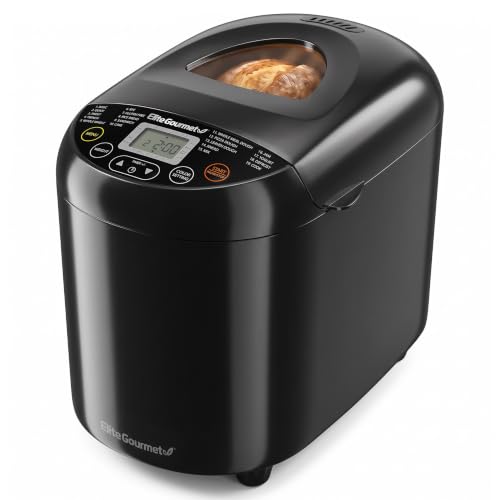
Elite Gourmet 2 Lb Automatic Bread Maker With CERALAST Ceramic Pan
19 presets3 loaf sizesCERALAST ceramic panGluten-free
Check price on Amazon
Best for: Beginners who want a forgiving ceramic pan at a low cost.

The Elite Gourmet pairs nineteen presets with a ceramic-coated pan, which the maker calls CERALAST. Three loaf sizes and a gluten-free preset make it flexible for households with different eaters, and automatic kneading, rising and baking handles the process from start to finish.

The ceramic coating is the notable feature for a beginner. Ceramic resists scratching better than many basic nonstick surfaces, so an accidental run-in with a spatula is less likely to wreck the pan. It is not scratch-proof, but it is more forgiving. Against the Cuisinart, it offers more presets and a tougher pan; against the LCKSMAL, it lacks the built-in scale and extra programs.

Ownership is the usual routine of hand washing, drying the pan fully and keeping the paddle clean. Keep the instruction booklet's recipe quantities in mind, because first loaves fail more from wrong measurements than from wrong programs.

What works

  • Ceramic pan is more forgiving than basic nonstick
  • Nineteen presets with a gluten-free setting
  • Three loaf sizes for different households
  • Fully automatic kneading, rising and baking

Watch out for

  • No built-in scale or app support
  • Ceramic still needs hand washing
  • Less established than the Cuisinart name

Spec sheet

Presets
19
Pan
CERALAST ceramic coating
Loaf sizes
Three
Capacity
2 lb
Special setting
Gluten-free
03
LCKSMAL 2026 2.5LB Bread Maker With Built-In Electronic Scale
Built-in scale25 programs2.5 lbGluten-free
Check price on Amazon
Best for: Beginners who struggle with measuring flour accurately.

The LCKSMAL is the only machine here that addresses the beginner's biggest problem directly. A built-in electronic scale lets you weigh ingredients inside the pan, which removes the chance of scooping too much flour, the leading cause of dense, short loaves. Twenty-five programs cover gluten-free, sourdough and yogurt as well as the standard menus.

That scale changes the learning curve. A new baker does not need a separate kitchen scale, and the machine can guide you through quantities. Against the Cuisinart and Elite Gourmet, it adds measuring help and a bigger 2.5-pound capacity, but it is a newer name with a shorter track record and it costs more. Against the OSIPOTO, it offers the scale and more programs.

In ownership, keep the scale area clean and calibrate it if readings drift. Use the manufacturer's recipes at first and note the dough ball texture. The machine is a good teacher for someone who wants to learn proportions by weight. Over a few months, you will absorb the ratios and can then bake confidently on any machine.

What works

  • Built-in scale removes measuring errors
  • Twenty-five programs including sourdough and gluten-free
  • 2.5-pound capacity for larger loaves
  • Teaches weighing habits from the start

Watch out for

  • Newer brand with a shorter track record
  • Scale may need recalibration over time
  • Costs more than basic models

Spec sheet

Scale
Built-in electronic scale
Programs
25 built-in
Capacity
2.5 lb
Includes
Gluten-free, sourdough, yogurt
Audience
Beginners
04
KITCHENARM 19-in-1 HANDY Bread Machine With Homemade Cycle
19 programsHomemade cycleGluten-freeBeginner friendly
Check price on Amazon
Best for: Novices who want room to grow into custom recipes.

The KITCHENARM HANDY targets complete novices with nineteen programs, a homemade cycle for your own recipes and a dedicated gluten-free setting. The homemade cycle matters more than it sounds: once you outgrow the presets, you can set your own knead, rise and bake times, so the machine does not feel limiting after the first few months.

It is a beginner-friendly design in the sense that it asks little. A straightforward panel and a modest program list reduce the risk of picking the wrong setting. Against the larger KITCHENARM 29-in-1, it is simpler; against the Cuisinart, it offers more programs and a custom option. The trade-off is a less established brand and a coating that needs gentle care.

Ownership centers on the pan and paddle. Hand wash, dry thoroughly and replace the paddle if it begins to wobble. Keep recipes simple for the first month and add complexity once your dough texture is consistent. Once you are comfortable, use the homemade cycle to lengthen the first rise, which builds flavor in a plain white loaf.

What works

  • Homemade cycle for custom recipes
  • Dedicated gluten-free setting
  • Nineteen programs without clutter
  • Beginner-friendly controls

Watch out for

  • Less established brand
  • Standard coating needs gentle care
  • No built-in scale

Spec sheet

Programs
19-in-1
Homemade cycle
Included
Gluten-free
Dedicated setting
Audience
Beginner friendly
Brand
KITCHENARM
05
OSIPOTO 2LB Stainless Steel 17-in-1 Bread Maker
17 programsStainless steel2 lbNonstick pan
Check price on Amazon
Best for: Beginners who prefer a sturdy stainless machine.

The OSIPOTO uses a stainless steel body and seventeen programs to cover standard bread, dough and cake cycles in a two-pound format. The metal casing helps with heat and durability and feels more solid than a plastic shell. It is marketed to beginners with a clean, plain control layout.

For a first-time baker, the seventeen programs are a sensible middle path: enough to bake white, whole wheat, French and sweet bread plus dough and jam, without a menu so long that you never learn it. Against the Cuisinart, it adds a stainless finish and a couple more programs, while its larger two-pound pan offers a bit more room for a growing family, and against the LCKSMAL it lacks the scale and sourdough settings.

In ownership, keep the exterior wiped to avoid fingerprints and hand wash the pan. A stainless body is easier to wipe clean than textured plastic, and the weight helps keep the machine still while it kneads. For a beginner, a steady machine matters because a rocking pan can shift the dough ball and lead to an uneven first rise.

What works

  • Stainless steel body feels solid and wipes clean
  • Seventeen programs cover everyday baking
  • Two-pound capacity suits most households
  • Plain, beginner-friendly layout

Watch out for

  • No built-in scale or custom program highlight
  • Less established brand
  • Nonstick pan needs gentle care

Spec sheet

Programs
17-in-1
Body
Stainless steel
Capacity
2 lb
Pan
Nonstick
Audience
Beginners

Spec sheet decoder

What the numbers on the box really mean

The specs manufacturers lead with, translated into what they tell you about real-world performance.

Programs (12 to 25)

The number of preset cycles, such as white, French, whole wheat, dough, jam and cake.

Watch forMany are variations on the same thing; the critical ones are basic, whole wheat, dough and gluten-free.

Loaf size

The pan capacity, from one pound on the Cuisinart to 2.5 pounds on the LCKSMAL.

Watch forA bigger pan does not make a better loaf; match it to your household.

Ceramic coating

The Elite Gourmet's CERALAST pan uses a ceramic nonstick layer.

Watch forCeramic is more scratch resistant but still wears with metal tools.

Built-in scale

The LCKSMAL weighs ingredients inside the pan.

Watch forCheck that it can be zeroed between ingredients.

Crust setting

Light, medium or dark browning, as on the Cuisinart's three options.

Watch forA dark setting can burn a sweet loaf.

Methodology

How We Evaluated These Bread Makers for Beginners

Control simplicity

We evaluated how quickly a first-timer can get from unboxing to a loaf. The Cuisinart's twelve programs and plain panel scored high, while longer menus on the LCKSMAL and KITCHENARM were weighed against their guidance.

Forgiveness

We looked at features that reduce failure: the LCKSMAL's scale, the Elite Gourmet's ceramic pan and smaller loaf sizes. We also considered the quality of the printed recipe booklet, since a clear booklet turns a first loaf into a repeatable routine. A machine that forgives measuring mistakes is better for a novice.

Program usefulness

We counted the programs a beginner actually uses: basic, whole wheat, dough, quick and gluten-free. The OSIPOTO's seventeen and Elite Gourmet's nineteen presets were judged on that core set.

Build and cleaning

We considered body material, pan coating and how easy parts are to clean. The OSIPOTO's stainless body and the Elite Gourmet's ceramic pan scored well.

Support and longevity

Based on owner feedback patterns, established names like Cuisinart tend to offer easier access to replacement pans and paddles.

Decision guide

How to Choose the Right Bread Makers for Beginners

By Experience Level

SituationPickWhy
Never baked beforeCuisinart Compact CBK-110Plain controls and small loaf sizes
Bad at measuringLCKSMAL 2.5LBBuilt-in scale removes flour errors
Plan to experiment laterKITCHENARM 19-in-1 HANDYHomemade cycle for custom recipes

By Budget

Budget tierPickWhy
Lowest outlayElite Gourmet 2 LbCeramic pan and presets at a low cost
Middle groundOSIPOTO 17-in-1Stainless body and sensible programs
Highest outlayLCKSMAL 2.5LBBuilt-in scale and 25 programs

Simple vs Feature-Rich

Simple

The Cuisinart and OSIPOTO offer plain panels and a modest program list. They are easy to learn and hard to misuse, and they cover standard bread well.

Feature-rich

The LCKSMAL and KITCHENARM add scales, custom cycles and more programs. They give room to grow but take more time to learn.

Choose simple if you want bread this week and expect to bake a few times a month; choose feature-rich if you plan to keep learning, to bake weekly and to try different flours. Neither group is wrong, and many bakers start simple, learn the basics and later move to a more capable machine.

Pan Coating Preference

PreferencePickWhy
Scratch-resistant ceramicElite Gourmet CERALASTCeramic-coated pan
Conventional nonstickCuisinart CompactVertical metal nonstick pan
Sturdy casingOSIPOTO 17-in-1Stainless steel body

For First Loaves Specifically

Look for

Clear controls, a gluten-free option if needed and a way to measure accurately. Start with the basic white program and weigh your flour. Keep notes on every loaf, including room temperature, flour brand and water amount, because small changes explain most differences between a good loaf and a poor one. After three or four bakes, move on to whole wheat and the dough cycle.

In this comparison

The Cuisinart is the easiest start, the LCKSMAL solves measuring and the Elite Gourmet is the forgiving value pick.

When to Spend More

Spend more if

You want measuring help and room to grow. The LCKSMAL's scale and 25 programs shorten the learning curve.

Save if

You just want a basic loaf. The Cuisinart or Elite Gourmet delivers it for less.

Ownership

Maintenance schedule

The upkeep that decides whether this machine lasts two seasons or ten.

TaskIntervalWhy it matters
Hand wash the panAfter each bakeDishwashers wear coatings. Use a soft sponge and a nonmetal tool.
Remove the paddleAfter each bakeDried dough locks it onto the shaft. Soak in warm water if stuck.
Wipe the chamberMonthlyCrumbs burn and smoke. Wipe with a damp cloth when cool.
Check yeast freshnessEvery few weeksOld yeast is a common cause of flat loaves. Proof a pinch in warm water; it should foam within ten minutes. Store opened yeast in the freezer to keep it active for months.
Calibrate the scaleEvery few monthsOn the LCKSMAL, check with a known weight to confirm readings.

FAQ

Frequently Asked Questions

What is the easiest bread maker for a beginner?

The Cuisinart Compact is the easiest to learn, with twelve programs and plain controls. The LCKSMAL is easier if measuring is your weak point.

Why did my first loaf come out dense?

Usually too much flour or old yeast. Weigh flour instead of scooping, and proof a pinch of yeast in warm water before baking.

How many programs do I need?

Fewer than you think. Basic, whole wheat, dough, quick and gluten-free cover most bakers, so a twelve-program machine is enough.

Is a ceramic pan worth it?

It is more scratch resistant than basic nonstick, which helps forgiving use. It still needs hand washing and nonmetal tools.

Can I bake gluten-free bread?

Yes, with a dedicated gluten-free program on machines like the Cuisinart, Elite Gourmet and KITCHENARM. Use a gluten-free recipe as flours behave differently.

Should I buy a large machine?

Not as a first purchase. A one to two pound machine avoids waste while you learn, and you can upgrade later.

Bottom line

The short version

Browse more bread makers for beginnerson Amazon →
James Miller, Lead Machine Editor

About the author

James Miller

Lead Machine Editor, MachineFanatic

James Miller leads MachineFanatic's buying guides, turning spec sheets, manuals and owner feedback into clear verdicts on power tools, outdoor power equipment, shop machines and kitchen machines.

More from James →

Keep reading

Related guides