
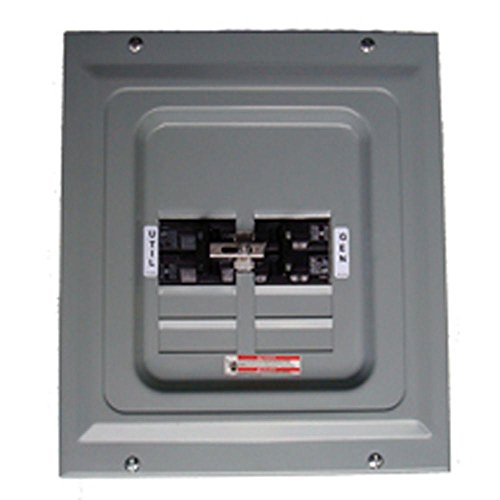
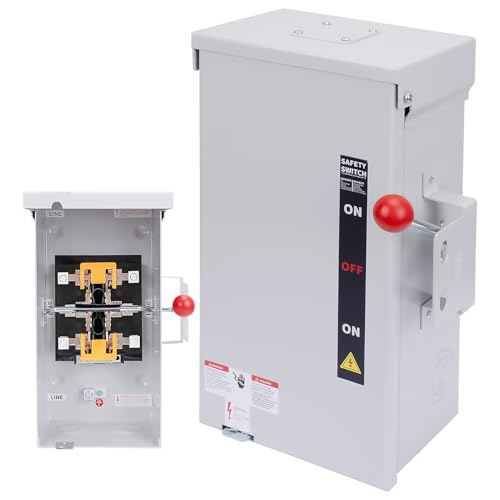


Generac's listing is unusually specific about purpose: it is meant to feed one dedicated load from a portable generator, not to move the entire house. That scope is the safest way to use a disconnect-style switch, because the sub-panel you build behind it holds only the circuits you chose, and the generator cannot be overloaded by flipping on the dryer. The double-pole manual design isolates generator power from the utility during the switchover.
A 100 amp rating gives a lot of headroom for any home portable, and the manufacturer's name carries weight with inspectors and installers who already know Generac's gear. Placed next to the 200 amp boxes in this lineup, it is a quieter, smaller solution with a clearer job description. It requires a separate sub-panel that you or your electrician must supply, with breakers for the chosen circuits.
That extra panel is the cost of the safety. Plan the load list first, mount the switch and sub-panel together near the main service, and let the electrician fit the generator inlet and feed breaker. Mark the lever positions on a printed card and exercise it each fall with the main off. Keep the generator's power cord short and rated for the load, and check the inlet for heat discoloration after the first long run. If you ever upgrade to a larger generator, the 100 amp rating means the switch itself will not need replacing, only the cord and inlet.
What works
- Single-load design limits overload risk
- 100A rating gives ample headroom
- Double-pole isolation from the utility
- Recognized generator brand
Watch out for
- Needs a separate sub-panel
- No inlet or cord in the listing
- Installer and permit required
Spec sheet
- Rating
- 100 amp
- Poles
- Double pole
- Operation
- Manual switching
- Intended load
- One dedicated sub-panel
- Use
- Portable generator backup