
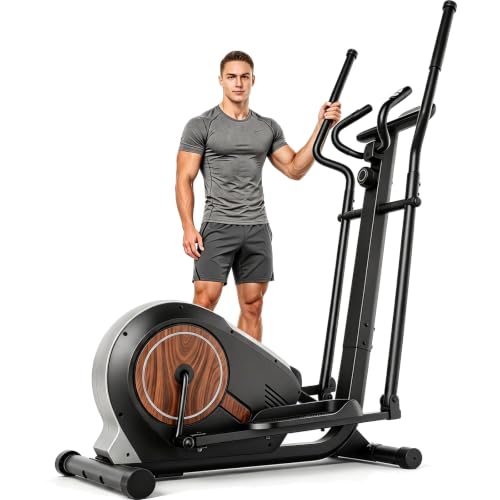
Amazon affiliate links - we earn a commission.Affiliate disclosure

Buying guide · 13 min read · Updated 2026-11-28

Best Ellipticals (2026)

Home ellipticals compared by stride length, flywheel weight, magnetic resistance and weight capacity, with picks for tall users, small rooms and quiet homes.

James MillerBy James MillerLead Machine Editor5 machines comparedSpec-sheet verified
Best Ellipticals

At a glance

Our top picks

Side by side

Spec comparison

MachineTypeStrideFlywheelResistanceCapacity
THERUN elliptical machine, 20 in stride, 18 lb flywheel, 32 levelsBest OverallTHERUN elliptical machine, 20 in stride, 18 lb flywheel, 32 levelsMagnetic home elliptical20 inches18 pound perimeter-weighted32 motorized levelsn/a
Niceday elliptical, 19 in stride, 18 lb flywheel, 400 lb capacityBest for Tall UsersNiceday elliptical, 19 in stride, 18 lb flywheel, 400 lb capacityMagnetic home elliptical19 inches18 pounds16 levels400 pounds
FOUSAE elliptical, rear-drive, 16 lb flywheel, 16 magnetic levelsBest Rear DriveFOUSAE elliptical, rear-drive, 16 lb flywheel, 16 magnetic levelsRear-drive magnetic ellipticaln/a16 pounds16 magnetic levelsn/a
ANCHEER elliptical, 16 in stride, 500 lb capacity, magneticBest Heavy-Duty ValueANCHEER elliptical, 16 in stride, 500 lb capacity, magneticHeavy-duty magnetic elliptical16 inchesn/aMagnetic500 pounds
pooboo elliptical, 15.5 to 17 in stride, 16 levels, 350 lb capacityBest Adjustable Stridepooboo elliptical, 15.5 to 17 in stride, 16 levels, 350 lb capacityAdjustable-stride elliptical15.5 to 17 inchesn/a16 levels, knob350 pounds

An elliptical trainer guides your feet in an oval path while the pedals and handles move together, giving a low-impact cardio workout that avoids the pounding of a treadmill. A heavy flywheel behind the pedals smooths the motion, and a magnetic brake sets how hard each stride feels. The mechanism is simple, which is why the build details matter.

Most disappointment comes from a stride that is too short for the user, a flywheel too light to feel smooth or a frame that wobbles at speed. Weight capacity and ceiling clearance also trip buyers up. This guide compares those physical facts across the lineup so the choice rests on measurements rather than adjectives.

Before you buy

6 Criteria to Look For Before Buying an Elliptical

  1. 01

    Stride length

    Stride is the length of the pedal path, and the industry range runs 16 to 20 inches. The THERUN gives 20 inches, the Niceday gives 19, and the ANCHEER gives 16. A stride shorter than your natural gait feels choppy, and taller users need 18 inches or more. Treat the stride number as the first filter. Measure inseam against stride if you are unsure, since a short stride tires the hips.

  2. 02

    Flywheel weight

    The flywheel stores momentum and smooths the motion. The THERUN and Niceday use 18 pounds, the FOUSAE uses 16, and heavier wheels generally feel smoother. A lighter wheel makes the stride feel jerky at low resistance. Perimeter weighting, as on the THERUN, adds momentum without extra mass. A heavier wheel also masks small flaws in assembly, which is why cheap frames feel rough at low resistance.

  3. 03

    Resistance system

    Magnetic resistance is quiet and low maintenance because there are no pads to wear. The THERUN's 32 motorized levels allow small steps, while the Niceday and FOUSAE use 16. More levels help if you plan to progress gradually, but quality of the stride matters more than level count. Progression matters, so finer steps help anyone returning from an injury.

  4. 04

    Rear drive versus front drive

    Rear-drive ellipticals like the FOUSAE offer more stride adjustment and a flatter path. Front-drive machines usually offer more incline options. Neither is better in absolute terms, so choose based on stride feel and floor space. If floor length is the limit, compare footprints before drive type.

  5. 05

    Weight capacity and frame

    A listed capacity tells you how strong the frame is. The ANCHEER lists 500 pounds, the Niceday 400, and the pooboo 350. A higher number usually signals a heavier, more stable base. Even lighter users benefit from a sturdy frame that does not wobble at speed. Remember that capacity counts both the user and anything they carry, such as a weighted vest.

  6. 06

    Ceiling and footprint

    Elliptical pedals lift your head higher than a treadmill. Add 12 inches or more to your height and compare it with ceiling height. Measure the floor length of the machine, plus room to step on and off. A rear-drive frame often needs the most front-to-back space. A standard door height can also limit how you move the assembled machine.

Detailed reviews

The 5 best ellipticals, explained

01
THERUN elliptical machine, 20 in stride, 18 lb flywheel, 32 levels
20 in stride18 lb flywheel32 motorized levelsMagnetic drive
Check price on Amazon
Best for: Taller users and serious exercisers who want a long stride and fine resistance steps.

The THERUN offers a 20 inch stride, the upper end of the 16 to 20 inch industry range, along with an 18 pound perimeter-weighted flywheel. A perimeter-weighted wheel stores momentum at its rim, which gives a fluid, controlled feel through the whole stride. Thirty-two motorized magnetic resistance levels allow very small steps between warm-up and hard work.

The long stride is the main advantage, since taller users need that length to avoid a cramped, choppy motion. The tradeoff is size: a 20 inch stride means a long machine and tall pedals, so it needs real floor space and a decent ceiling. Compared with the Niceday 19 inch, it offers more resistance steps, but the Niceday uses a manual knob.

Ownership is simple but not maintenance-free. Magnetic systems have no pads to wear, yet bolts loosen over time and pedals can squeak until lubricated. Recheck the hardware monthly and read the weight capacity before deciding. Because the resistance is motorized, the console needs a power adapter, so place the machine within reach of an outlet. Its perimeter-weighted wheel is the feature most owners notice first when they step off a lighter machine.

What works

  • 20 inch stride suits tall users
  • 18 pound flywheel gives a smooth feel
  • 32 motorized levels allow small steps
  • Magnetic drive has no pads to wear

Watch out for

  • Long frame takes a large footprint
  • Motorized resistance adds electronics to maintain

Spec sheet

Type
Magnetic home elliptical
Stride
20 inches
Flywheel
18 pound perimeter-weighted
Resistance
32 motorized levels
Drive
Magnetic
02
Niceday elliptical, 19 in stride, 18 lb flywheel, 400 lb capacity
19 in stride18 lb flywheel16 levels400 lb capacity
Check price on Amazon
Best for: Tall users who want a gym-length stride with a strong frame.

This Niceday has a 19 inch gym-grade stride that the maker says suits users up to 6 feet 4 inches, backed by an 18 pound flywheel and 16 resistance levels. A dual-triangle structure and dual-axis linkage aim for a stable, natural gait. The 400 pound capacity makes it one of the more accommodating frames here.

Its tradeoff is similar to the THERUN's: it is large and needs space. Sixteen levels is half the THERUN's range, so steps between settings are bigger. Compared with the ANCHEER, which also lists a high capacity, the Niceday offers a longer stride and heavier flywheel.

Assembly is a two-person job on most ellipticals of this size, so plan help. Keep the floor flat and add a mat to protect it. Tall buyers who struggle with short strides will find this the easiest machine in the guide to live with. It is also the machine in this guide most likely to feel like a gym unit rather than a home compromise. Plan for a flat floor and a sturdy mat underneath.

What works

  • 19 inch stride suits users up to 6 feet 4 inches
  • 18 pound flywheel smooths each stride
  • 400 pound capacity supports heavy users
  • Dual-triangle frame is built for stability

Watch out for

  • Large footprint needs a dedicated room
  • Sixteen levels give coarser steps than the THERUN

Spec sheet

Type
Magnetic home elliptical
Stride
19 inches
Flywheel
18 pounds
Resistance
16 levels
Capacity
400 pounds
03
FOUSAE elliptical, rear-drive, 16 lb flywheel, 16 magnetic levels
Rear drive16 lb flywheel16 magnetic levelsRehab to intense
Check price on Amazon
Best for: Users who prefer rear-drive geometry and want a quiet, balanced elliptical.

The FOUSAE is built on a rear-drive system with a balanced 16 pound flywheel and 16 magnetic resistance levels. Rear drive places the flywheel behind the user, which lets the maker offer a longer, flatter stride path and more room for adjustment. The maker pitches it for both gentle rehabilitation and harder fat-burning sessions.

The tradeoff is that rear-drive designs tend to be longer front to back, so check the floor length. A 16 pound flywheel is a step below the 18 pound wheels on the THERUN and the Niceday. Sixteen levels cover the typical range, and magnetic drive keeps it quiet.

Because it is rear drive, the handles and pedals move in a pattern that many users find more natural. Tighten the pedal bolts as part of a monthly check and wipe sweat off the console. It suits users who want a gentler path and a quiet drive. The rear-drive layout also tends to keep the handles and pedals in a pleasant rhythm for users who dislike a steep motion path. Keep the rear of the machine clear of walls so the flywheel housing has room.

What works

  • Rear-drive layout offers a natural stride path
  • 16 pound flywheel keeps motion fluid
  • Magnetic drive runs quietly
  • Suits both rehab and harder workouts

Watch out for

  • Rear-drive frames run long front to back
  • Flywheel is lighter than the 18 pound rivals

Spec sheet

Type
Rear-drive magnetic elliptical
Drive
Rear
Flywheel
16 pounds
Resistance
16 magnetic levels
Use
Rehab through fat burning
04
ANCHEER elliptical, 16 in stride, 500 lb capacity, magnetic
16 in stride500 lb capacityMagnetic resistanceQuiet drive
Check price on Amazon
Best for: Heavier users and average-height buyers who need a robust, quiet frame.

The ANCHEER pairs a 16 inch stride with a 500 pound maximum user weight, the highest capacity in the guide. Magnetic resistance keeps the drive quiet, and the maker emphasizes a heavy-duty design. A 16 inch stride sits at the short end of the industry range, so it suits average height users.

The tradeoff is stride. Taller users will feel cramped at 16 inches compared with the 19 and 20 inch machines above, and the result is a choppier gait. The huge capacity makes it a sound choice for heavier users who need a frame they can trust.

Ownership is typical for a magnetic elliptical: no belts or pads to replace, though bolts and pedals need periodic attention. Weigh the capacity against your needs, because an elliptical rated for 500 pounds usually has a sturdier base. It is a good value when stability matters more than stride length. A robust base also means the machine is heavy to move, so decide on its permanent spot before assembly. Heavier users should treat the capacity rating as a ceiling and not a target.

What works

  • 500 pound capacity is the highest here
  • Magnetic drive stays quiet
  • 16 inch stride suits average heights
  • Heavy-duty build inspires confidence

Watch out for

  • 16 inch stride feels short to tall users
  • Fewer published specs than rivals

Spec sheet

Type
Heavy-duty magnetic elliptical
Stride
16 inches
Capacity
500 pounds
Resistance
Magnetic
Feel
Natural gait
05
pooboo elliptical, 15.5 to 17 in stride, 16 levels, 350 lb capacity
15.5 to 17 in stride16 levels350 lb capacitySteel pipe frame
Check price on Amazon
Best for: Mixed-height households that need an adjustable stride in one machine.

The pooboo lists a stride that adjusts between 15.5 and 17 inches, which lets several household members find a comfortable length. A 16-level magnetic resistance knob sets difficulty, and a thickened steel pipe frame supports up to 350 pounds. Adjustability is the selling point.

The tradeoff is that its longest setting, 17 inches, is still shorter than the THERUN's 20 inches, so tall users will not get a gym-length stride. A knob also gives less convenience than the THERUN's motorized levels. Compared with the ANCHEER, it adds adjustment but loses capacity.

Change the stride setting carefully and tighten hardware afterward. Wipe the frame and check pedal bolts regularly. It suits a household with different heights who want one machine to cover them. Because the stride changes, each user should reset the setting before a session and confirm the pedals are tight. This habit is worth building in any shared home.

What works

  • Stride adjusts from 15.5 to 17 inches
  • 16 magnetic levels cover most needs
  • 350 pound capacity is decent
  • Steel pipe frame feels stable

Watch out for

  • Longest stride is still modest
  • Knob resistance needs manual adjustment

Spec sheet

Type
Adjustable-stride elliptical
Stride
15.5 to 17 inches
Resistance
16 levels, knob
Capacity
350 pounds
Frame
Thickened steel pipe

Spec sheet decoder

What the numbers on the box really mean

The specs manufacturers lead with, translated into what they tell you about real-world performance.

Stride length

This is the distance the pedals travel in one stroke. A longer stride suits taller users and gives a more natural gait.

Watch forThe THERUN lists 20 inches and the ANCHEER lists 16, so match the number to your height.

Flywheel weight

The flywheel is a weighted wheel that keeps the pedals moving smoothly. Heavier wheels feel smoother but add weight and cost.

Watch forThe THERUN and Niceday list 18 pounds while the FOUSAE lists 16.

Resistance levels

Levels are the steps of difficulty. More levels give finer control.

Watch forThe THERUN lists 32 motorized levels but most others list 16. Motorized steps are changed from the console, so they are easier mid workout than reaching for a knob.

Magnetic resistance

A magnet adjusts drag on the flywheel without contact. It is quiet and needs little maintenance.

Watch forAll five picks use it, so compare the other specs instead.

Weight capacity

This is the maximum user weight the frame is rated for. It also hints at the sturdiness of the base.

Watch forThe ANCHEER lists 500 pounds and the pooboo lists 350. Always leave margin below the limit for a sturdy feel.

Methodology

How We Evaluated These Ellipticals

Stride and motion

We compared stride length and how natural the path feels for different heights. The THERUN lists 20 inches and the pooboo adjusts from 15.5 to 17. Stride length set the base ranking.

Flywheel and resistance

Based on the spec sheet, we checked flywheel weight and level count. The THERUN and Niceday list 18 pounds, and the THERUN adds 32 motorized levels. Smooth motion was weighted heavily. Units with only a knob were not penalized, but motorized steps earned extra credit.

Frame and capacity

We looked at frame construction and listed capacity. The ANCHEER lists 500 pounds and the Niceday lists 400. Stability under load counted for every user.

Size and noise

We considered footprint, ceiling clearance and drive noise. Rear-drive and long-stride machines need more floor. Magnetic drive scored well for quiet homes. Assembly difficulty was noted where owners mentioned it repeatedly.

Owner feedback patterns

We reviewed owner feedback patterns on assembly, squeaks and wobble. Bolts loosen over time and pedals can squeak until lubricated. Those patterns shaped each con and the care schedule.

Decision guide

How to Choose the Right Ellipticals

By User Height

SituationPickWhy
Over 6 feet tallNiceday 19 inch elliptical19 inch stride for users up to 6 feet 4 inches
Tall with a bigger budgetTHERUN elliptical20 inch stride
Average heightANCHEER 16 inch elliptical16 inch stride and strong frame
Mixed household heightspooboo ellipticalStride adjusts 15.5 to 17 inches
Prefers rear driveFOUSAE ellipticalRear-drive geometry

By Budget

TierPickWhy
LowerANCHEER 16 inch ellipticalHeavy-duty frame at a modest tier
Lower midpooboo ellipticalAdjustable stride
MidFOUSAE ellipticalRear drive and 16 levels
Upper midNiceday 19 inch ellipticalLong stride and 18 pound flywheel
Top of this listTHERUN elliptical20 inch stride and 32 levels

Long Stride vs Adjustable Stride

Long fixed stride

The THERUN at 20 inches and the Niceday at 19 inches give a natural gait for tall users. They need more room and cost more. They suit one primary user.

Adjustable stride

The pooboo adjusts from 15.5 to 17 inches, so several users can share it. It does not reach the gym-length strides of the longer machines. It suits shared homes.

Pick a long fixed stride if you are tall and an adjustable one for a shared household.

Resistance Steps

PreferencePickWhy
Smallest stepsTHERUN elliptical32 motorized levels
Standard 16 levelsNiceday 19 inch elliptical16 magnetic levels
Rear-drive feelFOUSAE elliptical16 magnetic levels
Simple knobpooboo elliptical16-level knob
Heavy-user frameANCHEER 16 inch ellipticalMagnetic and 500 pound capacity

For Low-Impact Joint Care Specifically

Look for

Choose a stride length that matches your height so the knees do not over-flex. A heavier flywheel smooths the motion and reduces jerks. Start with low resistance and short sessions.

In this comparison

The Niceday's 19 inch stride and 18 pound flywheel give the smoothest motion for tall users. The FOUSAE's rear-drive path suits gentle rehab. The ANCHEER works for heavier users who want a stable frame.

When to Spend More

Spend more if

You are tall or use the machine daily. The THERUN and Niceday justify the cost with longer strides and heavier flywheels.

Save if

You exercise a few times a week at average height. The ANCHEER and pooboo cover the basics with sturdy frames.

Ownership

Maintenance schedule

The upkeep that decides whether this machine lasts two seasons or ten.

TaskIntervalWhy it matters
Tighten bolts and pedalsMonthlyVibration loosens hardware over time. A loose pedal causes wobble and squeaks. Use the supplied tool and avoid overtightening plastic parts.
Lubricate pivotsEvery 3 monthsCrank and pedal squeaks usually need lubrication. Use a light grease on the pivots. Wipe off excess grease so it does not attract dust.
Wipe the frame and consoleAfter each useSweat corrodes bolts and damages electronics. A dry cloth after each session helps.
Check the power adapterEvery 6 monthsMotorized resistance needs power. Replace a frayed cable promptly.
Level the machineEvery 6 monthsAn uneven floor causes wobble and uneven wear. Adjust the feet and check the mat.

FAQ

Frequently Asked Questions

What stride length do I need?

Between 16 and 20 inches is the common range. Taller users should choose 18 inches or more, such as the Niceday's 19 or the THERUN's 20. Measure yourself against the listed range and not the product name.

Is a heavier flywheel always better?

A heavier wheel feels smoother, especially at low resistance. The THERUN and Niceday list 18 pounds, but build quality still matters. A very light wheel feels jerky even on a good frame.

How do I choose between magnetic levels?

More levels give finer steps, but the quality of the stride matters more. The THERUN's 32 levels help progression, and 16 levels suit most users. Choose the stride first and the resistance steps second.

Will an elliptical fit my ceiling?

Add 12 inches or more to your height and compare with ceiling height. Long-stride machines sit taller, so measure before ordering. Rooms with a sloped ceiling need special care.

How long do ellipticals last?

A magnetic elliptical can last for many years with basic care. Bolts and pedals are the usual issues, not the drive system. Keep the manual and the assembly hardware in case you move house.

Are ellipticals good for joints?

They are low impact because your feet do not leave the pedals. Match the stride to your height and ease into resistance. People with severe joint conditions should ask a clinician before starting.

Bottom line

The short version

Browse more ellipticalson Amazon →
James Miller, Lead Machine Editor

About the author

James Miller

Lead Machine Editor, MachineFanatic

James Miller leads MachineFanatic's buying guides, turning spec sheets, manuals and owner feedback into clear verdicts on power tools, outdoor power equipment, shop machines and kitchen machines.

More from James →

Keep reading

Related guides