
Amazon affiliate links - we earn a commission.Affiliate disclosure

Buying guide · 13 min read · Updated 2026-11-15

Best Room Humidifiers for CPAP Users (2026)

Five quiet room humidifiers for CPAP sleepers compared on noise, humidity control and placement, plus how they work alongside a heated tube.

James MillerBy James MillerLead Machine Editor5 machines comparedSpec-sheet verified
Best Room Humidifiers for CPAP Users

At a glance

Our top picks

Side by side

Spec comparison

A CPAP machine already contains its own heated water chamber, so a room humidifier is a supporting player rather than a replacement. It helps when the bedroom itself is so dry that your nose, throat and lips complain even with the machine's humidity turned up.

The catch is that too much room humidity can cause condensation in the hose, while too little leaves you parched. That makes a steady, controllable, quiet room unit more useful than a powerful one, and placement matters as much as the model.

Before you buy

6 Criteria to Look For Before Buying a Room Humidifier for CPAP Users

  1. 01

    A sensor to prevent rainout

    When room air is very humid and the bedroom is cool, moisture can condense inside a CPAP hose, which is often called rainout. A humidifier with a target setting, like the DREO smart 4L or the DREO 6L, holds the room in a steadier range. Without one, a cheap hygrometer lets you stop the unit before the air gets too damp. Check it at bedtime and again in the morning, because the overnight swing tells you more than a single reading.

  2. 02

    Noise on top of a CPAP hum

    A CPAP motor already produces a steady sound, and a loud humidifier adds a second layer. The Levoit NeoClassic 450 is quoted near 21 dB and the Clarston near 24 dB. A unit that quiet disappears beneath the machine instead of competing with it. Remember that decibel ratings are for the quiet setting, so the high setting will be louder.

  3. 03

    Distance and placement

    Keep the room humidifier across the room from the CPAP, with the mist aimed away from the machine and its air intake. Mist near an intake delivers droplets and minerals toward the filter. A few feet of separation and a stable surface solve most problems. If the room is small, put the humidifier by the door and the CPAP by the bed.

  4. 04

    Cool versus warm mist

    Cool mist adds no heat and is simple, while warm mist boils water and adds scale and a hot surface. Near a CPAP, cool mist is the more cautious choice. The DREO 6L offers both, so you can decide by season.

  5. 05

    Water quality

    Ultrasonic units carry minerals into the air as fine dust, which you do not want drifting toward a mask or filter. Distilled water avoids it, and it is also what a CPAP's own chamber needs. Using distilled water in both places keeps things consistent. It also means one jug on the shelf serves both machines.

  6. 06

    Light and display control

    A glowing indicator disturbs sleep, and a CPAP user already has a machine with its own light. Look for a display-off or light-off mode. The Clarston has a total light-off feature and the DREO has a sleep mode. Both help the room stay dark enough for good sleep.

Detailed reviews

The 5 best room humidifiers for cpap users, explained

01
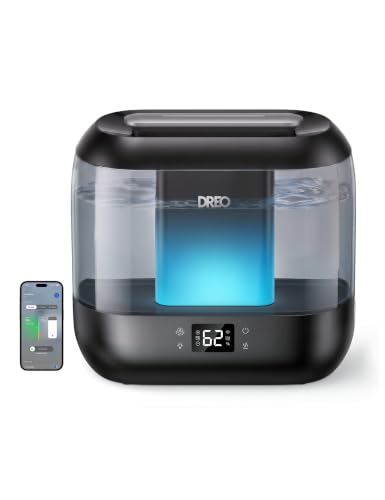
DREO Smart 4L Cool Mist Humidifier with Auto Humidity
4L tankAuto humidity36h runtime28dB sleep mode
Check price on Amazon
Best for: CPAP users who want steady humidity without guessing.

For a CPAP sleeper the defining feature is the humidity sensor. The DREO reads the room and trims its output as it nears the level you pick, which stops the air from creeping into the range where moisture condenses in the tube or the mask.

Dual-intake airflow lifts the fog into the room rather than dropping it beside the unit, which keeps the nightstand and your machine drier. The four liter tank is quoted at up to 36 hours, so one fill covers a night and the next day without leaving water to go stale. A sleep mode keeps the display dark and the fan near 28 dB, which is quiet enough to sit under the hum of a CPAP motor.

Place it across the room from the CPAP machine rather than beside it, with the nozzle aimed away from the unit and the air intake. Flush the tank daily and descale it monthly. Distilled water belongs in the room humidifier too, since mineral dust is the last thing you want drifting toward a mask. Give it a week of use before you change any CPAP humidity settings, so you know which device is doing what.

What works

  • Sensor holds a set humidity
  • Four liter tank outlasts a night
  • Dark display in sleep mode
  • Top fill that pours from above

Watch out for

  • Sensor needs a clean surface to read true
  • Takes more space than a nightstand mini

Spec sheet

Tank
4 L, top fill
Type
Ultrasonic cool mist
Runtime
Up to 36 h
Noise
About 28 dB in sleep mode
Control
Sensor, app and voice
02
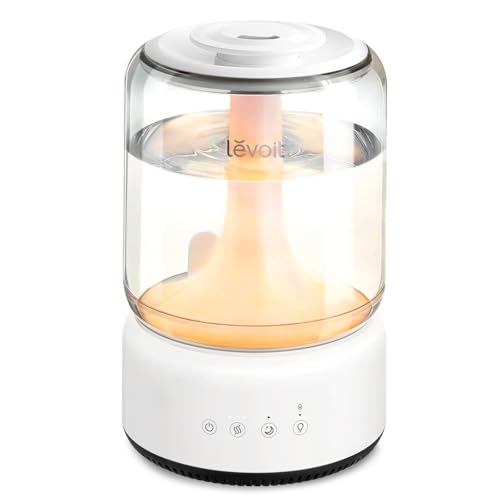
Levoit NeoClassic 450 4.2L Humidifier, 21dB
4.2L tank21dB class270 mL/hDetachable tray
Check price on Amazon
Best for: Light sleepers who want the lowest added noise.

Noise is the reason this Levoit ranks high for CPAP sleepers. At about 21 dB it sits well below the hum of a typical machine, so it does not stack a second drone on top of the first. A listed 270 mL/h output and a mist column near 47 inches spread moisture around the room instead of puddling.

A detachable tray keeps the base dry and makes a quick monthly clean straightforward. The 4.2 liter tank is quoted at up to 42 hours on low, which suits a bedroom you leave closed overnight. Against the DREO smart 4L it has no sensor, so a separate hygrometer is a good companion, but it is quieter and a little simpler.

Place it well away from the CPAP air intake, and aim the plume toward the room center. Rinse daily, descale the tray monthly, and use distilled water so no mineral dust reaches the mask side of the room. It is the quietest large-tank choice here, and the dry base means a monthly clean never involves the electronics. Many owners pair it with a small hygrometer on the nightstand.

What works

  • About 21 dB beside a CPAP hum
  • Detachable tray keeps the base dry
  • Tall mist column spreads moisture
  • Up to 42 hours on a fill

Watch out for

  • No humidity sensor
  • Heavy when the tank is full

Spec sheet

Tank
4.2 L, top fill
Noise
About 21 dB
Mist output
270 mL/h
Mist height
About 47 in
Runtime
Up to 42 h
03
Clarston 2L Cool Mist Humidifier, 24dB, Light-Off Mode
2L tank24dB class25h on lowLight-off mode
Check price on Amazon
Best for: Small bedrooms where a dark, quiet unit is the goal.

A compact tank with a quoted 25 hours on low and a high setting of 200 mL/h makes this Clarston a sensible small-bedroom unit. A total light-off feature means no glow near a sleeper wearing a mask, which is more important than it sounds. At about 24 dB it is close to the quietest here.

The mist is described as superfine, which helps it disperse rather than wet a surface. Against the NeoClassic 450 it is smaller and lighter but has less reach, so it fits a small room best. A high mode gives a quick boost when the air is very dry.

It has no sensor, so keep a hygrometer on the nightstand. Each morning, empty and rinse the tank, descale monthly, and stick to distilled water. Place it a few feet from the CPAP and aim the mist away from the machine. A tray under the unit catches drips if the tank is bumped.

What works

  • Total light-off mode
  • About 24 dB and compact
  • Up to 25 hours on low
  • High mode for quick boosts

Watch out for

  • No humidity sensor
  • Limited reach in larger rooms

Spec sheet

Tank
2 L, top fill
Noise
About 24 dB
Runtime
Up to 25 h on low
High output
200 mL/h
Light
Total light-off feature
04
DREO 6L Smart Warm and Cool Mist Humidifier, 500 mL/h
6L tank500 mL/hWarm and cool60h runtime
Check price on Amazon
Best for: Large or very dry bedrooms that need extra output.

Choosing between warm and cool mist is the interesting decision here. This DREO offers both, with the warm setting reaching roughly 133 degrees Fahrenheit and the cool setting suiting the rest of the year. Many CPAP users prefer cool mist near the machine, and having the choice means you can switch if a cold, dry winter calls for warmth.

A 500 mL/h ceiling and a six liter tank make it the most powerful unit in the lineup, with a quoted 60 hour runtime. A sensor with 5 percent tolerance holds your target, which suits CPAP users who need a stable range. Than the DREO smart 4L it is larger and heavier, and the warm mode adds scale.

Keep it across the room from the CPAP machine, since hot, moist air near the intake is not helpful. Descale the heater monthly. Use it in cool mode most nights unless the room is very cold. Because it is smart, you can schedule it to ease off before you wake, which helps keep morning condensation down.

What works

  • 500 mL/h gives strong headroom
  • Warm and cool modes
  • Sensor tolerance quoted at 5 percent
  • Six liters for up to 60 hours

Watch out for

  • Heater scales and needs descaling
  • Large and heavy for a nightstand

Spec sheet

Tank
6 L
Mist output
500 mL/h
Mist types
Warm (about 133F) and cool
Runtime
Up to 60 h
Control
Smart, 5% humidity tolerance
05
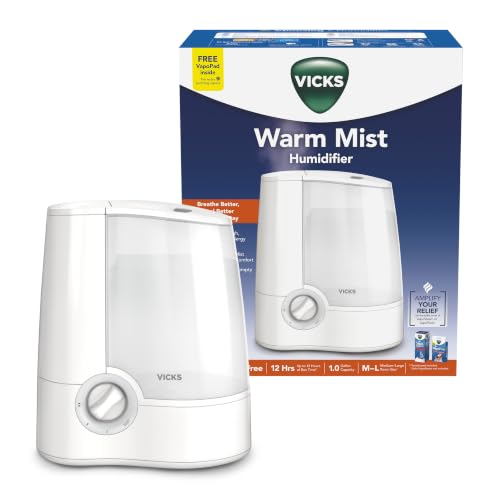
Vicks Warm Mist Humidifier, 1 Gallon, Filter-Free
1 gal tankWarm mist12h useFilter-free
Check price on Amazon
Best for: Cold, dry rooms where warm mist is preferred.

A one gallon tank and about 12 hours of use in a medium or large room define this Vicks. It boils water, so output is warm and the minerals stay behind rather than becoming dust. The design is filter-free, which keeps running costs low.

For a CPAP user it is a more cautious choice. Steam and a hot surface near a breathing machine call for sensible spacing, so keep it across the room and never aim it toward the air intake. Against the DREO units it has no sensor and no app, so a separate hygrometer is essential.

Scale builds on the heating element, so descale with vinegar on schedule. Never move it while hot. Choose it only if you strongly prefer warm mist and can keep it away from the machine. Let the tank cool before you carry it, and empty it each morning.

What works

  • Boils water, so no mineral dust
  • One gallon with about 12 hours
  • Filter-free design
  • Simple mechanical operation

Watch out for

  • Hot surface and steam near sleepers
  • No humidity sensor

Spec sheet

Tank
1 gallon
Type
Warm mist
Runtime
About 12 h in a medium room
Filter
None
Room size
Medium to large

Spec sheet decoder

What the numbers on the box really mean

The specs manufacturers lead with, translated into what they tell you about real-world performance.

Target humidity

A setting where the unit measures the room and stops at your chosen level. It prevents overshoot.

Watch forThe DREO units have it, the Levoit and Clarston do not.

Noise (dB)

How loud the unit is near the housing at its quiet setting. It adds to the sound of your CPAP.

Watch forThe Levoit is about 21 dB, the DREO smart 4L about 28 dB.

Mist output (mL/h)

The water released per hour at maximum. It tells you how quickly the room reaches your target.

Watch forThe DREO 6L lists 500 mL/h, the Clarston 200 mL/h on high.

Runtime on low (h)

How long a full tank lasts at the lowest setting. Higher settings drain it faster.

Watch forThe Levoit lists up to 42 hours, the Clarston up to 25.

Warm mist temperature

How hot the output gets. It adds comfort in a cold room and a burn risk near a sleeper.

Watch forThe DREO 6L reaches about 133F in warm mode.

Methodology

How We Evaluated These Room Humidifiers for CPAP Users

Humidity stability

We rewarded sensors that hold a target, since steady room humidity helps avoid hose condensation. The DREO smart 4L and DREO 6L scored highest. Dial-only units were marked down, though a dial plus a hygrometer is still workable.

Noise stacking

We compared quoted decibels against a typical machine hum. The Levoit NeoClassic 450 at about 21 dB and Clarston at about 24 dB led. The DREO at about 28 dB still scored well.

Placement flexibility

We looked at mist height, nozzle aim and footprint. The Levoit's tall mist column and the DREO's dual-intake fan helped. Warm units lost points for steam near a sleeper.

Light behavior

We checked for a way to make the room dark. The Clarston's light-off feature and the DREO sleep mode scored best. Always-on indicators lost points because a CPAP sleeper already has a machine with its own light.

Owner feedback patterns

Noise, leaks and white dust were the complaints that recurred most, and they weighed more than star averages. Mineral dust and loud refills were the common themes, and several sleepers noted that bright indicators bothered them more than the hum. Those patterns shaped the light and noise weighting.

Decision guide

How to Choose the Right Room Humidifiers for CPAP Users

By Bedroom Size

SituationPickWhy
Small bedroomClarston 2LCompact, 24 dB, light off
Medium bedroom, hands-offDREO smart 4LSensor and 36 hours
Medium bedroom, quietestLevoit NeoClassic 450About 21 dB
Large or very dry bedroomDREO 6L500 mL/h and 60 hours
Cold room, warm mist wantedVicks Warm MistBoils water, filter-free

By Budget

SituationPickWhy
Lowest outlayVicks Warm MistSimple mechanical design
Lower mid tierClarston 2LQuiet small unit
Mid tierLevoit NeoClassic 450Large quiet tank
Upper mid tierDREO smart 4LAdds sensor and app
Highest tierDREO 6LWarm and cool with a sensor

Cool Mist vs Warm Mist

Cool mist

The DREO smart 4L, Levoit, Clarston and DREO 6L in cool mode add no heat. They are simple and safe near a sleeper. They leave minerals in the air without distilled water.

Warm mist

The Vicks and the DREO 6L in warm mode boil water. It is comfortable in cold rooms and avoids mineral dust. It adds scale and steam, so keep it across the room.

Choose cool mist near a CPAP for simplicity; choose warm mist only if you can keep it well clear of the machine.

Control Style

SituationPickWhy
Want a humidity targetDREO smart 4LSensor holds a level
Want app and voice controlDREO smart 4LAdjust without moving
Prefer a dial and hygrometerLevoit NeoClassic 450Simple, very quiet
Want a boost modeClarston 2LHigh mode of 200 mL/h
Want warm and cool choiceDREO 6LSelectable by season

For Winter Dryness Specifically

Look for

Enough output to lift the room by several points without condensation. A sensor target keeps you from overshooting. A quiet motor keeps your sleep intact.

In this comparison

The DREO 6L at 500 mL/h has the most headroom. The DREO smart 4L holds the target by sensor. The Levoit keeps the noise lowest.

When to Spend More

Spend more if

You want a humidity target or a big dry room covered. The DREO smart 4L and DREO 6L earn their price.

Save if

You have a small room and a hygrometer. The Clarston and Vicks cover that need.

Ownership

Maintenance schedule

The upkeep that decides whether this machine lasts two seasons or ten.

TaskIntervalWhy it matters
Empty and rinse the humidifier tankDailyStagnant water grows microbes in a day or two. Fresh water each night keeps the room air clean and the tank free of film, which matters when you breathe in that room for eight hours.
Vinegar descale of the humidifier baseEvery 2 to 4 weeksScale cuts output and clogs sensors on smart units. Rinse well afterward so no vinegar smell reaches your sleeping area.
Check the CPAP hose for condensationEach morningWater in the tube is a sign the room is too humid or too cool. Lower the humidifier target, and note how the reading changes over a few nights.
Wipe the sensor areaWeeklyFilm distorts readings on smart units. A soft cloth is enough.
Dry fully before storageEnd of seasonDamp parts mold in a closet over the summer. Air dry everything with the lid off.

FAQ

Frequently Asked Questions

Do I need a room humidifier if my CPAP has a heated chamber?

Not always. The chamber humidifies the air you breathe through the mask. A room unit helps when the bedroom is so dry that your nose and lips suffer even with the machine's humidity up.

Can room humidity cause rainout in the hose?

Yes, when the room is humid and cool, moisture can condense in the tube. A target setting keeps the room in a steady range. Lower the target if you see water in the hose, and consider raising the bedroom temperature a degree or two. Both changes reduce condensation without touching the CPAP settings.

Where should I place the room humidifier?

Across the room from the CPAP, with the mist aimed away from the machine. Keep it on a stable surface. Do not point it at the intake. A room with a closed door will build humidity faster than one with open airflow.

Is warm mist or cool mist better near a CPAP?

Cool mist is the more cautious choice near a breathing machine. Warm mist adds steam and a hot surface. Keep any warm unit well clear.

Should I use distilled water?

It is advisable for both the CPAP chamber and an ultrasonic room unit, since minerals form dust and scale. It also keeps both machines cleaner. Follow your CPAP manual, and replace the chamber water daily. A clean chamber and a clean room unit work together.

What humidity level should I aim for?

A range of 30 to 50 percent suits most bedrooms. Higher levels raise condensation and mold risk. Ask your sleep clinician about your machine settings, since room humidity and chamber humidity interact.

Bottom line

The short version

Browse more room humidifiers for cpap userson Amazon →
James Miller, Lead Machine Editor

About the author

James Miller

Lead Machine Editor, MachineFanatic

James Miller leads MachineFanatic's buying guides, turning spec sheets, manuals and owner feedback into clear verdicts on power tools, outdoor power equipment, shop machines and kitchen machines.

More from James →

Keep reading

Related guides