
Amazon affiliate links - we earn a commission.Affiliate disclosure

Buying guide · 13 min read · Updated 2026-11-13

Best Inverter Generator with 240 Volt Outlet (2026)

Six inverter generators with 120/240 volt output compared by plug type, rated watts per leg, fuel options and what a 240 volt load actually demands.

James MillerBy James MillerLead Machine Editor6 machines comparedSpec-sheet verified
Best Inverter Generator with 240 Volt Outlet

At a glance

Our top picks

Side by side

Spec comparison

MachineFuelStartOutputEngine
Pulsar 7,250W Super Quiet Dual Fuel Inverter with Remote StartBest OverallPulsar 7,250W Super Quiet Dual Fuel Inverter with Remote StartGasoline or propaneRemote startn/an/a
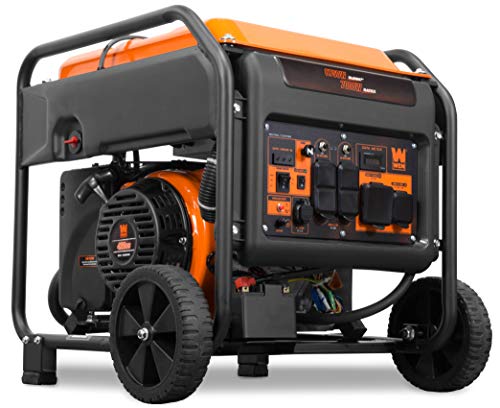
WEN GN875i 8,750W Open Frame Inverter, Electric StartBest Value CapacityWEN GN875i 8,750W Open Frame Inverter, Electric StartGasolineElectric start8,750W surge, 7,000W rated420cc four-stroke OHV
Westinghouse iGen8200TFc 8,200W Tri-Fuel InverterBest Tri-Fuel 240VWestinghouse iGen8200TFc 8,200W Tri-Fuel InverterGasoline, propane, natural gasRemote electric start8,200W peakn/a
LIFAN 6900W Inverter Generator, 120/240V Remote StartBest Remote Start ValueLIFAN 6900W Inverter Generator, 120/240V Remote StartGasolineRemote and electric start6,900W peak, 5,500W rated312cc OHV
ComJoy 5500W Inverter Generator, 120/240V, 30A OutletBest Compact 240VComJoy 5500W Inverter Generator, 120/240V, 30A OutletGasolinen/a5,500W peak, 120V and 240V223cc four-stroke OHV
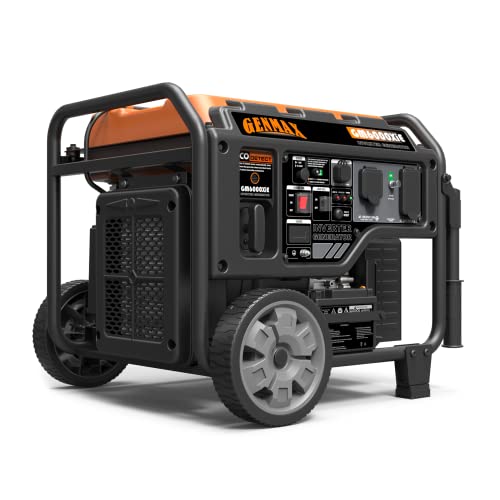
GENMAX 6,000W Open Frame Inverter with Electric StartBest Hour Meter FeatureGENMAX 6,000W Open Frame Inverter with Electric StartGasolinen/a6,000W peak, 5,250W rated312cc high speed OHV

A 240 volt outlet is not just a bigger socket. It is what lets a generator run a well pump, a welder, a dryer, a central air conditioner or a home panel, loads that no 120 volt-only machine can touch.

This guide ranks six inverter-style machines that offer 120 and 240 volt output. It looks at the plug on the panel, how the output splits between legs, and whether the machine can be connected to a house through a transfer switch without surprises.

Before you buy

6 Criteria to Look For Before Buying an Inverter Generator with 240 Volt Outlet

  1. 01

    Know your 240 volt plug

    A 240 volt load comes with a plug type, such as the NEMA 14-50 for a range or the L14-30 for a transfer switch. The Westinghouse iGen8200TF puts a 14-50R on the panel, while other machines offer a twist-lock. Buying a machine without the right outlet means an adapter, and adapters are the first thing to overheat.

  2. 02

    Rated watts, not peak

    The WEN GN875i lists 8,750 surge and 7,000 rated, the GENMAX lists 6,000 peak and 5,250 rated, and the Pulsar lists 7,250 peak and 6,000 running. A 240 volt well pump can pull three times its running watts for a moment. Size on the rated number plus the biggest start surge.

  3. 03

    How output splits across legs

    A 240 volt generator splits its output across two 120 volt legs, so a single 120 volt circuit can only draw half or less of the total. A 5,500-watt machine does not give 5,500 watts on one 120 volt outlet. Balance your loads across both legs and avoid putting everything on one side.

  4. 04

    Bonded neutral and house connection

    A machine with a bonded neutral can feed 240 volt equipment directly, but it must not be backfed into a house panel without a transfer switch or interlock. The Westinghouse and WEN units list transfer-switch readiness. Ask an electrician before wiring anything to a panel.

  5. 05

    Propane derating

    Dual fuel machines lose output on propane, and the loss varies a lot. The Pulsar 7250 drops 500 running watts, from 6,000 to 5,500. Compare the propane rating, not only the gasoline number.

  6. 06

    Enclosed versus open frame

    The Pulsar and Westinghouse use enclosed inverter cases that are quieter and more weatherproof. The WEN GN875i and GENMAX are open frame and cost less per watt. Choose by where the machine sits and who hears it.

Detailed reviews

The 6 best inverter generator with 240 volt outlet, explained

01
Pulsar 7,250W Super Quiet Dual Fuel Inverter with Remote Start
7,250W peak gas6,000W running gasGas or propane120/240V output
Check price on Amazon
Best for: Rural homeowners who need 240 volts from a machine that can switch to stored propane.

Many 240 volt generators lose a large chunk of output when they switch to propane, and this one loses only 500 running watts, falling from 6,000 on gasoline to 5,500. That mild derating means a well pump or a welder keeps working on a stored propane cylinder when the gas runs out. Remote start and a stated super-quiet design round out a machine meant for outages.

Against the WEN GN875i it carries about 1,000 fewer rated watts, but it adds propane and a quieter enclosed style. Against the Westinghouse iGen8200TF it lacks natural gas, so it fits a house without a gas line as well as it fits a rural lot.

Because a 240 volt output is only as safe as the connection behind it, plan the plug and the cord before the first start. Use a heavy-gauge 240 volt cord with a proper twist-lock end, and store the propane hose loosely coiled to avoid kinks. When you switch to propane mid-outage, shut the gasoline valve first and let the engine consume what is in the bowl so the changeover is smooth and the carburetor is not left holding old fuel.

What works

  • 6,000 running watts on gasoline
  • Only a 500-watt drop on propane
  • 120/240 volt output with remote start
  • Quiet enclosed inverter design

Watch out for

  • No natural gas option
  • Heavier than the 120 volt-only machines

Spec sheet

Fuel
Gasoline or propane
Gas output
7,250W peak, 6,000W running
Propane output
6,500W peak, 5,500W running
Voltage
120V and 240V output
Start
Remote start
02
WEN GN875i 8,750W Open Frame Inverter, Electric Start
8,750W surge7,000W rated420cc engineTransfer-switch ready
Check price on Amazon
Best for: Shops, farms and homes that need maximum 240 volt capacity for the money.

At seven thousand rated watts, this open-frame machine offers the most running power in the group per unit of cost. The 420cc engine and electric start handle a well pump plus a furnace and refrigerator with room left over, and the listing describes the body as weighing 30 percent less than a traditional 8,750-watt generator. It is transfer-switch ready and RV ready.

The design cost is exposure and noise. An open frame lets the engine cool easily but sounds louder than an enclosed case, so it suits a barn, a shop or a back porch rather than a campground. The output is clean enough for sensitive electronics, according to the listing.

Open frames need protection from rain, so buy a vented cover and keep it on between uses. Check the oil frequently, since a big engine under a heavy 240 volt load heats the sump fast.

What works

  • 7,000 rated watts at a low cost
  • 420cc engine with electric start
  • Lighter than a conventional 8,750-watt unit
  • Transfer-switch and RV ready

Watch out for

  • Open frame is loud and exposed
  • Gasoline only

Spec sheet

Fuel
Gasoline
Output
8,750W surge, 7,000W rated
Engine
420cc four-stroke OHV
Start
Electric start
Design
Open frame, transfer-switch and RV ready
03
Westinghouse iGen8200TFc 8,200W Tri-Fuel Inverter
8,200W peakTri-fuel14-50R 50A outletRemote electric start
Check price on Amazon
Best for: Homes with a gas line that want a 50 amp, 240 volt outlet and three fuel choices.

The 14-50R outlet is the plug that matters most for a home backup that must feed a 240 volt sub-panel, and this machine puts it on the front. Three fuels give you choices: gasoline for strong output, propane for storage and natural gas for an unlimited supply from the house line. Inverter speed control keeps the engine near the load rather than at full speed.

Against the Pulsar 7250 it adds natural gas and a 50 amp outlet, while the listing leaves out the rated watts per fuel, so confirm those on the nameplate. It costs more than the WEN GN875i and offers less proven raw capacity, but it is far quieter.

Because a 50 amp outlet feeds a lot of house, have a licensed electrician fit the interlock or transfer switch and label each circuit. Check the natural gas fittings for leaks with soapy water, and keep the regulator clean.

What works

  • 14-50R 50 amp outlet on the panel
  • Three fuels including natural gas
  • Remote electric start
  • Inverter speed control for quieter running

Watch out for

  • Per-fuel rated watts are not clear in the listing
  • Costs more than open-frame options

Spec sheet

Fuel
Gasoline, propane, natural gas
Output
8,200W peak
Main outlet
120/240V 14-50R 50A
Start
Remote electric start
Use
Transfer switch or interlock ready
04
LIFAN 6900W Inverter Generator, 120/240V Remote Start
6,900W peak5,500W rated312cc enginePure sine wave
Check price on Amazon
Best for: Homeowners who want 240 volts and remote start from a gasoline machine at a fair cost.

A 312cc engine with 5,500 rated watts and pure sine wave under three percent THD describes a mid-size home backup machine. The remote and electric start remove the cord pull in a cold or wet outage. The listing frames it for home backup and offers 120 and 240 volt output.

Compared with the Pulsar 7250 it gives about 500 fewer running watts and no propane, so it is a gasoline-only purchase. It trims the cost in return, which suits a homeowner who stores fuel and rotates it each season.

Because 5,500 watts is a real load, use a proper inlet and a heavy cord. Run it for twenty minutes each season to confirm the remote fob and the electric starter still work, and replace the fob battery each year. If the remote ever fails, the electric start button on the panel is the backup, so know where it is before the lights go out.

What works

  • 5,500 rated watts with a 312cc engine
  • Remote and electric start
  • Pure sine wave under 3% THD
  • 120 and 240 volt output

Watch out for

  • Gasoline only
  • Less brand support than major names

Spec sheet

Fuel
Gasoline
Engine
312cc OHV
Output
6,900W peak, 5,500W rated
Voltage
120V and 240V
Start
Remote and electric start
05
ComJoy 5500W Inverter Generator, 120/240V, 30A Outlet
5,500W peak223cc engine120/240V30A outlet
Check price on Amazon
Best for: Campers and small shops that need a 240 volt outlet in a lighter machine.

A smaller 223cc engine keeps this ComJoy lighter than the 312cc machines, and it still provides a 240 volt output alongside a 30 amp outlet and a seven-port charging hub. The listing positions it for home use and camping, with a telescopic handle for moving it.

Its peak figure of 5,500 watts is the only number the listing leads with, so the rated watts are lower, and a 240 volt motor load needs checking against that lower figure. Against the LIFAN 6900 it is smaller and simpler, which suits a modest 240 volt load such as a small compressor.

If you plan to feed a well pump, confirm the pump's start amps before buying. Keep the unit on a level pad, and run it under load monthly because small engines gum fastest when idle. A 240 volt cord also needs the right gauge for its length, so a 50-foot run feeding a pump should not be a thin general-purpose extension from the garage.

What works

  • 240 volt output from a 223cc engine
  • 30A outlet and a charging hub
  • Telescopic handle for moving
  • Lighter than the 312cc units

Watch out for

  • Rated watts are not clearly stated
  • Too small for a large well pump

Spec sheet

Fuel
Gasoline
Engine
223cc four-stroke OHV
Output
5,500W peak, 120V and 240V
Outlets
30A outlet plus a 7-port charging hub
Handling
Telescopic handle
06
GENMAX 6,000W Open Frame Inverter with Electric Start
6,000W peak5,250W rated312cc engineHour meter
Check price on Amazon
Best for: Owners who want an open-frame 240 volt machine with a clear service schedule.

An hour meter turns maintenance from guesswork into a schedule, and it is the detail that earns this GENMAX a place. LED indicators flag low oil, overload and ready status, and the 5,250 rated watts come from a 312cc engine at a weight of 106.9 pounds. Two wheels and a steel handle make it movable by one person on flat ground.

Rated watts come in 1,750 below the WEN GN875i, with a smaller engine and a simpler panel. It is open frame, so noise and weather exposure follow the usual pattern.

Follow the hour meter for the first oil change at roughly 20 hours, then yearly or per the manual. Keep a cover handy, and test the electric start monthly since a battery that sits unused will fail first.

What works

  • 5,250 rated watts from a 312cc engine
  • Hour meter tracks service intervals
  • LED alerts for low oil and overload
  • Wheels and a steel handle

Watch out for

  • Open frame is loud
  • At 106.9 pounds it needs a ramp for a truck

Spec sheet

Fuel
Gasoline
Engine
312cc high speed OHV
Output
6,000W peak, 5,250W rated
Weight
106.9 lb
Panel
Hour meter and LED alerts

Spec sheet decoder

What the numbers on the box really mean

The specs manufacturers lead with, translated into what they tell you about real-world performance.

NEMA 14-50R

A 50 amp, 120/240 volt receptacle used for ranges, large RVs and transfer switches. It is a heavy outlet that needs a heavy cord.

Watch forThe iGen8200TF lists this outlet directly.

Split-phase output

A 120/240 volt generator produces two 120 volt legs that combine to 240 volts. Each leg carries only part of the total watts.

Watch forBalance loads across legs on every machine here.

Bonded neutral

The neutral is connected to the frame at the generator so it can power 240 volt tools directly. It conflicts with a house panel unless a proper switch is used.

Watch forDo not wire any unit here to a house without a transfer switch or interlock.

Starting versus running watts

Starting watts cover a motor's brief surge, and running watts are what the machine can hold. A 240 volt motor can need three times its running draw at start.

Watch forThe WEN GN875i shows a 1,750-watt gap between surge and rated.

Hour meter

A counter that records engine hours so you can service on schedule rather than by calendar. It is rare on small generators.

Watch forThe GENMAX 6000 includes one.

Methodology

How We Evaluated These Inverter Generator with 240 Volt Outlet

Outlet and plug type

We checked which 240 volt plug each panel carries and whether it matches common uses. The iGen8200TF offers a 14-50R, and others use twist-locks or generic 240 outlets. A clear plug description ranked higher.

Rated watts against start surge

We compared running watts to the surge a 240 volt motor demands. The WEN GN875i leads at 7,000 rated, and the Pulsar 7250 gives 6,000 on gas. Machines that list only a peak lost ground.

Fuel flexibility

We counted fuels and the propane derating. The iGen8200TF offers three fuels, and the Pulsar 7250 drops only 500 watts on propane. Gasoline-only units are simpler but less flexible.

House connection readiness

We looked for transfer-switch readiness and bonded-neutral notes. Westinghouse and WEN list transfer-switch readiness. We favored clear statements.

Noise and enclosure

We compared enclosed inverter cases with open frames. The Pulsar and Westinghouse are enclosed, and the WEN and GENMAX are open frame. Enclosed cases rank higher for residential use.

Decision guide

How to Choose the Right Inverter Generator with 240 Volt Outlet

By 240 Volt Load

SituationPickWhy
Well pump with a start surgeWEN GN875i7,000 rated watts
Sub-panel through a transfer switchWestinghouse iGen8200TF50A 14-50R outlet
Home backup on stored propanePulsar 7250W Dual FuelOnly 500 watts lost on propane
Small compressor or welderComJoy 5500W240 volts in a lighter unit
Mid-size home backupLIFAN 6900W5,500 rated watts and remote start

By Budget

TierPickWhy
Lowest cost per rated wattWEN GN875i7,000 rated watts, open frame
Low cost compactComJoy 5500WSmaller engine and lower weight
Mid cost with remote startLIFAN 6900WRemote start and 5,500 rated watts
Mid cost with a service meterGENMAX 6000WHour meter and LED alerts
Upper cost enclosed dual fuelPulsar 7250WQuiet case and propane

Open Frame vs Enclosed Inverter

Open frame

The WEN GN875i and GENMAX 6000 give the most rated watts for the money and cool easily. They are louder and need a cover and a sheltered spot.

Enclosed inverter

The Pulsar 7250 and Westinghouse iGen8200TF run quieter and keep rain off the engine. They cost more per watt but suit a house near neighbors.

Choose open frame for a shop or barn, and enclosed for a yard next to neighbors.

Fuel Strategy

PreferencePickWhy
Gas only, lowest costWEN GN875iSimple and powerful
Gas plus propanePulsar 7250WSmall derating on propane
Natural gas supplyWestinghouse iGen8200TFNo refueling during a long outage
Gas with remote startLIFAN 6900WFob start

For a Well Pump Specifically

Look for

Rated watts above three times the pump's running load, a 240 volt outlet and a clean sine wave. Check the pump's nameplate for start amps and consider a soft starter.

In this comparison

The WEN GN875i at 7,000 rated watts and the Pulsar 7250 at 6,000 are the best fits, and the iGen8200TF suits a pump on a transfer switch.

When to Spend More

Spend more if

You need quiet, natural gas or a 50 amp outlet. The iGen8200TF and Pulsar 7250 offer those.

Save if

The machine lives in a shop or barn. The WEN GN875i delivers the most rated watts for the cost.

Ownership

Maintenance schedule

The upkeep that decides whether this machine lasts two seasons or ten.

TaskIntervalWhy it matters
Check oil under loadEvery 8 hours of useA large engine under a 240 volt load heats oil quickly. Low oil triggers a shutdown at a bad time.
Inspect 240 volt plugs and cordsBefore every useA heavy plug that runs warm signals resistance. Replace any discolored or loose connector.
Exercise the electric startMonthlyStarter batteries die from disuse. A trickle charger keeps it ready.
Change oil and filterAfter the first 20 hours, then yearlyBreak-in particles and heat shorten oil life. Fresh oil protects the bearings.
Clean the air filterEvery 50 hours or yearlyA clogged filter richens the mixture and loses power. Replace it if it is oily.

FAQ

Frequently Asked Questions

Why do I need a 240 volt outlet?

Some loads, such as well pumps, central air, dryers and welders, run on 240 volts. A 120 volt-only generator cannot start them.

Can I use a 240 volt generator for a whole house?

Only through a transfer switch or interlock kit installed by an electrician, sized to the machine's rated watts. The 8,750-watt and 8,200-watt units can feed a sub-panel of chosen circuits.

How many watts does a well pump need?

A typical half-horsepower pump runs near 1,000 watts but can need 3,000 or more to start. Check the nameplate and choose a machine with margin.

Is a 240 volt outlet less safe?

It carries more energy, so cords and plugs must be heavy-duty and in good condition. Keep it dry and never use a damaged connector.

Does dual fuel affect 240 volt output?

Yes. Propane typically lowers rated watts, and the Pulsar 7250 drops from 6,000 to 5,500. Check the propane number.

Can I charge an electric vehicle with it?

A 240 volt outlet can run a low-power charger, but it is slow and heavy on fuel. Treat it as an emergency measure.

Bottom line

The short version

Browse more inverter generator with 240 volt outleton Amazon →
James Miller, Lead Machine Editor

About the author

James Miller

Lead Machine Editor, MachineFanatic

James Miller leads MachineFanatic's buying guides, turning spec sheets, manuals and owner feedback into clear verdicts on power tools, outdoor power equipment, shop machines and kitchen machines.

More from James →

Keep reading

Related guides