


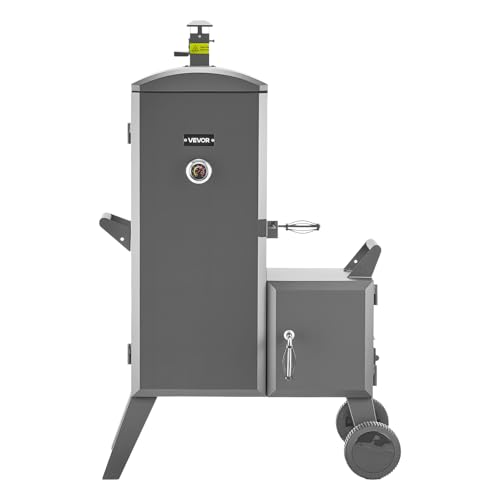
A reverse flow design routes smoke under a baffle plate to the far end of the chamber and then back across the food toward the stack. That path evens out the hot-to-cool gradient that plagues traditional offsets, where the meat near the firebox cooks faster than the meat at the far end.
The Highland lists 619 sq in of primary space and 474 sq in of secondary space, for 1,093 sq in total. A large-capacity charcoal basket gives a more efficient burn and, per the maker, longer cooks between reloads. That makes it a better first stick burner than the cheap barrel offsets because the chamber behaves predictably.
The real cost is the work. You will feed splits or charcoal every 45 to 60 minutes on a low cook, learn to read smoke color, and rinse ash out of the firebox afterward. Season the steel with oil before the first fire and keep the cover on, because bare metal rusts quickly at the weld seams. If you want a smoker that holds itself, buy a pellet cooker instead. Plan a first cook with cheap ribs, because the first few fires teach you more about the airflow than any manual will.
What works
- Reverse flow evens out heat across the whole chamber
- 1,093 sq in total with 619 sq in primary grate
- Charcoal basket gives a more efficient burn
- Real stick burner smoke flavor
Watch out for
- Needs fire tending every hour or so
- Bare steel rusts without seasoning and a cover
Spec sheet
- Fuel
- Charcoal and wood splits
- Total area
- 1,093 sq in
- Primary chamber
- 619 sq in
- Secondary area
- 474 sq in
- Design
- Reverse flow