
Amazon affiliate links - we earn a commission.Affiliate disclosure

Buying guide · 15 min read · Updated 2026-11-06

Best Oscillating Multi-Tools Under $100 (2026)

Five oscillating multi-tools under $100 compared on motor, battery platform, vibration and accessory fit, with what a budget tool gives up in flush cutting.

James MillerBy James MillerLead Machine Editor5 machines comparedSpec-sheet verified
Best Oscillating Multi-Tools Under $100

At a glance

Our top picks

Side by side

Spec comparison

MachinePlatformMotorSpeedKit
DEWALT DCS356B 20V MAX XR Brushless Oscillating Multi-Tool (Tool Only)Best OverallDEWALT DCS356B 20V MAX XR Brushless Oscillating Multi-Tool (Tool Only)DeWalt 20V MAXBrushless3-speed selector with variable triggerTool only, two wood blades
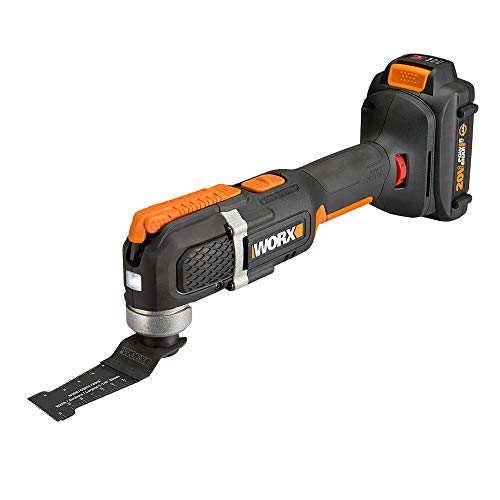
WORX WX696L 20V Sonicrafter Oscillating Multi-ToolBest Universal FitWORX WX696L 20V Sonicrafter Oscillating Multi-ToolWORX Power Share 20Vn/a5,000 to 20,000 OPM, two speedsn/a
RYOBI ONE+ 18V Cordless Oscillating Multi-Tool (Tool Only)Best ONE+ OptionRYOBI ONE+ 18V Cordless Oscillating Multi-Tool (Tool Only)RYOBI ONE+ 18Vn/aVariable dial to 20,000 OPMTool only, battery sold separately
SKIL PWRCore 12 Brushless 12V Oscillating Multi-Tool (Tool Only)Best CompactSKIL PWRCore 12 Brushless 12V Oscillating Multi-Tool (Tool Only)SKIL PWRCore 12Brushlessn/aTool only
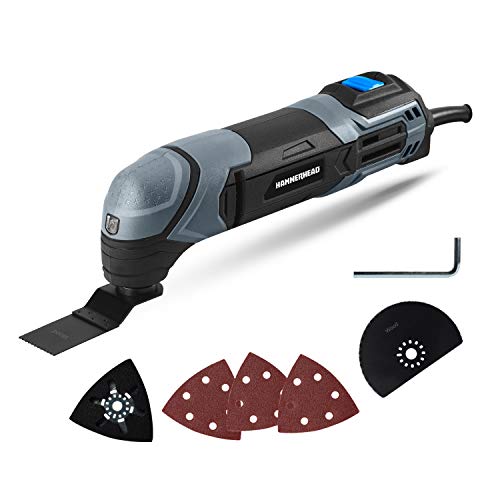
Hammerhead 2.2-Amp Corded Oscillating Multi-Tool KitBest Corded KitHammerhead 2.2-Amp Corded Oscillating Multi-Tool Kitn/a2.2 amp cordedUp to 20,000 OPM, variable dialn/a

An oscillating multi-tool swings a small blade or pad side to side through a few degrees at ten thousand or more cycles a minute. That motion cuts flush against a surface, plunges into drywall and trim, strips grout and sands into corners, which is why it is the tool of remodeling.

This guide explains how oscillation rate, battery platform and accessory fit decide what a low-priced tool can do, which compromises are harmless for a homeowner and which will frustrate you in a long session.

Before you buy

6 Criteria to Look For Before Buying an Oscillating Multi-Tool Under $100

  1. 01

    Oscillation rate and angle

    Oscillation rate counts how many times per minute the blade swings, and the angle sets how far. Budget tools run 10,000 to 20,000 OPM, with arcs of 2 to 4 degrees. A wider arc cuts faster but vibrates more. The maker's OPM number tells you less than the arc, which is rarely published. Choose by how the tool feels in your hand after five minutes. In the first minute every oscillating tool feels smooth, and the differences only show up when your fingers start to tingle, so test the grip with the blade engaged against a scrap of wood if you can.

  2. 02

    Accessory interface

    Blade fit is the hidden cost. Universal-fit tools like the WORX accept most blades, proprietary systems accept their own. A tool that takes the blades you already own saves money. A cheap bimetal blade costs a few dollars and a good carbide one several times that, and over a remodel you can easily use ten, so accessory cost often outweighs the price difference between tools. Look for a quick-release or tool-free change, like the SKIL's lever.

  3. 03

    Corded vs cordless

    A cordless tool is convenient in a room without an outlet, but a hungry tool drains a small pack in minutes of continuous sanding. A corded tool such as the Hammerhead has no limit. For grout removal and long sanding, corded is better. A grout blade works slowly and dulls fast, and a tool that cuts out every few minutes interrupts the rhythm that keeps the blade in the joint.

  4. 04

    Battery platform and tool-only pricing

    Four of these five tools are sold without batteries. A DeWalt, Ryobi, SKIL or WORX tool only makes sense if you own the matching pack. Add the cost of a battery and charger, and compare it to a corded kit if you do not. A 20V pack and charger can cost as much as the tool itself, which is why the corded Hammerhead often wins on pure value for a one-time remodel.

  5. 05

    Brushless vs brushed

    Brushless motors waste less heat and run longer on a charge. The DeWalt and SKIL are brushless, while the Ryobi, WORX and Hammerhead use brushed motors. Brushless matters more on small batteries, such as the 12V pack on the SKIL, where saved energy is a bigger share of the total. On a 5Ah 20V pack the difference is less noticeable.

  6. 06

    Vibration and grip

    Vibration is the real limit on oscillating tools. A soft grip and a low-vibration design, like the Ryobi's claimed approach, let you work longer. Hold a tool for several minutes if you can. Look at where the battery sits: a heavy pack at the back of a long body shifts the balance, and an oscillating tool wants to sit centered in your palm so the blade cuts flat.

Detailed reviews

The 5 best oscillating multi-tools under $100, explained

01
DEWALT DCS356B 20V MAX XR Brushless Oscillating Multi-Tool (Tool Only)
20V MAX XRBrushless3-speedLED light
Check price on Amazon
Best for: DeWalt 20V owners who want a brushless oscillating tool without paying for another pack.

The DCS356B pairs a brushless motor with a three-speed selector and a variable trigger, and it ships as a bare tool with two wood-cutting blades. DeWalt says a brushless motor delivers up to 57 percent more run time than a brushed one, which matters because an oscillating tool pulls steady current for as long as you hold the trigger. An LED lights the cut line.

Next to the SKIL PWRCore 12, the DeWalt has a larger 20V pack behind it, so it can cut longer through nail-embedded trim and sanding passes. It is the better tool for sustained cutting, while the SKIL is the better tool to hold in a tight cabinet. Compared with the WORX at 20V, the DeWalt has brushless efficiency and a bigger accessory market.

Ownership depends on batteries: because it is a bare tool, add the cost of a pack and charger unless you already own DeWalt 20V gear. Blades dull fast on nails and screws, so keep a few bimetal and carbide ones on hand. If you own the batteries, it is the strongest tool under the cap. Use the lowest speed for sanding and scraping, where a fast blade just melts paint into a gummy film, and the highest speed for cutting wood and plastic.

What works

  • Brushless motor stretches battery life
  • Three-speed selector plus variable trigger
  • LED lights the work
  • Large accessory market

Watch out for

  • Tool only, batteries cost extra
  • Blades dull quickly on nails

Spec sheet

Platform
DeWalt 20V MAX
Motor
Brushless
Speed
3-speed selector with variable trigger
Light
LED
Kit
Tool only, two wood blades
02
WORX WX696L 20V Sonicrafter Oscillating Multi-Tool
20V5,000-20,000 OPMUniversal fitPower Share
Check price on Amazon
Best for: WORX owners and anyone who wants a tool that takes almost any brand of blade.

The Sonicrafter's headline is its universal fit system, which accepts blades from most major brands. That matters because oscillating accessories are a market of standards and exceptions, and a tool that takes any blade lets you shop by price and quality. Speed runs from 5,000 to 20,000 oscillations per minute across two ranges.

It is a cordless tool on the Power Share platform, which shares batteries with WORX 20V and 40V outdoor tools and lifestyle products. That is a real strength if you own a WORX string trimmer or blower, since the same pack powers the Sonicrafter. If you do not, its value is less clear because the pack is the major cost.

Compared with the DeWalt, the WORX has a wider range of blade compatibility but a brushed motor and a smaller accessory network. For ownership, check the blade clamp for tightness before every job, since a loose blade rattles and cuts poorly, and use a coarse sanding pad with a hook-and-loop base for finishing. It suits a homeowner on WORX. Because blade stock is plentiful, you can also try inexpensive blades in a variety of shapes, including the flush-cut, plunge and scraper blades that make an oscillating tool useful in the first place.

What works

  • Universal fit takes most brands of blades
  • 5,000 to 20,000 OPM range
  • Shares batteries with WORX 20V tools
  • Handles sawing, grout and scraping

Watch out for

  • Brushed motor, less efficient
  • Only two speed ranges

Spec sheet

Platform
WORX Power Share 20V
Speed
5,000 to 20,000 OPM, two speeds
Accessories
Universal fit system
Uses
Sawing, sanding, scraping, grout
Battery
Shared with WORX 20V and 40V tools
03
RYOBI ONE+ 18V Cordless Oscillating Multi-Tool (Tool Only)
18V ONE+20,000 OPMVariable dialLow vibration
Check price on Amazon
Best for: Ryobi ONE+ owners who want a low-vibration oscillating tool.

The Ryobi is a bare 18V ONE+ tool with a variable-speed dial up to 20,000 oscillations per minute. The maker claims the lowest vibration in its class, and vibration is the main limit on how long you can hold an oscillating tool, because the small blade shakes your hand and wrist at high frequency. A tool that vibrates less lets you work longer.

The ONE+ system is one of the most widely used battery platforms, so many homeowners already own packs. If you do, it is the cheapest route to a cordless oscillating tool here. Against the DeWalt DCS356B, the Ryobi gives up brushless efficiency in exchange for a more affordable platform.

Ownership notes: the maker's vibration claim is relative, not absolute, so check how the tool feels after ten minutes of work. Use a fully charged 4Ah or larger pack for sanding and cutting jobs longer than a few minutes. It is a sensible tool for the ONE+ household. Keep the blade flat against the work and let the oscillation do the cutting, since pressing hard raises heat and dulls the teeth without speeding the cut.

What works

  • Variable dial to 20,000 OPM
  • Maker claims lowest vibration in class
  • Works with ONE+ batteries
  • Low-risk entry to cordless

Watch out for

  • Tool only, batteries extra
  • Vibration claim is relative

Spec sheet

Platform
RYOBI ONE+ 18V
Speed
Variable dial to 20,000 OPM
Vibration
Maker claims lowest in class
Uses
Cutting, sanding, scraping
Kit
Tool only, battery sold separately
04
SKIL PWRCore 12 Brushless 12V Oscillating Multi-Tool (Tool Only)
12VBrushlessQuick-releaseCompact
Check price on Amazon
Best for: People who work in tight spaces and want a light, compact tool.

The SKIL PWRCore 12 is the smallest oscillating tool here, a 12V brushless model with a quick-release lever for accessories. A 12V tool is light and short, which suits flush cuts in a cabinet, trim in a bathroom and detail sanding in a tight corner. Brushless efficiency helps a small pack last.

At 12V it cannot sustain the high power of a 20V tool, so it is slower in nail-embedded trim and long cuts. Compared with the DeWalt DCS356B at 20V, the SKIL is smaller and lighter but less powerful. If your work is light and precise, small is an advantage.

Ownership notes: PWRCore 12 batteries are compact, so buy two if you work in sessions. Use the quick-release lever to change blades, but check that the blade seats fully before starting. If you own SKIL 12V tools, it is a natural add-on, and if not, think about the platform. For plunge cuts in drywall or baseboard, the small head also lets you see the line, which is half the battle in a flush cut.

What works

  • Compact brushless body
  • Quick-release blade lever
  • Light enough for overhead work
  • Good for flush cuts and detail sanding

Watch out for

  • Less power than 20V tools
  • Tool only, 12V batteries extra

Spec sheet

Platform
SKIL PWRCore 12
Motor
Brushless
Accessory change
Quick-release lever
Style
Compact body
Kit
Tool only
05
Hammerhead 2.2-Amp Corded Oscillating Multi-Tool Kit
2.2 amp20,000 OPMVariable dialBlades included
Check price on Amazon
Best for: Occasional users who want a corded kit with blades and a sanding pad at the lowest outlay.

The Hammerhead is a corded tool with a 2.2-amp motor that reaches up to 20,000 oscillations per minute through a variable dial. It ships as a kit with a flush-cut blade, a semicircle saw blade, a sanding pad and sanding sheets, so you can start working immediately without hunting for accessories.

A corded oscillating tool has no battery to run down, so it is the practical choice for grout removal and long sanding sessions, where a cordless tool would stop. It is also the lowest outlay in the lineup. It trades portability, since the cord drags across the work, and it has less refined vibration control than the DeWalt or Ryobi.

Ownership notes: use a short extension cord and keep it clear of the blade, replace blades often and treat the included accessories as starters. A lesser-known brand means thin parts support. If you will use the tool a few times a year, a corded kit is the sensible way in. The included semicircle blade is useful for general cuts and the flush-cut blade for door jambs, so a first-time owner can finish a small project without buying anything else.

What works

  • Corded, no battery limit
  • Kit includes blades and sanding pad
  • Variable speed up to 20,000 OPM
  • Soft-grip handle

Watch out for

  • Cord drags across work
  • Thin brand support

Spec sheet

Motor
2.2 amp corded
Speed
Up to 20,000 OPM, variable dial
Included
Flush cut blade, semicircle blade, sanding pad
Handle
Ergonomic soft grip
Power
Corded

Spec sheet decoder

What the numbers on the box really mean

The specs manufacturers lead with, translated into what they tell you about real-world performance.

OPM

Oscillations per minute, the number of swings the blade makes each minute. Most budget tools reach 20,000.

Watch forA high OPM with a small arc can cut slower than a lower OPM with a wide arc.

Brushless

A motor with electronic switching instead of carbon brushes.

Watch forIt extends runtime but does not by itself make the tool more powerful.

Universal fit

A clamp that accepts blades from most brands.

Watch forSome blades fit loosely, so check for rattle.

Tool only

A tool sold without a battery or charger.

Watch forAdd the cost of the pack to your budget.

Platform

The family of batteries that fits a brand's tools. DeWalt 20V, Ryobi ONE+ and WORX Power Share are separate.

Watch forA battery from one platform does not fit another.

Methodology

How We Evaluated These Oscillating Multi-Tools Under $100

Motor and runtime

We compared brushless tools like the DeWalt and SKIL with brushed tools like the Ryobi, WORX and Hammerhead, and noted how efficiency affects a small pack.

Accessory system

We looked at blade fit and change mechanisms, noting the WORX's universal system and the SKIL's quick-release lever.

Platform value

We weighed what a bare tool costs once you add a battery, and how widely each platform is used.

Vibration and ergonomics

We considered grip, weight and vibration claims, noting the Ryobi's low-vibration positioning.

Fit for the cap

Every tool has a live price at or below the cap. We ranked each by how much usable capability a homeowner gets for the money.

Decision guide

How to Choose the Right Oscillating Multi-Tools Under $100

By Job

ScenarioPickWhy
Trim and nail-embedded woodDeWalt DCS356BBrushless 20V
Grout removal and long sandingHammerhead 2.2-AmpCorded
Tight cabinets and bathroomsSKIL PWRCore 12Compact
Mixed blades from other brandsWORX SonicrafterUniversal fit
Home remodeling on ONE+RYOBI ONE+Low vibration

By Budget Tier

TierPickWhy
LowestHammerhead 2.2-AmpCorded kit
LowSKIL PWRCore 12Bare tool
MidRYOBI ONE+Bare tool
UpperWORX SonicrafterUniversal fit
Top of the capDeWalt DCS356BBrushless XR

Corded vs Cordless

Corded

Unlimited runtime for grout and sanding sessions. The Hammerhead is the corded choice.

Cordless

Moves anywhere but drains the pack in long sessions. The DeWalt, WORX, Ryobi and SKIL are cordless.

Choose corded for long jobs and cordless for quick cuts.

Compact vs Full Size

PreferencePickWhy
SmallestSKIL PWRCore 1212V compact
Most powerDeWalt DCS356B20V brushless
Lowest vibrationRYOBI ONE+Maker claim
Universal bladesWORX SonicrafterFit any

For Flush Cutting Trim Specifically

Look for

A flush-cut blade, low vibration and a slim head. Keep the blade flat against the surface.

In this comparison

The Hammerhead ships with a flush-cut blade, and the SKIL's slim head reaches tight spots. The DeWalt has the power for hard trim.

When to Spend More

Spend more if

You use the tool weekly or want Starlock accessories and a sealed anti-vibration system. A premium tool is smoother and lasts longer.

Save if

You use it a few times a year. The Hammerhead or a bare tool on your existing platform is enough.

Ownership

Maintenance schedule

The upkeep that decides whether this machine lasts two seasons or ten.

TaskIntervalWhy it matters
Replace bladesWhen cuts slowA dull blade overheats the tool.
Check the clampBefore each useA loose blade rattles and cuts poorly.
Clean ventsAfter dusty jobsSanding dust clogs the motor.
Store batteries coolAlwaysHeat shortens lithium cell life.
Inspect the cordBefore each useA frayed cord on the Hammerhead is a shock hazard.

FAQ

Frequently Asked Questions

What can an oscillating tool do that other tools cannot?

It cuts flush against a surface, plunges into drywall and trim, and sands into corners. Other tools cannot do those cuts without damaging the surface.

Do I need a cordless one?

For quick cuts, yes. For grout removal or long sanding, a corded tool is better.

Why do blades dull so fast?

Nails and screws dull blades quickly. Use bimetal or carbide blades for those jobs.

Will any blade fit any tool?

No. Universal-fit tools like the WORX accept most blades, but proprietary systems need their own.

Why is vibration important?

Vibration limits how long you can work comfortably. A softer grip and a low-vibration design help.

Is a bare tool a good value?

Only if you own the batteries. Otherwise add the cost of a pack and charger.

Bottom line

The short version

Browse more oscillating multi-tools under $100on Amazon →
James Miller, Lead Machine Editor

About the author

James Miller

Lead Machine Editor, MachineFanatic

James Miller leads MachineFanatic's buying guides, turning spec sheets, manuals and owner feedback into clear verdicts on power tools, outdoor power equipment, shop machines and kitchen machines.

More from James →

Keep reading

Related guides