
Amazon affiliate links - we earn a commission.Affiliate disclosure

Buying guide · 14 min read · Updated 2026-11-25

Best Plasma Cutters Under $500 (2026)

Five 50 to 65 amp pilot arc plasma cutters that list for under $500, including one with a built-in compressor, ranked on air control and real clean-cut limits.

James MillerBy James MillerLead Machine Editor5 machines comparedSpec-sheet verified
Best Plasma Cutters Under $500

At a glance

Our top picks

Side by side

Spec comparison

The step up from entry plasma cutters is not simply more amperage. It is pilot arc starting as standard, better air handling and features that protect the torch, so the machine copes with the rusty, painted and uneven steel that real projects involve.

The biggest practical difference is whether the machine needs an outside air supply. A cutter without one needs a compressor that can feed it, and that is a larger expense than many buyers expect. We ranked the options on air handling, amperage honesty and controls. Prices move, and the $500 cap reflects listing prices when this guide was updated.

Before you buy

6 Criteria to Look For Before Buying a Plasma Cutter Under $500

  1. 01

    Built-in or external air

    A plasma cutter's biggest hidden cost is the compressor. It needs roughly 4 to 6 CFM at 60 to 75 PSI of clean, dry air. A small pancake cannot supply that for long, and the arc sputters when air runs short. The HITBOX bundles a compressor, so the supply is matched to the machine. If you already own a good compressor, an external-air unit is cheaper and lighter. Think through where the machine will live: a built-in compressor makes sense on a rolling cart in a small garage, while a bare cutter fits better next to a stationary shop compressor with a dryer. Also consider noise, since a built-in pump runs whenever you cut and is noticeably louder than the inverter alone.

  2. 02

    Pressure monitoring

    Wrong air pressure shortens consumable life and ruins cuts. The Bestarc BTC500 Pro and ARCCAPTAIN both have internal air sensors that tell you when pressure is off. A sensor turns a guess into a reading, and it is a cheap way to protect tips and electrodes. If you buy a cutter without one, add an inline pressure gauge at the machine. Set the pressure while air is flowing, not when the system is static, because the flowing pressure is lower than the standing pressure. If the reading drops sharply when you start cutting, the compressor or the hose is too small for the job.

  3. 03

    Amperage versus input voltage

    A 65 amp rating, like the VEVOR's, is available only on a 240 volt circuit. On 120 volts the machine delivers a fraction of that. The Bestarc and VEVOR 50 amp units run on both voltages, but the 120 volt output is much lower. If you only have 120 volts, you are buying a 30 to 40 amp machine, whatever the label says. Many shops put in a dedicated 240 volt outlet for this reason, which costs far less than the time lost to a machine that cannot do the work. Check your breaker size and wire gauge before you plug in, since a plasma cutter draws heavy current while it cuts.

  4. 04

    Clean cut and maximum cut

    The clean cut is the practical thickness, 1/2 inch for the 50 and 55 amp machines. The maximum cut, 3/4 inch, is a ragged severance limit. Plan around the clean figure. If you regularly cut 5/8 inch or more, step up to a higher-rated machine on 240 volts. Thickness also affects speed: a 1/2 inch cut on a 50 amp machine is slow and uses consumables quickly, while the same cut on a 65 amp machine moves along more comfortably. Aluminum and stainless need extra care, and results vary with the alloy.

  5. 05

    Pilot arc and arc timing

    Pilot arc starts without touching the work, so it cuts rusty and painted steel and expanded mesh. The VEVOR units let you adjust pilot and post-flow timing, which extends consumable life. A high-frequency start can disturb electronics, so keep computers and phones away from the torch. Adjustable timing is a small feature that helps in practice: a longer post-flow cools the torch and consumables after each cut, and a shorter pilot time avoids wearing the tip when you are not cutting. If you make many short cuts, those settings matter more than a few extra amps.

  6. 06

    Duty cycle and cooling

    Duty cycle is the cutting time in a ten minute window at a stated current. The ARCCAPTAIN lists about 60 percent. A higher number means you can cut longer before the machine rests. On a thin sheet job this rarely matters, but on a long run of cuts it decides whether you wait. Hot garages shorten the usable cycle, since the inverter sheds heat more slowly in a warm room. Keep the vents clear and give the machine space on all sides.

Detailed reviews

The 5 best plasma cutters under $500, explained

01
HITBOX HBC8000II 50A plasma cutter with built-in air compressor
50ABuilt-in compressorPilot arc220V
Check price on Amazon
Best for: Buyers with no compressor who want a self-contained cutting setup.

The HITBOX is the only unit in this list that carries its own air compressor. A plasma cutter needs a steady supply of clean, dry air, roughly 4 to 6 CFM at 60 to 75 PSI, and a small shop compressor often cannot supply that. Building the compressor into the machine removes the biggest hidden cost and the biggest source of sputtering cuts, since the supply is sized to the cutter.

It uses a 50 amp inverter with a high-frequency non-touch pilot arc, so it starts the arc without contact and cuts through paint and light rust. An air switch is used instead of a simple rocker switch, a comprehensive protection feature that cuts the circuit when the air supply fails. It runs on 220 volts, which limits where you can plug it in but allows the full rated output.

Against the VEVOR 65 amp, it has lower amperage but needs no extra equipment. A built-in compressor adds weight, noise and one more thing to service, so drain moisture and keep the intake clean. Add an inline filter anyway, and keep spare consumables. Because the compressor is inside the case, make sure the machine has clearance around the intake and exhaust, and do not cut in a dusty corner where grit will be drawn in. A wheeled cart makes the extra weight manageable.

What works

  • Built-in compressor removes the air problem
  • Pilot arc cuts through rust and paint
  • Air switch adds protection
  • Fifty amps for half inch work

Watch out for

  • Needs a 220 volt circuit
  • Heavier and louder than a bare cutter

Spec sheet

Output
50 amps
Input
220 volt
Start
High-frequency non-touch pilot arc
Air
Built-in air compressor
Protection
Air switch
02
Bestarc BTC500 Pro 50A plasma cutter, Bluetooth app, air sensor
50ABluetooth appAir sensor110/220V
Check price on Amazon
Best for: Cutting benches where remote current adjustment and air alerts save time.

Bestarc's BTC500 Pro adds two features rarely seen at this level: a Bluetooth app that adjusts cutting current from up to 98 feet away, and a built-in air sensor that warns when air pressure is too low or too high. Wrong air pressure is a leading cause of poor cuts and short consumable life, and a sensor that tells you is more useful than another LED.

It is a 50 amp IGBT inverter with dual voltage input, a 1/2 inch clean cut and a 3/4 inch maximum cut. The clean figure is the practical rating, while the maximum is a ragged severance limit. Remote control is a gimmick for some, but on a long cutting bench it saves walking back to the machine.

Next to the HITBOX, it needs an outside compressor, but it runs on either 110 or 220 volts. Match it with a compressor that delivers real airflow, add a water trap and keep spare tips and electrodes. If the app disconnects, you can still set everything on the panel. Because the sensor reports pressure, use it every session to confirm your regulator setting before the first cut. That habit alone protects the consumables better than most extra features.

What works

  • Built-in air pressure sensor
  • Bluetooth current control from 98 feet
  • Runs on 110 or 220 volts
  • Clean and maximum cut both listed

Watch out for

  • Needs a separate compressor
  • App adds a feature that some owners never use

Spec sheet

Output
50 amps
Input
110 or 220 volt
Clean cut
1/2 inch
Maximum cut
3/4 inch
Control
Bluetooth app up to 98 feet
03
ARCCAPTAIN 55A plasma cutter, HF pilot arc, 60% duty
55AHF pilot arc60% duty2T/4T
Check price on Amazon
Best for: Daily garage cutting where a stated duty cycle matters.

ARCCAPTAIN's 55 amp unit pushes a little higher than the common 50 amp rating and lists a 60 percent duty cycle, 50 and 60 hertz compatibility and dual voltage input. The clean cut is 1/2 inch with a 3/4 inch maximum, which is the same pairing as the 50 amp competitors, so the extra current mostly buys speed and a margin when cutting near the limit.

It has an internal air pressure sensor so you can set pressure with the regulator, and 2T and 4T trigger modes. The high-frequency pilot arc starts the cut without touching the metal, with the usual caveat that high-frequency starts can disturb nearby electronics.

Set beside the VEVOR 50 amp, it offers slightly more current and a clear duty cycle. Set beside the Bestarc, it has no app but offers a stated 60 percent figure. Keep the air clean, check the ground clamp and respect the cooling intervals, because the duty cycle assumes a ten minute window. A machine that stops mid-cut and restarts after a few minutes is simply protecting itself, so do not treat it as a fault. Plan long sheet cuts in sections to avoid the stop.

What works

  • Fifty-five amps with stated 60% duty
  • Internal air pressure sensor
  • 2T and 4T trigger modes
  • Dual voltage input

Watch out for

  • High-frequency start can disturb electronics
  • No remote control or built-in compressor

Spec sheet

Output
55 amps
Start
High-frequency pilot arc
Duty cycle
About 60 percent
Clean cut
1/2 inch (3/4 inch max)
Safety
Internal air pressure sensor
04
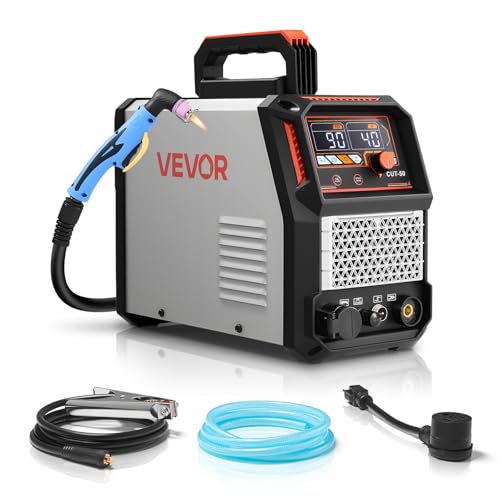
VEVOR 65A plasma cutter, pilot arc, 110V/220V, 2T/4T display
65APilot arcPT/PA timing110/220V
Check price on Amazon
Best for: 240 volt shops that cut thicker plate and want tunable arc timing.

VEVOR's 65 amp unit is the highest rated in the list and carries a non-touch pilot arc, dual voltage input and a digital display. The adjustable pilot arc and post-flow times, PT from 1 to 6 seconds and PA from 0.1 to 3 seconds, let you tune the arc to extend consumable life, which is a useful feature on a machine used for many short cuts.

Amperage is a ceiling, not a guarantee. A 65 amp rating usually applies on a 240 volt circuit, and on a 120 volt outlet the machine delivers far less. If you only have 120 volts, the extra amps are wasted and the 50 amp class machines are equivalent.

Measured against the 50 amp VEVOR below, it is the one to buy if you plan to cut thicker plate on 240 volts. As always, the compressor must keep up with the air demand, and you should keep spare tips and electrodes on hand. The timing controls reward a little experimenting: write down the settings that give the cleanest result on each thickness. A thicker plate also needs a slower, steadier hand and a torch held square to the work.

What works

  • Sixty-five amps at the top of the range
  • Adjustable pilot and post-flow timing
  • Non-touch pilot arc
  • Dual voltage input

Watch out for

  • Full amperage needs 240 volts
  • Needs a compressor with plenty of delivered air

Spec sheet

Output
65 amps
Start
Non-touch pilot arc
Input
110 or 220 volt
Timing
PT 1 to 6 s, PA 0.1 to 3 s adjustable
Display
Digital, 2T/4T
05
VEVOR 50A plasma cutter, pilot arc, 110V/220V, 2T/4T display
50APilot arcPT/PA timing110/220V
Check price on Amazon
Best for: A straightforward 50 amp pilot arc machine for a home shop.

This VEVOR is the 50 amp sibling of the 65 amp model, with the same non-touch pilot arc, adjustable timing and digital display. According to the listing, it cuts through rough and rusty surfaces without direct contact, which is the main reason to buy pilot arc over touch start.

Fifty amps is the sweet spot for half inch clean cuts in mild steel. It runs on 110 or 220 volts, with the usual caveat that the 110 volt output is lower. Measured against the ARCCAPTAIN, it offers similar amperage and a longer list of timing controls but fewer published duty cycle details.

Ownership is routine: keep the air dry, replace the tip when the cut gets ragged and keep the ground clamp on bare metal. If the machine stops, check for overheating and let it cool. Team it with a plasma-rated regulator and a drain-equipped filter at the machine, which is cheaper than replacing wet consumables every week. For practice, use scrap in the thickness you cut most so the settings are ready when the real part arrives.

What works

  • Non-touch pilot arc for rust and paint
  • Adjustable pilot and post-flow timing
  • Dual voltage input
  • Digital display with 2T and 4T

Watch out for

  • Duty cycle details are thin
  • Needs an external compressor

Spec sheet

Output
50 amps
Start
Non-touch pilot arc
Input
110 or 220 volt
Timing
Adjustable PT and PA times
Display
Digital, 2T/4T

Spec sheet decoder

What the numbers on the box really mean

The specs manufacturers lead with, translated into what they tell you about real-world performance.

Built-in compressor

An air compressor inside the cutter. It removes the need for an outside air supply.

Watch forOnly the HITBOX lists one.

Air sensor

A sensor that reports air pressure and alerts you when it is wrong.

Watch forThe Bestarc and ARCCAPTAIN list one.

PT and PA time

Post-flow and pilot arc timing. They protect the torch and consumables.

Watch forThe VEVOR units list adjustable PT and PA.

Clean and max cut

Clean is the practical thickness, max is a ragged limit.

Watch forThe Bestarc lists 1/2 inch clean and 3/4 inch maximum.

Duty cycle

Cutting time in a ten minute window at a stated current.

Watch forThe ARCCAPTAIN lists about 60 percent.

Methodology

How We Evaluated These Plasma Cutters Under $500

Air handling

We compared built-in compressors, air sensors and regulators. The HITBOX's compressor and the Bestarc's sensor earned the most credit. Units with no air features scored lower.

Amperage honesty

We checked how each listing states output by voltage. Higher ratings were treated as 240 volt figures. A 65 amp label on a 110 volt outlet was not taken at face value. We also looked for listings that give a cut rating at each voltage, since that is the information a buyer needs.

Start and arc control

Pilot arc, timing controls and trigger modes were reviewed. The VEVOR timing options stood out. Units with a stated start type scored higher. We treated high-frequency starts as a neutral trait and flagged them only for electronics risk.

Cooling and duty

Duty cycle claims were read as ten minute window figures. The ARCCAPTAIN's stated 60 percent led. Missing figures lost points.

Cap compliance

Every machine was verified under the $500 cap at the time of writing. Notes rely on the spec sheet and owner feedback patterns. The list shares no models with the lower-cap sibling.

Decision guide

How to Choose the Right Plasma Cutters Under $500

By Air Supply

SituationPickWhy
No compressor at allHITBOX HBC8000IIBuilt-in air compressor
Good compressor, want monitoringBestarc BTC500 ProAir sensor and app
Good compressor, want duty cycleARCCAPTAIN 55AStated 60 percent
Thick plate on 240VVEVOR 65AHighest amperage
Simple 50 amp unitVEVOR 50APilot arc and timing controls

By Budget

TierPickWhy
Lowest in this listVEVOR 50ABasic pilot arc
Lower middleBestarc BTC500 ProApp and air sensor
MiddleARCCAPTAIN 55AStated duty cycle
Upper middleVEVOR 65AHighest amperage
Top of the capHITBOX HBC8000IIBuilt-in compressor

Built-in Air vs External Air

Built-in (HITBOX)

No compressor to buy and the supply matches the cutter. It adds weight and noise and needs 220 volts.

External (all others)

Lighter and often dual voltage. You must own a compressor with real delivered airflow.

Choose built-in if you have no compressor and external if you already own a good one.

Voltage Availability

PreferencePickWhy
Only 120VBestarc BTC500 ProDual voltage with app
240V onlyHITBOX HBC8000IIFull rating on 220 volts
EitherVEVOR 50A110 or 220 volt input
240V for thick workVEVOR 65ASixty-five amps

For Fabrication Shops Specifically

Look for

Pilot arc, a stated duty cycle and tunable timing. A shop cuts many parts, so consumable life and cooling matter.

In this comparison

The ARCCAPTAIN and VEVOR 65A fit best. The Bestarc adds air alerts that protect consumables.

When to Spend More

Spend more if

You cut over 3/4 inch plate or run a CNC table. That calls for a higher-rated machine with a machine torch.

Save if

You cut sheet and light plate now and then. A lower-cap unit is enough.

Ownership

Maintenance schedule

The upkeep that decides whether this machine lasts two seasons or ten.

TaskIntervalWhy it matters
Replace tips and electrodesWhen the cut degradesWorn consumables cause dross and ragged cuts. Fresh ones restore the arc.
Drain the air filter and trapEvery sessionWet air destroys consumables. A dry supply keeps the arc stable.
Inspect the torch and cableMonthlyDamaged insulation causes arcing. Replace worn parts.
Clean the ventsEvery few monthsDust blocks airflow and heats the inverter. A blast of dry air clears it.
Check the built-in compressor intakeMonthlyA clogged intake starves the cutter of air. Clean the filter element.

FAQ

Frequently Asked Questions

Do I need a compressor?

Yes, unless the cutter has one built in. Plan on 4 to 6 CFM at 60 to 75 PSI of clean, dry air. Check the delivered airflow of your compressor at that pressure, not its peak rating.

Is a 65 amp cutter always better?

Only on 240 volts and for thicker plate. On a 120 volt outlet the output is far lower.

What does pilot arc add?

It starts the arc without touching the work, so it cuts rust, paint and mesh. It uses a high-frequency start that can disturb electronics.

Why does my cut leave dross?

Common causes are a worn tip, wet air or the wrong travel speed. Check consumables and air first. Dross that peels off easily points to speed, while hard dross that sticks points to low current or a worn tip.

Can I cut aluminum?

Yes with most units, but you need clean air and more current. Expect a thinner clean cut than on steel.

Does the $500 cap change?

Listing prices move. The cap reflects prices when this guide was updated, so check the live listing.

Bottom line

The short version

Browse more plasma cutters under $500on Amazon →
James Miller, Lead Machine Editor

About the author

James Miller

Lead Machine Editor, MachineFanatic

James Miller leads MachineFanatic's buying guides, turning spec sheets, manuals and owner feedback into clear verdicts on power tools, outdoor power equipment, shop machines and kitchen machines.

More from James →

Keep reading

Related guides