
Amazon affiliate links - we earn a commission.Affiliate disclosure

Buying guide · 12 min read · Updated 2026-11-07

Best Rear Wheel Drive Lawn Mowers (2026)

Five rear-wheel-drive gas mowers compared by engine, wheel size and bag capacity, with notes on why rear drive grips slopes better than front drive.

James MillerBy James MillerLead Machine Editor5 machines comparedSpec-sheet verified
Best Rear Wheel Drive Lawn Mowers

At a glance

Our top picks

Side by side

Spec comparison

MachineEngineDeckDriveModes
SENIX 201cc 22-inch variable-speed rear-drive mowerBest OverallSENIX 201cc 22-inch variable-speed rear-drive mower201cc 4-cycle OHV22 inch steelRear-wheel, variable speedMulch, bag, side discharge
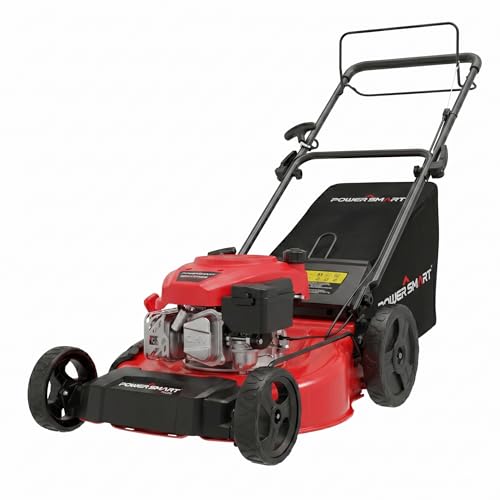
PowerSmart 21-inch 170cc hill mower with 10-inch wheelsBest for HillsPowerSmart 21-inch 170cc hill mower with 10-inch wheels170cc OHV21 inchRear-wheel self-propelBag, mulch, discharge, no tools
PowerSmart 21-inch 170cc rear-drive mower, 1.4-bushel bagBest Bag CapacityPowerSmart 21-inch 170cc rear-drive mower, 1.4-bushel bag170cc OHV21 inch steelRear-wheel for slopesBag, mulch, rear discharge
PowerSmart 21-inch 170cc self-propelled mower with auto chokeBest Auto-Choke ValuePowerSmart 21-inch 170cc self-propelled mower with auto choke170cc 4-stroke OHV21 inch steelRear-wheel3-in-1
PowerSmart 22-inch rear-drive mower with Briggs and Stratton E550 140ccBest Named EnginePowerSmart 22-inch rear-drive mower with Briggs and Stratton E550 140ccBriggs and Stratton E550 140cc22 inchRear-wheeln/a

Rear-wheel drive is not a marketing label but a mechanical choice with real consequences. A mower is front-heavy when you start but its weight shifts backward whenever you lean on the handle, and driving the rear wheels puts the pulling force exactly where that weight lands.

The result is better traction on slopes, in damp grass and with a full bag, which is why the layout is common on self-propelled mowers sold for hills. Still, the benefit depends on wheel size, engine torque and drive control, and not every rear-drive mower delivers it equally.

Before you buy

6 Criteria to Look For Before Buying a Rear Wheel Drive Lawn Mower

  1. 01

    Why rear drive works

    As you lean on a mower handle, weight shifts backward over the rear wheels, so driving them gives more traction as the effort rises. Front-drive mowers lose grip in exactly that situation. All five mowers here drive the rear wheels, so the differences come from wheel size and engine instead. A front-drive mower on the same hill tends to lighten at the driven wheels and spin, which is why rear layouts dominate models sold for slopes.

  2. 02

    Rear wheel diameter

    Larger driven wheels roll over dips and keep more rubber on the ground. The SENIX uses 11-inch rear wheels and the PowerSmart hill model uses 10-inch wheels. A small wheel on rough ground digs in and drops the deck.

  3. 03

    Engine size and brand

    Displacement sets torque in thick grass: 140cc on the Briggs-powered PowerSmart, 170cc on the other PowerSmarts and 201cc on the SENIX. A named engine brand eases parts and service, which matters over years of ownership.

  4. 04

    Drive control and speed

    Variable speed lets you match your walking pace, and a single speed forces you to adapt to the mower. The SENIX has variable speed. A drive bar that is easy to hold matters more than it seems on a long mow.

  5. 05

    Bag weight on traction

    A rear bag adds weight behind the driven wheels, which helps a rear-drive machine on a slope. The 1.4-bushel bags on two of the PowerSmarts add traction as they fill but also make the mower heavy to lift.

  6. 06

    Start system

    Gas mowers need a recoil pull, which varies from easy to hard. Auto choke on one PowerSmart and Prime 'N Pull on another reduce the steps. If you cannot comfortably pull a cord, rear-drive battery mowers exist but are covered in other guides. Before buying, pull the cord on a similar engine in a shop, and be honest about whether three or four pulls on a cold morning is realistic for you every week of summer.

Detailed reviews

The 5 best rear wheel drive lawn mowers, explained

01
SENIX 201cc 22-inch variable-speed rear-drive mower
201cc OHV22-inch deck11-inch rear wheelsVariable speed
Check price on Amazon
Best for: Large, hilly lawns where engine torque and big driven wheels matter most.

The thing that sets this SENIX apart is that every part of the traction chain is bigger than on the others in this guide: a 201cc overhead-valve engine, a 22-inch steel deck and 11-inch rear wheels on the driven axle. Larger driven wheels bridge dips and hold more rubber on the ground, which helps when the lawn is rough as well as steep.

Variable-speed drive lets you set the pace, a real advantage over single-speed systems that force you to walk at the machine's speed. The cost is weight and fuel upkeep. It is the heaviest mower in the lineup and, against the PowerSmart models, you pay for the larger engine and wider deck in both outlay and effort when you lift it.

To keep a rear-drive mower pulling well, clean the drive cable and wheel hubs of grass, check the cable adjustment each season so the drive engages fully, and use fresh stabilized fuel. Change the oil annually and keep the air filter clean, since a 201cc engine working hard on a slope ingests a lot of dust. On a steep run, shift your grip to the downhill side of the handle and slow the drive before turning, because a heavy mower with a big engine builds momentum quickly and the drive bar is your only brake besides letting go. If you mow wet slopes you will find even this machine slipping, so wait for a dry afternoon.

What works

  • Largest engine in the group at 201cc
  • 11-inch driven rear wheels grip and roll over bumps
  • Variable speed sets your own pace
  • Wide 22-inch steel deck

Watch out for

  • Heaviest machine here
  • Needs the full gas routine of fuel, oil and filter care

Spec sheet

Engine
201cc 4-cycle OHV
Deck
22 inch steel
Drive
Rear-wheel, variable speed
Rear wheels
11 inch
Modes
Mulch, bag, side discharge
02
PowerSmart 21-inch 170cc hill mower with 10-inch wheels
170cc OHV10-inch wheelsRear driveTool-free 3-in-1
Check price on Amazon
Best for: Medium hilly yards where large wheels and tool-free mode switching are useful.

This PowerSmart is the one marketed for hills and uneven ground, and the key spec is its 10-inch wheels paired with rear drive. The listing says it starts in one or two pulls and switches between bagging, mulching and discharge without tools, which suits a yard where conditions change through the season.

Compared with the SENIX 201cc it has a smaller engine and one inch less deck, but it is a step lighter and a less demanding machine to handle. Against the other PowerSmart 21-inch variants it is distinguished by its larger wheels and its explicit hill positioning, which matters if the slope is the reason for buying.

Gas ownership applies: stabilized fuel, an oil change each year, a clean air filter and a sharp blade. Check wheel hubs for caked grass because a clogged hub robs the drive of grip, and store the machine with fuel treated or the tank run low. When you buy any mower described as a hill model, ask how steep the maker actually means: most walk-behind manuals recommend against mowing slopes beyond roughly fifteen degrees, and the drive only changes how hard the climb feels, not how safe the descent is. Mow across the face of a slope rather than up and down, and keep your footing before your speed.

What works

  • 10-inch wheels roll over rough ground
  • Switches bag, mulch and discharge without tools
  • Marketed and equipped for hills
  • Engine starts in a pull or two by the listing

Watch out for

  • Smaller engine than the SENIX 201cc
  • Recoil start and fuel upkeep

Spec sheet

Engine
170cc OHV
Deck
21 inch
Drive
Rear-wheel self-propel
Wheels
10-inch large
Modes
Bag, mulch, discharge, no tools
03
PowerSmart 21-inch 170cc rear-drive mower, 1.4-bushel bag
170cc OHVSteel deck1.4-bushel bag3-in-1
Check price on Amazon
Best for: Owners who bag most of their clippings and want rear drive to handle the extra weight.

This version of the PowerSmart 21-inch emphasizes the practical side: a robust steel deck, a 170cc overhead-valve engine and a 1.4-bushel rear bag that the listing pairs with easy mode switching. Rear-wheel drive is billed as the slope feature.

It is close to the hill model above in engine and deck, and the main difference you will notice is the weight distribution when the bag fills, since a rear bag adds load behind the driven wheels, which is exactly where rear drive wants it. On a slope that bag weight actually helps traction rather than hurting it.

Keep an eye on the bag mesh, which clogs with fine clippings and cuts the airflow that lifts grass into it. Beat the bag clean after each use, use fresh fuel, and change the oil annually. Sharpen the blade every season so the bag fills with cut grass, not torn grass. When bagging uphill, the bag sits lower than your hands and the weight tugs the handle downward, so empty it earlier than you would on flat ground. If you mostly mulch rather than bag, the extra bag capacity is wasted money, and a plainer model would serve you as well.

What works

  • 1.4-bushel bag reduces emptying trips
  • Rear drive benefits from bag weight on slopes
  • Steel deck is sturdy
  • 170cc engine for thick turf

Watch out for

  • A full bag makes the mower heavy to lift
  • Same recoil start and fuel upkeep as other gas models

Spec sheet

Engine
170cc OHV
Deck
21 inch steel
Drive
Rear-wheel for slopes
Bag
1.4 bushel
Modes
Bag, mulch, rear discharge
04
PowerSmart 21-inch 170cc self-propelled mower with auto choke
170cc OHVAuto chokeRear driveSteel deck
Check price on Amazon
Best for: Owners who want a simple start routine and rear traction at the lowest cost.

The headline detail here is the auto choke: the engine sets its own cold-start mixture, so there is no choke lever to remember and flood. Paired with a recoil start, it is about as easy to start as a gas mower gets without an electric starter.

Rear-wheel drive on a steel 21-inch deck makes it a straightforward slope machine, and the maker describes it as giving confident control on uneven terrain. Compared with the hill model it lacks the larger wheels, and compared with the Briggs-powered PowerSmart it uses a generic engine rather than a named brand.

Ownership is typical gas: fresh stabilized fuel, an annual oil change, a clean air filter and a sharp blade. Because the choke is automatic, let the engine warm for a few seconds before engaging the drive, and clear the hubs of grass after wet cuts. Because this is the model people buy on price, it is worth planning for the small stuff: keep a spare spark plug and air filter on the shelf, and write the oil type on the deck in marker. Cheap mowers rarely die from one big failure, they fade when a cheap part is ignored for a season, and a little routine keeps this one pulling reliably.

What works

  • Auto choke removes a starting step
  • Rear drive grips slopes
  • Steel deck for durability
  • 170cc engine for thick grass

Watch out for

  • Smaller wheels than the hill model
  • Generic engine with no named brand behind it

Spec sheet

Engine
170cc 4-stroke OHV
Deck
21 inch steel
Drive
Rear-wheel
Start
Auto choke, recoil pull
Modes
3-in-1
05
PowerSmart 22-inch rear-drive mower with Briggs and Stratton E550 140cc
140cc Briggs E55022-inch deckRear drivePrime 'N Pull
Check price on Amazon
Best for: Owners who want a recognized engine brand behind a rear-drive mower with a wide deck.

This is the only mower in the guide that lists a named engine, the Briggs and Stratton E550 at 140cc, and it comes with the Prime 'N Pull starting system, where you press a primer bulb and then pull. The engine is smaller than the 170cc units, but the brand behind it makes parts and service easier to find.

The 22-inch deck is the widest of the PowerSmart range, and rear-wheel drive with a 1.4-bushel bag follows the pattern of the others. The smaller engine is the compromise: it will feel less authoritative than the 170cc or 201cc machines in thick, wet grass or on a long incline.

Because the engine is a recognized make, local small-engine shops can service it, which is a real advantage in year five. Stay on top of the primer bulb, replace the air filter on schedule and use stabilized fuel. If you value parts availability over raw torque, this is the one to choose. Expect the Prime 'N Pull routine to become second nature: two or three presses on the primer for a cold engine, one for a warm one, then a smooth pull rather than a jerk. Because it is the smallest engine here, give it a longer warm-up before engaging the drive on a slope, and take a lighter cut when the grass is thick so it keeps its speed.

What works

  • Briggs and Stratton engine is easy to service
  • 22-inch deck is wide for the class
  • Prime 'N Pull start
  • Rear-wheel drive with 1.4-bushel bag

Watch out for

  • 140cc engine is the smallest here
  • Less torque than the 170cc and 201cc models

Spec sheet

Engine
Briggs and Stratton E550 140cc
Deck
22 inch
Drive
Rear-wheel
Bag
1.4 bushel
Start
Prime 'N Pull

Spec sheet decoder

What the numbers on the box really mean

The specs manufacturers lead with, translated into what they tell you about real-world performance.

Rear-wheel drive

The rear wheels are driven by the engine through a transmission. Weight shifts back under effort, which improves grip.

Watch forAll five here drive the rear wheels; compare wheel size next.

Engine displacement (cc)

Cylinder capacity. A bigger figure usually means more torque for thick grass.

Watch for140cc, 170cc and 201cc appear in this lineup.

OHV

Overhead valve, a design that runs cooler and more efficiently than older side-valve engines.

Watch forAll the engines here are OHV.

Bag capacity (bushel)

A volume measure for clippings. More capacity means fewer stops but a heavier bag.

Watch forTwo PowerSmarts list 1.4 bushels.

Prime 'N Pull

A Briggs and Stratton starting system with a primer bulb that fills the carburetor before you pull.

Watch forOnly the Briggs-powered PowerSmart uses it.

Methodology

How We Evaluated These Rear Wheel Drive Lawn Mowers

Traction layout

We looked at rear wheel diameter and drive type, from the SENIX's 11-inch wheels to the 10-inch PowerSmart. Bigger driven wheels scored higher. We read the figures from spec sheets.

Engine strength

We compared 140cc, 170cc and 201cc engines against typical lawn demands. A larger engine suits thick grass and long slopes. We also noted engine brand and its effect on parts availability.

Start and control

We looked at starting systems and drive control: auto choke, Prime 'N Pull and variable speed. Easier starting and a settable speed scored higher. We relied on owner feedback patterns.

Deck and bag

We compared 21-inch and 22-inch steel decks and 1.4-bushel bags. Wider decks cut faster, and larger bags reduce stops. Weight when full counted against.

Ownership burden

We rated the gas routine of fuel, oil and filters equally across the group. Brand support and parts availability differentiated the models. Simpler starts scored higher.

Decision guide

How to Choose the Right Rear Wheel Drive Lawn Mowers

By Slope and Lawn Size

SituationPickWhy
Big hilly lawnSENIX 201ccBiggest engine and 11-inch wheels
Medium hilly yardPowerSmart hill model10-inch wheels, tool-free modes
Bagging on slopesPowerSmart 1.4-bushelBag weight aids rear traction
Easy starting on a budgetPowerSmart auto chokeNo choke lever
Service availabilityPowerSmart Briggs E550Named engine brand

By Budget

TierPickWhy
Lowest outlayPowerSmart auto chokeSimple rear-drive gas
Low to midPowerSmart 1.4-bushelBag and steel deck
Mid tierPowerSmart hill modelBigger wheels
Mid to upperPowerSmart Briggs E550Named engine, wide deck
Upper tierSENIX 201ccBiggest engine and wheels

Generic vs Named Engine

Generic engine

The SENIX 201cc and the 170cc PowerSmarts use unbranded overhead-valve engines. They deliver strong torque for the cost but parts and service come from the seller or generic suppliers.

Named engine

The Briggs-powered PowerSmart gives local shops a known engine to service and parts that are widely stocked, at the price of a smaller 140cc displacement.

Choose generic for raw torque per cost, and named if you expect to keep the mower more than a few seasons.

By Wheel Size

TerrainPickWhy
Rough and bumpySENIX 201cc11-inch rear wheels
Mixed hillsPowerSmart hill model10-inch wheels
Mostly smooth slopesPowerSmart auto chokeStandard wheels suffice
Heavy bagPowerSmart 1.4-bushelRear drive uses bag weight

For Slopes Specifically

Look for

Large rear wheels, a drive bar you can hold with a light grip and an engine with enough torque not to bog on the climb. Never mow wet grass on a slope.

In this comparison

The SENIX 201cc has the biggest wheels and engine, and the PowerSmart hill model is the lighter alternative. The Briggs-powered unit suits shallower slopes.

When to Spend More

Spend more if

Slopes are steep or the lawn is large. The SENIX 201cc with 11-inch wheels earns its price.

Save if

The slope is gentle. The PowerSmart auto-choke model gives the same rear-drive layout for less.

Ownership

Maintenance schedule

The upkeep that decides whether this machine lasts two seasons or ten.

TaskIntervalWhy it matters
Adjust the drive cableStart of seasonA stretched cable makes the drive slip or fail to engage on a slope. Adjust until it engages fully.
Change engine oilEvery seasonMowing hills loads the engine harder. Fresh oil keeps it protected.
Clean wheel hubsAfter wet cutsCaked grass stops rear wheels from gripping. Clear it so drive transmits fully.
Service the air filterTwice a seasonDust on a slope starves the engine. Clean or replace the filter.
Stabilize fuel before storageEnd of seasonEthanol fuel gums carburetors over winter. Add stabilizer or run the tank low.

FAQ

Frequently Asked Questions

Is rear-wheel drive better than front?

On slopes and with a full bag, yes, because weight shifts rearward as you push and the driven wheels gain grip. On flat ground the difference is small.

Is all-wheel drive available on walk-behinds?

True all-wheel drive is rare on walk-behind mowers and mostly appears on gas models or robots. Rear drive is the practical choice for most owners.

What engine size do I need?

For thick grass and slopes, 170cc to 201cc is comfortable. A 140cc unit like the Briggs-powered PowerSmart is fine for lighter use.

Does a bag help traction?

Yes, on a rear-drive mower. The bag sits behind the driven wheels, so its weight adds grip, though it makes the machine heavier to lift.

Is a rear-drive mower harder to push?

You do not push it, it pulls itself. The effort is in steering and holding it back on descents, so choose a drive bar you can hold comfortably. A heavy gas machine with a full bag still demands attention on turns, and releasing the drive bar stops the wheels, so practice that reflex before you rely on it on a slope.

Why does my rear-drive mower stop pulling?

Most often the drive cable is stretched or the wheel hubs are packed with grass. Adjust the cable and clear the hubs.

Bottom line

The short version

Browse more rear wheel drive lawn mowerson Amazon →
James Miller, Lead Machine Editor

About the author

James Miller

Lead Machine Editor, MachineFanatic

James Miller leads MachineFanatic's buying guides, turning spec sheets, manuals and owner feedback into clear verdicts on power tools, outdoor power equipment, shop machines and kitchen machines.

More from James →

Keep reading

Related guides