
Amazon affiliate links - we earn a commission.Affiliate disclosure

Buying guide · 13 min read · Updated 2026-11-25

Best RV Vacuum Cleaners (2026)

Five vacuums for RV life compared by weight, power source and storage: a cordless stick, a 4 pound corded stick, a light upright, a 12V hand vac and a shop vac.

James MillerBy James MillerLead Machine Editor5 machines comparedSpec-sheet verified
Best RV Vacuum Cleaners

At a glance

Our top picks

An RV vacuum has a harder job than a house vacuum. The floor is small but the nooks are many, storage is a single cabinet and power may come from a 30 amp pedestal, a generator or nothing at all.

That changes what matters. Weight, how the machine stores, how it is powered and how easily the bin empties count for more than a headline suction number. This guide compares five different vacuum styles on those practical points.

Before you buy

6 Criteria to Look For Before Buying a RV Vacuum Cleaner

  1. 01

    Power source and your hookup habits

    A corded vacuum like the Bissell 2033M or the Eureka NEU10AE4 needs 120V, while the Shop-Vac 12V runs from a car socket and the Tikom V500 needs charging. If you mostly camp at pedestals, corded is simplest. If you boondock, plan for a 12V hand vacuum or an inverter. A pure sine inverter is kinder to a charger than a modified one, and a vacuum charging from the battery bank draws from the same pool as your lights and refrigerator, so schedule it for sunny hours.

  2. 02

    Weight and carrying

    RV vacuums are carried up steps and into cabinets. The Bissell weighs under four pounds and the Eureka weighs 7.7 pounds. Anything much heavier than ten pounds becomes a chore in a coach. Steps, narrow doors and slide-out thresholds all punish a heavy machine, and a vacuum that is a chore to fetch is a vacuum that does not get used.

  3. 03

    Storage footprint

    A closet in a trailer might hold a stick vacuum but not an upright. The Tikom V500 adds a wall dock, and the Shop-Vac 12V fits in a drawer. Measure your storage before you buy, including the height under a bed platform, the width of a closet door and the depth of a cabinet. A vacuum that needs a wall dock needs a wall, and a rig with no free wall space should skip that style.

  4. 04

    Suction claims in context

    The Tikom V500 lists 40 kPa and the Shop-Vac 12V lists 7 kPa, but brands measure differently and neither number describes real pickup on carpet. Compare within a category, and read owner feedback about brush roll and nozzle design. A modest motor with a good nozzle and a sealed path often beats a bigger motor with leaks, because pickup depends on airflow at the floor, not on the label.

  5. 05

    Filter and bin design

    A washable filter saves money and a bagless bin makes emptying fast. Dust in a small RV settles quickly, so a filter that traps fine particles matters. Clean the filter on a schedule or suction fades. In an RV with pets, expect to clean it more often, and keep a spare filter if the model uses one, so you can swap while the other dries.

  6. 06

    Surface mix

    Hard floors and rugs need different tools. The Eureka suits carpet, the Bissell suits hard floor and upholstery, and the WORKSHOP suits wet messes. Match the vacuum to the rig floor, not to the box. A rig with vinyl plank needs little more than a soft roller and a good nozzle, while a coach with plush carpet needs real agitation, and the wrong match disappoints every time.

Detailed reviews

The 5 best rv vacuum cleaners, explained

01
Tikom V500 cordless stick vacuum with wall dock
450W motor40 kPa claimCordless6-in-1
Check price on Amazon
Best for: Hookup campers who want a cordless stick that converts to a hand vacuum.

The Tikom V500 pairs a 450 watt motor and a 40 kPa suction claim with a cordless battery, an LED touch screen and a charging wall dock. Its six-in-one design converts from a stick to a hand vacuum and a stair vacuum, which is the useful trick in an RV with tight spaces. No cord means no hunting for a pedestal outlet and no tripping over a cable in a narrow aisle.

The tradeoff is charging. A 450 watt cordless vacuum needs a battery that eventually refills from 120V, so a long boondocking stay without a generator or inverter leaves you with a dead vacuum. The suction number is also a maker claim, and a bigger motor drains the battery faster at full power. Beside the Bissell 2033M you gain freedom and give up the guarantee of unlimited runtime.

Storage is the other consideration. A wall dock is convenient in a house, but in an RV you may mount it inside a closet or leave the vacuum in a cabinet with the charger. Check that a closet door can close with the vacuum docked, and that the charger sits away from heat sources such as a furnace duct. Dump the dust bin after every use, wash the filter on schedule and keep the battery between about 20 and 80 percent when it sits for weeks.

What works

  • Cordless design avoids outlet hunting
  • Converts from stick to hand and stair modes
  • LED touch screen shows power mode
  • Charging wall dock keeps it ready

Watch out for

  • Needs 120V to recharge, which boondockers may lack
  • 40 kPa is a maker claim and drains the battery at full power
  • Bulkier to store than a 12V hand vacuum

Spec sheet

Motor
450W
Suction
40 kPa claimed
Power
Cordless battery
Display
LED touch screen
Modes
Stick, hand, stair and more
02
Bissell 2033M Featherweight corded stick vacuum
Under 4 lbCorded3-in-1Bagless
Check price on Amazon
Best for: Pedestal campers who want a very light vacuum with unlimited runtime.

The Bissell 2033M is a bagless corded stick vacuum that weighs under four pounds and converts to a hand vacuum and a stair vacuum. Its crevice tool and floor nozzle suit hard floors and upholstery, which describes most of an RV interior. Because it plugs into a wall, its runtime is limited only by your power supply, not by a battery.

The tradeoff is the cord and the modest power. It is meant for light cleaning, not for deep-cleaning a carpet or sucking up a spill of gravel. A short cord on a pedestal outlet limits where it can reach, and an extension cord adds clutter. It also needs 120V, so it sits idle when you are on battery power only.

It stores neatly in a closet and is easy to carry up the steps. Dump the bin often, tap the filter clean and check the brush roll for hair. For a rig with a pedestal most nights, it is a sensible, low-risk choice.

What works

  • Under four pounds is easy to carry up RV steps
  • Converts to a hand and stair vacuum
  • No battery to run down
  • Crevice tool and floor nozzle included

Watch out for

  • Needs a 120V outlet and a cord
  • Modest power for deep carpet cleaning
  • Cord reach is limited in a long coach

Spec sheet

Weight
Under 4 pounds
Power
Corded electric
Design
Stick, hand and stair vacuum
Bin
Bagless
Tools
Crevice tool and floor nozzle
03
Eureka Airspeed NEU10AE4 7.7 pound upright vacuum
7.7 lb upright10.5 inch pathPet hairQuick-release handle
Check price on Amazon
Best for: Larger motorhomes with carpet that need a real upright.

The Eureka Airspeed NEU10AE4 is a featherweight upright at 7.7 pounds, with a 10.5 inch wide cleaning path and a quick-release handle for above-floor cleaning with a crevice tool or dusting brush. It is marketed for hard floors and carpets and for pet hair, which makes it the closest thing here to a full-size vacuum. The narrow path suits an RV aisle.

The tradeoff is bulk. An upright is harder to store than a stick, and it needs a corded outlet. At 7.7 pounds it is light for an upright but heavier than the Bissell. It is also a larger machine than a motorhome closet may want to hold.

Choose it if you have carpet or rugs in the rig and want proper floor-agitation. Keep the brush roll clear of hair, empty the cup after each use and wash the filter on schedule. If the rig has slide-outs, vacuum the slide seal tracks too, since dust collects there and gets pushed into the cabin every time the slide moves.

What works

  • Light at 7.7 pounds for an upright
  • 10.5 inch path fits an RV aisle
  • Quick-release handle for above-floor cleaning
  • Works on hard floors and carpet

Watch out for

  • Bulky to store in a small coach
  • Corded operation needs an outlet
  • Heavier than a stick vacuum

Spec sheet

Weight
7.7 pounds
Cleaning path
10.5 inch wide
Surfaces
Hard floor and carpet
Handle
Quick release for above-floor use
Power
Corded
04
Shop-Vac 12V handheld car vacuum, 7000 Pa, 16 foot cord
12V DC7 kPa16 ft cordWashable filter
Check price on Amazon
Best for: Boondockers and van owners who want a vacuum that runs on 12V.

Shop-Vac offers a 12 volt handheld vacuum with a 7 kPa suction claim and a 16 foot power cord, meant for cars but equally useful in an RV. It plugs into a 12V accessory socket, so it works with the house battery, the tow vehicle or a power pack, and it needs no 120V outlet. The reusable washable filter keeps ongoing costs low.

The tradeoff is power and capacity. A 12V handheld has a small bin and modest suction compared with a stick vacuum, so it suits crumbs, pet hair on a seat and gravel on a mat. It is not a replacement for a floor vacuum in a larger coach. The cord limits reach, but 16 feet covers most of a van or small trailer.

This works well as a backup for boondockers. Keep it in a drawer near the door, empty the bin each time and wash the filter when suction fades. Because it draws current from a 12V socket, check that the plug seats firmly, since a loose plug heats up and can melt the tip. A fuse in the vehicle socket is a sign the draw is high, so do not run it for long stretches on a weak battery.

What works

  • Runs from a 12V socket with no 120V needed
  • 16 foot cord covers a small interior
  • Washable reusable filter
  • Compact enough for a drawer

Watch out for

  • Small bin and modest suction
  • Not a floor vacuum for a large coach
  • Draws from the house battery while running

Spec sheet

Power
12V DC plug
Suction
7 kPa claimed
Cord
16 feet
Filter
Reusable and washable
Use
Car and small interiors
05
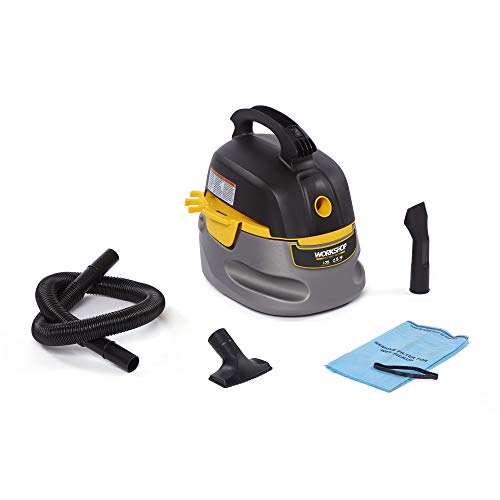
WORKSHOP WS0255VA 2.5-gallon wet and dry shop vacuum
2.5 gallon1.75 peak HPWet and dry5-year warranty
Check price on Amazon
Best for: Muddy or wet camps that need a wet and dry vacuum.

The WORKSHOP WS0255VA is a compact 2.5 gallon wet and dry shop vacuum with a flat bottom that resists tipping, a four foot hose, a ten foot power cord and on-board storage for its attachments. It is built to pick up water, mud and debris, which is useful after a rainy campsite or a leaking window. A five-year limited warranty is a rare comfort at this size.

A real limit is that peak horsepower is a marketing figure that tells you little about real suction. A shop vac is also louder than a household vacuum and wants a 120V outlet. It is overkill for crumbs and a bulky item to store in a small rig.

It earns its space in a trailer that gets muddy or wet, or for cleaning a truck bed and awning. Dump the tank after wet use, dry the filter and store the hose loosely. Since the tank holds water, never leave liquid sitting in it between trips, since it will smell and grow mold. Keep a spare foam filter for wet jobs and a paper filter for dry ones.

What works

  • Handles wet and dry messes
  • Compact 2.5 gallon tank
  • Flat bottom resists tipping
  • Five-year limited warranty

Watch out for

  • Peak horsepower figure is a marketing number
  • Louder and bulkier than a stick vacuum
  • Needs a 120V outlet

Spec sheet

Tank
2.5 gallon
Motor
1.75 peak horsepower
Hose
4 foot
Cord
10 foot
Warranty
5-year limited

Spec sheet decoder

What the numbers on the box really mean

The specs manufacturers lead with, translated into what they tell you about real-world performance.

kPa suction

Kilopascals measure the pressure difference a vacuum can create. A higher number suggests stronger lift in a sealed test.

Watch forTikom claims 40 kPa and Shop-Vac 12V claims 7 kPa, which are not comparable across categories.

Peak horsepower

A marketing figure for a motor's momentary output. It does not tell you steady suction.

Watch forWORKSHOP lists 1.75 peak HP.

Motor watts

Watts describe electrical input. More watts draw more power and can mean more suction.

Watch forTikom lists 450W.

12V DC

A supply from a car or RV accessory socket. It limits power but needs no inverter.

Watch forThe Shop-Vac 12V uses it.

Cleaning path

The width of the floor nozzle. A narrow path suits aisles.

Watch forEureka lists a 10.5 inch path.

Methodology

How We Evaluated These RV Vacuum Cleaners

Power flexibility

We asked whether each vacuum needs 120V, a battery charge or a 12V socket. Flexibility across camping styles scored well, because most owners switch between hookup weekends and off-grid stretches in the same year. A vacuum that works in both beats one that works in one.

Weight and storage

We compared pounds and footprint, from under four pounds on the Bissell to a 2.5 gallon tank on the WORKSHOP. Light and compact units scored higher, and we also asked how each vacuum stores, since a machine that wants a wall dock or a tall closet is a poor fit in a trailer with no spare room.

Cleaning tools

We counted attachments and conversions, such as stick to hand and stair modes. More modes help in tight spaces, such as the gap between a bed and a wall or the crack beside a refrigerator, where a hand vacuum with a crevice tool does what a floor nozzle cannot.

Filter and maintenance

We looked at washable filters, bagless bins and brush roll access. Easy upkeep keeps suction up, and we noted designs where the filter and bin come out without tools, since an RV owner cleans in a driveway or a campsite and not at a workbench.

Fit for RV surfaces

We matched each vacuum to typical RV floors, upholstery and wet messes. We treated maker suction numbers as claims, and we gave more weight to design details like nozzle width, bin size and filter access than to a single headline figure.

Decision guide

How to Choose the Right RV Vacuum Cleaners

By Power Situation

SituationPickWhy
Pedestal every nightBissell 2033MCorded, unlimited runtime
Generator or inverter availableTikom V500Cordless with a dock
Boondocking on 12VShop-Vac 12VRuns from a 12V socket
Carpeted motorhomeEureka NEU10AE4Upright with a 10.5 inch path

By Budget

TierPickWhy
LowestShop-Vac 12VSimple hand vacuum
Low to midBissell 2033MLight corded stick
MidWORKSHOP WS0255VAWet and dry capability
UpperTikom V500Cordless with touch screen

Cordless vs Corded

Cordless

The Tikom V500 gives freedom and no cord to trip over, but needs charging. Runtime is a maker figure.

Corded

The Bissell and Eureka never run out of battery, but need an outlet and a cord.

Choose cordless if you have regular charging; choose corded if you camp at pedestals.

Floor Axis

PreferencePickWhy
Carpet or rugsEureka NEU10AE4Upright agitation
Hard floor and upholsteryBissell 2033MCrevice tool and floor nozzle
Mud and waterWORKSHOP WS0255VAWet and dry
Seats and cabinetsShop-Vac 12VHandheld

For Small Vans and Trailers Specifically

Look for

A vacuum that stores in a drawer and runs on whatever power you have. Weight and size matter more than suction.

In this comparison

The Shop-Vac 12V fits a drawer and runs from 12V, while the Bissell 2033M weighs under four pounds.

When to Spend More

Spend more if

You live in the rig. The Tikom V500's modes and cordless freedom pay off every day.

Save if

You vacuum a few times a trip. The Bissell or the Shop-Vac 12V is enough.

Ownership

Maintenance schedule

The upkeep that decides whether this machine lasts two seasons or ten.

TaskIntervalWhy it matters
Dump the binAfter every useA full bin cuts suction and lets dust back into the filter. Empty outdoors.
Wash the filterMonthlyA clogged filter makes the motor work harder. Let it dry fully before reinstalling.
Clear the brush rollEvery few usesHair wraps the roll and slows it. Cut it free with scissors.
Charge the batteryBefore storageLithium batteries age fastest when fully drained or fully charged for long periods. Store at a partial charge, somewhere cool, since a hot closet in summer ages a full battery faster than a half-full one on a shelf in the shade.
Inspect the cord and plugEvery seasonA frayed cord is a hazard. Replace damaged cords, and never run a vacuum with the cord damaged or the plug loose, since a bad cord in a wet or dusty camp is a fire and shock risk.

FAQ

Frequently Asked Questions

Do I need a special RV vacuum?

Not special, but a light, compact one suits tight spaces and carrying. Match it to your power supply.

Is cordless better in an RV?

It is convenient, but it needs a way to recharge. At hookups it works well. On long boondocking trips a 12V vacuum is more reliable.

Can I run a vacuum on an inverter?

Yes, if the inverter has enough continuous watts. A 450W vacuum needs an inverter rated above that with headroom.

How do I clean upholstery?

Use a crevice tool or a handheld unit and a soft brush. Work from top to bottom so dust falls onto the floor, then finish with the floor pass. Fabric seats in an RV hold sand and pet hair, so a pass each trip keeps them from grinding the weave.

Why does suction fade?

A full bin, a clogged filter or a hair-wrapped brush roll. Clean each in turn.

Is a shop vac worth it?

Only if you often face mud or water. For crumbs, a stick or hand vacuum is easier.

Bottom line

The short version

Browse more rv vacuum cleanerson Amazon →
James Miller, Lead Machine Editor

About the author

James Miller

Lead Machine Editor, MachineFanatic

James Miller leads MachineFanatic's buying guides, turning spec sheets, manuals and owner feedback into clear verdicts on power tools, outdoor power equipment, shop machines and kitchen machines.

More from James →

Keep reading

Related guides