
Amazon affiliate links - we earn a commission.Affiliate disclosure

Buying guide · 13 min read · Updated 2026-11-09

Best Scroll Saws (2026)

Scroll saws compared by throat depth, stroke speed, arm design, bevel range and blade change, to help you choose one for fretwork, inlay and intricate cuts.

James MillerBy James MillerLead Machine Editor6 machines comparedSpec-sheet verified
Best Scroll Saws

At a glance

Our top picks

Side by side

Spec comparison

MachineMotorThroatTableBevelSpeed
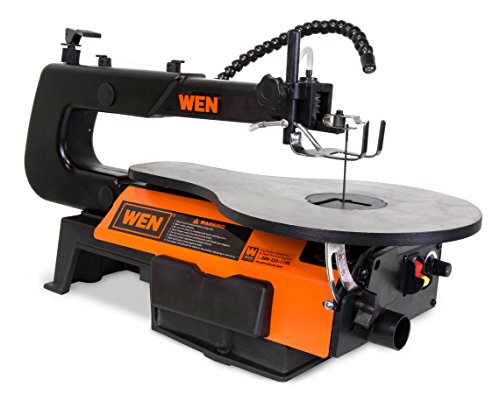
WEN LL2156 21 in 1.6 Amp Parallel Arm Scroll SawBest OverallWEN LL2156 21 in 1.6 Amp Parallel Arm Scroll Saw1.6 amp variable speed21 in25-5/8 x 16 in steel45 left, 30 rightn/a
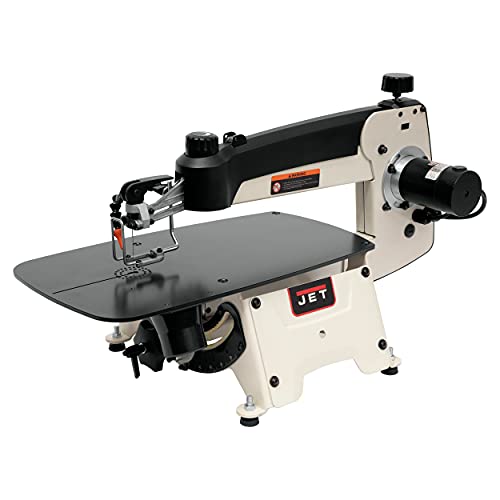
JET JWSS-18B 18 in Variable-Speed Scroll SawBest Smooth OperatorJET JWSS-18B 18 in Variable-Speed Scroll Sawn/a18 inn/an/an/a
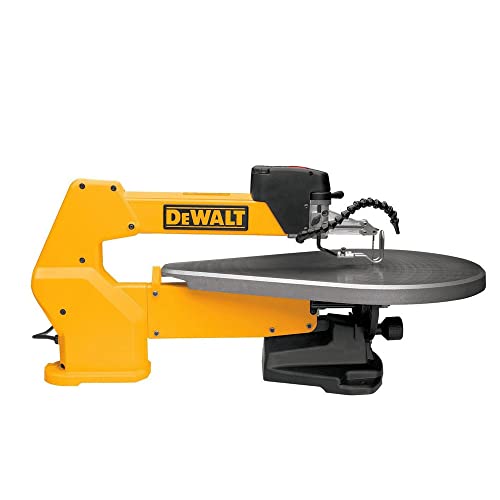
DEWALT DW788 20 in Variable-Speed Scroll SawBest Long-Throat ClassicDEWALT DW788 20 in Variable-Speed Scroll Saw1.3 amp20 inn/an/aVariable
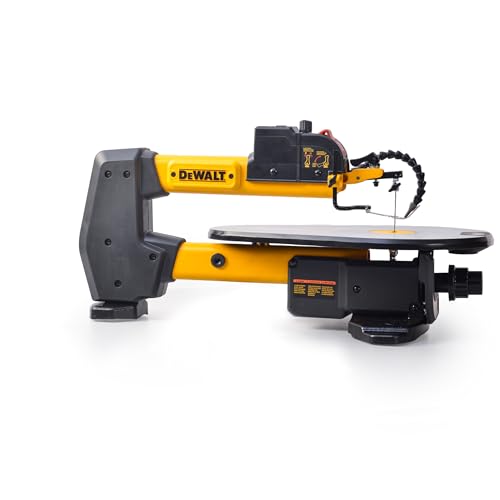
DeWalt 18 in 1.6 Amp Variable-Speed Scroll SawBest New DeWaltDeWalt 18 in 1.6 Amp Variable-Speed Scroll Saw1.6 amp18 inDie-cast aluminum45 left, 15 right500 to 1,500 SPM
WEN 3921 16 in Variable-Speed Scroll Saw with LightBest ValueWEN 3921 16 in Variable-Speed Scroll Saw with Lightn/a16 in16 x 11 in45 degrees left400 to 1,600 SPM
SKIL SS9503-00 1.2 Amp 16 in Variable-Speed Scroll SawBest Dust ControlSKIL SS9503-00 1.2 Amp 16 in Variable-Speed Scroll Saw1.2 amp16 inn/an/aElectronic variable

A scroll saw drives a thin blade up and down through the work, which lets you cut tight curves, inside cutouts and delicate fretwork that no other saw can do. The blade is held at both ends under tension, so you can thread it through a drilled hole and cut from inside a shape.

Throat size, arm design and speed range decide how smooth a saw feels and how much detail it can handle.

Before you buy

6 Criteria to Look For Before Buying a Scroll Saw

  1. 01

    Throat depth

    Throat depth is how far the blade sits from the rear frame, and it sets the widest panel you can turn. The SKIL and WEN 3921 offer 16 inches, the JET and DeWalt 18, the DW788 20 and the WEN LL2156 21. Buy the depth you need for your largest project, since a short throat forces awkward turning. A common mistake is to buy for the biggest project once a year and live with a heavy saw daily.

  2. 02

    Parallel arm versus C-arm

    A parallel-arm saw keeps the blade near vertical through its stroke, which reduces front-to-back drift in thick stock. The WEN LL2156 and DW788 use that style. Simple C-arm saws cost less but swing more. Choose parallel for hardwood and thick stock. The JET JWSS-18B tilts the arm instead of the table, which keeps the work flat during bevel cuts.

  3. 03

    Stroke speed range

    Speed ranges from 400 to 1,600 strokes per minute across these saws. A low speed of 400 gives control in tight curves, and a high speed near 1,600 cuts fast in thin stock. The JET covers 400 to 1,550 and the DeWalt 18 inch covers 500 to 1,500. Slow speed is where beginners should live, because hardwood burns when the blade runs too fast.

  4. 04

    Blade change system

    Scroll saw blades break, so blade changes happen constantly. Tool-free clamps and flip-open panels, like those on the WEN LL2156, turn a five minute job into a one minute job. Saws that need a hex key slow down inside cutouts. Ask whether the saw takes plain-end and pinned blades, since plain-end blades are cheaper and finer.

  5. 05

    Table and bevel range

    A larger table supports big pieces, and the WEN LL2156 offers 25-5/8 by 16 inches. Bevel range matters for inlay and compound cuts. The WEN LL2156 reaches 45 left and 30 right, and the DeWalt 18 inch reaches 45 left and 15 right. Look at the table surface too, as a flat die-cast or steel table lets thin stock slide without catching.

  6. 06

    Dust and visibility

    Sawdust hides the cut line. The SKIL has a blower and an LED, and the JET has a vacuum port. Poor visibility causes wandering cuts. A blower, a vacuum or both reduce the problem. A scroll saw makes fine dust that is unhealthy to breathe, so a mask is needed even with a vacuum.

Detailed reviews

The 6 best scroll saws, explained

01
WEN LL2156 21 in 1.6 Amp Parallel Arm Scroll Saw
1.6 amp motor21 in throatParallel armDual-bevel table
Check price on Amazon
Best for: Hobbyists who want a large, stable saw for big fretwork panels.

The LL2156 is a 21 inch scroll saw with a parallel-arm design and a steel table measuring 25-5/8 by 16 inches. Parallel arms keep the blade moving close to vertical, which reduces the front-to-back swing of a C-arm saw and gives a straighter edge in thick stock.

Heavy steel construction limits vibration and noise, and the table bevels up to 45 degrees left and 30 degrees right. Two flip-open side panels give tool-free blade changes. Compared with the WEN 3921 at 16 inches, it has a bigger throat and table, and a heavier frame that stays put on the bench.

The parallel-arm linkage has more pivots to keep clean and lubricated than a simple C-arm. It is bulky, so plan on a permanent bench spot or stand.

What works

  • Parallel arm reduces blade swing
  • 21 inch throat fits large panels
  • Steel table with dual bevel
  • Tool-free blade changes

Watch out for

  • Large and heavy for a small bench
  • More moving joints to maintain

Spec sheet

Motor
1.6 amp variable speed
Throat
21 in
Arm design
Parallel arm
Table
25-5/8 x 16 in steel
Bevel
45 left, 30 right
Blade change
Tool-free side panels
02
JET JWSS-18B 18 in Variable-Speed Scroll Saw
400-1,550 SPM18 in throatTilting armDust port
Check price on Amazon
Best for: Serious hobbyists cutting fine detail for long sessions.

The JET JWSS-18B has an 18 inch throat and a variable speed range of 400 to 1,550 strokes per minute. The arm tilts 45 degrees right and 30 degrees left, which allows the table to stay flat while you bevel cut, and the 2-1/2 inch dust port on the underside collects sawdust at the source.

JET is known for smooth, low-vibration saws. Against the WEN LL2156 it has a smaller throat but a more refined feel and a more conventional stroke range. It is priced above the WEN, so it fits people who spend hours at the saw.

Keep the dust port connected to a vacuum, check blade clamps and replace the blade often. Fine fretwork depends on a fresh blade more than on the saw.

What works

  • Smooth low-vibration cutting
  • Tilting arm keeps the table flat
  • Dust port collects at the source
  • 400 to 1,550 SPM variable speed

Watch out for

  • 18 inch throat is smaller than the WEN LL2156
  • Costs more than WEN and SKIL saws

Spec sheet

Speed range
400 to 1,550 SPM
Throat
18 in
Arm tilt
45 right, 30 left
Dust port
2-1/2 in removable
Power
120V single phase
03
DEWALT DW788 20 in Variable-Speed Scroll Saw
1.3 amp motor20 in throatVariable speedSteel blade
Check price on Amazon
Best for: Woodworkers who want a proven precision saw with a deep throat.

The DW788 is a long-standing 20 inch variable-speed scroll saw with a 1.3 amp motor. Its reputation rests on a smooth parallel-link motion that keeps the blade vertical through its stroke, which is why it is a common choice for precise fretwork.

The 20 inch throat sits between the 18 inch JET and the 21 inch WEN LL2156. The motor rating of 1.3 amps is lower than the WEN at 1.6, but a scroll saw needs finesse more than power. The listing gives limited feature detail, so compare it with the JET before deciding.

Its parts and blade clamps are standard, and a rubber-feet bench mount is enough. Check the arm pivots for play as the saw ages.

What works

  • 20 inch throat for large panels
  • Variable speed for different materials
  • Smooth parallel-link motion
  • Established brand with parts support

Watch out for

  • Lower motor rating than newer designs
  • Listing gives limited feature detail

Spec sheet

Motor
1.3 amp
Throat
20 in
Speed
Variable
Blade
Steel
Type
Benchtop scroll saw
04
DeWalt 18 in 1.6 Amp Variable-Speed Scroll Saw
1.6 amp motor18 in throat500-1,500 SPMDie-cast table
Check price on Amazon
Best for: Home woodworkers who want a modern DeWalt saw with a simple setup.

This DeWalt has an 18 inch throat, a 1.6 amp motor and a variable speed range of 500 to 1,500 strokes per minute. The die-cast aluminum table adds stability and reduces vibration, and a front-facing scale shows bevel angle from 45 degrees left to 15 degrees right.

The bevel range is narrower on the right than the WEN LL2156, which goes to 30, and the throat is smaller. It matches the JET JWSS-18B on throat size, though the JET has a wider speed range. It suits home users who want a major brand and a simple setup.

Check blade tension each time and keep the table clean of resin. A front bevel scale saves time compared with a side-mounted gauge.

What works

  • 1.6 amp motor with 500 to 1,500 SPM
  • Die-cast aluminum table
  • Front-facing bevel scale
  • 18 inch throat for most projects

Watch out for

  • Right bevel limited to 15 degrees
  • Newer model with a short track record

Spec sheet

Motor
1.6 amp
Throat
18 in
Speed
500 to 1,500 SPM
Table
Die-cast aluminum
Bevel
45 left, 15 right
05
WEN 3921 16 in Variable-Speed Scroll Saw with Light
400-1,600 SPM16 in throatWork lightTwo blade directions
Check price on Amazon
Best for: Beginners who want a capable saw without a large outlay.

The WEN 3921 is a 16 inch scroll saw with a variable speed range of 400 to 1,600 strokes per minute, a 16 by 11 inch table that bevels 45 degrees left and a work light. It accepts blades in two directions, standard and turned 90 degrees, which lets you cut longer lengths of stock than the throat suggests.

It costs far less than the JET and the larger WEN, and it makes a solid learning saw. The 16 inch throat limits panel size, and the table is smaller than the LL2156. Compared with the WEN 3923, which has a flip-open panel for blade changes, the 3921 is less convenient to service.

Check blade tension, clean the table and expect to replace blades often as you learn.

What works

  • Low cost of entry
  • 400 to 1,600 SPM speed range
  • Blade turns 90 degrees for long rips
  • Built-in work light

Watch out for

  • 16 inch throat limits panel size
  • Blade changes take longer than on newer WENs

Spec sheet

Speed
400 to 1,600 SPM
Throat
16 in
Table
16 x 11 in
Bevel
45 degrees left
Blade
Standard or 90 degrees
06
SKIL SS9503-00 1.2 Amp 16 in Variable-Speed Scroll Saw
1.2 amp motor16 in throatLED lightDust removal
Check price on Amazon
Best for: Beginners who want visibility and dust control in a compact saw.

The SKIL SS9503 is a 16 inch scroll saw with a 1.2 amp motor, electronic variable speed control, an integrated LED and a dust removal system. The built-in dust blower keeps the cut line visible, which matters because sawdust hides the pencil line.

Its motor is the smallest in the lineup, which is fine for thin stock, as is common with 1.2 amp saws. Against the WEN 3921, it has an LED, a dust system and electronic speed control, but a narrower motor rating. It suits users who value visibility over capacity.

Check the dust blower hose and keep the LED clear of sawdust.

What works

  • Integrated dust removal keeps the line visible
  • LED worklight at multiple angles
  • Electronic variable speed
  • Compact 16 inch frame

Watch out for

  • Lowest motor rating in the lineup
  • Smaller throat limits panel size

Spec sheet

Motor
1.2 amp
Throat
16 in
Speed
Electronic variable
Light
Integrated LED
Dust
Integrated removal system

Spec sheet decoder

What the numbers on the box really mean

The specs manufacturers lead with, translated into what they tell you about real-world performance.

Throat size

The throat is the distance from the blade to the rear arm, and the nominal figure is twice the arm reach to the blade. A 20 inch saw cuts to the center of a 40 inch panel. It affects how the saw feels in use more than the label suggests.

Watch forSome brands round up. Check capacity by listed cutting width.

SPM

Strokes per minute is how many times the blade goes up and down. Higher speeds cut faster but increase heat and blade wear. It affects how the saw feels in use more than the label suggests.

Watch forA saw listing 1,600 SPM is not better than one listing 1,500 if its stroke vibrates.

Amp rating

Amps measure motor current. Scroll saw motors are small, between 1.2 and 1.6 amps in this lineup. It affects how the saw feels in use more than the label suggests.

Watch forMotor amps matter little compared with stroke quality, so do not pay for it.

Bevel range

Bevel range is how far the table or arm tilts. It lets you cut inlay and angled work. It affects how the saw feels in use more than the label suggests.

Watch forCheck the left and right ranges, which often differ.

Arm design

Arm design describes how the blade moves. Parallel arms keep it near vertical and C-arms swing. It affects how the saw feels in use more than the label suggests.

Watch forMarketing may call a saw parallel when it is not. Look for the linkage.

Methodology

How We Evaluated These Scroll Saws

Throat and table

We compared throat size from 16 inches on the WEN 3921 and SKIL to 21 inches on the WEN LL2156, plus table dimensions. This matters because a scroll saw rewards small improvements in stability and visibility more than raw power.

Arm design and vibration

We favored parallel-arm designs such as the WEN LL2156 and DW788 because they reduce blade swing. Vibration affects edge quality. This matters because a scroll saw rewards small improvements in stability and visibility more than raw power.

Speed range

We compared stroke ranges and whether control is electronic. The WEN 3921 at 400 to 1,600 SPM covers the widest span. This matters because a scroll saw rewards small improvements in stability and visibility more than raw power.

Blade changes

We checked whether blades change without tools. Tool-free systems earned credit because blades break often. This matters because a scroll saw rewards small improvements in stability and visibility more than raw power.

Dust handling

We looked at dust ports, blowers and lights. The SKIL and JET both handle visibility well. This matters because a scroll saw rewards small improvements in stability and visibility more than raw power.

Decision guide

How to Choose the Right Scroll Saws

By Project Size

ScenarioPickWhy
Large panelsWEN LL215621 inch throat
Fine fretworkJET JWSS-18BSmooth low-vibration stroke
Mid-size craftsDEWALT DW78820 inch throat
Beginner learningWEN 3921Low cost
Visibility firstSKIL SS9503Blower and LED

By Budget

TierPickWhy
EntryWEN 3921Lowest cost
Value with dust controlSKIL SS9503Blower and LED
Mid-rangeDeWalt 18 inBrand and die-cast table
UpperWEN LL2156Largest and parallel arm
PremiumJET JWSS-18BSmoothest feel

Parallel Arm vs C-Arm

Parallel arm

Keeps the blade near vertical for straighter edges. The WEN LL2156 and DW788 use this design.

C-arm

Simpler and cheaper, with more blade swing. The WEN 3921 and SKIL fit here.

Pick parallel for thick hardwood and C-arm for thin craft stock.

Blade Access

PreferencePick
Tool-free blade changeWEN LL2156
Standard clampsDEWALT DW788
Front bevel scaleDeWalt 18 in
Rotate blade 90 degreesWEN 3921

For Fretwork Specifically

Look for

Look for low vibration, slow speeds near 400 SPM and fine blade clamps.

In this comparison

The JET JWSS-18B and WEN LL2156 give the smoothest cutting.

When to Spend More

Spend more if

Spend more on the JET JWSS-18B if you cut for hours at a time.

Save if

Save with the WEN 3921 if you are learning.

Ownership

Maintenance schedule

The upkeep that decides whether this machine lasts two seasons or ten.

TaskIntervalWhy it matters
Replace the bladeEvery 1 to 2 hours of cuttingBlades dull fast. A dull blade burns wood and wanders.
Check blade tensionEach blade changeLow tension bows the cut. Pluck the blade and listen for a clear note.
Clean the tableAfter each sessionResin builds up and drags the work. Wipe with solvent.
Inspect arm pivotsEvery 6 monthsWorn pivots add play and wobble. Tighten or replace bushings.
Clear the dust blowerMonthlyA clogged blower hides the line. Blow it out with air.

FAQ

Frequently Asked Questions

What is the difference between a scroll saw and a band saw?

A scroll saw cuts fine detail with a thin blade. A band saw cuts thicker stock and larger curves. Many woodworkers own both, since each handles work the other cannot.

What blade should I start with?

Start with a number 5 skip-tooth blade for 1/4 inch hardwood. Finer blades suit thin stock. Plain-end blades are inexpensive and easy to thread through small holes.

Is a bigger throat better?

Only if you cut large panels. A bigger throat adds bulk and cost. Most hobby fretwork fits comfortably on a 16 to 18 inch saw.

Can I cut metal?

Thin soft metals with a metal-cutting blade at slow speed, but it dulls blades quickly. Wood, plastic and thin brass are the usual materials.

Why does my blade break?

Over-tension, fast speeds, or pushing too hard. Lower the speed and feed lightly. Blade breakage is normal, so keep a box of spares.

Do I need a dust collector?

A blower and a vacuum port reduce dust. Wear a mask for fine dust. Dust also builds up in the arm and motor, so clean them occasionally.

Bottom line

The short version

Browse more scroll sawson Amazon →
James Miller, Lead Machine Editor

About the author

James Miller

Lead Machine Editor, MachineFanatic

James Miller leads MachineFanatic's buying guides, turning spec sheets, manuals and owner feedback into clear verdicts on power tools, outdoor power equipment, shop machines and kitchen machines.

More from James →

Keep reading

Related guides