

Amazon affiliate links - we earn a commission.Affiliate disclosure

Buying guide · 16 min read · Updated 2026-11-06

Best Rated Solar Generators, Most Proven Picks (2026)

Six established solar generators compared on cycle life, safety certification, UPS speed, capacity and output, from a 292 Wh Jackery to a 3.8 kWh Bluetti.

James MillerBy James MillerLead Machine Editor6 machines comparedSpec-sheet verified
Best Rated Solar Generators, Most Proven Picks

At a glance

Our top picks

Side by side

Spec comparison

MachineCapacityAC outputUPS
Jackery Explorer 2000 v2 Portable Power StationMost Proven OverallJackery Explorer 2000 v2 Portable Power Station2,042 Wh LiFePO42,200 W, 3 AC ports20 ms, UL1778 certified
Jackery Explorer 300 Portable Power StationMost Proven Small UnitJackery Explorer 300 Portable Power Station292 Wh LiFePO4300 W, 600 W surgen/a
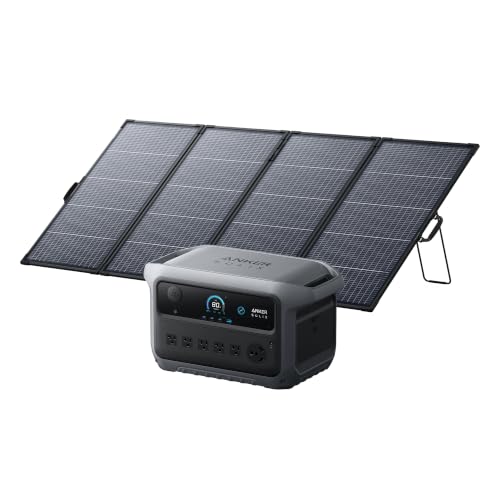
Anker SOLIX C2000 Gen 2 with 400W Bifacial PanelMost Proven for EfficiencyAnker SOLIX C2000 Gen 2 with 400W Bifacial Panel2,048 Wh LiFePO4, expandable to 4 kWh2,400 W, 4,000 W peakn/a
EcoFlow DELTA 3 Ultra with 2x220W PanelsMost Proven for Quiet OperationEcoFlow DELTA 3 Ultra with 2x220W Panels3,072 Wh LiFePO43,600 W, 7,200 W surgeUnder 10 ms
BLUETTI Elite 400 with 2x200W Solar PanelsMost Proven for CapacityBLUETTI Elite 400 with 2x200W Solar Panels3,840 Wh LiFePO42,600 W, 3,900 W power lifting15 ms
Jackery HomePower 3600 Plus with 2x200W PanelsMost Proven for ExpansionJackery HomePower 3600 Plus with 2x200W Panels3,584 Wh LFP, expandable to 21 kWh3,600 W, 7,200 W in paralleln/a

Most proven in a solar generator means a maker with a record of shipping the same battery design for years, published cycle life and safety figures, and service that exists when something fails. Star-rating summaries drift and favor whatever was reviewed recently, so this guide leans on engineering evidence rather than popularity.

This guide explains which published specs show a station is built to last, how cycle life, UPS certification and cell chemistry differ between brands, and how to size a proven station to real loads. Start with the picks above for the shortlist, then read the reviews below to see which proven option fits your household, your travel and your sun.

Before you buy

6 Criteria to Look For Before Buying a Rated Solar Generators, Most Proven Pick

  1. 01

    Published cycle life

    A cycle rating tells you how many full charge and discharge cycles the battery survives before it holds a set share of its original capacity. Jackery lists 6,000 cycles for the HomePower 3600 Plus and 4,000 cycles to 70 percent for the Explorer 300, and Anker lists 4,000 cycles to 80 percent for the C1000 class. Compare the percentage as well as the count, because 70 percent and 80 percent end points are not equal. A station with no stated rating deserves less trust.

  2. 02

    Cell chemistry and thermal safety

    LiFePO4 cells are more stable than nickel-based lithium-ion, and manufacturers add structural safeguards. Jackery describes ceramic membrane cells rated at 302 degrees Fahrenheit for the HomePower 3600 Plus, and EcoFlow cites an EV-grade CTC structure with 24/7 battery protection. These claims come from the makers, so treat them as directional, but the existence of a stated safety design is itself a mark of an established product.

  3. 03

    UPS switchover and certification

    If a station will keep a computer or medical device alive through an outage, how fast it switches matters. The EcoFlow Delta 3 Ultra lists under 10 milliseconds, the Bluetti Elite 400 lists 15 milliseconds and the Jackery 2000 v2 lists 20 milliseconds with a UL1778 certification. Most computer power supplies ride through 10 to 20 milliseconds. A certification beats a bare claim.

  4. 04

    Output and surge for real loads

    Capacity tells you how long, and watts tell you what. The Delta 3 Ultra and HomePower 3600 Plus output 3,600 watts, the C2000 Gen 2 outputs 2,400 watts, the Jackery 2000 v2 outputs 2,200 watts, and the Elite 400 outputs 2,600 watts. A fridge compressor may need two to three times its running power for a moment, so check the surge figure, such as the Delta's 7,200 watts.

  5. 05

    Support and shipping realities

    Established makers have service channels, firmware updates and replacement parts. Several listings here, including the Anker C2000 Gen 2, the Delta 3 Ultra and the Elite 400, ship the station and the panels separately, so do not worry if one arrives first. Check the warranty term and what voids it before buying. A proven brand with a clear claims process is worth more than a spec edge.

  6. 06

    Expansion and future-proofing

    A station you will keep for ten years may need to grow. The Anker C2000 Gen 2 expands to 4 kWh, and the Jackery HomePower 3600 Plus expands to 21 kWh per unit and links in parallel for 240 volts. Fixed-capacity stations like the Explorer 2000 v2 are simpler, but you must replace them to grow. Decide whether expansion is real for you before paying for it.

Detailed reviews

The 6 best rated solar generators, most proven picks, explained

01
Jackery Explorer 2000 v2 Portable Power Station
2,042 Wh LiFePO42,200 W AC39.5 lbUL1778 UPS rated
Check price on Amazon
Best for: Buyers who want a mature product line from a long-established maker with certified UPS behavior.

Proven here means a maker with a long record, a published safety certification and a battery chemistry that has been in the field. Jackery built its name on portable power, and the 2000 v2 carries a UL1778 certification for uninterruptible power systems, a standard for the switchover behavior that matters in an outage. It holds 2,042 watt-hours and outputs 2,200 watts across three AC ports, which covers a fridge, a router and lights for a full day.

It is also the lightest of the 2 kWh class, which Jackery says is 41 percent lighter than typical LiFePO4 stations of that capacity, at 39.5 pounds. Compared with the Anker C2000 Gen 2, it matches the capacity but offers 200 watts less output, and compared with the 3,000 watt class units it gives up headroom. The quoted silent charging mode under 30 dB makes overnight charging a non-event in a bedroom or an apartment.

Ownership is conventional. The LiFePO4 pack is rated for about 10 years of use, the app switches between fast and quiet charging, and the unit works safely indoors since it produces no exhaust. This is sold as a bare station, so panels are a separate purchase, and you must use the straight DC8020 plug rather than the L-shaped DC7909 when connecting Jackery panels. Keep it ventilated and do not store it at zero charge.

What works

  • UL1778 certified for uninterruptible power use during outages
  • Silent charging mode stays under 30 dB overnight
  • Charges to 80 percent from the wall in about 66 minutes
  • Light for 2 kWh at 39.5 pounds

Watch out for

  • Rated 2,200 W, below the 3,600 W class stations here
  • Panels are sold separately in this bare listing
  • Twenty millisecond switchover is slower than some rivals

Spec sheet

Capacity
2,042 Wh LiFePO4
AC output
2,200 W, 3 AC ports
Weight
39.5 lb
AC recharge
80% in 66 min, 102 min emergency full
UPS
20 ms, UL1778 certified
Silent charging
Under 30 dB
02
Jackery Explorer 300 Portable Power Station
292 Wh LiFePO4300 W AC7.5 lb4,000 cycles
Check price on Amazon
Best for: Travelers and apartment dwellers who need a dependable small battery for a CPAP, laptop and phones.

The Explorer 300 is the longest-running line in this group, and the current version has been upgraded to LiFePO4 cells. It is a small, simple battery: 292 watt-hours, two pure sine wave outlets rated 300 watts with a 600 watt surge, a 100 watt USB-C power delivery port and a 120 watt car port. Jackery states 4,000 cycles to 70 percent, which implies more than a decade of occasional use.

The proven part is the narrow focus. This is not a station trying to run a house, and it does not overreach. A CPAP, a laptop, a drone battery charger and lights fit comfortably. Compared with the 2,042 watt-hour Explorer 2000 v2, it holds one seventh of the energy, so it only suits small loads. Compared with a 1,024 Wh station it is a fraction of the weight, easy to toss in a bag.

The listing is for the station alone, with the panel optional. A 100 watt Jackery panel reaches 80 percent in about 2.8 hours according to Jackery, so it is worth adding one if you plan to use solar. Maintenance is limited to keeping the battery from sitting empty. For backup of small electronics, it is hard to beat for reliability and simplicity.

What works

  • LiFePO4 cells rated over 70 percent at 4,000 cycles
  • Seven and a half pounds fits in a bag or glove box
  • Hundred watt USB-C port charges laptops quickly
  • Pure sine wave AC output suits sensitive electronics

Watch out for

  • Only 292 Wh, so a 100 W load lasts under 3 hours
  • Three hundred watt output cannot run kitchen appliances
  • Solar panel is optional and sold separately

Spec sheet

Capacity
292 Wh LiFePO4
AC output
300 W, 600 W surge
Weight
7.5 lb
Ports
2 AC, 100 W USB-C, 2 USB-A, 120 W car
Cycle life
70% after 4,000 cycles
Solar
80% in about 2.8 h with 100 W panel
03
Anker SOLIX C2000 Gen 2 with 400W Bifacial Panel
2,048 Wh LiFePO42,400 W (4,000 W peak)58 min full charge400 W bifacial panel
Check price on Amazon
Best for: Households that want an efficient 2 kWh station with a strong panel and the option to expand.

Anker's C2000 Gen 2 is the efficiency pick. A quoted 9 watt standby draw means the inverter wastes little energy when idle, which Anker says is enough to power a dual-door fridge for up to 32 hours on a single charge, and up to 64 hours with an expansion battery to reach 4 kilowatt-hours. Its 2,400 watt rating and 4,000 watt peak are designed to start most window and RV air conditioners.

The included PS400 panel is a strength: 400 watts, 21.9 pounds, IP68 rated against rain and dust, and bifacial, collecting light on both sides for up to 10 percent more output according to Anker. Compared with the Jackery 2000 v2, it has the same capacity with 200 more watts of output and a full 100 percent recharge in 58 minutes from the wall or solar combined. Compared with the 3 kWh stations, it holds a third less energy but weighs far less.

The station and panel ship in separate packages, which is easy to overlook. Keep an eye on the inverter standby setting, and use the app to tune charging. The unit is quiet at light loads, and the LiFePO4 battery is built for daily cycling. For a household that wants a fridge, router and a few small appliances through a day, it is a sensible, efficient choice.

What works

  • Nine watt standby draw wastes little energy while idling
  • Fifty-eight minute full recharge using AC and solar together
  • Bifacial IP68 panel handles rain and gives extra output
  • Expands to 4 kWh for long fridge runtime

Watch out for

  • Station and panel arrive as separate packages
  • Capacity is lower than the 3 kWh stations in this roundup
  • Needs app tuning to get the quoted fast charging

Spec sheet

Capacity
2,048 Wh LiFePO4, expandable to 4 kWh
AC output
2,400 W, 4,000 W peak
Recharge
80% in 45 min, 100% in 58 min
Standby draw
9 W
Panel
PS400 bifacial, 21.9 lb, IP68
Shipping
Station and panel ship separately
04
EcoFlow DELTA 3 Ultra with 2x220W Panels
3,072 Wh LiFePO43,600 W (7,200 W surge)25 dB under loadUnder 10 ms UPS
Check price on Amazon
Best for: Apartment and RV owners who want high output and the quietest overnight operation.

EcoFlow built its reputation on fast charging and quiet operation, and the Delta 3 Ultra extends that to a 3 kilowatt-hour class. It outputs 3,600 watts continuously with 7,200 watts of surge, with an X-Quiet 3.0 cooling design that EcoFlow says holds the noise at about 25 dB under load. That is a figure to read cautiously, but it indicates a fan designed for overnight use in an apartment or an RV.

It supports four charging methods, including the EcoFlow Smart Generator, which lets a gasoline generator top up the battery automatically. Compared with the Jackery 2000 v2, it carries about 1,000 more watt-hours and 1,400 more watts of output, though at greater weight and cost. Compared with the Bluetti Elite 400, it has less capacity but higher output and a faster UPS.

The sub 10 millisecond UPS is the best in this group for protecting PCs and medical equipment through an outage. The panels ship separately from the station, so expect two deliveries. LiFePO4 cells give it a design life EcoFlow puts at about 10 years of daily use. Plan a spot with at least a few inches of clearance around the vents, and register the app for firmware updates.

What works

  • Maker quotes 25 dB under load for quiet overnight use
  • Sub 10 millisecond UPS protects PCs and medical gear
  • Four charging routes include a smart generator input
  • Seven thousand two hundred watt surge starts big motors

Watch out for

  • Panels and station ship in separate packages
  • Weighs far more than the 2 kWh class stations here
  • Premium-priced for the capacity compared with the Anker

Spec sheet

Capacity
3,072 Wh LiFePO4
AC output
3,600 W, 7,200 W surge
Noise
25 dB under load (maker figure)
UPS
Under 10 ms
Charging
Wall, solar, car or EcoFlow Smart Generator
Battery
10 years of daily use
Solar kit
Two 220 W panels
05
BLUETTI Elite 400 with 2x200W Solar Panels
3,840 Wh LiFePO42,600 W (3,900 W lift)15 ms switchoverTrolley design
Check price on Amazon
Best for: Homeowners who want long runtime for a fridge and essentials, with a rollable design.

The Elite 400 is Bluetti's high-capacity answer, with 3,840 watt-hours and a 2,600 watt inverter that can lift to 3,900 watts for starting loads. Bluetti is an established name in this field, and the Elite line is built to be rolled like luggage with a trolley handle. The 15 millisecond switchover is fast enough for Wi-Fi routers, cameras and pet feeders.

Its compromise is solar speed. With two 200 watt panels, Bluetti quotes 9.5 to 19 hours for a full recharge, so a day of sun will not refill it. Compared with the Delta 3 Ultra, it has more capacity but less output, so it suits long low-power loads rather than heavy starts. Compared with the Anker C2000 Gen 2, it stores nearly twice as much energy but is far heavier to move.

It is a heavy unit and a better fit as a home backup than a camping companion. The panels ship separately. Plan around the 2,600 watt limit when you add loads, and keep it plugged in to hold a full charge. If you want the most hours of fridge and lighting from one box without moving up to a whole-home battery, this is a solid choice.

What works

  • Largest storage in this roundup at 3,840 Wh
  • Roll-away trolley design moves it without lifting
  • Fifteen millisecond switchover covers routers and cameras
  • Nine ports serve a spread of devices at once

Watch out for

  • Solar refill takes 9.5 to 19 hours with two 200 W panels
  • Output of 2,600 W trails the 3,600 W class units
  • Heavy for car camping or any carry-by-hand use

Spec sheet

Capacity
3,840 Wh LiFePO4
AC output
2,600 W, 3,900 W power lifting
Ports
9
UPS
15 ms
Solar recharge
0 to 100% in about 9.5 to 19 h
Mobility
Roll-away trolley design
06
Jackery HomePower 3600 Plus with 2x200W Panels
3,584 Wh LFP3,600 W output6,000 cyclesExpandable to 21 kWh
Check price on Amazon
Best for: Households planning for long-term outage backup who want expansion and the longest rated cycle life.

This is the flagship of the lineup, and its claim to proven status is the cycle life. Jackery rates the 3,584 watt-hour pack for 6,000 cycles and a 10 year life, the longest figure in this roundup, with ceramic membrane cells it says were rated at 302 degrees Fahrenheit to resist thermal runaway. It also expands to 21 kilowatt-hours, so the same station can grow with a household.

Output is 3,600 watts, and linking two units gives 7,200 watts and 240 volts, which matters for well pumps and larger appliances. A hybrid AC and DC recharge takes about 2 hours, which is quick for a pack this big. Compared with the Delta 3 Ultra, it has more capacity and a longer cycle rating, while the EcoFlow has the quicker UPS. Compared with the Elite 400, it has more output and expansion but less base storage.

It has a luggage-style design with wheels and a telescopic handle, but it is a heavy device and the panels and station ship separately. For an owner who wants a battery that will outlast the house's first roof, and a path to add capacity, this is the longest-horizon pick here. Check the warranty terms and a plan for mounting.

What works

  • Six thousand cycle rating is the longest in this roundup
  • Expands to 21 kWh per unit for whole-home essentials
  • Two units linked give 240 V at 7,200 W
  • Quoted 2 hour hybrid recharge is fast for 3.6 kWh

Watch out for

  • Panels and station ship separately
  • Heavy wheeled unit that needs a planned location
  • Premium-priced for a base 3.6 kWh of storage

Spec sheet

Capacity
3,584 Wh LFP, expandable to 21 kWh
AC output
3,600 W, 7,200 W in parallel
Cycle life
6,000 cycles, 10 year life
Recharge
2 h hybrid AC and DC
Cell safety
Ceramic membrane, rated at 302 F
Shipping
Station and panels ship separately

Spec sheet decoder

What the numbers on the box really mean

The specs manufacturers lead with, translated into what they tell you about real-world performance.

Cycle life to X%

The number of full cycles before the battery holds only a stated share of its original capacity.

Watch forJackery's 70 percent at 4,000 cycles and Anker's 80 percent at 4,000 cycles are different standards.

UPS switchover

The time to switch to battery power when the source fails, in milliseconds.

Watch forUnder 10 ms on the Delta 3 Ultra is faster than 20 ms on the Jackery 2000 v2, but only certification such as UL1778 verifies it.

Rated and surge watts

Continuous output and a brief overload capacity for motor starts.

Watch forThe Bluetti Elite 400's 3,900 W is a power-lifting mode, not continuous output.

Standby draw

The power the inverter uses while idle with no load.

Watch forAnker's 9 W is low. A station that wastes 30 W idle drains a 1 kWh battery in about a day.

Bifacial panel

A panel that collects light on both faces, which adds output when the ground reflects light.

Watch forGains of around 10 percent, as Anker claims for the PS400, depend on the surface beneath.

Methodology

How We Evaluated These Rated Solar Generators, Most Proven Picks

Brand and product record

We looked at how long each maker has shipped portable power and whether the line has matured. Jackery's Explorer series, Anker's SOLIX line, EcoFlow's DELTA series and Bluetti's Elite line were treated as established, and unknown brands were excluded.

Published durability data

We compared cycle ratings and end-of-life percentages, such as the HomePower 3600 Plus at 6,000 cycles and the Explorer 300 at 4,000 cycles to 70 percent. Missing figures counted against a pick.

Safety and UPS behavior

We looked for certifications and switchover times, including the UL1778 test on the Explorer 2000 v2 and the under 10 millisecond figure on the Delta 3 Ultra. Claims without a standard were treated as directional.

Capacity and output spread

We compared capacity from 292 Wh to 3,840 Wh and output from 300 W to 3,600 W so that each pick fits a clear job. A station with high output and small capacity drains quickly, so we looked at the ratio.

Support and shipping

We noted separate shipments, warranty clarity and app support. Stations that ship panels separately, such as the Anker bundle and the Delta 3 Ultra, were noted but not penalized.

Decision guide

How to Choose the Right Rated Solar Generators, Most Proven Picks

By What You Need to Power

Match the proven station to your actual loads.

Use caseRecommended pickWhy
CPAP, laptop and phonesJackery Explorer 300292 Wh at 7.5 lb
Fridge and router for a dayJackery Explorer 2000 v22,042 Wh with UL1778 UPS
Efficient fridge backupAnker SOLIX C2000 Gen 29 W standby, 32 h fridge
Quiet apartment backupEcoFlow DELTA 3 Ultra25 dB under load per maker
Longest fridge runtimeBLUETTI Elite 4003,840 Wh
Whole-home essentials, growthJackery HomePower 3600 PlusExpands to 21 kWh

By Budget

Relative tiers only.

Budget tierRecommended pickWhy
LowestJackery Explorer 300Smallest proven unit
MidJackery Explorer 2000 v2Certified and light
Mid to upperAnker SOLIX C2000 Gen 2Efficient with panel
UpperBLUETTI Elite 400Largest base capacity
HighEcoFlow DELTA 3 UltraFast UPS, quiet
PremiumJackery HomePower 3600 Plus6,000 cycles, expansion

Fixed Capacity vs Expandable

The question is whether you will outgrow the station.

Fixed capacity

The Jackery Explorer 300 and Explorer 2000 v2 and the Bluetti Elite 400 are simpler and lighter. You replace the unit when you outgrow it. They suit renters, campers and buyers with known loads.

Expandable

The Anker C2000 Gen 2 grows to 4 kWh and the Jackery HomePower 3600 Plus grows to 21 kWh, with parallel linking for 240 V. You pay for modules later, and they suit homeowners and full-time RVers.

Pick fixed capacity if your loads are known. Pick expandable if you expect to grow.

By UPS and Backup Needs

How fast the station must switch.

Backup needRecommended pickWhy
Desktop PC or serverEcoFlow DELTA 3 UltraUnder 10 ms
Router, cameras, pet feederBLUETTI Elite 40015 ms
General home essentialsJackery Explorer 2000 v220 ms and UL1778
Small electronics onlyJackery Explorer 300Pass-through use
Efficiency with expansionAnker SOLIX C2000 Gen 2Low standby draw

For Refrigerator Backup Specifically

Look for

Enough watt-hours for a full day, since a fridge uses roughly 1 to 1.5 kWh per day, a surge rating above the compressor's start draw and low standby losses.

In this comparison

The Anker C2000 Gen 2 is the efficient choice, with Anker quoting up to 32 hours for a dual-door fridge. The Bluetti Elite 400 at 3,840 Wh has the most hours, and the Explorer 2000 v2 covers about a day.

When to Spend More

Spend more if

You rely on the station for medical gear or long outages. The EcoFlow DELTA 3 Ultra and Jackery HomePower 3600 Plus justify a premium with faster switchover and longer rated life.

Save if

You need modest backup. The Jackery Explorer 300 and Explorer 2000 v2 are proven and cost less than the 3 kWh class.

Ownership

Maintenance schedule

The upkeep that decides whether this machine lasts two seasons or ten.

TaskIntervalWhy it matters
Keep charge between 20 and 80 percent in storageCheck every 3 monthsPartial charge reduces stress and avoids protection lockout. Top up if the level drifts.
Clean vents and fan intakesEvery 3 to 6 monthsDust restricts airflow and reduces output when hot. A brush or compressed air clears it.
Update firmwareWhen promptedUpdates adjust charge control and safety limits. Update while on mains power.
Inspect panel cables and connectorsEach seasonFolding stresses cables. A damaged lead gives intermittent charging.
Run a load checkTwice a yearRunning a known load for an hour reveals capacity loss before it matters in an outage.
Avoid temperature extremesAlwaysHeat above about 100 degrees Fahrenheit accelerates cell aging, and freezing blocks charging.

FAQ

Frequently Asked Questions

What makes a solar generator proven rather than just popular?

Look for published cycle life, a stated end-of-life capacity, a safety certification such as UL1778 for UPS behavior, and a maker that has shipped the same family for years. Popularity can come from marketing and discounting, while those facts come from engineering. Jackery, Anker, EcoFlow and Bluetti publish most of them.

How long do these batteries really last?

The makers quote 4,000 to 6,000 cycles for LiFePO4 packs, which is more than 10 years of daily use. Real life depends on depth of discharge, heat and storage. Keeping the battery out of heat and avoiding long storage at zero charge extends it.

Is a bigger station always the better choice?

No. A 3.8 kWh station costs more, weighs far more and takes longer to refill from solar. The Bluetti Elite 400 needs 9.5 to 19 hours of sun on two 200 W panels. Choose capacity for your actual daily energy use, and add panels to match.

What is the difference between UPS and pass-through charging?

A UPS function switches to battery in milliseconds when the source drops, so a computer does not reboot. Pass-through charging only lets you charge and use the station at once, with no guaranteed switching speed. The Jackery 2000 v2 is UL1778 certified, and the EcoFlow Delta 3 Ultra quotes under 10 ms.

Do I need the expansion batteries?

Only if your loads will grow. The Jackery HomePower 3600 Plus expands to 21 kWh and the Anker C2000 Gen 2 to 4 kWh. Expansion is useful for long outages, but it adds cost and weight. If your needs are modest, a fixed station is simpler.

Are these safe to run indoors?

Yes, battery stations produce no exhaust or carbon monoxide. Give the fan clearance, keep them dry and away from heat, and do not cover the vents. Panels must be outdoors.

Bottom line

The short version

Browse more rated solar generators, most proven pickson Amazon →
James Miller, Lead Machine Editor

About the author

James Miller

Lead Machine Editor, MachineFanatic

James Miller leads MachineFanatic's buying guides, turning spec sheets, manuals and owner feedback into clear verdicts on power tools, outdoor power equipment, shop machines and kitchen machines.

More from James →