
Amazon affiliate links - we earn a commission.Affiliate disclosure

Buying guide · 12 min read · Updated 2026-11-07

Best Sponge Mops (2026)

Six sponge mops compared on sponge material, wringer design, handle length and refill supply, from cellulose squeeze mops to a PVA quadruple roller.

James MillerBy James MillerLead Machine Editor6 machines comparedSpec-sheet verified
Best Sponge Mops

At a glance

Our top picks

Side by side

Spec comparison

MachineSpongeWringerHeadsBest useHead width
MoopBrushee Natural Cellulose Squeeze Sponge Mop with 52 Inch PoleBest OverallMoopBrushee Natural Cellulose Squeeze Sponge Mop with 52 Inch PoleNatural celluloseEasy-pull lever2 includedKitchens and hard floorsn/a
Eyliden Self-Wringing Sponge Mop with 13 Inch Honeycomb HeadBest Wide HeadEyliden Self-Wringing Sponge Mop with 13 Inch Honeycomb HeadHoneycombPull-up roller2 reusablen/a13 inch
HOMEMAID Cellulose Metal Hinge Squeeze Sponge Mop Made in USABest ValueHOMEMAID Cellulose Metal Hinge Squeeze Sponge Mop Made in USANatural cellulose, 9.25 x 2.65 x 1 inchSpring-hinged metaln/aSimple everyday moppingn/a
LOLA Squeezematic Butterfly Automatic Sponge Mop with 4 HeadsBest Automatic WringerLOLA Squeezematic Butterfly Automatic Sponge Mop with 4 Headsn/aAutomatic butterfly4 (2 foam with cellulose, 2 all foam)Households that want spare heads9 inch
50 Inch Telescopic Roller Sponge Mop with Four Cellulose Refill HeadsBest Refill Bundle50 Inch Telescopic Roller Sponge Mop with Four Cellulose Refill Headsn/aSelf-squeeze roller4 celluloseHardwood and tile10 inch honeycomb
Kitchen + Home PVA Sponge Roller Mop with 11 Inch Quadruple RollerBest Roller StyleKitchen + Home PVA Sponge Roller Mop with 11 Inch Quadruple RollerPVA with horizontal groovesn/an/aFast kitchen cleanup11 inch quadruple roller

A sponge mop trades the strands of a string mop for a flat block of absorbent material, and that block changes how the mop behaves. It picks up liquid quickly, scrubs with an edge and leaves a thin film of water instead of a puddle, which is why people buy it for kitchens and bathrooms.

The things that decide quality are the sponge material, the wringer and the supply of replacement heads. Cellulose, PVA and foam each age and smell differently, the wringer decides how dry the floor ends up, and a mop with no available refills becomes disposable the day the sponge wears out.

Before you buy

6 Criteria to Look For Before Buying a Sponge Mop

  1. 01

    Sponge material

    Natural cellulose, used in the MoopBrushee, HOMEMAID and the 50 inch refill-pack mop, absorbs quickly and dries faster, while PVA, as in the Kitchen + Home roller, is cheaper but hardens. Foam heads, as in the LOLA models, are durable but absorb less. The material decides how long the head lasts and how it smells over time. A cellulose head dried out on a shelf feels like cardboard and softens only after a soak, which surprises first-time owners who expect a sponge to be ready at once. PVA behaves similarly but cracks more easily at the folds, so a PVA mop left leaning against a wall for weeks may need a new head before its next outing. Foam heads avoid the stiffness problem but hold less water and compress with use.

  2. 02

    Wringer type

    A lever or roller wringer, like the MoopBrushee's pull lever or the Eyliden roller, keeps your hands clean. A spring hinge, as on the HOMEMAID, is simpler and lasts longer. A butterfly design like the LOLA Squeezematic folds the sponge automatically. Choose by how dry you want the floor and how much you want to touch. Lever and roller mechanisms squeeze harder than a hand twist, so floors end up drier, but they add moving parts that collect grit. A spring hinge is the least likely to fail, because there is little to jam, though it asks you to bend a bit and pinch the frame. Test the wringer on the first day, since a stiff or loose mechanism is easier to return than to live with.

  3. 03

    Head width

    A wider head covers more floor, such as the Eyliden at 13 inches or the Kitchen + Home at 11 inches, but a wide wet head is heavy and harder to push into corners. Narrower heads like the LOLA at 9 inches reach tight spaces. Match the width to your layout.

  4. 04

    Handle length and material

    A long handle avoids stooping. The MoopBrushee has a 52 inch stainless pole, the 50 inch roller mop is telescopic, and the LOLA is a four-piece aluminum design. Stainless is stronger and aluminum is lighter.

  5. 05

    Refill supply

    A sponge head wears out, so replacement availability matters. The 50 inch roller mop ships with four refill heads, and the LOLA includes four. Check that replacements are sold separately before you buy a mop with only one. Some listings, including the 50 inch roller mop family, note that refill heads are sold under their own listing, so confirm that the head you need still matches the frame. A mop whose head snaps in with a standard fit is easier to keep running than one that needs a brand-specific part.

  6. 06

    Floor safety

    Sponge mops can leave a wet film if poorly wrung. Wring twice for sealed wood and laminate, and avoid standing water. Stone floors need a neutral cleaner.

Detailed reviews

The 6 best sponge mops, explained

01
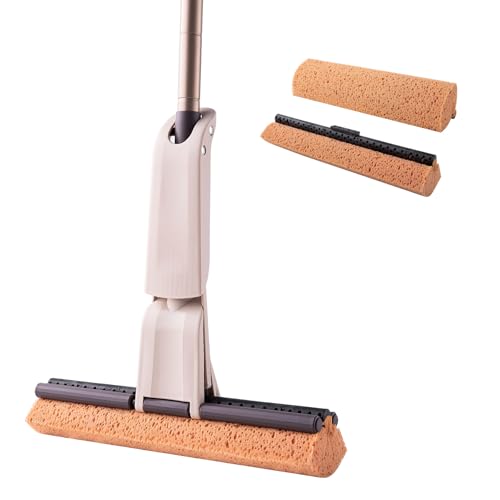
MoopBrushee Natural Cellulose Squeeze Sponge Mop with 52 Inch Pole
CellulosePull wringer52 inch pole2 heads
Check price on Amazon
Best for: Kitchens and hard floors where quick drying and no-touch wringing matter.

The MoopBrushee uses a natural cellulose sponge that absorbs quickly and dries faster than the PVA used in many cheap sponge mops. A lever wringer compresses the head so you do not touch dirty water, and the 52 inch stainless steel pole lets you work without bending. Two heads are included, so you can swap when one wears out.

The tradeoff is that cellulose sponges stiffen when dry and can crumble over time if left dry for long. They also need to be kept damp or soaked before use, which is a habit to learn. Compared with the Eyliden honeycomb head, the MoopBrushee is a stiffer, more traditional sponge.

In ownership, rinse the head after use, squeeze it and leave it standing so it dries without sitting in water. Replace the head when it develops a sour smell or starts to crumble, and soak a dry head in water for a minute before use to soften it. The pole and wringer are simple, with few parts that can fail. It pairs well with a small bucket of warm water and a mild floor cleaner for a kitchen that sees daily traffic.

What works

  • Natural cellulose absorbs fast and dries quickly
  • Easy-pull lever wringer
  • 52 inch stainless steel pole
  • Two heads in the box

Watch out for

  • Cellulose stiffens when dry
  • Heads wear out and need replacing
  • Lever mechanism has moving parts

Spec sheet

Sponge
Natural cellulose
Wringer
Easy-pull lever
Pole
52 inch stainless steel
Heads
2 included
Best use
Kitchens and hard floors
02
Eyliden Self-Wringing Sponge Mop with 13 Inch Honeycomb Head
13 inch headHoneycombPull-up roller2 heads
Check price on Amazon
Best for: Mixed-floor homes that want a wide head and quick wringing.

The Eyliden has a 13 inch honeycomb sponge head, wider than most sponge mops, so it covers more floor per pass. A pull-up roller wrings the sponge without bending or touching it, and the maker says it works on hardwood, laminate, tile, marble, ceramic, vinyl, cork, bamboo and terrazzo. Two reusable heads are included.

The compromise is that a wide head is heavier when wet and harder to push into corners. A 13 inch head also takes a larger squeeze, and a pull roller can leave the sponge damp if you do not give it a second pull. Against the MoopBrushee, it trades a stiffer cellulose block for a softer honeycomb texture.

In use, wring twice for sealed wood, since a wet honeycomb can leave streaks. Rinse the head thoroughly, stand it upright to dry and swap heads when the honeycomb breaks down. It is a good all-around mop for a mixed-floor household.

What works

  • 13 inch wide honeycomb head
  • Pull-up roller wringer
  • Two reusable heads
  • Works on many hard surfaces

Watch out for

  • Wide head is heavy when wet
  • Harder to push into tight corners
  • May need a second wring on wood

Spec sheet

Head width
13 inch
Sponge
Honeycomb
Wringer
Pull-up roller
Heads
2 reusable
Surfaces
Wood, laminate, tile, vinyl
03
HOMEMAID Cellulose Metal Hinge Squeeze Sponge Mop Made in USA
CelluloseSpring hingeRust resistantMade in USA
Check price on Amazon
Best for: Simple everyday mopping from a durable, domestically made mop.

The HOMEMAID mop pairs a natural cellulose sponge measuring about 9.25 by 2.65 by 1 inch with a heavy-duty spring-hinged metal wringer and a rust resistant frame. The design is the classic hinged squeeze mop: fold the sponge to wring it, with no levers or rollers.

The compromise is that the head is smaller than the modern wide designs and the hinge needs you to bend or grip the frame. Against the MoopBrushee, it is simpler and more durable but less hands-free.

In ownership, a metal hinge is easy to repair and lasts for years if you rinse the frame after use. Keep the sponge damp, store the mop head up, and replace the cellulose head when it starts to crumble. It is a good pick for someone who values simplicity and domestic manufacture. The frame is compact enough to hang from a hook in a laundry room, which keeps the head out of standing water. Because the sponge is smaller, you will make more passes on a large kitchen, so it suits apartments better than big open floor plans.

What works

  • Spring-hinged metal wringer
  • Rust resistant frame
  • Natural cellulose sponge dries faster
  • Simple and repairable

Watch out for

  • Smaller sponge head
  • Less hands-free wringing
  • Hinge needs rinsing to avoid grit

Spec sheet

Sponge
Natural cellulose, 9.25 x 2.65 x 1 inch
Wringer
Spring-hinged metal
Frame
Rust resistant
Origin
Made in USA
Best use
Simple everyday mopping
04
LOLA Squeezematic Butterfly Automatic Sponge Mop with 4 Heads
Butterfly wringer4 heads9 inch headAluminum handle
Check price on Amazon
Best for: Households that want several heads and automatic squeezing.

The LOLA Squeezematic uses a butterfly design that folds the sponge to squeeze it automatically, and the kit includes four heads: two foam with a cellulose layer and two all foam. The handle is a four-piece aluminum design, and the head is 9 inches wide.

The tradeoff is the mix of materials. The foam heads wear differently from the cellulose layers, and the butterfly hinge has more pivot points than a simple squeeze mop. Compared with the HOMEMAID, it comes with more heads and a lighter handle.

Keep the mop head upright to drain and rinse after use. A set of four heads lasts a long time, so this is a good pick if you dislike buying refills. Check that the butterfly hinge stays clean of grit. The scuff pad on the leading edge helps lift dried spots, though you should test it on a hidden patch of a delicate finish first. With four heads in the box, a household can rotate fresh ones for kitchen and bathroom use so that grease from one room never travels to the other.

What works

  • Four heads included
  • Automatic butterfly wringer
  • Aluminum four-piece handle
  • Foam and cellulose options

Watch out for

  • More pivot points to clean
  • Mixed head materials age unevenly
  • 9 inch head is narrow

Spec sheet

Heads
4 (2 foam with cellulose, 2 all foam)
Head width
9 inch
Handle
4-piece aluminum
Wringer
Automatic butterfly
Best use
Households that want spare heads
05
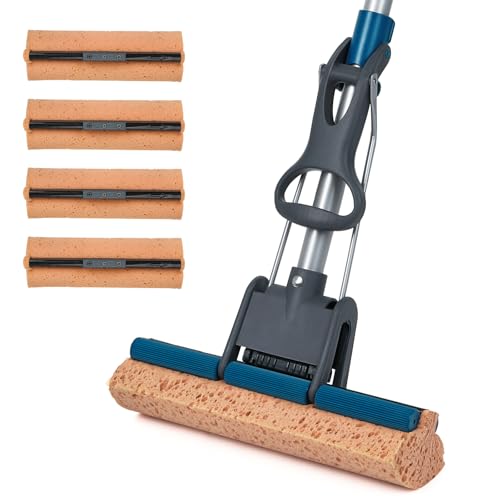
50 Inch Telescopic Roller Sponge Mop with Four Cellulose Refill Heads
4 heads10 inch head50 inch handleHoneycomb
Check price on Amazon
Best for: Weekly mopping on hardwood and tile with plenty of spare heads.

This roller mop has a 10 inch wide honeycomb sponge head, a 50 inch telescopic handle and a self-squeeze roller, with four cellulose refill heads in the box. The honeycomb design is meant to improve absorption, and the telescopic handle reduces back strain.

The compromise is that it is a generic brand with less track record than the established makers. The telescopic handle can wobble if the lock is loose, and the roller mechanism needs regular rinsing.

Its selling point is the four refill heads, which is the best value for repeat users. Rinse the head, stand it upright and swap the head when it wears out. It suits a household that mops weekly and does not want to buy refills often.

What works

  • Four cellulose refill heads
  • 50 inch telescopic handle
  • Self-squeeze roller
  • Honeycomb absorption design

Watch out for

  • Generic brand
  • Telescopic lock can loosen
  • Roller needs regular rinsing

Spec sheet

Head width
10 inch honeycomb
Handle
50 inch telescopic
Heads
4 cellulose
Wringer
Self-squeeze roller
Best use
Hardwood and tile
06
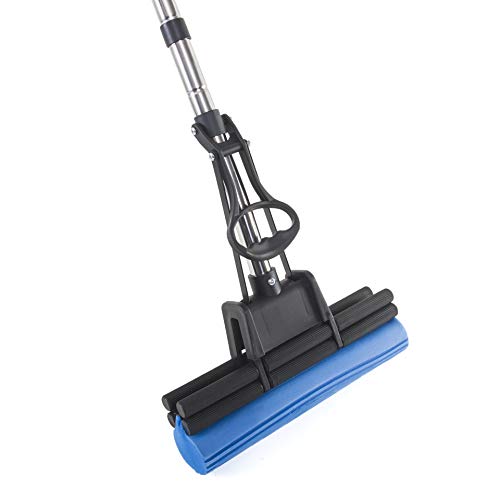
Kitchen + Home PVA Sponge Roller Mop with 11 Inch Quadruple Roller
PVAQuadruple roller11 inchAluminum handle
Check price on Amazon
Best for: Quick kitchen spills and light daily cleaning.

The Kitchen + Home mop uses four rollers of PVA sponge with horizontal grooves that lift dirt, lint and hair. The head is 11 inches wide, the handle is aluminum, and the maker claims it picks up more than five times as much liquid as a regular mop, a claim that depends on the comparison.

The tradeoff with PVA is that the sponge turns hard when dry and cracks if left dry. It also needs to be soaked before the first use and stored damp. Against the cellulose models, PVA is cheaper but less long-lived.

Use it for fast spill cleanup and light floors. Rinse thoroughly, let the rollers drain and replace the head when it stiffens or cracks. The quadruple roller design lets you wring by pulling the handle, which keeps your hands clean.

What works

  • Four rollers lift hair and lint
  • Aluminum handle
  • Absorbs and locks in liquid
  • Pull-handle wringing

Watch out for

  • PVA hardens and cracks when dry
  • Needs soaking before first use
  • Shorter life than cellulose

Spec sheet

Sponge
PVA with horizontal grooves
Head width
11 inch quadruple roller
Handle
Heavy-duty aluminum
Absorbency
More than 5 times regular mop
Best use
Fast kitchen cleanup

Spec sheet decoder

What the numbers on the box really mean

The specs manufacturers lead with, translated into what they tell you about real-world performance.

Cellulose

A natural plant-based sponge material that absorbs quickly and dries faster than synthetics. It stiffens when dry.

Watch forThe MoopBrushee, HOMEMAID and 50 inch roller mop use cellulose.

PVA

A synthetic sponge that absorbs a lot and locks liquid in. It turns hard when dry and cracks if left dry.

Watch forThe Kitchen + Home mop uses PVA.

Honeycomb texture

A patterned sponge surface that adds edges for scrubbing and increases absorbency.

Watch forThe Eyliden and the 50 inch roller mop use honeycomb heads.

Butterfly wringer

A design where two halves fold to squeeze the sponge.

Watch forThe LOLA Squeezematic uses it.

Telescopic handle

A handle with sliding sections that lock at a chosen length.

Watch forThe 50 inch roller mop uses one, and the lock can loosen.

Methodology

How We Evaluated These Sponge Mops

Sponge quality

We compared materials and head designs. Cellulose heads such as the MoopBrushee scored highest for absorbency, and PVA scored lower for durability. This follows the listings.

Wringing

We weighed how well each wringer removes water. Lever and roller designs scored high for hands-free use, and the spring hinge scored for durability.

Handle and head size

We looked at head width and handle length. The Eyliden at 13 inches and the MoopBrushee at 52 inches scored well for coverage and comfort.

Refill supply

We considered how many heads each kit includes. The LOLA with four heads and the roller mop with four refills scored high.

Floor safety

We considered moisture on floors. Models that wring well score higher for hardwood and laminate.

Decision guide

How to Choose the Right Sponge Mops

By Floor Type

SituationPickWhy
Hardwood and laminateMoopBrushee cellulose mopFast-drying cellulose and lever wringer
Mixed floorsEyliden sponge mop13 inch head, many surfaces
Tile and vinylKitchen + Home PVA rollerQuadruple roller lifts dirt
Everyday kitchensHOMEMAID metal hinge mopSimple and durable
Weekly mopping50 inch roller mopFour refill heads

By Budget

TierPickWhy
LowestKitchen + Home PVA rollerPVA roller head
Low50 inch roller sponge mopFour refills
MiddleEyliden sponge mopWide head
Upper middleHOMEMAID metal hinge mopDomestic made
HighMoopBrushee cellulose mopCellulose and lever
HighestLOLA SqueezematicFour heads and aluminum

Cellulose vs PVA

Cellulose

The MoopBrushee, HOMEMAID and 50 inch roller mop dry faster and last longer. They stiffen when dry.

PVA

The Kitchen + Home roller absorbs a lot and costs less. It hardens and cracks if left dry.

Frequent users pick cellulose, and cost-focused buyers pick PVA.

Wringer Style

PreferencePickWhy
Lever wringerMoopBrushee cellulose mopNo-touch squeezing
Roller wringerEyliden sponge mopPull-up roller
Spring hingeHOMEMAID metal hinge mopSimple and durable
ButterflyLOLA SqueezematicAutomatic fold

For Kitchens Specifically

Look for

Look for fast absorption, a wringer that leaves the floor barely damp and a head that reaches under cabinet edges. Cellulose dries faster.

In this comparison

The MoopBrushee and the HOMEMAID are the best matches, with the Kitchen + Home roller for quick spills.

When to Spend More

Spend more if

Spend more if you want spare heads or a stronger handle, which points to the LOLA Squeezematic or the MoopBrushee.

Save if

Save if you mop lightly, where the Kitchen + Home roller or the 50 inch roller mop is enough.

Ownership

Maintenance schedule

The upkeep that decides whether this machine lasts two seasons or ten.

TaskIntervalWhy it matters
Rinse the spongeAfter every useDirt left in the sponge sours and smells. Rinse until the water runs clear.
Dry uprightAfter rinsingA sponge sitting in water grows mildew. Stand the mop so air reaches the head.
Soak a dry head before useEach timeDry cellulose and PVA are stiff and can crack. A soak softens them.
Check the wringerMonthlyGrit in hinges and rollers causes stiffness. Rinse and wipe the mechanism.
Replace the headWhen it crumbles or smellsA worn sponge cleans poorly. A fresh head restores performance.

FAQ

Frequently Asked Questions

Are sponge mops safe for hardwood?

Yes, if wrung well. Wring twice, avoid standing water and wipe seams dry, since moisture can damage wood.

What is the difference between cellulose and PVA?

Cellulose absorbs fast and dries sooner, and PVA is cheaper but hardens. The MoopBrushee uses cellulose, and the Kitchen + Home roller uses PVA.

How long does a sponge head last?

It varies with use. Replace it when it crumbles, hardens or smells, which can be a few months of weekly mopping. Heavy kitchen use, hard water and strong cleaners shorten that life, so a household with a busy kitchen should keep a spare head ready rather than waiting for the old one to fail in the middle of a job.

Do I need spare heads?

They help. The LOLA kit includes four heads and the 50 inch roller mop four refills.

Why does my sponge stiffen?

Cellulose and PVA harden when dry. Soak the head before use and store it damp but upright.

Which is best for tile?

A mop with an absorbent head and a good wringer, such as the Kitchen + Home roller or the MoopBrushee. Tile tolerates more water than wood. Grout lines hold dirt that a soft sponge slides over, so use a stiffer scuff edge or a brush for them, and finish the floor with a dry pass if the grout looks dark and wet. Natural stone needs a neutral cleaner, since acidic products dull the surface.

Bottom line

The short version

Browse more sponge mopson Amazon →
James Miller, Lead Machine Editor

About the author

James Miller

Lead Machine Editor, MachineFanatic

James Miller leads MachineFanatic's buying guides, turning spec sheets, manuals and owner feedback into clear verdicts on power tools, outdoor power equipment, shop machines and kitchen machines.

More from James →

Keep reading

Related guides