
Amazon affiliate links - we earn a commission.Affiliate disclosure

Buying guide · 13 min read · Updated 2026-11-07

Best Tow-Behind Lawn Aerators (2026)

Tow-behind lawn aerators compared: plug versus spike tines, weight trays, working width and hitch fit, for lawn tractors, zero-turns and ATVs.

James MillerBy James MillerLead Machine Editor7 machines comparedSpec-sheet verified
Best Tow-Behind Lawn Aerators

At a glance

Our top picks

Side by side

Spec comparison

MachineWorking widthTinesDepth
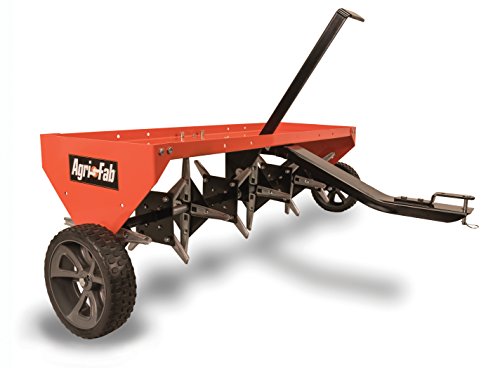
Agri-Fab 48-Inch Plug Aerator 32 KnivesBest OverallAgri-Fab 48-Inch Plug Aerator 32 Knives48 inches32 galvanized coring knivesPlugs up to 3 inches
Agri-Fab 40-Inch Plug Aerator 24 KnivesBest Mid-Width PlugAgri-Fab 40-Inch Plug Aerator 24 Knives40 inches24 galvanized coring knivesn/a
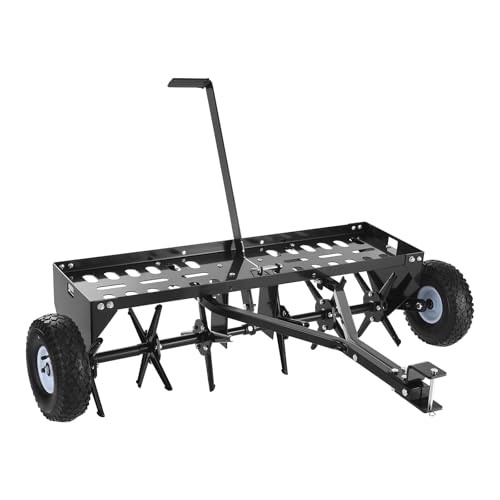
VEVOR 40-Inch Plug Aerator 120 lb TrayBest Value PlugVEVOR 40-Inch Plug Aerator 120 lb Tray40 inchesn/aUp to 3 inches
Garvee 48-Inch Plug Aerator 330 lb TrayBest Big Tray PlugGarvee 48-Inch Plug Aerator 330 lb Tray48 inches32 galvanized plug tinesn/a
Doniks 48-Inch Plug Aerator 30 TinesBest Alternative 48-InchDoniks 48-Inch Plug Aerator 30 Tines48 inches30 galvanized steel plug tinesUp to 2 inches
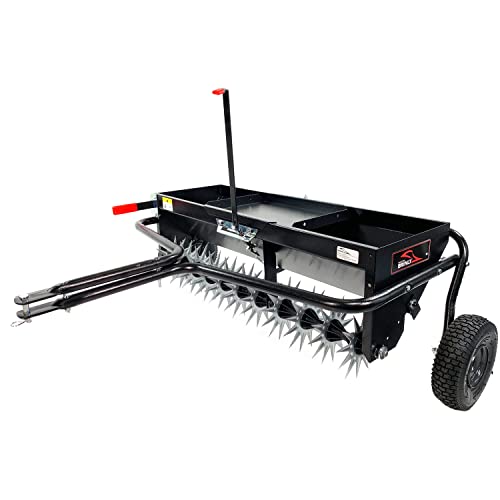
Brinly 40-Inch Aerator Spreader CombinationBest Combination UnitBrinly 40-Inch Aerator Spreader Combination40 inches3-D galvanizedn/a
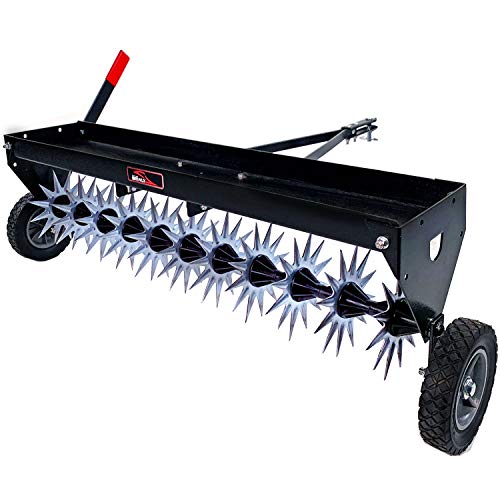
Brinly SAT2-40BH-P 40-Inch Spike AeratorBest Spike UnitBrinly SAT2-40BH-P 40-Inch Spike Aerator40 inchesn/aUp to 2 inches

A tow-behind aerator has no engine. It is a ground-driven drum or rack of tines that your tractor, zero-turn or ATV pulls across the lawn, and the tines are pressed into the soil by the machine's own weight plus whatever you pile in the tray. The towing vehicle supplies all the power, so the real question is how well the implement is built to use it.

The key divide is between plug tines that remove cores of soil and spike tines that simply punch holes. Beyond that, working width, tray capacity, tire quality and hitch fit decide whether the job takes an hour or an afternoon. This guide compares those mechanics across twelve candidates and picks the ones worth hooking up.

Before you buy

6 Criteria to Look For Before Buying a Tow-Behind Lawn Aerator

  1. 01

    Plug versus spike tines

    Plug tines like the Agri-Fab 48-inch's 32 coring knives remove soil, relieving compaction. Spike tines like the Brinly SAT2 push holes and can compact soil around each hole, especially clay. Choose plug for clay or heavily trafficked turf and spike only for light or sandy ground. A shovel test helps: if a spade will not sink half its blade by hand, the lawn needs coring and weight, not light spikes.

  2. 02

    Weight tray capacity

    Tines only penetrate under load. The Garvee tray holds 330 pounds, the VEVOR 120, the Brinly combination 75. Fill within the limit with sand bags or blocks, and check your tractor can tow the total. Concrete blocks are easy to stack evenly, while bagged sand shifts and is harder to remove.

  3. 03

    Working width versus tractor

    A 48-inch unit needs a mower or tractor that can turn it; a 40-inch unit suits narrower machines. Wider cuts passes, but a unit wider than your deck is awkward at gates.

  4. 04

    Tires and bearings

    Flat-free tires on the Agri-Fab never puncture, while pneumatic tires on the Garvee roll smoother but need pressure checks. Bearings and axles are the wear points on cheap units.

  5. 05

    Tine count and hole density

    Thirty-two knives on the Agri-Fab 48-inch punch more holes per pass than 24 on the 40-inch unit. For hard ground, plan two passes at right angles regardless of tine count.

  6. 06

    Hitch and transport lever

    Universal hitches fit most pins, but height varies. A transport handle that raises tines, as on the Agri-Fab, saves stopping at every turn.

Detailed reviews

The 7 best tow-behind lawn aerators, explained

01
Agri-Fab 48-Inch Plug Aerator 32 Knives
48 in. width32 coring knivesUp to 3 in. deepFlat-free tires
Check price on Amazon
Best for: Half-acre to multi-acre lawns with compacted soil and a tractor to pull it.

Plug aeration is the method turf specialists prefer, and the Agri-Fab uses 32 galvanized coring knives to pull plugs from the soil to a stated depth of up to 3 inches. Removing cores relieves compaction instead of squeezing the soil sideways around each hole, which is the failure of most spike designs. The 48-inch width halves the passes compared with a 24-inch unit.

Flat-free tires and a cantilever transport handle address the two things that annoy owners most: punctured tires and awkward raising and lowering. Against the 40-inch Agri-Fab it adds eight more knives and eight more inches for a higher price tier, which pays off beyond about half an acre.

Ownership is simple. Rinse soil off the knives, wipe them with oil before winter and check for bent or dull tips after rocky ground. Store it tipped on its tail to save floor space.

What works

  • Coring knives remove plugs instead of compacting
  • 48-inch path halves the passes
  • Flat-free tires never puncture
  • Transport handle raises and lowers the tines

Watch out for

  • Highest price tier among plug units here
  • Needs a tractor or zero-turn to pull
  • Wide frame is bulky to store

Spec sheet

Working width
48 inches
Tines
32 galvanized coring knives
Depth
Plugs up to 3 inches
Tires
Flat-free
Hitch
Universal
02
Agri-Fab 40-Inch Plug Aerator 24 Knives
40 in. width24 coring knivesPlug typeSingle-lever handle
Check price on Amazon
Best for: Quarter to half acre lawns behind a standard garden tractor.

This is the same design philosophy at a narrower size: 24 galvanized coring knives, a 40-inch working width and a plug-removal action that improves airflow, water absorption and nutrient reach. Fewer knives mean fewer holes per square foot per pass, so you may want a second pass in a different direction on hard ground.

The single-lever transport handle lets you lift the tines for turns and travel without leaving the seat in many setups. It suits typical lawn tractors with a 42 to 46 inch deck better than the 48-inch version, which can be awkward behind a narrow machine.

Compared with the 48-inch model it gives up eight knives and width but costs less and stores smaller. Maintenance is the same: clean, oil, store dry and inspect the knives.

What works

  • Real plug removal at a lower price tier
  • 40-inch width suits garden tractors
  • Single-lever transport handle
  • Same proven construction as the 48-inch

Watch out for

  • Fewer knives mean thinner hole density
  • Needs extra weight on hard soil
  • Still requires a towing vehicle

Spec sheet

Working width
40 inches
Tines
24 galvanized coring knives
Action
Plug removal
Transport
Single-lever raise and lower
Hitch
Universal
03
VEVOR 40-Inch Plug Aerator 120 lb Tray
40 in. widthUp to 3 in. deep120 lb trayUniversal hitch
Check price on Amazon
Best for: Homeowners who aerate yearly and want plug action on a budget.

VEVOR offers the plug action at a value price tier: a 40-inch core aerator with high-strength coring tines claimed to reach 3 inches and a weight tray supporting up to 120 pounds. That tray number matters because penetration depends on load: a bare frame will skim dry ground, while 100 pounds of sand or blocks drives tines deeper.

Compared with the Agri-Fab 40-inch it lists a larger tray capacity and a similar depth, but without the decades of dealer support. It is a sensible buy for a homeowner who aerates once a year.

Load the tray evenly, never above the stated limit, and aerate after rain when soil is moist but not saturated. Clean and oil the tines at season end.

What works

  • Plug action with a 3-inch depth claim
  • 120 lb weight tray capacity
  • Low price tier for the width
  • Universal hitch

Watch out for

  • Thin brand support and parts
  • Depth claim needs load and moist soil
  • Build details are less documented

Spec sheet

Working width
40 inches
Depth
Up to 3 inches
Weight tray
Up to 120 pounds
Action
Core aerator
Build
Heavy duty rust resistant
04
Garvee 48-Inch Plug Aerator 330 lb Tray
48 in. width32 plug tines330 lb trayPneumatic tires
Check price on Amazon
Best for: Large lawns with hard soil where heavy loading is needed.

Garvee matches the Agri-Fab on width and tine count, with 32 galvanized plug tines in a staggered array, and adds a tray built for 330 pounds. A bigger tray allows heavier loading for stubborn soil, though you must also check that your tractor can pull the combined weight.

Pneumatic tires roll smoother over rough ground than hard plastic, but they can puncture and need pressure checks, which is the tradeoff against the Agri-Fab's flat-free tires. Pricing sits lower than the Agri-Fab 48-inch.

Before buying, confirm the hitch height suits your tractor. Keep the tires inflated, clean the tines and oil them for storage.

What works

  • 48-inch width with 32 plug tines
  • 330 lb tray allows deep loading
  • Pneumatic tires roll smoothly
  • Lower price tier than Agri-Fab 48

Watch out for

  • Pneumatic tires can puncture
  • Heavy loaded weight needs a strong tractor
  • Thin dealer support

Spec sheet

Working width
48 inches
Tines
32 galvanized plug tines
Weight tray
Up to 330 pounds
Tires
Pneumatic
Layout
Geometric tine array
05
Doniks 48-Inch Plug Aerator 30 Tines
48 in. width30 galvanized tinesWeighted tray2 in. depth
Check price on Amazon
Best for: Large lawns where 2-inch plugs are sufficient.

Doniks fits 30 galvanized plug tines on six wheels across a 48-inch frame, with a stated depth of up to 2 inches, one inch less than the Agri-Fab claim. An all-steel frame, side panels and solid shafts carry a weighted tray.

The shallower depth claim is honest and enough for most lawns, since the active root zone of turf is in the top few inches. It costs less than the Agri-Fab 48-inch and slightly more than some 40-inch units.

Check bearings and bolts after the first use, keep the tines clean and store dry. Tilt it onto its tail for storage so the tines stay out of damp ground.

What works

  • 48-inch width
  • Solid shafts and side panels
  • Honest 2-inch depth claim
  • Mid price tier

Watch out for

  • Shallower than the Agri-Fab and VEVOR claims
  • Thin brand support
  • Bearings are the likely wear point

Spec sheet

Working width
48 inches
Tines
30 galvanized steel plug tines
Tine wheels
6 wheels
Depth
Up to 2 inches
Build
All steel with solid shafts
06
Brinly 40-Inch Aerator Spreader Combination
40 in. widthAerator plus spreader75 lb tray3-D tines
Check price on Amazon
Best for: Fall overseeding on loam or sandy lawns where one pass saves time.

Brinly's combination unit aerates and spreads in a single trip, dropping seed, fertilizer or lime into the fresh holes. Overseeding right after aeration is the standard fall routine, because seed has good soil contact in the openings.

Its patent-pending 3-D tines are galvanized and described by the maker as twice as strong as standard ones, and the rigid steel tray holds 75 pounds. That tray is smaller than the VEVOR or Garvee, so penetration on hard soil is limited.

It is a spike-type action, so on heavy clay it compacts more than a plug unit. For sandy or loam soil and a once-a-year seeding job, it saves a pass. Clean the spreader hopper after each use.

What works

  • Aerates and spreads in one pass
  • 3-D tines described as twice as strong
  • Rigid 75 lb weight tray
  • Brinly parts support

Watch out for

  • Spike action compacts clay
  • Smaller tray limits penetration
  • Highest price tier of the 40-inch units

Spec sheet

Working width
40 inches
Function
Aerates and drops seed, fertilizer or lime
Weight tray
Up to 75 pounds
Tines
3-D galvanized
Hitch
Tow-behind
07
Brinly SAT2-40BH-P 40-Inch Spike Aerator
40 in. width11 tine wheels12 spikes eachUp to 2 in.
Check price on Amazon
Best for: Light compaction and sandy soil where repeated passes are acceptable.

This is the classic spike design: eleven 8-inch tine wheels with twelve spike tips each, penetrating up to 2 inches. Brinly's 3-D galvanized tines are built to resist bending, and a solid 5/8-inch steel axle and double tow bar make the frame stout.

Spikes push soil aside rather than remove it, so they suit light compaction, sandy soil and turf that needs air more than relief. On heavy clay the displaced soil can tighten around each hole.

Compared with the plug units it costs less and needs less weight to work, but delivers less benefit on hard ground. Clean and oil the stars before storage.

What works

  • Strong 3-D tines and 5/8 inch axle
  • Needs less weight to penetrate
  • Transport wheels included
  • Lower price tier than plug units

Watch out for

  • Spikes compact heavy clay
  • Only 2 inches deep
  • Less effective than coring

Spec sheet

Working width
40 inches
Tine wheels
11 wheels, 8 inch diameter
Spikes per wheel
12
Depth
Up to 2 inches
Axle
5/8 inch solid steel

Spec sheet decoder

What the numbers on the box really mean

The specs manufacturers lead with, translated into what they tell you about real-world performance.

Plug depth

How deep the coring tines remove soil. Three inches suits most turf roots.

Watch forAgri-Fab and VEVOR claim 3 inches, Doniks 2.

Tray capacity

The extra weight the frame is built to hold. More weight drives tines deeper.

Watch forGarvee 330 lb versus Brinly combination 75 lb.

Tine wheel

A wheel with spiked arms that rolls and punches. More wheels mean more holes per pass.

Watch forBrinly SAT2 has 11 wheels.

Galvanized steel

Zinc-coated steel that resists rust. It extends tine life but not forever.

Watch forOil tines anyway before storage.

Flat-free tires

Solid or foam-filled tires that cannot puncture. They ride harder but need no air.

Watch forAgri-Fab 48-inch.

Methodology

How We Evaluated These Tow-Behind Lawn Aerators

Tine action

We separated plug from spike designs and scored coring higher for compacted soil. The Agri-Fab and VEVOR units led here. Cores also break down in a couple of weeks and return soil to the turf.

Weight and penetration

We compared tray capacities from 75 to 330 pounds, because load decides depth. The Garvee scored highest on capacity.

Frame and wheels

We looked at steel construction, axles and tires. Flat-free tires and solid axles earned credit. We checked whether axles are solid steel, since bent axles end an aerator quickly.

Width and fit

We matched 40 and 48 inch widths to tractor sizes and gates.

Value

We separated the VEVOR as the value plug pick from the Agri-Fab as the proven pick. Owner feedback patterns on generic bearings shaped the scoring.

Decision guide

How to Choose the Right Tow-Behind Lawn Aerators

By Soil Type

SituationPickWhy
Heavy clay, compactedAgri-Fab 48-Inch PlugRemoves soil plugs
Hard soil needing weightGarvee 48-Inch330 lb tray
Loam, overseedingBrinly CombinationSeeds in the same pass
Light or sandy soilBrinly SAT2 SpikeSpikes are enough

By Budget

TierPickWhy
LowestBrinly SAT2 40-Inch SpikeCheap wide spike
Low-midVEVOR 40-Inch PlugPlug at a value tier
MidDoniks 48-Inch PlugWide plug
HigherAgri-Fab 48-Inch PlugProven plug

Plug vs Spike

Plug

The Agri-Fab, VEVOR, Garvee and Doniks units remove cores that relieve compaction. They need more weight and cost more.

Spike

The Brinly SAT2 punches holes, penetrate with less weight and cost less, but can compact clay.

Pick plug for clay and heavy traffic, spike for light, sandy soil.

By Towing Vehicle

VehiclePickWhy
Lawn tractor with 42-inch deckAgri-Fab 40-Inch PlugMatching width
Garden tractor or zero-turnAgri-Fab 48-Inch PlugFewer passes
ATV or UTVGarvee 48-InchHeavy loading possible
Small mower tractorVEVOR 40-Inch PlugModerate weight

For Overseeding Specifically

Look for

Look for an aerator with a spreader so seed drops into fresh holes. Aerate when soil is moist and seed straight away.

In this comparison

The Brinly combination unit spreads seed in the same pass. For clay, plug first with an Agri-Fab and seed separately.

When to Spend More

Spend more if

Spend more if your lawn is large or compacted, which points to the Agri-Fab 48-inch for coring and flat-free tires.

Save if

Save if the soil is light. The Brinly SAT2 spike unit does the job for less.

Ownership

Maintenance schedule

The upkeep that decides whether this machine lasts two seasons or ten.

TaskIntervalWhy it matters
Rinse soil off the tinesAfter each usePacked soil holds moisture and rusts steel. Dry before storing.
Oil the tines and axleBefore winterA light coat of oil prevents rust on galvanized steel that has been scratched.
Check bolts and bearingsEach seasonVibration loosens bolts on budget frames.
Inspect tire pressureBefore each usePneumatic tires lose air, causing uneven penetration.
Store on its tailOff-seasonSaves floor space and keeps tines off the ground.

FAQ

Frequently Asked Questions

Are tow-behind aerators worth it over manual ones?

For lawns above a quarter acre, yes. Pulling a tractor does the work that would take hours on foot. Rental core aerators work better but cost a weekend, so owners with large lawns often prefer their own implement.

How much weight should I add?

Add weight until the tines sink fully, within the tray's stated capacity. Check that your tractor can tow the total.

When should I aerate?

Cool-season grass in fall, warm-season grass in late spring to early summer, when soil is moist but not saturated. Avoid aerating during drought or heat stress, because the holes dry the root zone further.

Plug or spike?

Plug for clay and compaction. Spike only for light or sandy soil, where it will not worsen compaction.

How fast can I tow it?

Keep to about 4 mph or less so the tines penetrate cleanly and the frame does not bounce. Faster speeds make the frame bounce and skip, leaving uneven holes.

Do I need to pull plugs off the lawn?

No. Cores break down in a couple of weeks and return nutrients to the turf.

Bottom line

The short version

Browse more tow-behind lawn aeratorson Amazon →
James Miller, Lead Machine Editor

About the author

James Miller

Lead Machine Editor, MachineFanatic

James Miller leads MachineFanatic's buying guides, turning spec sheets, manuals and owner feedback into clear verdicts on power tools, outdoor power equipment, shop machines and kitchen machines.

More from James →

Keep reading

Related guides