
Amazon affiliate links - we earn a commission.Affiliate disclosure

Buying guide · 12 min read · Updated 2026-11-07

Best Window Air Conditioners (2026)

Six window air conditioners from 5,000 to 10,000 BTU compared on room size, noise, controls and installation, with sizing rules for a bedroom or a living room.

James MillerBy James MillerLead Machine Editor6 machines comparedSpec-sheet verified
Best Window Air Conditioners

At a glance

Our top picks

Side by side

Spec comparison

MachineCooling capacityCoverageControlCompressor
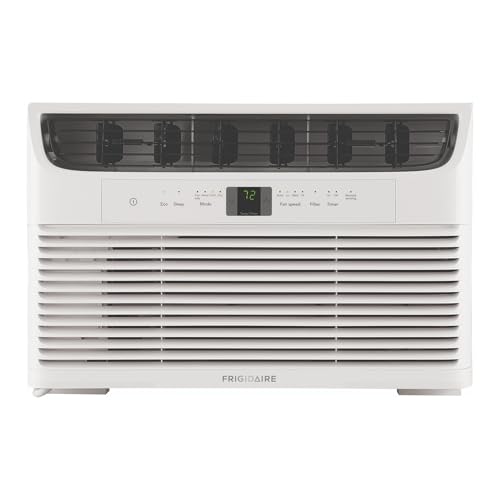
Frigidaire 8,000 BTU Window AC with Remote, 350 sq ftBest OverallFrigidaire 8,000 BTU Window AC with Remote, 350 sq ft8,000 BTUUp to 350 sq ftRemote with eco moden/a
GE 5,000 BTU Mechanical Window AC, 150 sq ftBest ValueGE 5,000 BTU Mechanical Window AC, 150 sq ft5,000 BTUUp to 150 sq ftn/an/a
Midea 6,000 BTU EasyCool Window AC, 250 sq ftBest Mid-Size PickMidea 6,000 BTU EasyCool Window AC, 250 sq ft6,000 BTUUp to 250 sq ftLED display and remoten/a
Midea 6,000 BTU U-Shaped Inverter Window ACBest Quiet PickMidea 6,000 BTU U-Shaped Inverter Window AC6,000 BTUUp to 250 sq ftWi-Fi, app and remoteDC inverter
Midea 8,000 BTU Smart Inverter Window AC with HeatBest for Year-Round UseMidea 8,000 BTU Smart Inverter Window AC with Heat8,000 BTUn/aLED display, appInverter
Midea 10,000 BTU U-Shaped Inverter Window ACBest for Large RoomsMidea 10,000 BTU U-Shaped Inverter Window AC10,000 BTUUp to 450 sq ftWi-Fi, app and remoteDC inverter

A window air conditioner is the cheapest way to cool one room, and it works by pulling warm indoor air across an evaporator coil while a condenser coil rejects the heat outdoors. Capacity, window shape and noise tolerance decide whether the box in your window is a good one.

Buying the largest unit you can afford is the most common mistake. A room that is cooled too quickly never gets properly dehumidified, so match the capacity to floor area, sun and ceiling height, then pick controls you will actually use.

Before you buy

6 Criteria to Look For Before Buying a Window Air Conditioner

  1. 01

    Match BTU to floor area

    A starting rule is about 20 BTU per square foot at an 8 foot ceiling, so the GE 5,000 BTU suits 150 square feet, the Midea 6,000 BTU suits 250, the Frigidaire 8,000 BTU suits 350 and the Midea 10,000 BTU suits 450. Add around 10 percent for strong sun and more for a kitchen. A unit that is too big cools quickly and leaves the room clammy.

  2. 02

    Window shape and size

    Most units suit a double-hung window, but casement and sliding windows need a different install. The U-shaped Midea 6,000 and 10,000 BTU units need a window that can close on a narrow neck, and every unit needs a minimum height and width. Measure the opening, and look at the weight and the bracket before you buy.

  3. 03

    Noise and compressor type

    Fixed-speed units like the Frigidaire 8,000 BTU and GE 5,000 BTU run the compressor at full blast, listed around 52 to 56 dBA. Inverter units such as the U-shaped Midea models vary speed and keep the compressor outside the sash. Above about 55 dB many people report disturbed sleep, so prefer the inverter for bedrooms.

  4. 04

    Controls you will use

    The GE uses mechanical dials, while the Midea 6,000 BTU EasyCool and Frigidaire 8,000 BTU add a remote and a digital thermostat. Wi-Fi on the U-shaped Midea models lets you precool a room before you get home. Choose the controls you will use, since a fancy app is wasted on a guest room.

  5. 05

    Electrical supply

    Small units run on a normal 115V circuit, but a 10,000 BTU unit draws noticeably more current and should not share a circuit with a microwave or heater. Check the plug type and the breaker rating on the nameplate. Extension cords are a fire risk on these loads and are best avoided.

  6. 06

    Heat mode and seasonal use

    The Midea 8,000 BTU inverter adds a heat mode, which most window units lack. It suits mild shoulder seasons but costs more to run than a heat pump. Decide whether you will leave a unit in all year, since a unit left in needs sealing and covering.

Detailed reviews

The 6 best window air conditioners, explained

01
Frigidaire 8,000 BTU Window AC with Remote, 350 sq ft
8,000 BTUUp to 350 sq ftRemote controlEco mode
Check price on Amazon
Best for: A 300 to 350 square foot bedroom or living room that wants a remote.

This Frigidaire is a conventional fixed-speed window unit: the compressor runs at full output until the thermostat is satisfied, then shuts off while the fan keeps circulating. At 8,000 BTU it is sized for a bedroom plus an adjoining hall or a medium living room, and it adds a remote, three fan speeds and six-way louvers that let you aim the air.

The trade is the usual one for fixed-speed machines. Every time the compressor starts you hear a thump, and the room swings a degree or two around the setpoint. Eco mode helps by cycling the fan off with the compressor. Against the 6,000 BTU Midea EasyCool it adds a third more capacity, and against the 10,000 BTU Midea U it is louder but clearly easier on the budget.

Expect a normal ownership routine: wash the filter every few weeks, clean the coils at the start of summer, and support the weight with the included bracket. Remove the unit in winter or cover it outside, and store it upright so the compressor oil stays in place.

What works

  • Sized for the most common room, up to 350 square feet
  • Remote with eco mode and three fan speeds
  • Six-way louvers aim air into the room
  • Conventional design that any shop can service

Watch out for

  • Fixed-speed compressor cycles on and off with a thump
  • Louder than the inverter U-shaped units
  • Heavy for one person to lift into a window

Spec sheet

Cooling capacity
8,000 BTU
Coverage
Up to 350 sq ft
Fan speeds
3
Airflow
6-way directional
Control
Remote with eco mode
02
GE 5,000 BTU Mechanical Window AC, 150 sq ft
5,000 BTUUp to 150 sq ftDial controls52 dBA low
Check price on Amazon
Best for: A small bedroom or office under 150 square feet where simple dials are preferred.

The GE is a minimal machine on purpose. Two dials set the temperature and fan speed, the listing quotes 52 dBA on low and 56 dBA on high, and there is no app, Wi-Fi or display to fail. At 5,000 BTU it covers up to 150 square feet, which is a small bedroom, a nursery or a home office.

Its limit is capacity. It will not keep up in a sunny room over 150 square feet, and the 56 dBA high mode is audible in a quiet bedroom. Next to the Midea 6,000 BTU EasyCool it costs less and has simpler controls, but you lose the remote and the digital display.

Ownership is easy. The filter slides out for a rinse, the coil needs an annual cleaning, and a mechanical thermostat will rarely fail. It is also light enough for most people to install alone, which matters if you lift it every season.

What works

  • Dial controls have nothing to crash
  • Listed 52 dBA on the low setting
  • Light enough to install alone
  • Right size for a 150 square foot room

Watch out for

  • Too small for sunny rooms over 150 square feet
  • No remote or display
  • High mode reaches 56 dBA

Spec sheet

Cooling capacity
5,000 BTU
Coverage
Up to 150 sq ft
Cooling modes
2 (low and high)
Quiet figure
52 dBA low, 56 dBA high
Controls
Mechanical dials
03
Midea 6,000 BTU EasyCool Window AC, 250 sq ft
6,000 BTUUp to 250 sq ftElectronic control52 dB low
Check price on Amazon
Best for: A 200 to 250 square foot bedroom where a remote and a digital display are wanted.

The Midea EasyCool bundles three modes, cool, fan and dehumidify, with an LED display and a remote for a 250 square foot room. It is a fixed-speed design, but the electronic thermostat holds the setpoint more closely than the dial units. The listing quotes 52 dB in low mode.

It sits in the sweet spot between the 5,000 BTU GE and the 8,000 BTU Frigidaire. Compared with the GE it covers another 100 square feet and gains a remote, while compared with the Frigidaire it is lighter and fits a smaller window opening. The cost is that it has no heat mode and no inverter.

Upkeep is the standard routine: a monthly filter rinse and a coil clean each spring. The dehumidify mode is useful in muggy weather, but it is a fan-and-cooling mode, not a true dehumidifier, so empty expectations of a dry basement.

What works

  • Electronic control holds temperature closely
  • Cool, fan and dehumidify modes
  • Covers 250 square feet in a light unit
  • Remote control and LED display

Watch out for

  • No heat mode
  • Fixed-speed compressor cycles audibly
  • Dehumidify mode is not a true dehumidifier

Spec sheet

Cooling capacity
6,000 BTU
Coverage
Up to 250 sq ft
Modes
Cool, fan, dehumidify
Quiet figure
52 dB low mode
Control
LED display and remote
04
Midea 6,000 BTU U-Shaped Inverter Window AC
6,000 BTUU-shaped designDC inverterWi-Fi control
Check price on Amazon
Best for: A bedroom where noise matters and the window can close on a U-shaped neck.

The U-shaped Midea straddles the window sash, so the window closes down on a narrow neck of the unit and the noisy compressor sits outside. That, plus a DC inverter compressor that modulates speed, is why it is the quiet option in this list. The listing claims over 37 percent in energy savings versus standard units, a manufacturer figure worth treating as a best case.

Its limits are the physical install and the capacity. The U shape needs a double-hung or slider window that can close on the neck, and it still covers only 250 square feet, the same as the fixed-speed Midea EasyCool. You pay extra for quiet, not for more cooling.

It is a premium design with a Wi-Fi app, so keep the remote as a fallback. The clean routine is the same as other units, though the inverter board is a more expensive part to replace than a mechanical thermostat.

What works

  • Compressor sits outside the sash, lowering indoor noise
  • DC inverter holds temperature without hard cycling
  • Window closes on a narrow neck, saving light
  • Wi-Fi app plus remote control

Watch out for

  • Needs a double-hung or slider window
  • Only 250 square feet of coverage
  • Inverter board is costly to replace

Spec sheet

Cooling capacity
6,000 BTU
Coverage
Up to 250 sq ft
Compressor
DC inverter
Design
U-shaped, window closes on narrow neck
Control
Wi-Fi, app and remote
05
Midea 8,000 BTU Smart Inverter Window AC with Heat
8,000 BTUInverterHeat mode5 modes
Check price on Amazon
Best for: A room that needs light heating in spring and autumn as well as cooling.

This Midea adds an inverter compressor and a heat mode to an 8,000 BTU window chassis, with five modes in total: heat, auto, cool, dry and fan. In winter it can take the chill off a room in the shoulder seasons, which a cool-only unit cannot do.

The heat mode is the thing to understand before buying. Window units with heat typically use an electric element or a limited reversing cycle, and either is less efficient than a mini split. Treat it as a spring and autumn convenience rather than a primary heater. Against the plain Frigidaire 8,000 BTU you pay extra for the inverter and heat.

Ownership includes the usual filter and coil care, plus deciding whether to leave the unit installed in winter. Because it can heat, some owners leave it in the window, so seal the gaps with foam to stop drafts and cover the outside.

What works

  • Heat mode extends use beyond summer
  • Inverter compressor smooths temperature swings
  • Five modes including dry and auto
  • Same 350 square foot class as other 8,000 BTU units

Watch out for

  • Heat mode is not a primary heat source
  • Costs more than a cool-only 8,000 BTU unit
  • Inverter electronics are expensive to replace

Spec sheet

Cooling capacity
8,000 BTU
Modes
Heat, auto, cool, dry, fan
Compressor
Inverter
Control
LED display, app
Fan speeds
3
06
Midea 10,000 BTU U-Shaped Inverter Window AC
10,000 BTUUp to 450 sq ftU-shapedWi-Fi control
Check price on Amazon
Best for: A large bedroom or open living area up to 450 square feet.

The 10,000 BTU U-shaped Midea covers up to 450 square feet, the largest room in this comparison, and keeps the quiet inverter design of its 6,000 BTU sibling. For a large bedroom or a small open living area it is the only unit here that has the capacity without being a loud, fixed-speed machine.

The limits are weight and the window. A 10,000 BTU unit is heavy, so installation should be a two-person job, and the U shape requires a window that closes onto a narrow neck. The listing also quotes over 37 percent in energy savings, which is a vendor figure, not a measured guarantee.

At this size the ownership details matter more: keep the coil clean so the inverter does not work harder, and check the circuit capacity, because a 10,000 BTU unit draws noticeably more than a 5,000 BTU model.

What works

  • Covers up to 450 square feet
  • Inverter compressor with a quiet U-shaped layout
  • Wi-Fi control with a remote
  • Window closes on a slim neck

Watch out for

  • Heavy, so two people should install it
  • U shape needs a compatible window
  • Highest cost in this lineup

Spec sheet

Cooling capacity
10,000 BTU
Coverage
Up to 450 sq ft
Compressor
DC inverter
Design
U-shaped
Control
Wi-Fi, app and remote

Spec sheet decoder

What the numbers on the box really mean

The specs manufacturers lead with, translated into what they tell you about real-world performance.

BTU rating

The amount of heat the unit removes per hour at test conditions. More BTU means faster cooling but not better comfort.

Watch forThe lineup runs from 5,000 BTU on the GE to 10,000 BTU on the large Midea, so match to your room.

Coverage area

The room size the maker says the unit can cool. It assumes an 8 foot ceiling and average sun.

Watch forThe GE lists 150 square feet and the Midea 10,000 BTU lists 450, so check that your room fits the lower end.

dB or dBA

A sound level reading taken at a set distance, usually on the lowest fan speed. Higher numbers mean louder.

Watch forThe GE lists 52 dBA low and 56 dBA high, while the EasyCool quotes 52 dB low.

Inverter compressor

A compressor whose speed varies instead of switching fully on or off. It smooths the temperature and reduces cycling noise.

Watch forThe Midea 6,000, 8,000 and 10,000 BTU inverter models use this, while the Frigidaire and GE do not.

Window type

The shape of window the chassis is designed for. Double-hung is standard, sliders and casements need different kits.

Watch forThe U-shaped Midea units need a sash that closes on a narrow neck.

Methodology

How We Evaluated These Window Air Conditioners

Capacity versus room

We compared each unit's BTU rating with the coverage the maker lists. The GE covers 150 square feet and the Midea 10,000 BTU covers 450, so we scored picks on how honestly their size matched a real room. Overstated coverage lost points.

Noise

We read the quoted sound levels and the compressor design. Fixed-speed models list 52 to 56 dBA while the U-shaped inverters place the compressor outside the sash. Units with a quiet low mode scored higher.

Installation and weight

We considered window type, bracket support and weight from the listing. A 10,000 BTU unit takes two people, while the 5,000 BTU GE can be moved by one. Easier installs scored higher.

Controls and features

We weighed dials, remote and Wi-Fi control, dehumidify and heat modes. The Midea 8,000 BTU stands out with five modes, while the GE wins on simplicity. We favored features a buyer will use daily.

Ownership reality

We assessed the washable filter, coil access and the cost of replacing electronics based on owner feedback patterns. Inverter boards cost more to fix than mechanical thermostats, so we noted that tradeoff.

Decision guide

How to Choose the Right Window Air Conditioners

By Room Size

SituationPickWhy
Nursery or office up to 150 sq ftGE 5,000 BTUSized for 150 sq ft, simple dials
Bedroom up to 250 sq ftMidea 6,000 BTU EasyCoolRemote and display
Living room up to 350 sq ftFrigidaire 8,000 BTUMost common room size
Open area up to 450 sq ftMidea 10,000 BTU U-ShapedInverter capacity

By Budget

SituationPickWhy
Lowest costGE 5,000 BTUMechanical, smallest
Mid-rangeMidea 6,000 BTU EasyCoolElectronic control
Mid to upper rangeFrigidaire 8,000 BTUMore capacity and a remote
Highest outlay for quietMidea 10,000 BTU U-ShapedInverter and Wi-Fi

Fixed-speed vs Inverter

Fixed-speed

The GE 5,000 BTU, Midea 6,000 BTU EasyCool and Frigidaire 8,000 BTU run the compressor at full output and cycle off. They cost less and are simple to repair. The compressor thump and the temperature swing are the price.

Inverter

The Midea 6,000, 8,000 and 10,000 BTU inverter units vary compressor speed, which smooths temperature and reduces cycling noise. They cost more and carry more electronics.

Choose fixed-speed for a guest room or office, and inverter for a bedroom you sleep in.

Window type and install

SituationPickWhy
Standard double-hung windowFrigidaire 8,000 BTUConventional chassis
Window must keep its lightMidea 6,000 BTU U-ShapedWindow closes on a narrow neck
Lift it alone each seasonGE 5,000 BTULightest unit here
Large window, two people to liftMidea 10,000 BTU U-ShapedHeavy but quiet

For Bedrooms Specifically

Look for

A low-speed sound figure near 52 dB, an inverter compressor and a thermostat that holds close to the setpoint. A unit sized just right will run longer cycles and sound steadier than an oversized one.

In this comparison

The Midea 6,000 BTU U-Shaped is the quietest design for a bedroom up to 250 square feet, and the Midea 10,000 BTU U-Shaped does the same for a larger room.

When to Spend More

Spend more if

You sleep in the room, the window is large, or you want heat in shoulder seasons. The Midea U-Shaped models or the Midea 8,000 BTU inverter with heat reward that spend.

Save if

The room is a guest room, office or nursery. The GE 5,000 BTU or the Frigidaire 8,000 BTU is plenty.

Ownership

Maintenance schedule

The upkeep that decides whether this machine lasts two seasons or ten.

TaskIntervalWhy it matters
Wash the filterEvery 2 to 4 weeks in useA clogged filter cuts airflow and makes the coil freeze. Rinse it and let it dry fully.
Clean the coilsStart of each summerDust on the coils reduces heat transfer and raises power use. Use a soft brush and a fin comb.
Check the sealsEach installGaps around the sash leak warm air and insects. Replace the foam strips when they harden.
Drain and storeEnd of each seasonStanding water breeds odor and corrodes the base pan. Tip it to drain and store it upright.
Inspect the cord and plugEach seasonA warm plug is a sign of a bad connection. Replace a damaged cord rather than patching it.

FAQ

Frequently Asked Questions

What size window air conditioner do I need?

Start with about 20 BTU per square foot at an 8 foot ceiling, then add for strong sun or a kitchen. That gives a 5,000 BTU unit for 150 square feet and about 8,000 BTU for 350 square feet.

Is a bigger unit always better?

No. An oversized unit cools quickly and shuts off before it removes much moisture, leaving the room cool but clammy. A correctly sized unit runs longer and dehumidifies better.

How long does a window air conditioner last?

Commonly eight to twelve years with regular cleaning. Dirty coils and moving the unit around each season shorten that. Inverter units cost more to repair if the control board fails.

Are inverter window units worth the cost?

They are worth it in bedrooms and for steady cooling, because they modulate speed and are quieter. For a spare room the fixed-speed units do the job for less.

Can I leave a window unit in all winter?

You can, but seal and cover the outside to stop drafts. A unit with a heat mode, like the Midea 8,000 BTU inverter, is more useful if you leave it in.

Why does my unit drip water?

Window units drain condensate out the back and must tilt slightly outward. A unit that tilts inward or has a clogged drain will drip indoors.

Bottom line

The short version

Browse more window air conditionerson Amazon →
James Miller, Lead Machine Editor

About the author

James Miller

Lead Machine Editor, MachineFanatic

James Miller leads MachineFanatic's buying guides, turning spec sheets, manuals and owner feedback into clear verdicts on power tools, outdoor power equipment, shop machines and kitchen machines.

More from James →

Keep reading

Related guides