
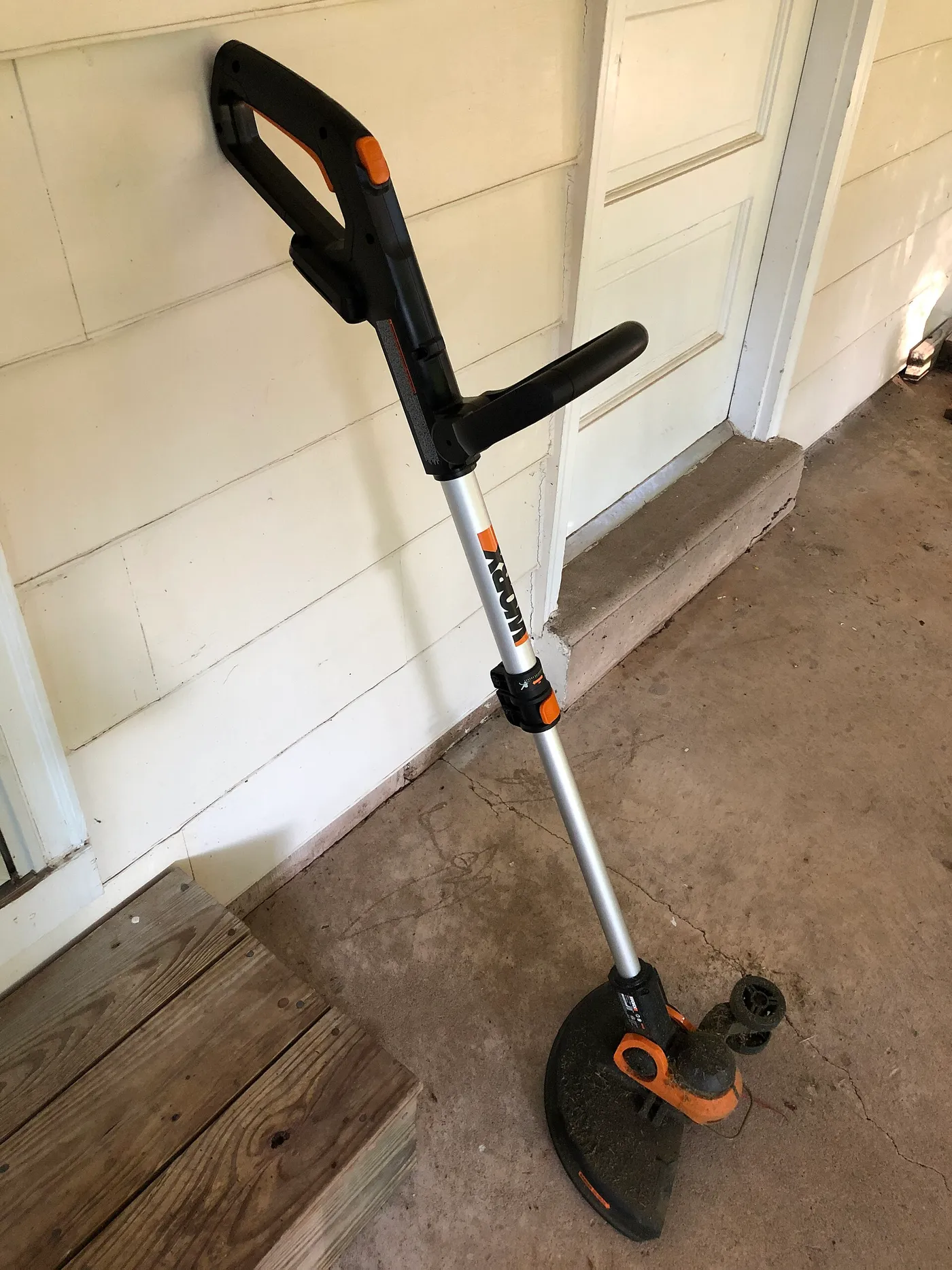
Two tools, two different cuts
People often use the words trimmer and edger as if they meant the same thing, and the confusion is understandable, because both are long-shafted tools that make a lawn look finished. They do different cuts, though. A trimmer cuts grass horizontally at the height you hold it. An edger cuts vertically, slicing down into the soil to form a clean boundary.
That difference in cut direction is the whole story. Once you see it, the question of which one to buy usually answers itself: does your problem live above the ground, in the form of long grass at fences and beds, or at the edge, where grass creeps over a walkway?
What a string trimmer does
A string trimmer, often called a weed eater, spins a short length of flexible nylon line at high speed around a spool head. The whirling line cuts grass and soft weeds. You sweep it side to side near the ground, around trees, fences, posts, beds and along walls where the mower deck cannot reach.
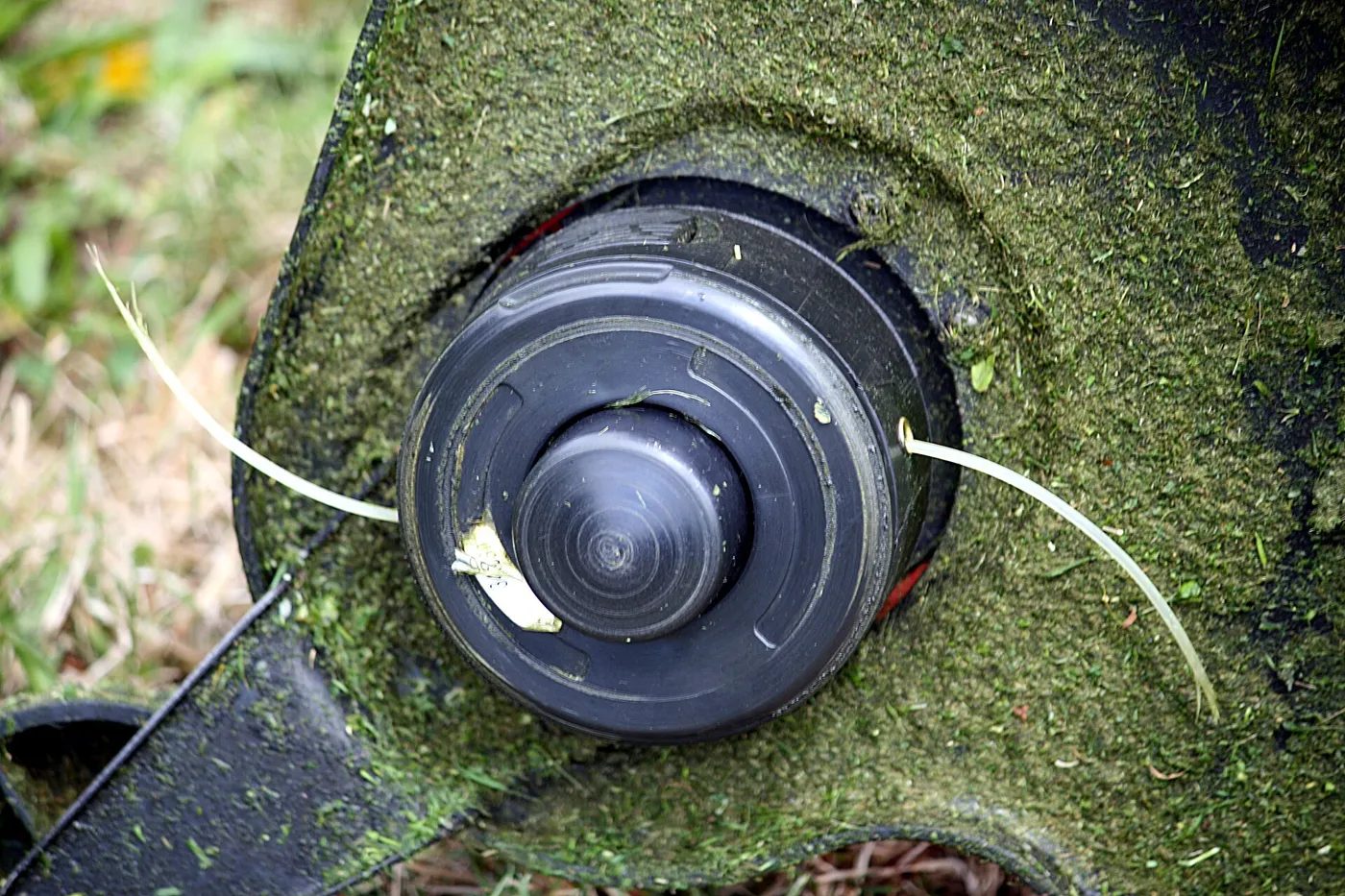
It is the finishing tool for a mowed lawn and a basic tool for overgrown patches. With the right line and a decent motor, a trimmer can handle tall grass, light brush and weeds, though it does not cut woody stems. A trimmer also tidies awkward ground, such as slopes, ditches and areas under shrubs where a mower will not go.
Trimmers differ by power source, shaft type and head design. Battery, corded and gas models are all available. Straight shafts reach under bushes and suit taller users, and curved shafts are lighter and easier for beginners. Line size matters too, and we cover it in our trimmer line guide.
What an edger does
An edger uses a rigid steel blade, usually a flat vertical disc, that spins to cut a groove along the edge of grass where it meets a hard surface or a bed. The blade works vertically, so it cuts down into the turf and soil rather than across it. The result is a sharp, clean border with a small gap between lawn and pavement.
The cut lasts longer than a trimmer’s. A string trimmer shaved along a walkway leaves the roots in place, and grass creeps back in a week or two. An edger severs the runners and roots at the boundary, so the line stays crisp for several weeks.
Edgers come in several forms. Walk-behind models have wheels and a blade you steer along the line like a small mower. Stick edgers look like a trimmer with a blade at the end of a shaft and use the same battery platform as a trimmer in many lines. Manual edgers, which are half-moon spades or rolling cutters, do the same job without a motor, if you have the stamina.
Cut direction explained
| Feature | String trimmer | Edger |
|---|---|---|
| Cutting element | Flexible nylon line | Rigid steel blade |
| Cut plane | Horizontal | Vertical |
| Main job | Cut grass and weeds in unmowable spots | Cut a clean border along a hard edge |
| Cuts into soil | No, and it should not | Yes, shallow groove |
| Effect lasts | Days to a couple of weeks | Several weeks |
| Throws debris | Grass and small stones sideways | Soil and stones forward and sideways |
| Consumable | Line | Blade |
Can a trimmer do the edging
Yes, to a point. Many trimmers have a rotating head or a pivot at the neck that lets you turn the cutting plane on its side, and some include an edging guide wheel. With the head rotated 90 degrees and the guide rolling on the pavement, the line cuts vertically along the edge.
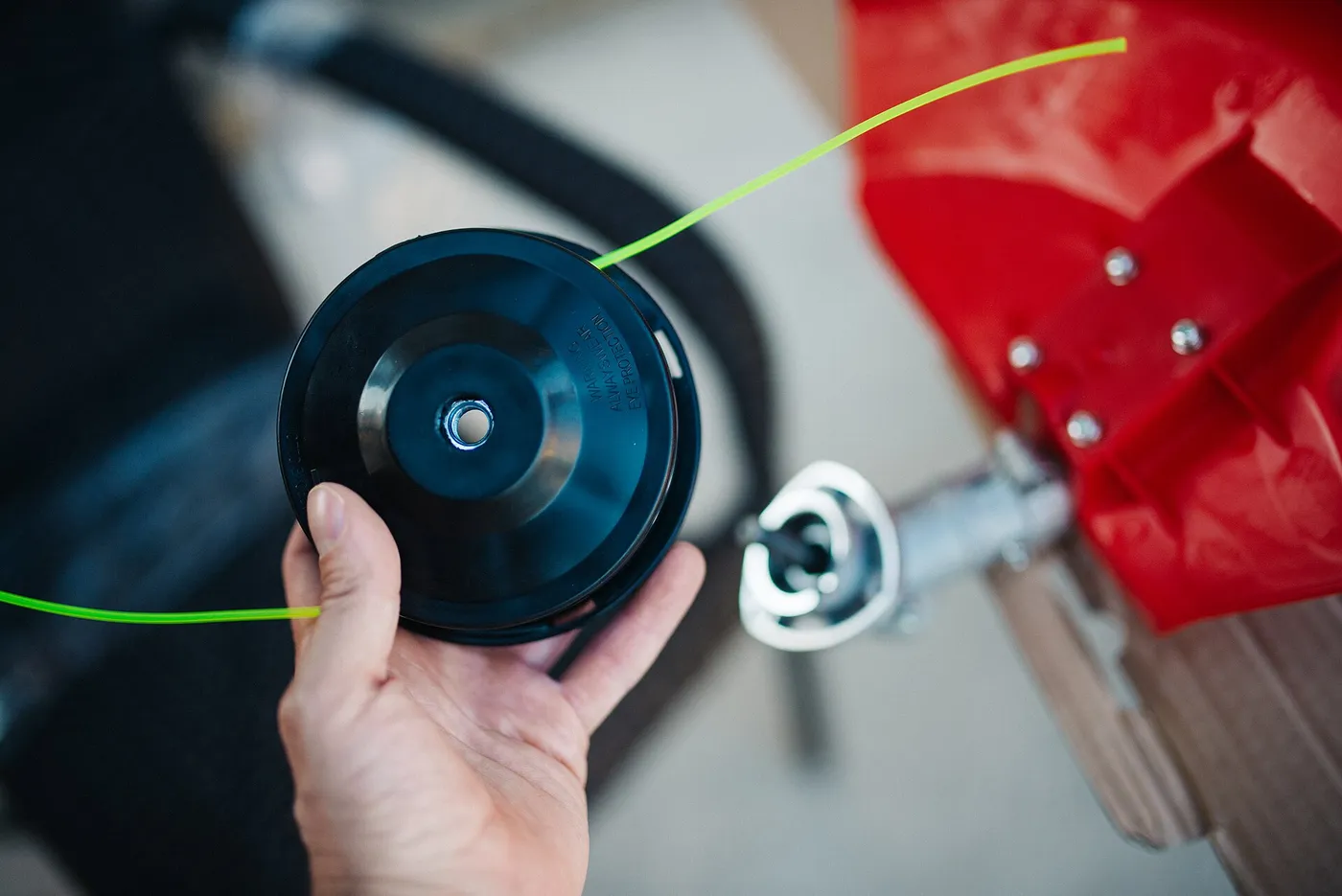
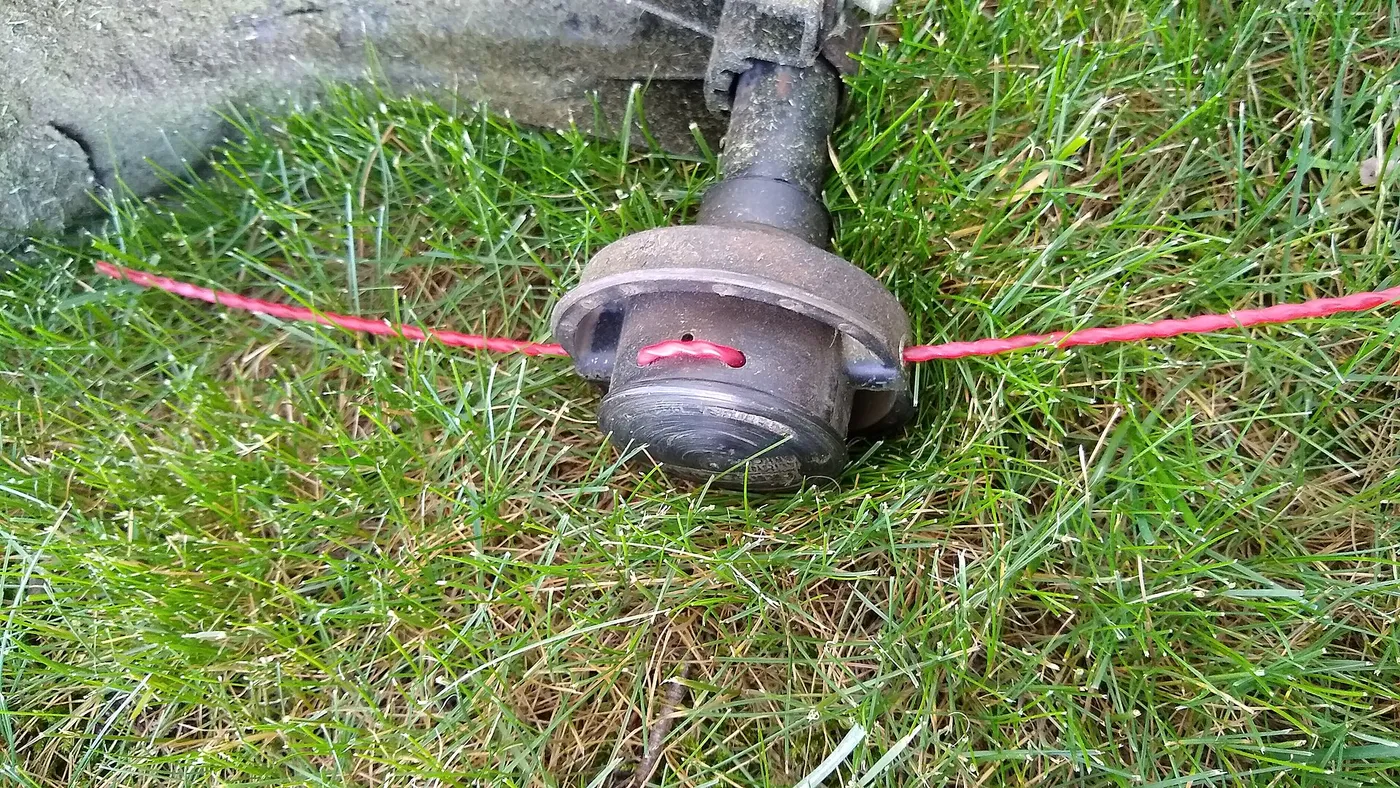
That works for a casual neat line, and it saves money and storage space. The limits are the line itself and the depth. Nylon line wears fast against concrete and gravel, and it cannot cut deeply into compacted soil. It also leaves a feathered border rather than a trench, and the line must be fed or replaced often.
Some trimmers are sold as combination tools that convert into an edger. These are convenient and worth a look if you want one machine. If you want a deep, sharp border that lasts, a dedicated edger does better, as outlined in our cordless edger roundup.
Dedicated edger types
If you decide to buy an edger, the type decides the experience.
- Walk-behind wheeled edgers: two or three wheels, a blade at the front and a handle. They offer a steady line and a consistent depth, and they suit long straight borders and large yards. They are bulkier to store.
- Stick edgers: a motor head on a shaft with a blade at the end and a guide wheel. They are light and easy to store, and easier to steer around curves. Depth control is simpler than on a wheeled unit.
- Combination units: a shaft with interchangeable heads for string trimming, edging and sometimes pole saw or hedge trimmer use. They save space and cost, though each head may be a compromise.
- Manual edgers: a half-moon blade you stamp in or a rolling wheel. They are quiet and inexpensive, and they are slow on long runs.
When you need both tools
A lawn with long straight edges along a driveway, sidewalk, patio or bed benefits from an edger. A lawn with lots of fences, trees, mailboxes, slopes and beds benefits from a trimmer. Most average yards have both, so the best answer for a yard with both features is often a trimmer first and an edger later.
Buy a trimmer as your first tool because it handles more jobs. If you live in a house with a long driveway and sidewalk and you want sharp borders, add an edger, or choose a trimmer that converts easily. If you only want a neat look and are happy to re-edge every couple of weeks, a trimmer used on its side may be enough.
Platform thinking helps. If you already own a battery trimmer, check whether the same brand sells a bare-tool edger that uses the same pack. That route saves the cost of batteries and a charger, and it keeps charging simple. Our electric edger guide lists corded and cordless options that suit that approach.
Power, runtime and ease
Edging demands more torque than trimming because the blade works against soil, roots and compacted turf. A weak motor bogs down in dry clay, and a battery that suits light trimming may drain quickly under an edger’s load. Look at motor power and, for cordless tools, at battery capacity. Corded electric edgers offer steady power and unlimited runtime if an outlet is near. Gas models give the most power for heavy-duty jobs on large properties.
Ease of use differs too. A trimmer is natural for most people to sweep. An edger needs a steady hand to hold the line, and a wheel guide helps. Practising on a short section is a good start, since the first pass defines the border and later passes follow it.
If you are shopping for a trimmer to double as an edger, pay attention to the line it takes, since edging wears line fast. Our breakdown of trimmer line sizes and shapes explains which diameter and cross section hold up best against pavement edges, and the cordless trimmer options in our cordless string trimmer guide include several with a rotating head.
Blade and edge profiles
Edgers are not all the same cut. Most stick and wheeled edgers use a flat vertical blade that slices a straight-sided groove along the pavement edge. This gives a clean, crisp line that follows a driveway or sidewalk and suits lawns bordered by hard surfaces.
Bed edging is a different task. To define a garden bed, many gardeners prefer a V-shaped or angled trench, which holds mulch and gives a soft, curved look. Some edgers can tilt their blade for this, and a manual half-moon spade does it by hand. If your goal is a mulch-holding bed border, check whether the edger offers blade tilt or a depth adjustment that lets you cut at an angle.
Depth control matters. A blade set too deep digs into irrigation lines, buried cable or tree roots, and a blade set too shallow leaves grass roots in the border. Know where sprinkler pipes and cables run before you set the depth, and call your utility locator service if you are unsure what is buried near the edge.
Hazards the tools share and how they differ
Both tools throw debris, but the pattern differs. A trimmer line flings grass, twigs and small stones sideways in a wide arc around the head, and a trimmer on its side projects debris along the ground toward the pavement and your shins. A blade edger flings soil and stones forward and sideways, and a stick edger leaves your legs closer to the blade than a wheeled unit does.
Protective gear is the same for both: safety glasses or goggles, closed shoes, long trousers and hearing protection for gas and loud corded models. Keep bystanders and pets well away, and check the work area for stones, toys, hoses and sprinkler heads before starting.
- Keep the guard in place on both tools, since it reduces thrown debris and protects your legs.
- Never lift the head above knee height while it is spinning.
- Release the trigger and wait for the blade or line to stop completely before clearing a jam.
- Disconnect the battery or unplug the tool before changing a blade or a spool.
- Avoid edging in wet conditions with a corded tool, and keep the cord clear of the cutting path.
Common mistakes
- Buying an edger when a trimmer with a rotating head would have met the need.
- Expecting a trimmer on its side to cut a deep trench into compacted turf.
- Setting an edger blade too deep and hitting irrigation lines or roots.
- Using a trimmer close to young tree trunks and damaging the bark.
- Edging before mowing, which leaves clippings spread across the freshly cut border.
- Letting an edger blade go dull, which tears turf instead of cutting it.
How to use each tool well
Trimming
Hold the head slightly angled and keep the cutting line a few inches above the ground, letting only the tip of the line do the cutting. Work from left to right, or in the direction that throws debris away from you. Avoid scalping the lawn by dropping the head to the soil, and avoid wrapping the line around tree trunks, which can cut the bark and damage young trees.
Edging
Walk along the hard surface and let the guide wheel roll against it. Set the blade depth to cut roughly an inch or so into the soil, as the model allows, and make one steady pass. Do the tight edges at a slower pace, and finish by sweeping or blowing the debris from the pavement.
For both tools, work on dry ground and clear stones and toys before you start. Remove loose debris from the path first, because both tools throw material at speed.
First-time edging versus keeping an edge
There is a big difference between cutting a new edge into a lawn that has never had one and maintaining an existing one. The first cut means severing years of grass runners and roots that have grown across the border, and the soil along an old walkway can be compacted and full of small stones. That job is the hardest on any machine and the most likely to bog down a battery tool.
Many owners do the first cut with a manual half-moon edger or a powerful gas or corded unit, then switch to a lighter tool for maintenance. Once the trench exists, a trimmer on its side or a light stick edger can keep it open with a quick pass every couple of weeks. This two-stage approach avoids buying a heavy machine for a job you only do once a year.
Edging at the right time of day helps too. Slightly damp, not soggy, soil cuts cleanly, while dry hard clay resists the blade and soaked soil clumps. If the ground is rock hard, water the border the day before and edge once the surface has drained a little.
A short buying checklist
- Walk your property and count the hard-edge metres against the fences, trees and beds.
- Decide whether you want a crisp border or a tidy one, since that decides between an edger and a trimmer on its side.
- Check whether any tool you own shares a battery platform with an edger you are considering.
- Look for adjustable blade depth and a guide wheel on any edger.
- Look for a rotating head and an edging wheel on any trimmer you plan to use sideways.
- Check the weight and balance, since you will hold the tool at a stretch.
Maintenance differences
A trimmer needs line replaced or fed and a clean head, with an occasional check of the spool and the air filter or battery contacts. An edger blade wears and dulls, especially on concrete edges, and it can be sharpened or replaced when it rounds off. A dull edger blade tears the turf instead of slicing it, which leaves a ragged border.
Check guards on both tools. The shield limits throw and protects your legs, and a missing or cracked shield is a safety problem. Replace damaged guards before using the tool.
A simple seasonal routine
In spring, make the first edging pass once the ground has thawed and dried a little, then trim along fences and beds as growth picks up. Through summer, trim at every second or third mow and edge every two to four weeks, depending on how fast your grass spreads and how crisp you like the border. In autumn, a final edge before the leaves fall keeps beds tidy and makes raking easier. Between sessions, store the tool dry, clear grass from the head and check the blade or line, so it is ready for the next job.
Cost and storage
A trimmer is the cheaper entry tool, and a convertible trimmer can cover edging as a bonus. A dedicated edger adds a purchase and another tool to store. Wheeled edgers need floor space, and stick edgers hang on a wall hook with the trimmer. If space and budget are tight, a convertible unit or a trimmer with a pivoting head is the most economical way to do both.
Consider how often you will use each tool. A trimmer gets used every mow, and an edger perhaps every few weeks. The less often a tool is used, the more attractive a combined machine or a manual edger becomes.
One more consideration is the noise and the time of day. Both tools are loud enough to bother neighbours at early hours, and an edger working on concrete edges is louder than a trimmer on grass. Battery models are quieter, and scheduling the work for mid-morning keeps everyone happy.
Frequently Asked Questions
Is an edger the same as a string trimmer?
No. A trimmer cuts horizontally with nylon line, and an edger cuts vertically with a steel blade. Some trimmers can be rotated to edge, but the cut is shallower and less lasting.
Can I use a weed eater as an edger?
You can on a trimmer with a rotating head or edging guide, by turning the head on its side. It works for a casual edge but wears the line quickly on hard surfaces.
Which should I buy first?
A trimmer, because it handles more jobs. Add an edger if you want crisp lines along a driveway or sidewalk.
Are battery edgers strong enough?
Many are for routine maintenance edging. Heavy first-time edging through compacted turf or roots is harder on a battery tool and may require a stronger or gas model.
How often should I edge?
Every few weeks during the growing season is common. Edging after a mow gives the sharpest look.
Bottom line
Treat the trimmer as the everyday tool and the edger as the finishing tool. If you want one machine, choose a trimmer with a rotating head or a convertible kit. If you want crisp, lasting borders along hard surfaces, add a dedicated edger, ideally one that shares your battery. Either way, wear eye protection, clear debris first and keep the guards in place.