
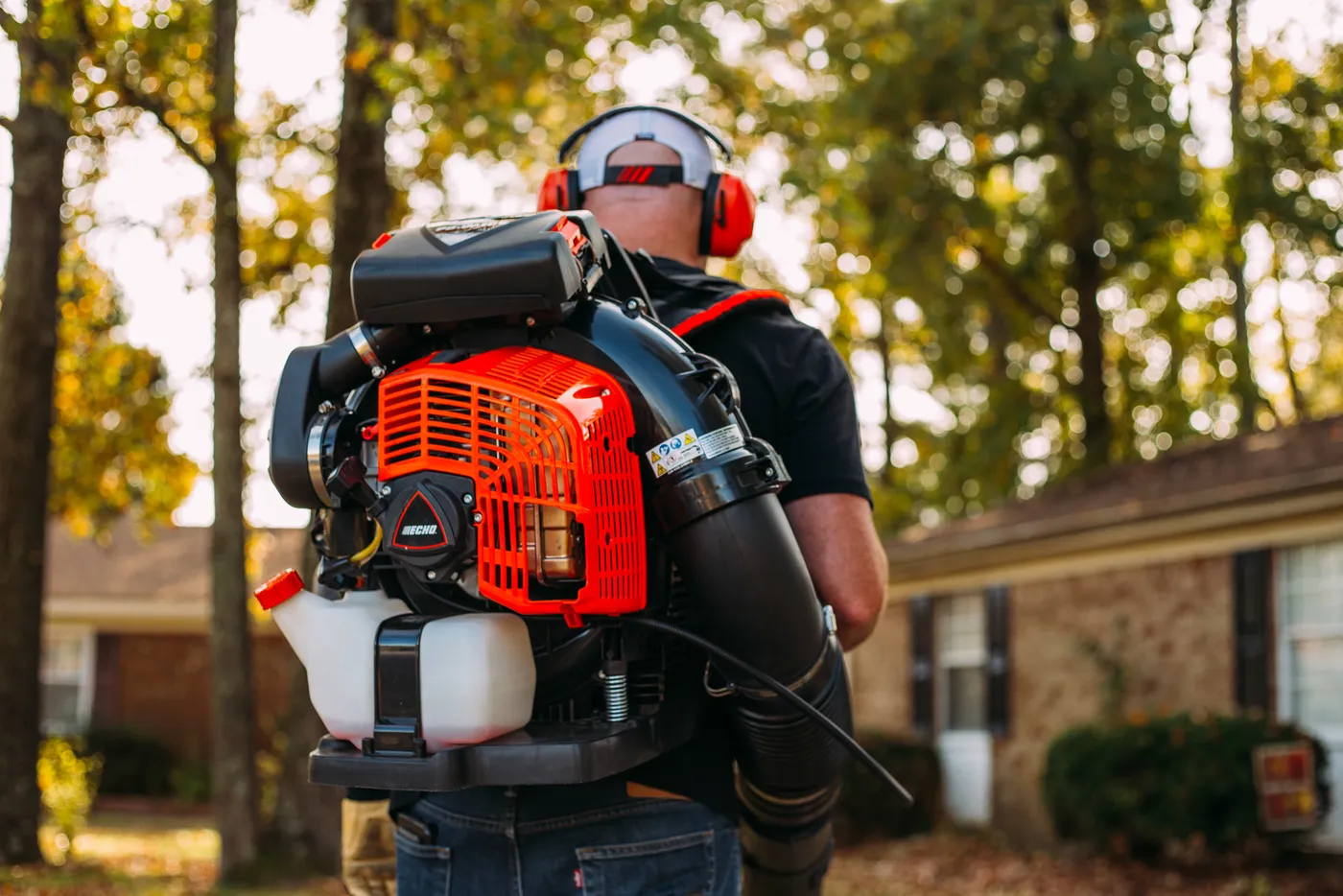
The sore shoulder that starts the search
Many people reach this question after forty minutes with a handheld blower. The tool was fine for the first ten minutes, then the wrist started to ache, the forearm burned, and the last third of the yard felt like a chore. That is the clearest sign that the form factor, not the engine, was wrong for the job.
There are three common formats: handheld, backpack and walk-behind. They share the same basic principle of a fan pushing air through a nozzle, but they put the weight in different places and offer different power ceilings. That changes how long you can work, how much you can clear and how tired you are at the end.
This page is about the shape of the machine. The two airflow figures on the label, CFM and MPH, have their own explainer in our CFM versus MPH guide.
Handheld blowers
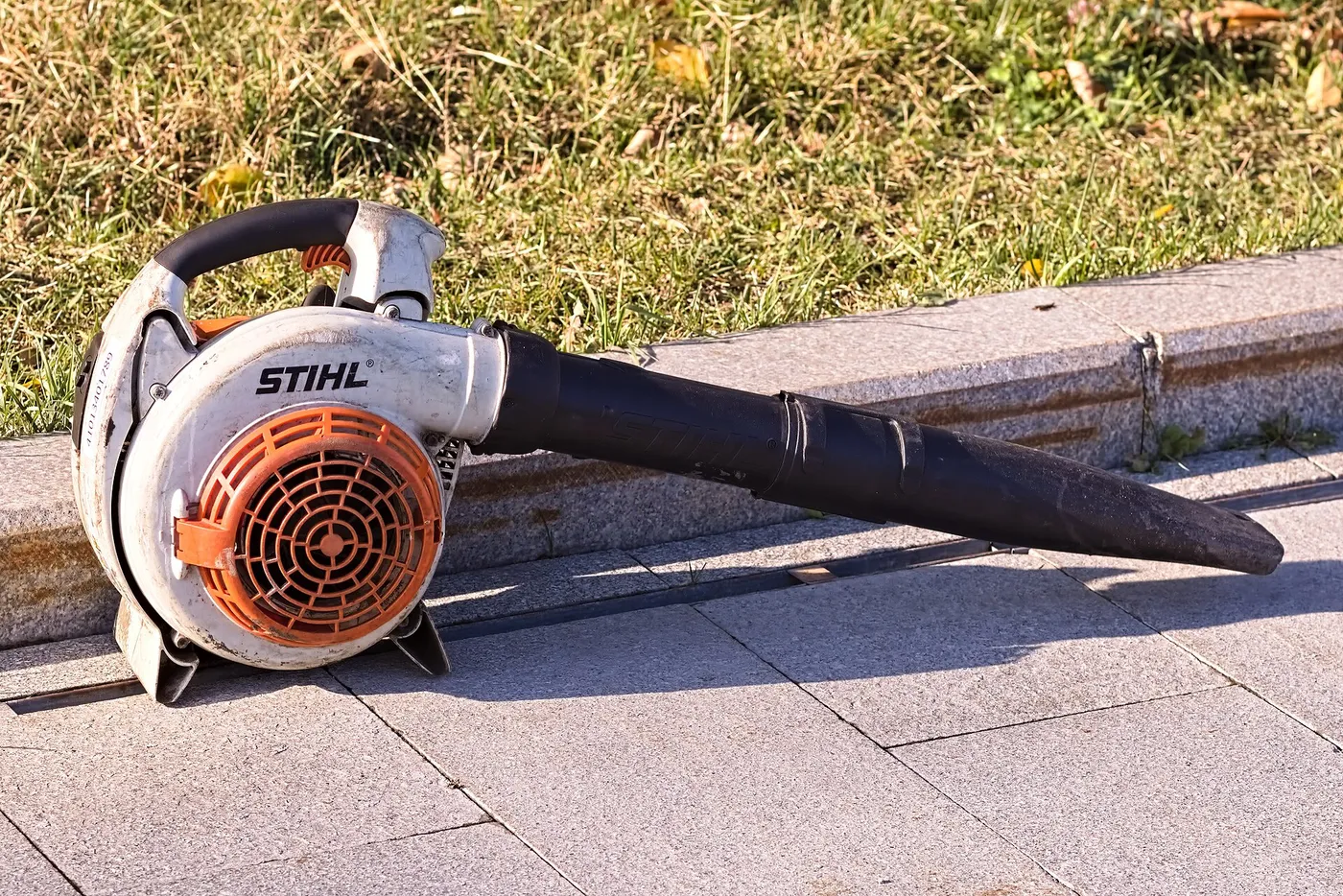
A handheld blower is a single unit you hold with one hand on a main handle, with the motor and fan behind or beside the nozzle tube. Battery versions dominate this category, because a pack hangs off the back as a counterweight. Corded electric and small gas models also exist.
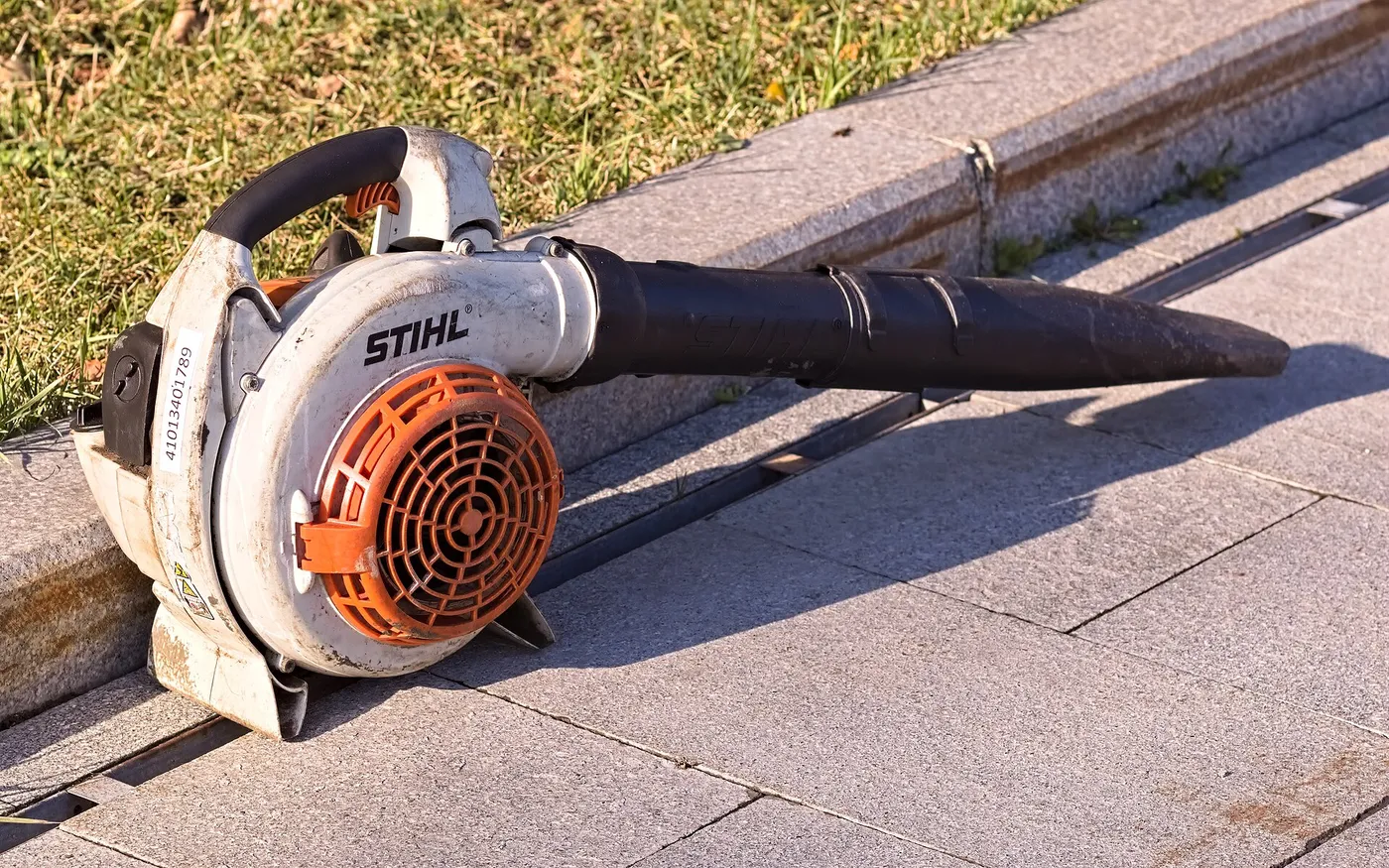
The strengths are weight and simplicity. A typical handheld battery blower is light enough to hold at arm’s length for a few minutes, stores on a shelf or a wall hook, and starts with a button. It is the right tool for a patio, a front walkway, a deck, a garage floor or a quick pass over a small lawn.
The weakness is endurance and power. All of the weight is in your arm, which limits sustained work, and the compact housing limits fan size. Runtime on small packs is short at high output. For a small yard those limits rarely matter. For a larger yard they decide the purchase.
Backpack blowers
A backpack blower carries the engine or battery on a padded frame with shoulder straps and a hip belt, and a flexible hose or rigid tube leads to a handheld control unit with the nozzle. You hold only the tube and a throttle, so your arm lifts a small fraction of the machine’s weight.
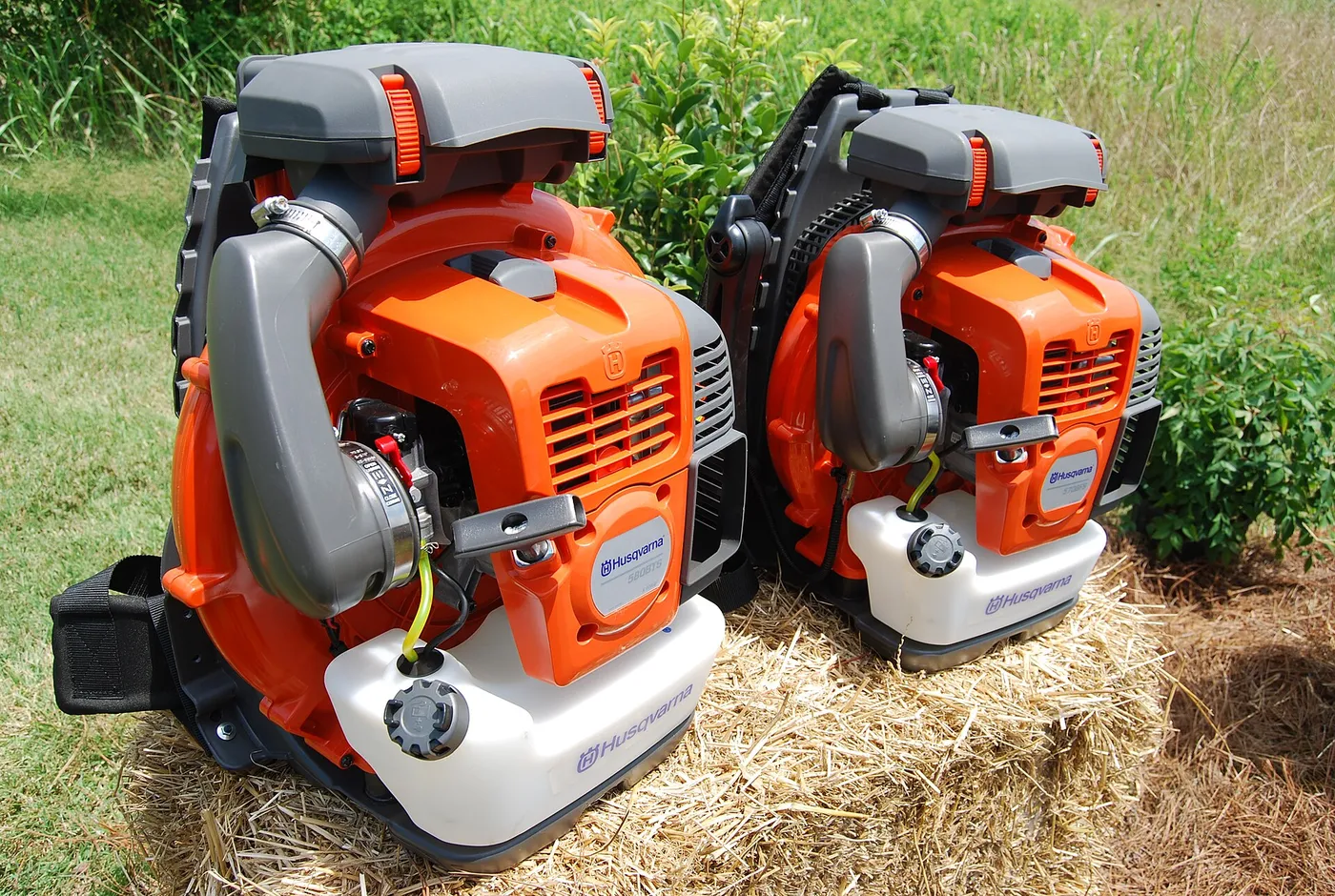
That arrangement allows a bigger fan, a stronger motor or engine and a larger fuel tank or battery. Backpack blowers lead the category in output and endurance, which is why landscapers use them on large properties. Gas backpack blowers can run as long as there is fuel, and battery backpack models use large packs on the back frame to reach long runtimes.
The costs are weight on your back, bulk in storage and a higher purchase price. A loaded backpack unit is heavy to put on, and it can be hot and tiring in summer. Good harness design, with a padded hip belt, adjustable straps and a ventilated back panel, makes a large difference in comfort.
Walk-behind blowers
A walk-behind blower, sometimes called a wheeled blower, mounts a large engine and fan on a wheeled frame with a long, adjustable chute. You push it like a lawn mower and aim the airstream by swivelling the chute. These are the highest output blowers sold to homeowners.
Their strength is raw air. A wheeled unit moves a huge volume through a wide nozzle, and it can clear a long driveway, a field of leaves under oaks or a large parking area in a single sweep. Because the weight rides on wheels, you never carry the machine, and you can work for long periods without fatigue.
The weaknesses are size and flexibility. It is bulky, heavy to lift into a truck and awkward on steps, uneven ground and tight spaces. It is also loud, and most models are gas powered. It is a specialist tool for open, level property.
Head to head
| Factor | Handheld | Backpack | Walk-behind |
|---|---|---|---|
| Weight in your hands | All of it | Tube only | None, rolls on wheels |
| Typical output | Low to moderate | Moderate to very high | Highest |
| Best property size | Under a quarter acre | Quarter acre to several acres | Large, open, level areas |
| Sustained work | Short sessions | Long sessions | Very long sessions |
| Manoeuvrability | Excellent | Good | Limited |
| Storage space | Small | Medium | Large |
| Noise | Lowest on battery models | Moderate to loud | Loud |
| Power source options | Battery, corded, gas | Gas, battery | Mostly gas |
Choosing by property size
Property size is the cleanest way to decide. Think about the total area you clear and how many leaves fall on it, not just the lawn size.
- Small yard or townhouse, up to about a quarter acre: a handheld battery blower covers the job in a short session. The light weight and easy storage outweigh the lower power.
- Typical suburban lot with several trees: a strong handheld battery model works if you clear in sections, and a battery backpack is worth considering if leaf fall is heavy and you work for more than thirty minutes at a time.
- Half an acre to a few acres, or heavy tree cover: a backpack blower is the sensible tool, with gas or a large battery.
- Long driveways, parking areas or open fields of leaves: a walk-behind blower covers the ground fastest.
If you own several tools on a single battery platform, a handheld from that platform is cheap to add. See our 18V leaf blower picks for light-duty models that share packs with other tools.
Weight, balance and fatigue
A handheld blower weighs a few pounds, but you hold it extended with the nozzle out front, which is a poor lever arm for a wrist and a forearm. After half an hour of sweeping, that adds up. Back-mounted units shift the weight to your hips, which carry load far better than a wrist.
Backpack models vary a great deal in carried weight. A battery backpack can be much lighter than a gas backpack, since the pack is lighter than an engine and fuel. Check the stated weight and the harness design. A padded hip belt moves the load off your shoulders, and a chest strap keeps the straps from sliding.
If you have a bad back, a shoulder injury or a wrist problem, test how a model fits before you buy. A heavy unit is a bad choice for anyone with back trouble, and a handheld blower used for hours is a bad choice for anyone with wrist or elbow trouble. A walk-behind machine avoids carrying entirely.
Runtime and power source
Runtime is a function of fuel or battery capacity and the output you use. A handheld battery blower often has a modest pack, and turbo mode empties it fast. A backpack blower carries a bigger pack or a fuel tank, and it can work much longer at a given output.
Gas is the long-runtime option, since you top up the tank in a minute. Cordless packs need charging time, and a heavy day of leaf clearing may need a spare pack. If you are weighing fuel against batteries for the whole property, our gas versus battery mower comparison covers the same trade-offs for mowers, and the logic carries over: gas wins on endless runtime, and battery wins on noise, upkeep and starting.
Corded electric handhelds have unlimited runtime but are tethered by a cord, which limits reach and snags on shrubs. They suit a small area near an outlet.
Noise and neighbourhood rules
Noise rises with power and with engine type. Gas backpack and walk-behind blowers are the loudest, and they need hearing protection for any extended session. Battery handhelds and battery backpacks are far quieter, though still loud enough at the nozzle to warrant ear protection during long use.
Some communities restrict gas blowers, set hour limits or require quieter equipment. Check local rules and homeowner association guidelines before you buy a gas model. If you live close to neighbours, the quieter battery option avoids friction as well as complying with rules.
Storage and transport
A handheld blower hangs on a wall hook or sits on a shelf. A backpack blower needs a bench, a shelf or floor space, and the gas version needs to be stored with attention to fuel. A walk-behind blower is about the size of a mower, and it needs a garage bay or a shed, and a ramp or lift to load into a truck.
Think also about transport. If you service a second property or a friend’s lot, a handheld or a backpack fits in a car or truck bed with little fuss. A wheeled blower needs a ramp and a vehicle with room for it.
Other jobs a blower does
Leaf clearing is the headline task, but blowers handle several others. Clearing grass clippings from a driveway after mowing, drying a car or a wet patio, blowing light snow from a deck, clearing debris from a gutter edge with a tube extension and tidying a workshop floor all fit a blower. Handhelds excel at the small, fussy jobs, and backpack and wheeled models excel at the large ones.
Some blowers also vacuum and mulch, which is a different feature set. If you plan to gather and shred leaves, check whether a model is a blower only or a blower-vacuum, because converting a blower-only machine is often not possible.
Maintenance by format
Upkeep differs sharply between the three. A handheld battery blower needs almost nothing beyond a clear intake screen and sensible pack storage. A corded model needs the cord inspected for nicks. A gas handheld or backpack unit needs fresh fuel mixed to the correct ratio if it is a two-stroke, an air filter that is cleaned on schedule, a spark plug that is checked each season and fuel that is not left to age in the tank over winter.
Four-stroke gas blowers avoid the fuel mixing step, but they need oil checks and changes like any small engine. Wheeled walk-behind models have the most service points: engine oil, air filter, tyres, chute pivot and sometimes a belt or drive system.
Whatever format you own, clean the fan housing and intake after each season, and look for chipped impeller blades or cracked housings. Debris inside a housing unbalances the fan, causes vibration and reduces output. A quick look takes a minute and prevents most mid-season failures.
Safety and protection
All three formats are loud and throw debris at speed, so protective gear is part of the purchase. Wear hearing protection suited to the noise level, eye protection that stops flying grit and a dust mask when you clear dry, dusty material. Closed shoes and long trousers protect your legs from thrown stones.
Point the nozzle away from bystanders, pets, vehicles and windows, and never aim it at people. Keep the exhaust away from your face on gas models, and run gas equipment only outdoors, never in a garage or enclosed space, because exhaust contains carbon monoxide.
When refuelling a gas unit, switch it off and let it cool, fill on a stable surface away from open flame and wipe up spills before restarting. Store fuel only in an approved container. Follow your manual for every step, since procedures differ by model.
Working a yard efficiently with each format
Technique changes with the tool. With a handheld, work in short bursts and switch hands to spread the strain. Clear in sections, moving leaves toward a collection point, and rest the arm between sections rather than forcing a single long session.
With a backpack, adjust the tube length so your arm stays relaxed, and use the cruise control or a steady trigger to avoid squeezing hard. Keep the nozzle low and work with the wind when you can, since a headwind eats a large part of your output. A walk-behind unit rewards long, straight runs along a driveway or lawn edge, with the chute angled to roll material forward in a continuous wave.
On any format, plan the clearing direction before you start. Move debris toward a single pile, a tarp or the curb rather than pushing it back and forth between zones. Doing the lee side of the house first, then the exposed side, prevents leaves from blowing back onto cleared areas.
Mistakes to avoid
- Buying a heavy backpack unit for a small yard and finding it more trouble than the job deserves.
- Buying a handheld for a large property and spending the whole afternoon holding it up.
- Focusing on the highest output figure and ignoring weight, fit and noise.
- Choosing a gas model in an area that restricts gas equipment.
- Skipping a spare battery or a fuel can and cutting a job short.
- Forgetting storage space for a wheeled or backpack unit.
Decision table
| Your situation | Best format |
|---|---|
| Small yard, light leaves, short sessions | Handheld battery |
| Patio, deck and garage tidy-ups only | Handheld battery or corded |
| Quarter acre or more with many trees | Backpack battery or gas |
| Work for an hour or more at a time | Backpack |
| Long, flat driveway or large open area | Walk-behind |
| Back or shoulder problems | Walk-behind or light handheld in short sessions |
| Noise-sensitive neighbourhood | Battery handheld or battery backpack |
For models that cover each format, see our best leaf blowers guide.
Harness, controls and what makes a backpack comfortable
If you pick a backpack blower, the harness deserves as much scrutiny as the motor. Look for wide, padded shoulder straps, an adjustable chest strap, a firm hip belt and a back panel with some ventilation. A frame that fits your torso length keeps the weight over your hips. An ill-fitting frame puts the load on your shoulders, which becomes tiring within minutes.
Controls also matter. A throttle with cruise control lets you hold a steady speed without gripping the trigger, which reduces hand fatigue. An easily reachable power setting lets you drop to a lower level near flower beds. A tube that you can lengthen or shorten adjusts reach to your height and posture.
Check fuel and battery access on a backpack. A gas tank that you can fill without taking the unit off, or a battery that you can swap on the frame, keeps sessions flowing.
If you are still torn between two formats, rent or borrow one for a single autumn weekend. A few hours of real leaf clearing on your own property reveals fatigue, noise and storage problems that no spec sheet will show, and it makes the final choice much easier. A short trial also tells you whether you tolerate the noise.
Frequently Asked Questions
Is a backpack blower worth it for a regular yard?
If your yard is under a quarter acre, probably not, since a good handheld does the job with less weight to store. Above half an acre, or with heavy leaf fall, a backpack saves real time and effort.
Are handheld blowers weak?
They have lower output than backpack models, but strong handheld battery blowers handle most home tasks. They are limited more by arm fatigue and runtime than by power.
Are walk-behind blowers worth the space?
Only for large, open, level areas. On a typical suburban lot they are overkill and awkward to store.
Do backpack blowers need gas?
No. Battery backpack blowers are common and offer low noise and no fuel handling. Gas models still lead on endless runtime and top output.
Which format is best for older users?
It depends on the limitation. A light handheld in short sessions suits someone with a strong back and weak wrists, while a wheeled blower or a well-fitted backpack suits someone who cannot hold a tool at arm’s length for long.
Bottom line
Choose a handheld for small yards and quick jobs, a backpack for half an acre and up or any long session, and a walk-behind for large flat open ground. Match the format to your area, your stamina and your storage space, then choose the power source that fits your noise and runtime needs. A blower that suits your body and your property will get used every autumn, and a mismatched one will sit in the shed.