
Two numbers, one job
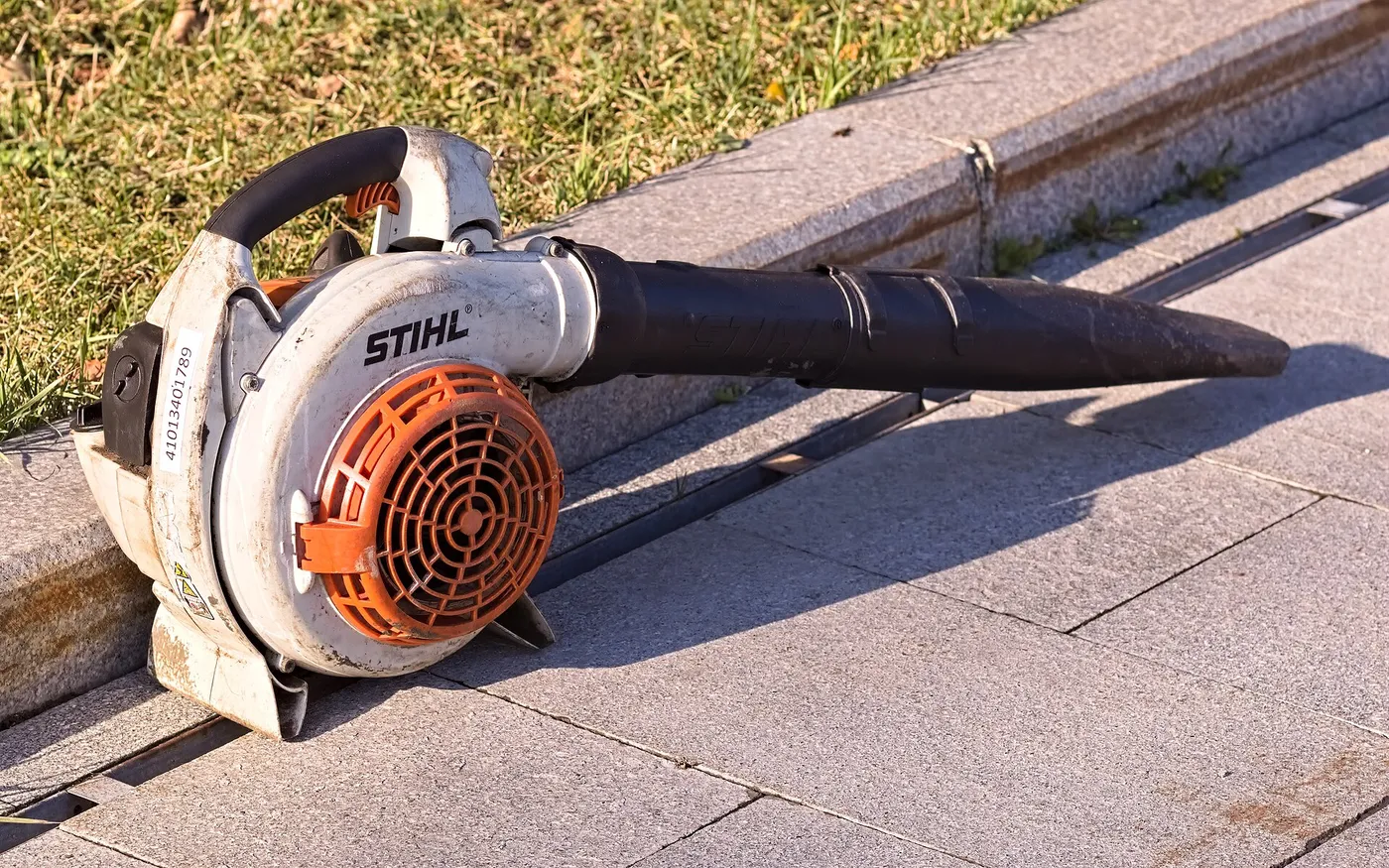
Every leaf blower box carries two big numbers. One is labelled CFM, short for cubic feet per minute. The other is MPH, miles per hour. Shoppers often pick whichever is larger or whichever the box highlights, and that is how people end up with a blower that screams but barely moves wet leaves, or one that shifts a large volume of air gently across the lawn.
The two numbers describe different things. CFM is a measure of volume, how much air passes through the nozzle every minute. MPH is a measure of speed, how fast that air is moving as it leaves. Think of a garden hose: opening the tap wider increases how much water flows, and squeezing the end with your thumb increases how fast it sprays. A blower works on the same logic.
What CFM does
CFM tells you how much air the blower pushes. A high CFM blower has a big stream of air that can roll a whole pile of dry leaves across a lawn, shove a mat of debris along a driveway or clear a wide path in a single pass. It is the number that governs how much ground you cover per minute.
High CFM also matters for volume jobs. Moving a thick layer of loose leaves, pine needles or grass clippings needs a lot of air, because the air has to get under and around the material and carry it along. A blower with a narrow, fast jet pushes a small area aggressively, but it has to be swept back and forth to clear a wide strip.
The trade-off is that a wide, gentle stream may not dislodge stuck material. Leaves matted into wet grass, damp debris pressed into a gap or seed pods wedged between pavers need more than volume.
What MPH does
MPH measures the speed of the air at the nozzle. High speed gives you the force to lift stuck leaves, flick debris out of gaps and peel material off a surface. A high-speed jet works like a pressure washer for dry material: concentrated and effective at a small point.
Speed matters most when the debris is stubborn. Wet leaves, small stones, bark chips in a flower bed and wedged matter in deck boards all need speed to break their grip. A fast, narrow jet is also easier to aim, so it works well for edges, corners and tight spaces.
The downside is coverage. A high-speed jet from a small nozzle covers a narrow path, and it can scatter light debris in unwanted directions, including flower beds, gravel and mulch. High speed is not the same as high power.
Why both matter together
The force that a blower puts on debris comes from the combination of volume and speed. In physics terms, thrust is the mass of air moved each second multiplied by its speed. For a given nozzle, the mass of air per second depends on CFM, so the push on a pile of leaves is roughly proportional to CFM multiplied by MPH. That is why serious buyers multiply the two numbers to get a single comparison figure, sometimes called blowing force or air power.
The multiplied figure is a useful shortcut, though not a perfect one. It ranks blowers by overall push, but it hides the shape of the output. Two blowers can share the same CFM times MPH product yet behave differently, one broad and gentle and the other narrow and fast.
| Blower profile | CFM | MPH | CFM times MPH | Character |
|---|---|---|---|---|
| Wide and gentle | 600 | 100 | 60,000 | Moves large piles, struggles with stuck wet leaves |
| Narrow and fast | 300 | 200 | 60,000 | Strong on stuck debris, covers little ground |
| Balanced | 450 | 135 | 60,750 | Handles both, a good all-round fit |
The figures in that table are illustrative, chosen to show how products can match while behaving differently, and they are not measurements of any named model. The lesson is to compare the product and also look at how each number splits.
How makers measure and why numbers do not compare
Blower specs are not always measured the same way. CFM and MPH can be taken at the end of the nozzle, at the end of an extension tube or with a concentrator nozzle fitted, and each setup gives a different number. Some brands quote the highest reading in turbo mode, while others quote the regular mode.
Because there is no single rule that every brand follows on the box, comparing a CFM figure from one maker with a CFM figure from another can mislead. Treat numbers from the same brand and the same test method as comparable, and be sceptical of big gaps between brands for products that otherwise look similar.
The question to ask is simple: at what nozzle and in what mode was the number measured? If the box or product page does not say, assume the figures are the best case.
How the nozzle changes things
The nozzle is where volume and speed trade places. A narrower opening forces the same volume of air through a smaller area, so speed rises while volume falls a little. A wider opening does the opposite. This is why many blowers ship with a round tube, a flat or tapered concentrator and sometimes a wide scattering attachment.
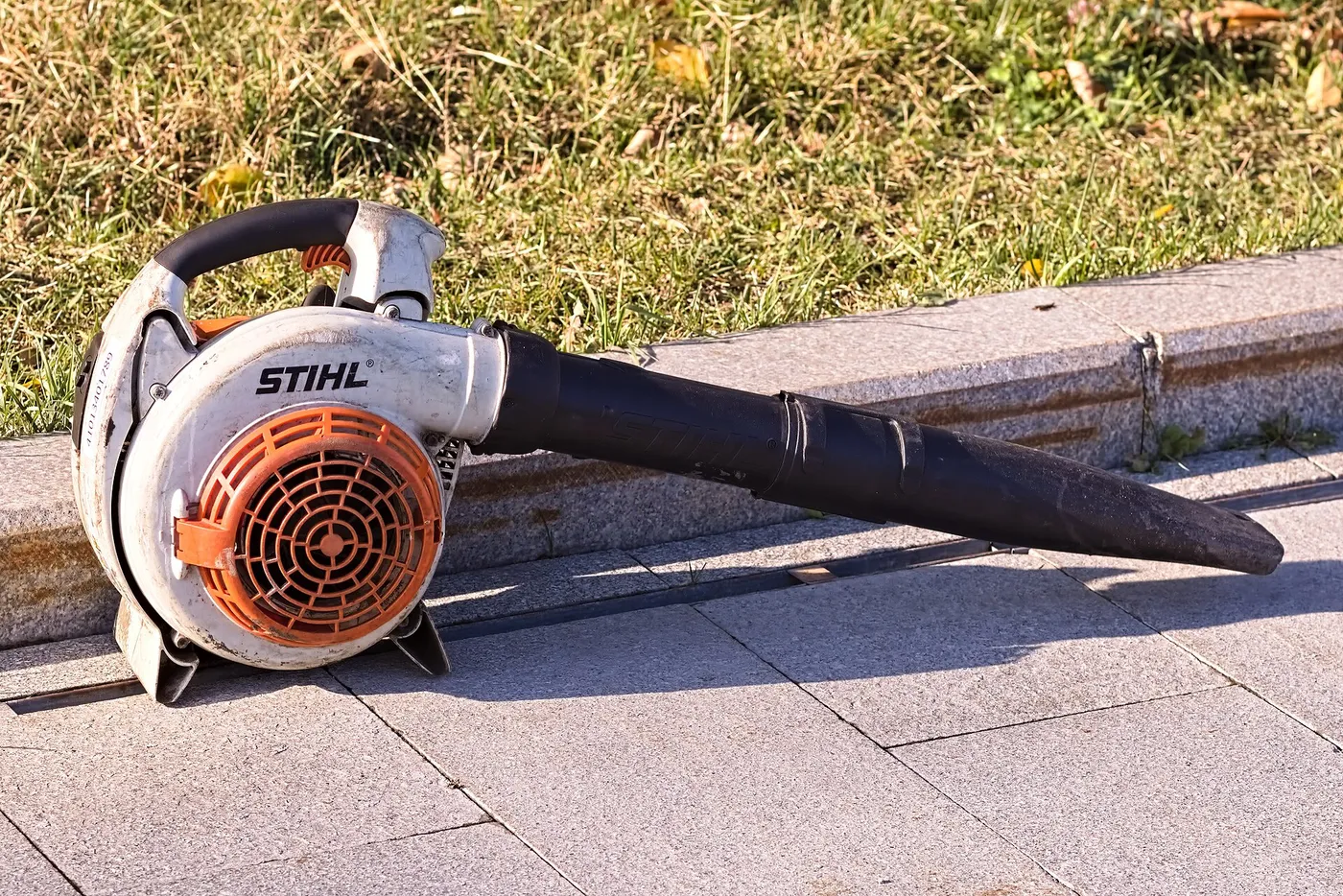
A flat nozzle spreads the stream into a thin sheet that suits sweeping a hard surface, since the thin blade of air gets under debris. A round nozzle gives a rounder, easier-to-aim jet. A narrow concentrator boosts speed for stubborn material, at the cost of coverage.
If you buy a blower for varied jobs, check whether the nozzles are included and how easily they swap. A blower with great numbers and no accessories may be less flexible than one with lower numbers and good nozzles.
Matching the numbers to your jobs
| Job | Leans on | What to look for |
|---|---|---|
| Dry leaves across an open lawn | CFM | High volume to roll large piles |
| Wet leaves stuck to grass or pavement | MPH | High speed to break them loose |
| Clearing a driveway or patio | Both | A balanced blower with a flat nozzle |
| Cleaning debris from gutters or gaps | MPH | Fast, narrow stream |
| Grass clippings off a sidewalk | CFM | Wide stream for light, loose material |
| Small yard, light cleanup | Neither extreme | Modest, balanced figures and low weight |
Whatever the jobs, remember that you also have to carry the blower. A high-output machine is heavier, louder and thirstier on battery or fuel, and the form factor is its own decision. See our backpack, handheld and walk-behind blower comparison for that side of the choice.
Power source and what the numbers imply
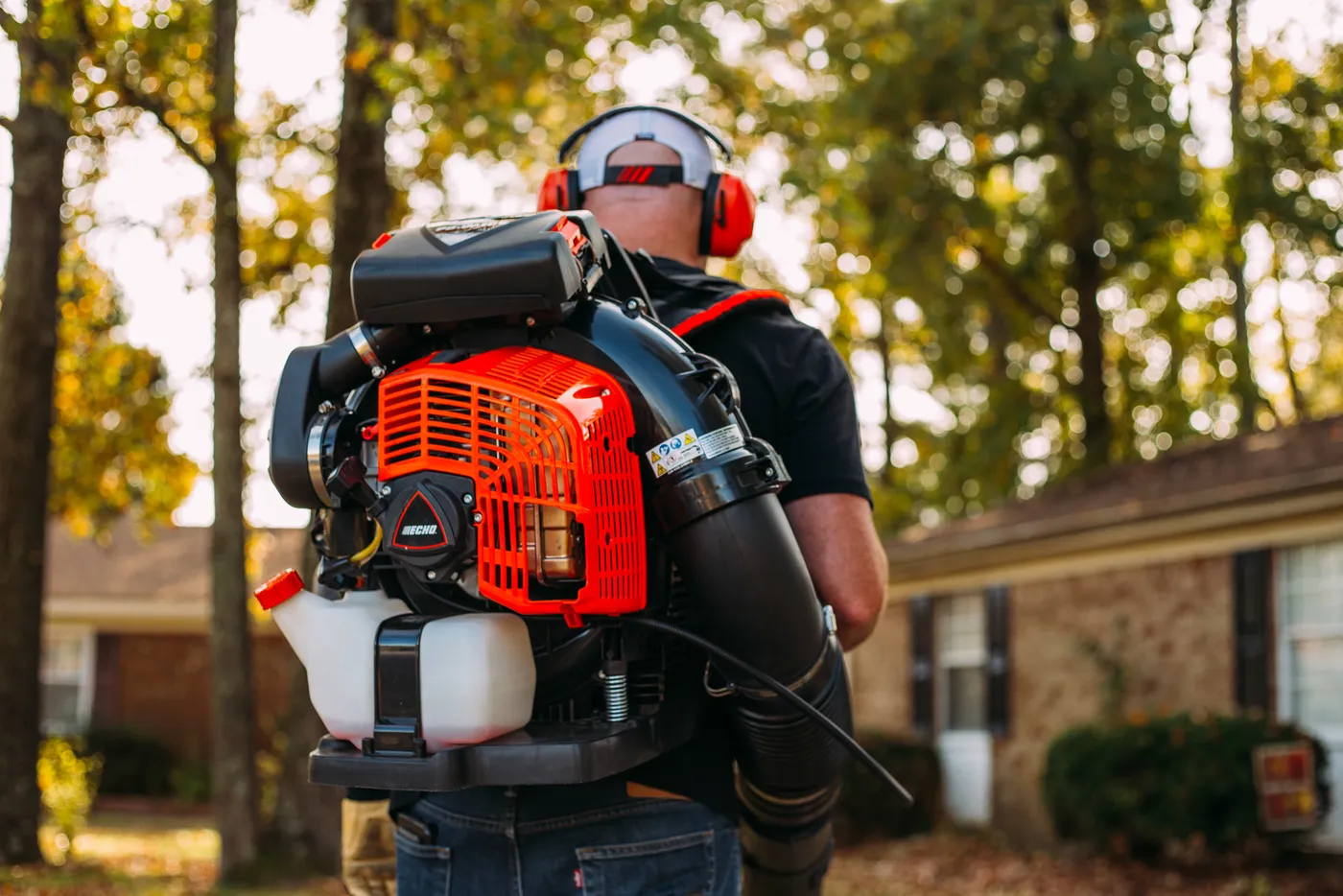
Gas blowers have traditionally led on both numbers because a small two-stroke or four-stroke engine can spin a fan at high speed for as long as there is fuel. Corded electric blowers offer steady, moderate output with no runtime limit. Battery blowers have closed a lot of the gap, with larger packs, brushless motors and turbo modes that deliver strong figures for short bursts.
The catch with battery blowers is that the headline number often applies to turbo mode only, and turbo drains the pack quickly. Runtime in everyday use depends on how much of the time you use high output. If you are choosing a cordless model, compare both the high-mode numbers and the runtime at the mode you will actually use. The pack count and voltage matter, but the numbers on the nozzle matter more, and our 20V leaf blower roundup shows how entry-level battery models compare.
For heavy property work, the stronger gas and high-voltage battery machines are covered in our best leaf blowers guide.
Common spec traps
- A giant MPH with a tiny CFM. This is a hair dryer shaped like a blower. It sounds impressive and clears little.
- A giant CFM with a modest MPH. This moves air but will not dislodge wet leaves or stuck debris.
- Numbers quoted with a concentrator nozzle only. The listed speed may not apply with the standard nozzle.
- Turbo-only figures. They hold for a short burst and not for the runtime the box advertises.
- Equivalent to a gas blower. This phrase has no standard meaning. Ask for the numbers.
- Ignoring weight and noise. A blower you do not want to hold is a blower you will not use.
Why wet leaves defeat the wrong blower
Wet leaves are the real test of the two numbers. A dry leaf is light, and a gentle high-volume stream lifts it easily. A wet leaf is heavier, and surface tension and a film of water make it stick flat to the ground. To break that grip, the air has to hit the leaf with enough speed to get under its edge, and then carry enough volume behind it to roll the leaf forward.
That explains the difference owners report between blowers that look similar on paper. A wide, gentle blower slides over a mat of wet leaves without lifting it, and a fast, narrow one lifts the edge but leaves a tiny cleared path. The best performers pair solid speed with a decent volume, and they work with a low nozzle angle, a few inches above the surface, so the air runs along the ground and under the leaves.
If your yard is mostly wet leaves under trees, give MPH a bit more weight in your decision. If it is mostly dry leaves on open lawn, give CFM more weight. If you have both, buy a balanced model and use technique to cover the gaps.
Reading a spec sheet step by step
Take a hypothetical listing that reads 500 CFM and 150 MPH. Multiply the two and you get 75,000, a combined figure you can compare against other listings. Now ask three questions. First, were these measured at the nozzle or at a tube end? Second, were they taken in turbo or in regular mode? Third, does the listing mention a concentrator nozzle?
If the answers are the standard nozzle, regular mode and no concentrator, you have an honest figure. If the answers are a concentrator and turbo only, the day-to-day output is lower. A second hypothetical listing with 400 CFM and 160 MPH multiplies to 64,000. On paper it is weaker overall, but it may suit stuck debris better because its speed is higher.
Use the product as a ranking tool and the split as a character check. When two listings have a close product, choose by the second-order factors: weight, noise, runtime and whether the nozzle set fits your jobs.
Battery blowers, turbo mode and runtime
Turbo is where battery blower numbers come from, and it is also where the battery empties fastest. A pack that gives a long runtime at a middle setting can empty in a few minutes of continuous turbo, because motor power draw rises steeply with fan speed. The relationship is steep because the power needed to move air climbs faster than the speed itself.
The practical advice is to use turbo in bursts. Use the middle setting for open sweeps and switch to turbo only for stuck debris. That approach stretches runtime and keeps motor and pack temperature down. If a model has a cruise control or variable trigger, it gives you fine control over this trade-off.
When comparing cordless blowers, look at the stated runtime and ask at which speed it was measured. A model advertising a long runtime at low output may have a very different story at high output. Lower voltage platforms are fine for light yard work and tidy-ups, as shown in our 20V picks, but a large property or a lot of wet leaves will drain a small pack quickly.
Keeping the blower performing at its numbers
A blower rarely delivers its published figures after a few seasons of neglect. Airflow falls when the intake screen is clogged with leaf dust and grass, when the impeller is damaged or caked, or when the nozzle is cracked or loose. On a gas blower, a dirty air filter, an old spark plug or stale fuel reduces fan speed and lowers both numbers.
Clean the intake after each session, check the tube connections for air leaks and inspect the impeller for chips. If a blower suddenly seems weak, rule out a loose tube or a blocked intake before blaming the motor. Following the manual’s maintenance schedule keeps the machine close to its published output.
Noise and fan design
Air speed and noise are linked. The faster the air leaves the nozzle, the more turbulence it creates, and the louder the blower sounds. Cordless models tend to sit at the quieter end, and those are collected in our cordless leaf blower guide. Fan design also matters: axial fans move a large volume of air at a moderate speed and tend to be quieter for the volume they move, while centrifugal fans build higher pressure and speed in a more compact housing.
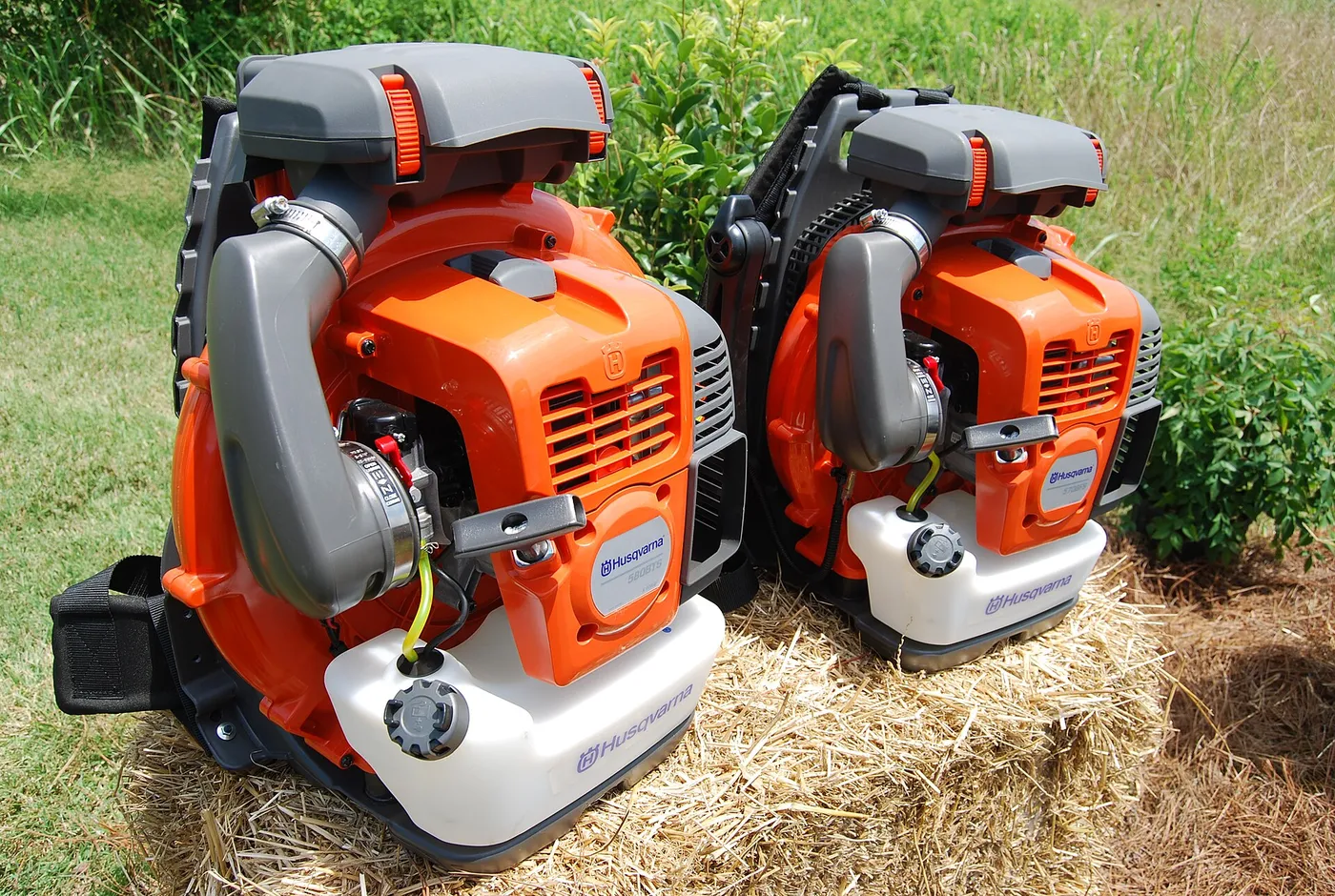
If you live near close neighbours, noise is a real part of the decision. Local rules sometimes limit the decibel level of yard equipment or the hours of use. Some manufacturers publish a sound rating, and a lower figure usually means a quieter pitch and less fatigue. Treat quiet as a feature: a blower you can run for longer without earplugs is one you will actually use.
Technique beats a few extra points of output
How you hold the blower changes the result as much as a modest spec difference. Keep the nozzle low and angled slightly downward so the air stream skims the surface and gets under debris. Work in overlapping sweeps toward a single collection point, and avoid blowing leaves into the wind, which wastes volume and speed.
Start from the edges and work toward the middle, or from the house outward, so you never re-clear ground you have already finished. On a lawn, a quick pass with the stream held at a shallow angle lifts leaves from the turf without tearing the grass. On a driveway, a flat nozzle and a steady forward walk beats frantic waving.
Blowing leaves onto a tarp saves collection time, and a light mist of water on dry dusty debris can help keep it from rising as a cloud. Wear hearing protection and eye protection, and keep the exhaust pointed away from people, pets and open windows.
A practical buying method
- List your jobs: open lawn leaves, a driveway, a patio, wet autumn mats, clippings or a mix.
- Decide whether the volume of debris or the stubbornness of it is your bigger problem.
- Choose a blower where both numbers are respectable instead of one is extreme.
- Check that the numbers are measured at the nozzle you will use and in the mode you will use.
- Check weight, runtime or fuel type and noise.
- Look for accessories: a flat nozzle, a concentrator and a tube extension that fit your jobs.
Frequently Asked Questions
Which matters more, CFM or MPH?
Neither alone. CFM governs how much debris you can move at once, and MPH governs how well you can dislodge stuck material. The pairing, roughly CFM times MPH, gives the best single comparison.
Is higher CFM always better?
Not always. A very high CFM with a low MPH moves loose, dry material well but struggles with wet or stuck debris. Pick the balance that suits your jobs.
How many CFM do I need for leaves?
It depends on yard size and leaf volume. Larger lawns with deep dry leaf cover benefit from higher CFM, while small yards do well with modest numbers. Check how the figures are measured before comparing models.
Do battery blowers match gas on these numbers?
The best battery models can come close in turbo mode, though they drain the pack quickly there. Gas still leads for sustained heavy work.
Can I improve results without buying a stronger blower?
Yes. Work with the wind, blow toward an open area or a tarp, keep the nozzle low, and use short sweeping passes. Technique can matter as much as a few extra points of output.
Bottom line
CFM is volume and MPH is speed. Both are needed, and their product is a fair guide to total blowing force. Choose a blower with a balanced pair of numbers, confirm the nozzle and mode behind them, and weigh the output against weight, runtime and noise. A blower that is slightly less powerful on paper but easy to hold, quiet enough to use and fitted with the right nozzle will clear more leaves in the real world than a spec-sheet champion you leave in the shed.