
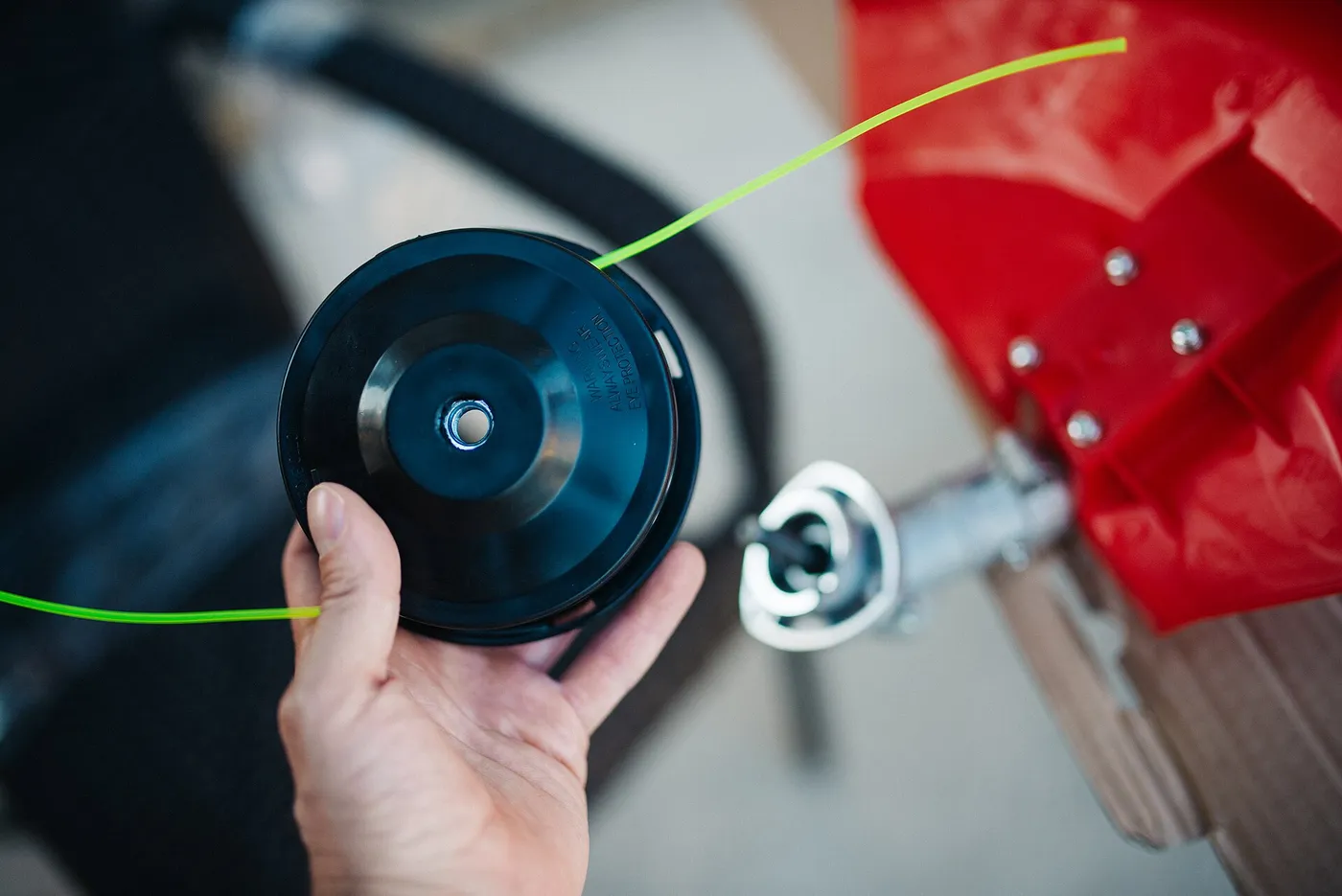
What a trimmer head actually does
A string trimmer cuts by whipping a short length of nylon line around at high speed. The line wears and breaks in use, so every head has to solve the same problem: how to get more line out without stopping, taking the head apart or cutting your hand. Bump feed, automatic feed and fixed line are three different answers, and each one carries a different set of habits and failure modes.
The right head depends less on brand and more on how you cut. A person trimming a tidy lawn edge for ten minutes needs something different from a person clearing a fence line of woody weeds. This guide walks through each type, how it works, where it jams and how to choose.
How a bump feed head works
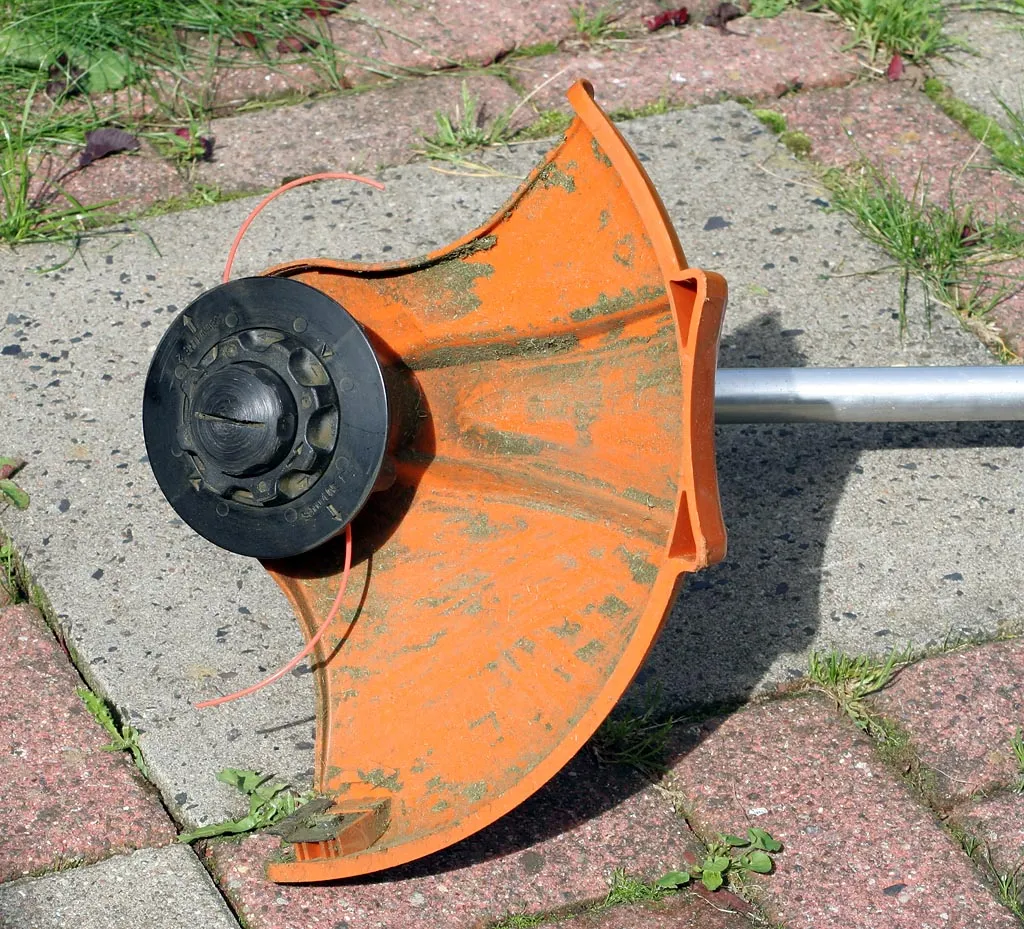
A bump feed head holds a spool of line inside a housing. A spring pushes the spool toward its seat, and a set of notches or teeth keeps it locked while the head spins. When you tap the head on the ground at speed, the spool lifts against its spring, the notches release for an instant, and centrifugal force pulls a measured amount of line out through the eyelets.
The cutter guard has a small blade that trims the new line to its working length. If the line is already at full length, tapping does nothing useful. If it is short, a tap or two restores it.
Strengths and limits of bump feed
- Simple and cheap to repair. A spool, a spring and a cap are about all that can wear out.
- Works on gas and battery trimmers alike. It needs no electronics or speed sensing.
- Gives you control. You decide when to feed, so you do not waste line on a good edge.
- Needs a tap. It demands a pause, a bump on soft ground and a bit of judgment.
- Can jam on fused line. Line that has melted together inside the head will not feed.
Banging hard on concrete is a common mistake. It wears the housing, throws line out in excess and can crack the cap. A light tap on turf is enough.
How an automatic feed head works
An automatic feed head is designed to advance line without you tapping it. Designs vary by brand, but the common idea is that the head senses a change when the line gets short, either through a drop in drag on the line or a change in spool speed, and releases a short length on its own. Some heads advance a set amount each time you release and re-pull the trigger. Others advance when the line wears to a certain point.
The appeal is obvious: keep cutting, keep the trimmer moving, and the head keeps itself topped up. That convenience is the reason many battery trimmers ship with this style.
Strengths and limits of automatic feed
- No tapping. You cut and the line manages itself.
- Quicker rhythm on long edges. It suits large lots with long runs of fence or path.
- Can overfeed. Hard edges and abrasive surfaces can grind line away faster than a bump head would.
- More moving parts. More parts means more things that can stick or wear.
- Brand specific. The mechanism and spool type vary, so check what replacement spools your model takes.
How a fixed line head works
A fixed line head has no feed mechanism at all. It holds pre-cut lengths of line, or short pieces threaded through the head, that stay at a set length until they wear out and you replace them. Some versions use thick molded strips, and some use short lengths of heavy line pushed through holes in the head and locked in place.
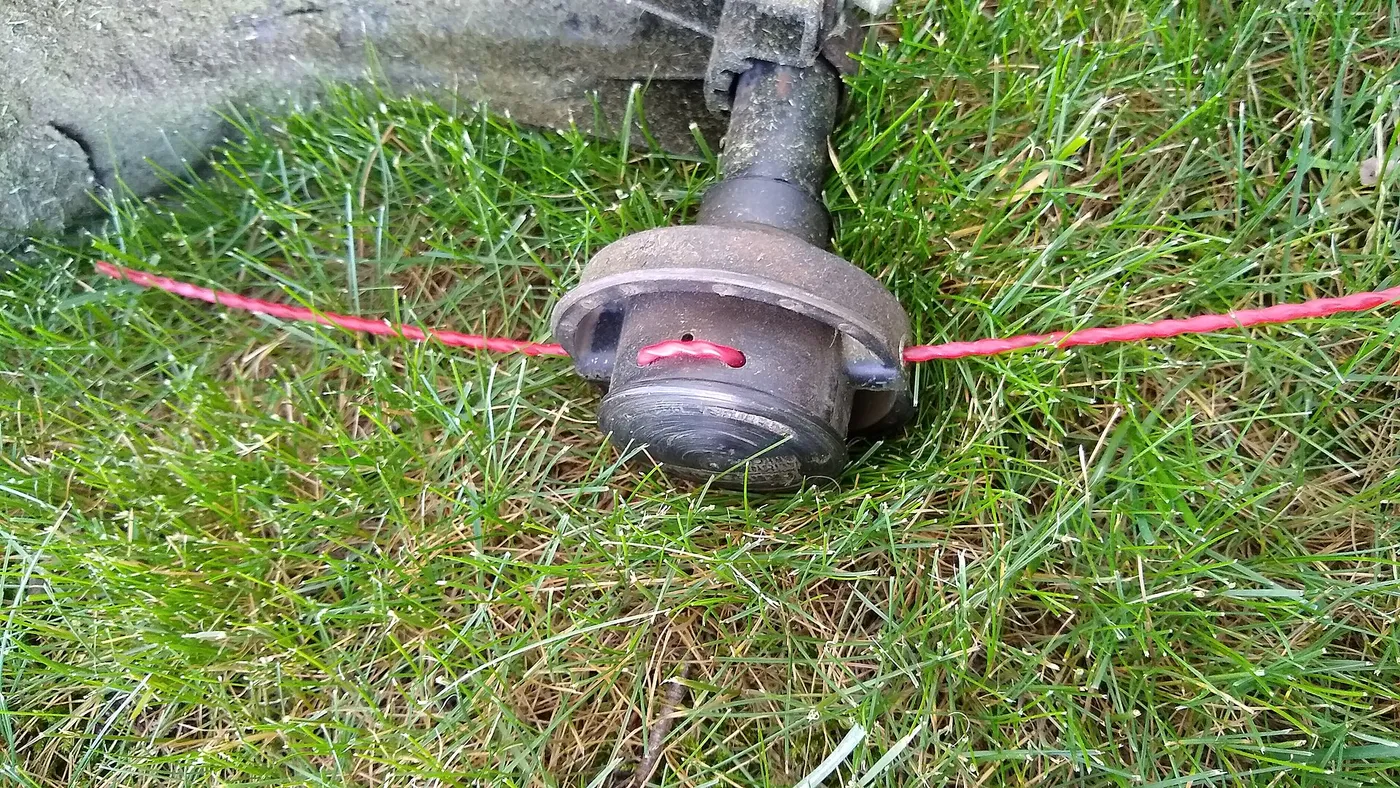
The trade-off is the opposite of automatic. You gain simplicity and toughness, since nothing can fuse inside the head. You lose the ability to keep cutting when the line wears down, so you stop and replace pieces more often.
Side by side
| Feature | Bump feed | Automatic feed | Fixed line |
|---|---|---|---|
| How line advances | You tap the head on the ground | Head advances line itself | It does not, you replace pieces |
| Effort while cutting | Pause and tap | Lowest | Stop to replace |
| Line waste | Low if tapped lightly | Can be higher | Lowest, nothing feeds |
| Jam risk | Moderate, fused or crossed line | Moderate, mechanism sticking | Very low |
| Best on | General lawn and garden edges | Long, frequent trimming runs | Brush, weeds and rough edges |
| Repairs | Simple, common parts | Brand specific parts | Simple |
Why line jams and how to prevent it
Most feed problems come from the same few causes, and they apply to every feeding head. Knowing them saves more frustration than choosing the perfect head.
- Fused line. Friction heat can melt adjacent coils together, especially if the line is too thin for the head, dry and brittle, or wound loosely.
- Crossed winding. Line that crosses over itself on the spool binds as it unwinds. Wind it flat and tight, in the direction shown on the spool.
- Wrong diameter. A line too thick for the eyelets will not exit freely. A line too thin may cut poorly and wear fast. Use the diameter the manual specifies, and see our guide to trimmer line sizes and shapes for how to read it.
- Dry, old line. Nylon absorbs and loses moisture over time. Old line becomes brittle and snaps. Storing a spool in a sealed bag helps.
- Worn eyelets. A groove worn into the eyelet edge can pinch or fray the line.
Matching the head to the power source
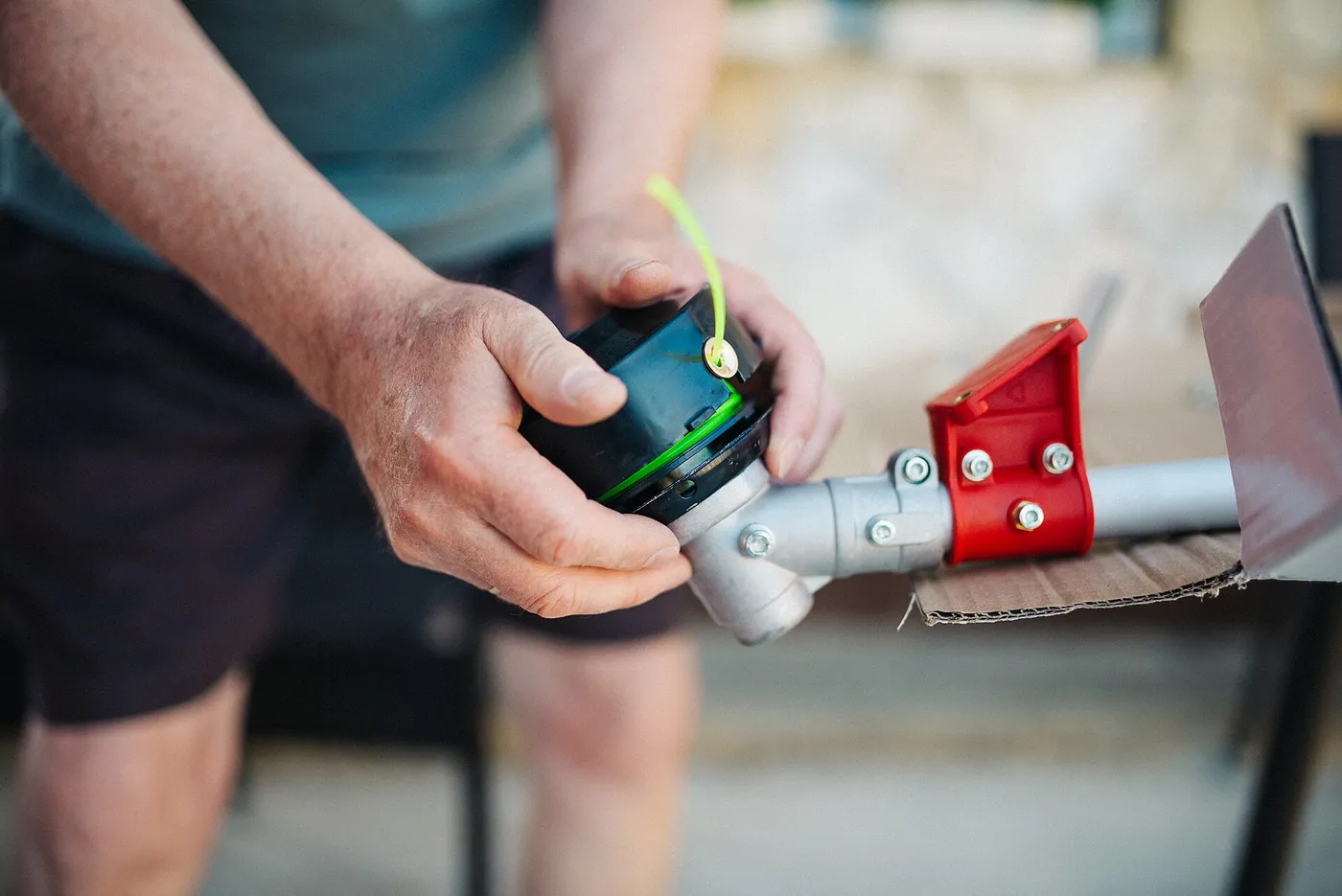
A head only works as well as the trimmer behind it. A bump feed head asks the shaft to reach full speed before you tap, which most gas and strong battery trimmers do easily. A low-power trimmer that bogs down when loaded can fail to feed because the head never reaches the speed that releases the line.
That is one reason brushless battery trimmers have become popular, since they hold their speed under load and make any feeding head behave better. If you are comparing models, our bump feed cordless trimmer guide lines up options in that style, and our broader cordless string trimmer comparison covers how head type fits among the other specs. For the motor side, see brushless cordless trimmers.
Line shape and head compatibility
The line itself matters, and so does its fit to the head. Round line is the common choice for general use, while shaped lines such as square, twisted or multi-sided cut more aggressively and make more noise. Heavier line works best with a head and motor strong enough to turn it.
Do not assume any line fits any head. Eyelet size, spool design and the length of the cut-off blade are all set for a range of diameters. Use the diameter the head and trimmer are rated for, and avoid fitting a thicker line on a weaker trimmer in the hope of getting more cutting power. It tends to bog the motor and wear the pack down.
Choosing by job
| Your job | Best head type | Why |
|---|---|---|
| Regular lawn edging on a small yard | Bump feed | Simple, repairable, low waste |
| Long fence lines and driveways | Automatic feed | Keeps cutting without pauses |
| Weeds, brush and woody stems | Fixed line | Heavy, nothing to jam |
| Beginner who wants fewer decisions | Automatic or bump feed | Both are easy to run |
| Battery trimmer on a modest pack | Bump feed | Fewer moving parts to waste energy |
| Rocky or stony edges | Fixed line | Short pieces take hits without feeding waste |
If you already own a platform of batteries, choosing within it is more useful than chasing a head type. Look at the options in our 40V cordless trimmer guide to see how head styles show up across that voltage class.
Reloading a feeding head, step by step
Reloading is the chore that decides whether you like your head. Spool designs differ, so follow your manual, but the pattern is the same on most bump and automatic heads.
- Remove the battery or disconnect the spark plug wire so the trimmer cannot start.
- Open the head by pressing the tabs or turning the cap, and lift out the spool. Note which way it sits and which way the line winds.
- Clear packed grass and dirt from the housing and from the spool seat.
- Cut line to the length the spool calls for, usually marked on the spool or in the manual.
- Fold the line in half, seat the fold in the notch at the spool center, and wind both halves in the direction of the arrow, flat and side by side.
- Leave a few inches of each end free and lock them in the holding slots.
- Thread the ends through the eyelets, refit the spool and cap, and release the line from the slots.
Pre-wound spool kits skip most of that and are useful if you hate winding. They cost more per foot of line, but a swap takes under a minute.
Heat, wet grass and how line behaves
Nylon is sensitive to its environment. In hot, dry conditions, line dries and becomes brittle, snapping near the eyelet. Cold stiffens it and can make it chip. Damp grass wraps around the head and packs the housing, which slows the spool and masks a feeding problem as a power problem.
A few habits keep line behaving. Trim wet grass in short passes and pause to clear the head. Keep spare line in a sealed bag, away from a hot garage. If line seems brittle, some owners soak it in water overnight before loading it, but check your manual first, since makers differ on whether they recommend this.
The hidden cost of tapping
Bump feed gets criticized for the tap, but the tap has a hidden benefit: it makes you check the line. Every time you bump, you get a moment to see whether the line is short, frayed or missing. With automatic feed, a line that has snapped off at the eyelet can go unnoticed until the trimmer is cutting with a stub.
The reverse is also true. Tapping too often or too hard wastes line and wears the housing, and hitting concrete is a leading cause of cracked heads. If you choose bump feed, tap lightly on soft ground, listen for the line to feed, and stop when it does.
Replacing or upgrading a head
Many trimmers let you swap heads, and a head that fits your shaft thread and spool size can change how the machine behaves. Before you buy a replacement, check three things: the thread size and direction on the shaft, the line diameter range the head supports, and whether your trimmer's motor is strong enough for the head you want.
Fixed line and blade attachments suit tough ground, but they are heavier and can strain a weak motor. Treat any swap as a trade, and check your manual for what the maker allows. An unapproved head or blade can void a warranty and raise injury risk.
If you cannot decide, buy for the worst job in your yard, not the average one. A trimmer that handles the overgrown corner by the shed will handle the easy lawn edge without complaint, while the reverse is rarely true. Think about where the line actually goes: along soft turf, against stone, or into woody weeds, and pick the head that survives that surface.
Cost and maintenance of each type
Day to day costs differ in what gets used up. A bump feed head uses line and eventually a worn spool or cap. An automatic head uses line, and its mechanism can be more costly to replace if it wears. A fixed line head uses cut pieces, which are cheap, but you use more of them as they wear and need replacing.
Whichever head you choose, a few habits extend life. Keep a spare spool of the right diameter. Clean grass and dirt from the head after use, because packed debris stops the spool from moving. Check the eyelets for wear, and replace the head if the cap cracks, since a failing cap can throw parts.
Safety notes
A trimmer head throws debris at speed. Wear eye protection, long trousers and sturdy shoes. Disconnect the battery or spark plug before reloading line or clearing a jam, since an accidental start can cause serious injury. Follow the manual for how to reload your head, and never bypass the cutter guard, because it also limits the line to a safe working length.
Frequently Asked Questions
Is bump feed better than automatic feed?
Neither is better in every case. Bump feed is simple, cheap to repair and wastes little line when tapped lightly. Automatic feed saves tapping and suits long runs. Choose based on how you trim and how much you value convenience.
Why does my trimmer head not feed line?
The usual causes are fused or tangled line, the wrong line diameter, a worn head or a trimmer that has not reached full speed when you tap. Take the head apart, check for melted coils, rewind the line flat, and use the diameter your manual specifies.
Can I use thicker line to cut tougher weeds?
Only within the range your trimmer and head are rated for. Thicker line demands more power, and fitting it to a weak trimmer can bog the motor, reduce runtime and strain the head. If you regularly cut tough growth, consider a fixed line head or a more powerful trimmer.
Are fixed line heads good for homeowners?
They suit rough, weedy or rocky ground where feeding heads jam or waste line. For ordinary lawn edging they are less convenient, since you stop to replace line when it wears short.
How often should I replace trimmer line?
Replace it when it is worn to a stub, brittle, fused or frayed, not on a fixed schedule. Fresh line stored in a sealed bag lasts longer than old line left in a hot shed.
Bottom line
For most yards, a bump feed head is the dependable default. It is simple to repair, tolerant of different trimmers and cheap to keep running. Choose automatic feed if tapping bothers you and you cut long runs regularly, and choose a fixed line head for brush, rocky edges and rough ground where jams cost you more time than replacing line does. Whichever you pick, match the line diameter to your trimmer, wind it flat, and keep the head clean.