
Amazon affiliate links - we earn a commission.Affiliate disclosure

Buying guide · 12 min read · Updated 2026-11-07

Best 1/3 HP Sump Pumps (2026)

Six 1/3 HP sump pumps compared on housing, flow at lift, float switch and warranty, for basements where a modest motor is all you need.

James MillerBy James MillerLead Machine Editor6 machines comparedSpec-sheet verified
Best 1/3 HP Sump Pumps

At a glance

Our top picks

Side by side

Spec comparison

One third of a horsepower is the quiet workhorse size of the sump pump world. It is enough motor for the average residential pit, it draws modest current on a standard household circuit, and it is the size most manufacturers build their reputations on. The category is crowded, though, and the differences hide in the housing, the switch and the honest flow numbers.

Because the motor is the same fraction of a horsepower in every pump here, you cannot rank them by the label. The rating that matters is how much water each one moves at the height your discharge actually climbs, and what stops it from doing so when the storm lasts longer than expected.

Before you buy

6 Criteria to Look For Before Buying a 1/3 HP Sump Pump

  1. 01

    Is 1/3 HP enough

    A 1/3 HP motor is the right size for most residential pits, moving roughly 2,000 to 2,700 GPH at a typical 10 foot rise. If your pit fills faster than that during storms, or your discharge climbs far higher, step up. The Wayne SPF33 shows the trend: 3,750 GPH at zero lift but 2,718 GPH at a stated height. A good rule is to time how long the pit takes to fill a few inches during heavy rain, convert that to gallons per hour, and add a margin of 50 percent before you decide that 1/3 HP is enough. A pit that fills in under two minutes needs more than this size.

  2. 02

    Housing and heat

    Heat kills small submersibles. The Zoeller M53 uses cast iron, the Liberty 237 uses finned aluminum and the Wayne CDU790 uses coated steel. Metal housings cool the motor in pit water; thermoplastic ones like the Superior 92372 rely on moderate duty. A pump with an iron body also tolerates a pit that runs hot, such as one beside a furnace or water heater drain.

  3. 03

    Float or sensor

    The float is the most common failure point. A vertical float such as the SPF33's fits narrow pits, and an electronic sensor like the Cleartide's removes the float entirely. Whatever you choose, test it quarterly. A tethered float needs more pit width than a vertical one, so check the pit diameter before ordering, and keep the float clear of the discharge pipe and the power cord.

  4. 04

    Flow at lift

    A 1/3 HP motor loses a lot of output as water climbs. The SPF33 loses about 28 percent at the stated lift. Compare pump curves at your real height instead of box labels. Rate your own discharge: count vertical feet from the pump to the pipe exit, then add about one foot of equivalent head for every ten feet of straight pipe and for each elbow.

  5. 05

    Suction and leftover water

    Top-suction pumps like the CDU790 stop a few inches above the pit floor, which leaves water behind. Bottom-suction and sensor pumps drain lower. A pit that stays wet can grow mold, so choose to suit the space. A pit that stays damp is also a humidity source for the basement, so a lower stop level may be worth a slightly higher cost.

  6. 06

    Warranty and parts

    The CDU790 carries three years and is assembled in the USA. Utility pumps with no listed warranty are fine for spares but not for a pit you cannot afford to lose. Keep the receipt and register the pump, since some warranties require proof of date and a working check valve.

Detailed reviews

The 6 best 1/3 hp sump pumps, explained

01
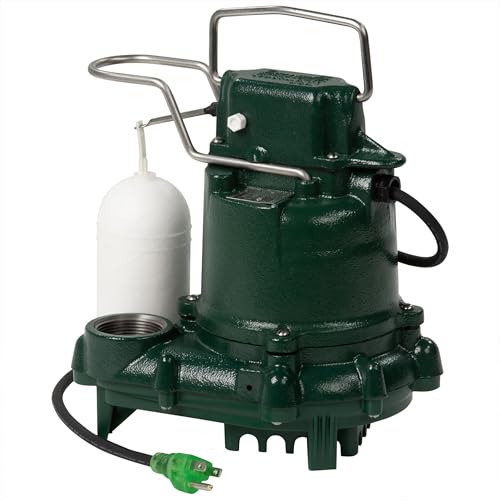
Zoeller M53 Mighty-mate 1/3 HP cast iron submersible
1/3 HPCast ironVortex impellerAutomatic float
Check price on Amazon
Best for: A permanent residential pit where longevity matters more than cost.

The M53 is the benchmark for a 1/3 HP pit pump. The motor, switch case and pump housing are all cast iron, which turns the whole body into a heat sink that carries motor heat into the pit water. Heat is what kills small submersibles, so this is the reason it lasts.

A non-clogging vortex impeller sits recessed from the flow path and passes small solids without wearing against them. The switch is float activated and sealed in the iron case, so the part most likely to fail in a cheaper pump is better protected here. It costs noticeably more than the Wayne CDU790 at the same horsepower.

The tradeoff is that you pay for a name and a build, not for a bigger motor or a higher published flow. On a pit with modest inflow that is a fair trade. Check the float travel annually, clear the screen, replace the check valve before it fails, and expect long service. Year-three reality is mostly about the switch and the check valve, not the motor. If the pump has been cycling a few times a week, expect it to look and sound the same as day one.

What works

  • All-iron body moves heat into the pit water
  • Vortex impeller keeps wear off the blades
  • Sealed iron switch case protects the float
  • Long record in residential service

Watch out for

  • Highest cost of the 1/3 HP group
  • No published flow at lift in the data
  • Heavier to lift out than plastic pumps

Spec sheet

Motor
1/3 HP
Housing
Cast iron motor, switch case and pump
Impeller
Non-clogging vortex
Switch
Float activated, automatic
Category
Permanent pit pump
02
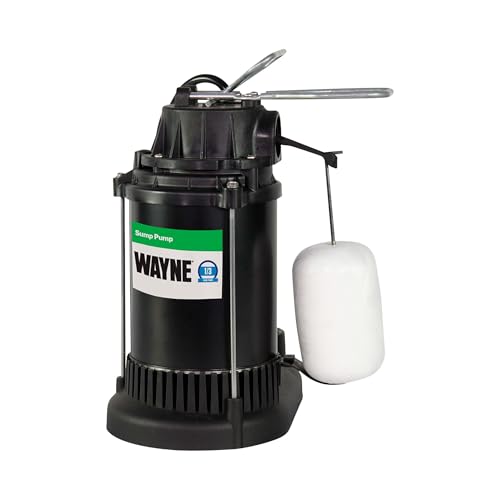
Wayne SPF33 1/3 HP sump pump, 3,750 GPH
1/3 HP3,750 GPH at 0 ftVertical floatCoated steel
Check price on Amazon
Best for: A standard pit where honest flow numbers and a fair price matter.

The SPF33 publishes two flow figures: 3,750 GPH at zero lift and 2,718 GPH at a stated height. That is a 28 percent drop, and having both numbers is more useful than a single maximum. The coated steel and thermoplastic body resists corrosion without the weight of cast iron.

The vertical float switch fits narrow pits and turns the pump on automatically as the water rises. Compared with the Zoeller M53, the Wayne gives you a higher zero-lift rating and a lower price in exchange for a lighter body and shorter pedigree. Compared with the Superior 92372 at 2,880 GPH, it moves more water on paper.

Treat it as the value pick for a standard pit. Test the float twice a year, keep the screen clear and replace the check valve in step with the pump. If you buy it, also buy a spare check valve. The pump will outlast the valve more than once, and a valve swap takes ten minutes with a pipe wrench.

What works

  • Publishes flow at two heights
  • Vertical float fits narrow pits
  • Corrosion-resistant coated steel body
  • Higher rated flow than most 1/3 HP rivals

Watch out for

  • Coated steel sheds heat less well than iron
  • Shorter service record than Zoeller
  • Flow still drops about 28 percent at lift

Spec sheet

Motor
1/3 HP
Flow at 0 ft
3,750 GPH (63 GPM)
Second rating
2,718 GPH (45 GPM) at a stated lift
Body
Coated steel and thermoplastic
Float
Vertical, automatic
03
Wayne CDU790 1/3 HP submersible basement sump pump
1/3 HPTop suction3-year warrantyMade in USA
Check price on Amazon
Best for: A typical basement where a recognized brand and a warranty matter.

The CDU790 is the straightforward 1/3 HP pump for a normal basement. Top suction keeps the intake above the silt on the pit floor and avoids air lock, and the cast iron volute holds its shape where wear concentrates. Stainless fasteners and an epoxy-coated steel motor housing round out a durable build.

A three-year warranty and US assembly give it more support than the generic utility pumps in this group. The weakness of top suction is that the pump quits above the pit floor and leaves a few inches of water behind.

Against the Wayne SPF33 it trades a vertical float for a top-suction intake, and against the Zoeller M53 it trades an all-iron body for a lower cost. It is a sound default. Clear the pit of gravel, inspect the cord and check the valve yearly. Parts and service are easy to find, and a competent plumber can swap one in under an hour.

What works

  • Top suction keeps silt out of the impeller
  • Three-year warranty
  • Stainless fasteners last in damp pits
  • Assembled in the USA

Watch out for

  • Leaves water in the pit when it stops
  • Steel housing less rigid than iron
  • No flow at lift in the data

Spec sheet

Motor
1/3 HP
Intake
Top suction
Housing
Epoxy-coated steel, cast iron volute
Fasteners
Stainless steel
Warranty
3 years
04
Liberty Pumps 237 1/3 HP submersible sump pump
1/3 HPFinned aluminum housingVortex impellerPowder coated
Check price on Amazon
Best for: Homeowners who want metal cooling without cast iron weight.

The Liberty 237 uses a deep-finned, powder coated aluminum motor housing. Aluminum conducts heat quickly and the fins add surface area, so the motor sheds heat into the pit water efficiently while weighing far less than cast iron. A vortex-style impeller reduces clogging and improves flow.

It is a good pick when you want metal cooling without the weight of iron, for instance in a pit where you lift the pump out regularly. Aluminum is lighter and corrosion resistant, though it can be less rigid than iron in rough handling.

Against the Zoeller M53, the Liberty offers a different cooling design at a similar class of price. Expect the same service routine: a bucket test each quarter, screen cleaning and a check-valve inspection yearly. The powder coat can chip if the pump is dragged across concrete, so lift it by the handle or the discharge pipe rather than the cord.

What works

  • Finned aluminum housing sheds heat quickly
  • Lighter than cast iron to lift
  • Vortex impeller reduces clogging
  • Powder coat resists corrosion

Watch out for

  • Aluminum less rigid than iron
  • Few published flow figures in the data
  • Priced near the premium end

Spec sheet

Motor
1/3 HP
Housing
Deep-finned powder coated aluminum
Impeller
Vortex style
Use
Residential groundwater drainage
Role
Primary pit pump
05
Superior Pump 92372 1/3 HP thermoplastic submersible pump
1/3 HP2,880 GPH max25 ft liftVertical float
Check price on Amazon
Best for: A light-duty pit or a spare pump with a vertical float.

The Superior 92372 is a thermoplastic 1/3 HP pump rated for 2,880 GPH, with a 25 foot maximum lift and a 10 foot cord. A vertical float switch controls it automatically and fits narrower pits.

Its plastic body is light and corrosion proof but does not shed heat like iron or aluminum, so it suits pits with moderate duty. The 25 foot lift figure is a shutoff head, not a working flow, so do not read it as a promise at height.

Compared with the Wayne SPF33's 3,750 GPH, it moves less on paper. It is a good lower-cost pit pump or a spare. Check the float and rinse the screen each spring. It shares a 1/3 HP motor with the Zoeller M53, but the price gap is the price of the housing, not the horsepower.

What works

  • Vertical float suits narrow pits
  • Light thermoplastic body
  • 10 ft cord reaches most outlets
  • 25 ft rated lift

Watch out for

  • Lower rated flow than the Wayne SPF33
  • Plastic body runs hotter than metal
  • Lift figure is a shutoff head

Spec sheet

Motor
1/3 HP
Max flow
2,880 GPH (zero lift)
Max lift
25 ft vertical
Body
Thermoplastic
Cord
10 ft
Float
Vertical switch
06
Cleartide 1/3 HP submersible utility pump 2,790 GPH
1/3 HP2,790 GPHAuto sensorCopper-wound
Check price on Amazon
Best for: A spare pump or flood-day utility work with a low start level.

The Cleartide takes a different approach: an electronic water sensor instead of a float. In auto mode it starts at about 1-1/5 inches of water and stops at about 1/5 inch, and a manual mode lets you run it dry-ish for a final pass. A 100 percent copper-wound motor is claimed to run cooler and last longer.

The sensor means no float to tangle on a cord, which is a real advantage, but it is also a newer technology with less long-term history than a mechanical float. It is a utility pump first, suited to flooded floors and cellars.

Against the Zoeller M53 it is a very different machine: lighter, cheaper and more flexible, but not designed to sit in a pit for ten years. Use it as a spare or for flood work. Keep the sensor probes clean, because a film of silt can make the electronic sensor misjudge the water level.

What works

  • Sensor starts at about 1-1/5 inches
  • No float to tangle
  • Copper-wound motor claimed to run cooler
  • Auto and manual modes

Watch out for

  • Sensor has little long-term track record
  • Utility pump, not a pit pump
  • 2,790 GPH is a zero-lift rating

Spec sheet

Motor
1/3 HP copper-wound
Max flow
2,790 GPH (zero lift)
Sensor start
About 1-1/5 inches
Sensor stop
About 1/5 inch
Modes
Auto and manual

Spec sheet decoder

What the numbers on the box really mean

The specs manufacturers lead with, translated into what they tell you about real-world performance.

1/3 HP

Motor size, which sets startup current and sustained capacity. A 1/3 HP motor draws roughly 4 to 6 amps running and more at startup.

Watch forAll six pumps share it, so rank them on housing and flow at lift.

GPH at 0 ft

Best-case flow with no lift. Always check the second figure, not the first.

Watch forThe SPF33's 3,750 GPH drops to 2,718 GPH at a stated lift.

Vortex impeller

An impeller recessed from the flow path that passes small solids.

Watch forThe M53 and Liberty 237 use vortex designs. Gravel will still damage any impeller.

Top suction

An intake above the pit floor that avoids silt.

Watch forThe CDU790 leaves a few inches of water behind.

Copper-wound

A winding material that runs cooler than aluminum.

Watch forThe Cleartide claims copper windings.

Methodology

How We Evaluated These 1/3 HP Sump Pumps

Cooling

We compared cast iron, finned aluminum, steel and thermoplastic housings, since heat is what ends small pumps. The Zoeller M53 and Liberty 237 lead. We also noted that a lighter housing is easier to pull but may be less rigid.

Flow at lift

We looked for flow at more than one height. The Wayne SPF33's 3,750 and 2,718 GPH figures set the standard. Where flow at lift was missing, we treated the maximum as a ceiling.

Switch reliability

We weighed vertical floats, tethered floats and electronic sensors against the failure modes of each. A pump with no float at all, like the Cleartide, scored differently from one with a vertical float.

Ownership

We considered warranty length and parts support. The CDU790 offers three years. Spare parts availability counted too.

Fit and duty

We separated pit pumps from utility pumps so a spare was never ranked against a primary.

Decision guide

How to Choose the Right 1/3 HP Sump Pumps

By Pit Condition

SituationPickWhy
Permanent pit, want longest lifeZoeller M53All-iron body
Normal basementWayne CDU790Three-year warranty
Want honest flow at liftWayne SPF33Two published flow figures
Pit you lift oftenLiberty 237Light finned aluminum
Spare for flood daysCleartide 1/3 HPAuto sensor with low start

By Budget

TierPickWhy
LowestCleartide 1/3 HPUtility pump with auto sensor
LowSuperior 92372Thermoplastic with vertical float
MidWayne SPF33Higher rated flow
UpperWayne CDU790Warranty and brand
HighestZoeller M53Cast iron longevity

Cast Iron vs Aluminum vs Plastic

Metal bodies

The Zoeller M53 and Liberty 237 move heat into the pit water. Pick these for a primary pump.

Plastic bodies

The Superior 92372 and Cleartide are light and cheap. Pick these for spares and moderate duty.

Metal for primary duty, plastic for spares.

Float Style

PreferencePickWhy
Narrow pitWayne SPF33Vertical float
No float to tangleCleartide 1/3 HPElectronic sensor
Sealed switchZoeller M53Switch in iron case
Simple verticalSuperior 92372Vertical float switch

For Average Basements Specifically

Look for

A pump that matches inflow, not one that claims the biggest number. Time how fast your pit fills.

In this comparison

The Wayne CDU790 and SPF33 cover typical inflow with warranty and published flow.

When to Spend More

Spend more if

The pit is your only protection. The Zoeller M53 or Liberty 237 give better cooling.

Save if

You want a spare. The Superior 92372 or Cleartide suffice.

Ownership

Maintenance schedule

The upkeep that decides whether this machine lasts two seasons or ten.

TaskIntervalWhy it matters
Bucket testEvery 3 monthsPour water in the pit and confirm the pump starts and stops. A stuck float is the usual failure. Do it before the wet season and again after any long dry spell.
Clean the screenEvery 6 monthsSilt chokes the intake and heats the motor.
Check valve inspectionEvery 6 monthsBackflow causes short cycling. Replace it every few years even if it seems fine.
Cord checkYearlyA damaged cord is a hazard.
Clear the pitYearlyDebris jams floats and impellers. Scoop out silt and stray debris so the pump does not suck it in.

FAQ

Frequently Asked Questions

Is 1/3 HP enough for a basement?

For most homes, yes. It moves roughly 2,000 to 2,700 GPH at a typical rise. If the pit has flooded before, step up. A pump that cycles every minute in a storm is a sign the pit needs a larger model.

1/3 HP vs 1/2 HP, which should I buy?

Choose 1/2 HP if the discharge climbs high or inflow is heavy. Otherwise 1/3 HP draws less current and costs less. A 1/2 HP pump also leaves more margin during a long storm.

Why does flow drop at lift?

The pump must push water against gravity and friction. A pump like the SPF33 loses about 28 percent at its stated lift. Always read the second flow figure on the spec sheet.

Does a 1/3 HP pump need its own circuit?

Usually not, but a dedicated circuit with a GFCI is best practice. Check local code.

How long do 1/3 HP pumps last?

A well-built pit pump lasts several years, depending mostly on how often it cycles. Replace the check valve and test the float regularly.

Can I use a utility pump as a sump pump?

Only as a spare. Utility pumps lack switch life and cooling for a permanent pit.

Bottom line

The short version

Browse more 1/3 hp sump pumpson Amazon →
James Miller, Lead Machine Editor

About the author

James Miller

Lead Machine Editor, MachineFanatic

James Miller leads MachineFanatic's buying guides, turning spec sheets, manuals and owner feedback into clear verdicts on power tools, outdoor power equipment, shop machines and kitchen machines.

More from James →

Keep reading

Related guides