
Amazon affiliate links - we earn a commission.Affiliate disclosure

Buying guide · 13 min read · Updated 2026-11-07

Best 16000 BTU RV Air Conditioners (2026)

Five 16,000 BTU rooftop RV air conditioners compared on heat pump vs PTC heat, ducted vs non-ducted fit, dual-compressor design and the 12V control feed.

James MillerBy James MillerLead Machine Editor5 machines comparedSpec-sheet verified
Best 16000 BTU RV Air Conditioners

At a glance

Our top picks

Side by side

Spec comparison

MachineCoolingHeatingNoiseDuctPower
TOSOT GO Cool 16,000 BTU heat pump RV AC with WiFiBest OverallTOSOT GO Cool 16,000 BTU heat pump RV AC with WiFi16,000 BTU12,500 BTU heat pump43 dB claimedNon-ductedn/a
FOGATTI 16K BTU non-ducted cooling-only RV ACBest Dual-Compressor ValueFOGATTI 16K BTU non-ducted cooling-only RV AC16,000 BTUn/an/aNon-ducted115V AC plus 12V DC
FOGATTI 16,000 BTU ducted cooling-only RV AC, 59 dBBest Ducted CoolingFOGATTI 16,000 BTU ducted cooling-only RV AC, 59 dB16,000 BTUn/a59 dB listedDucted115V AC plus 12V DC
16,000 BTU 115V non-ducted AC with 1,500W PTC heat, 550 CFMBest Airflow16,000 BTU 115V non-ducted AC with 1,500W PTC heat, 550 CFM16,000 BTU1,500W PTC (5,120 BTU)n/aNon-ducted115V
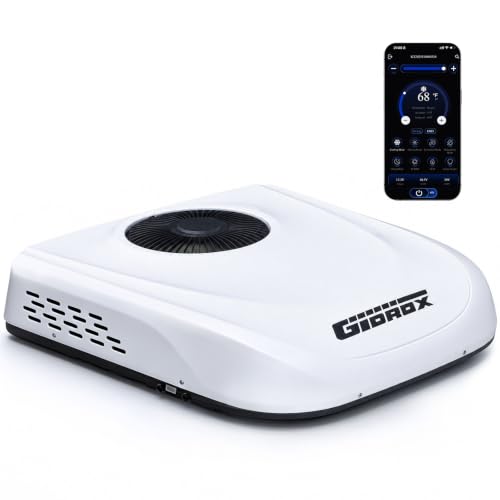
Gidrox 115V inverter heat pump RV AC, dual-outletBest Dual-Outlet DesignGidrox 115V inverter heat pump RV AC, dual-outlet13,500 BTU per body text12,000 BTU heat pump43 dB claimedn/an/a

Sixteen thousand BTU sits between the common 15,000 BTU size and the big 18,000 BTU units. It is aimed at long trailers, fifth wheels and motorhomes with one air conditioner and plenty of sun on the roof.

Because the cooling capacity is so close across models, the real choices are the heating method, the duct layout and the electrical requirements. Several of these units also need a separate 12V control feed, which surprises first-time installers.

Before you buy

6 Criteria to Look For Before Buying a 16000 BTU RV Air Conditioner

  1. 01

    Verify the real BTU rating

    The Gidrox is titled 16,000 BTU but its body text says 13,500 BTU of cooling. A mismatch between title and nameplate is a warning sign. Ask for the nameplate rating before you order, and compare it with the TOSOT or FOGATTI numbers. Marketplace titles often round up, so the nameplate sticker on the unit is the only number that matters for generator sizing. That one check can save you from sizing a generator for the wrong number.

  2. 02

    The 12V control feed

    FOGATTI units state they need both 115V AC and 12V DC connections, and several others do too. A rooftop unit with no 12V feed will not run its controls. Check your wiring before the roof comes off. A 12V feed also needs a fuse, typically small, so use the manual's wire gauge and not a lamp wire. Tracing the wire at the roof opening takes ten minutes and prevents a return. Voltage at the roof can sag under a long, thin control wire, so use the gauge the manual specifies.

  3. 03

    Heat pump versus PTC

    TOSOT lists a 12,500 BTU heat pump and the roof unit lists a 1,500W PTC at 5,120 BTU. The heat pump gives far more heat per watt in mild weather but fades in cold. PTC works anywhere but draws about 12.5 amps. For campers who winter in the cold, neither is a primary heater, so keep the furnace working. In practice, many owners use a heat pump to dodge the morning chill and a furnace for the real cold.

  4. 04

    Dual compressors

    FOGATTI uses two compressors, which can stage the load. In theory that smooths starting surge. Ask about the startup draw before relying on it with a small generator. Redundancy is a side benefit, since one compressor failing may leave partial cooling. Two-stage designs also tend to run quieter at partial load. Ask the seller for the startup amp figure and compare it with your generator's surge rating.

  5. 05

    Ducted or non-ducted

    Ducted units send air to ceiling vents, while non-ducted blow from one assembly. The ducted FOGATTI lists 59 dB, louder than the 43 dB claims on non-ducted rivals. Pick based on your existing ceiling. Noise also depends on duct length and register size, so a ducted unit can be quieter at the vent than its label. Check also whether the unit's ceiling assembly mounts with the same bolt pattern as your current one.

  6. 06

    Airflow and layout

    The PTC roof unit lists 550 CFM, Gidrox 330 CFM. More airflow helps a long rig, but also adds noise. Match airflow to length. Too much airflow can feel drafty over a bed, so choose a unit with fan speed steps. Airflow figures are measured at the fan, not at the vent, so ducted layouts deliver less than the label.

Detailed reviews

The 5 best 16000 btu rv air conditioners, explained

01
TOSOT GO Cool 16,000 BTU heat pump RV AC with WiFi
16,000 BTU12,500 BTU heat43 dB claimWiFi + remote
Check price on Amazon
Best for: Owners who want one unit for cooling and spring or fall heat.

The GO Cool pairs 16,000 BTU of cooling with a 12,500 BTU heat pump, WiFi and remote control, and a noise claim of 43 dB that the maker says is 32 percent quieter than standard RV air conditioners. A heat pump delivers warmth by reversing the refrigerant cycle, so in spring and fall it can take over from a propane furnace and save fuel. The listing says it works over a wide range of ambient temperatures, but heat pumps always lose capacity as it gets colder.

The features cost money and complexity. It sits in the upper-middle price tier, and a WiFi-connected appliance adds another thing that can go wrong. The 43 dB number is a maker claim, and a ceiling-mounted compressor is audible from the bed regardless. Compared with the FOGATTI units, it adds heat and quiet claims; compared with the PTC unit in this guide, it heats far more efficiently in mild weather.

Ownership is typical for a modern rooftop unit. Clean the filter monthly, wash the condenser coil each year and verify the roof gasket every spring. Fit a soft start if you run on a small generator, and keep a propane furnace for freezing nights.

What works

  • 12,500 BTU heat pump
  • WiFi and remote control
  • 43 dB claimed noise level
  • Non-ducted fit with standard opening

Watch out for

  • Upper-middle price tier
  • Heat pump fades below freezing
  • Connected features add failure points

Spec sheet

Cooling
16,000 BTU
Heating
12,500 BTU heat pump
Noise
43 dB claimed
Control
WiFi and remote
Duct
Non-ducted
02
FOGATTI 16K BTU non-ducted cooling-only RV AC
16,000 BTUDual compressorsHIPS shell115V + 12V
Check price on Amazon
Best for: Cooling-only owners who like staged compressors.

FOGATTI uses dual compressors in a cooling-only 16,000 BTU unit. Two smaller compressors can stage up and down, running one at partial load and both on the hottest days, which can smooth out power demand compared with one large single-speed compressor. The HIPS shell resists impact and UV, a plus on a roof that sees sun and branches.

The listing makes a point of stating that the unit needs both 115V AC and 12V DC connections, which is a useful honest note. Without a clean 12V feed at the roof, the controls will not work, so check your wiring before ordering. It has no heater, so it suits owners who already have a furnace. It lands in the middle of the price range.

Ownership centers on the 12V feed and the usual filter, coil and gasket care. If the unit refuses to start, test the control voltage first because low 12V is a frequent culprit. Because it is cooling only, it keeps the electrical story simple: one big compressor circuit and no heater element to add to the draw.

What works

  • Dual compressors stage the load
  • Impact and UV resistant HIPS shell
  • Clear power requirement stated
  • Non-ducted standard fit

Watch out for

  • No heating function
  • Needs both 115V and 12V connections
  • Middle price tier

Spec sheet

Cooling
16,000 BTU
Compressors
Dual high-efficiency
Shell
HIPS impact and UV resistant
Power
115V AC plus 12V DC
Duct
Non-ducted
03
FOGATTI 16,000 BTU ducted cooling-only RV AC, 59 dB
16,000 BTUDucted59 dB listedDual compressors
Check price on Amazon
Best for: Rigs with ceiling ducts that need even distribution.

This ducted version is the same platform in a configuration for rigs that route air through ceiling plenums. Dual compressors and eco-friendly refrigerant carry over, and the listing gives a noise figure of 59 dB, noticeably higher than the heat pump rivals' claims.

Ducting spreads air to multiple vents, which helps in a long rig. The cost is that a ducted install must match your existing duct layout. At 59 dB it is the noisiest unit here, so it suits owners who value distribution over silence. It sits in the upper-middle tier. Compared with the non-ducted FOGATTI, it trades quiet for coverage.

Ownership includes inspecting duct seals, since leaks dump cooled air into the ceiling cavity, plus the filter, coil and 12V feed checks. Inspect the duct boot connections when you install, because loose boots are the most common source of lost cooling. If you are replacing an older ducted unit, bring photos of the ceiling assembly to the seller to confirm the match.

What works

  • Ducted layout for multi-vent coverage
  • Dual compressors
  • R32 refrigerant
  • Clear 59 dB figure

Watch out for

  • Loudest listed noise here
  • Cooling only
  • Needs duct compatibility

Spec sheet

Cooling
16,000 BTU
Duct
Ducted
Noise
59 dB listed
Compressors
Dual high-efficiency
Power
115V AC plus 12V DC
04
16,000 BTU 115V non-ducted AC with 1,500W PTC heat, 550 CFM
16,000 BTU1,500W PTC550 CFMNon-ducted
Check price on Amazon
Best for: Budget buyers who want heat and strong airflow.

This rooftop unit combines 16,000 BTU of cooling with a 1,500W PTC ceramic heater rated at 5,120 BTU per hour, and it lists the highest airflow in the guide at 550 CFM. The heater is resistance style, so it works at any temperature but draws about 12.5 amps on top of the base load.

The heating is modest, so it suits taking the chill off. Strong airflow helps move cool air through a long trailer. The brand is unnamed in the listing, which is a caution for support, though it sits in the lowest price tier. Compared with the TOSOT, it heats less efficiently; compared with the FOGATTI, it adds a heater at a lower tier.

Ownership is standard: filter, coils, gasket and terminals. Confirm warranty terms before buying, because support is the main unknown. Run the heater only when shore power is solid, since it adds to the base load. With no brand named in the listing, ask where warranty claims go before you buy.

What works

  • 550 CFM airflow
  • 1,500W PTC heater included
  • Lowest price tier
  • Non-ducted install

Watch out for

  • Unclear brand support
  • Resistance heat is power hungry
  • Only 5,120 BTU of heat

Spec sheet

Cooling
16,000 BTU
Heating
1,500W PTC (5,120 BTU)
Airflow
550 CFM
Power
115V
Duct
Non-ducted
05
Gidrox 115V inverter heat pump RV AC, dual-outlet
Inverter12,000 BTU heat330 CFM43 dB claim
Check price on Amazon
Best for: Buyers who value an inverter and wide-angle airflow.

The Gidrox is titled 16,000 BTU, but its feature text lists a 13,500 BTU cooling capacity, so read the listing closely and confirm the real rating before buying. It pairs an inverter compressor with a heat pump rated at 12,000 BTU, 330 CFM of airflow and a dual-sided outlet with a 100 degree adjustment range meant to cover a 35 foot rig.

The listing claims about 65 percent energy savings against standard heaters, which is a maker claim. The inconsistency in the cooling number is the main caution, and a newer brand adds support risk. It sits at the top price tier of the group. Compared with the TOSOT, it has a similar heat pump but less certainty about cooling capacity.

Ownership is routine: clean the filter and coils, check the gasket and verify the 12V feed. Ask the seller to confirm the nameplate rating in writing. The wide outlet is a smart idea for a long rig, as it throws air toward both ends. If the seller confirms the real cooling number is 13,500 BTU, treat it as a 13,500 BTU heat pump and compare it against that class instead.

What works

  • Inverter compressor
  • 12,000 BTU heat pump
  • Dual-sided wide-angle outlet
  • 43 dB claim

Watch out for

  • Cooling capacity is listed inconsistently
  • Top price tier
  • Newer brand support

Spec sheet

Cooling
13,500 BTU per body text
Heating
12,000 BTU heat pump
Airflow
330 CFM
Outlet
Dual-sided, 100 degree
Noise
43 dB claimed

Spec sheet decoder

What the numbers on the box really mean

The specs manufacturers lead with, translated into what they tell you about real-world performance.

BTU

Heat removed per hour.

Watch forGidrox's cooling text differs from its title.

PTC

Ceramic resistance heating.

Watch forRooftop unit lists 1,500W.

Heat pump

Reverse-cycle heating.

Watch forTOSOT 12,500 BTU, Gidrox 12,000 BTU.

12V DC feed

Control power at the roof.

Watch forFOGATTI requires it.

CFM

Airflow volume.

Watch for550 for the PTC unit.

Methodology

How We Evaluated These 16000 BTU RV Air Conditioners

Listing accuracy

We checked titles against feature text and flagged the Gidrox mismatch. Accuracy matters because buyers size generators and breakers from these numbers. Listing accuracy also tells us something about how carefully a seller supports the product afterwards.

Heating

We compared 12,500 BTU heat pump with 5,120 BTU PTC heat. Heat pump output assumes mild weather, so we noted that limit. A bigger heat number is only valuable if the weather lets the heat pump reach it.

Electrical requirements

We noted the 12V feed and dual-compressor design. A unit that clearly states its power requirements earns trust. Units that need a separate 12V feed were not penalized, only flagged.

Noise claims

We compared 43 dB claims with the FOGATTI ducted 59 dB figure. We treated all dB figures as best case. Duct noise was considered separately from compressor noise.

Value

We judged tiers from the PTC unit up to the Gidrox. The TOSOT earns the top ranking by balancing features, tier and clear specifications.

Decision guide

How to Choose the Right 16000 BTU RV Air Conditioners

By Season

SituationPickWhy
Cooling onlyFOGATTI non-ductedDual compressors
Spring and fall heatTOSOT GO CoolHeat pump
Budget heat16,000 BTU PTC unitLowest tier
Existing ductsFOGATTI ductedMulti-vent
Inverter preferenceGidroxInverter

By Budget

TierPickWhy
Lowest16,000 BTU PTC unitHeat included
MidFOGATTI non-ductedCooling value
Upper-midFOGATTI ducted or TOSOTFeatures
TopGidroxInverter

Heat Pump vs PTC Heat

Heat pump

TOSOT's 12,500 BTU is efficient in mild weather.

PTC

The roof unit's 1,500W element heats anywhere but costs more power.

Mild climate, TOSOT; cold with shore power, PTC. If you only camp in warm months, skip the heat entirely and save the money.

Ducted vs Non-Ducted

RigPickWhy
Has ceiling ductsFOGATTI ductedMatches layout
No ductsTOSOT or FOGATTI non-ductedSimple
Long, openPTC roof unit550 CFM

For Long Trailers Specifically

Look for

High airflow and wide-angle outlets.

In this comparison

The PTC unit lists 550 CFM and Gidrox a wide-angle outlet. Pair either with a soft start if you travel with a small generator.

When to Spend More

Spend more if

You want a heat pump and WiFi, pointing to TOSOT. Also spend more if you want the quiet claim and connected control.

Save if

You just need cooling, pointing to FOGATTI non-ducted. Also save if the rig is under 30 feet, where a smaller unit may suffice.

Ownership

Maintenance schedule

The upkeep that decides whether this machine lasts two seasons or ten.

TaskIntervalWhy it matters
Clean filterMonthly in useAirflow loss freezes the coil. Wash the foam in warm water and dry fully. A dirty filter also raises power use. A clean filter keeps the evaporator from icing and extends compressor life.
Wash coilsYearlyDirty coils raise power use. Use a soft brush and low-pressure water. Bent fins reduce airflow. Do it with the power off and the breaker open for safety.
Check 12V feedSeasonalLow control voltage stops starts. Use a multimeter at the control board to confirm the feed stays near 12 volts when the compressor starts.
Inspect gasketSpringLeaks begin at the seal. Look for dried or cracked sealant and replace worn foam. Photograph the gasket when you open the old unit so you can compare.
Check duct sealsYearlyLeaks waste cooling on ducted units. Reseal any gaps with foil tape rather than cloth tape, which dries out.

FAQ

Frequently Asked Questions

Is 16,000 BTU too big?

For most trailers under 30 feet, yes. It suits long rigs in hot climates. Oversizing leads to short cycling and a clammy cabin. A 13,500 or 15,000 BTU unit often does the job for less.

Can a small generator start it?

Only with a soft start and a generator of about 3,000 watts. Check the generator's surge rating against the unit's startup draw. A 3,000 watt inverter generator is the realistic floor for a unit this size, and 3,500 is more comfortable.

What is the price range?

Tiers run from the PTC unit up to the Gidrox. Prices change, so check listings. Spending more buys heat, WiFi and quieter claims, not more cooling.

Why does it need 12V?

The control board runs on 12V DC. Without it, the display and compressor controls cannot operate. It is a common surprise, so ask your electrician to check before roof work.

Heat pump or PTC?

Heat pump for mild weather. Check your climate before deciding. Consider supplemental heat when temperatures fall below the mid 30s.

Is the Gidrox really 16,000 BTU?

Its text says 13,500 BTU, so confirm before buying. Ask the seller to send the nameplate photo.

Bottom line

The short version

Browse more 16000 btu rv air conditionerson Amazon →
James Miller, Lead Machine Editor

About the author

James Miller

Lead Machine Editor, MachineFanatic

James Miller leads MachineFanatic's buying guides, turning spec sheets, manuals and owner feedback into clear verdicts on power tools, outdoor power equipment, shop machines and kitchen machines.

More from James →

Keep reading

Related guides