
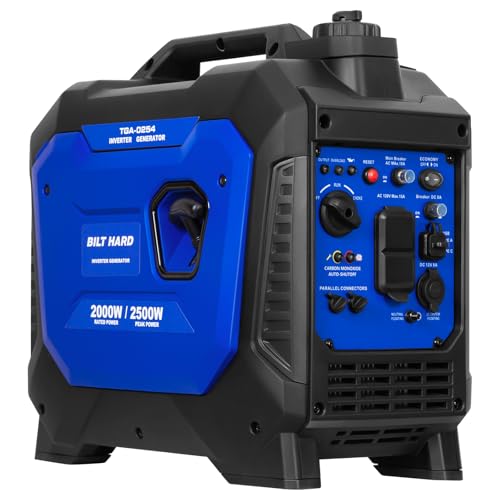


The BILT HARD is the one unit here that states both numbers plainly: 2500 starting watts and 2000 running watts from an 80cc air-cooled four-stroke OHV engine. That 2000 running figure is the honest continuous rating, and it is the highest running claim among the true 2000-class picks in this guide. The inverter board holds total harmonic distortion under 3 percent, which is what laptop chargers, CPAP machines and modern converter boards need.
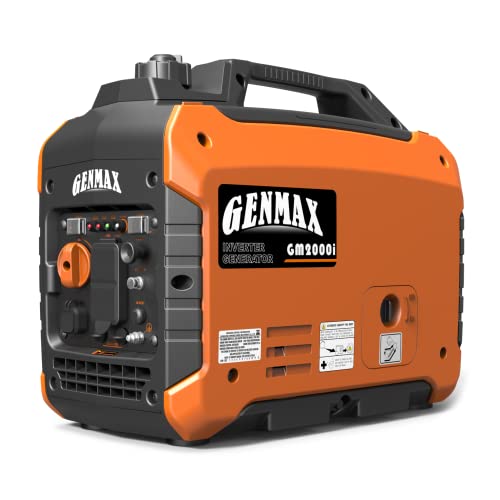
The tradeoff is that its listing leaves some detail thin, so you are trusting the spec sheet more than a long track record. Against the Genmax GM2000i, which quotes only starting watts, the BILT gives you roughly 25 percent more continuous headroom on paper once you read the labels correctly. A built-in CO sensor and parallel-ready outlets make it the safer, more expandable buy for RV owners who may add a second unit later.
Ownership is a small-engine routine: change the oil after the first break-in hours, run the carburetor dry or use stabilized fuel before storage, and keep the air-cooled cylinder clear of dust. The compact crankcase holds little oil, so check it before every trip rather than every season.
What works
- States both starting and running watts, so sizing is not guesswork
- CO sensor adds a real safety layer around an RV
- Parallel-ready outlets leave a path to double the output
- Inverter output stays under 3 percent distortion
Watch out for
- Fewer long-term owner reports than the established names in this class
- Small crankcase means oil checks before every trip
Spec sheet
- Running watts
- 2000
- Starting watts
- 2500
- Engine
- 80cc 4-stroke OHV, air-cooled
- Power quality
- Under 3% THD
- Safety
- CO sensor