


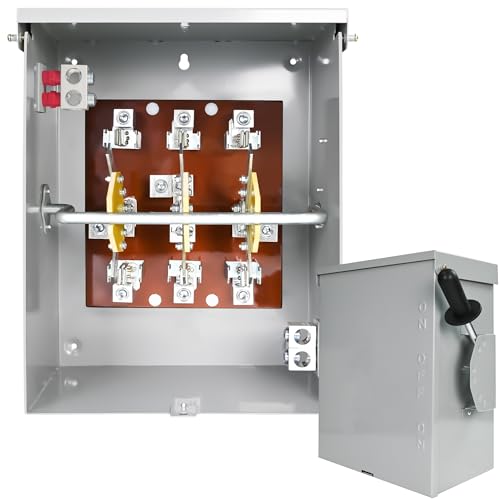
Siemens makes this one the way an electrical manufacturer makes a disconnect, and that difference shows in the listing. The data sheet language is plain: 100 amp, 240 volt, three pole, three wire, non-fused general duty, double throw, Type 3R. It describes a quick-make, quick-break mechanism and a double-break visible blade design, which means you can see the contacts open when the lever is thrown.
The visible blade matters to the person servicing the house, because a lineman or electrician can confirm the source is isolated with their own eyes rather than trusting a label. Note that 100 amps at 240 volts is the ceiling, not a working number, so a 100 amp rating does not mean a generator that big will survive on it. This is also a smaller switch than the 200 amp boxes in this lineup, so it suits a smaller panel, a shop sub-panel or a house with a 100 amp service.
Installation is firmly electrician work. It has no integrated generator inlet, no breaker, no neutral kit in the listing, so those parts and the permit are separate lines on the job. Mount it where the enclosure can drain and be reached, torque the lugs to the label, and re-check them after the first heat cycle. Its simplicity is the asset here: there is no circuit board to fail in a storm.
What works
- Established electrical manufacturer
- Visible double-break blade contacts
- Type 3R enclosure for outdoor mounting
- No electronics to fail in a storm
Watch out for
- 100A ceiling suits only small panels
- No inlet, breaker or neutral kit included
- Needs a licensed electrician and permit
Spec sheet
- Rating
- 100 amp, 240 volt
- Poles
- 3 pole, 3 wire
- Fusing
- Non-fused general duty
- Enclosure
- Type 3R outdoor
- Action
- Double throw, visible blade