
Amazon affiliate links - we earn a commission.Affiliate disclosure

Buying guide · 12 min read · Updated 2026-11-07

Best 8 Circuit Generator Transfer Switches (2026)

Four generator transfer switches that cover eight circuits or more, compared by amp rating, indoor panel design and automatic versus manual switching.

James MillerBy James MillerLead Machine Editor4 machines comparedSpec-sheet verified
Best 8 Circuit Generator Transfer Switches

At a glance

Our top picks

Side by side

Spec comparison

Eight circuits is the point where a transfer switch stops being a single-appliance tool and starts covering the essentials of a whole house: refrigeration, heat, water, lighting and communications. It is also where the temptation to overload a portable generator becomes real.

This class is split between manual panels that you switch by hand and automatic units that sense the outage themselves. Each approach has its own tradeoffs in cost, complexity and how much the household has to understand during an outage.

Before you buy

6 Criteria to Look For Before Buying a 8 Circuit Generator Transfer Switch

  1. 01

    Manual or automatic

    The Champion and both Generac panels are manual, while the Nature's Generator unit switches automatically. Automatic suits travelers and anyone with medical equipment, but adds electronics. A manual panel is simpler and cheaper, and works if someone is home. The common mistake is paying for automatic convenience and then using a portable generator that still needs a person to start it, which defeats the purpose.

  2. 02

    Amp rating versus generator

    Two of the 30 amp panels here, the Champion and the Generac 30 amp, suit 7,500 watt class generators, while the Generac 50 amp lists 12,000 watts. Buying a bigger panel than the generator can fill is a waste. Check the generator receptacle first, and remember that a 30 amp, 240 volt feed tops out near 7,200 watts, so a bigger machine will still be limited by the panel.

  3. 03

    How many circuits you can power

    Eight circuits sounds generous, but a portable generator shares its limit across all of them. List the running watts of each essential load, then leave margin. Most households use fewer than eight at once. Start the largest motor first, such as a well pump or furnace blower, and add the rest one at a time while watching the generator.

  4. 04

    Indoor panel placement

    The Champion and Generac units are indoor panels. They need a dry wall with working clearance in front. A cold garage that sweats with humidity can still damage an indoor panel over time. Choose a wall inside conditioned space if you can, and keep storage boxes and ladders away from the panel door.

  5. 05

    Upgrade path

    Only the Generac HomeLink units mention an upgrade to automatic operation. If you may buy a standby generator, an upgradeable panel avoids a second install. If you are sure you will stay manual, skip the premium. Be honest about plans: many owners say they will upgrade and never do, while others buy a standby unit within a few years.

  6. 06

    Permit and electrician

    Every unit here belongs with a licensed electrician and a local permit. Eight circuits means more wire and more connections to get right. A poor install risks backfeed and can void insurance. Ask the electrician to explain the final layout and leave you a labeled directory, since you will rely on it during a stressful outage.

Detailed reviews

The 4 best 8 circuit generator transfer switches, explained

01
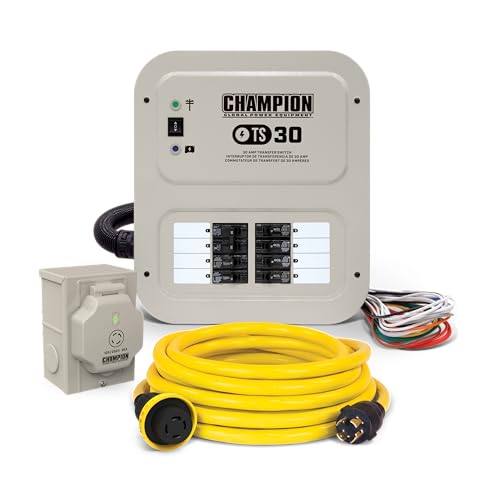
Champion 30A indoor-rated 8-circuit manual switch, 25 ft cord
30A8 circuitsIndoor ratedUL 1008
Check price on Amazon
Best for: Households with a 30 amp generator that want exactly eight circuits.

Champion's switch is a manual unit with exactly eight available circuits, and it is described as indoor rated and UL 1008 certified. It comes prewired with labeled wires and a 25 foot generator cord, which makes the job faster and less expensive for the electrician. The design powers hard-wired circuits, so there is no need to run extension cords through the house.

The eight-circuit count is the sweet spot for a 30 amp generator, because it covers the essentials without inviting you to add more loads than the machine can carry. Compared with the Generac HomeLink 30 amp panel, you give up the automatic upgrade path but gain a certification and a bundled cord. The indoor rating also means this belongs on a dry garage or utility wall, not an exposed exterior one.

In ownership, the main points are keeping the panel clear, labeled and dry. Exercise each switch a couple of times a year, inspect the cord before storm season and keep the generator outdoors and away from windows. A licensed electrician and a local permit are required for the install, and the written load list should live near the panel. Twenty-five feet is a comfortable length for most side-yard setups, but measure from the inlet to the spot where the generator can run safely outdoors before you assume it reaches. In year three the likely maintenance items are a worn cord end and a dusty panel, both of which are cheap to fix if caught early.

What works

  • Eight circuits match a 30 amp generator well
  • Indoor rating and UL 1008 certification
  • 25 ft cord included in the kit
  • Prewired and labeled for a faster install

Watch out for

  • Indoor cabinet is not for exposed walls
  • No path to automatic operation

Spec sheet

Amp rating
30A
Circuits
Eight
Rating
Indoor, UL 1008 certified
Cord
25 ft generator cord
Wiring
Prewired with labeled wires
02
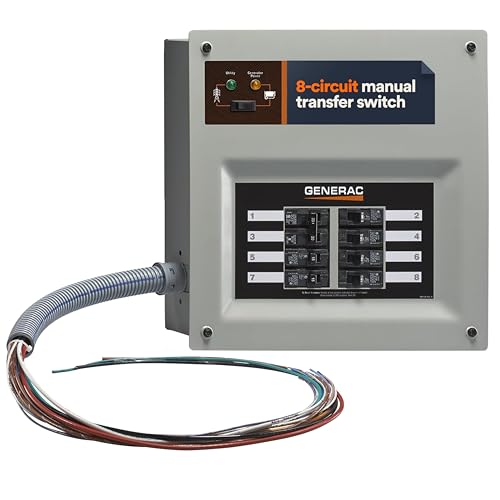
Generac HomeLink 30A manual switch, 8 to 10 circuits
30A8 to 10 circuitsIndoor panelHomeLink ready
Check price on Amazon
Best for: Buyers who may add automatic switching later.

Generac builds this panel as a manual starting point that can later be converted to automatic switching with a HomeLink module. The listing calls it an indoor pre-wired panel for eight to ten circuits, with an electronic rocker that swings the whole load over with one button.

The upgrade path is the reason to choose it over the Champion. If you expect to buy a bigger generator or a standby unit, you can reuse the panel instead of replacing it. The one-button switching also helps when the person on duty is not the one who set it up.

The trade is that the listing is less specific about bundled accessories, so ask the electrician what else is needed. As with every unit here, a licensed install under a permit is required, and the panel should be mounted indoors where it stays dry. The electronic rocker is the part most worth understanding before an outage: practice the sequence once with the generator running and the electrician's instructions in hand, so a family member can repeat it. If you later buy a standby generator, ask the installer what the HomeLink conversion requires, since the upgrade has its own wiring and settings. Until then, treat the panel as a manual unit and keep the generator's load list taped inside the door.

What works

  • One-button switching is quick and clear
  • Upgrade path to automatic operation
  • Eight to ten circuits in a prewired panel
  • Indoor mounting keeps parts dry

Watch out for

  • Indoor panel only
  • Upgrade module is a separate purchase

Spec sheet

Amp rating
30A
Circuits
Eight to ten
Mounting
Indoor pre-wired panel
Switching
Electronic rocker, one button
Upgrade
HomeLink automatic module
03
Generac HomeLink 50A manual switch kit, up to 16 circuits
50A8 to 16 circuits12,000WMechanical interlock
Check price on Amazon
Best for: Larger generators and several 240 volt appliances.

This HomeLink kit steps up to a 50 amp rating and a stated 12,000 watt capacity, with room for eight to sixteen circuits. It powers ten hard-wired circuits at 120 and 240 volts, including high-draw appliances and well pumps, and a mechanical interlock stops utility and generator contacts from closing together.

That larger capacity is the point: if your generator really delivers close to 12,000 watts, a 30 amp panel would waste it. Compared with the 30 amp HomeLink, you get a bigger rating and more circuit headroom, but you also need a generator and inlet to match.

Ownership centers on matching components. The inlet, cord, wire and breaker sizes all scale up at 50 amps, so the electrician should specify them together. Keep the panel indoors and accessible, and pull a permit for the work. A 50 amp cord is heavy, expensive and stiff in cold weather, so decide early where it will be stored and how it reaches the inlet. Many homeowners buy this size for a well pump and an electric water heater, and then discover the generator cannot start both together, so stagger the starts and watch the load. If your generator is smaller than the panel, the extra capacity is not wasted entirely, but it will not be used.

What works

  • 50 amp rating with a stated 12,000 watt capacity
  • Room for up to sixteen circuits
  • Mechanical interlock prevents backfeed
  • Handles 240 volt well pumps and appliances

Watch out for

  • Needs a matching 50 amp generator and inlet
  • More circuits than most portables can run at once

Spec sheet

Amp rating
50A, 120/240V
Circuits
Eight to sixteen
Capacity
12,000 watts
Safety
Mechanical interlock against backfeed
Mounting
Indoor pre-wired panel
04
Nature's Generator 30A 8-circuit automatic transfer switch
30A8 circuitsAutomaticUL approved
Check price on Amazon
Best for: Households that cannot be present to switch by hand.

Nature's Generator offers an automatic version with eight independent circuits, a 30 amp rating and 120/240 volt operation. The listing says it is pre-wired and UL approved, and that it switches to backup power by itself when the grid drops.

The benefit is not having to be home or awake to flip a switch, which suits people who travel or who care for someone with medical needs. The cost is more complexity: automatic units add sensing and timing electronics that a purely mechanical panel does not have. Next to the Champion, it is the more convenient and the less simple option.

Plan on a licensed electrician, a permit and a conversation with the installer about how the generator will start and run when the switch senses an outage. Keep the unit dry, and test it on a schedule so you know it works before the next storm. Ask the installer how the unit signals the generator to start, because not every portable generator accepts that kind of command and a manual start may still be needed. That detail is the real reason automatic switching is easier to plan with a standby generator than with a portable one. If you travel often, also decide who has a key or the instructions for resetting the system after an extended outage.

What works

  • Switches to backup power automatically
  • Eight independent circuits at 30 amps
  • Pre-wired and listed as UL approved
  • Runs at 120/240 volts

Watch out for

  • More electronics than a mechanical panel
  • Needs planning around generator start behavior

Spec sheet

Amp rating
30A
Circuits
Eight independent
Voltage
120/240V
Operation
Automatic switching
Listing
UL approved, pre-wired

Spec sheet decoder

What the numbers on the box really mean

The specs manufacturers lead with, translated into what they tell you about real-world performance.

Eight circuits

Eight breaker positions can be moved to generator power. Two-pole loads use two slots.

Watch forA well pump on 240 volts takes two of the eight, and a water heater on 240 volts takes two more, which leaves only four for everything else in the Champion.

UL 1008

The safety standard for transfer switch equipment. It is the mark inspectors look for.

Watch forThe Champion cites it, so ask the installer to photograph the label inside the cabinet for your records and for the inspector.

Mechanical interlock

A physical barrier that stops utility and generator contacts closing together.

Watch forThe Generac 50 amp kit names it.

Automatic transfer

The switch senses an outage and moves loads by itself.

Watch forOnly the Nature's Generator unit here does this, and it still depends on a generator that can be started when the switch calls for power.

12,000 watts

The stated capacity at 50 amps and 240 volts.

Watch forYour generator may deliver less in continuous use, so size the loads to its running watts rather than to the panel capacity.

Methodology

How We Evaluated These 8 Circuit Generator Transfer Switches

Circuit fit

We compared the eight-circuit count and the headroom beyond it. The Generac 50 amp kit reaches sixteen slots. Units with exactly eight scored as the closest match to the topic.

Switching style

We separated manual from automatic designs. The Nature's Generator unit is the only automatic one. Each style was judged by who it suits, not by which is more advanced. A simple manual panel scores well for households that are home during outages, while automatic scores well for the opposite case.

Safety and listing

We looked for UL 1008, UL approval and mechanical interlocks. A documented listing scored higher. Marks on the unit matter more than listing text. The inspector reads the label, so we treated any unit without a clearly cited mark as a question to resolve before buying.

Generator match

We matched amp ratings to generator classes. The 12,000 watt Generac 50 amp kit fits large machines. The 30 amp panels fit the 7,500 watt class, which also happens to be where many popular portable generators sit. A panel far larger than the generator was treated as unused capacity, not a bonus.

Ownership

We weighed upgrade paths and cord inclusion. The Champion's 25 foot cord and the Generac upgrade module each counted. All findings use spec sheets and owner feedback patterns, not lab work.

Decision guide

How to Choose the Right 8 Circuit Generator Transfer Switches

By Primary Need

SituationPickWhy
Exactly eight circuits, cord includedChampion 30A indoorEight circuits and 25 ft cord
May go automatic laterGenerac HomeLink 30AUpgrade module path
Large generator, 240 volt loadsGenerac HomeLink 50A12,000 watt capacity
Cannot switch by handNature's Generator automaticSenses the outage

By Budget

TierPickWhy
Lower outlayChampion 30A indoorBundled cord, manual
MiddleGenerac HomeLink 30AUpgradeable panel
Higher outlayNature's Generator automaticAutomatic switching
Highest outlayGenerac HomeLink 50ALarger rating and capacity

Manual vs Automatic

Manual

The Champion and the two Generac panels need a person to switch. They are simpler, easier to repair and cheaper to own. A stuck rocker is a ten minute electrician fix, whereas a failed control board on an automatic unit can take a part order and a longer wait.

Automatic

The Nature's Generator unit senses the outage and switches itself, which helps when nobody is home but adds electronics. It also helps during the night, when nobody wants to walk to a basement panel with a flashlight and guess which position is generator.

Choose manual if someone is usually home, and automatic if you travel or rely on medical equipment. Households that fall in between often pick the upgradeable Generac HomeLink 30A, which starts manual and can grow, but that route only makes sense if you will really buy the module and a generator that can start on command.

By Generator Size

GeneratorPickWhy
Around 7,500 wattsChampion 30A indoor30 amp class
Mid-size with upgrade plansGenerac HomeLink 30ACan grow into automatic
Around 12,000 wattsGenerac HomeLink 50A50 amp class
Mid-size, unattendedNature's Generator automatic30 amp automatic

For Whole-House Essentials Specifically

Look for

Enough slots for refrigeration, heat, water and lighting, plus 2-pole room for a pump. Count slots before you count watts. A refrigerator, a furnace, a pump, two lighting circuits, a modem and a freezer already fill six of the eight positions.

In this comparison

The Generac HomeLink 50A offers up to sixteen circuits, while the Champion keeps to eight with a clear load limit. Whichever you choose, write the order in which circuits come on and tape it to the panel, so the generator is never hit with every load at once. Practice the sequence once in daylight so the household knows it before the lights go out.

When to Spend More

Spend more if

You need automatic switching or a large 240 volt load, which points to the Nature's Generator unit or the Generac 50 amp kit.

Save if

Someone is home and the generator is mid-size. The Champion covers eight circuits with a cord included.

Ownership

Maintenance schedule

The upkeep that decides whether this machine lasts two seasons or ten.

TaskIntervalWhy it matters
Exercise the switchesTwice a yearMoving each circuit keeps contacts clean. It confirms every position still transfers. Do the exercise with the generator off and the loads unplugged where possible, and follow the maker's sequence.
Test the automatic unitEvery few monthsA trial outage confirms the sensing and the generator start. Do it with the electrician's settings already in place.
Inspect the cord and inletBefore storm seasonCracked jackets and pitted pins overheat. Replace damaged parts before the next outage season.
Review the load listYearlyNew appliances change the running watts. Keep the list near the panel.
Check the panel areaYearlyClutter and moisture around an indoor panel are hazards. Keep clearance in front. Electricians and inspectors expect clear working space, and so will you when you need to reach the switches in the dark.

FAQ

Frequently Asked Questions

Do I really need eight circuits?

Most households use fewer at once. Eight gives flexibility, but the generator limit stays the same, so choose slots you can power. Write down every load you would miss after one day without power and total the running watts before deciding.

Manual or automatic?

Manual is simpler and cheaper if someone is home. Automatic suits travelers or people who rely on powered medical equipment. Either way, a generator must run outdoors and away from windows because of carbon monoxide.

Can I install it myself?

No. A licensed electrician should install it under a permit. Mistakes can backfeed utility lines.

Which generator size fits?

The 30 amp panels fit roughly 7,500 watt class machines, while the Generac 50 amp kit lists 12,000 watts. Check the receptacle shape on your generator, since the inlet and cord must match it exactly.

What does indoor rated mean?

It means the cabinet is meant for dry indoor locations, not exposed outdoor walls.

How long do these last?

The mechanical parts last many years if kept dry and exercised. Electronics in automatic units may need earlier attention. Testing the system each season is the best way to catch a problem while it is still cheap to fix.

Bottom line

The short version

Browse more 8 circuit generator transfer switcheson Amazon →
James Miller, Lead Machine Editor

About the author

James Miller

Lead Machine Editor, MachineFanatic

James Miller leads MachineFanatic's buying guides, turning spec sheets, manuals and owner feedback into clear verdicts on power tools, outdoor power equipment, shop machines and kitchen machines.

More from James →

Keep reading

Related guides