
Amazon affiliate links - we earn a commission.Affiliate disclosure

Buying guide · 15 min read · Updated 2026-11-07

Best All-in-One Solar Charge Controller Inverters (2026)

All-in-one units combine an MPPT charge controller, a pure sine inverter and an AC charger. Six 12V, 24V and 48V models compared on surge, PV limits and upkeep.

James MillerBy James MillerLead Machine Editor6 machines comparedSpec-sheet verified
Best All-in-One Solar Charge Controller Inverters

At a glance

Our top picks

Side by side

Spec comparison

MachineOutputBattery voltageMPPT controller
Renogy 3500W 48V hybrid inverter charger, 80A MPPTBest OverallRenogy 3500W 48V hybrid inverter charger, 80A MPPT3500W continuous, 7000W peak surge48V DC80A, 150V PV limit
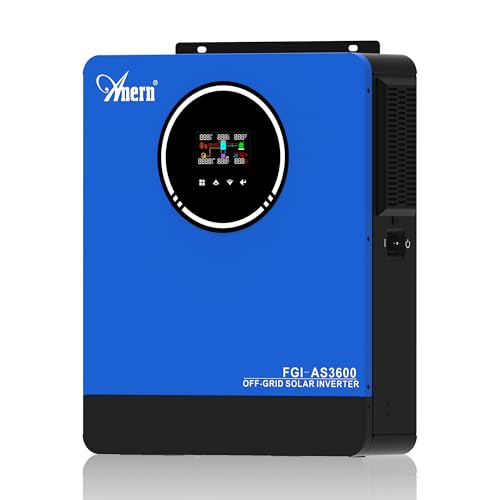
Anern 3600W hybrid inverter, 24V, 120A MPPTBest Value 24VAnern 3600W hybrid inverter, 24V, 120A MPPT3600W pure sine wave24V DC120A built in
POWLAND 4000W hybrid inverter, 24V, 140A MPPT, glass displayBest Display and PowerPOWLAND 4000W hybrid inverter, 24V, 140A MPPT, glass display4000W continuous, 8000W surge24V DC140A
LiTime 5000W 48V split-phase hybrid, 120V and 240V, parallel up to 6Best Split-PhaseLiTime 5000W 48V split-phase hybrid, 120V and 240V, parallel up to 65000W, 120V/240V split phase48V DC100A built in
VEVOR 3000W hybrid solar inverter, 24V, MPPT, pure sineBest Budget HybridVEVOR 3000W hybrid solar inverter, 24V, MPPT, pure sine3000W pure sine wave24V DCn/a
ALLWEI 3000W 12V all-in-one inverter charger, 150A MPPTBest 12V OptionALLWEI 3000W 12V all-in-one inverter charger, 150A MPPT3000W, 3600W surge12V DC150A adjustable

An all-in-one solar inverter charger packs three jobs into one box: an MPPT controller that harvests the panels, a pure sine inverter that makes household AC, and an AC charger that tops up the battery from the grid or a generator. The appeal is fewer boxes, less wiring and one display.

The choice of system voltage shapes everything else. A higher battery voltage means lower current and thinner copper, while a low-voltage unit trades simplicity for heavy cable and larger fuses. Surge rating, idle draw and the panel voltage window matter more than the headline watts.

Before you buy

6 Criteria to Look For Before Buying an All-in-One Solar Charge Controller Inverter

  1. 01

    System voltage choice

    Power equals voltage times current, so a 3000 watt load pulls about 250 amps at 12 volts, 125 at 24 and 62 at 48. Higher voltage means thinner cable, smaller fuses and less loss. The Renogy 3500W and LiTime 5000W use 48 volts, the Anern, POWLAND and VEVOR use 24 and the ALLWEI uses 12.

  2. 02

    Surge versus continuous rating

    Motors and compressors draw two to three times running watts for a moment at start. The Renogy lists 7000 watts of surge on 3500 continuous, while the ALLWEI lists 3600 on 3000. Size to the surge of your largest motor load, not only to the continuous number.

  3. 03

    PV voltage window and MPPT current

    The controller has a maximum panel voltage and a charging current limit. The Renogy accepts up to 150 volts and 80 amps, so series strings are possible. Cold weather raises panel voltage, so leave margin below the limit when you design the array.

  4. 04

    Idle consumption

    An inverter burns power just by being on. The Renogy lists 48 watts at idle and 25 watts in power-saving mode, which adds up to over a kilowatt-hour per day at 48 watts. For a small battery bank, idle draw can be a big share of daily use.

  5. 05

    Generator and grid charging

    The AC charger turns a generator or grid into a battery source. The Renogy lists a 40 amp charger and the Anern lists mains charging as one of four modes. Check that your generator's output is clean and large enough to feed both loads and charger.

  6. 06

    Battery chemistry settings

    Lead-acid and lithium need different voltage profiles. The POWLAND supports 24 volt LiFePO4, lithium-ion and lead-acid banks. Wrong settings undercharge or overcharge the battery, so set the profile before connecting loads.

Detailed reviews

The 6 best all-in-one solar charge controller inverters, explained

01
Renogy 3500W 48V hybrid inverter charger, 80A MPPT
3500W, 7000W surge80A / 150V MPPT40A AC chargerLow idle draw
Check price on Amazon
Best for: Cabin and workshop builders who want a 48V system with low current and a mature brand.

The Renogy 3500W is the most balanced unit here because it pairs a sensible output with a high-voltage battery bus. At 48 volts, a full 3500 watt load pulls roughly 73 amps from the battery, which is manageable with ordinary copper, while a 12 volt unit of the same size would pull around 290 amps. The 80 amp MPPT controller accepts up to 150 volts of panel input, so you can wire panels in series strings.

It includes a 40 amp AC battery charger, which is the generator or grid input that makes the unit hybrid. Idle consumption is listed at 48 watts, falling to 25 watts in power-saving mode, a figure that matters because an inverter that runs all night drains the battery before any load is applied. Compared with the ALLWEI 12 volt unit, the Renogy suits a bigger, longer-lived system, and compared with the LiTime 5000W it is simpler and cheaper.

Ownership is about fusing and monitoring. Install a Class T fuse or breaker sized for the battery side, keep cable runs short and tidy and check the lug torque after the first week. Leave breathing room around the case, since a loaded inverter makes real heat. With a 48 volt lithium bank, this is a dependable heart for a cabin or workshop.

What works

  • 48V bus keeps battery current near 73 A at full load
  • 80A / 150V MPPT accepts series-wired panels
  • 7000W surge covers pump and compressor starts
  • Power-saving mode drops idle draw to 25W

Watch out for

  • Needs a 48V battery bank, a bigger upfront build
  • 3500W is modest for whole-house loads
  • Needs proper fusing and ventilation

Spec sheet

Output
3500W continuous, 7000W peak surge
Battery voltage
48V DC
MPPT controller
80A, 150V PV limit
AC charger
40A
Idle draw
48W, 25W in power-saving mode
02
Anern 3600W hybrid inverter, 24V, 120A MPPT
3600W, 24V120A MPPT4 charging modesWorks without battery
Check price on Amazon
Best for: DIY builders on a 24V battery bank who want strong MPPT capacity at a low cost tier.

The Anern 3600W is a 24 volt hybrid with a 120 amp MPPT controller, which makes it a strong match for a mid-size battery bank. At 24 volts, a full load draws about 150 amps from the battery, double what a 48 volt unit would draw, so cable gauge and fusing need respect. The listing says it works with or without a battery, which helps in a grid-tied style setup or for a trial before a full bank is installed.

It offers four charging modes, including solar only and mains supply. That flexibility lets you charge from panels in the day and from a generator or grid when needed. The large controller rating is useful when you plan a big panel array on a 24 volt bank. Against the POWLAND 4000W, the Anern has slightly less output but a lower cost tier.

The ownership concerns are typical for lower-cost brands. Check that the battery profile matches your chemistry, confirm firmware and warranty terms and keep a log of settings. Support and parts availability vary, so ask the seller before you buy. That makes it a good value for builders who understand wiring and want a lot of controller for the money.

What works

  • 120A MPPT handles a large panel array
  • Four charging modes cover solar and mains
  • Operates with or without a battery
  • Lower cost tier than most 24V hybrids

Watch out for

  • 24V full load draws about 150 A and needs heavy cable
  • Support and parts vary by seller
  • Settings need care for each battery chemistry

Spec sheet

Output
3600W pure sine wave
Battery voltage
24V DC
MPPT controller
120A built in
Charging modes
4, including solar only and mains
Battery option
Works with or without battery
03
POWLAND 4000W hybrid inverter, 24V, 140A MPPT, glass display
4000W, 8000W surge140A MPPT6.25 in glass display24V lithium or lead
Check price on Amazon
Best for: Builders who want 4000W of output on a 24V bank with a clear touch display.

The POWLAND is the most powerful 24 volt unit in this guide, rated for 4000 watts continuous and 8000 watts surge. A 140 amp MPPT controller sits inside, and the listing highlights a 6.25 inch tempered glass display with touch buttons that is clearer than the small LCDs on cheaper units. It supports 24 volt LiFePO4, lithium-ion and lead-acid batteries.

That output on a 24 volt bus is a lot of current. A 4000 watt load draws roughly 167 amps from the battery, so wire, lugs and fusing are not an afterthought. Anyone who plans to run that load for long should use a 48 volt system instead, or accept shorter, thicker cable and a battery with a high continuous discharge rating. Next to the Anern 3600W, it offers more output and a better display for a higher cost tier.

In ownership, the display is a pleasant day-to-day feature because you see charge source, load and battery state at a glance. Keep the vents clear, update the battery settings when you add capacity and verify the surge rating against your motor loads. It suits someone who wants a lot of power from a 24 volt system and values a clean interface.

What works

  • 4000W continuous with 8000W surge
  • 140A MPPT supports a large panel array
  • 6.25 inch glass display is easy to read
  • Supports lithium and lead-acid 24V banks

Watch out for

  • Full load draws about 167 A at 24V
  • Needs heavy cable and a robust battery
  • Higher cost tier than the Anern

Spec sheet

Output
4000W continuous, 8000W surge
Battery voltage
24V DC
MPPT controller
140A
Display
6.25 inch tempered glass touch
Batteries
24V LiFePO4, lithium-ion, lead-acid
04
LiTime 5000W 48V split-phase hybrid, 120V and 240V, parallel up to 6
5000W split phase100A MPPTParallel up to 6Timed charging
Check price on Amazon
Best for: Off-grid homeowners who need 120V and 240V output and room to expand by paralleling.

The LiTime 5000W is the large, expandable choice. It outputs split-phase 120 and 240 volts, which means it can run a 240 volt well pump or a welder as well as normal outlets. A 100 amp MPPT controller and a 48 volt bus keep battery current reasonable, and up to six units can be paralleled for a larger system.

Timed charging and discharging is a cost-saving feature: you can set windows when the inverter takes grid power to charge or when it supports loads from the battery, which helps where electricity rates vary by hour. It also has UPS-style switchover for backup use. Against the Renogy 3500W, the LiTime adds split-phase output and more power but at a higher cost tier and with a more complex setup.

Ownership requires planning. Split-phase systems need correct wiring and neutral handling, and a 5000 watt load on 48 volts draws about 104 amps from the battery. Use a proper breaker and DC fuse, and consider an electrician for the AC side. It is a strong foundation for a whole-cabin or small-home system that you intend to grow.

What works

  • Split-phase 120V and 240V output
  • 100A MPPT on a 48V bus
  • Parallel up to six units for growth
  • Timed charging and discharging saves on power rates

Watch out for

  • Setup and wiring are more complex
  • Higher cost tier than single-phase units
  • Full load draws about 104 A at 48V

Spec sheet

Output
5000W, 120V/240V split phase
Battery voltage
48V DC
MPPT controller
100A built in
Expansion
Parallel up to 6 units
Smart features
Timed charging and discharging, UPS
05
VEVOR 3000W hybrid solar inverter, 24V, MPPT, pure sine
3000W, 24VMPPT built inLead-acid and lithiumPure sine wave
Check price on Amazon
Best for: First-time off-grid builders who want a low-cost 24V hybrid for modest loads.

The VEVOR 3000W is a two-in-one hybrid that combines an inverter and an MPPT controller, aimed at off-grid systems on a 24 volt battery. It supports lead-acid and lithium batteries and outputs pure sine wave power, which is safe for electronics, motors and modern appliances. For someone building a first off-grid system, it is a low-cost entry point.

A 3000 watt rating is enough for a refrigerator, lights, a small pump and tools, but not for a whole house with electric heating. The listing gives few details about controller current and surge, so check the full specification sheet before you design your array. Against the Anern 3600W, it has a lower output and a lower cost tier, and fewer details to review.

Ownership favors careful buyers. Confirm the PV voltage limit, size cables for roughly 125 amps at full load and verify that the battery profile suits your chemistry. Keep spare fuses and know the warranty terms. It is a sensible starter for small cabins and sheds.

What works

  • Low cost tier among hybrid inverters
  • Integrated MPPT removes one box
  • Supports lead-acid and lithium batteries
  • Pure sine output suits electronics

Watch out for

  • Limited published controller details
  • 3000W caps heavy appliance use
  • Support and documentation are thinner

Spec sheet

Output
3000W pure sine wave
Battery voltage
24V DC
Controller
Integrated MPPT
Batteries
Lead-acid and lithium
Design
2-in-1 inverter and controller
06
ALLWEI 3000W 12V all-in-one inverter charger, 150A MPPT
3000W, 12V150A MPPT3600W surge10-150A charge
Check price on Amazon
Best for: Van and boat owners who need a 12V all-in-one with strong MPPT capacity.

The ALLWEI 3000W is the 12 volt option, for vans, boats and small cabins that already run a 12 volt battery. It integrates a pure sine wave inverter, a 150 amp MPPT solar charger and an AC charger, with adjustable charging current from 10 to 150 amps and four charge sources. Surge is rated at 3600 watts.

A 12 volt system at this size is demanding. A full 3000 watt load draws about 250 amps from the battery, which requires very thick cable, large fuses and a battery that can deliver that current. The low surge rating of 3600 watts also limits motor starts compared with the Renogy's 7000 watts. This unit makes sense for intermittent loads like a microwave, not for continuous full-power use.

Ownership is about wiring discipline. Keep cable runs very short, use a proper bus bar and fuse, and monitor temperature at the lugs. For vans and boats where 12 volts is the standard, it is a convenient all-in-one, but for any larger system a 24 or 48 volt unit is the better choice.

What works

  • Fits existing 12V systems
  • 150A MPPT with adjustable charge current
  • Four charge sources in one box
  • Pure sine wave 120V output

Watch out for

  • Full load draws about 250 A at 12V
  • 3600W surge is modest for motors
  • Heavy cable and fusing required

Spec sheet

Output
3000W, 3600W surge
Battery voltage
12V DC
MPPT controller
150A adjustable
Charge sources
Four, including AC and solar
Adjustable charge
10A to 150A

Spec sheet decoder

What the numbers on the box really mean

The specs manufacturers lead with, translated into what they tell you about real-world performance.

Continuous watts

The load the inverter can run indefinitely. It is the number to size against your daily loads.

Watch forThe POWLAND lists 4000W and the VEVOR lists 3000W.

Surge watts

A short-duration limit for motor starts. It usually lasts only a few seconds.

Watch forThe Renogy lists 7000W and the POWLAND 8000W.

MPPT current rating

The maximum charging current from panels into the battery, in amps. It limits how much panel power you can use on that battery voltage.

Watch forThe ALLWEI lists 150A and the Anern 120A.

Max PV voltage

The highest panel string voltage the controller accepts. Exceeding it damages the unit.

Watch forThe Renogy lists 150V.

Idle power

The power the inverter uses with no load. It drains the battery continuously.

Watch forThe Renogy lists 48W at idle and 25W in power-saving mode.

Methodology

How We Evaluated These All-in-One Solar Charge Controller Inverters

System voltage and current

We compared battery voltage and the current each unit draws at full load. The 48 volt Renogy and LiTime scored best. The 12 volt ALLWEI scored lowest on this point.

Output and surge

We looked at continuous and surge ratings. The POWLAND's 4000W and 8000W led among 24 volt units, and the LiTime's 5000W led overall.

MPPT capability

We checked controller amperage and PV limits. The ALLWEI's 150A and the POWLAND's 140A are the strongest, and the Renogy's 150V window is useful for series strings.

Efficiency and idle draw

We valued low idle consumption and power-saving modes. The Renogy states its figures clearly. Others publish less.

Support and documentation

We weighed brand support, manuals and warranty clarity. Established names scored higher than unknown sellers, though price tier also mattered.

Decision guide

How to Choose the Right All-in-One Solar Charge Controller Inverters

By Battery Voltage

SituationPickWhy
12V van or boatALLWEI 3000W 12VFits 12V systems
24V cabin bankPOWLAND 4000W 24V4000W and 140A MPPT
24V value buildAnern 3600W 24V120A MPPT at a low tier
48V workshopRenogy 3500W 48VLowest battery current
48V split-phase homeLiTime 5000W 48V120V and 240V

By Budget

SituationPickWhy
Lowest cost tierVEVOR 3000W 24VBasic hybrid
Low tier, big MPPTAnern 3600W 24V120A controller
Middle tierALLWEI 3000W 12V12V convenience
Upper middle tierPOWLAND 4000W 24VDisplay and power
Highest tierLiTime 5000W 48VSplit phase, expandable

Single-Phase vs Split-Phase

Single-phase 120V

The Renogy, Anern, POWLAND, VEVOR and ALLWEI output 120 volts only. That covers most household outlets and simple wiring.

Split-phase 120V/240V

The LiTime 5000W can feed 240 volt loads such as a well pump, and splits loads across two legs. It needs more careful wiring.

Choose single phase for simple cabins; choose split phase for homes with 240V loads.

Low Voltage vs High Voltage Systems

SituationPickWhy
Short cable runs onlyALLWEI 3000W 12VCompact system
Moderate runsAnern 3600W 24VBalanced current
Long runs or big loadsRenogy 3500W 48VLow current
Expansion laterLiTime 5000W 48VParallel up to six
First small buildVEVOR 3000W 24VLow cost

For a Backup Cabin Specifically

Look for

Low idle draw, generator input and a battery profile that matches your bank. Cabins sit empty most of the time, so efficiency and remote monitoring matter.

In this comparison

The Renogy 3500W is the best fit with its 25W power-saving mode and 40A generator charger.

When to Spend More

Spend more if

You run motors, a well pump or want to expand. The LiTime 5000W and POWLAND 4000W offer power and display.

Save if

You have light loads. The VEVOR or Anern keeps the cost down.

Ownership

Maintenance schedule

The upkeep that decides whether this machine lasts two seasons or ten.

TaskIntervalWhy it matters
Check DC lug torqueAfter first week, then yearlyLoose lugs heat up at high current. Retorque to the manual's specification.
Clean vents and fansEvery 6 monthsDust blocks airflow and raises temperatures. Clean with compressed air.
Verify battery settingsWhen capacity changesWrong profiles harm batteries. Update voltage settings after any bank change.
Inspect PV connectionsEvery seasonCorroded connectors waste power. Check MC4 plugs and replace damaged ones.
Update firmwareYearlyManufacturers fix bugs and add features. Follow the manual's procedure.

FAQ

Frequently Asked Questions

Is an all-in-one inverter better than separate components?

It is simpler and cheaper to install, with fewer connections. Separate parts give more flexibility and easier repairs, but cost more and need more space.

What size inverter do I need?

Add up the running watts of everything you want to power at once, then add the surge of your largest motor. A 3500 to 5000 watt unit covers most cabins.

Can I run this without batteries?

Some units, like the Anern, can run without a battery, but performance is limited. A battery smooths loads and supports surges.

Do I need a generator input?

It is useful for cloudy days. The AC charger can top up the battery from a generator, so the system never fails.

Is 12V enough for a home system?

Rarely. At 3000 watts a 12 volt system draws about 250 amps, which is hard to wire safely. Use 24 or 48 volts for larger systems.

How do I size the solar array?

Divide your daily watt-hours by about 4 to 5 sun hours and a 0.7 loss factor, then check the array against the controller's voltage and current limits.

Bottom line

The short version

Browse more all-in-one solar charge controller inverterson Amazon →
James Miller, Lead Machine Editor

About the author

James Miller

Lead Machine Editor, MachineFanatic

James Miller leads MachineFanatic's buying guides, turning spec sheets, manuals and owner feedback into clear verdicts on power tools, outdoor power equipment, shop machines and kitchen machines.

More from James →

Keep reading

Related guides