



Amazon affiliate links - we earn a commission.Affiliate disclosure

Buying guide · 17 min read · Updated 2026-11-06

Best Anker SOLIX F3800 Solar Generators (2026)

Seven Anker SOLIX F3800 setups and alternatives compared by 240V output, solar input, expansion and weight, for home backup and RV use.

James MillerBy James MillerLead Machine Editor7 machines comparedSpec-sheet verified
Best Anker SOLIX F3800 Solar Generators

At a glance

Our top picks

Side by side

Spec comparison

MachineBatteryAC outputSolar inputExpansion
Anker SOLIX F3800 Plus 3,840Wh 6,000W Power StationBest OverallAnker SOLIX F3800 Plus 3,840Wh 6,000W Power Station3,840Wh LiFePO46,000W, 120V and 240VUp to 3,200WUp to 53kWh
Anker SOLIX F3800 3,840Wh 6,000W Power StationBest Original VersionAnker SOLIX F3800 3,840Wh 6,000W Power Station3,840Wh LiFePO46,000W, 120V and 240V2,400WUp to 53.8kWh
Anker SOLIX F3000 3,072Wh 6,000W Power StationBest Mid-Size AnkerAnker SOLIX F3000 3,072Wh 6,000W Power Station3,072Wh LiFePO46,000W (120V, or pair two for 240V)Up to 2,400WUp to 24kWh
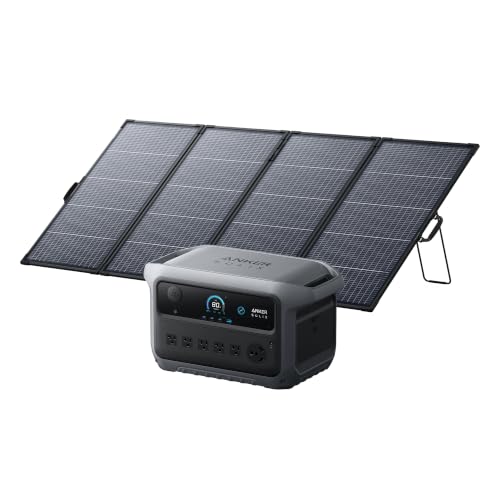
Anker SOLIX C2000 Gen 2 2,048Wh 2,400W with 400W PanelBest Mid-Size ValueAnker SOLIX C2000 Gen 2 2,048Wh 2,400W with 400W Panel2,048Wh LiFePO42,400W, 4,000W peakn/aUp to 4kWh
EcoFlow DELTA Pro 3,600Wh 3,600W Power StationBest Rival PlatformEcoFlow DELTA Pro 3,600Wh 3,600W Power Station3,600Wh LiFePO43,600W, 4,500W X-Boostn/aUp to 25kWh
Jackery HomePower 3600 Plus 3,584Wh 3,600W Power StationBest Lighter Home BackupJackery HomePower 3600 Plus 3,584Wh 3,600W Power Station3,584Wh LFP3,600W, 7,200W in paralleln/aUp to 21kWh
Anker SOLIX C1000 Gen 2 1,024Wh 2,000W with 200W PanelBest Compact StarterAnker SOLIX C1000 Gen 2 1,024Wh 2,000W with 200W Panel1,024Wh LiFePO42,000W, 3,000W peak600W (60V max)n/a

A large solar generator is a battery bank, an inverter and a solar charge controller combined into one wheeled box, sold as a quiet and fume-free substitute for a gas generator. The marketing focuses on watt-hours and watts, but the choice that actually decides whether it works for your house is whether it can deliver 240 volts and how quickly it can refill from your panels.

This guide explains how this flagship home station compares with its siblings and with rival stations, and how to match capacity, voltage, solar input and expansion to real loads. The quick picks are above, and the model reviews below explain who each unit fits and who should shop in a smaller or larger class.

Before you buy

6 Criteria to Look For Before Buying an Anker SOLIX F3800 Solar Generator

  1. 01

    Why 240V changes the class

    A 120 volt station cannot run a well pump, an electric dryer, a central air conditioner or most EV chargers, because those appliances are wired for 240 volts. The F3800 and F3800 Plus provide 120 and 240 volt output from a single 6,000 watt inverter, while the F3000 gives 120 volts and needs a second unit for 240. The Jackery HomePower 3600 Plus also needs a pair for 240. The common mistake is buying on watt-hours and discovering at installation that the key appliance needs 240. List your must-run appliances and their voltages first.

  2. 02

    Solar input sets recharge speed

    The F3800 Plus accepts up to 3,200 watts of solar and the original F3800 2,400, while the C1000 Gen 2 takes 600. Input is the ceiling, not the output you will see. A 3,840 watt-hour battery needs roughly 5 to 7 hours of strong sun at 3,200 watts, and winter or shade can halve that. Panels in series raise voltage and in parallel raise current, and each station has a voltage window, so a mismatched array underperforms. Size the array for the input rating only if you have the roof or ground space to match.

  3. 03

    Capacity versus real runtime

    Nameplate watt-hours are before losses, and usable energy is about 85 to 90 percent. The 3,840 watt-hour F3800 can run a 150 watt refrigerator, a few lights and a router for well over a day, but a window air conditioner at 600 watts drains it in under 6 hours. The F3000 at 3,072 watt-hours has a claimed 125 hour AC idle standby, which matters because idle inverter draw can eat the battery overnight. Check the idle consumption, not just the capacity.

  4. 04

    Expansion and total system cost

    Expansion is where the F3800 family stands out, with a ceiling of 53 to 53.8 kilowatt-hours, against 24 for the F3000, 25 for the EcoFlow DELTA Pro and 21 for the Jackery HomePower 3600 Plus. An expandable system lets you buy once and grow, but add-on batteries cost as much as a small station, so budget for the total, not the base unit. Confirm that extra batteries are available for the exact generation you buy.

  5. 05

    Generator and grid integration

    A station that accepts a gas generator can recharge in long outages when the sun is absent. The F3800 Plus supports a 240 volt generator adapter and Anker's smart generator with auto start and stop, and the F3000 offers 3,600 watt pass-through. A home connection through a transfer switch or home power panel is safer than back-feeding via an outlet. Never connect a station to the house through a cable with two male ends, because it endangers utility workers.

  6. 06

    Weight, size and placement

    The large units are not truly portable. A 6,000 watt, 3.8 kilowatt-hour station weighs on the order of 100 pounds or more, and the cord runs from the panels need planning. The C2000 Gen 2 and C1000 Gen 2 are far easier to move, and the Jackery claims to be among the lightest of its class. Choose where it will live before you buy, since a unit you cannot move to the garage or porch will rarely get used in an emergency.

Detailed reviews

The 7 best anker solix f3800 solar generators, explained

01
Anker SOLIX F3800 Plus 3,840Wh 6,000W Power Station
3,840Wh LFP6,000W 120/240V3,200W solar inputExpands to 53kWh
Check price on Amazon
Best for: Households that want 240V whole-home essentials backup with the highest solar input in the lineup.

The F3800 Plus is the refreshed version of Anker's flagship, and for most buyers it is the version to choose. The core is a 3,840 watt-hour LiFePO4 battery behind a 6,000 watt inverter that provides both 120 volt and 240 volt output, so it can run a dryer, an electric range circuit or a well pump without a second unit. Anker states a 3,200 watt solar input, which is among the highest in the class, and a recharge to usable capacity in about 63 minutes when solar and a generator feed it together. Expansion reaches 53 kilowatt-hours with add-on batteries.

The practical value is how the pieces fit together. A 240 volt generator adapter lets a gas generator top it up in the field, and the unit supports an auto start-stop arrangement with Anker's smart generator, so a long outage need not leave you with a flat battery. Against the original F3800, the Plus lifts solar input from 2,400 to 3,200 watts, which is a one third increase, and it is the reason the newer model leads here. Against the 3,072 watt-hour F3000, you gain 768 watt-hours and 240 volt output.

Ownership concerns are mostly about site planning. It is a heavy, large unit that you set on a level, dry floor with airflow, and it should be placed where the cable run to your panels is short because high-voltage solar input is carried on thick wire. The 5-year warranty and a stated 10-year design life are solid for the class. Bundles with a 400 watt panel or with a home power panel are the same core unit with accessories added.

What works

  • 6,000W 120/240V output runs dryers, well pumps and ranges
  • Stated 3,200W solar input recharges fast from big arrays
  • Expandable to 53kWh with add-on batteries
  • Supports gas generator and smart generator top-up

Watch out for

  • Large and heavy, so placement and cable runs need planning
  • Premium cost class, well above 1kWh stations

Spec sheet

Battery
3,840Wh LiFePO4
AC output
6,000W, 120V and 240V
Solar input
Up to 3,200W
Expansion
Up to 53kWh
Fast recharge
63 min via solar plus generator
Warranty
5 years, 10-year design life
02
Anker SOLIX F3800 3,840Wh 6,000W Power Station
3,840Wh LFP6,000W 120/240V2,400W solar inputExpands to 53.8kWh
Check price on Amazon
Best for: Buyers who want the F3800 platform and a 240V output without paying for the fastest solar input.

The original F3800 established the line, and it is still a capable machine: 3,840 watt-hours, 6,000 watts, and dual-voltage output. It includes a NEMA 14-50 port that lets you charge an electric vehicle with the car's own cable or power an RV inlet, with an L14-30 port as another 240 volt option. Anker claims about a day of household use from the base 3.84 kilowatt-hours, and the unit adds capacity up to 53.8 kilowatt-hours through expansion batteries.

Set beside the Plus, the difference is solar input and some detail upgrades: 2,400 watts here against 3,200, so a large array refills the Plus faster. If you plan a modest array of around 1,200 to 2,000 watts the gap narrows. The original may also be easier to find at a lower price tier, so it is a value choice for buyers who do not need the fastest charging. The extra solar headroom matters most if you want to recover a full day's energy in a few sun hours.

Care is the same as other stations: avoid heat, check the cords, and let it cycle occasionally. Because there are two generations, confirm that the expansion batteries you want are compatible with this version before you buy. When pairing it with a smart generator, keep the setup to Anker's own accessories, as the unit communicates with them for auto start and stop.

What works

  • 6,000W dual-voltage output matches the Plus for appliances
  • NEMA 14-50 and L14-30 ports suit EV and RV power
  • Expandable to 53.8kWh like the newer version
  • Auto start-stop generator support extends outages

Watch out for

  • Solar input of 2,400W is lower than the Plus at 3,200W
  • Check expansion battery compatibility between generations

Spec sheet

Battery
3,840Wh LiFePO4
AC output
6,000W, 120V and 240V
Solar input
2,400W
Expansion
Up to 53.8kWh
Ports
NEMA 14-50 and L14-30
Warranty
5 years, 10-year lifespan
03
Anker SOLIX F3000 3,072Wh 6,000W Power Station
3,072Wh LFP6,000W output3,600W pass-throughExpands to 24kWh
Check price on Amazon
Best for: Buyers who want 6,000W output and generator-ready charging in a slightly smaller package.

The F3000 is the slightly smaller, more modular sibling in the F-series. It carries 3,072 watt-hours and a 6,000 watt inverter, but unlike the F3800 it outputs 120 volts from a single unit, and you pair two for 240 volts. Anker states a 3,600 watt pass-through charging, which means a generator can power loads while it recharges the battery, and it highlights ultra-low idle consumption, claiming 125 hours of AC standby, which stretches runtime when you only need a few watts.

Compared with the F3800 Plus, you have 768 fewer watt-hours and a lower expansion ceiling of 24 kilowatt-hours against 53. It makes more sense if your needs are 120 volt household circuits, an RV or a workshop, and if you want to start smaller. The 2,400 watt solar input matches the original F3800. If you later need 240 volt, pairing a second unit effectively doubles the cost, so buy the F3800 family if 240 volt is a requirement from the start.

It has a generator-ready design, which means it can accept charging from a fuel generator, and it can reach 6,000 watts of recharging when generator and solar are combined. As with any large station, keep it ventilated and watch the cable lengths, because the input voltage window is narrow and long runs can drop below it.

What works

  • 3,600W pass-through charging runs loads while recharging
  • 125 hours of AC idle standby stretches low-load runtime
  • Expandable to 24kWh with add-on batteries
  • Generator-ready design accepts fuel generator charging

Watch out for

  • Single unit is 120V only, and 240V needs a second unit
  • Smaller expansion ceiling than the F3800 family

Spec sheet

Battery
3,072Wh LiFePO4
AC output
6,000W (120V, or pair two for 240V)
Solar input
Up to 2,400W
Expansion
Up to 24kWh
Pass-through
3,600W
Idle standby
125 hours AC idle
04
Anker SOLIX C2000 Gen 2 2,048Wh 2,400W with 400W Panel
2,048Wh LFP2,400W (4,000W peak)58 min full charge400W bifacial panel
Check price on Amazon
Best for: Campers, RV owners and small homes that need 2kWh of fast-charging backup.

The C2000 Gen 2 is the choice when the F3800 family is more than you need. A 2,048 watt-hour battery with a 2,400 watt inverter and a 4,000 watt peak runs most window air conditioners, RV air conditioners and the kitchen basics, and it can double to 4 kilowatt-hours with an expansion battery. Anker claims a full charge in 58 minutes and an 80 percent charge in 45 minutes, which is faster than most competitors in this size. A 9 watt standby draw means it can power a dual-door refrigerator for up to 32 hours.

The bundle includes the PS400 400 watt bifacial panel, which weighs 21.9 pounds, about half what comparable 400 watt panels weigh, and the panel and station ship separately. Compared with the 1,024 watt-hour C1000 Gen 2, you get double the energy and 400 more watts of output. Compared with the F3800 Plus it lacks 240 volt output and has about half the battery, but it is far easier to move and store.

It is a good partner for a camping, RV or small-home setup. Treat nameplate runtime figures as best case and expect a smaller figure in practice. A bifacial panel needs reflective ground to deliver its extra gain, so place it over light-colored or gravel surfaces for the claimed benefit.

What works

  • Stated 58 minute full charge is quick for a 2kWh station
  • 9W standby draw lets it keep a fridge going about 32 hours
  • Expands to 4kWh with an expansion battery
  • Lightweight 400W bifacial panel included in the bundle

Watch out for

  • No 240V output, so it cannot run a dryer or well pump
  • Station and panel ship separately, and bifacial gain needs reflective ground

Spec sheet

Battery
2,048Wh LiFePO4
AC output
2,400W, 4,000W peak
Full charge
58 min
Standby draw
9W
Expansion
Up to 4kWh
Panel
PS400 bifacial, 21.9 lb
05
EcoFlow DELTA Pro 3,600Wh 3,600W Power Station
3,600Wh LFP3,600W, 4,500W X-BoostExpands to 25kWh2.7 hr wall charge
Check price on Amazon
Best for: Buyers who prefer EcoFlow's app and ecosystem and need up to 3,600W at 120V.

The EcoFlow DELTA Pro is the most direct rival to the F3800, and it is worth considering if you want a proven platform. It stores 3,600 watt-hours and outputs 3,600 watts, with a 4,500 watt X-Boost mode for resistive loads, and two units can be paired for 7,200 watts. Charging is a strength: 1.8 hours from a 240 volt outlet at 3,000 watts, 2.7 hours from a 1,800 watt wall outlet, and about 2.8 hours from four 400 watt panels. It supports five ways to charge, including an electric-vehicle station.

Set next to the F3800 Plus, the Anker has a bigger battery at 3,840 against 3,600 watt-hours, a higher 6,000 watt inverter against 3,600, 240 volt output built in and a larger expansion ceiling of 53 kilowatt-hours against 25. The EcoFlow answer is to pair two units, which costs more than the F3800. If your needs are sub-3,600 watts and 120 volts, the DELTA Pro is sufficient and may suit a smaller budget; if you want one box to run a dryer, the Anker is the better fit.

The EcoFlow app is polished, with real-time monitoring of every input and output and a load-priority feature. It is also an older platform, so check availability of extra batteries and accessories. Treat the wall-charge figures as best case.

What works

  • 3,600W with 4,500W X-Boost handles most 120V loads
  • Fast 1.8 hr full charge from a 240V outlet is stated
  • Pairs two units for 7,200W when needs grow
  • Five charging methods include an EV charging station

Watch out for

  • Smaller 6,000W versus 3,600W inverter than the Anker F3800
  • Older platform, so accessory availability needs checking

Spec sheet

Battery
3,600Wh LiFePO4
AC output
3,600W, 4,500W X-Boost
Pairing
Two units for 7,200W
Expansion
Up to 25kWh
Wall charge
2.7 hr at 1,800W
App
EcoFlow, Wi-Fi and Bluetooth
06
Jackery HomePower 3600 Plus 3,584Wh 3,600W Power Station
3,584Wh LFP3,600W (7,200W parallel)Expands to 21kWh2 hr hybrid charge
Check price on Amazon
Best for: Buyers who want a lighter 3.6kWh station and plan to pair for 240V later.

The Jackery HomePower 3600 Plus is the rival for buyers who want a lighter home-backup unit and a plug-and-play approach. It holds 3,584 watt-hours and delivers 3,600 watts, with 7,200 watts and 240 volt output available by pairing two units in parallel. Jackery says it recharges from 0 to 100 percent in about 2 hours using hybrid AC and DC input, and that it is the lightest 3.6 kilowatt-hour LFP station, 29 percent lighter and 34 percent smaller than comparable models, thanks to its automotive CTB construction.

The safety story centers on ceramic membrane battery cells, which Jackery states were tested to 302 degrees F to resist thermal runaway. Against the Anker F3800 Plus, the Jackery has roughly 7 percent less capacity at 3,584 against 3,840 watt-hours, but its output is 3,600 watts per unit rather than 6,000, and its 21 kilowatt-hour expansion ceiling is well below 53. The pairing approach to 240 volts costs more than a single F3800.

It works with a manual transfer switch for a straightforward home connection. As with others, consider an electrician for any panel work. Bundles come with 200 or 500 watt-class panels and ship in separate boxes, so confirm what is in each listing.

What works

  • Lighter and smaller than similar 3.6kWh stations by the maker's claim
  • Full recharge in about 2 hours with hybrid AC and DC
  • Ceramic membrane cells tested at 302F aim to resist thermal runaway
  • Plug-and-play design works with a manual transfer switch

Watch out for

  • 240V needs two units paired, which doubles the cost
  • 21kWh expansion ceiling is well below the F3800 family

Spec sheet

Battery
3,584Wh LFP
AC output
3,600W, 7,200W in parallel
Voltage
120V and 240V in parallel
Expansion
Up to 21kWh
Full charge
About 2 hours hybrid AC and DC
Cell safety
Ceramic membrane cells tested at 302F
07
Anker SOLIX C1000 Gen 2 1,024Wh 2,000W with 200W Panel
1,024Wh LFP2,000W (3,000W peak)600W solar input10 ms UPS
Check price on Amazon
Best for: Camping, vans and small backup needs where portability beats capacity.

The C1000 Gen 2 is the entry point for anyone who likes the Anker approach but does not need a home-scale machine. It stores 1,024 watt-hours, outputs 2,000 watts and peaks at 3,000, and it provides nine output ports. Anker states that 600 watts of solar, with a 60 volt maximum, can recharge it in about 1.8 hours, and a sub-10 millisecond UPS switchover protects a CPAP or a computer. Cells are rated to keep at least 80 percent capacity after 4,000 cycles, and the unit is described as 14 percent smaller and 11 percent lighter than similar models.

It is a very different machine from the F3800 family. At 1,024 watt-hours it holds roughly a quarter of the energy of the 3,840 watt-hour F3800, so it keeps a refrigerator running for a day but not through a long outage, and its 120 volt output has no 240 volt path. It fits camping, vehicles, small cabins and a smaller backup plan.

Two packages are dispatched separately in the bundle with the 200 watt panel. Keep solar input within 60 volts, so choose panel wiring carefully, and expect modest real-world output from a single 200 watt panel.

What works

  • 2,000W output with 3,000W peak is strong for a 1kWh unit
  • Stated 1.8 hr solar recharge with 600W of panels
  • Under 10 ms UPS suits CPAP and computer loads
  • 4,000 cycles to 80 percent capacity per the maker

Watch out for

  • 1,024Wh is a day of fridge power, not long-outage backup
  • No 240V option, and 60V solar limit constrains panel wiring

Spec sheet

Battery
1,024Wh LiFePO4
AC output
2,000W, 3,000W peak
Solar input
600W (60V max)
Solar recharge
1.8 hr
Cycle life
4,000 cycles to 80%
UPS
Under 10 ms

Spec sheet decoder

What the numbers on the box really mean

The specs manufacturers lead with, translated into what they tell you about real-world performance.

Watt-hours (Wh)

Stored energy. 3,840Wh means the battery can supply 3,840 watts for an hour or 384 watts for ten hours, before losses.

Watch forUsable energy is lower after inverter losses. Do not plan to drain it to zero, and expect less in cold weather.

Continuous watts and peak

The sustained inverter rating and the short-term surge for motor starts.

Watch forThe C2000 Gen 2 lists 2,400 watts with 4,000 watts peak. The peak lasts only moments, so check your largest motor load.

Solar input watts and voltage

The maximum power the charge controller accepts, with a voltage window.

Watch forThe C1000 Gen 2 limits input to 60 volts, so panel wiring matters. A high watt rating does not help if the array voltage falls outside the window.

Pass-through charging

The ability to power loads from the input while charging the battery at the same time.

Watch forThe F3000's 3,600W pass-through helps with generator use, but sustained pass-through may be limited by the input cable and thermal limits.

LFP cycle life

Cycles before capacity falls to a stated level, commonly 80 percent.

Watch forThe C1000 Gen 2 states 4,000 cycles to 80 percent. Daily cycling uses those cycles faster than occasional backup.

Methodology

How We Evaluated These Anker SOLIX F3800 Solar Generators

Voltage and output class

We first split the lineup by whether each station can deliver 240 volts from one unit, which only the F3800 and F3800 Plus do. The rest were ranked by continuous watts, from 6,000W on the F3000 down to 2,000W on the C1000 Gen 2.

Capacity and expansion

We compared base battery size and the maximum expansion ceiling: 53.8 and 53 kilowatt-hours for the F3800 pair, 24 for the F3000, 25 for the EcoFlow DELTA Pro, 21 for the Jackery and 4 for the C2000 Gen 2. Higher ceilings scored better, with notes on whether batteries stay available.

Solar and recharge capability

We evaluated stated solar input, from 3,200 watts on the F3800 Plus to 600 watts on the C1000 Gen 2, and the fastest stated recharge, such as 63 minutes with solar plus generator. We treated these as best-case and gave credit to stations that accept generator input.

Portability and placement

Based on spec sheets and owner feedback patterns, we compared size and weight claims, including the lightweight Jackery and the 21.9 lb Anker panel. Heavier, higher-output units were penalized only when the use case is portable.

Warranty and platform maturity

We considered stated warranty and design life, including 5 years and 10 years on the F3800, and weighed the maturity of the EcoFlow DELTA Pro platform against newer generations. Newer platforms gained for features but are less proven.

Decision guide

How to Choose the Right Anker SOLIX F3800 Solar Generators

By What You Need to Run

Start with the loads and their voltage, then pick the class.

SituationPickWhy
Dryer, range and well pumpAnker SOLIX F3800 Plus6,000W at 120/240V from one unit
240V needs on a smaller budgetAnker SOLIX F3800Same 6,000W output with 2,400W solar
120V household circuits and a workshopAnker SOLIX F30006,000W and 3,600W pass-through
Window or RV air conditionerAnker SOLIX C2000 Gen 22,400W with 4,000W peak
Refrigerator and a few appliancesJackery HomePower 3600 Plus3,600W in a lighter body
CPAP, laptops and campingAnker SOLIX C1000 Gen 21,024Wh with 10 ms UPS
Familiar app and pairing pathEcoFlow DELTA Pro3,600W, pairs for 7,200W

By Budget

Relative tiers only, since bundles and prices change.

TierPickWhat you give up
Lowest cost entryAnker SOLIX C1000 Gen 2Only 1,024Wh and 120V
Lower mid-rangeAnker SOLIX C2000 Gen 2No 240V, 2,048Wh
Mid-range rivalEcoFlow DELTA Pro or Jackery HomePower 3600 PlusLower output than the F3800
Upper mid-rangeAnker SOLIX F3000120V only per unit
Premium valueAnker SOLIX F3800Lower solar input than the Plus
Premium top pickAnker SOLIX F3800 PlusHighest cost and size

Single Unit 240V vs Paired Units

Single unit with 240V

The F3800 and F3800 Plus supply 240 volts from one 6,000 watt inverter, so one purchase covers dryers, ranges and well pumps and avoids paying for a second unit. The tradeoff is a bigger, heavier box and a single point of failure.

Paired units

The F3000, EcoFlow DELTA Pro and Jackery HomePower 3600 Plus reach 240 volts only by pairing two units. This costs more, but you get two movable halves and can use one alone for 120 volts.

Pick a single unit if 240V is a core need. Pick paired units if you value portability or want to grow in stages.

Solar and Generator Charging

PreferencePickNote
Highest solar inputAnker SOLIX F3800 PlusUp to 3,200W
Generator top-upAnker SOLIX F3800 Plus240V generator adapter and smart generator
Pass-through useAnker SOLIX F30003,600W pass-through
Fast wall chargeEcoFlow DELTA Pro1.8 hr at 240V, stated
Small arrayAnker SOLIX C1000 Gen 2600W input, 60V max

For Home Backup Specifically

Look for

240 volt output for well pumps and dryers, enough capacity for your chosen circuits, a home-connection method such as a transfer switch, and a way to recharge in a multi-day outage with solar or a generator.

In this comparison

The Anker SOLIX F3800 Plus is the best fit because it combines 6,000W 240V output, 3,200W solar and generator support. The original F3800 is the value alternative.

When to Spend More

Spend more if

You need 240V loads, want to grow to dozens of kilowatt-hours or want fast solar refills. The F3800 Plus is the one.

Save if

You only need essentials or camping power. The C2000 Gen 2 or C1000 Gen 2 do the job, and the Jackery or EcoFlow suit 120V homes.

Ownership

Maintenance schedule

The upkeep that decides whether this machine lasts two seasons or ten.

TaskIntervalWhy it matters
Charge to 40 to 60 percent for storageEvery 3 to 6 monthsLFP stays healthy at partial charge. A full discharge in storage can damage cells.
Inspect ports, plugs and cablesEvery 6 monthsHeat-marked connectors waste power and risk faults. Replace damaged cables.
Keep air vents clearAlwaysBlocked vents raise temperatures and trigger derating. Leave clearance on all sides.
Update firmware through the appWhen promptedUpdates improve charging control and safety. Do not update mid-outage.
Exercise the unit under loadTwice a yearAn unused battery hides problems. Run a real load for an hour.
Clean panels and check connectorsEach seasonDirt and loose MC4 connectors cut input. A quick wipe and check keeps charging near rated.

FAQ

Frequently Asked Questions

Is the F3800 Plus worth it over the original F3800?

The Plus raises stated solar input from 2,400 to 3,200 watts and adds a few refinements, while keeping the same 3,840 watt-hour battery and 6,000 watt output. It is worth it if you have a large array and want fast refills. With a small array the original is the better value.

Can the F3800 run my whole house?

It can run essential circuits, not a whole house on a hot day. At 6,000 watts and 3,840 watt-hours, it handles a fridge, lights, a well pump and some outlets, but central air will drain it fast. Add expansion batteries and choose circuits through a transfer switch or home power panel.

What is the difference between the F3800 and F3000?

The F3800 is 3,840 watt-hours with 120 and 240 volt output from one unit and expands to 53.8 kilowatt-hours. The F3000 is 3,072 watt-hours, 120 volts per unit with 240 by pairing, and expands to 24. The F3000 emphasizes pass-through charging and low idle draw.

How many solar panels does it need?

The F3800 Plus accepts up to 3,200 watts and the original 2,400, so eight 400 watt panels could in theory hit the Plus limit. Real output is lower than nameplate, and array voltage must fit the input window. Start with what your space allows.

Is it safe to use indoors?

Station-type units produce no exhaust, so they are safer than gas generators, but they still need ventilation and a stable, dry surface. Do not charge or store them in a closed hot space. Follow the manufacturer's temperature ranges.

Do I need an electrician?

Plugging appliances into the unit needs none. Connecting to the house panel through a transfer switch or home power panel should be done by a licensed electrician, and local code may require a permit.

Bottom line

The short version

Browse more anker solix f3800 solar generatorson Amazon →
James Miller, Lead Machine Editor

About the author

James Miller

Lead Machine Editor, MachineFanatic

James Miller leads MachineFanatic's buying guides, turning spec sheets, manuals and owner feedback into clear verdicts on power tools, outdoor power equipment, shop machines and kitchen machines.

More from James →

Keep reading

Related guides