
Amazon affiliate links - we earn a commission.Affiliate disclosure

Buying guide · 13 min read · Updated 2026-11-15

Best Commercial Food Processors (2026)

Six commercial-style food processors compared by horsepower, bowl type, feed method and build, from restaurant workhorses to bowl-cutter bargains.

James MillerBy James MillerLead Machine Editor6 machines comparedSpec-sheet verified
Best Commercial Food Processors

At a glance

Our top picks

Side by side

Spec comparison

MachineBowlMotorBest at
Waring WFP16S 4-Quart Commercial Food Processor, 2 HPBest OverallWaring WFP16S 4-Quart Commercial Food Processor, 2 HP4 quarts2 horsepowerHigh-volume batch prep
Waring WFP16SC 4-Quart Food Processor with Continuous FeedBest for Continuous FeedWaring WFP16SC 4-Quart Food Processor with Continuous Feed4 quarts, 16 cups2 horsepowerNon-stop slicing and shredding
Waring WFP11SW 2.5-Quart Food Processor, 3/4 HP, Flat LidBest Compact CommercialWaring WFP11SW 2.5-Quart Food Processor, 3/4 HP, Flat Lid2.5 quarts, clear3/4 horsepowerSmall batches in tight spaces
Robot Coupe R2B CLR Cutter Mixer, 2.9 L Bowl, 1 HPBest Cutter MixerRobot Coupe R2B CLR Cutter Mixer, 2.9 L Bowl, 1 HP2.9 L clear polycarbonate1 horsepowerEmulsions, pastes and fine chops
CLIVIA 9L Commercial Food Processor, 1800 W Bowl CutterBest Bulk Bowl CutterCLIVIA 9L Commercial Food Processor, 1800 W Bowl Cutter9 L stainless steel1800 WBulk mincing and chopping
VEVOR 550W Commercial Vegetable Slicer with 6 BladesBest Slicer ValueVEVOR 550W Commercial Vegetable Slicer with 6 Bladesn/a550 Wn/a

Commercial food processors differ from home models in three ways: motor horsepower instead of watts, bowls measured in quarts or liters, and a build meant for hours of running rather than minutes. They are for caterers, small restaurants and serious home cooks who prep in volume.

Two very different machines hide under the same label. One is the batch bowl processor with a continuous-feed option, and the other is the bowl cutter, a large vertical chopper. Choosing the design that matches your prep list is the first and most expensive decision.

Before you buy

6 Criteria to Look For Before Buying a Commercial Food Processor

  1. 01

    Batch bowl, cutter mixer or slicer

    Commercial machines come in three designs. The Waring WFP11SW and WFP16S are batch bowls with discs, the WFP16SC adds continuous feed, the Robot Coupe R2B and CLIVIA 9L are bowl cutters, and the VEVOR is a continuous slicer. They do different work. Choose by your prep list, since a bowl cutter cannot slice a potato cleanly and a slicer cannot emulsify a sauce.

  2. 02

    Horsepower versus watts

    One horsepower is about 750 W, so the Robot Coupe R2B at 1 HP, the Waring WFP16S at 2 HP and the CLIVIA at 1800 W are in the same league, while the VEVOR at 550 W is lighter. A commercial motor is built to run for hours with a cooling fan, not minutes. Check the duty cycle in the manual before relying on it for a full shift.

  3. 03

    Bowl size and sealing

    A 2.5-quart bowl suits a small prep list and a 4-quart bowl suits a busy kitchen. A sealed bowl, such as Waring's LiquiLock, lets you process soups and sauces without a leak. Open bowls are fine for dry work. Match the bowl to the liquids you plan to handle.

  4. 04

    Continuous feed

    Continuous feed discharges finished food through a side spout, so the bowl never fills. The Waring WFP16SC and the VEVOR use it. It saves time on large produce runs and costs more in parts to clean. If your prep is mixed batches, a plain bowl is simpler.

  5. 05

    Service and parts

    A commercial machine is only useful while it runs. Waring and Robot Coupe sell parts through restaurant suppliers, and technicians know them. Smaller brands such as CLIVIA and VEVOR rarely do. Weigh the lower cost against the downtime when something breaks.

  6. 06

    Power and space

    These machines draw more current and take more room than home appliances. A 2 HP motor needs a proper circuit, and a 9 L bowl cutter needs a sturdy bench. Confirm the plug type and the voltage. Plan a spot where the machine can stay.

Detailed reviews

The 6 best commercial food processors, explained

01
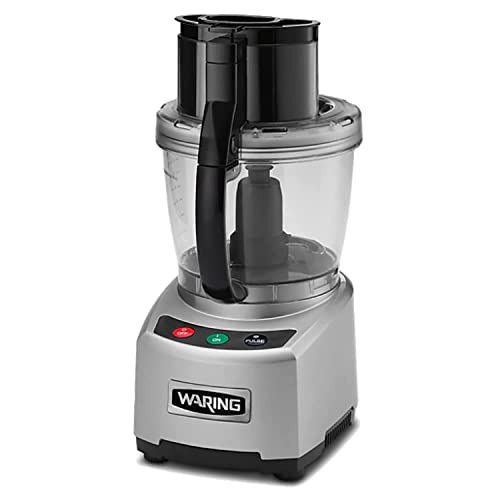
Waring WFP16S 4-Quart Commercial Food Processor, 2 HP
4-quart bowl2 HP motorLiquiLock sealDisc kit
Check price on Amazon
Best for: Small restaurants, caterers and serious home cooks who prep in volume.

Two horsepower is roughly four times what a good home machine puts out, and that headroom is the whole story of the WFP16S. The motor drives through long runs of shredding, slicing and chopping without sagging, which is the difference between a tool for an afternoon and a tool for a shift. A 4-quart sealed bowl is large enough for a double batch of coleslaw or a full tray of diced vegetables.

The LiquiLock system seals the bowl so you can process soups, sauces and dressings without a leak, something that unsealed home bowls cannot manage. A kit of shredding and slicing discs ships with it, so it is ready for the common prep jobs from day one. It is a batch-style machine, so you load the bowl, run and empty it, rather than feeding a stream of food.

Ownership favors commercial habits. The base is heavy, needs a dedicated counter spot and requires a proper circuit, and the bowl and disc parts are sold individually. Clean the sealed bowl promptly, store discs in a rack and respect the duty cycle. It is expensive for a home kitchen, but for a small restaurant, a bakery or a serious canning household it is the strongest option in the group.

What works

  • 2 HP motor runs long jobs without sagging
  • 4-quart sealed bowl handles liquids
  • Shredding and slicing discs included
  • Parts sold individually

Watch out for

  • Heavy and needs dedicated counter space
  • High cost compared with home machines
  • Batch loading slows continuous prep

Spec sheet

Bowl
4 quarts
Motor
2 horsepower
Seal
LiquiLock sealed bowl
Discs
Shredding and slicing included
Best at
High-volume batch prep
02
Waring WFP16SC 4-Quart Food Processor with Continuous Feed
4-quart bowl2 HP motorContinuous feedThermal protection
Check price on Amazon
Best for: Kitchens that slice and shred large quantities of produce in one sitting.

The WFP16SC is the WFP16S with a continuous-feed attachment, and that one addition changes how the machine works. In batch mode it behaves like its sibling, a sealed 4-quart bowl. In continuous mode, food is fed through a chute, processed by the disc and discharged through a side spout into your own container, so the bowl never fills. That means you can slice a case of onions without stopping.

The motor carries thermal overload protection, which shuts the machine down if it overheats rather than burning out. Waring says the machine performs over twenty functions, but the real value is in repetitive volume slicing and shredding for salads, hash browns and slaws.

Compared with the batch-only WFP16S, it costs more and takes more cleaning since there are more parts. The continuous-feed head must be taken apart after every use. If your job is a long list of produce for a salad bar, it is the right machine. If you do mixed batch jobs, the WFP16S is simpler and cheaper.

What works

  • Continuous feed discharges to your container
  • 2 HP motor with thermal overload protection
  • Also works as a sealed batch bowl
  • Over twenty functions

Watch out for

  • More parts to clean after use
  • Costs more than the batch-only model
  • Continuous head adds storage needs

Spec sheet

Bowl
4 quarts, 16 cups
Motor
2 horsepower
Feed
Batch and continuous
Protection
Thermal overload
Best at
Non-stop slicing and shredding
03
Waring WFP11SW 2.5-Quart Food Processor, 3/4 HP, Flat Lid
2.5-quart bowl3/4 HP motorLiquiLock bowlLow profile
Check price on Amazon
Best for: Small kitchens and cafes that want commercial durability in a compact size.

This is the smaller Waring, a 2.5-quart batch machine with a three-quarter horsepower motor. It is the commercial option for a kitchen that cannot spare the room for a large unit. The low-profile design and flat lid let it slide under a cabinet, and the clear unbreakable bowl lets you see the texture of the food as it processes.

Three-quarter horsepower is still more than most home machines deliver, so it shreds and chops dense food without stalling. The LiquiLock sealed bowl handles liquids. What you give up is volume, since 2.5 quarts is the amount of a normal home machine, and you will work in more rounds than on the 4-quart model.

For cleanup, the sealed bowl comes apart in a few pieces and the parts are standard Waring items, so replacements are easy to find. If you are moving from a home processor to a commercial design, this is the gentle first step.

What works

  • Low profile fits under cabinets
  • 3/4 HP motor with commercial duty
  • Sealed clear bowl shows the texture
  • Standard Waring parts

Watch out for

  • Smaller 2.5-quart capacity
  • No continuous feed option
  • Costs more than home machines of similar size

Spec sheet

Bowl
2.5 quarts, clear
Motor
3/4 horsepower
Lid
Flat lid
Seal
LiquiLock
Best at
Small batches in tight spaces
04
Robot Coupe R2B CLR Cutter Mixer, 2.9 L Bowl, 1 HP
2.9 L bowl1 HP motorSmooth S blade3-button controls
Check price on Amazon
Best for: Professional-style bowl work such as emulsions, pastes and pastry.

The R2B is a cutter mixer, which means it is built around a bowl and a smooth S blade rather than a disc kit. A 1 HP motor drives the blade through batches of meat, pastry, sauces and purees, and a three-button panel with on, off and pulse is all the control you need. The clear polycarbonate bowl holds 2.9 liters.

This machine is designed for the jobs that a disc processor does poorly: emulsifying a vinaigrette, grinding a pate, working a pastry dough or chopping herbs to a fine paste. The smooth blade gives a fast, even cut.

The maker is a household name in professional kitchens, parts are stocked by restaurant suppliers and the build quality is strong. The limit is that it does not come with slicing and shredding discs, and the clear bowl is prone to clouding from heavy use. If your work is bowl work, it is the most refined tool in the guide.

What works

  • 1 HP motor with a smooth S blade
  • Simple three-button control
  • Clear bowl shows the texture
  • Parts stocked by restaurant suppliers

Watch out for

  • No slicing or shredding discs in the base kit
  • Clear bowl clouds with heavy use
  • High cost for bowl-only work

Spec sheet

Bowl
2.9 L clear polycarbonate
Motor
1 horsepower
Blade
Smooth S blade
Controls
3-button panel
Best at
Emulsions, pastes and fine chops
05
CLIVIA 9L Commercial Food Processor, 1800 W Bowl Cutter
9 L steel bowl1800 W motor986 to 2470 RPMStainless chassis
Check price on Amazon
Best for: Kitchens that mince or chop in bulk and want adjustable speed.

The CLIVIA is a large bowl cutter, a stainless 9 liter bowl with a heavy blade and an 1800 W motor, built for mincing meat, vegetables and grains in bulk. Speed is adjustable from about 986 to 2470 RPM, which lets you go from a coarse chop to a fine paste by turning a knob.

The all-stainless bowl and chassis are easy to clean and resist odor, and the big capacity suits a restaurant that prepares sausage fillings, dumpling stuffings or large batches of salsa. It is a mincer rather than a slicer, so there are no discs.

Be realistic about the brand. It does not carry the parts network of a Waring or a Robot Coupe, so a missing blade or lid is harder to replace. Buy it for one defined high-volume job, check what the seller covers and keep an eye on the blade seal. For the money, it offers a lot of bowl and motor.

What works

  • 9 L stainless bowl for bulk batches
  • Adjustable speed from about 986 to 2470 RPM
  • 1800 W motor
  • Stainless bowl and chassis

Watch out for

  • No slicing or shredding discs
  • Limited parts and service network
  • Heavy and takes real counter space

Spec sheet

Bowl
9 L stainless steel
Motor
1800 W
Speed
986 to 2470 RPM adjustable
Build
Stainless bowl and chassis
Best at
Bulk mincing and chopping
06
VEVOR 550W Commercial Vegetable Slicer with 6 Blades
550 W motor6 blades2 feed holes1600 RPM
Check price on Amazon
Best for: Small shops and stalls that slice and shred vegetables in quantity.

The VEVOR is not a bowl machine at all. It is a continuous-feed vegetable slicer that pushes food through one of two feeding holes onto a spinning blade at about 1600 RPM, with six interchangeable blades for slicing, shredding and cutting. A 550 W motor and a stainless and cast aluminum body make it a counter-top slicer for a small restaurant or a market stall.

Two feeding holes let you fit both large and long items, and the continuous-feed design means the food falls into your container. It is the right tool for cabbage, potatoes and carrots in bulk, and it is a poor tool for sauces, pastes or anything liquid.

It costs far less than the Waring continuous-feed model, and that is the point. You get slicing and shredding at a fraction of the cost, in exchange for a smaller motor and less parts support. Clean the blades carefully with a brush, keep fingers clear of the feed holes and use the pusher.

What works

  • Six blades for slicing and shredding
  • Two feed hole sizes
  • Continuous feed into your container
  • Lowest cost among the commercial slicers

Watch out for

  • Smaller 550 W motor
  • Not for liquids or pastes
  • Limited parts and service network

Spec sheet

Motor
550 W
Blades
6
Feeding holes
2 sizes
Speed
1600 RPM
Build
Stainless and cast aluminum

Spec sheet decoder

What the numbers on the box really mean

The specs manufacturers lead with, translated into what they tell you about real-world performance.

Horsepower

A motor rating where 1 HP is about 750 W. It signals sustained commercial duty.

Watch forThe Waring WFP16S lists 2 HP and the Robot Coupe R2B lists 1 HP.

LiquiLock

Waring's sealed bowl system that prevents leaks when processing liquids.

Watch forThe WFP11SW and WFP16S use it, so soups are possible.

Continuous feed

A chute and side discharge that process food without filling the bowl.

Watch forThe WFP16SC and VEVOR offer it, with more parts to clean.

Adjustable RPM

A speed control that sets blade speed for coarse or fine results.

Watch forThe CLIVIA lists 986 to 2470 RPM.

Thermal overload protection

A cutoff that stops the motor when it overheats.

Watch forThe WFP16SC includes it, and it is a key safety feature.

Methodology

How We Evaluated These Commercial Food Processors

Design fit

We split batch bowl processors, cutter mixers and a continuous slicer and judged each by its own job. A mismatch between machine and task counted against a pick. The Waring WFP16S led the general-purpose group.

Motor and duty

We read 3/4 HP, 1 HP, 2 HP, 1800 W and 550 W ratings against intended use. Sustained duty and thermal protection counted more than peak numbers. The 2 HP machines led.

Sealing and cleanup

We looked at sealed bowls, parts counts and how each machine breaks down for cleaning. LiquiLock bowls and stainless bowls scored well. Continuous-feed heads lost points for extra parts.

Service network

We weighed how easy it is to buy parts and find a technician. Waring and Robot Coupe scored high, and the smaller brands lower. Downtime risk was part of the cost picture.

Owner feedback patterns

We read feedback for repeating themes such as cracked bowls, seal wear and blade dulling. These patterns shaped the cons. Individual comments were never treated as measurements.

Decision guide

How to Choose the Right Commercial Food Processors

By Kitchen Type

SituationPickWhy
Small restaurant, mixed prepWaring WFP16S2 HP and a 4-quart sealed bowl
Salad bar with long slicing runsWaring WFP16SCContinuous feed with thermal protection
Tight counter or cafeWaring WFP11SWLow profile and compact
Pastry, pates and emulsionsRobot Coupe R2B CLRSmooth S blade cutter mixer
Bulk mincing and stuffingsCLIVIA 9L Bowl CutterLarge steel bowl and adjustable speed
Vegetable slicing on a shoestringVEVOR 550W SlicerSix blades and two feed holes

By Budget

Budget tierPickWhy
Lowest tierVEVOR 550W SlicerCheapest slicer
Low-mid tierCLIVIA 9L Bowl CutterLarge bowl and strong motor
Mid tierWaring WFP11SWCommercial brand, small size
Upper tierWaring WFP16SFull 4-quart commercial capacity
Top tierWaring WFP16SC or Robot Coupe R2BContinuous feed or cutter mixer quality

Batch Bowl vs Bowl Cutter

Batch bowl

The Waring machines use a sealed bowl with slicing and shredding discs. They cover most prep jobs. They need disc storage.

Bowl cutter

The Robot Coupe R2B and CLIVIA use a bowl and a blade. They excel at mincing, emulsifying and pastes. They cannot slice or shred.

Choose a batch bowl for general prep. Choose a bowl cutter for pastes and bulk mincing.

By Power and Space

SituationPickWhy
Needs the most motorWaring WFP16S2 HP
Little counter roomWaring WFP11SWLow profile
Sturdy bench availableCLIVIA 9L Bowl Cutter9 L steel bowl
Light duty and low costVEVOR 550W Slicer550 W

For Home Canning and Batch Cooking Specifically

Look for

A sealed bowl, a strong sustained motor and discs for the cuts you need. Volume and consistency matter more than extras.

In this comparison

The Waring WFP16S gives the most for a serious home cook, and the WFP11SW is the compact option. The Robot Coupe R2B is better for pastes and purees.

When to Spend More

Spend more if

The machine will run daily and downtime costs you money. The Waring WFP16S and Robot Coupe R2B have the service networks and build to justify it.

Save if

Your use is occasional or specialized. The VEVOR 550W Slicer and CLIVIA 9L Bowl Cutter give capacity at a lower tier.

Ownership

Maintenance schedule

The upkeep that decides whether this machine lasts two seasons or ten.

TaskIntervalWhy it matters
Wash bowl, lid and discsAfter every useFood acids and oils attack plastic and dull edges. Warm soapy water and a brush are enough.
Check the bowl sealWeeklyA worn seal leaks and ruins sauces. Replace flattened or cracked seals.
Wipe the motor housingDaily in serviceSplatter and flour dust clog the vents. Keep the housing clean and dry.
Inspect blades for nicksMonthlyA chipped blade gives ragged cuts and strains the motor. Replace it promptly.
Respect the duty cycleDuring heavy useEven commercial motors need rests. Follow the manual and watch for thermal cutoffs.

FAQ

Frequently Asked Questions

What makes a food processor commercial?

A commercial machine has a motor rated in horsepower, a larger bowl and a build meant for hours of running. It usually has a service network and parts availability. Check the duty cycle and the plug type.

Is a commercial processor worth it at home?

For canning, large batch cooking and heavy shredding, yes. For daily salads and dips, a good home machine is enough. The extra size and cost only pay off with volume.

Which is best for slicing vegetables?

The Waring WFP16SC with continuous feed is the strongest option. The VEVOR slicer is the low-cost alternative. A bowl cutter is not suited to slicing.

Do commercial processors handle liquids?

Sealed bowls such as Waring's LiquiLock do. Open bowl cutters are better for pastes and dry mixes. Check the listing before you process soup.

How long should one last?

A well-maintained Waring or Robot Coupe can serve for many years in a working kitchen. Bowls, seals and blades are the wear parts. Smaller brands are harder to repair.

Do I need a special circuit?

Large motors draw more current than home appliances. Check the voltage and plug type, and avoid sharing a circuit with other heavy equipment. Ask an electrician if in doubt.

Bottom line

The short version

Browse more commercial food processorson Amazon →
James Miller, Lead Machine Editor

About the author

James Miller

Lead Machine Editor, MachineFanatic

James Miller leads MachineFanatic's buying guides, turning spec sheets, manuals and owner feedback into clear verdicts on power tools, outdoor power equipment, shop machines and kitchen machines.

More from James →

Keep reading

Related guides