
Amazon affiliate links - we earn a commission.Affiliate disclosure

Buying guide · 15 min read · Updated 2026-11-06

Best Costway Dehumidifiers (2026)

Six Costway dehumidifiers from a 32 pint bedroom unit to a 215 pint job site machine, compared on DOE capacity, drainage, noise and coverage.

James MillerBy James MillerLead Machine Editor6 machines comparedSpec-sheet verified
Best Costway Dehumidifiers

At a glance

Our top picks

Side by side

Spec comparison

MachineRated capacityCoverageTankControlsDrainage
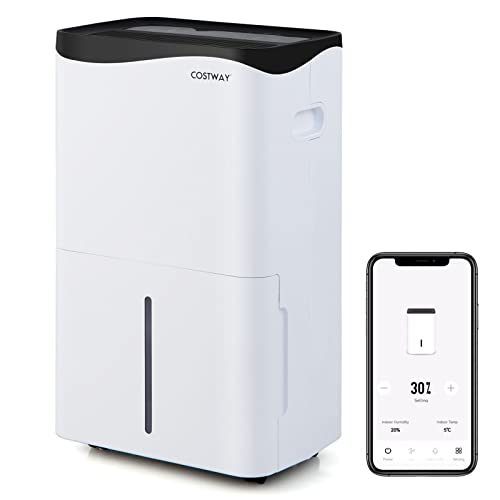
Costway 100 Pint Smart Wi-Fi Dehumidifier for 5,500 Sq FtBest OverallCostway 100 Pint Smart Wi-Fi Dehumidifier for 5,500 Sq Ft100 pints/day at 95F, 90% RHUp to 5,500 sq ft5 L (1.3 gal) with level windowSmart Life app, Bluetooth, Alexa, 4 modes, 2 fan speedsn/a
Costway 80 Pint Dehumidifier with Pump and 2.2 Gal TankBest with Built-In PumpCostway 80 Pint Dehumidifier with Pump and 2.2 Gal Tank80 pints/day at 95F, 90% RHn/a2.2 galn/aManual tank, 2 ft gravity hose, or pump
Costway 80 Pint 4,000 Sq Ft Compressor DehumidifierBest Value for Large RoomsCostway 80 Pint 4,000 Sq Ft Compressor Dehumidifier80 pints/day at 95F, 90% RHUp to 4,000 sq ft (maker rating)1 gal with visible levelAuto and continuous, 0 to 24 hour timer, child lockManual or 2 ft hose with drain plug
Costway 32 Pint Quiet Dehumidifier for 2,500 Sq FtBest for BedroomsCostway 32 Pint Quiet Dehumidifier for 2,500 Sq Ft32 pints/day at 95F, 90% RHUp to 2,500 sq ft (maker rating)n/an/aManual tank or 3.3 ft hose
Costway 150 Pint Dehumidifier with Pump for 7,000 Sq FtBest for Large BasementsCostway 150 Pint Dehumidifier with Pump for 7,000 Sq Ft150 pints/day at 95F, 90% RHUp to 7,000 sq ft (maker rating)2.4 gal with handlen/aManual, 23.5 in gravity hose or 16.4 ft pump hose
Costway 215 Pint Commercial Dehumidifier for 8,000 Sq FtBest for Job SitesCostway 215 Pint Commercial Dehumidifier for 8,000 Sq Ft215 pints/day at 95F, 90% RHUp to 8,000 sq ft (maker rating)n/aDigital display, 0 to 24 hour timer, memory restart2 ft continuous drain hose

A dehumidifier is a small refrigeration machine. It pulls room air across a cold coil, condenses water out of it and warms the air slightly on the way back out. The buying problem is that the pint figure on the box is measured in a hot, soaked room that almost no basement ever reaches, so two units with the same label can behave very differently.

This guide explains how to read capacity ratings, drainage options and noise claims so you can size a machine to a real room. Start with the picks above for the short list, then read the reviews below to match each model to your space, your drain and the way you plan to run it.

Before you buy

6 Criteria to Look For Before Buying a Costway Dehumidifier

  1. 01

    Read the DOE pint rating

    Dehumidifier capacity has been measured under the US DOE test at 65F and 60% humidity since the 2019 update, which is much closer to a real basement than the older 80F and 60% test. Many marketplace listings still quote a 95F and 90% figure that can be three times higher. Always find the DOE number and size from it. In this lineup the 80 pint 4,000 sq ft model states 24 DOE pints and the 100 pint smart model states 36, so the larger label hides a modest real difference. Buyers often take the biggest number and assume a bigger room is covered, which is the most common sizing mistake.

  2. 02

    Match capacity to room wetness

    Size by how wet the room feels, not only by square footage. A damp, musty room needs a larger machine than a dry room of the same size, and a space with a sump pit or a laundry load needs more again. A reasonable rule is to pick a DOE capacity at least one step above what a coverage chart suggests for a wet room. The 32 pint Costway suits a single bedroom, while the 150 pint unit is the only home model here that makes sense for an open, wet basement. Running an undersized machine nonstop just wears the compressor and never reaches the target humidity.

  3. 03

    Plan the drainage first

    A dehumidifier that needs emptying every day will eventually be ignored, so continuous drainage decides whether it works in practice. Gravity hoses need a drain lower than the machine, while a pump can lift water through a hose to a sink or window. The 80 pint Costway with a pump and the 150 pint unit with its 16.4 ft pump hose are the two lineup picks that solve a high drain, and the 100 pint smart model relies on gravity and a smaller 1.3 gallon tank. Measure the distance and height to your drain before you choose a model, because a short hose that cannot reach is a frequent return reason.

  4. 04

    Know the operating temperature

    Refrigerant dehumidifiers lose output as the room cools, because the coil frosts and the machine must pause to defrost. Below about 65F the capacity falls quickly, and below 41F most home units stop being useful. A basement that stays at 55F in winter will not behave like the 95F lab condition on the box. Auto defrost, which all the Costway models here include, protects the coil but does not restore the lost capacity. If your space is cold, either size up generously or plan for a desiccant model, which is a different machine entirely.

  5. 05

    Judge the noise honestly

    Fan and compressor noise is rated at the lowest fan speed, usually in a quiet lab. The 32 pint Costway lists 36 dB and the 80 pint models list 41 and 42 dB, which are suitable for a bedroom, while the 150 pint model lists 45 dB and the commercial unit is louder and has no quiet specification worth trusting. Noise in a small room reflects off hard walls, so a machine that sounds fine in a basement can feel loud in a bedroom. If you sleep with it on, choose the lowest listed figure and use the sleep or low fan mode.

  6. 06

    Check smart controls and safety

    A humidistat and timer are standard, but app and voice control add real value only if the machine is out of sight. Of the Costway models here, only the 100 pint model has app and Alexa control, which is helpful for a basement unit. Look for tank-full shutoff, auto restart after a power cut, a child lock if kids share the space and a washable filter. Avoid running any dehumidifier on a thin extension cord, since a compressor draws a surge at startup that can overheat a long, light cord.

Detailed reviews

The 6 best costway dehumidifiers, explained

01
Costway 100 Pint Smart Wi-Fi Dehumidifier for 5,500 Sq Ft
100 pints (95F, 90%)36 pints DOEApp and Alexa1.3 gal tank
Check price on Amazon
Best for: Basements and large living areas where you want app control and a capacity rating that includes a DOE figure.

This is the Costway to buy if you want a number you can actually plan around. The listing gives three capacity ratings instead of one: 100 pints at the flattering 95F and 90% humidity lab condition, 85 pints at 86F and 80%, and 36 pints under the DOE test. That DOE figure is the honest one for a cool basement, and it still puts this unit well above the 30 and 32 pint Costway models on real moisture removal.

The smart layer is useful rather than decorative. Wi-Fi and Bluetooth control through the Smart Life app plus Alexa support means you can check and change the humidity target from upstairs, which matters because a basement unit is easy to forget about. Four modes (auto, continuous drying, sleeping and fan) and two fan speeds cover most situations. Compared with the 80 pint Costway that has a pump, this one has a smaller 1.3 gallon tank, so on a wet week you will either empty it often or run the hose to a floor drain.

The practical limits are drainage and maintenance. With no pump, continuous drainage is gravity only, so the unit needs to sit higher than the drain. At 36 DOE pints a day, that small tank fills quickly in a wet season, so treat the hose connection as part of the purchase. Rinse the mesh filter monthly during the damp season, keep the coil fins free of dust, and plan on a storage cover if the unit sits through a dry winter.

What works

  • Lists a DOE rating next to the inflated 95F figure
  • App and Alexa control for a unit that lives in the basement
  • Maker rates it for rooms of up to 5,500 sq ft in size
  • Four modes including a fan only mode for airing out a room

Watch out for

  • Tank holds only 1.3 gallons, so hose drainage is close to required
  • No built-in pump, so drainage is manual or by gravity
  • App control depends on a third party app that may change

Spec sheet

Rated capacity
100 pints/day at 95F, 90% RH
DOE capacity
36 pints/day
Mid-range rating
85 pints/day at 86F, 80% RH
Coverage
Up to 5,500 sq ft
Tank
5 L (1.3 gal) with level window
Controls
Smart Life app, Bluetooth, Alexa, 4 modes, 2 fan speeds
Timer
0 to 24 hours
02
Costway 80 Pint Dehumidifier with Pump and 2.2 Gal Tank
80 pints (95F, 90%)Built-in pump2.2 gal tank41 dB or less
Check price on Amazon
Best for: Finished basements and laundry rooms where the drain is higher than the dehumidifier and you want it fully unattended.

The 80 pint pump model is the Costway that solves the most annoying basement problem, which is a drain that sits above the machine. Three drainage options come in the box: empty the 2.2 gallon tank by hand, run the 2 ft hose to a floor drain, or switch on the pump and push water up and out through the supplied tubing. A pump moves the condensate through a small impeller, so the water can climb to a utility sink or a window instead of relying on gravity.

The 80 pint figure is the 95F and 90% humidity rating, so it overstates what you will see in a 65F basement. Treat it as roughly a mid-size machine in practice and size the room accordingly. Next to the 100 pint smart model this one has no app, but it has a bigger tank and noise listed at 41 dB or less, which is respectable for the capacity. An interior drying function runs the fan after shutdown to dry the coil area, which helps reduce musty smells between cycles.

Ownership comes down to the pump. Pumps are the part most likely to clog with lint or algae, so rinse the reservoir and run a cup of diluted vinegar through the hose once or twice a season. Keep the discharge hose short and sloped so it never holds standing water, and unplug the unit and drain it completely before storing it for winter.

What works

  • Three drainage routes: manual, gravity hose or built-in pump
  • 2.2 gallon tank lasts much longer than the 100 pint model
  • Listed at 41 dB or less, which is quiet for its capacity
  • Interior drying cycle helps limit coil odor between runs

Watch out for

  • No app or voice control, only the touch panel and timer
  • The 80 pint figure is a 95F rating, not a cool basement figure
  • Pump and reservoir need periodic cleaning to stay reliable

Spec sheet

Rated capacity
80 pints/day at 95F, 90% RH
Tank
2.2 gal
Drainage
Manual tank, 2 ft gravity hose, or pump
Noise
41 dB or less
Modes
Auto and continuous
Timer
1 to 24 hours with screen off
Safety
Overflow shutoff, interior drying
03
Costway 80 Pint 4,000 Sq Ft Compressor Dehumidifier
80 pints (95F, 90%)24 pints DOE42 dB1 gal tank
Check price on Amazon
Best for: Buyers who want a capable mid-size Costway for a damp room or small basement and do not need a pump or an app.

This model is useful mostly because the listing is honest enough to teach you something: 80 pints per day at 95F and 90% humidity, but only 24 pints per day by the DOE standard. That 3.3 to 1 gap between the marketing figure and the regulatory figure is the single most important thing to understand about every dehumidifier on this page. A 24 pint DOE machine is a perfectly good unit for a damp bedroom, bathroom or small finished basement, yet the 4,000 sq ft coverage claim should be taken with a large grain of salt.

Compared with the 100 pint smart Costway, which lists 36 DOE pints, this one removes roughly a third less water under the same standard and has no app. In exchange it is lighter on the budget tier and runs at as low as 42 dB. It also has a modest 1 gallon tank, so continuous drainage with the 2 ft hose and drain plug is the realistic way to use it in a basement. A child lock, memory restart and inside drying are included, which cover the basics of unattended running.

Day to day it behaves like any small refrigerant unit. The compressor will frost the coil in cool rooms, and auto defrost periodically pauses cooling to melt the ice, which temporarily lowers output below 65F. Wash the mesh, wipe the coil with a soft brush and keep a few inches clear around every vent. If the room is genuinely large or the basement smells musty, step up to the pump model or the 150 pint unit instead.

What works

  • Lists both an 80 pint and a 24 pint DOE rating, so you can compare fairly
  • Noise as low as 42 dB for use in a bedroom or office
  • Child lock and memory restart suit unattended running
  • Compact enough to roll between rooms on its four wheels

Watch out for

  • The 4,000 sq ft claim is far above what a 24 pint DOE rating supports
  • Small 1 gallon tank makes hose drainage necessary in a basement
  • Output drops in cool rooms when auto defrost cycles

Spec sheet

Rated capacity
80 pints/day at 95F, 90% RH
DOE capacity
24 pints/day
Coverage
Up to 4,000 sq ft (maker rating)
Noise
As low as 42 dB
Tank
1 gal with visible level
Drainage
Manual or 2 ft hose with drain plug
Controls
Auto and continuous, 0 to 24 hour timer, child lock
04
Costway 32 Pint Quiet Dehumidifier for 2,500 Sq Ft
32 pints (95F, 90%)36 dB3 modes3.3 ft hose
Check price on Amazon
Best for: Bedrooms, bathrooms and small rooms where noise matters more than raw capacity.

The 32 pint model is the quietest Costway here, with noise listed as low as 36 dB. That is the level of a quiet library, which makes this the right size and the right sound profile for a bedroom, nursery or home office. The 32 pint figure is again the warm and humid lab condition, so it is a small machine in real life. It suits a single room, not an open basement.

Three modes handle most jobs. Continuous mode runs until you stop it, auto holds a humidity target, and a drying mode keeps the fan and compressor going to dry laundry on a rack. A three color indicator on the front shows whether the room is dry, comfortable or damp without reading the display, which is a small but practical touch. Compared with the 80 pint models, you give up tank size and drainage flexibility but gain a lighter, quieter machine that is easy to carry.

In ownership terms this is the simplest machine in the lineup. The 3.3 ft hose is enough for a bathroom sink or tub, and the washable filter pulls out for a rinse. Because it is a compressor design, keep it in a room above about 65F for full output, and expect it to cycle its defrost in cooler rooms.

What works

  • Quietest pick in this lineup, listed at 36 dB for bedrooms
  • Three color indicator shows room humidity at a glance
  • Drying mode suits a clothes rack in a laundry room
  • Light and portable, with a top handle and four wheels

Watch out for

  • Capacity is far too small for an open or wet basement
  • Tank is small, so a hose is needed for overnight running
  • The 2,500 sq ft figure assumes a lightly damp room

Spec sheet

Rated capacity
32 pints/day at 95F, 90% RH
Coverage
Up to 2,500 sq ft (maker rating)
Noise
As low as 36 dB
Modes
Continuous, auto and drying
Drainage
Manual tank or 3.3 ft hose
Indicator
Three color humidity light
Extras
24 hour timer, child lock, auto defrost, memory restart
05
Costway 150 Pint Dehumidifier with Pump for 7,000 Sq Ft
150 pints (95F, 90%)16.4 ft pump hose2.4 gal tank45 dB
Check price on Amazon
Best for: Large unfinished basements and damp workshops that need high capacity with a pump drain.

The 150 pint unit is built for spaces where the small machines simply cannot keep up, such as an unfinished basement with a sump pit, a large crawl-adjacent room or a garage workshop. It pairs a large compressor with three fan speeds, a 2.4 gallon tank and a 16.4 ft pump hose, so the water can leave the room without anyone carrying a bucket. The 45 dB rating is quite reasonable for this size.

Treat the 150 pint number as a ceiling that applies at 95F and 90% humidity, not a promise for a 60F basement. In cool, damp conditions the real output is a fraction of that, but a machine this size still moves far more air and water than the 80 pint units. Against the 215 pint commercial model it is much lighter and quieter, and it keeps the home dehumidifier features such as a child lock, memory restart and auto defrost.

Plan the install before you buy. Route the pump hose with a continuous upward-then-down path and avoid kinks, since a kinked hose can overheat the pump. Keep the unit off carpet, leave clearance around the intake and rinse the mesh each month. If the humidity target is never reached after two or three days, the room is bigger or wetter than one machine can handle, and a second unit or a source fix such as a gutter or grading repair will do more than turning the dial down.

What works

  • Pump hose reaches 16.4 ft for sink or window discharge
  • Three fan speeds let you trade noise for drying speed
  • 2.4 gallon tank gives breathing room if the pump is not used
  • Child lock and memory restart suit unattended running

Watch out for

  • Heavy and bulky, so moving it between floors is a two hand job
  • The 150 pint figure is a 95F rating, not a cool basement figure
  • Pump line can clog or kink and needs periodic checking

Spec sheet

Rated capacity
150 pints/day at 95F, 90% RH
Coverage
Up to 7,000 sq ft (maker rating)
Tank
2.4 gal with handle
Drainage
Manual, 23.5 in gravity hose or 16.4 ft pump hose
Noise
45 dB
Fan
3 speeds
Modes
Normal and continuous
06
Costway 215 Pint Commercial Dehumidifier for 8,000 Sq Ft
215 pints (95F, 90%)8,000 sq ft rating4 wheels2 ft drain hose
Check price on Amazon
Best for: Water damage drying, workshops, warehouses and very large basements.

This is a commercial-style machine, aimed at water damage restoration, construction drying and big warehouse or shop spaces. At 215 pints per day on the warm and humid rating it is more than double the 100 pint smart model, and it is the only machine here that makes sense for a flooded room. The cabinet is built to be rolled around a site, with two large directional wheels, two lockable universal wheels and a push-pull handle.

The caveat is the same as with every rating. Commercial dehumidifier capacity is often quoted at 80F and 60% humidity by industry convention, but here the listing uses 95F and 90%, so expect meaningfully less in a cool space. It also lacks a pump, so you will want a floor drain or a transfer pump downstream. Compared with the 150 pint home unit, you gain raw capacity and rugged mobility, and you lose the quiet and household features.

Think of it as a tool, not an appliance. Use it with doors closed, set it near the wettest area and give it clear airflow on both sides. Clean the washable mesh before and after every job, because construction dust blinds the coil quickly and cuts output. Do not run it unattended in a space with standing water around the electrical cord, and store it drained and upright.

What works

  • Highest rated capacity in the Costway range at 215 pints
  • Large directional wheels and handles for moving around a site
  • Wide 30% to 80% humidity setting range for drying jobs
  • Memory restart resumes your settings after a power cut

Watch out for

  • Loud and bulky, so it does not belong in living spaces
  • No pump, so the 2 ft hose needs a drain at floor level
  • Rated at 95F, so output drops in a cold, wet structure

Spec sheet

Rated capacity
215 pints/day at 95F, 90% RH
Coverage
Up to 8,000 sq ft (maker rating)
Humidity range
30% to 80%
Drainage
2 ft continuous drain hose
Mobility
2 lockable wheels, 2 large wheels, push-pull handle
Controls
Digital display, 0 to 24 hour timer, memory restart
Safety
Auto defrost, cable strap

Spec sheet decoder

What the numbers on the box really mean

The specs manufacturers lead with, translated into what they tell you about real-world performance.

DOE pints per day

The US Department of Energy test measures water removal at 65F and 60% relative humidity since the 2019 update, which resembles a real basement far more than an old 80F test did. It is the only figure that lets you compare two brands on a fair basis. A DOE rating of 24 pints is a small to mid machine, and 36 pints is a solid mid-size one.

Watch forListings often lead with a 95F and 90% figure instead. The 80 pint 4,000 sq ft Costway states a 24 pint DOE rating, a 3.3 to 1 gap, and the 100 pint model states 36.

Rated coverage in square feet

Coverage is a manufacturer estimate of how much floor area the machine can handle, usually assuming a moderately damp space and an open floor plan. It ignores ceiling height, doors, moisture sources and air leakage. It is a loose guide at best.

Watch forCoverage numbers are inflated to be larger than the capacity justifies. A unit with 24 DOE pints rated for 4,000 sq ft is the clearest example here, so use coverage only as a tiebreaker.

Pump versus gravity drain

Gravity drainage uses a hose and the machine must sit above the drain. A built-in pump uses a small impeller to push condensate up and out through a tube, letting you route water over a laundry sink or out a window. Pumps add cost and one more part to clean.

Watch forCheck the actual pump hose length and lift. The 150 pint Costway lists 16.4 ft of pump hose, while the 100 pint smart model has only a gravity connection and a small tank.

Noise in dB

Decibel ratings are usually taken at the lowest fan speed in a quiet room at a set distance, and a few decibels is a noticeable difference. 36 dB is near a whisper, 45 dB is a quiet office hum and 55 dB is a conversation. A rise of about 10 dB sounds roughly twice as loud.

Watch forQuoted figures are best case. Commercial machines like the 215 pint unit list no meaningful quiet figure, and a compressor start adds a short thump on top of the steady fan sound.

Humidity range 30% to 80%

This is the setpoint range of the humidistat, not the range the machine can reach. Health guidance usually suggests keeping indoor humidity around 30% to 50%, with 50% as a practical upper limit in summer. The machine stops when it reads the target.

Watch forA wide range looks flexible, but a machine that cannot reach the setpoint in a cold room just runs forever. Pick the target by room use and check it with a separate hygrometer.

Methodology

How We Evaluated These Costway Dehumidifiers

Capacity on a fair footing

We compared each unit by the most conservative capacity rating the listing states, favoring DOE figures where available, and treated 95F and 90% figures as marketing ceilings. Machines that disclosed more than one rating were given credit for transparency. This is why the 100 pint smart model and the 80 pint 4,000 sq ft model are easy to compare while others rely on a single number.

Drainage flexibility

We looked at the tank size, hose length, gravity and pump options, because drainage decides whether a basement unit gets used daily. The 80 pint pump model and the 150 pint unit ranked highest here, while the 32 pint and 100 pint units rely on tank or gravity. A larger tank gives slack if the pump or hose is not used.

Noise and room suitability

We compared listed decibel figures against the likely room. The 32 pint unit at 36 dB and the 80 pint models at 41 and 42 dB suit bedrooms, while the 150 pint unit at 45 dB suits a basement and the 215 pint commercial machine is a workspace tool. We did not reward a low number if the capacity was too small to matter.

Controls and safety features

We reviewed humidistat range, timers, child locks, tank-full shutoff, auto defrost and memory restart, along with app control. Only the 100 pint model offers app and Alexa control, which we weighted for units that sit out of sight. Safety features were treated as a baseline, not a differentiator.

Lineup positioning and value

We ranked the six units by capacity tier, from the 32 pint unit at the bottom to the 215 pint unit at the top, then asked which step makes sense for which buyer. The 100 pint smart model leads because its DOE figure and controls fit the most common use. The 4,000 sq ft 80 pint unit is a value pick only when you accept its 24 pint DOE reality.

Decision guide

How to Choose the Right Costway Dehumidifiers

By Room Size and Wetness

Match the machine to how wet the room actually is, then confirm the drainage fits.

ScenarioRecommended pickWhy
Bedroom, nursery or officeCostway 32 Pint Quiet Dehumidifier36 dB and a size that suits one room
Damp finished basement up to a medium sizeCostway 100 Pint Smart Wi-Fi Dehumidifier36 DOE pints and app control
Basement with the drain above the floorCostway 80 Pint Dehumidifier with PumpPump lifts water to a sink or window
Large unfinished or very damp basementCostway 150 Pint Dehumidifier with PumpHigh capacity and a 16.4 ft pump hose
Water damage or a job siteCostway 215 Pint Commercial DehumidifierHighest capacity, built to roll around

By Budget

Relative tiers inside the Costway range, without naming figures.

Budget tierRecommended pickWhat you get
Least expensive way inCostway 32 Pint Quiet DehumidifierA quiet small room machine
Mid tier for a large roomCostway 80 Pint 4,000 Sq Ft Dehumidifier80 pint rating, 24 DOE pints
Mid to upper tier with convenienceCostway 80 Pint Dehumidifier with PumpPump drainage and a 2.2 gallon tank
Upper tier for smart controlCostway 100 Pint Smart Wi-Fi DehumidifierApp, Alexa and a stated DOE rating
Highest tier for big spacesCostway 150 Pint and 215 Pint modelsLarge capacity for wet or huge spaces

Home Machine vs Commercial Machine

The line between a home dehumidifier and a commercial one is about moisture load, not just size.

Home machine

A home unit is designed to hold a room at a steady humidity, run quietly and drain to a tank or hose. The 32 pint, 80 pint, 100 pint and 150 pint Costway models fall here. They handle ordinary damp basements, laundry rooms and bedrooms and add household features such as timers and child locks.

Commercial machine

A commercial unit is built to remove a large burst of water quickly, such as after a leak or during construction. The 215 pint Costway is the lineup example. It is louder, bulkier and lacks a pump, but it has the raw capacity and rolling chassis for job sites.

Pick a home machine for a steady damp room, and the commercial model only if there has been actual flooding or you are drying a large structure.

Pump vs Gravity Drainage

How the water leaves the machine matters as much as how much it removes.

PreferenceRecommended pickWhy
Floor drain nearby, no pump neededCostway 100 Pint Smart Wi-Fi DehumidifierGravity hose and app control
Drain higher than the machineCostway 80 Pint Dehumidifier with PumpPump option and a larger tank
Long run to a sink or windowCostway 150 Pint Dehumidifier with Pump16.4 ft pump hose
Empty a tank manuallyCostway 32 Pint Quiet DehumidifierSmall and light, manual tank
Short hose to a drain at floor levelCostway 215 Pint Commercial Dehumidifier2 ft hose, works with a floor drain

For Basements Specifically

Look for

A basement needs real DOE capacity, a way to drain without carrying a bucket and a machine that tolerates cool air. Look for a stated DOE figure, a pump or a hose, and auto defrost. Size one step up if there is a sump pit or you see condensation on cold walls.

In this comparison

The Costway 100 Pint Smart Wi-Fi Dehumidifier is the best fit for a typical basement because of its 36 DOE pints and app control. The Costway 80 Pint with a pump is the better choice when the drain is above the floor, and the 150 Pint unit suits very large or wet basements.

When to Spend More

Spend more if

Spend more if the space is wet most of the year, you cannot carry a bucket or the area is large. The Costway 80 Pint with a pump and the 150 Pint unit cost more than the 32 Pint model but remove the daily emptying chore and provide the capacity that a wet basement needs.

Save if

Save if you are drying a single bedroom, a bathroom or a closet. The Costway 32 Pint Quiet Dehumidifier or the 80 Pint 4,000 Sq Ft model covers a light problem, and a bigger machine just runs less often without helping.

Ownership

Maintenance schedule

The upkeep that decides whether this machine lasts two seasons or ten.

TaskIntervalWhy it matters
Rinse the mesh filterEvery 2 to 4 weeks in seasonA clogged filter reduces airflow and lowers capacity. A quick rinse and dry restores output.
Clean the water tankMonthlyStanding water grows a film that smells. Wash with mild soap and dry before reinstalling.
Flush the pump and hoseEvery 3 monthsAlgae and lint can block the pump or kink a hose. Run diluted vinegar through the line and check the slope.
Brush the coil finsTwice a seasonDust on the evaporator coil insulates it and cuts efficiency. Use a soft brush with the unit unplugged.
Check the cord and outletEach seasonA compressor draws a surge at startup. A loose plug or thin extension cord can overheat.
Drain and store for winterAt the end of the damp seasonWater left inside can stagnate or freeze. Empty the tank, dry the unit and store it upright.

FAQ

Frequently Asked Questions

How do I choose between a 32 pint and an 80 pint Costway?

Start with the room. The 32 pint model suits a single room that is lightly damp, while the 80 pint models suit larger or wetter spaces such as a basement. The 80 pint figure is the 95F rating, so it is a mid-size machine in practice. If you are unsure, step up one size because an undersized machine runs nonstop.

Is a higher pint rating always better?

Not necessarily. Pint ratings depend on the test conditions, and a 95F and 90% figure is three times larger than the DOE figure for some units. Compare DOE pints where they are stated, and judge coverage by how wet the room is. A larger rating also means a larger, louder and more power-hungry machine.

How often should I clean a dehumidifier?

Rinse the filter every two to four weeks while it is running, and wash the tank monthly. Brush the coil twice a season and flush any pump line every few months. Cleaning protects capacity and prevents musty smells, so it is the cheapest way to keep the machine working properly.

Do I need a pump?

Only if the drain is above the machine or far away. A pump lifts water through a hose, which is why the 80 pint and 150 pint Costway models are useful in basements. If you have a floor drain nearby, gravity drainage with a hose is simpler and has fewer parts to clean.

What humidity level should I aim for?

Most guidance suggests keeping indoor humidity around 30% to 50%, with about 50% as a sensible upper limit in summer. Mold risk rises as humidity stays above 60% for long periods. Use a separate hygrometer to confirm the reading, since the built-in sensor can be off by several points.

Can a home dehumidifier handle water damage?

A home unit can help dry a mild damp patch, but a flooded room needs far more capacity and often professional drying equipment. The 215 pint Costway is the only model here sized for that kind of load. Fix the water source first, remove wet materials and run the machine in a closed room.

Bottom line

The short version

Browse more costway dehumidifierson Amazon →
James Miller, Lead Machine Editor

About the author

James Miller

Lead Machine Editor, MachineFanatic

James Miller leads MachineFanatic's buying guides, turning spec sheets, manuals and owner feedback into clear verdicts on power tools, outdoor power equipment, shop machines and kitchen machines.

More from James →

Keep reading

Related guides