
Amazon affiliate links - we earn a commission.Affiliate disclosure

Buying guide · 12 min read · Updated 2026-11-15

Best Dehumidifiers for RVs (2026)

Six RV dehumidifiers compared on power draw, tank size, drain into a shower pan, winter behavior and storage use, with condensation sources explained.

James MillerBy James MillerLead Machine Editor6 machines comparedSpec-sheet verified
Best Dehumidifiers for RVs

At a glance

Our top picks

Side by side

Spec comparison

MachineTankCoverageTechnologySafetyDrainage
Deyagoo 50 oz Small-Space Dehumidifier for RV Closets, 200 sq ftBest OverallDeyagoo 50 oz Small-Space Dehumidifier for RV Closets, 200 sq ft50 oz (1500 ml), transparent200 sq ftSemiconductorAuto shut offn/a
98 oz Dual-Core Small Dehumidifier with Drain Hose and Sleep ModeBest Hose Drain Plate Unit98 oz Dual-Core Small Dehumidifier with Drain Hose and Sleep Mode98 ozn/aDual-core semiconductorRed warning light and shutoff if full or misplacedTank or drain hose
Newo 44 oz Dehumidifier with Auto Defrost and 24 to 96 Hour TimersBest for Storage WeeksNewo 44 oz Dehumidifier with Auto Defrost and 24 to 96 Hour Timers44 oz260 sq ftn/an/an/a
TABYIK 35 oz Mini Dehumidifier for Bedroom and RV, 280 sq ftBest for Vans and ClosetsTABYIK 35 oz Mini Dehumidifier for Bedroom and RV, 280 sq ft1000 ml, 35 oz280 sq ft listingThermoelectricAuto shut offn/a
Shinco 30 Pint Dehumidifier with LED Display and Drain HoseBest for Large RigsShinco 30 Pint Dehumidifier with LED Display and Drain Hosen/a1,500 sq ft listingn/an/aTwo options, tank or hose
AEOCKY X1-Pro Rotary Desiccant Dehumidifier, 10 PintsBest for Freezing WeatherAEOCKY X1-Pro Rotary Desiccant Dehumidifier, 10 Pintsn/a2,000 sq ft listingRotary desiccant, molecular sieve coren/aHands-free drain hose

An RV packs a lot of moisture into a very small volume. Cooking, showers, breathing and a propane stove or furnace all add water vapor, and the thin walls and single-pane windows give it cold surfaces to condense on. The result is wet windows in the morning and musty cabinets by the end of a season.

Space and power set the shopping rules. A unit has to fit a floor, a bunk or a closet, run on a campsite hookup or a small inverter and survive being bumped down the road. Light plate units suit most rigs, and the rest depends on climate and storage habits.

Before you buy

6 Criteria to Look For Before Buying a Dehumidifier for RVs

  1. 01

    Know where RV moisture comes from

    Cooking, showers, breathing and propane combustion all add water vapor, and cold windows and walls collect it as condensation. Run the roof vent fan while cooking and showering, and crack a window for airflow. A dehumidifier then handles what the vent leaves behind. Propane stoves and furnaces are worth a special mention, because burning propane releases water as one of its products, so a cooking session or a long furnace run can raise humidity faster than the people inside do.

  2. 02

    Power source and draw

    A plate unit like the Deyagoo draws little power and fits an inverter or a small generator. A compressor like the Shinco needs shore power, and a desiccant machine like the AEOCKY draws more still. Match the machine to how you camp, not to the biggest rating. If you rely on solar and batteries, check the running watts on the label and add up a full night, since a unit that quietly drains a battery bank defeats the point of a quiet camp.

  3. 03

    Cold-weather behavior

    Plates and compressors lose output as the air cools, and an unheated RV in winter is where they struggle. The Newo lists auto defrost, and the AEOCKY desiccant has no coil to frost. If you camp in freezing weather, choose one of those.

  4. 04

    Size, weight and securing it

    A unit that slides across the floor on the road is a hazard. The TABYIK and Deyagoo are small and light, so a strap or a non-slip mat holds them. A heavy compressor should be removed or secured before travel.

  5. 05

    Drain method

    A tank of 35 to 50 ounces fills quickly in a humid rig. A hose into the shower pan, as the 98 oz unit allows, drains to the gray tank with no carrying. Check that the hose route is downhill and secured.

  6. 06

    Storage use

    A parked RV sits with the doors closed and no airflow, which is where mold gets started. The Newo's 96 hour timer and defrost keep it working alone. A compressor on shore power is the stronger answer for long storage. Open interior doors and cabinet doors before you leave so air can circulate, and pull bedding off mattresses, which hold moisture and musty smell through a damp month.

Detailed reviews

The 6 best dehumidifiers for rvs, explained

01
Deyagoo 50 oz Small-Space Dehumidifier for RV Closets, 200 sq ft
50 oz tank200 sq ftAuto shut offLight button
Check price on Amazon
Best for: A travel trailer or camper van that needs a small, quiet, low-power unit.

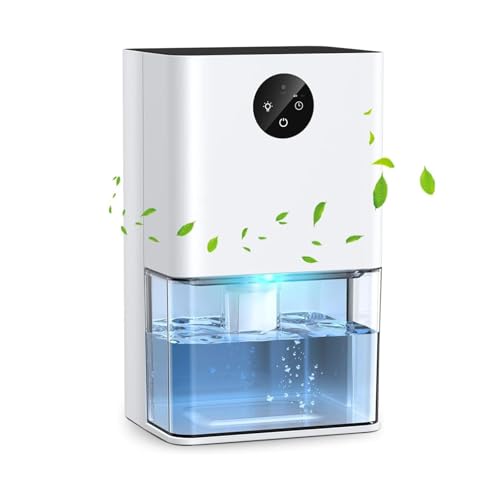
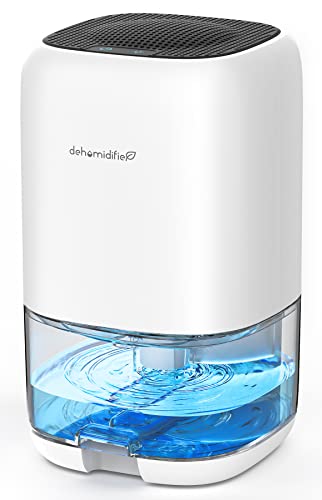
Deyagoo lists the RV by name and sizes itself for a closed room of about 200 square feet, which is close to the interior of a small travel trailer. A modest coverage claim that matches the space is the right starting point. The transparent 50 ounce tank lets you see the water collected at a glance, a small feature that suits a cramped rig.

A semiconductor core draws little power and has no compressor to rattle down the road, so it travels well and runs quietly while you sleep. It cannot match a compressor for water removal, but an RV's volume is small enough that ounces a day make a visible difference. A separate light button turns off the colored lamp, which is helpful in a bunk.

Empty the tank each morning, wipe the plate monthly and secure the unit with a strap before towing. Place it where air can reach the intake, away from bedding. Of the lineup, this is the best all-round pick for a typical camper.

What works

  • Honest 200 sq ft label that fits an RV
  • Transparent tank is easy to read
  • Low power draw with no compressor
  • Light button turns off the lamp

Watch out for

  • Cannot dry a very wet rig
  • Output is limited to ounces
  • Tank needs emptying daily in humid weather

Spec sheet

Tank
50 oz (1500 ml), transparent
Coverage
200 sq ft
Technology
Semiconductor
Target spaces
Bedroom, RV, closet
Safety
Auto shut off
02
98 oz Dual-Core Small Dehumidifier with Drain Hose and Sleep Mode
98 oz tankDual-coreDrain hoseSleep mode
Check price on Amazon
Best for: A full-time or long-stay RV where a hose to the shower pan removes the tank chore.

This plate unit adds a drain hose to a 98 ounce tank, which gives an RV owner a rare option: run the hose into the shower pan or a bucket and forget the tank. A shower pan drain is a standard RV trick, since the water goes straight to the gray tank without any carrying. The unit uses dual-core semiconductor technology and is best in closed rooms.

A high-power mode removes moisture faster from a damp bath or storage area, and a quieter mode suits sleeping. The unit shuts off with a red warning light if the tank is full or if it is not seated correctly. Against the Deyagoo, it has a larger tank and a hose, but a less honest coverage claim.

Secure the hose so it cannot kink on the road, wipe the plate and keep the vents clear. Full-time RV living, without daily tending, is the use case it fits best.

What works

  • Drain hose can run to the shower pan
  • 98 oz tank lasts several days
  • High-power and quiet modes
  • Shuts off with a warning light if full

Watch out for

  • 1,000 sq ft claim is generous
  • Output is limited to ounces
  • Hose must be secured before travel

Spec sheet

Tank
98 oz
Technology
Dual-core semiconductor
Modes
High-power mode and a quieter mode
Drainage
Tank or drain hose
Safety
Red warning light and shutoff if full or misplaced
03
Newo 44 oz Dehumidifier with Auto Defrost and 24 to 96 Hour Timers
44 oz tankAuto defrost24-96H timers260 sq ft
Check price on Amazon
Best for: An RV that sits parked for days between trips.

Newo's long timers suit an RV that sits for days between trips. A 96 hour setting runs the unit through a long weekend of storage and then stops, so an unattended rig does not sit with a full tank and a machine that has quit. Auto defrost keeps the plate working in a cool, unheated camper.

The 260 square foot label is realistic for a travel trailer, and the 44 ounce tank is small enough to carry from the rig. Three working modes and an indicator that dims at night make it easy to live with inside. Compared with the Deyagoo, timers and defrost come with a smaller tank.

Empty the tank when you arrive, wipe the plate and keep the vents clear. An RV that is parked for stretches and needs to keep working on its own is where it makes sense.

What works

  • 24 to 96 hour timers for parked rigs
  • Auto defrost in a cool camper
  • 260 sq ft label fits an RV
  • Flashing alert when the tank is full

Watch out for

  • 44 oz tank is mid-size
  • Alert only helps if someone is near
  • Plate output stays in ounces

Spec sheet

Tank
44 oz
Coverage
260 sq ft
Timers
24, 48, 72 or 96 hour, or continuous
Defrost
Auto defrost
Alert
Flashing red light when full
04
TABYIK 35 oz Mini Dehumidifier for Bedroom and RV, 280 sq ft
35 oz tank280 sq ftAuto shut offQuiet
Check price on Amazon
Best for: A camper van or tiny trailer with very little floor space.

TABYIK names RVs in its title and is the smallest unit in this guide, with a 1000 milliliter transparent tank. In a camper van or a compact trailer with little floor space, a smaller footprint is worth more than a bigger tank. It fits on a shelf, a bunk or a counter corner.

Its 280 square foot label is modest, and the unit's auto shut off protects the floor when the tank fills. The separate light button turns off the lamp. Next to the Deyagoo, the tank is smaller but so is the body.

Empty the tank daily in humid weather, wipe the plate and strap the unit down for travel. Pick it up for a van or a tiny trailer.

What works

  • Smallest footprint of the group
  • Transparent tank shows collected water
  • Auto shut off when full
  • Separate button for the light

Watch out for

  • 35 oz tank needs daily emptying
  • Slow in a cool rig
  • Output is limited to ounces

Spec sheet

Tank
1000 ml, 35 oz
Coverage
280 sq ft listing
Technology
Thermoelectric
Safety
Auto shut off
Extra
Separate 7-color light button
05
Shinco 30 Pint Dehumidifier with LED Display and Drain Hose
30 pints/dayLED displayAuto mode2 drain options
Check price on Amazon
Best for: A large motorhome or a stationary rig on shore power with a real damp problem.

Shinco is a home compressor unit that suits a very large fifth wheel or motorhome parked on shore power. A 30 pint compressor removes pints rather than ounces, which matters in a rig that is damp from a leak, a rainy season or a wet storage spot. It is far larger than a travel trailer needs, so most owners will not carry it along.

The LED display shows humidity and timer, and auto mode holds a target you set. Two drainage options, tank or hose, give flexibility. Against the plate units, it has far more capacity but needs a hookup and more space.

Strap it down before you drive, leave it on shore power while parked, and rinse the filter occasionally. Owners of a big rig or a long-term stationary RV will get the most from it.

What works

  • 30 pint compressor removes real water
  • LED display and auto humidity mode
  • Tank or hose drainage
  • Handles a rainy-season rig

Watch out for

  • Too large for a small trailer
  • Needs shore power
  • Heavy to move

Spec sheet

Output
Up to 30 pints per day
Coverage
1,500 sq ft listing
Display
LED humidity and timer display
Mode
Auto humidity mode
Drainage
Two options, tank or hose
06
AEOCKY X1-Pro Rotary Desiccant Dehumidifier, 10 Pints
10 pints/dayRotary desiccantNo frostDrain hose
Check price on Amazon
Best for: Winter camping on shore power where plates and compressors stall.

AEOCKY's X1-Pro uses a rotary desiccant wheel instead of a cold coil, which is why it does not frost. Plate units and compressors both struggle in cold air, and a winter-camped RV is a place where condensation is worst. A desiccant machine keeps pulling moisture at low temperatures and gives off warm, dry exhaust.

The cost is power. A desiccant machine heats its wheel to release the water it has absorbed, so it draws far more electricity per pint than a plate or compressor. It suits a campsite with a full hookup, not boondocking on a battery. Against the Shinco, it removes fewer pints but works in freezing air.

Use it on a stable surface with the hose running to a drain, and wash the filter between trips. Winter camping with shore power is the setting where it shines.

What works

  • No cold coil, so no frost
  • Warm, dry exhaust helps in cold weather
  • Hands-free drain hose
  • Works at low temperatures

Watch out for

  • High power draw suits hookups only
  • 10 pints is oversized for a small van
  • Heavier than plate units

Spec sheet

Output
10 pints per day
Technology
Rotary desiccant, molecular sieve core
Coverage
2,000 sq ft listing
Cold behavior
Built for winter, no frost
Drainage
Hands-free drain hose

Spec sheet decoder

What the numbers on the box really mean

The specs manufacturers lead with, translated into what they tell you about real-world performance.

Ounces per day

The daily water removal of a plate unit. A US quart is 32 ounces.

Watch forFew plate listings state it, so judge by tank size and honest coverage claims.

Timer settings

Scheduled run times that stop the unit after a set period.

Watch forThe Newo lists 24, 48, 72 and 96 hour timers.

Rotary desiccant

A wheel with a moisture-absorbing core that is heated to release water. It has no cold coil.

Watch forThe AEOCKY X1-Pro uses this method and lists 10 pints per day.

Tank capacity

The volume before the unit shuts off. Bigger tanks mean fewer chores.

Watch forThe 98 oz unit holds nearly three times the TABYIK's 35 oz.

Coverage (sq ft)

A listing estimate for a closed room. RV interiors are small, so honest claims matter.

Watch forThe Deyagoo says 200 sq ft and the 98 oz unit says 1,000 for similar hardware.

Methodology

How We Evaluated These Dehumidifiers for RVs

Fit for a small volume

We compared coverage labels against typical RV interiors of 150 to 400 square feet. The Deyagoo's 200 and the Newo's 260 were credited. Large claims on plates were discounted.

Power and travel

We considered power draw, weight and how easily each unit can be secured. Plates scored well, and the Shinco and AEOCKY were judged for hookup use only. Units that slide easily ranked lower.

Cold and storage behavior

We counted defrost, timers and desiccant technology. The Newo's timers and the AEOCKY's no-frost design stood out. Owner feedback patterns on winter use informed the order.

Drain convenience

We checked tank sizes from 35 to 98 oz and hose options. The 98 oz unit's hose to the shower pan was the best fit. Daily emptying of a small tank counted against a unit.

Noise for sleeping

We read noise listings and the presence of sleep modes. Plates are near silent, and compressors hum. A bunk next to the machine favors a plate. In a rig where the sleeping area is three steps from the kitchen, even a quiet compressor is heard all night.

Decision guide

How to Choose the Right Dehumidifiers for RVs

By RV Type

SituationPickWhy
Travel trailer, full-time useDeyagoo 50 ozHonest 200 sq ft label and clear tank
Long stays, no daily emptying98 oz Dual-Core UnitHose to the shower pan
RV parked for daysNewo 44 ozUp to 96 hour timer
Camper van or tiny trailerTABYIK 35 ozSmallest footprint
Large motorhome on shore powerShinco 30 PintCompressor capacity

By Budget

Budget tierPickWhy
Lowest tierTABYIK 35 ozSmallest plate unit
Low to middleNewo 44 ozTimers and defrost
MiddleDeyagoo 50 ozHonest label and clear tank
Mid to high98 oz Dual-Core UnitLarge tank and hose
Higher tierAEOCKY X1-ProWinter desiccant technology

Plate vs Compressor vs Desiccant

Plate units

The Deyagoo, TABYIK, Newo and 98 oz unit draw little power and run silent. They remove ounces a day. They suit most RVs.

Compressor and desiccant

The Shinco removes pints and needs shore power. The AEOCKY works in freezing air but draws much more power. Both suit hookup camping only.

Choose a plate for ordinary RV life, a compressor for a very wet rig and the desiccant for winter hookups.

Drain Preference

PreferencePickWhy
Hose to the shower pan98 oz Dual-Core UnitHose option with tank
Large tank, carry it outShinco 30 PintTank or hose
Hands-free in winterAEOCKY X1-ProDrain hose included
Daily emptying is fineTABYIK 35 ozSmall and clear tank

For Winter Camping Specifically

Look for

Auto defrost or desiccant technology, a hose drain and shore power. Vent the stove and run the roof fan to cut the moisture you add.

In this comparison

The AEOCKY X1-Pro is the winter hookup pick, and the Newo 44 oz is the lighter-duty alternative with defrost.

When to Spend More

Spend more if

You live in the RV or camp in freezing weather. The 98 oz unit with a hose or the AEOCKY X1-Pro repays the premium.

Save if

You camp in mild weather for short trips. The TABYIK or the Deyagoo is enough.

Ownership

Maintenance schedule

The upkeep that decides whether this machine lasts two seasons or ten.

TaskIntervalWhy it matters
Empty and rinse the tankDaily to weeklyStanding water grows slime and odor in a small space. A rinse and dry prevents it.
Wipe the cooling plateMonthly on plate unitsCamper humidity leaves a film on the plate that slows drying. A soft cloth is enough.
Secure the unit for travelBefore every moveA sliding unit can spill or damage floors. Strap it down or stow it.
Check the drain hoseEvery tripA kink traps water and trips the unit off. Keep a downhill run to the pan.
Verify humidity with a hygrometerMonthlyBuilt-in sensors drift about 5 percent. A compact meter stuck to a cabinet door tells you whether the camper is drying out while parked.

FAQ

Frequently Asked Questions

Do I need a dehumidifier in my RV?

If windows run with water, cabinets smell musty or the RV sits in storage, yes. Ventilation helps but rarely solves it alone, especially in cold or rainy weather when you cannot leave windows open. A small hygrometer on a shelf tells you quickly whether your rig needs more than airing out.

Can I run one on battery power?

A small plate unit draws little power and can run on an inverter. Compressors and desiccant units need shore power.

Why does my RV get so wet in winter?

Cooking, showers and breathing add vapor, and cold windows and walls collect it as condensation. Venting and a heated, dry interior reduce it.

How do I drain it?

Run a hose into the shower pan so the water goes to the gray tank, or empty the tank by hand. Secure the hose before moving.

Is a plate unit enough?

For most RVs, yes. A very wet or large rig may need a compressor on shore power.

What humidity should I target?

Between 40 and 50 percent. Above 60 percent encourages mold and mildew.

Bottom line

The short version

Browse more dehumidifiers for rvson Amazon →
James Miller, Lead Machine Editor

About the author

James Miller

Lead Machine Editor, MachineFanatic

James Miller leads MachineFanatic's buying guides, turning spec sheets, manuals and owner feedback into clear verdicts on power tools, outdoor power equipment, shop machines and kitchen machines.

More from James →

Keep reading

Related guides