
Amazon affiliate links - we earn a commission.Affiliate disclosure

Buying guide · 12 min read · Updated 2026-11-07

Best Dehumidifiers Under $50 (2026)

Five small thermoelectric dehumidifiers under $50 for closets, bathrooms and bedrooms, with honest limits on how much water each can really pull.

James MillerBy James MillerLead Machine Editor5 machines comparedSpec-sheet verified
Best Dehumidifiers Under $50

At a glance

Our top picks

Side by side

Spec comparison

MachineTankRated roomCooling methodSafety
TABYIK 35 oz thermoelectric dehumidifier, 280 sq ftBest OverallTABYIK 35 oz thermoelectric dehumidifier, 280 sq ft35 oz (about 1 L)280 sq ftThermoelectric plateAuto shut off when full
NeedDuck 44 oz small dehumidifier, auto defrostLargest TankNeedDuck 44 oz small dehumidifier, auto defrost44 oz (1.3 L)n/aThermoelectric plateAuto shut off when full
Lonxfy 35 oz screen display dehumidifier, 350 sq ftBest DisplayLonxfy 35 oz screen display dehumidifier, 350 sq ft35 oz30 to 350 sq ftSemiconductorn/a
SANVINDER 25 oz Peltier dehumidifier for bedroomsSmallest FootprintSANVINDER 25 oz Peltier dehumidifier for bedrooms25 ozn/aThermo-electric PeltierAuto off when full
Pro Breeze 17 oz mini dehumidifier, 215 sq ftBest for Tiny SpacesPro Breeze 17 oz mini dehumidifier, 215 sq ft17 oz215 sq ftThermoelectricAuto shut off when full

A dehumidifier at the bottom of the price range is a different animal from the compressor box people picture. Almost everything here uses a thermoelectric plate, which has no refrigerant loop, no big motor and very little water capacity per day.

That makes these units honest tools for closets, small bathrooms, RV cabins and a spare bedroom with a mild damp problem. They are not tools for basements. Prices move, and the $50 cap reflects listing prices on the date this guide was updated.

Before you buy

6 Criteria to Look For Before Buying a Dehumidifier Under $50

  1. 01

    Know the technology you buy

    Every machine in this price band cools a thermoelectric plate instead of running a compressor and refrigerant loop. A compressor unit rated at 22 pints per day moves many gallons of air across a cold coil, while the 35 oz TABYIK tank holds about a pint in total. Expect ounces per day, not pints. If a listing never says which technology it uses, assume plate.

  2. 02

    Judge the test condition

    Output figures are quoted at a stated temperature and humidity, and the warmer and wetter the test, the bigger the number. The Lonxfy states 350 ml per day at 86F and 80 percent RH, which is a tropical room. A bedroom at 68F and 55 percent gives a fraction of that. Compare only numbers with the same condition printed beside them.

  3. 03

    Match tank to how often you are home

    Auto shut off protects furniture, but it also stops drying until you empty the tank. The 17 oz Pro Breeze and 25 oz SANVINDER shut down much sooner than the 44 oz NeedDuck. If you work away all day, pick the larger tank so the unit works while you are gone.

  4. 04

    Room size is a ceiling

    Ratings of 215 to 350 square feet assume a mild problem and a closed room. Open doors, a shower next door or a damp wall cut effective coverage hard. Halve the claimed area for a bathroom, and use the 215 sq ft Pro Breeze only for closets.

  5. 05

    Cold rooms break plates

    A thermoelectric plate loses output as the room cools, and frost can form under about 40 to 50 degrees F. The NeedDuck lists auto defrost, which helps, but nothing here belongs in an unheated garage. If your problem is a cold basement, move up to a compressor unit with low temperature defrost.

  6. 06

    Plan for a short service life

    Plates, fans and thin plastic tanks are inexpensive parts, but they run hot and cycle often. A realistic expectation is a few seasons of steady use. Buy for a specific job and replace the unit when output fades, rather than expecting appliance-grade longevity.

Detailed reviews

The 5 best dehumidifiers under $50, explained

01
TABYIK 35 oz thermoelectric dehumidifier, 280 sq ft
35 oz tank280 sq ftThermoelectricAuto shut off
Check price on Amazon
Best for: Closets, small bedrooms and bathrooms with a mild damp problem.

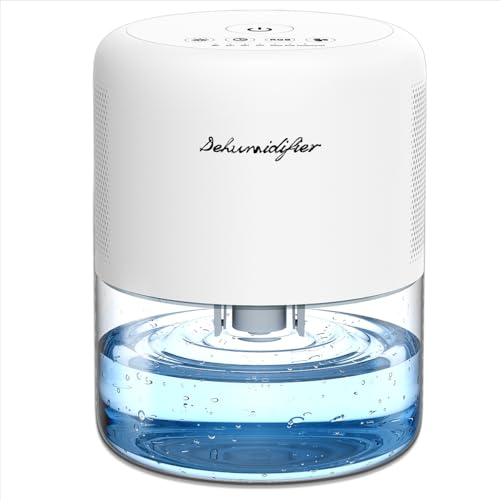
The TABYIK is built around a Peltier plate: electricity pushes heat from one face of a semiconductor to the other, the cold face drops below the dew point, and moisture condenses onto it and drips into a clear 35 oz tank. There is no compressor and no refrigerant, so it is light, nearly silent and cheap to build. The seller rates it for roughly 280 square feet, which is a number to treat as a ceiling for a mild problem, not a promise.

The tradeoff is output. A plate this size moves a small amount of water per day, and the rate falls quickly as the room gets cooler or drier. In a warm, muggy bathroom or a closed bedroom it keeps up; in a cold garage it will mostly sit there. Compared with the NeedDuck at 44 oz, you give up about a quarter of the tank, but the TABYIK is the one most owners can place on a shelf without it looking like a gadget.

Ownership is simple. You empty the transparent tank, wipe it so slime does not form, and let the auto shut off handle the rest. Dust on the heat sink fan is the one thing to clear a few times a year. Expect a service life measured in a couple of seasons of steady use, not a decade, and treat it as a consumable that earns its price.

What works

  • Clear tank lets you see the water collected
  • No compressor, so it runs close to silent
  • Auto shut off stops it when the tank fills
  • Light and easy to move shelf to shelf

Watch out for

  • Output is small and drops in cool rooms
  • 280 sq ft rating assumes only mild dampness
  • Plate and fan wear out faster than a compressor

Spec sheet

Tank
35 oz (about 1 L)
Rated room
280 sq ft
Cooling method
Thermoelectric plate
Safety
Auto shut off when full
Extras
Separate 7 colour light button
02
NeedDuck 44 oz small dehumidifier, auto defrost
44 oz tankAuto defrostGradual dryingAuto shut off
Check price on Amazon
Best for: Spare rooms and RV cabins where a larger tank means fewer trips.

NeedDuck positions this unit as a slow, steady drier rather than a fast one, and that framing is accurate for the technology. It uses the same thermoelectric principle as the TABYIK, but with a 44 oz tank, so you empty it less often. An auto defrost function matters here because a cold plate can frost over when the room is cool, and a unit that can pause and thaw keeps working instead of icing up.

Where it falls short is the same place every unit in this price band does: it cannot move enough air through a cold plate to dry a large room. The 44 oz tank is larger than the 35 oz TABYIK and 25 oz SANVINDER, but a bigger tank is not a bigger engine. Fill time is set by the plate, so the extra capacity mostly buys you fewer trips on a long weekend.

In year two the things to watch are the tank seal and the fan. Rinse the tank with a mild vinegar solution if a film appears, and do not store the unit with water in it. It suits an RV cabin or a spare bedroom that you close up between visits, and it is a poor match for a laundry room that sees steam every day.

What works

  • 44 oz tank is the largest in this price band
  • Auto defrost keeps it running in cooler rooms
  • Gradual drying suits closed, low-traffic rooms
  • Auto shut off protects against overflow

Watch out for

  • Tank size does not raise drying speed
  • Weak against steamy bathrooms or laundry rooms
  • Small plate struggles once the room gets cold

Spec sheet

Tank
44 oz (1.3 L)
Cooling method
Thermoelectric plate
Defrost
Automatic
Safety
Auto shut off when full
Best size of room
Small enclosed rooms
03
Lonxfy 35 oz screen display dehumidifier, 350 sq ft
35 oz tank350 sq ftScreen displaySleep mode
Check price on Amazon
Best for: Bedrooms where you want a readout and a night mode.

The Lonxfy is the only pick here that states its output under a named test condition: up to 350 ml per day at 86 degrees F and 80 percent humidity. That is useful because it shows how much the number depends on a warm, wet room. At 65 degrees and 60 percent, which is where most real bedrooms sit, you should expect a clear fraction of it. The semiconductor plate and fan are the same basic design as the other picks, with a screen showing operating status.

The display is the practical difference. When a unit has no readout you do not know if it stopped because it is full, defrosting or finished. A status screen answers that without opening the tank. A sleep mode lowers fan speed for night use, which trades a little drying for noise, a fair deal in a bedroom.

Compared with the TABYIK, it has the same 35 oz tank but a larger stated coverage of 350 square feet and better feedback. It is still not a basement machine. Plan on emptying it daily in a damp week, and keep it off carpet where a leak would sit unseen.

What works

  • States output under a named 86F, 80% RH condition
  • Screen shows operating status at a glance
  • Sleep mode lowers fan noise at night
  • Rated for up to 350 sq ft of mild dampness

Watch out for

  • Quoted output falls sharply in cooler rooms
  • Same 35 oz tank as cheaper rivals
  • Display adds a part that can fail

Spec sheet

Tank
35 oz
Rated room
30 to 350 sq ft
Quoted output
350 ml/day at 86F, 80% RH
Cooling method
Semiconductor
Controls
Screen display, sleep mode
04
SANVINDER 25 oz Peltier dehumidifier for bedrooms
25 oz tankPeltierAuto offVery quiet
Check price on Amazon
Best for: Nightstands, small bathrooms and gear lockers.

SANVINDER describes this model as a thermo-electric Peltier unit, which is the most direct name for the technology. The 25 oz tank is the smallest in this roundup, and that is the point: it is meant for a corner of a nightstand, a small bathroom or a gym bag locker. A cold plate and a small fan are the only active parts, so there is nothing to hum or rattle.

Because the tank is the smallest here, it shuts off sooner than the 44 oz NeedDuck, which is a nuisance if you are away. In practice that is sometimes a feature, since a small tank cannot flood a shelf. The listing leans on quiet and energy saving, and both are true of any plate-based unit; the real question is whether the room is small enough to benefit.

Treat it as a closet and cabinet tool. Rinse the tank each time you empty it, leave an inch or two of clearance around the vents, and replace it without guilt when the plate weakens. It is the cheapest way to test whether a dehumidifier helps a small space before spending more.

What works

  • Smallest tank, so the unit stays compact
  • Fan only noise suits sleeping rooms
  • Auto off prevents overflow onto furniture
  • Cheapest way to test a damp small space

Watch out for

  • 25 oz tank fills and shuts off early
  • Not enough output for a whole bedroom
  • Short expected service life

Spec sheet

Tank
25 oz
Cooling method
Thermo-electric Peltier
Safety
Auto off when full
Noise
Sleep-friendly, fan only
Fit
Small bedrooms, bathrooms
05
Pro Breeze 17 oz mini dehumidifier, 215 sq ft
17 oz tank215 sq ftAuto shut offNo fan noise
Check price on Amazon
Best for: Wardrobes, pantries and small utility closets.

The Pro Breeze is the best-known name of the group and the most modest on paper. The listing says it removes up to about 9 ounces of water, with a 17 oz tank and a 215 square foot rating. That is a candid, small number, and it fits what a thermoelectric plate this size can deliver. It is designed for a wardrobe, a pantry or a small utility closet.

The downside is obvious next to the NeedDuck: a 17 oz tank is about 40 percent of the 44 oz one, so it fills quickly in a humid week. Its rating of 215 square feet is also the lowest here, and it should be read as a closet-sized figure. Use it where an enclosed space can hold the moisture long enough for the plate to catch it.

Upkeep is minimal. Empty after every fill, keep the vent clear, and store it dry. Do not expect it to fight a mildew smell in a room that you open daily, because fresh moist air arrives faster than the plate can remove it.

What works

  • Honest, modest output figure on the listing
  • 215 sq ft rating suits a closet realistically
  • Compact enough to fit on a shelf
  • Auto shut off when the 17 oz tank fills

Watch out for

  • 17 oz tank fills quickly in a humid week
  • Smallest coverage rating in the group
  • Useless in a room opened to fresh air daily

Spec sheet

Tank
17 oz
Rated room
215 sq ft
Quoted output
Up to about 9 oz of water
Cooling method
Thermoelectric
Safety
Auto shut off when full

Spec sheet decoder

What the numbers on the box really mean

The specs manufacturers lead with, translated into what they tell you about real-world performance.

Sq ft rating

The seller's estimate of the largest closed room the unit can influence. It assumes light dampness and normal temperatures.

Watch forThe 215 sq ft Pro Breeze rating is closet-sized; do not read 350 sq ft on the Lonxfy as a living room.

Tank size (oz)

The volume of condensate the bucket holds before auto shut off stops the unit. It sets how long the machine can run unattended.

Watch forCompare 17 oz on the Pro Breeze with 44 oz on the NeedDuck when you will be out for a day.

Quoted output

Milliliters or ounces per day at a named temperature and humidity. A hotter, wetter test condition makes the same machine look better.

Watch forThe Lonxfy 350 ml per day figure is tied to 86F and 80% RH, so expect less in a normal room.

Auto defrost

A routine that pauses the plate when frost starts to build, then restarts after thawing. It protects the unit in cooler rooms.

Watch forThe NeedDuck lists it, but a plate unit still slows sharply once the room is cold.

Noise level

Plate units have only a small fan, so they are far quieter than compressor machines. Sleep modes reduce fan speed further.

Watch forThe Lonxfy sleep mode helps in a bedroom; the SANVINDER is fan only by design.

Methodology

How We Evaluated These Dehumidifiers Under $50

Technology and honesty of claims

We checked whether each listing states how the unit pulls moisture and under what test condition. The Lonxfy cites 350 ml per day at 86F, and the Pro Breeze cites about 9 oz, while others give only a coverage area. Candid numbers scored higher than vague ones.

Tank size and user burden

We compared how often each tank needs emptying and how safely it shuts off. The 44 oz NeedDuck beat the 17 oz Pro Breeze on this axis by a wide margin. Shut off behaviour counted as a safety feature.

Cold-room behaviour

Plate units lose output as temperature falls, so we looked for defrost and frost handling. Auto defrost on the NeedDuck earned credit, while units with no mention were scored cautiously.

Noise and placement

We weighed fan noise, footprint and whether a unit can sit on a bedroom shelf. The SANVINDER and TABYIK scored best for small spaces.

Owner feedback patterns

We looked at recurring owner comments on tank leaks, fading output and fan noise, based on the spec sheets and general listing feedback patterns. Units with a clear tank and simple controls drew fewer complaints.

Decision guide

How to Choose the Right Dehumidifiers Under $50

By Space Type

SituationPickWhy
Wardrobe or pantryPro Breeze 17 ozSmallest rating that matches a closet
Small bedroomTABYIK 35 ozBalanced tank and quiet running
Bedroom with night modeLonxfy 35 ozSleep mode and a status screen
Spare room left closedNeedDuck 44 ozLargest tank in the group
Nightstand or lockerSANVINDER 25 ozSmallest footprint of the five

By Budget

TierPickWhy
Cheapest optionPro Breeze 17 ozLowest cost for a closet test
Low price, bigger tankSANVINDER 25 ozCheap with a usable tank
Middle of the groupTABYIK 35 ozBest balance for most rooms
Upper end of the groupLonxfy 35 ozAdds a display and sleep mode
Highest in this capNeedDuck 44 ozMost capacity and defrost

Thermoelectric vs Compressor

Thermoelectric plate

A cold plate condenses water with no refrigerant. It is quiet, light and cheap, which is why all five picks here, including the TABYIK and Lonxfy, use it. Output is small and falls in cool rooms.

Compressor

A refrigerant loop moves far more water and works at lower humidity, but it is heavy, louder and costs more. No pick here uses one.

Choose a plate unit for a closet or small room; choose a compressor machine for any basement or whole-room problem.

By Noise Priority

PreferencePickWhy
Silent sleeperSANVINDER 25 ozFan only noise, sleep friendly
Adjustable night modeLonxfy 35 ozSleep mode lowers fan
Balanced quietTABYIK 35 ozQuiet in normal running
Bigger tank, quietNeedDuck 44 ozSlow, gradual operation
Quiet closetPro Breeze 17 ozMarketed as no noise

For Closets and Stored Gear Specifically

Look for

A tight enclosure, a small rating and a tank that suits how often you open the door. Closed space lets a weak plate keep up, and a clear tank shows when to empty it.

In this comparison

The Pro Breeze 17 oz is closet sized at 215 sq ft, and the TABYIK 35 oz is the step up if you want fewer trips to empty it.

When to Spend More

Spend more if

The room is cold, the problem is a basement, or you see condensation on windows every morning. Move to a compressor unit rather than stacking two plates such as the NeedDuck and TABYIK.

Save if

You only need a drier wardrobe or bathroom shelf. The Pro Breeze or SANVINDER does that job for the lowest cost.

Ownership

Maintenance schedule

The upkeep that decides whether this machine lasts two seasons or ten.

TaskIntervalWhy it matters
Empty and wipe the tankAfter every fillStanding water grows slime and a musty smell. A quick wipe keeps the tank clear and the output smell free.
Clear the vent and heat sinkMonthlyDust restricts airflow over the plate. Less airflow means less condensation and a hotter plate.
Rinse the tank with mild vinegarEvery 2 to 3 monthsA thin film forms where water sits. Vinegar removes it without harsh chemicals.
Check the cord and plugEach seasonSmall units run for long hours. A warm plug or frayed cord is a reason to stop using it.
Store dryEnd of seasonDrain and air dry before boxing the unit. Trapped water causes mould inside the tank.

FAQ

Frequently Asked Questions

Is a thermoelectric dehumidifier worth it at this price?

Yes, for the right job. A closet, pantry or small bathroom can see a real improvement. A basement or whole bedroom will not.

How much cash should I plan to spend for a basement?

A basement needs a compressor unit with a drain hose, and those sit well above this price tier. These plate units are the wrong tool, even the 44 oz NeedDuck.

How long will one last?

Plan on a few seasons of steady use. The plate runs hot and the fan wears, so treat any of these as a consumable.

Does a bigger tank mean more drying?

No. Output is set by the plate and the room conditions, while tank size only sets how long it runs before auto shut off. The 44 oz NeedDuck does not outdry the 35 oz TABYIK.

Are the sq ft numbers realistic?

They describe a mild problem in a closed room. For a bathroom with a daily shower, take away at least half, and treat the 215 sq ft Pro Breeze as closet only.

Can I leave one running while I sleep?

Yes, since they have auto shut off and little heat. Put it on a hard, level surface and never on a bed or blanket.

Bottom line

The short version

Browse more dehumidifiers under $50on Amazon →
James Miller, Lead Machine Editor

About the author

James Miller

Lead Machine Editor, MachineFanatic

James Miller leads MachineFanatic's buying guides, turning spec sheets, manuals and owner feedback into clear verdicts on power tools, outdoor power equipment, shop machines and kitchen machines.

More from James →

Keep reading

Related guides