
Amazon affiliate links - we earn a commission.Affiliate disclosure

Buying guide · 11 min read · Updated 2026-11-12

Best DeWalt Leaf Blowers (2026)

Three DeWalt cordless blowers compared: the 20V Max DCE100, the 20V Max XR DCBL722 and the 60V Flexvolt DCBL772, with airflow, noise and fit by yard.

James MillerBy James MillerLead Machine Editor3 machines comparedSpec-sheet verified
Best DeWalt Leaf Blowers

At a glance

Our top picks

Side by side

Spec comparison

MachinePlatformAirflowFanModelListing
DeWalt DCBL722 20V Max XR Blower 450 CFM 125 MPHBest OverallDeWalt DCBL722 20V Max XR Blower 450 CFM 125 MPH20V MaxUp to 450 CFMAxialn/an/a
DeWalt DCBL772 60V Flexvolt Axial Blower 600 CFMBest for Large LotsDeWalt DCBL772 60V Flexvolt Axial Blower 600 CFM60V Flexvolt600 CFMAxial handheldDCBL772BTool only
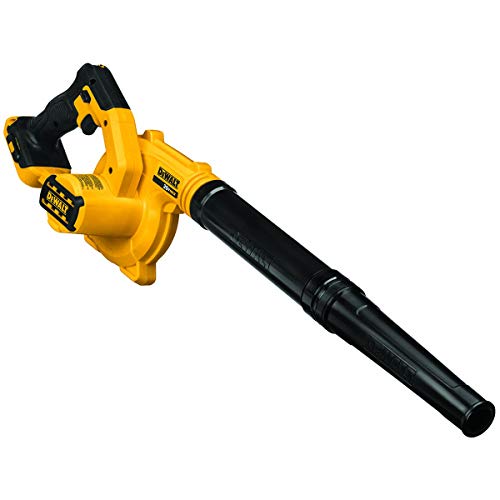
DeWalt DCE100 20V Max Compact Blower 100 CFMBest Jobsite SweeperDeWalt DCE100 20V Max Compact Blower 100 CFM20V Max100 CFMn/aDCE100BBare tool

A contractor-focused brand tends to build blowers as an afterthought to its drill and saw lineups, and that shows in how the range is organised. The choices are defined by battery platform first and airflow second, which is the opposite of how a homeowner usually thinks about it.

That makes it important to separate jobsite sweepers from yard tools. A small blower made to clear dust from a joint is not a leaf blower, even if it moves air. The numbers on the listing, and the platform behind them, tell you which category you are buying.

Before you buy

6 Criteria to Look For Before Buying a DeWalt Leaf Blower

  1. 01

    Match the platform to what you own

    DeWalt blowers split across two platforms: 20V Max for the DCE100 and DCBL722, and 60V Flexvolt for the DCBL772. Flexvolt packs also work in 20V tools, but a 20V pack will not run the 60V blower. If you already own a stack of 20V packs, the DCBL722 is a tool-only purchase. If you own Flexvolt packs, the DCBL772 makes sense. Buying a platform to get one blower is rarely good value. Count the packs you actually have, not the tools: a drill that came with one small battery does not give you enough energy to run a blower for a lawn. A realistic setup for the DCBL722 is two 5Ah packs, one working and one charging, and a buyer should price that into the decision rather than comparing bare-tool prices alone.

  2. 02

    Read CFM as a class marker

    The numbers here are 100, 450 and 600 CFM, and they fall into clear classes. 100 CFM is a jobsite sweeper, 450 CFM is a capable yard tool for dry leaves and 600 CFM clears piles faster on large areas. A figure under about 300 CFM will frustrate you in autumn. Treat the number as a guide to what the tool is for rather than as a score. Moving from 450 to 600 CFM is a third more air, which shows up as faster clearing of heavy piles but is hard to feel on a thin layer of dry leaves. The honest question is how much volume your yard puts in front of you each week, not what the spec sheet can reach.

  3. 03

    Noise rating and neighbours

    The DCBL722 lists 62 dB(A), which is notably quiet for a blower and is part of the reason battery tools are allowed in places where gas ones are banned. A lower rating makes early-morning work less intrusive. A rating is measured at a set distance and under set conditions, so real use at turbo is louder. Check your local rules before relying on the number. Many towns restrict gas blowers by hour or ban them in season, and a battery tool in the low 60s of dB(A) is usually the quiet alternative that keeps working. Even so, the sound of a fan at speed is a high-pitched whoosh, and early-morning courtesy is still sensible.

  4. 04

    Concentrator and nozzle choices

    The 125 MPH figure on the DCBL722 applies with the concentrator fitted, which narrows the air stream to raise speed. That helps on pavement, gravel and wet debris. Without it, the tool moves more volume at a lower speed, which suits lawns. A blower with a removable nozzle is flexible, but the nozzle is a small part that is easy to lose, so decide where it will live. A zip tie or a small pouch on the tool bag is enough. Also remember that the concentrator reduces volume, so on a lawn full of dry leaves you may move more material by taking it off and working with the wide stream.

  5. 05

    Battery size and runtime

    A blower empties a small battery quickly. A 2Ah 20V Max pack may give only minutes at full speed, while a 5Ah pack gives noticeably longer. The DCBL772 is designed for Flexvolt packs that offer more capacity again. Match the pack to the job length, and own a spare if you clear for more than 15 minutes. Remember that the tool-only listings here ship without a battery. A battery that is hot from heavy use should cool before it goes on the charger, and a charger that is too slow for a large pack will leave you waiting between sessions. If you plan to run the DCBL772 for an hour, you will want more than one pack and a fast charger to keep up.

  6. 06

    Handheld limits

    All three DeWalt blowers are handheld, which means your arm carries the weight and the tool at arm's length. That is fine for a quarter acre and tiring beyond that. If you clear a half acre or more, a backpack blower from another brand will be gentler on your body. Handheld comfort drops off sharply after 20 minutes of work. Standing posture matters too: keep the tube low, step back as you push the pile, and switch hands when you can. Strained forearms and elbows are the typical complaint after a long weekend of raking with a blower, and a lighter tool or a break is the simplest fix.

Detailed reviews

The 3 best dewalt leaf blowers, explained

01
DeWalt DCBL722 20V Max XR Blower 450 CFM 125 MPH
450 CFM125 MPH62 dB(A)20V Max XR
Check price on Amazon
Best for: Most homeowners and DIYers who already own 20V Max packs.

The DCBL722 is the blower that most DeWalt owners should consider first. It lists up to 450 CFM and up to 125 MPH with the concentrator nozzle fitted, from an axial fan the maker says is designed to maximise air output and runtime. The 62 dB(A) rating is low for a blower and matters if your neighbours are close or your area has noise rules.

It runs on the 20V Max battery, the same pack that fits DeWalt's drills and saws, so a contractor or serious DIYer can run it from packs already in the truck. The listing here is the tool-only version, and a kit version with a battery and charger exists under the DCBL722P1 number. Compared with the DCBL772 at 600 CFM, it gives up airflow but gains a lighter body and a shared battery.

Ownership is low fuss. Fit the concentrator when you need speed on pavement and take it off for volume on a lawn. Keep the intake clear, store packs at partial charge, and do not expect the small 20V packs to last through a heavy leaf job; a 5Ah pack is a better partner than a 2Ah one.

What works

  • 450 CFM and 125 MPH with concentrator
  • Low 62 dB(A) noise rating
  • Runs on the 20V Max pack family
  • Axial fan for efficient airflow

Watch out for

  • Tool-only listing needs a battery
  • Smaller packs run short at full speed

Spec sheet

Platform
20V Max
Airflow
Up to 450 CFM
Air speed
Up to 125 MPH with concentrator
Noise
62 dB(A)
Fan
Axial
02
DeWalt DCBL772 60V Flexvolt Axial Blower 600 CFM
600 CFM60V FlexvoltAxialBrushless
Check price on Amazon
Best for: Large lots and landscapers who already own 60V Flexvolt packs.

The DCBL772 is DeWalt's strongest handheld, with a stated 600 CFM from a 60V axial design. It is the tool for a big lot, a landscaper's day or a property where the leaves come down in drifts. The Flexvolt batteries it uses are the same ones that power the brand's larger tools, and they also work in 20V tools, which gives them value beyond the blower.

The tradeoff is cost and weight. A 60V pack is the most expensive in the DeWalt line, and it makes the blower heavier in the hand than the DCBL722. Compared with that 450 CFM unit, it moves 150 CFM more air, which means faster work on large areas but fatigue on small ones. The listing does not quote an air speed figure, so I am not going to guess at one.

Plan on a spare pack if you clear more than a quarter of an hour at a time. Check the intake after every session, keep the fan clean and avoid leaving a Flexvolt pack in a hot vehicle. It is a professional-grade handheld, and it is wasted on someone who sweeps a single driveway.

What works

  • 600 CFM, the most in the DeWalt range
  • Flexvolt packs also fit 20V tools
  • Axial fan suited to leaf piles
  • Built for working all day

Watch out for

  • Heavier and costlier than the 20V models
  • No air speed figure on the listing

Spec sheet

Model
DCBL772B
Platform
60V Flexvolt
Airflow
600 CFM
Fan
Axial handheld
Listing
Tool only
03
DeWalt DCE100 20V Max Compact Blower 100 CFM
100 CFM20V Max3-speedTrigger lock
Check price on Amazon
Best for: Dust and debris cleanup on jobsites and workbenches, not lawn work.

The DCE100 is a different tool from the other two and should be read as a jobsite cleaner. At 100 CFM it moves a fraction of the air of the DCBL722, and DeWalt itself lists uses such as tuck pointing, clearing debris from joints and cleaning small areas. It has a three-speed switch, a variable trigger and a trigger lock.

Why list it in a leaf blower guide at all? Because it is the only compact DeWalt blower, and many buyers searching for a small DeWalt tool will end up here. For leaves, it will handle a thin scattering on a deck but not a lawn. If you want a blower for yard work, step up to the DCBL722.

Its value is in the toolbox. It uses the same 20V Max packs as the rest of the line, it is light, and it is the right choice for dusty work such as cleaning out a mitre saw or a drilled hole. Keep the nozzle clear, store it with the battery removed, and wear eye protection when moving grit.

What works

  • Light and compact for tight work
  • Variable trigger with three speeds
  • Trigger lock for sustained use
  • Shares the 20V Max battery family

Watch out for

  • 100 CFM cannot clear a lawn
  • Sold as a bare tool

Spec sheet

Model
DCE100B
Platform
20V Max
Airflow
100 CFM
Speeds
3 with variable trigger
Listing
Bare tool

Spec sheet decoder

What the numbers on the box really mean

The specs manufacturers lead with, translated into what they tell you about real-world performance.

20V Max

DeWalt's mainstream battery platform, shared by most of its cordless tools. Packs range in capacity from small to large.

Watch forThe 20V Max name refers to a peak figure, and the pack's amp-hour rating matters more for runtime.

60V Flexvolt

A higher voltage pack that also fits 20V tools. It switches between voltages to suit the tool.

Watch forA Flexvolt pack works in a 20V tool but a 20V pack will not run the DCBL772.

CFM

Volume of air per minute at the nozzle. It tells you how much material the blower can push at once.

Watch for100 CFM on the DCE100 means it is not a leaf tool, however it is marketed.

dB(A)

A sound level measure weighted to the human ear. Lower numbers are quieter.

Watch forThe 62 dB(A) on the DCBL722 is a laboratory figure and rises at turbo.

Axial fan

A fan that pushes air straight through the tube. It tends to move more air for less weight than a centrifugal design.

Watch forAxial fans are less tolerant of debris ingestion, so keep the intake clear.

Methodology

How We Evaluated These DeWalt Leaf Blowers

Airflow class

We grouped the three tools by stated airflow: 100 CFM, 450 CFM and 600 CFM. That puts the DCE100 in the jobsite class and the others in the yard class. We did not treat a bigger number as automatically better for every buyer.

Platform fit

We considered how each tool fits DeWalt's two battery families. The 20V Max models suit most owners, while the 60V model suits those with Flexvolt packs. A tool that fits packs you already own earns the most credit.

Noise and neighbour friendliness

We looked at the stated 62 dB(A) on the DCBL722 as a real advantage in noise sensitive areas. The other listings give no figure, so we did not compare on this point.

Honest use case

We asked what each tool is actually for. The DCE100 is a jobsite sweeper, the DCBL722 a yard tool and the DCBL772 a heavy duty handheld. Each is described for its real purpose, which means the compact tool is judged as a cleaner and not penalised for being unable to clear a lawn. That honesty also means the guide steers some readers away from the cheapest option when leaves are the job.

Ownership and cost

Based on the spec sheet and owner feedback patterns, bare tools save money for existing owners but cost more for newcomers. We weighed the battery cost alongside the blower, particularly for the 60V pack.

Decision guide

How to Choose the Right DeWalt Leaf Blowers

By Property Size

SituationPickWhy
Workshop, deck or jobsite dustDCE100100 CFM compact sweeper
Quarter acre or less, dry leavesDCBL722450 CFM and 62 dB(A)
Half acre with heavy leaf fallDCBL772600 CFM from a 60V pack
Mixed driveway and lawnDCBL722Concentrator reaches 125 MPH

By Budget

TierPickWhy
Lowest cost entryDCE100Compact tool only
Best value for yard workDCBL722Shares common 20V packs
Highest outlayDCBL772Needs 60V Flexvolt packs
Cheapest if you own packsDCBL722Tool-only cost is modest

20V Max vs 60V Flexvolt

20V Max

The DCE100 and DCBL722 live here. Lighter packs, wide sharing across tools, and enough airflow for typical yards. Best for most buyers.

60V Flexvolt

The DCBL772 lives here, with 600 CFM. Heavier and costlier, but it gives the most airflow in the DeWalt range.

Take 20V Max unless you already own Flexvolt packs and clear large areas.

Jobsite vs Yard

PreferencePickWhy
Clean dust from a cut or a jointDCE100Compact and controllable
Clear leaves from a lawnDCBL722450 CFM moves real volume
Clear large drifts quicklyDCBL772600 CFM
Quiet work near neighboursDCBL72262 dB(A) rating

For Wet Leaves Specifically

Look for

Air speed and sustained power, because wet leaves stick to the surface. A narrow concentrator helps, as does a bigger battery.

In this comparison

The DCBL722 with its concentrator at 125 MPH is the best match for most. The DCBL772 has more volume but no stated speed. The DCE100 is not suited.

When to Spend More

Spend more if

You clear large areas weekly or own Flexvolt packs. The DCBL772 saves time and keeps pace with piles.

Save if

You have a small yard and own 20V packs. The DCBL722 as a bare tool is more than enough.

Ownership

Maintenance schedule

The upkeep that decides whether this machine lasts two seasons or ten.

TaskIntervalWhy it matters
Clear the intakeAfter every useAxial fans lose output when the intake is blocked. A quick wipe keeps the airflow close to the rated figure. Look at the vents on the side of the housing too, because wet grass can paste itself over them and cut the airflow without any warning noise.
Keep the concentrator nozzle with the toolAfter every useThe nozzle on the DCBL722 is a loose part that is easy to lose. Store it on the tube or in the same bag.
Store batteries at partial chargeWinter storageLithium packs degrade faster when stored full or empty. Keep them indoors and away from freezing.
Inspect the fan bladesMonthly in seasonA chipped or bent blade causes vibration and noise. Replace the fan if you find damage. Pick up sticks and stones before you blow, since a stone pulled into the intake is the most common cause of a damaged fan. A few seconds of looking at the lawn saves a repair.
Avoid heat in the vehicleAlwaysPacks left in a hot truck lose capacity quickly. Flexvolt packs in particular are costly to replace, so carry them in the cab or a shaded box instead. The same applies to a freezing garage in winter, where a cold pack delivers less power and should warm to room temperature before use.

FAQ

Frequently Asked Questions

Which DeWalt blower is best for most homeowners?

The DCBL722 is the best fit for most. It lists 450 CFM, 125 MPH with the concentrator and a low 62 dB(A) rating, and it uses the common 20V Max battery.

Is the DCE100 a leaf blower?

Not really. At 100 CFM it is a compact cleaner for jobsite dust and small areas. It can move a thin layer of dry leaves on a deck, but a lawn is beyond it. Where it earns its keep is cleaning a mitre saw, a drilled hole, a window track or a garage floor, which are jobs where a big blower would scatter dust everywhere. Buy it as a workshop accessory if that suits you, and buy the DCBL722 if leaves are the job.

Do I need Flexvolt batteries for the DCBL772?

Yes. It is a 60V tool and needs Flexvolt packs. Those packs also fit 20V tools, which gives them extra use, but a 20V pack will not run the blower.

Do these come with batteries?

The listings here are tool-only. Kit versions with batteries exist, such as the DCBL722P1, so check the exact model number before you buy.

How quiet is the DCBL722?

It lists 62 dB(A), which is low for a blower. That helps in noise sensitive areas, though turbo and real conditions will be louder than the lab figure.

Is a handheld enough for a half acre?

It can be, with the DCBL772 and spare packs, but your arm will notice. For half an acre or more, a backpack blower is more comfortable even if it is another brand, because the harness carries the load and the engine or battery sits on your back. If you want to stay with DeWalt, the 60V platform is the right place to start and a second pack is a worthwhile investment.

Bottom line

The short version

Browse more dewalt leaf blowerson Amazon →
James Miller, Lead Machine Editor

About the author

James Miller

Lead Machine Editor, MachineFanatic

James Miller leads MachineFanatic's buying guides, turning spec sheets, manuals and owner feedback into clear verdicts on power tools, outdoor power equipment, shop machines and kitchen machines.

More from James →

Keep reading

Related guides