
Amazon affiliate links - we earn a commission.Affiliate disclosure

Buying guide · 12 min read · Updated 2026-11-07

Best Dual Hose Portable Air Conditioners (2026)

Six dual hose portable air conditioners compared on DOE SACC capacity, inverter control, heat pump options, noise and room coverage for 2026.

James MillerBy James MillerLead Machine Editor6 machines comparedSpec-sheet verified
Best Dual Hose Portable Air Conditioners

At a glance

Our top picks

Side by side

Spec comparison

MachineMarketing capacityDOE capacityHose designCoverageControl
Midea Duo 14,000 BTU Portable AC with Heat, 12,000 SACCBest OverallMidea Duo 14,000 BTU Portable AC with Heat, 12,000 SACC14,000 BTU ASHRAE12,000 BTU SACCHose-in-hose dual ductn/an/a
Hisense 8,000 BTU SACC Dual Hose Inverter Portable ACBest ValueHisense 8,000 BTU SACC Dual Hose Inverter Portable AC10,000 BTU ASHRAE8,000 BTU SACCDual hose350 sq ftWi-Fi, ConnectLife
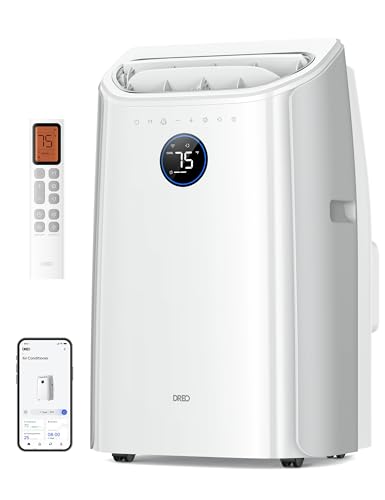
DREO 14,000 BTU Inverter Dual-Hose Portable AC, 10,000 DOE, 42 dBBest Quiet Dual HoseDREO 14,000 BTU Inverter Dual-Hose Portable AC, 10,000 DOE, 42 dB14,000 BTU ASHRAE10,000 BTUDual hosen/aSmart app
Whynter ARC-1230WN 14,000 BTU Dual Hose Smart Portable ACBest Auto-Drain PickWhynter ARC-1230WN 14,000 BTU Dual Hose Smart Portable AC14,000 BTUn/aDual hosen/aWi-Fi app and voice
Hisense Smart Dual Hose Portable AC with Heat Pump, 550 sq ftBest for Heating TooHisense Smart Dual Hose Portable AC with Heat Pump, 550 sq ftn/an/aDual hose550 sq ftn/a
AGTANA 16,000 BTU Inverter Dual-Hose Portable AC, 12,000 SACCBest for Very Large RoomsAGTANA 16,000 BTU Inverter Dual-Hose Portable AC, 12,000 SACC16,000 BTU ASHRAE12,000 BTU SACCn/a800 sq ftn/a

A dual hose portable uses one hose to bring outdoor air in to cool the condenser and a second to send the heat back out. That keeps the unit from pulling conditioned room air outside, which is the main flaw of a single-hose design.

The effect shows up in the DOE capacity figure and in how well the room holds its temperature on a hot afternoon. Dual hose is not magic, though, so check the SACC rating, the noise and the size of the room.

Before you buy

6 Criteria to Look For Before Buying a Dual Hose Portable Air Conditioner

  1. 01

    Why dual hose matters

    A single-hose unit exhausts room air, so make-up air leaks in through gaps in the building. A dual-hose unit draws outdoor air for the condenser through a second hose, which avoids that draw. The effect shows up in SACC: the Midea Duo and AGTANA 16,000 BTU rate about 75 to 86 percent of their ASHRAE numbers.

  2. 02

    Check the SACC ratio

    The Hisense 8,000 SACC is 80 percent of its 10,000 ASHRAE rating, and the Midea Duo is about 86 percent of 14,000. A ratio near 70 percent is typical for single-hose designs. A higher ratio is a sign that the dual-hose layout is working, and a missing SACC figure, like on the Whynter listing, is a reason to check the label.

  3. 03

    Inverter in a portable

    Inverter compressors modulate speed, which smooths temperature and cuts cycling noise. The Midea Duo, Hisense, DREO, Whynter and AGTANA all use them. In a bedroom that matters, since a portable's compressor is in the room with you.

  4. 04

    Duct run and window kit

    Every foot of hose and every bend loses capacity and radiates heat. Keep the hoses as short and straight as possible, and seal the window kit so that no warm air leaks in. A hose-in-hose duct like the Midea Duo's is stiffer and bulkier than two thin hoses. Insulating sleeves for the hoses cut radiated heat and are a cheap upgrade.

  5. 05

    Heat and year-round use

    The Hisense heat pump unit lists about 9,000 BTU of heating, and the Midea Duo lists a heating function. Heat pump heat costs less per degree than a resistance element, but limited in cold weather. Do not buy a portable as a primary heater.

  6. 06

    Noise claims

    The DREO and AGTANA list 42 dB, which is quieter than most portables, but it is measured at the quietest setting. A portable's compressor stands in the room, so expect louder sound at full output. Use sleep mode and place the unit away from your bed.

Detailed reviews

The 6 best dual hose portable air conditioners, explained

01
Midea Duo 14,000 BTU Portable AC with Heat, 12,000 SACC
14,000 BTU ASHRAE12,000 BTU SACCHose-in-hoseInverter, heat
Check price on Amazon
Best for: A large bedroom or living room that needs high real capacity and optional heat.

Midea's Duo uses a hose-in-hose design, with the intake and exhaust paths inside one flexible duct, so you get dual-hose behavior with a single run to the window. A variable-speed inverter compressor modulates output, and the listing adds a heating function and a 12,000 BTU SACC rating.

That SACC figure is high for the class: 12,000 SACC against 14,000 ASHRAE is about 86 percent, far better than the 70 percent seen on many single-hose units. The tradeoff is cost and bulk, since this is one of the most expensive portables, and the hose-in-hose duct is stiffer and thicker than a pair of thin hoses.

In ownership, treat the duct like a pipe: keep it short, straight and sealed to the window kit. Wash the filter every few weeks and empty or drain condensate as the manual describes. Compared with the Hisense units it offers much more capacity, and compared with the Whynter it uses a different dual-hose layout.

What works

  • 12,000 BTU SACC is a very high real-capacity figure
  • Hose-in-hose design gives dual-hose behavior with one run
  • Variable-speed inverter compressor
  • Heating function adds shoulder-season use

Watch out for

  • High price tier among portables
  • Thick, stiff duct is harder to route
  • Heavy and bulky in the room

Spec sheet

Marketing capacity
14,000 BTU ASHRAE
DOE capacity
12,000 BTU SACC
Hose design
Hose-in-hose dual duct
Compressor
Variable-speed inverter
Extra
Heating function
02
Hisense 8,000 BTU SACC Dual Hose Inverter Portable AC
8,000 BTU SACC10,000 BTU ASHRAEDual hose, inverter350 sq ft
Check price on Amazon
Best for: A bedroom or small living room up to 350 square feet.

Hisense is explicit about the ratings: 8,000 BTU SACC and 10,000 BTU ASHRAE, with dual hose technology and an inverter compressor. The SACC to ASHRAE ratio is 80 percent, which is a good sign that the dual-hose design is doing what it should.

Its coverage claim of 350 square feet is sensible for 8,000 BTU of real cooling, unlike units that claim far more. It adds Wi-Fi control through the ConnectLife app, plus cooling, dehumidifying and fan modes. Against the Midea Duo it has about two-thirds of the real capacity and costs less, and against the Hisense heat pump unit it cools the same but does not heat.

Ownership is the portable routine: manage the condensate, wash the filter and seal the window kit. A bedroom is the natural home, where the inverter helps keep the temperature steady. Because it is the smallest unit here, it is also the easiest to wheel between rooms, which suits a household that cools the bedroom at night and the den by day.

What works

  • 8,000 BTU SACC with a clear dual-hose design
  • Inverter compressor smooths cycling
  • Wi-Fi control with ConnectLife
  • Coverage claim matches the capacity

Watch out for

  • Smaller capacity than the 14,000 BTU units
  • Cool-only, with no heat mode
  • Compressor noise in the room

Spec sheet

DOE capacity
8,000 BTU SACC
Marketing capacity
10,000 BTU ASHRAE
Hose design
Dual hose
Coverage
350 sq ft
Control
Wi-Fi, ConnectLife
03
DREO 14,000 BTU Inverter Dual-Hose Portable AC, 10,000 DOE, 42 dB
14,000 BTU ASHRAE10,000 BTU DOE42 dB quietInverter
Check price on Amazon
Best for: A bedroom where a quiet inverter dual-hose unit is wanted.

DREO's dual-hose inverter unit lists 14,000 BTU ASHRAE and 10,000 BTU DOE, with a 42 dB quiet figure and smart control. The inverter and the dual hose together are meant to reduce both cycling noise and room infiltration.

The 42 dB figure is the standout because most portables sit well above it. It is measured at the quietest setting, so expect more sound at full output, but it still makes this one of the quieter portables. Against the Midea Duo it has less real capacity, but it fits a wide set of rooms, and against the AGTANA 16,000 BTU it gives a published figure with a smaller body.

Ownership includes condensate care, filter washing and checking the window kit. Because DREO is a newer name in air conditioners, confirm the warranty and keep your proof of purchase. Pair it with blackout curtains on a sunny window, since keeping solar heat out matters more than a few extra BTU in a small bedroom.

What works

  • Quiet figure of 42 dB
  • 10,000 BTU DOE capacity
  • Inverter compressor with dual hose
  • Smart app control

Watch out for

  • Newer name in air conditioners
  • The 42 dB figure applies to the quietest setting
  • Capacity below the Midea Duo

Spec sheet

Marketing capacity
14,000 BTU ASHRAE
DOE capacity
10,000 BTU
Quiet figure
42 dB
Hose design
Dual hose
Control
Smart app
04
Whynter ARC-1230WN 14,000 BTU Dual Hose Smart Portable AC
14,000 BTUInverterAuto drainWi-Fi and voice
Check price on Amazon
Best for: A large room where an established dual-hose brand and automatic drainage matter.

Whynter's ARC-1230WN is an inverter dual-hose unit with a built-in dehumidifier that drains automatically, plus Wi-Fi app and voice control. Whynter has a long record in portable air conditioners, and its dual-hose designs are a reference point for the category.

The data lists 14,000 BTU but no SACC figure, so you cannot compare its real capacity to the others here without the Energy Guide. The auto drain is the practical feature: in many conditions it handles the condensate so you rarely empty a tank. Compared with the Midea Duo it uses a more conventional two-hose layout, and compared with the DREO it has a longer brand history.

Ownership is routine. Keep the two hoses short, the window kit sealed and the filter clean, and confirm the SACC rating before you decide on a room size. If you live in a humid climate, run the drain connection to a floor drain or a bucket anyway, because automatic handling has limits on very damp days.

What works

  • Inverter dual-hose design
  • Built-in dehumidifier with auto drain
  • Wi-Fi app and voice control
  • Established portable AC brand

Watch out for

  • No SACC figure in the data
  • High price tier
  • Two hoses to route and seal

Spec sheet

Marketing capacity
14,000 BTU
Compressor
Inverter
Hose design
Dual hose
Drainage
Built-in dehumidifier with auto drain
Control
Wi-Fi app and voice
05
Hisense Smart Dual Hose Portable AC with Heat Pump, 550 sq ft
8,000 BTU SACC cool9,000 BTU heatHeat pump550 sq ft
Check price on Amazon
Best for: A room needing mild year-round conditioning without resistance heat costs.

This Hisense uses a heat pump, which means it heats by reversing the refrigerant cycle instead of with a resistance element, and the listing states about 9,000 BTU of heating beside 8,000 BTU SACC of cooling. Heat pump heat costs far less per degree than resistance heat.

The four modes, cool, heat, fan and dehumidify, give it year-round use, and the dual hose design applies in both cooling and heating. It claims 550 square feet, which is generous for 8,000 SACC, so treat it as a 400 square foot unit. Compared with the other Hisense it adds heat and costs more, and compared with the Midea Duo it has less real capacity.

Ownership requires condensate handling in both modes, since heating also produces water in cold, damp rooms. Seal the hoses and keep the filter clean.

What works

  • Heat pump heating at about 9,000 BTU
  • Dual hose design in both modes
  • Four modes for year-round use
  • Smart control

Watch out for

  • 550 square foot claim is generous for 8,000 SACC
  • Costs more than the cool-only Hisense
  • Heating in cold weather is limited

Spec sheet

Cooling capacity
8,000 BTU SACC
Heating capacity
About 9,000 BTU (heat pump)
Hose design
Dual hose
Coverage
550 sq ft
Modes
Cool, heat, fan, dehumidify
06
AGTANA 16,000 BTU Inverter Dual-Hose Portable AC, 12,000 SACC
16,000 BTU ASHRAE12,000 BTU SACC42 dB800 sq ft
Check price on Amazon
Best for: A large open room where a lower-cost 12,000 SACC unit is wanted.

AGTANA's largest unit pairs 16,000 BTU ASHRAE and 12,000 BTU SACC with a dual-motor, dual-hose, inverter design and a listed 42 dB. The listing adds a smart temperature protection feature.

Its SACC matches the Midea Duo at 12,000, but its coverage claim of 800 square feet is optimistic for that capacity, so treat it as a 550 to 600 square foot unit. The dual motors let the intake and exhaust fans run independently, which is a different approach from the hose-in-hose Duo.

Ownership is the usual care for a large portable. Plan floor space, a short straight hose run and a strong window seal. As a smaller brand, confirm the warranty before you buy. Measure the doorway and the path to the room before delivery, since a large dual-motor chassis is heavy and awkward on stairs.

What works

  • 12,000 BTU SACC matches the best here
  • Dual motor, dual hose, inverter design
  • Listed 42 dB
  • Large capacity for the price tier

Watch out for

  • 800 square foot claim is generous
  • Smaller brand with less support depth
  • Large footprint in the room

Spec sheet

Marketing capacity
16,000 BTU ASHRAE
DOE capacity
12,000 BTU SACC
Quiet figure
42 dB
Coverage
800 sq ft
Design
Dual motor, dual hose, inverter

Spec sheet decoder

What the numbers on the box really mean

The specs manufacturers lead with, translated into what they tell you about real-world performance.

SACC

Seasonally Adjusted Cooling Capacity, the DOE rating of real cooling. It is lower than the marketing ASHRAE number.

Watch forThe range runs from 8,000 on the Hisense to 12,000 on the Midea Duo and AGTANA 16,000 BTU.

ASHRAE BTU

A marketing capacity under test conditions that flatter the unit.

Watch forThe AGTANA lists 16,000 ASHRAE but only 12,000 SACC.

Hose-in-hose

A dual-duct layout with the intake and exhaust paths nested in one flexible duct.

Watch forOnly the Midea Duo uses it, and the duct is thicker than a single hose.

Heat pump

A refrigerant cycle that can reverse to heat a room. It uses less electricity per degree than a resistance heater.

Watch forThe Hisense heat pump unit states about 9,000 BTU of heating.

dB

A sound level reading, normally at the quietest setting.

Watch forThe DREO and AGTANA list 42 dB, and the others publish no figure in the data.

Methodology

How We Evaluated These Dual Hose Portable Air Conditioners

Real capacity

We compared SACC to ASHRAE ratios, which show how well the dual-hose layout works. The Midea Duo at 12,000 of 14,000 and the Hisense at 8,000 of 10,000 scored best, and units with no SACC figure scored cautiously.

Coverage honesty

We checked whether the room claim matched the SACC rating. The Hisense at 350 square feet for 8,000 SACC is sensible, while the AGTANA at 800 square feet for 12,000 SACC is generous.

Noise

We read the quiet figures, 42 dB for the DREO and AGTANA, and noted that portable compressors sit in the room. Inverter designs scored higher for lower cycling noise.

Heating and extras

We credited the Hisense heat pump and the Midea Duo heating function, and noted features such as automatic drainage on the Whynter.

Support

We considered brand depth based on owner feedback patterns. Midea, Hisense and Whynter scored higher than newer names, and any unit without a stated warranty lost points.

Decision guide

How to Choose the Right Dual Hose Portable Air Conditioners

By Room Size (SACC)

SituationPickWhy
Bedroom up to 350 sq ftHisense 8,000 BTU SACCDual hose inverter
Medium room up to 450 sq ftDREO 14,000 BTU10,000 DOE, 42 dB
Large room up to 600 sq ftMidea Duo 14,000 BTU12,000 SACC
Very large roomAGTANA 16,000 BTU12,000 SACC

By Budget

SituationPickWhy
Lowest costHisense 8,000 BTU SACCSmaller capacity
Mid-range with heatHisense Heat PumpAbout 9,000 BTU heat
Mid to upperDREO 14,000 BTUQuiet inverter
Highest outlayMidea Duo 14,000 BTUHighest SACC ratio

Hose-in-Hose vs Two Hoses

Hose-in-hose

The Midea Duo nests intake and exhaust in one duct, so you route one run to the window. It is easier to place but the duct is thick and stiff.

Two hoses

The Hisense, DREO, Whynter and AGTANA units use two separate hoses. They are thinner and more flexible, but you must seal two paths in the window kit.

Choose hose-in-hose if a single window port is easier for you, and two hoses if flexibility matters.

Cooling Only vs Heat

SituationPickWhy
Cooling only in a bedroomHisense 8,000 BTU SACCLowest cost
Cooling and efficient heatHisense Heat PumpHeat pump
Large room with some heatMidea Duo 14,000 BTUHeating function
Cooling with auto drainWhynter ARC-1230WNBuilt-in dehumidifier

For Sleeping Rooms Specifically

Look for

A published low dB figure, an inverter compressor and a size that matches the room. A smaller unit running longer is quieter than a big unit cycling.

In this comparison

The DREO at 42 dB and the Hisense 8,000 BTU SACC are the best fits for a bedroom, with the AGTANA 16,000 BTU quiet at 42 dB for a larger room.

When to Spend More

Spend more if

The room is large, hot or you want heat. The Midea Duo 14,000 BTU or the Hisense Heat Pump repay the premium.

Save if

The room is a bedroom under 350 square feet. The Hisense 8,000 BTU SACC does the job for less.

Ownership

Maintenance schedule

The upkeep that decides whether this machine lasts two seasons or ten.

TaskIntervalWhy it matters
Wash the filterEvery 2 weeks in useA clogged filter cuts airflow and capacity. Dry it fully before refitting.
Check both hoses and sealsEach installA leaking hose or window gap loses cooling. Seal the kit with foam.
Drain condensateAs neededA full pan shuts the unit off, and standing water breeds odor. Use the drain hose in humid weather.
Clean the coilsEach springDust films the coil and cuts efficiency. Use a soft brush and a vacuum.
Dry and store uprightEnd of seasonLeftover water breeds mold. Run fan mode to dry the unit, then store it upright.

FAQ

Frequently Asked Questions

Are dual hose portable ACs better than single hose?

Yes, usually, because they avoid pulling conditioned room air outside. The result is a higher SACC for the same size and less infiltration of warm air.

What is a good SACC to ASHRAE ratio?

Around 80 percent or more suggests the dual-hose design is working, as on the Hisense at 8,000 of 10,000. A ratio near 70 percent is typical of single-hose units. Always read the Energy Guide label, because the figure printed there is the one the maker certified.

Do dual hose units still need a window kit?

Yes. Both hoses must reach the outside, and the kit must seal the window gap. A leaky seal undoes the benefit of the second hose.

Are dual hose portables quiet?

Quieter than many single-hose models when they use an inverter, but the compressor is still in the room. The DREO and AGTANA list 42 dB at the quietest setting. Foam around the window kit also reduces the noise that leaks in from outdoors.

Can a portable with a heat pump replace a heater?

Only for mild weather. The Hisense heat pump unit lists about 9,000 BTU of heat, which helps in shoulder seasons but is limited in the cold.

How long does a portable AC last?

Often five to ten years with regular filter cleaning and proper drying. Mold and a clogged filter are the common causes of early failure.

Bottom line

The short version

Browse more dual hose portable air conditionerson Amazon →
James Miller, Lead Machine Editor

About the author

James Miller

Lead Machine Editor, MachineFanatic

James Miller leads MachineFanatic's buying guides, turning spec sheets, manuals and owner feedback into clear verdicts on power tools, outdoor power equipment, shop machines and kitchen machines.

More from James →

Keep reading

Related guides