
Amazon affiliate links - we earn a commission.Affiliate disclosure

Buying guide · 13 min read · Updated 2026-11-18

Best Electric Citrus Juicers (2026)

Seven electric citrus juicers compared: pressure-activated reamers, a power-assisted press, a die-cast bar unit and an automatic peeling machine, by use.

James MillerBy James MillerLead Machine Editor7 machines comparedSpec-sheet verified
Best Electric Citrus Juicers

At a glance

Our top picks

An electric citrus juicer does one thing: it presses or reams half a fruit so that the juice drains into a jug and the pulp stays behind. The motor makes the work easy and fast, but the difference between a good machine and a bad one lies in how the cone grips the fruit, how stable the base is and how easily the parts come apart for washing.

The seven machines here cover the main designs: pressure-activated reamers, a power-assisted press arm, a die-cast bar-style reamer and an automatic machine that peels and presses whole oranges. We compare them on stability, cone design, pulp control and cleanup, using the listing specs and general juicing knowledge. Prices and bundle contents change, so confirm exactly what is in the box before you order.

Before you buy

6 Criteria to Look For Before Buying an Electric Citrus Juicer

  1. 01

    Reamer, press or automatic

    A reamer like the Waring, Cuisinart and Proctor Silex spins a cone as you press fruit on. A press like the Breville 800CPXL squeezes with a motorized arm. An automatic machine like the VEVOR peels and juices whole oranges. Choose by how much effort you will tolerate and how large your fruit batch is. If you are not sure, a reamer is the safest first purchase, because it handles every citrus type and is simple to clean.

  2. 02

    Base stability and noise

    A die-cast base with vibration-dampening feet, as on the Waring BJ120C, keeps a juicer from shaking across the counter. Light plastic bases like the Proctor Silex can vibrate and walk. Stability matters because a reamer needs steady pressure, and a quiet machine is easier to live with. A damp cloth under a light juicer is a cheap way to cut vibration and noise.

  3. 03

    Cone size and fruit range

    The Proctor Silex and LEBENLANG include two cones for big and small fruit, the Waring has a universal reamer and the Breville a single finned cone. A cone that is too small for grapefruit or too large for limes wastes juice. Match the cone to the fruit you buy most. Very small limes may sit above the cone on a large reamer, so press to seat them before starting.

  4. 04

    Pulp control and pitcher

    The Cuisinart offers three pulp settings, the Proctor Silex a 34 ounce pitcher with markings and the LEBENLANG a 24 ounce container. Pulp control matters for smooth drinks, and a marked pitcher helps recipes. If you serve a crowd, a big pitcher saves repeated emptying. For cocktails, strain the juice again through a fine mesh sieve to remove any pulp.

  5. 05

    Cleanup

    Dried pulp is far harder to remove than fresh, so rinse parts right after juicing. Machines with fewer, removable parts are quicker to clean. The VEVOR has the most parts, and the Cuisinart and Healnitor have removable pieces. Never immerse the motor base. Never put sticky parts in a drawer before rinsing.

  6. 06

    Throughput and duty cycle

    The Waring is rated at 120 oranges per hour, while light units are built for a few fruits at a time. A small motor can overheat on large batches, so let it rest. For cafe use, choose a machine rated for continuous work. For heavy use, look for a machine that lists continuous operation.

Detailed reviews

The 7 best electric citrus juicers, explained

01
Waring BJ120C Compact Electric Citrus Juicer
120/hrDie-cast baseUniversal reamerCompact
Check price on Amazon
Best for: Busy homes and small cafes that juice many fruits at a time.

The BJ120C is built like a bar tool. A heavy-duty die-cast base with vibration-dampening feet keeps it stable and quiet, a universal reamer juices all types of citrus fruits, and the listing rates it at 120 oranges per hour. It is compact enough for a small counter, which is unusual for a machine that fast.

As a basic reamer it still has you pressing the fruit on the cone, and it lacks a pulp selector or a jug with markings. It is also priced above entry-level juicers. Compared with the Cuisinart it has no pulp control but is far sturdier, and compared with the Breville press it needs more hand pressure.

Rinse the reamer and strainer after each use and wipe the base. The die-cast construction means it will not walk across the counter. It suits households and small cafes that juice a lot. Because it is rated for continuous service, it is also forgiving of a long weekend of juicing for a party.

What works

  • Heavy die-cast base with vibration-dampening feet
  • Universal reamer fits all citrus
  • Rated for 120 oranges per hour
  • Compact and stable

Watch out for

  • No pulp control selector
  • Needs hand pressure on the fruit
  • Costs more than entry-level reamers

Spec sheet

Rating
120 oranges per hour
Base
Heavy-duty die-cast with vibration-dampening feet
Reamer
Universal, all citrus
Size
Compact
Operation
Quiet and stable
02
Breville 800CPXL Citrus Press Pro Orange Juicer
Power armQuadra-Fin coneStainlessPress arm
Check price on Amazon
Best for: Daily juicers who want a power-assisted press with high yield.

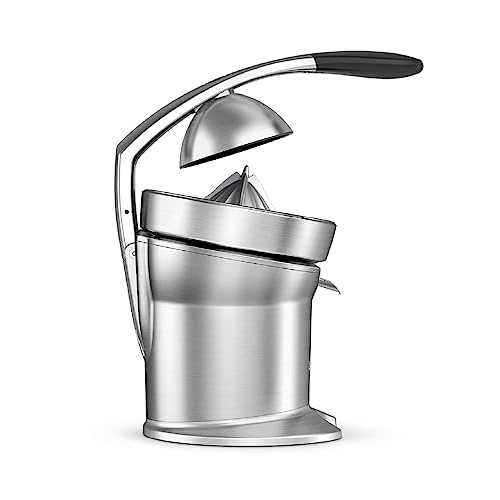
The 800CPXL does the pressing for you. An active-arm press with a power-assisted lever applies the downward force, and the finned, undulated Quadra-Fin cone is designed to extract maximum juice. The triple hinged arm is ergonomic, so you simply guide the fruit.

The tradeoff is price and size. It is the most expensive juicer here and takes up a good deal of counter space. It also has a single cone size, so tiny limes can be fiddly. Compared with the Waring it needs far less hand effort but is slower for volume, and compared with the Healnitor it is far more premium.

Rinse the cone and basket right away and wipe the stainless base. It suits people who juice every morning and value ease over speed. Because the arm does the work, it is a good fit for anyone whose wrists tire from pressing a reamer.

What works

  • Power-assisted lever does the pressing
  • Quadra-Fin cone extracts well
  • Ergonomic triple hinged arm
  • Brushed stainless build

Watch out for

  • Most expensive in the lineup
  • Large counter footprint
  • Single cone size

Spec sheet

Type
Power-assisted press
Cone
Quadra-Fin finned and undulated
Arm
Triple hinged ergonomic
Body
Brushed stainless
Fruit
Oranges, lemons, limes, grapefruit
03
Cuisinart Pulp Control Citrus Juicer with 3 Settings
3 pulp levelsFinal spinReamerAuto reverse
Check price on Amazon
Best for: Cooks who want smooth or pulpy juice from the same machine.

The Cuisinart gives you control over the glass. An adjustable reamer has three pulp settings, low, medium and high, and a final-spin feature extracts more juice from the pulp at the end of the squeeze. That means the same machine can make smooth lemonade or pulpy orange juice.

Against the Waring it is lighter-duty, and hand pressure on the fruit is still needed. The pulp control adds a part to clean. Compared with the Waring it is lighter and less stable, and compared with the Breville it is much cheaper.

Wash the reamer, strainer and spout after use. Adjustable pulp makes it handy for mixing different drinks from the same oranges. Because the pulp setting is a physical slider, you can change it between glasses without taking anything apart.

What works

  • Three pulp control settings
  • Final-spin feature extracts more juice
  • Simple, quick to use
  • Removable parts

Watch out for

  • Lighter-duty than the Waring
  • Still needs hand pressure
  • Pulp control adds a part to clean

Spec sheet

Type
Electric reamer
Pulp control
3 settings: low, medium, high
Feature
Final-spin extracts more juice
Reamer
Adjustable
Fruit
Oranges, lemons, limes
04
Proctor Silex Alex's Lemonade Stand 34 Ounce Electric Citrus Juicer
34 oz2 reamersPressure activatedPitcher
Check price on Amazon
Best for: Families that make lemonade and juice for a crowd on a budget.

The Proctor Silex is the family-sized lemonade machine. It is pressure activated, so it starts when you press fruit on the cone and stops when you lift, and it comes with two reamers for big and small fruit. A 34 ounce take-to-table pitcher with easy-to-read markings is large enough to serve a crowd, and a dollar of each sale goes to a children's cancer charity.

The tradeoff is power and finish. It is a light plastic body, so it is less stable and less durable than a die-cast machine, and the reamers need washing. Compared with the Waring it is far cheaper but built for lighter use. Compared with the LEBENLANG it has a bigger pitcher.

Rinse the reamers and the pitcher after each use. It suits families that make lemonade and juice for a crowd. Because the pitcher doubles as a serving jug, it also saves washing a separate container.

What works

  • 34 ounce pitcher with markings
  • Two reamers for big and small fruit
  • Pressure activated start and stop
  • Low outlay

Watch out for

  • Light plastic body is less stable
  • Less durable than die-cast
  • Reamers need washing

Spec sheet

Capacity
34 ounce pitcher
Reamers
2, for big and small fruit
Operation
Pressure activated
Use
Lemonade and juices
Cause
A dollar of each sale goes to a children charity
05
LEBENLANG Electric Orange Juicer with 2 Cones and 24 Ounce Container
24 oz2 conesTwo-way rotationBPA-free
Check price on Amazon
Best for: Singles and small families who want two cone sizes.

The LEBENLANG offers two pressing cones of different sizes and rotation in two directions, which the listing says gets more juice within seconds without forcing the fruit. A large transparent 24 ounce container with measuring marks is removable, so you can pour or store the juice.

A lightweight build from a lesser-known brand leaves durability and support uncertain. Compared with the Proctor Silex it has a smaller container, and compared with the Cuisinart it has no pulp selector.

Wash the cones and the container after use. It suits singles and small families who want two cone sizes. Because the cones are different sizes, switching between lemons and large oranges is quick.

What works

  • Two cone sizes for different fruit
  • Two-way rotation extracts more juice
  • 24 ounce removable container with marks
  • BPA-free materials

Watch out for

  • Lightweight with uncertain durability
  • Lesser-known brand
  • No pulp control

Spec sheet

Container
24 ounce removable with measuring marks
Cones
2 different sizes
Rotation
Two directions
Material
BPA-free
Use
Singles and families
06
Healnitor 150W Electric Citrus Juicer with 2 Cones
150 W2 conesStainless shellAnti-drip spout
Check price on Amazon
Best for: Cooks who want a quiet, tidy stainless-look juicer.

The Healnitor is a 150 watt juicer with a sleek stainless steel shell body and two cones. The listing mentions an anti-drip spout and a stainless steel slag tray that keep the counter clean, and says all removable parts are easy to wash. It is a compact, quiet unit.

The tradeoff is brand and verification. The listing gives few details beyond the motor and the finish, and an unbranded machine carries a support risk. Compared with the Waring it is lighter and cheaper, and compared with the LEBENLANG it has a steel shell but a smaller container.

Wipe the shell and wash the removable parts after each use. Pick it when a stainless look and a clean pour matter on the counter. Because the tray catches the leftover pulp, cleanup after a batch of oranges is simpler.

What works

  • 150 watt motor
  • Stainless steel shell
  • Anti-drip spout and slag tray
  • Two cones

Watch out for

  • Unbranded with uncertain support
  • Limited details on the listing
  • Lighter-duty than die-cast

Spec sheet

Motor
150 watt
Cones
2
Body
Stainless steel shell
Spout
Anti-drip
Tray
Stainless steel slag tray
07
VEVOR Commercial Orange Juicer Machine 120W Automatic Extractor
120 WAuto peelFeed chuteSUS304
Check price on Amazon
Best for: Cafes and large households that juice many whole oranges.

The VEVOR is a different animal. It peels, juices and filters whole oranges automatically, with a feed chute that accepts oranges from 55 to 80 mm, and it is made from SUS304 stainless steel and high-quality PC. You drop whole fruit in rather than cutting halves.

Expect it to occupy space and ask for more fuss than a hand reamer. It is a commercial machine that takes a lot of counter space, and it suits oranges of a limited size range rather than lemons and limes. It also has more parts to clean. Compared with the reamer juicers it needs no hand pressure but is far more complex.

Follow the cleaning instructions carefully, since peel and pulp collect in the machine. It suits cafes, juice bars and large households that drink a lot of orange juice. Because oranges must fall in the size range, check your fruit before you buy.

What works

  • Automatic peeling, juicing and filtering
  • Feed chute takes whole oranges
  • SUS304 stainless steel and PC build
  • No cutting or pressing needed

Watch out for

  • Large and complex
  • Suited only to oranges in a size range
  • More parts to clean

Spec sheet

Motor
120 watt
Process
Automatic peeling, juicing and filtering
Chute
Fits oranges 55 to 80 mm
Material
SUS304 stainless steel and PC
Use
Commercial or large home

Spec sheet decoder

What the numbers on the box really mean

The specs manufacturers lead with, translated into what they tell you about real-world performance.

Oranges per hour

A throughput rating that shows how fast a machine can juice under continuous use. It is a marketing rating, but it signals the motor class.

Watch forThe Waring lists 120 oranges per hour.

Die-cast base

A heavy metal casting that keeps the machine steady and quiet. It also helps protect the counter surface.

Watch forThe Waring lists one.

Pressure-activated

The cone spins only when you press fruit on it. It prevents the cone from spinning empty.

Watch forThe Proctor Silex lists it.

Pulp control

An adjustable strainer that sets how much pulp reaches the glass. Higher pulp suits breakfast juice.

Watch forThe Cuisinart lists three settings.

SUS304

A food-grade stainless steel that resists corrosion and acid. It also resists staining.

Watch forThe VEVOR lists it.

Methodology

How We Evaluated These Electric Citrus Juicers

Stability and build

We compared die-cast, stainless and plastic bodies, favoring the Waring for stability. A stable base scored higher because reamers need steady pressure.

Juicing design

We looked at cone design, power-assist and automatic peeling. We noted that no listing proves a yield figure.

Capacity and pitcher

We weighed pitcher size and markings from 24 to 34 ounces. A larger pitcher suits crowds but takes more space.

Pulp control

We credited adjustable pulp settings and strainers. A strainer that is easy to remove scored higher.

Cleanup

We considered removable parts and the number of pieces to wash. Machines with many parts scored lower for quick use.

Decision guide

How to Choose the Right Electric Citrus Juicers

By Use

SituationPickWhy
Busy home or small cafeWaring BJ120C120 oranges per hour
Daily oranges, low effortBreville 800CPXLPower-assisted press
Lemonade for a crowdProctor Silex 34 OunceLarge pitcher
Whole oranges, high volumeVEVOR Commercial JuicerAutomatic

By Budget

TierPickWhy
Lowest outlayProctor Silex 34 OunceSimple reamer
Low outlayLEBENLANG 2-Cone JuicerTwo cones
Mid rangeCuisinart Pulp ControlAdjustable pulp
Highest outlayBreville 800CPXLPower-assisted

Reamer vs Press

Reamer (Waring, Cuisinart, Proctor Silex)

Spins a cone as you press the fruit, which is simple and fast but needs hand pressure.

Press (Breville 800CPXL)

A motorized arm presses for you, which takes less effort but costs more and takes more room.

Choose a reamer for speed and a press for low effort. Many cafes use reamers for speed.

By Pulp Preference

PreferencePickWhy
Adjustable pulpCuisinart Pulp ControlThree settings
Marked pitcherProctor Silex 34 Ounce34 ounce markings
Clean counterHealnitor 150WAnti-drip spout and slag tray
Two cone sizesLEBENLANG 2-Cone JuicerBig and small cones

For Lemonade Specifically

Look for

A big pitcher, a cone that fits lemons and a quick start-stop action. Press halves in sequence and top up with water and sugar to taste.

In this comparison

The Proctor Silex has the largest pitcher and two reamers, and the Waring handles lemons at speed.

When to Spend More

Spend more if

You juice daily or for a business. The Waring or the Breville pays back in speed or comfort.

Save if

You juice a few times a week. The Proctor Silex or LEBENLANG does the job. A used machine is a risk, since motors and feet wear out.

Ownership

Maintenance schedule

The upkeep that decides whether this machine lasts two seasons or ten.

TaskIntervalWhy it matters
Rinse the cone and strainerRight after every useDried pulp is hard to remove and breeds odor. A soft brush clears the cone grooves.
Empty the pulp tray or basketAfter each batchA full tray blocks juice flow.
Wipe the baseAfter each useSticky juice attracts dust. Never immerse the motor base. A damp cloth is enough.
Check rubber feetEvery few monthsWorn feet let the machine vibrate and walk.
Descale if you use hard waterEvery few monthsMineral buildup can clog spouts and strainers. A soak in warm water with a little vinegar works well.

FAQ

Frequently Asked Questions

Which electric citrus juicer is best for oranges?

The Breville 800CPXL does the pressing for you, and the Waring BJ120C is the best for volume. The VEVOR peels and juices whole oranges. For single oranges, a basic reamer also works well.

Are electric juicers worth it?

Yes if you juice several fruits at a time. For occasional lemons, a manual press is cheaper and easier to store. Think about storage too.

How do I get more juice?

Roll the fruit first, use room-temperature fruit and press firmly but gently. Light pressure avoids bitter peel oils. Fresh fruit also juices better than old fruit.

Can I put the parts in the dishwasher?

Many removable parts are dishwasher safe, but check the manual. Never put the motor base in water.

Do I need to strain the juice?

Reamers can let seeds and pulp through. Pulp control or a sieve helps.

Can I juice for a crowd?

Yes. A big pitcher like the Proctor Silex helps, and a die-cast machine like the Waring keeps pace. Let the motor rest during very long sessions.

Bottom line

The short version

Browse more electric citrus juicerson Amazon →
James Miller, Lead Machine Editor

About the author

James Miller

Lead Machine Editor, MachineFanatic

James Miller leads MachineFanatic's buying guides, turning spec sheets, manuals and owner feedback into clear verdicts on power tools, outdoor power equipment, shop machines and kitchen machines.

More from James →

Keep reading

Related guides