
Amazon affiliate links - we earn a commission.Affiliate disclosure

Buying guide · 12 min read · Updated 2026-11-07

Best Electric Tortilla Makers (2026)

Five electric tortilla and roti makers compared by plate size, thickness and heat control: CucinaPro, Gonzalez, FineMade, and adjustable 4 and 6 inch models.

James MillerBy James MillerLead Machine Editor5 machines comparedSpec-sheet verified
Best Electric Tortilla Makers

At a glance

Our top picks

Side by side

Spec comparison

An electric tortilla maker presses a ball of dough flat between two heated plates and cooks it in the same motion, which replaces a rolling pin, a skillet and a lot of practice. The result is round, evenly cooked flatbread in under a minute.

The decisions are plate diameter, how the plates are heated and whether you can control thickness and browning. Think about whether you make flour tortillas, corn tortillas or roti, because the dough and the best plates differ.

Before you buy

6 Criteria to Look For Before Buying an Electric Tortilla Maker

  1. 01

    Plate diameter and tortilla size

    Plates of 8 inches, as on the FineMade and Gonzalez, make taco-size tortillas, while 10 inch plates on the CucinaPro and U-shaped roti maker make burrito-size wraps. The adjustable model offers 4 and 6 inch molds. Pick a size by the dishes you cook, since you cannot stretch a small plate. A good approach is to weigh dough balls on a scale, around 40 grams for a six inch tortilla and about 90 for a ten inch, so every tortilla comes out the same size and thickness. Remember that the plate leaves a margin of unpressed dough at the edge, so a ten inch plate makes a tortilla closer to nine and a half inches, and a smaller plate to seven. Measure the wraps you like to eat before deciding.

  2. 02

    Thickness control

    Thin flour tortillas and thick gorditas need different pressures. The adjustable model offers 1.5 to 5.5 millimeters, while most others depend on how hard you close the lid. If you cook varied dishes, thickness control matters. Thicker pressing gives a chewier tortilla and thinner pressing gives a crisper one, so test two settings with the same dough. Pressing pressure also matters: leaning hard on the lid flattens dough more than the plate's own weight does, so a press without a lock needs a consistent hand.

  3. 03

    Temperature and browning

    A proper tortilla needs plates hot enough to puff and brown. The FineMade has precise temperature control and the U-shaped roti maker has browning control, while the CucinaPro has a ready light only. Cold plates steam dough instead of searing it. If your first tortilla puffs unevenly, the plates are probably too cool, so let the press cycle on for another minute. A press that heats unevenly leaves one side pale, so look for owner feedback patterns on how evenly each model browns across the plate.

  4. 04

    Nonstick versus metal plates

    Nonstick plates release dough cleanly and wipe off easily, but must not be scratched. Metal plates like the Gonzalez's need seasoning. Nonstick suits casual cooks, and metal suits traditionalists. Never use nonstick spray on nonstick plates, since it builds a sticky film that is hard to remove. Nonstick coatings are tough but not forever. Treat them gently and they will outlast a cheap press that rusts.

  5. 05

    Flour, corn or roti

    Flour dough presses easily, corn masa needs a different press with no heat before cooking, and roti dough is stiff. The VEVOR is designed for corn, sopes and gorditas, while most others suit flour. Check the maker's list of doughs. For corn tortillas, work with fresh masa that is damp but not sticky, and line the plates with plastic or parchment as the maker advises. Roti dough is stiffer and often cooked on a flat pan afterward, so a press for roti should flatten first and finish on a griddle if you want classic puffing.

  6. 06

    Storage and safety

    Cord wraps, insulated handles and compact bodies matter in a small kitchen. The Gonzalez has insulated legs and handle. A hot press needs a safe spot on the counter. If counter space is tight, choose a unit that stands on edge or has a latch that holds it closed. A press that cools down quickly is also easier to store, so check whether the housing stays hot for long after unplugging.

Detailed reviews

The 5 best electric tortilla makers, explained

01
CucinaPro 10 inch electric tortilla maker with nonstick plates
10 inch platesNonstickReady lightCord wrap
Check price on Amazon
Best for: Families making flour tortillas and flatbreads weekly.

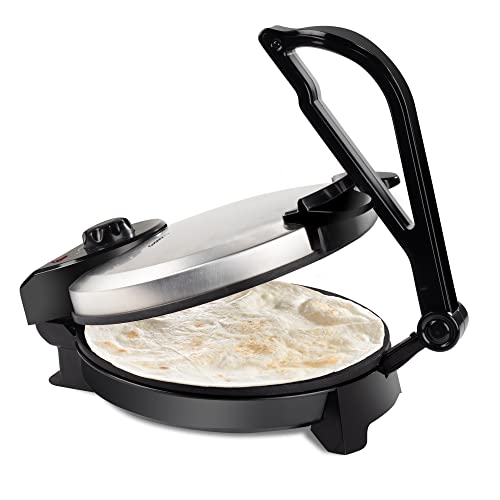
The CucinaPro is a clamshell press with two heated nonstick plates, ten inches across, that flattens and bakes a tortilla in one step. A ready light tells you when the plates are up to temperature, which prevents the most common mistake, pressing dough on cold plates that steam instead of sear. A cord wrap keeps storage tidy.

The tradeoff is that it offers a single heat setting and a fixed thickness determined by how hard you close the lid, so thin crepes and thick gorditas are beyond it. Compared with the 10 inch U-shaped roti maker, it is simpler but has no browning control, and against the Gonzalez press it cooks as well as flattens.

Preheat fully, use a dough ball sized to the plate and wipe the plates with a damp cloth while warm. Never use metal tools on the nonstick surface. Keep a clean towel nearby to stack finished tortillas and trap steam. A bench scraper makes cutting even dough balls fast.

What works

  • Flattens and bakes in one step
  • 10 inch nonstick plates wipe clean
  • Ready light prevents cold pressing
  • Cord wrap for storage

Watch out for

  • Single heat setting
  • Fixed thickness depends on your closing pressure

Spec sheet

Plate size
10 inches
Surface
Non-stick cooking plates
Function
Flattens and bakes in one step
Indicator
Ready light
Storage
Cord wrap
02
FineMade 8 inch compact electric tortilla and roti maker
8 inch platesTemperature controlCrepe capableCompact
Check price on Amazon
Best for: Small households that want temperature control and small tortillas.

The FineMade is an 8 inch compact press with precise temperature control, which lets you set the heat for flour tortillas, roti or crepes. A smaller plate means less counter space and smaller tortillas, which suits taco night for one or two people. Temperature control is the feature that sets it apart from simpler on-off models.

The limit is plate size. An 8 inch plate makes small tortillas, and anyone wanting burrito-size wraps will be disappointed. Compared with the CucinaPro, it is smaller but more controllable, and against the U-shaped 10 inch roti maker it lacks the sunken plate that holds dough.

Preheat, dust the plates lightly if the dough is sticky and clean them while warm. Store it with the plates closed. A small bench scraper helps loosen any dough that sticks to the edge. If you cook for one or two, the smaller footprint is a daily benefit.

What works

  • Precise temperature control
  • Compact 8 inch size
  • Makes tortillas, roti and crepes
  • Easy to store

Watch out for

  • Small plate limits tortilla size
  • Less cooking surface per batch

Spec sheet

Plate size
8 inches
Heat
Precise temperature control
Uses
Tortillas, roti, crepes
Size
Compact
Design
Electric press
03
10 inch U-shaped roti maker with browning control
10 inchU-shaped plateBrowning controlNonstick
Check price on Amazon
Best for: Roti and flatbread cooks who want browning control.

This roti maker has a U-shaped sunken plate, which holds the dough so it does not slide away while you press. Standard flat plates let a dough ball skate out of position, so a recessed lower plate is a practical improvement, and an adjustable browning control lets you choose a lighter or darker finish. A compact stainless body keeps it tidy.

The tradeoff is that recessed plates shape the dough into a defined disc, so oddly shaped flatbreads are less natural. Compared with the CucinaPro, it has better control but less brand history, and against the FineMade it is larger.

Let it preheat, use a measured dough ball and watch browning on the first tortilla so you learn the setting. Wipe the plates while warm. If the browning dial seems off, test it with plain flour dough before adding fillings. Use a small piece of parchment to protect the plate when pressing high-sugar doughs.

What works

  • U-shaped plate holds dough in place
  • Adjustable browning control
  • 10 inch nonstick surface
  • Compact stainless body

Watch out for

  • Recessed plate makes round discs only
  • Less established brand

Spec sheet

Plate size
10 inches
Plate shape
U-shaped sunken
Control
Adjustable browning
Surface
Nonstick
Body
Compact stainless
04
Gonzalez 8 inch electric tortilla press, made in Mexico
8 inchMade in MexicoInsulated handleFlour tortillas
Check price on Amazon
Best for: Cooks who want a traditional press with a sturdy build.

The Gonzalez is a traditional electric tortilla press made in Mexico, with an 8 inch plate and insulated legs and handle that keep your hands safe from the hot housing. It makes flour tortillas and roti with a simple, sturdy design that has been used in tortillerias and home kitchens for years.

The tradeoff is modernity. Metal plates need seasoning or lightly oiling rather than a nonstick coat, and there is less in the way of indicator lights or controls. Compared with the CucinaPro, it is less convenient but more traditional, and against the cast iron Mexican press it uses a motor-heated design.

Season the plates lightly, preheat fully and wipe the plates with a cloth while warm. Avoid water on the heating element. Use a dedicated cloth for the plates, since oil-seasoned cloths smear flavors. Keep spare plates or seasoning oil in a nearby cabinet.

What works

  • Traditional sturdy build
  • Insulated legs and handle
  • 8 inch plate for flour tortillas and roti
  • Simple to operate

Watch out for

  • Few conveniences such as indicator lights
  • Metal plates need seasoning

Spec sheet

Plate size
8 inches
Origin
Made in Mexico
Use
Flour tortillas and roti
Safety
Insulated legs and handle
Type
Electric press
05
Adjustable-thickness 4 and 6 inch electric tortilla maker with two molds
4 inch and 6 inch molds1.5 to 5.5 mmNonstickElectric
Check price on Amazon
Best for: Cooks who want thin tortillas and thick gorditas from one machine.

This tortilla maker comes with two molds, four and six inches, and an adjustable thickness range from 1.5 to 5.5 millimeters, which covers thin tortillas through thick gorditas. The two mold sizes make it versatile for taco-size and larger tortillas, and a nonstick coating releases dough cleanly.

The tradeoff is plate size. Neither mold reaches burrito size, and changing molds adds a step. Compared with the CucinaPro, it controls thickness precisely but makes smaller discs, and against the VEVOR it is a manual-feed machine.

Choose the thickness setting before you start, preheat fully and keep molds clean. Dust the mold lightly for sticky doughs. Check which side the hinge opens on so the layout fits your counter. Test each mold with a small dough ball before committing a full batch.

What works

  • Two molds for 4 and 6 inch tortillas
  • Thickness adjusts from 1.5 to 5.5 mm
  • Non-stick coating
  • Covers tortillas, tacos and gorditas

Watch out for

  • No burrito-size plate
  • Mold swapping adds a step

Spec sheet

Molds
4 inch and 6 inch
Thickness range
1.5 mm to 5.5 mm
Surface
Non-stick coating
Type
Electric tortilla maker
Use
Tortillas, tacos, gorditas

Spec sheet decoder

What the numbers on the box really mean

The specs manufacturers lead with, translated into what they tell you about real-world performance.

Plate diameter

The size of the pressing surface, which sets the maximum tortilla diameter. A larger plate makes a bigger tortilla but needs a bigger dough ball and more heating power. Diameter is measured across the plate, not across the finished tortilla.

Watch forThe CucinaPro is 10 inches and the FineMade and Gonzalez are 8 inches.

Thickness range

How thin or thick the press can make the dough disc. Thicker tortillas hold fillings better, and thinner ones roll up more easily.

Watch forThe adjustable model lists 1.5 mm to 5.5 mm.

U-shaped plate

A recessed lower plate that keeps dough centered while pressing. A sunken lower plate stops dough from sliding away as the lid comes down. A deeper well also helps with thicker, stiffer dough.

Watch forThe 10 inch roti maker uses it.

Ready light

A light that tells you when the plates reach temperature. It also shows you when the plates have recovered between tortillas.

Watch forThe CucinaPro includes one.

Masa

Corn dough made from nixtamalized corn, used for corn tortillas. Corn masa has no gluten, so it is stickier and needs a gentler press. Masa also dries quickly, so keep unused dough covered with a damp cloth.

Watch forCheck whether the press is rated for masa.

Methodology

How We Evaluated These Electric Tortilla Makers

Plate size and shape

We compared plate diameters and design. The CucinaPro is 10 inches and the roti maker has a U-shaped plate. Practical sizes scored higher. We also considered how close each plate gets to the edge of the housing. We also weighed how evenly each plate seems to heat across its width.

Control

We looked at temperature, browning and thickness controls. The FineMade has precise temperature control and the adjustable model has a thickness range. Better control scored higher. We noted whether the thickness setting is a dial or depends on your hand. We compared published thickness numbers against how tortillas are typically sold.

Surface and cleaning

We checked nonstick plates and easy cleaning. The CucinaPro and adjustable model are nonstick. Easier cleaning scored higher. We considered how easy it is to remove baked-on dough. We noted which coatings advertise PFOA-free construction.

Dough versatility

We considered flour, corn and roti support. The adjustable model handles gorditas and the VEVOR targets corn. Wider range scored higher. We read the listed doughs each maker says it can handle. We checked feedback patterns on warping plates.

Ownership

We weighed storage, safety and owner feedback patterns on coatings. Durable, safe designs scored higher. We looked at footprint and the weight of each unit. We looked at how easy each lid is to open one-handed.

Decision guide

How to Choose the Right Electric Tortilla Makers

By Tortilla Size

SituationPickWhy
Burrito-size flour tortillasCucinaPro 10 inch10 inch nonstick plates
Small tacosFineMade 8 inchCompact with temperature control
Roti and flatbread10 inch U-shaped roti makerSunken plate holds dough
Thin and thick optionsAdjustable 4 and 6 inch maker1.5 to 5.5 mm range
Traditional feelGonzalez 8 inchSturdy Mexican press

By Budget

SituationPickWhy
Lowest tierFineMade 8 inchCompact and controllable
Entry 10 inchCucinaPro 10 inchSimple and effective
Mid tierAdjustable 4 and 6 inch makerThickness range
Upper tier10 inch U-shaped roti makerBrowning control
Premium traditionalGonzalez 8 inchBuilt to last

Nonstick vs Traditional Metal

Nonstick

The CucinaPro, FineMade and adjustable maker release dough easily and wipe clean. The coating must be protected.

Traditional metal

The Gonzalez uses metal plates that last decades. They need seasoning and more care.

Casual cooks should pick nonstick, and traditionalists should pick metal.

Dough Type

SituationPickWhy
Flour tortillasCucinaPro 10 inchFlatten and bake
Stiff roti dough10 inch U-shaped roti makerHolds dough
Gorditas and thick tortillasAdjustable 4 and 6 inch maker5.5 mm setting
Crepes and thin flatbreadsFineMade 8 inchTemperature control

For Weekly Taco Night Specifically

Look for

Look for a ready light, nonstick plates and a size matched to your tacos. Make dough balls the same size for even results.

In this comparison

The FineMade suits tacos, and the CucinaPro suits burritos. The adjustable maker handles both small and thick.

When to Spend More

Spend more if

Spend more if you make tortillas weekly and want control. The roti maker and Gonzalez last for years.

Save if

Save if you only cook occasionally. The FineMade or CucinaPro covers the basics.

Ownership

Maintenance schedule

The upkeep that decides whether this machine lasts two seasons or ten.

TaskIntervalWhy it matters
Wipe plates while warmAfter each useDough residue hardens as plates cool. A silicone brush removes stray crumbs from the hinge. Plates cool slowly, so wipe them with a towel held in tongs rather than bare fingers.
Avoid metal tools on nonstickAlwaysScratches shorten the coating's life. Use a soft cloth or sponge only, never steel wool. Do not stack heavy items on the lid during storage.
Season metal platesAs neededA light oil film prevents sticking and rust. A wipe with a drop of neutral oil keeps iron or steel plates from rusting.
Wrap the cord looselyAfter each useTight bends damage cords over time. Replace a frayed cord immediately.
Keep water off the heaterAlwaysMoisture damages the heating element. Replace the unit if the heating plate warps or the lid no longer closes evenly. Use only a barely damp cloth near the heating plate.

FAQ

Frequently Asked Questions

Can I make corn tortillas?

Only with a press rated for masa. Most flour presses do not suit corn, which needs gentle pressure and a different cook. If you need gluten-free options, check whether the maker recommends a specific masa or flour for the press. If you cook for a family, a ten inch press saves time because each tortilla is bigger.

Why are my tortillas sticking?

Cold plates or too much moisture in the dough. Preheat fully and dust lightly. Rest the dough for at least twenty minutes before pressing so the gluten relaxes. Sticky dough is usually too wet, so add a little flour a spoonful at a time.

How many tortillas can I make per minute?

About one per minute on a single plate press. A larger batch needs patience. Stack cooked tortillas in a towel to keep them soft. Press one tortilla to test your dough and plate temperature before making a stack.

Is it better than a skillet?

It is faster and more consistent for repeated tortillas. A skillet is fine for one or two. For the best texture, press right after rolling dough into balls. A damp towel over cooked tortillas keeps them soft and pliable for hours.

How do I clean nonstick plates?

Wipe with a damp cloth while warm. Do not use abrasives. A cheap kitchen scale improves consistency more than any upgrade. Cook tortillas for about thirty to sixty seconds per side, depending on the press.

How long do these presses last?

Traditional metal presses last decades, and coated ones last several years with care. Keep it unplugged when not in use and out of reach of children. If your press ever gives off a burning smell, unplug it and check for stuck dough.

Bottom line

The short version

Browse more electric tortilla makerson Amazon →
James Miller, Lead Machine Editor

About the author

James Miller

Lead Machine Editor, MachineFanatic

James Miller leads MachineFanatic's buying guides, turning spec sheets, manuals and owner feedback into clear verdicts on power tools, outdoor power equipment, shop machines and kitchen machines.

More from James →

Keep reading

Related guides