
Amazon affiliate links - we earn a commission.Affiliate disclosure

Buying guide · 12 min read · Updated 2026-11-07

Best Electric Trolling Motors for Kayaks (2026)

Six electric trolling motors for kayaks compared by thrust, voltage, weight, shaft length, brushless or brushed design and battery needs for small paddle craft.

James MillerBy James MillerLead Machine Editor6 machines comparedSpec-sheet verified
Best Electric Trolling Motors for Kayaks

At a glance

Our top picks

Side by side

Spec comparison

MachineThrustSpeedsControlVoltageMotor
Newport Kayak Series 36 lb Thrust Saltwater Trolling Motor, 24 In. ShaftBest for Most KayaksNewport Kayak Series 36 lb Thrust Saltwater Trolling Motor, 24 In. Shaft36 pounds8, five forward and three reverse6-inch telescoping tillern/an/a
Newport NK180 HD 24V Electric Kayak Motor, 65 lb Thrust, BrushlessBest Brushless 24 VoltNewport NK180 HD 24V Electric Kayak Motor, 65 lb Thrust, Brushless65 poundsn/aVariable speed24 volt LiFePO4 lithium battery requiredBrushless direct drive
PARKHO HASWING W40 12V 40 lb Brushless Kayak Motor, Kill SwitchBest Safety FeaturesPARKHO HASWING W40 12V 40 lb Brushless Kayak Motor, Kill Switch40 pounds5 forward and 5 reversen/a12 voltBrushless
BKC Kayak Trolling Motor for Sit-On-Top Fishing KayaksBest Light WeightBKC Kayak Trolling Motor for Sit-On-Top Fishing Kayaksn/a5 forward and 3 reversen/an/an/a
Newport Kayak Series 55 lb Thrust Saltwater Trolling Motor, 24 In. ShaftBest Extra Thrust TransomNewport Kayak Series 55 lb Thrust Saltwater Trolling Motor, 24 In. Shaft55 pounds8, five forward and three reverse6-inch telescoping tillern/an/a
40 lb Thrust Brush Electric Trolling Motor, 12V, Telescopic HandleBest Compact Telescoping Shaft40 lb Thrust Brush Electric Trolling Motor, 12V, Telescopic Handle40 pounds5 forward and 3 reversen/a12 voltSolid copper brush motor

A kayak weighs a fraction of a fishing boat, and that changes every number in a trolling motor spec. The usual rule of 2 pounds of thrust per 100 pounds of loaded boat weight puts a 400 pound kayak and angler at only 8 pounds of thrust, so a 36 or 55 pound motor is an enormous margin that mostly buys speed and wind resistance, not necessity.

What limits a kayak motor is weight and mounting. The battery is often heavier than the motor, the motor must clear the paddle stroke, and the whole setup must keep the kayak stable. This guide ranks the lineup by weight, shaft length, voltage and drive design, and treats raw thrust as a secondary measure.

Before you buy

6 Criteria to Look For Before Buying an Electric Trolling Motor for Kayaks

  1. 01

    Thrust versus real need

    The usual rule of 2 pounds of thrust per 100 pounds of loaded boat means a 400 pound kayak and angler needs only about 8 pounds. The 36, 40, 55 and 65 pound motors here all exceed that, so extra thrust is margin for wind and current, not a requirement. Do not pay for thrust you will not use at full speed.

  2. 02

    Weight of motor and battery

    The BKC weighs 14.3 pounds, and a lead-acid battery can weigh more than the motor. Weight affects stability, portability and loading on a roof rack. Lithium batteries cut weight at a higher cost. As an example, a lead-acid deep cycle battery big enough for a day on the water can add well over thirty pounds, which is nearly twice the BKC motor, while a lithium battery of similar capacity weighs roughly a third as much. Put the battery low and near the center of the kayak so the hull stays balanced.

  3. 03

    Voltage and efficiency

    The Newport Kayak Series and Haswing W40 run on 12 volts, while the NK180 HD needs 24 volts and a LiFePO4 lithium battery. Higher voltage draws fewer amps for the same power. A 12 volt system is simpler and cheaper.

  4. 04

    Brushless versus brushed

    The Haswing W40 and NK180 HD are brushless, while the 40 pound motor is brushed. Brushless motors run cooler, last longer and use energy more efficiently. Brushed motors are simpler and cheaper but wear.

  5. 05

    Shaft length and mounting

    The Newport Kayak Series uses a 24 inch shaft, and the 40 pound motor adjusts from about 19 to 24.5 inches. A kayak mount sits near the waterline, so a short shaft avoids dragging. Confirm that your kayak has a transom, a bracket or a motor mount.

  6. 06

    Safety and corrosion

    The Haswing W40 has an emergency kill switch and the 40 pound motor a circuit breaker, while the Newport models are saltwater-rated. A kill switch protects you if you fall in. Rinse every motor after use.

Detailed reviews

The 6 best electric trolling motors for kayaks, explained

01
Newport Kayak Series 36 lb Thrust Saltwater Trolling Motor, 24 In. Shaft
36 lb thrust24 in shaft8 speedsSaltwater
Check price on Amazon
Best for: Kayak anglers who want a proven, short-shaft transom motor.

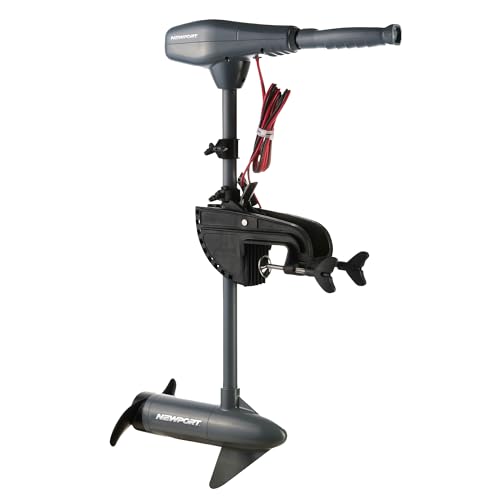
Newport's Kayak Series 36 pound motor is designed for kayaks and canoes, with a transom mount, a short 24 inch shaft, eight speeds, a 6 inch telescoping tiller and an LED battery indicator. The aluminum motor head uses corrosion-resistant magnesium, zinc and other metals, and the unit is saltwater-rated.

The 24 inch shaft is the right length for a kayak, where the mount sits only a few inches above the waterline. A longer shaft drags and risks hitting the bottom in shallow water. The 36 pounds of thrust is far more than a loaded kayak needs by the usual rule, which means the motor runs easily at low speeds and spares the battery. Eight speeds give fine control, and the LED meter shows the battery level at a glance.

A transom-mounted motor needs a mounting plate or a kayak with a motor bracket, and the tiller handle sits near your hip. Use a small 12 volt deep cycle or lithium battery, keep it secured and dry, and fuse the line. Rinse the motor after saltwater use and check the prop for line. Before the first trip, test the setup at the dock: sit in the kayak, lower the motor and check that the prop stays submerged when you shift your weight, that the tiller clears your leg and that the cable run is neat and out of your paddle path. A tidy installation makes the day on the water safer.

What works

  • 24 inch shaft suits kayak mounts
  • Eight speeds with an LED battery meter
  • Saltwater-rated aluminum head
  • Telescoping tiller adjusts to your position

Watch out for

  • Needs a motor mount or bracket
  • Brushed motor is less efficient than brushless
  • Thrust is far more than a kayak needs

Spec sheet

Thrust
36 pounds
Shaft
24 inch
Speeds
8, five forward and three reverse
Control
6-inch telescoping tiller
Indicator
LED battery meter
02
Newport NK180 HD 24V Electric Kayak Motor, 65 lb Thrust, Brushless
65 lb thrust24V LiFePO4600W / 1.8HPBrushless
Check price on Amazon
Best for: Anglers who want brushless efficiency and range on a 24 volt lithium system.

The NK180 HD is a 24 volt brushless motor with a listed 600 watts, 1.8 horsepower and 65 pounds of thrust, and it requires a 24 volt LiFePO4 lithium battery sold separately. Brushless direct drive gives smooth, quiet power with variable speed.

Brushless is the technology to look for. A brushless motor has no brushes to wear, runs cooler and wastes less energy as heat, which stretches a small battery's range, and direct drive removes the gearbox noise that angers fish and neighbors. A 24 volt system draws about half the current of a 12 volt one for the same power, which means thinner cable heat and longer runtime.

The trade-off is cost and the battery requirement: you must buy a 24 volt lithium battery, which is lighter than lead-acid but still a significant purchase. Use a battery with a built-in management system, mount it low and secure, and keep the connectors dry. It is the most capable and most efficient motor in this guide, and it suits anglers who cover long distances.

What works

  • Brushless direct drive is quiet and efficient
  • 65 lb thrust and 600 watts
  • 24 volt system draws fewer amps
  • Variable speed control

Watch out for

  • Requires a 24 volt LiFePO4 battery sold separately
  • Costs more than brushed 12 volt motors
  • Heavier setup overall

Spec sheet

Thrust
65 pounds
Power
600 watt, 1.8 HP
Voltage
24 volt LiFePO4 lithium battery required
Motor
Brushless direct drive
Control
Variable speed
03
PARKHO HASWING W40 12V 40 lb Brushless Kayak Motor, Kill Switch
40 lb thrust12V brushless5F / 5RKill switch
Check price on Amazon
Best for: Kayak anglers who want brushless efficiency and a kill switch on 12 volts.

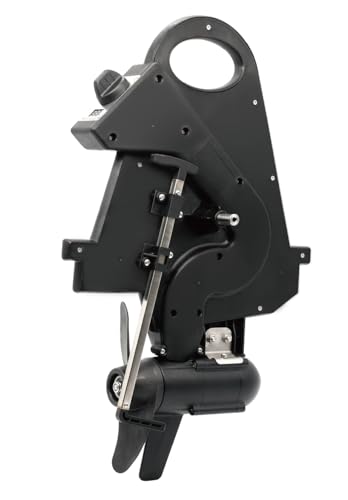
The Haswing W40 is a 12 volt brushless kayak motor with 40 pounds of thrust, five forward and five reverse speeds and an emergency kill switch. Compatibility with the Hobie ProAngler series is stated, along with suitability for diverse waterways.

Brushless efficiency at 12 volts is the combination that stands out. You get the lower heat and longer life of a brushless motor without the 24 volt battery requirement. Five reverse speeds, matching the forward speeds, are unusual and useful when you need to back away from a snag or a dock. The emergency kill switch cuts power instantly if you fall out or the kayak tips, which is a genuine safety benefit.

Compared with the Newport Kayak Series, the Haswing is brushless and has a kill switch, but offers less saltwater detail in the text reviewed. Confirm the mounting method for your kayak, use a secured 12 volt battery and keep the kill lanyard attached to your wrist or life jacket. Rinse after use.

What works

  • 12 volt brushless motor
  • Emergency kill switch
  • Five forward and five reverse speeds
  • Compatible with Hobie ProAngler per the listing

Watch out for

  • Saltwater rating not stated in the text reviewed
  • 40 lb thrust still exceeds a kayak's need
  • Newer brand

Spec sheet

Thrust
40 pounds
Voltage
12 volt
Motor
Brushless
Speeds
5 forward and 5 reverse
Safety
Emergency kill switch
04
BKC Kayak Trolling Motor for Sit-On-Top Fishing Kayaks
14.3 lb5F / 3R speedsQuietSit-on-top
Check price on Amazon
Best for: Anglers who haul the kayak alone and want a light motor.

BKC's kayak motor weighs just 14.3 pounds, so the overall vessel weight barely rises, and the maker says it runs quiet and smooth even at full power so it will not scare fish. Five forward and three reverse speeds pair with responsive steering, and the motor is designed for sit-on-top fishing kayaks.

Weight is the point. A kayak's performance is sensitive to weight, and every pound of motor, bracket and battery matters for portability, loading onto a roof rack and stability. A motor of 14.3 pounds keeps the whole setup manageable, and a quiet motor matters on a still morning.

The listing gives fewer specifics on thrust and voltage than the others, so check the specification page before buying. Mount it securely, pair it with a small battery and use the lower speeds for range. Because the maker markets it for sit-on-top kayaks, check that it fits your hull or transom before you commit. A light motor also reduces strain on the mounting hardware, which lowers the risk of a bracket cracking in chop. Take care to keep the weight balanced, since a motor hanging off the stern raises the tail and changes how the kayak tracks.

What works

  • 14.3 pound weight keeps the kayak light
  • Quiet at full power per the maker
  • Five forward and three reverse speeds
  • Designed for sit-on-top fishing kayaks

Watch out for

  • Thrust and voltage need confirming
  • Fit depends on your kayak
  • Less detail on corrosion protection

Spec sheet

Weight
14.3 pounds
Speeds
5 forward and 3 reverse
Noise
Quiet at full power per the maker
Design
Hands-free propulsion for sit-on-top kayaks
Steering
Responsive
05
Newport Kayak Series 55 lb Thrust Saltwater Trolling Motor, 24 In. Shaft
55 lb thrust24 in shaft8 speedsSaltwater
Check price on Amazon
Best for: Tandem kayaks and open-water paddlers who want extra headroom.

The 55 pound version of Newport's Kayak Series keeps the 24 inch shaft, the eight speeds, the 6 inch telescoping tiller and the corrosion-resistant aluminum head of the 36 pound motor, and adds more thrust. Kayak and canoe propulsion is its stated purpose, and saltwater use is within its rating.

The extra thrust is mostly headroom. A loaded kayak needs only a few pounds by the usual rule, so 55 pounds helps in strong wind, current or when towing a second kayak, but it draws more current at full speed and rarely runs at full. If you fish open water with wind and tide, the margin has value, and if you paddle ponds, the 36 pound motor is enough.

The heavier motor is a bit harder to mount on a lightweight kayak, so check the transom plate rating. Use a 12 volt battery sized for the draw, keep the motor rinsed and fuse the cable. For larger canoes and tandem kayaks, it is a sensible step up.

What works

  • 55 lb thrust for wind and current
  • 24 inch kayak-length shaft
  • Saltwater-rated aluminum head
  • Eight speeds and telescoping tiller

Watch out for

  • Heavier than the 36 lb version
  • Higher current draw at full power
  • More thrust than most kayaks need

Spec sheet

Thrust
55 pounds
Shaft
24 inch
Speeds
8, five forward and three reverse
Control
6-inch telescoping tiller
Build
Corrosion-resistant aluminum head
06
40 lb Thrust Brush Electric Trolling Motor, 12V, Telescopic Handle
40 lb thrust12V brushed5F / 3R speedsCircuit breaker
Check price on Amazon
Best for: Budget-minded kayakers who want a simple brushed motor with a breaker.

This motor has a solid copper brush design with 40 pounds of thrust on 12 volts, five forward and three reverse speeds, a telescopic handle and an adjustable depth and angle for small boats. An LED light at the top shows battery power, and a built-in circuit breaker protects the motor.

The built-in circuit breaker is a thoughtful safety touch: it trips if the prop jams or the current spikes, which protects the motor and the battery. The telescopic handle lets you set the length for a seated position, and the adjustable depth and angle make it flexible for different hulls. The listing's shaft range of about 19 to 24.5 inches suits a kayak.

A brushed motor is less efficient than a brushless one and wears over time, so expect to service it, but it is a simple, repairable design and costs less. Mount it securely, use a fused battery and rinse after saltwater use. For a budget kayak setup, it is a reasonable starting point. A brushed motor is also easy for a handy owner to service, with replacement brushes available for many designs, and it makes a sensible first motor while you learn how much power you really use. Keep the brush housing dry and listen for a rough sound, which signals worn brushes.

What works

  • Built-in circuit breaker
  • Telescopic handle and adjustable depth
  • Five forward and three reverse speeds
  • LED battery light

Watch out for

  • Brushed motor is less efficient
  • Brand and saltwater rating are unclear
  • Brushes wear with use

Spec sheet

Thrust
40 pounds
Voltage
12 volt
Motor
Solid copper brush motor
Speeds
5 forward and 3 reverse
Safety
Built-in circuit breaker, LED battery light

Spec sheet decoder

What the numbers on the box really mean

The specs manufacturers lead with, translated into what they tell you about real-world performance.

Thrust in pounds

The pushing force of the motor.

Watch forThe Newport Kayak Series lists 36 and 55, the NK180 HD 65.

LiFePO4

Lithium iron phosphate, a light, long-lived battery chemistry.

Watch forThe NK180 HD requires a 24 volt LiFePO4 battery.

Brushless direct drive

A motor with no brushes that drives the prop directly.

Watch forThe NK180 HD lists it.

Kill switch

A lanyard-operated cutoff that stops the motor.

Watch forThe Haswing W40 has one.

Shaft length

The length of the motor shaft from the mount.

Watch forThe Newport models use 24 inches.

Methodology

How We Evaluated These Electric Trolling Motors for Kayaks

Thrust fit

We matched thrust to kayak weight and treated extra thrust as headroom.

Weight

We compared motor weight, from the BKC's 14.3 pounds, and noted battery weight.

Drive design

We credited brushless motors and noted brushed designs.

Safety and corrosion

We credited kill switches, breakers and saltwater ratings.

Mounting fit

We looked at shaft length and mount style for kayak use.

Decision guide

How to Choose the Right Electric Trolling Motors for Kayaks

By Kayak Type

SituationPickWhy
Single sit-on-top fishing kayakNewport Kayak Series 36 lb24 inch shaft and 12 volt
Light kayak hauled aloneBKC Kayak Motor14.3 pounds
Tandem kayak or canoeNewport Kayak Series 55 lbExtra thrust
Long-range open waterNewport NK180 HDBrushless 24 volt

By Budget

TierPickWhy
Lowest40 lb Brush MotorSimple 12 volt brushed motor
Low-midBKC Kayak MotorLight and quiet
MidNewport Kayak Series 36 lbProven kayak transom motor
HigherNewport NK180 HDBrushless 24 volt system

12 Volt vs 24 Volt

12 volt

The Newport Kayak Series, Haswing W40 and the brushed motor run on one battery, which is simpler and cheaper.

24 volt

The NK180 HD draws fewer amps, runs longer and needs a 24 volt lithium battery.

Pick 12 volts for simplicity; pick 24 volts for range and power.

By Safety Priority

SituationPickWhy
Wants a kill switchPARKHO Haswing W40Emergency kill switch
Wants a built-in breaker40 lb Brush MotorCircuit breaker
Saltwater useNewport Kayak SeriesSaltwater-rated head
Quiet fishingBKC Kayak MotorQuiet at full power per the maker

For Fishing Kayaks Specifically

Look for

A short shaft, low weight, quiet operation and a way to control the motor while casting. Mount it so the prop clears your paddle.

In this comparison

The Newport Kayak Series and the BKC suit sit-on-top fishing kayaks.

When to Spend More

Spend more if

You paddle long distances or in wind, where brushless efficiency and lithium power pay off.

Save if

You fish small ponds. A 12 volt brushed motor is enough.

Ownership

Maintenance schedule

The upkeep that decides whether this machine lasts two seasons or ten.

TaskIntervalWhy it matters
Rinse with fresh waterAfter each useSalt and mud corrode connections and seals. A quick rinse extends life.
Check the prop for lineEvery tripFishing line wraps behind the prop and damages seals.
Inspect battery terminals and fusesMonthlyCorroded terminals cause voltage drop and heat.
Secure and dry the batteryEvery tripA loose battery in a kayak is a hazard.
Test the kill switchBefore each seasonA kill switch only protects you if it works.

FAQ

Frequently Asked Questions

How much thrust does a kayak need?

Only a few pounds by the usual rule of 2 pounds per 100 pounds of loaded weight, so a 400 pound kayak and angler need about 8 pounds. Larger motors give margin for wind, current and towing, and they let you run at a fraction of full power, which saves battery. Treat 36 to 55 pounds as comfortable, and do not pay extra for more than you will use.

Do I need a 24 volt system?

Not for most kayaks. A 12 volt motor needs one battery, which keeps the setup light and cheap. A 24 volt system draws fewer amps for the same power, which helps range and cable heat, and it suits brushless motors like the NK180 HD, but it needs a matching lithium battery and a bigger investment.

Can I mount a trolling motor on any kayak?

No. You need a transom, a bracket or a motor mount designed for your hull, and the mount must handle the motor's weight and thrust. Many fishing kayaks offer accessory mounts, but a plain recreational kayak may need a clamp-on or a custom bracket. Check the manufacturer's guidance for your kayak before you drill or clamp anything.

How long will the battery last?

It depends on speed and capacity, and the range is wide. Current draw climbs quickly with speed, so a kayak cruising at a walking pace can run all day on a modest battery while the same motor at full power drains it in an hour or so. A battery meter helps you plan the trip home with margin.

Is a lithium battery worth it?

It is often worth it in a kayak, since lithium iron phosphate batteries weigh far less than lead-acid of the same capacity, hold voltage steadier and last for many more cycles. The cost is higher up front, and they need a compatible charger and sometimes a battery management system. If you carry the kayak far, the weight saving alone justifies it.

Are motors allowed on every water?

No. Rules vary by lake, river and region, and some waters restrict or prohibit motors, require registration or limit horsepower and speed. Check the regulations for your waterway before you buy or launch, and carry any required safety gear such as a life jacket and a signaling device.

Bottom line

The short version

Browse more electric trolling motors for kayakson Amazon →
James Miller, Lead Machine Editor

About the author

James Miller

Lead Machine Editor, MachineFanatic

James Miller leads MachineFanatic's buying guides, turning spec sheets, manuals and owner feedback into clear verdicts on power tools, outdoor power equipment, shop machines and kitchen machines.

More from James →

Keep reading

Related guides