
Amazon affiliate links - we earn a commission.Affiliate disclosure

Buying guide · 12 min read · Updated 2026-11-07

Best Generators for Class A Motorhomes (2026)

Five portable generators sized for a Class A motorhome backup or supplement: running watts per fuel, outlets, noise and upkeep compared for big coaches.

James MillerBy James MillerLead Machine Editor5 machines comparedSpec-sheet verified
Best Generators for Class A Motorhomes

At a glance

Our top picks

Side by side

Spec comparison

MachineGas outputPropane outputEngine
Westinghouse 9500 Peak Watt Dual Fuel Generator, 6.6 Gallon TankBest OverallWestinghouse 9500 Peak Watt Dual Fuel Generator, 6.6 Gallon Tank9,500 peak, 7,500 rated8,550 peak, 6,750 ratedn/a
Westinghouse 12500 Watt Dual Fuel Generator, 457cc, Transfer ReadyBest Maximum OutputWestinghouse 12500 Watt Dual Fuel Generator, 457cc, Transfer Ready12,500 peak, 9,500 rated11,200 peak, 8,500 rated457cc OHV with cast iron sleeve
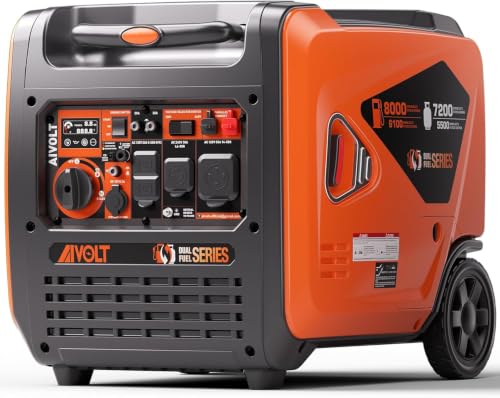
AIVOLT 8000W Dual Fuel Inverter Generator, 120/240V, 62 dBABest Quiet Large UnitAIVOLT 8000W Dual Fuel Inverter Generator, 120/240V, 62 dBAn/an/a322cc 4-stroke OHV
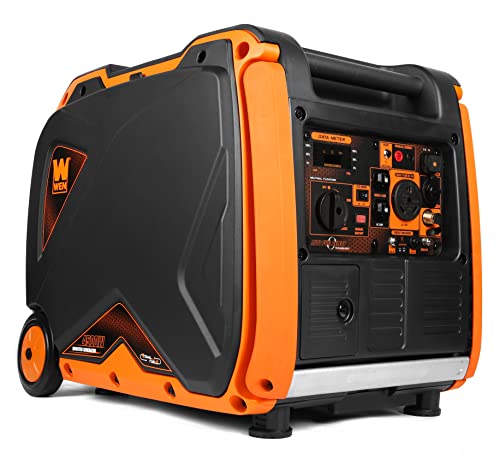
WEN 6800 Watt Dual Fuel RV Ready Inverter, CO WatchdogBest Mid-Range InverterWEN 6800 Watt Dual Fuel RV Ready Inverter, CO Watchdog6,800 surge, 5,100 rated6,000 surge, 4,500 rated224cc dual fuel
WEN DF450i 4500 Watt Dual Fuel RV Ready Inverter, 212ccBest Small BackupWEN DF450i 4500 Watt Dual Fuel RV Ready Inverter, 212cc4,500 surge, 3,500 rated4,500 surge, 3,150 rated212cc, EPA III and CARB compliant

A large motorhome rarely relies on a portable generator for daily life, because most carry a built-in unit. The portable machine is the backup when the onboard set is down, or a way to supplement it at a site where you want to avoid running a large engine all night.

That role shapes the shopping. You need enough running watts to handle several air conditioners and a galley, an outlet that matches a heavy-duty inlet, and a machine you can lift out of a basement bay. The right choice depends on how much of the coach you want to power.

Before you buy

6 Criteria to Look For Before Buying a Generator for Class A Motorhomes

  1. 01

    Role: backup or supplement

    Most Class A coaches carry a built-in generator, so a portable acts as a backup or a supplement. A backup only needs to run essentials, like the 3,500 watt WEN DF450i. A supplement that shares the load with the onboard unit wants 5,000 watts or more, like the WEN 6800 at 5,100 rated.

  2. 02

    Air conditioner count

    A typical Class A has two or three 13,500 to 15,000 BTU roof units. Each draws about 1,500 watts running and 2,500 to 3,000 at start. Three units together demand the 9,500 rated watts of the Westinghouse 12500, while two fit the 7,500 rated Westinghouse 9500.

  3. 03

    Outlet and inlet match

    A big coach inlet is a 50 amp plug, but many portable units offer only a 30 amp L14-30R. The Westinghouse 9500 and 12500 give an L14-30R, while the AIVOLT 8000 is labeled 50 amp RV ready. An adapter does not raise the capacity; it only matches the plug, so check the circuit rating.

  4. 04

    Fuel capacity and propane output

    A 6.6 gallon tank on the 9500 or a 9.5 gallon tank on larger units reduces refueling trips. Propane lowers output by 10 to 12 percent, such as 7,500 down to 6,750 rated watts on the 9500. Size on the propane figure if you rely on it.

  5. 05

    Weight and storage

    A 12,500 watt open frame can weigh well over 200 pounds, which excludes a basement bay and needs a hitch carrier or a ramp. The WEN DF450i is far lighter and fits a bay. Weigh how often you will actually deploy it before choosing size, and remember that a machine too heavy to move safely tends to stay in the garage when you need it. A rolling ramp and a second person solve most of that.

  6. 06

    Noise and resort rules

    Class A coaches often stay at resorts with strict quiet hours. The AIVOLT 8000 lists 62 dBA at 23 feet and the DF450i 58 dBA at quarter load. Open-frame units like the Westinghouse 12500 are far louder and may be banned at some sites.

Detailed reviews

The 5 best generators for class a motorhomes, explained

01
Westinghouse 9500 Peak Watt Dual Fuel Generator, 6.6 Gallon Tank
7500 rated watts6.6 gal tankRemote startDual fuel
Check price on Amazon
Best for: Large coaches that want to run two air conditioners from a portable backup.

This is the first machine in the lineup that can run most of a Class A coach by itself. With 7,500 rated watts on gasoline and 6,750 on propane, it has enough for two air conditioners and a galley load, and the propane loss is only about 10 percent. The 6.6 gallon tank gives it the longest stretch between refuels of the generators under 9,000 watts.

It provides an L14-30R 120/240 volt outlet, which is a 30 amp connection. That is not the 50 amp plug a large coach uses, so you will need an adapter or a transfer arrangement, and it limits how much of the load the coach can draw through a single cord. It ships with a key fob and a 12 volt battery charger, a useful touch for a machine that will sit.

This is a heavy open-frame unit and needs a wheel kit and a ramp. The battery charger keeps the starter battery alive over winter, and the 6.6 gallon tank needs stabilizer if the unit sits unused. Run it monthly under load and check the oil level before each start. Because a Class A coach has a long shore cord run, use a heavy gauge adapter cord and keep it short, since voltage drop under air conditioner load makes compressors run hot and hard.

What works

  • 7,500 rated watts runs two air conditioners
  • Only about 10 percent output loss on propane
  • Remote start fob and battery charger included
  • 6.6 gallon tank for long unattended runs

Watch out for

  • Outlet is a 30 amp L14-30R, not a 50 amp plug
  • Heavy and loud like all open-frame units

Spec sheet

Gas output
9,500 peak, 7,500 rated
Propane output
8,550 peak, 6,750 rated
Tank
6.6 gallons
Outlets
Two GFCI 5-20R, one L14-30R
Start
Remote key fob, battery charger
02
Westinghouse 12500 Watt Dual Fuel Generator, 457cc, Transfer Ready
9500 rated watts457cc OHVRemote startDual fuel
Check price on Amazon
Best for: Coaches with three air conditioners that also want home backup.

For a Class A coach where three air conditioners and a residential refrigerator can all be running at once, 9,500 rated watts is the ceiling. This unit lists 9,500 on gasoline and 8,500 on propane. The 457cc engine uses a cast iron sleeve, which holds up to long heat-soaked afternoons better than an aluminum bore.

The cost is bulk. It is a large steel frame that two people will struggle to load into a basement bay, so most owners keep it on a trailer hitch carrier or in a garage. Compared with the 9500 model, it adds 2,000 rated watts and a larger engine, but uses the same L14-30R style outlet arrangement plus an RV outlet.

Because a generator this large often serves as home backup too, think about the storage season. Drain the carburetor, charge the starter battery and protect the machine from rain. Parts for the Westinghouse family are widely available, which is a major advantage on the road. If a diesel pusher is your daily home, this is also the unit that can keep a residential refrigerator and the house batteries charging while the onboard set is serviced, and its cast iron sleeve is the reason it tolerates the long idle summers.

What works

  • 9,500 rated watts is the highest sustained output here
  • Cast iron sleeve suits long hot runs
  • Propane drops only to 8,500 rated watts
  • Widely available parts and service

Watch out for

  • Too heavy for a basement bay
  • Loudest machine in the lineup

Spec sheet

Gas output
12,500 peak, 9,500 rated
Propane output
11,200 peak, 8,500 rated
Engine
457cc OHV with cast iron sleeve
Outlets
Two GFCI 5-20R, L14-30R, RV outlet
Start
Remote and electric
03
AIVOLT 8000W Dual Fuel Inverter Generator, 120/240V, 62 dBA
8000 watts62 dBA at 23 ft322cc OHV50A RV ready
Check price on Amazon
Best for: Class A owners who want a quiet 50 amp class machine.

A 322cc inverter that claims 8,000 watts and 62 dBA at 23 feet is an unusual combination, and it is the reason this machine suits a Class A owner who parks in resorts. A diesel pusher's onboard generator makes noise you cannot change, while this portable unit lets you run quietly at night.

The automatic fuel switching moves between propane and gasoline, so a bottle running empty does not shut down the coach. It is labeled 50 amp RV ready with 120/240 volt output, which fits a big coach inlet more naturally than the 30 amp outlets on the Westinghouse units.

The trade is that an inverter of this size carries a lot of electronics, and the brand has a short service record. Keep it out of the rain, maintain airflow around the vents, and check what the warranty covers. At 8,000 watts it will not run three air conditioners together, so manage loads. On paper it gives up about 500 rated watts to the Westinghouse 9500, yet it runs far quieter, and for a coach that sits at a resort for a week that quiet is often worth more than the watts.

What works

  • 62 dBA at 23 feet is quiet for 8,000 watts
  • 120/240 volt output with 50 amp RV readiness
  • Automatic propane to gasoline switching
  • Clean inverter power for electronics

Watch out for

  • Brand has a short service record
  • Cannot run three air conditioners together

Spec sheet

Output
8,000 watts
Engine
322cc 4-stroke OHV
Noise
62 dBA at 23 feet
Voltage
120/240 volt
Fuel
Dual fuel, auto switching
04
WEN 6800 Watt Dual Fuel RV Ready Inverter, CO Watchdog
5100 rated watts224cc engine240V outputCO Watchdog
Check price on Amazon
Best for: Coaches that need a quieter, supplemental generator for part of the load.

At 5,100 rated watts on gasoline and 4,500 on propane, the WEN can run one or two air conditioners in a Class A coach as a supplement rather than a full replacement. Its strength is the inverter design and the safety systems: the Watchdog sensor shuts the engine off if carbon monoxide builds up near the machine.

The bonded-neutral 240 volt configuration is designed for low-power Level 2 vehicle charging, which a Class A owner towing a plug-in car behind the coach might use. That is a niche feature, but it shows the engineering priority is flexibility.

It is lighter than the Westinghouse models and easier to carry in a bay, but you give up more than 4,000 watts of output compared with the 9500 model. Expect to manage loads carefully and run the other air conditioner only when the first is stable. A soft start kit on each roof unit is a cheap upgrade that cuts the starting surge, and with it this machine can handle two units where it otherwise would trip on a simultaneous start.

What works

  • CO Watchdog shutoff improves safety
  • 5,100 rated watts handles one or two air conditioners
  • Inverter keeps noise modest
  • Lighter than the open-frame giants

Watch out for

  • Cannot match the 9,500 watt units on output
  • Propane drops to 4,500 rated watts

Spec sheet

Gas output
6,800 surge, 5,100 rated
Propane output
6,000 surge, 4,500 rated
Engine
224cc dual fuel
Safety
WEN Watchdog CO shutoff
Extra
Bonded-neutral 240V output
05
WEN DF450i 4500 Watt Dual Fuel RV Ready Inverter, 212cc
3500 rated wattsAuto fuel select58 dBA at 22 ft212cc engine
Check price on Amazon
Best for: Class A owners who want a light spare in case the onboard set fails.

This is the smallest machine in the guide and its role is specific: a lightweight, quiet backup that can keep the coach's fridge, lights and one air conditioner alive if the onboard generator fails. At 3,500 rated watts on gasoline and 3,150 on propane it will not run the whole coach.

Automatic fuel selection moves from propane to gasoline, and the 58 dBA rating at quarter load and 22 feet is quiet. The EPA III and CARB compliant 212cc engine means it can be used in states with strict rules, which matters if you cross California.

It weighs far less than the 9500 model, so one person can load it. Treat it as insurance for a coach, and keep it ready with fresh fuel and a charged start system. Compared with the 56450iX gas-only cousin, the dual fuel version gives you propane for storage. Keep a small propane cylinder with it in the bay, and exercise it quarterly so you know it starts when the onboard set does not.

What works

  • Automatic propane to gasoline selection
  • 58 dBA at quarter load and 22 feet
  • EPA III and CARB compliant engine
  • Light enough for one person to lift

Watch out for

  • 3,500 rated watts cannot run the whole coach
  • Propane output falls to 3,150 rated watts

Spec sheet

Gas output
4,500 surge, 3,500 rated
Propane output
4,500 surge, 3,150 rated
Engine
212cc, EPA III and CARB compliant
Noise
58 dBA at quarter load, 22 ft
Fuel logic
Propane to gasoline auto select

Spec sheet decoder

What the numbers on the box really mean

The specs manufacturers lead with, translated into what they tell you about real-world performance.

Rated watts by fuel

Sustained output on gasoline and on propane. Propane is lower on nearly every dual fuel unit.

Watch forThe Westinghouse 9500 lists 7,500 on gasoline and 6,750 on propane.

L14-30R outlet

A 120/240 volt, 30 amp locking outlet for a transfer switch or a split-phase cord.

Watch forThe Westinghouse units use this, not a 50 amp plug.

Bonded neutral

A configuration that links neutral and ground at the generator. It affects how the unit works with a transfer switch or an electric vehicle charger.

Watch forThe WEN 6800 states a bonded-neutral 240 volt setup.

Surge versus rated

Surge is a few seconds of motor starting power. Rated is the continuous output.

Watch forThe Westinghouse 12500 lists 12,500 peak and 9,500 rated.

EPA III and CARB

Emission compliance classes. CARB compliance lets a machine be sold and used in California.

Watch forThe WEN DF450i lists both.

Methodology

How We Evaluated These Generators for Class A Motorhomes

Fit to a big coach

We compared rated watts to the demand of two or three air conditioners plus a galley. The Westinghouse 12500 at 9,500 rated watts was the only one that comfortably covers three. Smaller units were treated as supplements.

Inlet compatibility

We checked the outlet types against a 50 amp RV inlet. The AIVOLT 8000 is labeled 50 amp ready while the Westinghouse models use a 30 amp locking outlet and need an adapter.

Fuel behaviour

We compared tank sizes, propane output and fuel switching. The 6.6 gallon tank on the Westinghouse 9500 and the automatic switching on the WEN DF450i were highlighted.

Weight and handling

Stated weights and frame types were used to judge storage. Open frames over 200 pounds need a carrier or ramp. The DF450i fits a basement bay.

Noise and rules

We favored published noise figures with a distance and load, including 62 dBA at 23 feet for the AIVOLT and 58 dBA at 22 feet for the WEN DF450i. Resort rules were part of the weighting, because a coach that cannot run its generator at the site gains nothing from extra watts.

Decision guide

How to Choose the Right Generators for Class A Motorhomes

By Air Conditioners

SituationPickWhy
Three air conditioners and a galleyWestinghouse 125009,500 rated watts on gasoline
Two air conditionersWestinghouse 95007,500 rated watts and a big tank
Two units with load managementAIVOLT 8000Quiet inverter near 8,000 watts
One or two units as a supplementWEN 68005,100 rated watts
Essentials onlyWEN DF450i3,500 rated watts, light enough to carry

By Budget

TierPickWhy
Lowest costWEN DF450iSmall unit as a spare
Mid tierWEN 6800Inverter with CO protection
Upper midWestinghouse 9500Big tank, high output
HigherAIVOLT 8000Quiet 8,000 watt inverter
HighestWestinghouse 12500Maximum output and cast iron sleeve

Open Frame vs Inverter

Open frame (Westinghouse 9500 and 12500)

Highest output per cost and long tanks, but loud and heavy. The 12500 delivers 9,500 rated watts, enough for three air conditioners.

Inverter (AIVOLT, WEN)

Quieter, cleaner power and lighter weight, but lower output. The AIVOLT 8000 gives 8,000 watts at 62 dBA and the WEN 6800 gives 5,100 rated watts.

Choose open frame for maximum output; choose inverter for resorts with noise rules.

Backup vs Supplement

RolePickWhy
Spare if the onboard set failsWEN DF450iLight and quiet, runs essentials
Share load with onboard setWEN 68005,100 rated watts
Full replacement for two air conditionersWestinghouse 95007,500 rated watts
Full replacement plus home backupWestinghouse 125009,500 rated watts, transfer ready
Quiet resort useAIVOLT 800062 dBA at 23 feet

For Home Backup Specifically

Look for

A transfer-switch ready outlet, enough running watts for a furnace blower, fridge and well pump, and a big tank. Never back-feed the house through a wall outlet.

In this comparison

The Westinghouse 12500 is the best fit with transfer-ready outlets and 9,500 rated watts. The 9500 is a cheaper second choice.

When to Spend More

Spend more if

You want to run the whole coach without the onboard generator, or you also need home backup. The Westinghouse 12500 delivers the most output.

Save if

You have a working onboard generator and want a spare. The WEN DF450i at 3,500 rated watts is enough for essentials.

Ownership

Maintenance schedule

The upkeep that decides whether this machine lasts two seasons or ten.

TaskIntervalWhy it matters
Charge the starter batteryMonthlyElectric start units depend on a healthy battery. The Westinghouse 9500 ships with a charger to keep it topped up.
Check oil levelEach startLarge engines hold several quarts and low-oil shutdown ends a run abruptly.
Change oilAfter 20 hours, then every 50 to 100 hoursBreak-in debris stays in the sump. Heavy loads shorten the interval.
Stabilize or drain fuelBefore storageA 6.6 gallon tank sitting for months gums the carburetor. Use stabilizer or run it dry.
Inspect fuel and propane linesEach seasonCracked lines leak fuel and waste propane. Replace any hardened hose.

FAQ

Frequently Asked Questions

Does a Class A motorhome need a portable generator?

Not if the onboard generator is healthy. A portable is a backup if that unit fails, or a supplement when you want to avoid running a large engine overnight.

How many watts do I need for a Class A?

Two air conditioners and a galley need about 6,000 to 7,500 watts, while three need around 9,500. Check the nameplates on your units and add the starting surge.

Which is the best budget pick?

The WEN DF450i is the lowest cost here and works as a spare. The WEN 6800 offers more output at a mid price.

Can a 30 amp outlet run a 50 amp coach?

With an adapter it can feed the coach, but only up to 3,600 watts. It will not run multiple air conditioners.

Is propane enough for a Class A?

On the Westinghouse 9500 propane gives 6,750 rated watts, enough for two air conditioners. Larger demands need gasoline.

Where do I store a large generator?

Many owners use a hitch carrier or keep it in a garage. Lighter units like the WEN DF450i fit a basement bay. Never run any generator in an enclosed bay.

Bottom line

The short version

Browse more generators for class a motorhomeson Amazon →
James Miller, Lead Machine Editor

About the author

James Miller

Lead Machine Editor, MachineFanatic

James Miller leads MachineFanatic's buying guides, turning spec sheets, manuals and owner feedback into clear verdicts on power tools, outdoor power equipment, shop machines and kitchen machines.

More from James →

Keep reading

Related guides