
Amazon affiliate links - we earn a commission.Affiliate disclosure

Buying guide · 12 min read · Updated 2026-11-07

Best Generators for Class C Motorhomes (2026)

Five portable generators that suit a Class C motorhome as a backup or boondocking supplement, judged on weight, running watts, noise and fuel options.

James MillerBy James MillerLead Machine Editor5 machines comparedSpec-sheet verified
Best Generators for Class C Motorhomes

At a glance

Our top picks

Class C motorhomes sit between a van and a bus-sized coach, and their storage is the limiting factor. A rear bay or a bumper carrier can take a small generator, but only a light one, so weight and shape matter as much as output.

Many Class C coaches also have an onboard generator that runs the air conditioner. The portable then serves as a backup when that set fails, or a quiet alternative at a campground that does not allow the onboard unit at night. This guide picks machines for that job.

Before you buy

6 Criteria to Look For Before Buying a Generator for Class C Motorhomes

  1. 01

    Weight and bay size

    A Class C has a rear bay or a bumper carrier that limits size. The Westinghouse 2550 at 42 pounds is an easy lift, while 4,000 watt open-frame machines weigh far more. Measure the bay and check the weight rating of a hitch carrier before buying. A hitch carrier adds tongue weight to the rear axle, so confirm the coach manufacturer allows it and that the carrier is rated for at least the machine weight plus a full tank of fuel.

  2. 02

    Air conditioner start capacity

    A 13,500 BTU roof unit draws about 1,500 watts running and 2,500 to 3,000 at start. The 1,900 watt Westinghouse 2550 cannot do it, while the 3,500 watt WEN units and the 4,000 watt maXpeedingrods can. A soft start kit lowers the surge if you must run a smaller unit.

  3. 03

    Propane compatibility

    Most Class C coaches carry a propane tank for the stove and furnace. A dual fuel machine like the WEN DF450i can use a separate cylinder with an auto switch. Propane drops output, for example from 3,500 to 3,150 rated watts, so size for the weaker figure.

  4. 04

    Noise at campgrounds

    The WEN units rate 58 dBA at quarter load and the Westinghouse 2550 as low as 52 dBA, while the open-frame PowerSmart lists 76 dB. Many campgrounds enforce quiet hours at about 60 dBA at a set distance. Noise ratings rise with load, so assume the real figure is higher.

  5. 05

    Emission compliance

    If you travel through California, a CARB compliant engine is required for sale and use. The WEN DF450i lists EPA III and CARB compliance. Check the listing if you cross state lines, since a non-compliant machine can be refused at a state-run park, and keep the compliance label visible on the housing so a ranger can confirm it quickly.

  6. 06

    Runtime and tank size

    Small inverter tanks last a night at a light load, not a day at a heavy one. The PowerSmart claims 11 hours at quarter load on 1.6 gallons, and the Westinghouse 2550 claims up to 11 hours on 1.16 gallons. Under air conditioner load, expect a fraction of that.

Detailed reviews

The 5 best generators for class c motorhomes, explained

01
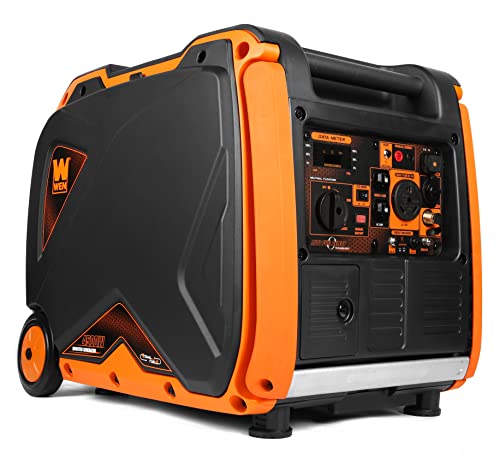
WEN DF450i 4500 Watt Dual Fuel RV Ready Inverter, 212cc
3500 rated wattsAuto fuel select58 dBA at 22 ftEPA III and CARB
Check price on Amazon
Best for: Class C owners who want one quiet machine using the coach's propane.

The WEN DF450i earns first place because it solves the real Class C problem: a motorhome carries a propane tank already, and this machine knows how to use it. Automatic fuel selection switches from propane to gasoline when the supply ends, so the air conditioner does not die at three in the morning.

Its 3,500 rated watts on gasoline and 3,150 on propane suit a Class C coach with one 13,500 BTU roof unit and a microwave, though not both at start. The 58 dBA rating is at quarter load and 22 feet, which is quiet enough for most campgrounds. The EPA III and CARB compliant engine is legal in strict states, a useful fact if your trips cross California.

Ownership is easy. It is a conventional 212cc inverter that one person can lift into a rear bay, and a fuel shutoff valve helps you burn the carburetor dry. The 212cc crankcase holds little oil, so check the level before each run, and exercise the propane side every few months so the regulator seals stay supple. Because a Class C bay sees road vibration, check the propane hose clamp and the handle bolts at the start of each season, and strap the machine down so it cannot slide into the coach wall.

What works

  • Automatic propane to gasoline selection
  • 58 dBA at quarter load is campground friendly
  • EPA III and CARB compliant for strict states
  • Light enough for one person to place

Watch out for

  • 3,150 rated watts on propane is tight with a microwave
  • Priced above the basic gas-only inverters

Spec sheet

Gas output
4,500 surge, 3,500 rated
Propane output
4,500 surge, 3,150 rated
Engine
212cc, EPA III and CARB
Noise
58 dBA at quarter load, 22 ft
Fuel logic
Automatic propane to gasoline
02
WEN 56450iX 4500 Watt RV Ready Inverter, Fuel Shutoff
3500 rated watts212cc engine58 dBA at quarter loadFuel shutoff
Check price on Amazon
Best for: Gasoline-minded Class C owners who want the same engine at a lower cost.

This is the DF450i without the propane plumbing, and that is the point. The 56450iX has the same 212cc engine and the same 3,500 rated watts, but it costs less and has fewer parts to fail. If your coach already carries a gasoline can for the engine, you may not need propane at all.

The fuel shutoff valve is a quiet virtue. It lets you cut the fuel and let the engine consume the remaining gasoline in the carburetor before it stops, which is the best single habit for avoiding gummed jets in storage. Clean inverter power protects phones and laptops.

Compared with the dual fuel version you lose the ability to run on stored propane, which matters if you let the machine sit all winter. For owners who use the generator every month, that is a minor loss. Keep the air filter clean and the oil fresh, and it will run for years. Its one real weakness against the DF450i is that a gasoline can stored in a rear bay is a vapor and fire concern, so use a sealed approved container and vent the bay.

What works

  • Same 212cc engine and 3,500 rated watts as the dual fuel model
  • Fuel shutoff protects the carburetor in storage
  • Quiet at 58 dBA at quarter load
  • Lower cost than the dual fuel sibling

Watch out for

  • No propane option for long storage
  • Needs fresh gasoline kept on board

Spec sheet

Output
4,500 surge, 3,500 rated
Engine
212cc
Noise
58 dBA at quarter load
Fuel control
Carburetor fuel shutoff
Power
Clean enough for phones and laptops
03
Westinghouse 2550 Peak Watt Super Quiet Inverter, 42 lb
1900 rated watts42 lb52 dBAGas or propane
Check price on Amazon
Best for: Owners who only need fridge, lights and electronics, with the lightest carry.

Forty-two pounds is the figure that matters. That is a machine a person can pull out of a rear bay with one hand and carry across a campsite, which a 4,500 watt unit never allows. At 1,900 rated watts it runs a fridge, lights, a laptop and a TV, but it cannot start a roof air conditioner on its own.

Its quiet rating, as low as 52 dBA, is the best in the lineup, and a one-gallon tank claims up to 11 hours at a light load. It runs on gasoline or propane, and an RV-ready outlet lets you plug in a coach shore cord for the lights and fridge.

It works as a spare for essentials or as a companion to a larger unit. Pair it with a soft start kit on the air conditioner if you are determined, but the more honest use is as a quiet night generator. Maintain it as you would any small inverter: fresh fuel, early oil change, and vents kept clear of dirt. Compared with the WEN DF450i it gives up 1,600 rated watts, but that is the price of a machine light enough to carry with one hand, and it is the one most likely to leave the bay at all.

What works

  • 42 pounds is easy to carry
  • As low as 52 dBA noise output
  • Runs on gasoline or propane
  • Up to 11 hours on a 1.16 gallon tank

Watch out for

  • Cannot start a roof air conditioner reliably
  • 1,900 rated watts is modest for a motorhome

Spec sheet

Peak watts
2,550
Rated watts
1,900
Weight
42 lb
Noise
As low as 52 dBA
Runtime
Up to 11 hours on 1.16 gallons
04
maXpeedingrods 5KW Inverter Generator, 4000 Running Watts
4000 running watts5000 peak wattsInverter outputLightweight frame
Check price on Amazon
Best for: Class C owners who need extra headroom for a stubborn air conditioner.

This is the highest sustained output in the lineup, 4,000 running watts, and it comes in a frame marketed as compact and lightweight. For a Class C with one air conditioner and a microwave, that extra 500 watts over the WEN gives real breathing room, and the 5,000 watt peak covers a stubborn compressor start.

It is a gasoline-only unit, so it lacks the propane convenience of the DF450i. The listing speaks of steady, high-quality current for sensitive equipment, which suits a coach full of electronics.

Because 4,000 running watts is more than a 30 amp circuit's 3,600 watt ceiling, check the outlet and plan around the limit. As a lesser-known brand, parts and warranty support will be thinner than WEN or Westinghouse, so keep common wear parts on hand. Run it monthly and treat the fuel as you would any gasoline unit. Since a single listing tells us little about long-term reliability, keep the receipt and register the warranty on day one, and watch the first 20 hours for oil consumption or odd vibration that would point to a defective unit.

What works

  • 4,000 running watts leaves headroom for compressors
  • 5,000 watt peak helps with hard starts
  • Inverter output for electronics
  • Compact body for a rear bay

Watch out for

  • Gasoline only, no propane option
  • Lesser-known brand with thinner support

Spec sheet

Peak watts
5,000
Running watts
4,000
Design
Inverter, compact
Use
RV, camping, food truck
Power
Steady current for sensitive gear
05
PowerSmart 4400 Watt Open Frame Inverter, CO Sensor
3600 running watts1.6 gal tank11 h at 25%CO sensor
Check price on Amazon
Best for: Remote boondockers who prefer low cost and long tank life over quiet.

The PowerSmart is the loudest machine here. Its 76 dB rating at 23 feet and a quarter load is an open-frame number, far above the 58 dBA of the WEN units. What you get for that noise is a lower cost, 3,600 running watts and a CO sensor that shuts the engine down.

The 1.6 gallon tank is paired with an 11 hour claim at a quarter load, a good figure for an overnight run. At 3,600 running watts it matches the ceiling of a 30 amp circuit, so it can power a coach's air conditioner without strain.

If you camp in public campgrounds with quiet hours, this one will draw complaints. For boondocking in remote spots, or as a spare that rarely runs, the savings can justify the noise. Treat it like any open-frame machine: place it on level ground, keep it away from windows, and check the oil often. Compared with the maXpeedingrods it gives up 400 running watts but includes a CO sensor, which many owners value more than the extra output when the machine sits near a sleeping coach.

What works

  • 3,600 running watts matches a 30 amp circuit
  • 11 hours at quarter load on 1.6 gallons
  • CO sensor shuts the engine down
  • Lowest cost per running watt here

Watch out for

  • 76 dB at 23 feet is loud for campgrounds
  • Open frame with no enclosure

Spec sheet

Starting watts
4,400
Running watts
3,600
Tank
1.6 gallons
Runtime
11 hours at 25% load
Noise
76 dB at 23 feet, 25% load

Spec sheet decoder

What the numbers on the box really mean

The specs manufacturers lead with, translated into what they tell you about real-world performance.

Rated watts versus surge

Rated watts are sustained, while surge is a few seconds. Compressors need the surge at start.

Watch forThe maXpeedingrods lists 5,000 peak against 4,000 running.

dBA at quarter load

Noise at a light load. It rises as the engine speeds up to meet heavier loads.

Watch forThe WEN units list 58 dBA at quarter load while the PowerSmart lists 76 dB.

Fuel shutoff

A valve that lets you stop the fuel supply and burn the carburetor dry before storage. It prevents gummed jets.

Watch forThe WEN 56450iX lists a fuel shutoff feature.

CO sensor

A built-in sensor that shuts the engine off if carbon monoxide builds up near the unit.

Watch forThe PowerSmart 4400 includes one; it never replaces siting the generator outdoors.

Runtime at 25 percent load

How long a full tank lasts with a light load. It flatters real use.

Watch forThe Westinghouse 2550 claims up to 11 hours on 1.16 gallons.

Methodology

How We Evaluated These Generators for Class C Motorhomes

Bay fit and weight

We compared stated weights and body type. The Westinghouse 2550 at 42 pounds is the easiest carry, and the open-frame PowerSmart is bulkier. We assumed a rear bay of modest size.

Air conditioner capability

Rated watts were measured against the 1,500 watt running and 2,500 to 3,000 watt starting demand of a roof unit. The WEN units at 3,500 and the maXpeedingrods at 4,000 pass; the Westinghouse 2550 does not.

Fuel options

We favored a propane option, since a Class C coach carries propane. The WEN DF450i's auto selection and its drop to 3,150 rated watts on propane were weighed.

Noise credibility

Noise ratings with a stated load and distance were preferred. The 58 dBA WEN units and 52 dBA Westinghouse count; the 76 dB PowerSmart was marked down for campgrounds.

Ownership burden

Based on owner feedback patterns, we considered start method, brand support and parts. The WEN and Westinghouse support networks outweigh lesser-known brands like maXpeedingrods.

Decision guide

How to Choose the Right Generators for Class C Motorhomes

By Coach Use

SituationPickWhy
Backup for one air conditionerWEN DF450i3,500 rated watts and propane use
Gas-only, lower costWEN 56450iXSame engine without the propane plumbing
Fridge, lights and electronics onlyWestinghouse 255042 pounds and 52 dBA
Stubborn air conditioner startmaXpeedingrods 5KW4,000 running and 5,000 peak watts
Remote boondocking, long nightPowerSmart 440011 hours at quarter load

By Budget

TierPickWhy
Lowest cost per wattPowerSmart 4400Open frame at the lowest spend
LowWestinghouse 2550Small and light
MidWEN 56450iXQuiet and gas-only
Upper midmaXpeedingrods 5KWHighest running watts
HighestWEN DF450iDual fuel and auto select

Dual Fuel vs Gas Only

Dual fuel (WEN DF450i)

Uses the coach's propane, stores indefinitely and switches automatically. Output falls from 3,500 to 3,150 rated watts. Best for owners who store the machine for months.

Gas only (WEN 56450iX, maXpeedingrods, PowerSmart)

Simpler and lower cost, with full output. The 56450iX has a fuel shutoff to protect the carburetor in storage.

Choose dual fuel if you store the machine long; choose gas-only if you run it monthly.

Noise Level

PreferencePickWhy
QuietestWestinghouse 2550As low as 52 dBA
Quiet with air conditioner powerWEN DF450i58 dBA at quarter load
Quiet and gas-onlyWEN 56450iXSame 58 dBA rating
Tolerates noise for outputmaXpeedingrods 5KWInverter with the highest watts
Remote sites onlyPowerSmart 440076 dB at 23 feet

For Boondocking Specifically

Look for

Fuel flexibility, a long runtime at light load, a CO shutoff and a weight you can handle alone. Carry a spare propane cylinder or a labeled fuel can.

In this comparison

The WEN DF450i is the best all-rounder, and the PowerSmart 4400 suits remote sites with its 11 hour claim. The Westinghouse 2550 is the best night-time spare.

When to Spend More

Spend more if

You camp in public campgrounds, cross California or rely on propane. The WEN DF450i earns its cost with auto fuel selection and compliance.

Save if

You run a generator rarely and only for essentials. The Westinghouse 2550 or the PowerSmart 4400 keeps the cost low.

Ownership

Maintenance schedule

The upkeep that decides whether this machine lasts two seasons or ten.

TaskIntervalWhy it matters
Check oilEach startSmall inverter crankcases hold little oil and run hot. A low-oil shutdown ends a run abruptly.
Change oilAfter 20 hours, then every 50 hoursBreak-in debris stays in the sump. Frequent short runs also dilute oil with fuel.
Burn off fuel before storageEnd of each tripA fuel shutoff valve lets the carburetor run dry and stay clean. Ethanol gasoline gums jets in weeks.
Exercise on propaneEvery 2 to 3 monthsDual fuel regulators and rubber hoses stiffen when idle. A run under load shows leaks early.
Clear vents and filterEvery 25 hoursDust blocks airflow in a compact case. Heat shortens the life of the engine.

FAQ

Frequently Asked Questions

Do I need a portable generator for a Class C?

Not if the onboard generator works well. A portable is a backup or a quiet alternative for nights at campgrounds that restrict onboard sets.

Can a small generator run a Class C air conditioner?

Only if it has about 3,000 watts or more, like the WEN units or the maXpeedingrods. The 1,900 watt Westinghouse 2550 cannot start a roof unit reliably.

Which is the best budget choice?

The PowerSmart 4400 is the lowest cost per watt but loud. The Westinghouse 2550 is a cheap, light choice for essentials.

Is dual fuel worth it for a Class C?

Usually yes, because the coach already carries propane. Expect about 10 percent less output on propane, such as 3,150 rated watts on the DF450i.

Where can I store one on a Class C?

A rear bay or a bumper carrier. Check the carrier's weight rating. Never run a generator inside a bay or compartment.

Is a CO sensor a substitute for safe placement?

No. It is a backup. Always run the generator outdoors, well away from windows and vents, and use a battery CO detector in the coach.

Bottom line

The short version

Browse more generators for class c motorhomeson Amazon →
James Miller, Lead Machine Editor

About the author

James Miller

Lead Machine Editor, MachineFanatic

James Miller leads MachineFanatic's buying guides, turning spec sheets, manuals and owner feedback into clear verdicts on power tools, outdoor power equipment, shop machines and kitchen machines.

More from James →

Keep reading

Related guides